 |
 HackRF on Sky Loop Antenna and Talented Balun
 4 March 2015 | by
 Todd Harrison, KF7NBI, is a regular contributor to AmateurRadio.com and writes from Arizona, USA.
UK Activity Contests
Every Tuesday evening the RSGB organises a VHF/UHF activity contest. I have just in time submitted my entry for the low power section of last Tuesday evenings 50MHz contest. With just 3 QSOs logged there is no way on this earth that I’ll be anywhere but near the bottom! Having a V2000 omni vertical antenna, 5W, and a stroke damaged voice is no way to enter a 50MHz, UK based, contest! The V2000 and even 2.5W is great in the Es season (I work most that is around), but it is far from ideal working inter-G on 6m SSB.
Tonight is the 144MHz (2m) March leg of the UKAC. My small 3el beam should turn again now (manually) so I’ll see how long my voice holds out. 45 minutes to 60 minutes is usually my limit. Last week I was on very little time. My best DX seems to be around 200km with 5W on 2m in “normal” conditions.
At this time of the year there are fewer portable stations active but activity (SSB and CW) is usually very high so this is a good opportunity to work some new squares. People have been very friendly. If in the UK or nearby join the fun 2000-2230z on 2m. I usually go QRT by 2100z because of the strain on my voice.
Just checked where I sit in the Jan 2015 AL section of the 50MHz UKAC. You guessed? Bottom! Well someone has to be!

Roger Lapthorn, G3XBM, is a regular contributor to AmateurRadio.com and writes from Cambridge, England.
What happens to your gear when you die?
How’s that for a title? I’m helping a widow sell her late husband’s ham gear. Things are going quickly as a local ham bought most of the newer gear based on recent sale prices from eBay and the QRZ.com swapmeet forum. Had she not reached out to the local club, it’s likely she would have sold thousands of dollars of gear at a yard sale for pennies, or simply sent it to recycling.
This got me to thinking…does my wife know who to call to dispose of my gear should something happen to me? While probably not high on the things to do list if I pass suddenly, it sure would be a good idea to have a list of hams I trust in a folder for her.
There are some great hams out there – I met another one over email this week who spends hundreds of dollars a year to provide data services for other hams. But there are also crooks and thieves that would rob a widow blind. Do your significant other a favor…leave behind a list of hams you trust.
Michael Brown, KG9DW, is a regular contributor to AmateurRadio.com and writes from Illinois, USA. Contact him at [email protected].
Icom IC-7100 firmware update E3
Icom Inc. has published firmware update E3 for the IC-7100 on their global website. This new firmware has been designed to improve RX audio quality.
The following firmware have been updated:
• CPU M to Version 1.04
• DSP I to Version 1.02
 The new firmware can be downloaded here.


Hans, PD0AC, is a regular contributor to AmateurRadio.com and writes from Almere, The Netherlands. Contact him at [email protected].
Austin Amateur Radio Supply Closes

Texas amateur radio equipment distributor Austin Amateur Radio Supply has closed its doors.
Started by Johnny Paul, WA5BGO, SK, over 35 years ago, Austin Amateur Radio Supply had been a regular advertiser in the major ham publications. After Paul’s death in late 2013, Austin Amateur Radio continued operation for well over a year.
I bought my first HT from Austin Amateur Radio Supply 25 years ago. It’s always sad to see another small retailer close their doors.
Thank you to the Paul family for 35 years of service to our community. You are missed already.
Matt Thomas, W1MST, is the managing editor of AmateurRadio.com. Contact him at [email protected].
What’s All the Fuss About K1N?
If you have been paying any attention to the world of ham radio DX, you have heard about the DXpedition to Navassa Island. According to Wikipedia, Navassa Island is a unorganized, unincorporated territory of the United States. Haiti (just 40 miles to the east) also claims ownership of the island but it appears that the US currently has control. The island is designated as the Navassa National Wildlife Refuge by the US Fish and Wildlife Service and access to the island is severely limited. (There is some interesting reading about the various territories of the US on Wikipedia.)
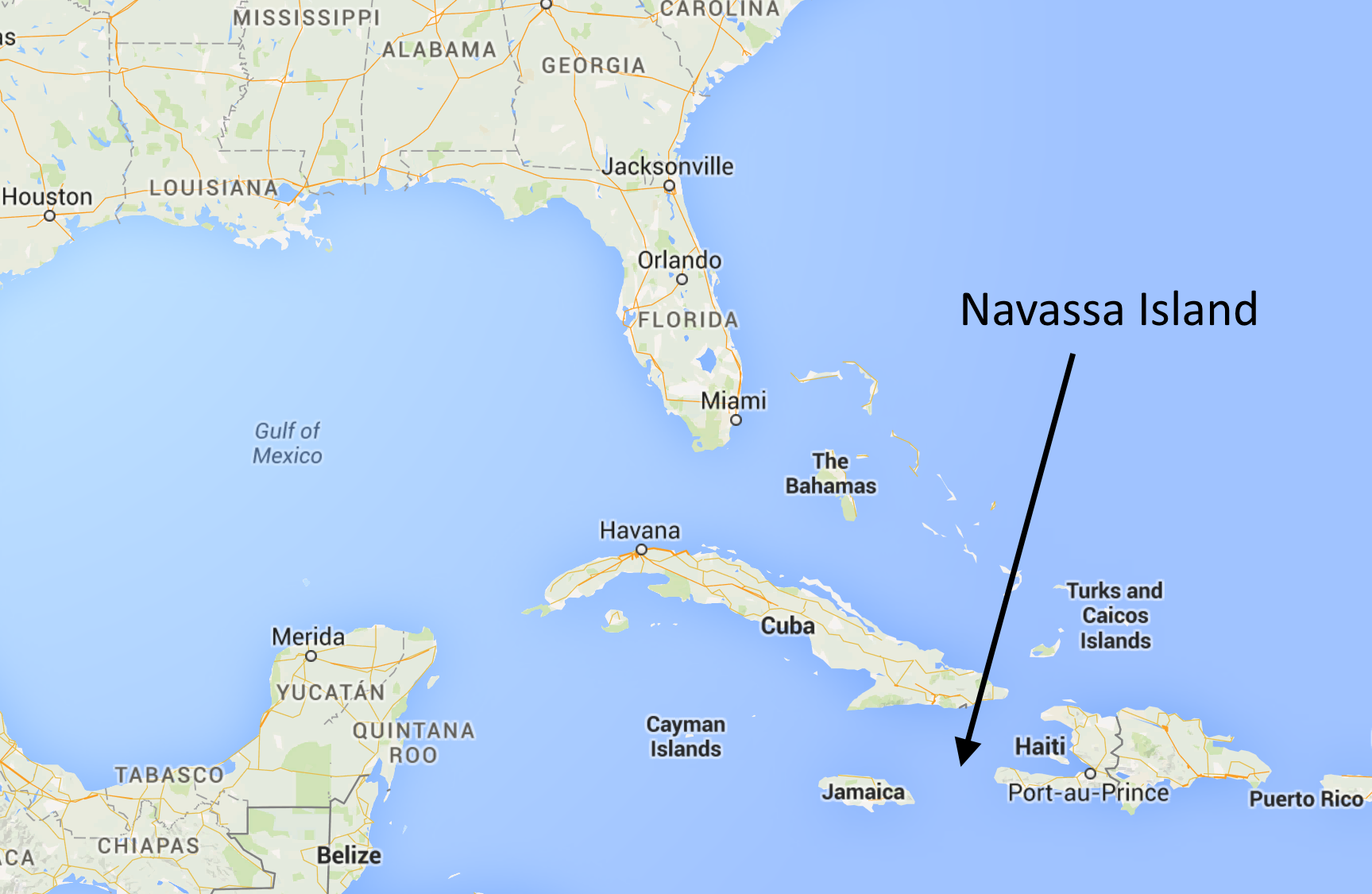 For the purposes of DXCC, Navassa Island is considered a separate country (I mean entity), one that is very difficult to work because no one lives there. Actually, its worse than that because hardly anyone is even allowed to set foot on the island, let alone install a ham station. This means that Navassa is near the top of the list of the most wanted DXCC entities.
An enterprising and persistent group of radio hams managed to get permission to visit the island and put it on the air. The logistical challenge is large, including the use of ships and helicopters to get all of the people, radio gear and supplies on and off the island. As you can imagine this gets quite expensive.
This is where I have to chuckle at the silliness of the situation. Imagine explaining this to someone that drops in from another planet. We have this hobby that involves communicating long distances via electromagnetic waves. One of the pursuits in this hobby is counting up how many countries you have contacted. Well, they aren’t all true independent countries, so we have to keep a special list to keep track of which ones are considered countries. Now, we have this one island that is on the list but we also have this rule that no one is allowed to live on this island. This causes a group of people to assemble a major expedition, costing a great deal of time and treasure, with the sole purpose of enabling electromagnetic communication from the island.
At this point, I should mention I am a slacker DXer. Many years ago, I did take the time to get >100 countries confirmed so that I could claim DXCC but I don’t spend much effort trying to chase new countries. When I heard about the Navassa DXpedition, it did peak my interest because I knew it was such a rare opportunity. Who knows when and if I would get another shot at working this country? I also knew the getting enough RF from my station to Navassa would not be very difficult. It is only 2300 miles from Colorado, a slam dunk on 20m, even with my modest 100W to a dipole antenna. Except that there would be 20,000 other hams called at the same time, creating a huge pileup. Which is why I don’t get into chasing rare DX. While I love the challenge of bouncing my signal off the ionosphere to reach distant locations, I don’t groove on the pile up that normally ensues. That quickly turns into a contest of who has the biggest signal (size does matter) and who is most adapt at getting the attention of the DX station.
About the time that K1N started operating from the island, I was out of town on business. I began to think that working Navassa was not for me. However, I did manage to find some operating time on Feb 14, which turned out to be the last full day of K1N operation. After just a couple of calls, I got through the pileup and worked them on 20m SSB. (I’d like to think that it was superior operating technique but it was probably just dumb luck.)
Thanks to the team that put Navassa Island on the air. (Yes, I did send in a small donation to help the cause.) From what I experienced, this DXpedition was very efficient and well run. Take a look at the interview with one of the participants, Glenn W0GJ, who had some interesting comments about the experience.
73, Bob K0NR
The post What’s All the Fuss About K1N? appeared first on The KØNR Radio Site.
Bob Witte, KØNR, is a regular contributor to AmateurRadio.com and writes from Colorado, USA. Contact him at [email protected].
You can save some cash by double checking.
Mike Weir, VE9KK, is a regular contributor to AmateurRadio.com and writes from New Brunswick, Canada. Contact him at [email protected].
 Ham Radio Deluxe |
 W5SWL Electronics |
 Ham Radio Prep |
 KB3IFH QSL Cards  Hip Ham Shirts  HamRadioAuctions HamRadioAuctions Reliance Antennas Reliance Antennas Enigma Shop Enigma Shop |  morseDX  Ni4L Antennas  R&L Electronics R&L Electronics antennas.us antennas.us QRV QRV |
- Matt W1MST, Managing Editor
