 |
 QRPTTF – 2015
 26 April 2015 | by
 As Mr. Lennon wrote, "Life is what happens when you're busy making other plans."
I had planned to get to Washington Rock State Park around Noon. The park, which is on the first ridge of the Watchung (Wach Unc in Lene Lanape) moutnains, meets the QRPTTF theme requirement for being a place somehow related to Native Americans. What actually happened was that my daughter was invited to a sleepover/birthday party, and I had to have her at her friend's house at 2:00 PM. So much for the early start.
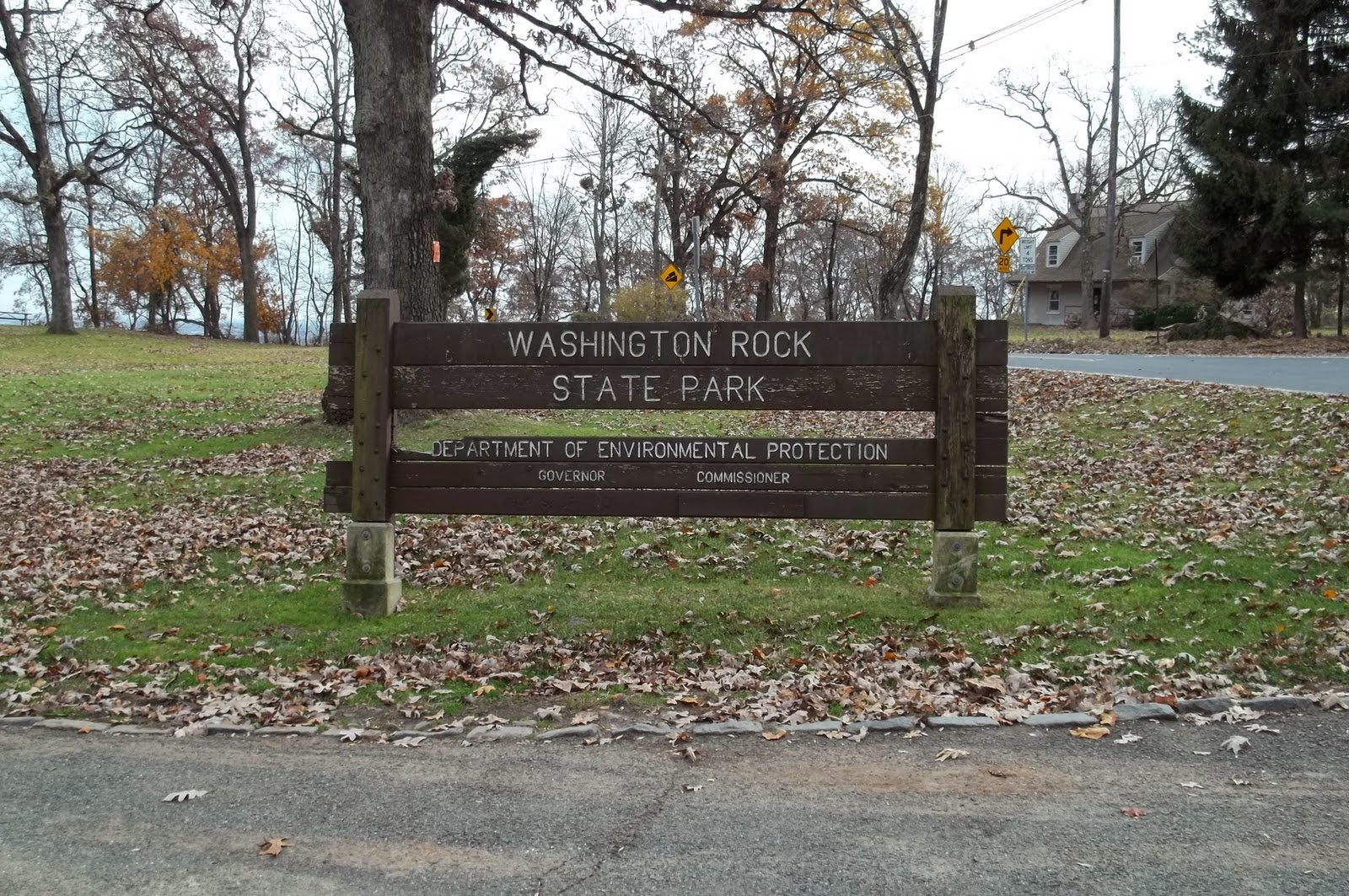
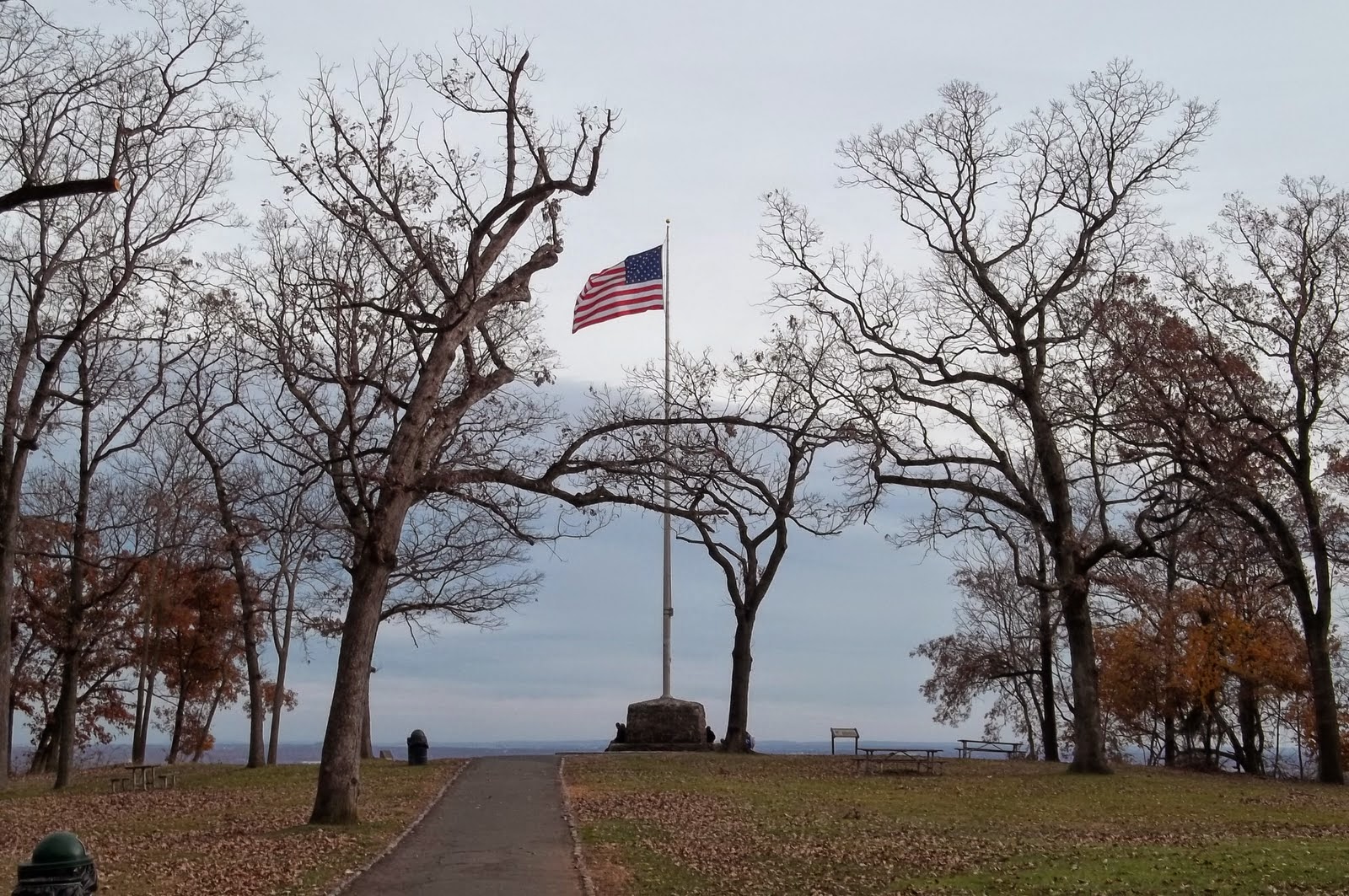
Set up did go like the knife through hot butter, after I made it to the park. The new Joplin ARC antenna launcher got my antenna hoist line up over a 40 foot high tree branch on the first shot. The EARCHI was up, literally in minutes.
I got on the air at about 1830 UTC and I spent about 15 minutes calling CQ QRP on 15 Meters with no takers. I had a feeling that 15 Meters was going to be good today. It wasn't, at least for me. So I meandered over to 20 Meters and was answered by Craig N8KMY at 1855 for my first QRPTTF QSO.
It didn't start out as a QRPTTF QSO. He called me because in his words, he couldn't believe that I was QRP. He is located in northern MI and told me that I was one of the loudest signals on the band for him. He repeatedly asked me to confirm that I was only running 5 Watts.
He was as loud to me as I was to him, so that's where the fun began. First he lowered his power from 40 Watts to 20 Watts, when I told him there was no difference in his signal, he continued to lower his power down to 10 Watts, and then, eventually 5 Watts. He was astounded when I told him (quite honestly) that there was no difference between his signal at 40 Watts or 5 Watts. A new QRP convert? I certainly hope so! Craig seemed enthusiastic enough.
Getting him down to 5 Watts qualified as a QRPTTF contact. We had a nice ragchew for about 25 minutes. A bit longer than I had intended, but it's never a bad thing to promote QRP, and bring a new soul into the fold, right? So it was worth it.
Besides, as it turned out, the bands weren't exactly rip-roaring with QRPTTF activity. I ended up making only 8 QSOs. Six on 20 Meters and two on 40 Meters.


I worked, in addition to N8KMY, NK9G, WQ8RP, K7RE, K4UPG (Kelly, my fellow QRP Polar Bear - Grrrrrrrr), WB3T, KS8M and AA5TB.
What made the day, was when my fellow SPARC members, Marv K2VHW (my official QRPTTF 2015 photographer) and Drew W2OU came for a visit. They kept me company in between QSOs and also stayed with me until I packed up for the return trip home. Around 5:00 PM, it started getting chilly again and QRPTTF signals were becoming about as scarce as hen's teeth. So only though I put in only 2 & 1/2 hours behind the key, I decided to call it an event and head home.
The important thing was that I had fun and enjoyed my time playing radio today. It feels like I don't get to do this anywhere near enough.
72 de Larry W2LJ
QRP - When you care to send the very least!
Larry Makoski, W2LJ, is a regular contributor to AmateurRadio.com and writes from New Jersey, USA. Contact him at [email protected].
Explaining Standing Waves
When we teach the Technician License Class, we provide a simple explanation of Standing Wave Ratio (SWR) that emphasizes the concept of impedance matching. An SWR of 1:1 is a perfect match; anything higher is less than perfect.
SWR is an important amateur radio concept, one that is not that easy to explain so I am always on the lookout for training materials. HamRadioNow just republished this video of excellent standing wave demonstration by Bill Hays, AE4QL. Bill actually goes well beyond just standing waves and shows some antenna and transmission line theory as well.
If you just want to learn about standing waves and basic antenna radiation, view the first 35 minutes. After that, it starts to get a little deep.
Grab a cup of your favorite beverage, settle in and get ready to learn from this video.
73, Bob K0NR
The post Explaining Standing Waves appeared first on The KØNR Radio Site.
Bob Witte, KØNR, is a regular contributor to AmateurRadio.com and writes from Colorado, USA. Contact him at [email protected].
Amateur Radio Weekly – Issue 58

The hidden FM radio inside your pocket, and why you can’t use it
You may not know it but most of today’s smartphones have FM radios inside of them. But the FM chip is not activated on two-thirds of devices. That’s because mobile makers have the FM capability switched off.
NPR
Google Shakeup & Amateur Radio Clubs
We take a quick look at how these changes may impact amateur radio websites, and how without action, some of our amateur radio club websites may be even harder to find after this change by Google.
Essex Ham
Rookie Roundup roundup
The South Plainfield Amateur Radio Club ran a station for the ARRL Rookie Roundup.
W2LJ
ITTY: Internet Teletype
With today’s streaming audio over the Internet, George, W7TTY has come up with a scheme that allows him to broadcast teletype news over the Internet 24 hours per day, 7 days per week.
rtty.com
Tinkering with the Credit Card Crystal Radio
All that is required is connecting the high-impedance earphone, earth/ground and aerial/antenna to the board. Since all of these components can be connected with the supplied alligator clip cables, getting it on the air took all of 20 seconds.
SWLing Post
ISS 2395 MHz Digital Amateur TV blank transmission test
Please monitor the 2395 MHz at 2.0 Ms/s frequency and tell everyone as soon as you observe it.
AMSAT UK
How to
Turning a wireless router into an SDR
OpenWRT is a special custom Linux based firmware designed to create a fully functional Linux system on a internet router by replacing the stock firmware. Since OpenWRT is Linux based, it is possible to install the RTL-SDR software and run it on the router itself.
rtl-sdr.com
Video
Ham Radio Mobile in 1984
The late Don Wallace, W6AM, was interviewed in 1984 by Wayne Overbeck, N6NB, for the PBS series, “Radio Collector.”
California Historical Radio Society
D-STAR and the Icom RS-MS1A Android App
Our latest video about D-STAR features Don Turner (G4TKR) who is being interviewed by Bob McCreadie (G0FGX) of TX Films.
Icom
Arduino comparison guide
Thinking about getting started with Arduino but not sure where to start? Look no further! We’ve put together this handy guide to help you pick the right microcontroller for your project.
SparkFun Electronics
Homebrew D-STAR repeater
YouTube
Amateur Radio Weekly is curated by Cale Mooth K4HCK. Sign up free to receive ham radio's most relevant news, projects, technology and events by e-mail each week at http://www.hamweekly.com.
Amateur Radio Newsline Report 1962 April 24 2015
- Australian ham radio floater balloon makes a trip around the world
- FCC proposes new privacy rules for amateur radio operators past information
- 2014 CQ World Wide SSB contest disqualifies some hams and warns others
- Palmyra Atoll DX operation announced for early 2016
- Barbados warns CBers and hams not to use excessive power
- Possibly the greatest selfie is taken by a ham radio operator on the ISS
THIS WEEK'S NEWSCAST
Script
Audio
AREDN first site on the air
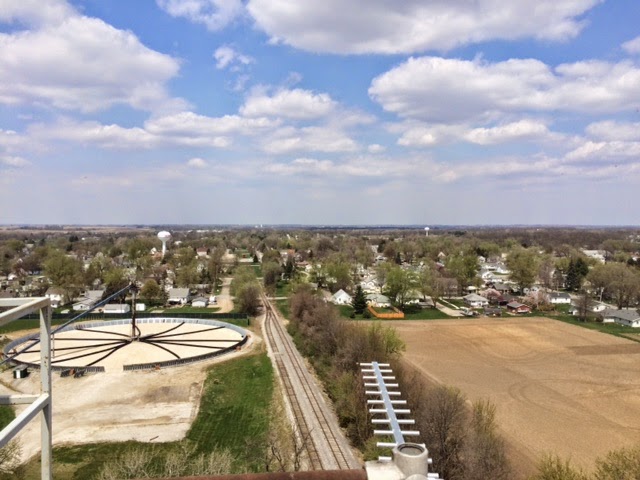
I’ve installed the first of what I hope are many AREDN (Amateur Radio Emergency Data Network) mesh nodes. This site is located on a large grain elevator in Heyworth, IL. It’s at the 150 foot level, with two yagi antennas. One antenna is pointed north towards Bloomington, and the other is pointed northeast.

Michael Brown, KG9DW, is a regular contributor to AmateurRadio.com and writes from Illinois, USA. Contact him at [email protected].
Hooked On QSLs
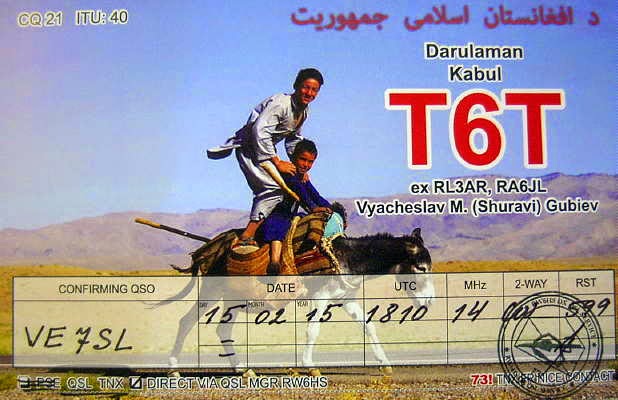
Ever since receiving my first QSL in the mail, as an 11 year-old SWL in Cycle 19, I've always loved getting new cards. Strange as it sounds, I can still recall the fresh ink smell and the brown manila envelope that arrived from "Switzerland Calling". In those days the world was a much larger place and Switzerland may as well have been on the moon. It was a world away ... and the envelope was addressed just to me!
I had a similar thrill this week, when my rural mailbox revealed a much-needed card from Afghanistan. It was from Shuravi, T6T, worked a few weeks ago on 20m ... surprising, as he was using just a low wire dipole supported with bamboo poles.
The card confirmed DXCC country #335 for me with most of them, like T6T, being on CW.
I keep a separate country count, and albums, for my two favorite bands ...160m and 6m, where it seems that new ones come either very slowly or in bunches.
As of today, my 160m total stands at 154 worked and confirmed while my total on the magic band stands at 86 worked and 85 confirmed ... proof of the Pacific Northwest's 6m black hole phenomenon. Sadly I neglected to quickly post a card to 4U1UN for a Saturday morning F2 QSO during Cycle 21. Later attempts proved futile as the logs were subsequently destroyed in a small fire.
The nine remaining DXCC countries will be tough, as, from what I can determine, there is little or no regular amateur radio activity from most of them:
H40 Temotu Province
FT/TO Glorioso Island
HK0 Malpelo Island
KP5 Descecheo Island
P5 DPR of Korea
SV/A Mt. Athos
VP8 South Sandwich Islands
Z8 Southern Sudan
ZL9 Auckland / Campbell Island
I've stayed away from e-QSLing as the look and the feel of a written paper card, was one of the first things that attracted me to the hobby and it seems, to me anyway, an important ham radio tradition to keep alive as long as possible. After all these years, I'm still hooked on QSLs.

Steve McDonald, VE7SL, is a regular contributor to AmateurRadio.com and writes from British Columbia, Canada. Contact him at [email protected].
They named a candy after me!
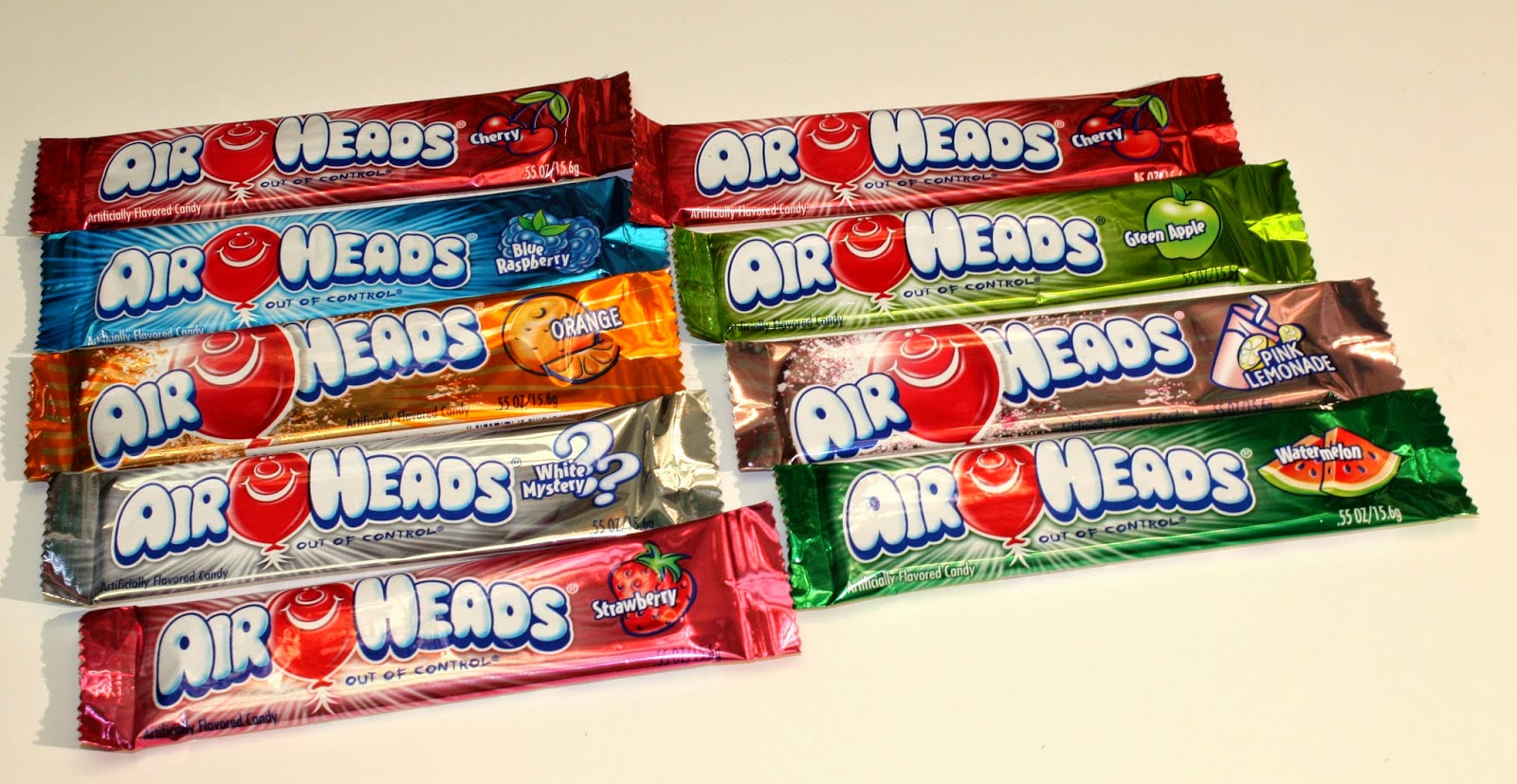
Larry Makoski, W2LJ, is a regular contributor to AmateurRadio.com and writes from New Jersey, USA. Contact him at [email protected].
 Ham Radio Deluxe |
 W5SWL Electronics |
 Ham Radio Prep |
 KB3IFH QSL Cards  Hip Ham Shirts  HamRadioAuctions HamRadioAuctions Reliance Antennas Reliance Antennas Enigma Shop Enigma Shop |  morseDX  Ni4L Antennas  R&L Electronics R&L Electronics antennas.us antennas.us QRV QRV |
- Matt W1MST, Managing Editor
