 |
 ICOM IC7300 in RadCom?
 12 October 2015 | by
 My new copy of RadCom is due towards the end of next week. I wonder, if as in PW, there will be a “tight lipped” policy as appears to be the case for all advertising in PW a few weeks ago? You can almost hear ICOM saying, “do NOT sell the IC7300, as this is for NEXT year, if at all”.
Certainly the UK selling price of the Yaesu FT991 has, as predicted, dropped some way. This will go lower still in the months ahead. If the IC7300 has had to be delayed (software issue maybe, or are they afraid the lack of 2m/70cm will be a problem, or is there a major design issue, or are they worried about the selling price versus the Yaesu FT991?) this would be a great shame.
I was expecting to see this in the UK by Christmas and selling for less than the FT991. I now have my doubts. The next RadCom may give us some clues.
See http://www.cqdx.ru/ham/new-equipment/icom-ic-7300-hf-50-mhz-transceiver/ .

Roger Lapthorn, G3XBM, is a regular contributor to AmateurRadio.com and writes from Cambridge, England.
LF Improving
 |
| courtesy: http://sdo.gsfc.nasa.gov/ |
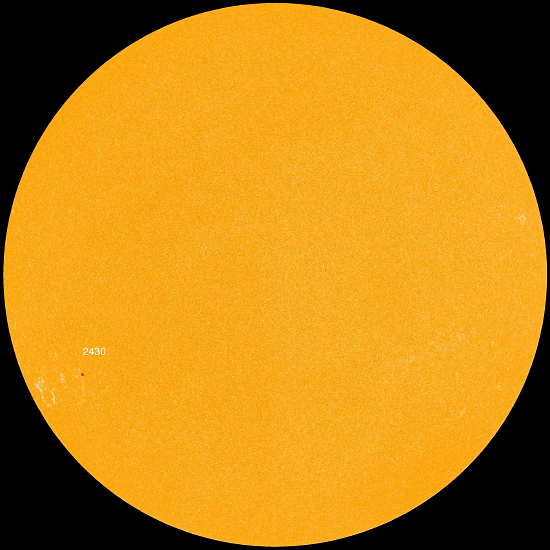
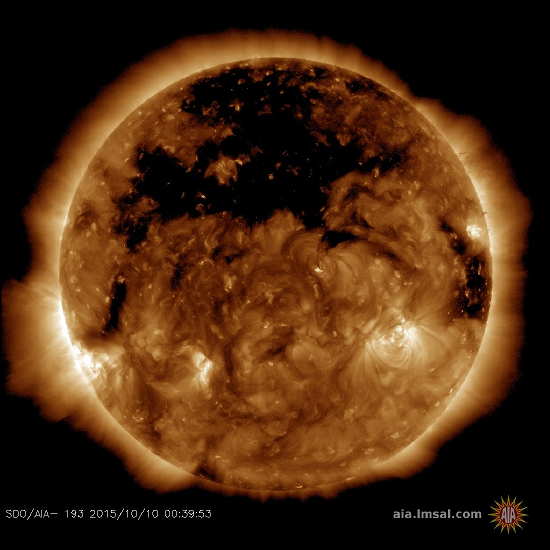
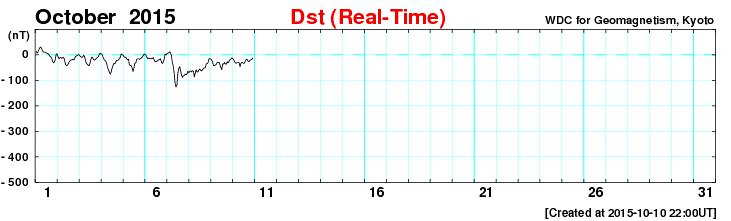
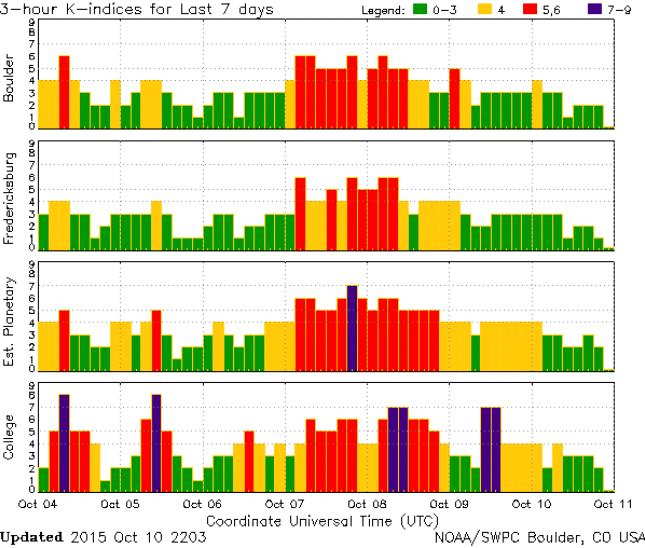
After more than a week of horrendous geomagnetic activity, due mainly to coronal-hole streaming, it looks as if things are starting to settle down once again. One would never know it from looking at the sun's image as the source of the streaming is largely invisible in the visible light spectrum. Viewing at a different wavelength however, reveals the source of the disruption, now about to rotate out of view for a few weeks.
 |
| courtesy: http://sdo.gsfc.nasa.gov/ |
 |
| courtesy: http://wdc.kugi.kyoto-u.ac.jp/dst_realtime/presentmonth/index.html |
 |
| courtesy: http://www.noaa.gov/ |
Steve McDonald, VE7SL, is a regular contributor to AmateurRadio.com and writes from British Columbia, Canada. Contact him at [email protected].
More VE7 Lightwave Activity
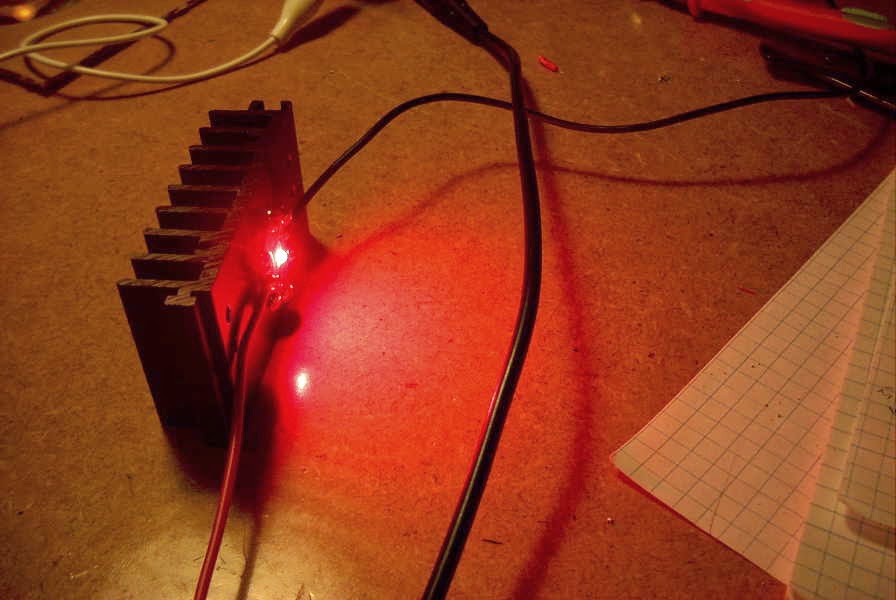 Two more VE7's are well on their way to getting in on the lightwave fun in the Vancouver lower mainland region. Toby, VE7CNF, and Mark, VA7MM, are constructing stations similar to the ones built by myself and Markus, VE7CA.
Toby and Mark live close enough that a clear-air scatter QSO between them might also be a possibility. Having another near-by amateur, or even in the same city, is a great source of motivation ... not to mention having someone else to actually talk to, once the system has been built.
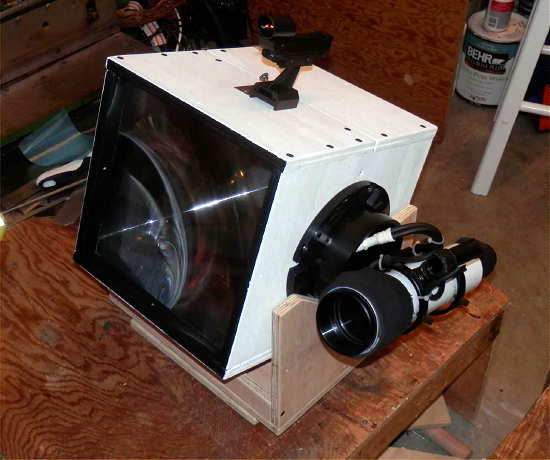
Except for the LED focusing sled, Toby's fine-looking transmitter box and LED driver / modulator, are now complete. The receiver is next on the list. I believe this will use one of the inexpensive ($5) fresnels lenses, purchased locally at Princess Auto, that seems to work very well for the price.
 |
| photos courtesy VE7CNF |
Steve McDonald, VE7SL, is a regular contributor to AmateurRadio.com and writes from British Columbia, Canada. Contact him at [email protected].
Amateur Radio Weekly – Issue 80

Alternative sites for Hamvention proposed
Fears about Hamvention leaving town because of Hara Arena’s economic struggles has local officials scrambling to propose alternative sites.
Dayton Daily News
New FM repeater satellite launches (Fox-1A)
Fox-1A is a 1-Unit CubeSat carrying an FM repeater that will allow simple ground stations using an HT and an “Arrow” type antenna to make contacts.
AMSAT UK
Radio Amateurs on NASA TV
Radio amateurs Jerry Buxton, N0JY and Courtney Duncan, N5BF were on the panel at a NASA prelaunch briefing on Wednesday, October 7.
AMSAT UK
Heathkit appears to be back in business
This radio has a real air variable tuning capacitor. We have them custom-manufactured for us to our specifications, including its ball-bearing planetary reduction drive for smooth tuning.
Heathkit
Disney Emergency Amateur Radio Service
If you’re visiting the Walt Disney World resort, we encourage you to make use of our repeaters.
WD4WDW
Emergency preparedness and cross band repeat
One of the best forms of communications that hams have at their disposal when forced to operate from challenging locations in regards to accessing distant repeaters is “Cross Band Repeat.”
Jerry’s Journal
Operators in Rhode Island dialed into enemy conversations worldwide
The FCC turned loose a 40-member spy team of men and women to listen in on the world.
Providence Journal
Build your own satellite ground station
If you have access to a 3D printer you can now put together your own ground station for between $300 and $400.
Make:
Making contacts via Ham Radio enabled satellites
It’s worth recording your session so that you can make sure you have copied your QSOs correctly.
Soliloquy Blog
Video
Arduino based Morse Code tutor
I’ve recreated a Datong D70 Morse code tutor using an Arduino.
ColdestMoon
Introduction to radio repeaters
What a repeater does, and what parameters you need to be able to use one.
YouTube
Amateur Radio Weekly is curated by Cale Mooth K4HCK. Sign up free to receive ham radio's most relevant news, projects, technology and events by e-mail each week at http://www.hamweekly.com.
New Satellite (Fox-1A/ AO-85) is Operational
 Congratulations to AMSAT for the successful launch and initial deployment of the Fox-1A amateur radio satellite.This bird has been designated AO-85 and has an FM transponder on board (435.180 MHz uplink, 145.980 MHz downlink).
I have not heard or worked this satellite yet but early reports indicate that it has a strong signal on the downlink. So start out by trying to hear the bird on 145.980 MHz. To find out when it will be overhead, use the AMSAT pass prediction page or your favorite satellite tracking software.
Download the Special Issue of the AMSAT Journal to get the full story.
73, Bob K0NR
The post New Satellite (Fox-1A/ AO-85) is Operational appeared first on The KØNR Radio Site.
Bob Witte, KØNR, is a regular contributor to AmateurRadio.com and writes from Colorado, USA. Contact him at [email protected].
Amateur Radio Newsline Report 1980 October 9, 2015
- WATCHING THE WEATHER
- WEBSITE WOES
- SCOUTS TAKE TO THE AIR
- HAMVENTION INTERVENTION
- PARTYING, NEW YORK STYLE
- ROLL CALL FOR MILITARY CONVOY
- LICENSE NUMBERS ARE DOWN, DOWN UNDER
- THE WORLD OF DX
- SOME KIND OF SUMMIT
They ARE attempting a comeback, after all.

It looks like the initial offerings are a table AM radio as well as some parts for already existing Heathkit products, namely the HW8, as well as their weather instruments.
Everything can be found here: https://shop.heathkit.com/shop
Obviously, it's a small fledgling offering, but every journey of 1,000 miles begins with a single step. So before we make any harsh judgments, let's all take a deep breath, wish the new "Heathkit" well, and see how this all shakes out.
72 de Larry W2LJ
QRP - When you care to send the very least !
Larry Makoski, W2LJ, is a regular contributor to AmateurRadio.com and writes from New Jersey, USA. Contact him at [email protected].
 Ham Radio Deluxe |
 W5SWL Electronics |
 Ham Radio Prep |
 KB3IFH QSL Cards  Hip Ham Shirts  HamRadioAuctions HamRadioAuctions Reliance Antennas Reliance Antennas Enigma Shop Enigma Shop |  morseDX  Ni4L Antennas  R&L Electronics R&L Electronics antennas.us antennas.us QRV QRV |
- Matt W1MST, Managing Editor
