 |
 WW1USA
 13 December 2015 | by
 I had the opportunity to be a guest operator at WW1USA today. WW1USA is a special event station located at the National World War I Museum in Kansas City, MO.
There was a request for operators that I saw on Larry’s List. Larry’s List is an awesome resource for hams in the greater Kansas City area. Not just another email list-serv, but a truly valuable resource in understanding what is happening in the area. From community events, swap-n-shop, club meetings, weekly nets to nearby hamfests – Larry’s List is one stop shopping for everything you need to know about amateur radio in Kansas City.
I read about the opportunity to sign up for operator/logging slots during this weekends activation of WW1USA and thought it would be a neat opportunity.
Arriving about 10 minutes before my shift started, I was immediately directed to a position and asked to start logging for an operator working contacts on 20 meters. The brief instructions I received was to log the callsign, name, and state of the contact. I think I recognized the logging program as N3FJPs logging program for Windows. I had used this program before during Field Day 2009 with my dad, KD6EUG.
As I adjusted into the chair, my ear turned towards a speaker, my fingers pecking away entering callsigns… I noticed there were not any radios here! Each of the operating positions were laptops, using HRD to control a rig at a remote location. Pretty cool. As I believe it would have been fairly difficult to raise antennas on top of the museum and then route feedlines down to an operating room, the planners of this special event used internet connectivity. To be honest, as an operator, the fact that I was not in front of the rig was really not even apparent.
After twenty minutes, I slid into the operators chair and proceeded to work contacts for the next two hours. Again, the planning effort of this operation became evident when I saw a short script in front of me for calling CQ as well as providing answers on how calling stations could QSL the contact. When a station at the distant end asked for more information about the reason for the special event, I was handed another card which talked about commemorating the failed Gallipoli campaign.
I had a great time making contacts: stations all over Canada and the United States. What a fun time!
Scott Hedberg, NØZB, is a regular contributor to AmateurRadio.com and writes from Kansas, USA. Contact him at [email protected].
Hooked Early
 |
| courtesy: http://www.arrl.org/ |
I still have a vivid memory of the day I discovered (and bought) my first QST magazine. It was in February, 1959, and I had recently turned 11 years of age.
It seems I was doomed from a very tender age and, as it turned out, there was little hope of recovery.
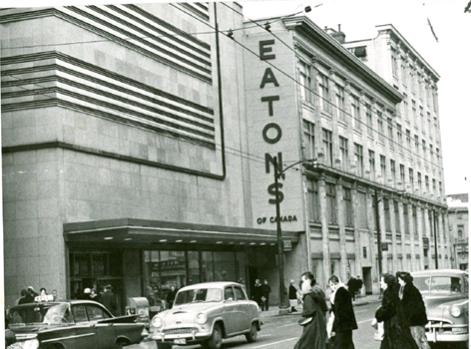
It was a Friday night and I had gone with my parents, as we did every Friday night following dinner, to the Eaton's department store in downtown Vancouver.
 |
| courtesy: http://www.thespec.com/ |
I recall debating to spend my small allowance on the costlier QST (55 cents) or the cheaper (40 cents) Popular Electronics. I found the technical-looking cover too overpowering, bit-the-bullet, and shelled-out for the QST ... that extra 15 cents forever sealing my fate.
As I sat in the back seat of the car (a '53 Chevy Sedan), waiting for my parents to finish their grocery shopping, I browsed through the QST. In truth, I understood very little but was particularly captivated with the station photographs in Rod Newkirk's "How's DX" column. One photograph in particular has remained in my memory through all these years, that of a young-looking "HS1JN" at the operating position from his exotic location in Thailand, along with Newkirk's equally enchanting description ... powerful stuff for a young mind eager to soak-up all of this new 'radio' stuff.
 |
| courtesy: http://www.arrl.org/ |
A recent internet search turned up snippets of information about the young Naval Researcher, Jamnong Saowanna, now SK, who eventually rose to the rank of Captain in the Thai Navy and was later instrumental in legitimizing amateur radio in Thailand. Apparently, back then, ham radio in Thailand had been unsanctioned and not officially approved by the government. HS1JN's original QSL also shows up, in the collection of K8CX, shown below.
 |
| courtesy: http://hamgallery.com/qsl/ |
Note that it's the same card shown taped to the front panel of HS1JN's homebrew transmitter in 1959. The K8CX card, for a 15m CW QSO with W6FMK in 1969, shows that OM Jamnong was by then running 500 watts along with a Collins KWM-2 ... quite a step up, but not nearly as alluring as his 'homespun 40-watt sender' and Hallicrafters S-40 receiver.
After absorbing as much as I could from my single copy of QST, I began making weekly visits to the downtown library via bus, every Saturday morning, as it was there that I discovered I could peruse their huge bound collection of QST magazines, and borrow the latest issues, just for the asking! As well, they had a stockpile of colorfully-covered Radio Amateur Handbooks that spanned the past two decades ... it couldn't get any better.
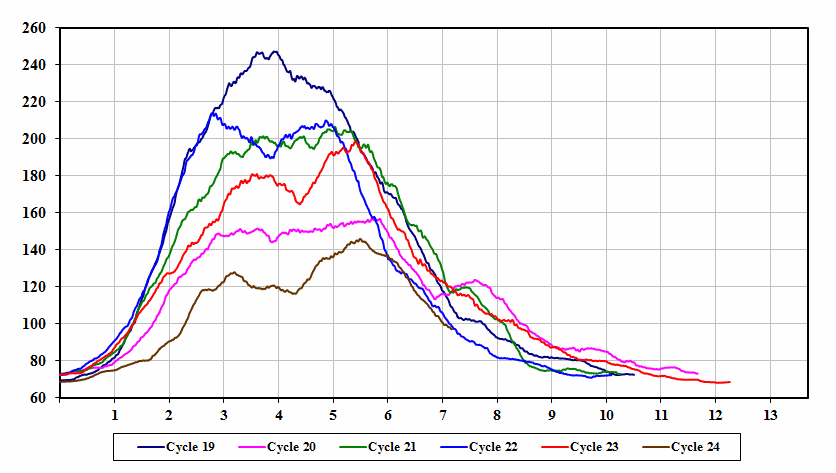
It was at this time that I changed my listening interests from the international shortwave broadcasters and began listening to hams on my old General Electric tombstone, particularly on 20m phone on weekend nights, as the band would be open all night long ... monster Cycle 19 had just peaked and propagation was nothing short of amazing.
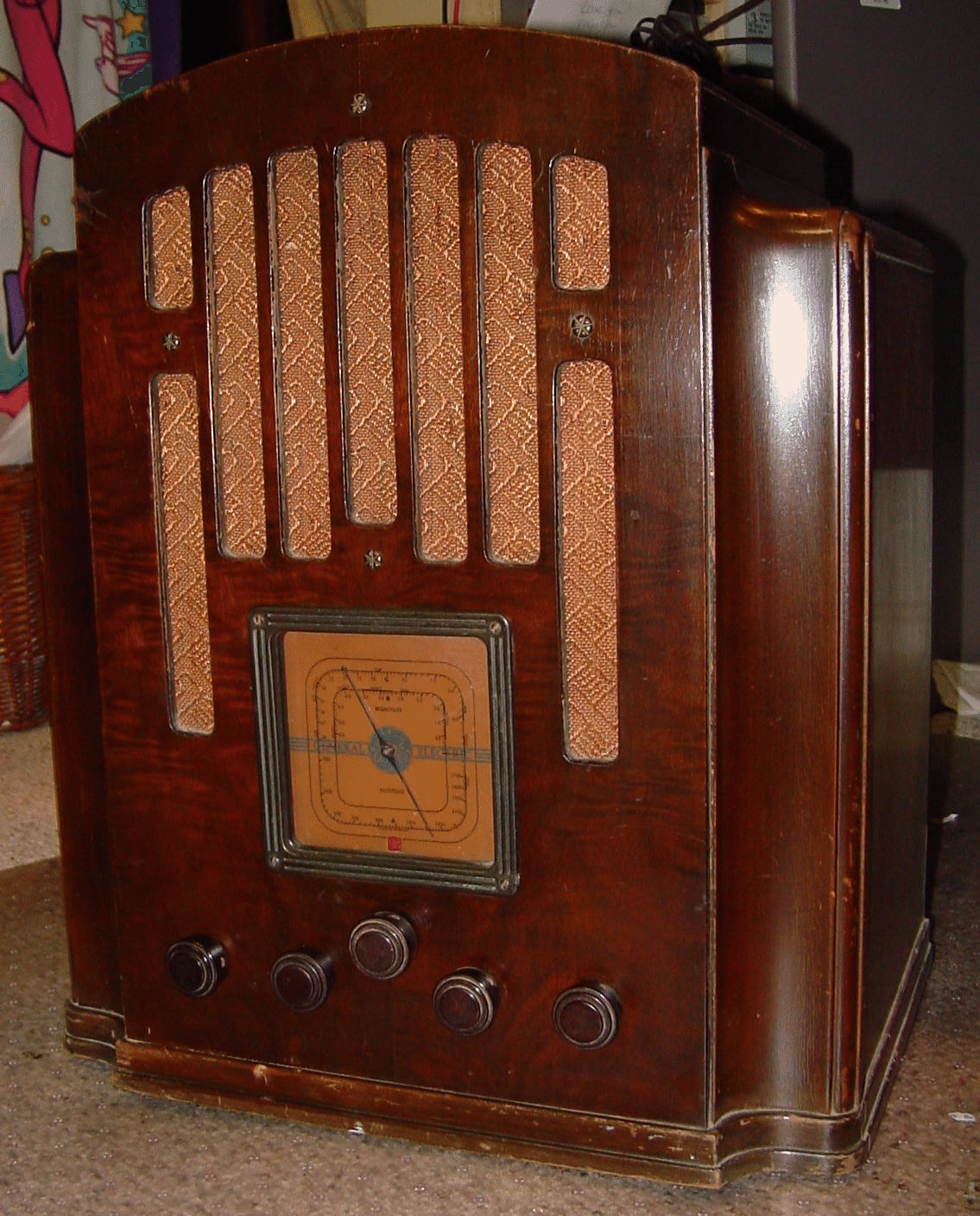
Between the February QST and the old GE, I never really had a chance.
Steve McDonald, VE7SL, is a regular contributor to AmateurRadio.com and writes from British Columbia, Canada. Contact him at [email protected].
Amateur Radio Weekly – Issue 89

aprs.fi releases iOS app for iPhone and iPad
This is the official iPhone and iPad application of aprs.fi, the favourite APRS web site of the Amateur Radio world.
aprs.fi
Icom IC-7300 available in January, official price announced
Icom’s IC-7300 is probably the most expected transceiver of 2016, given the fact that it’s the first direct-sampling SDR from one of the “big three” manufacturers.
YO9IRF
New IC-7300 videos from Icom
Over Ham-Radio.nl
Ham discovers sat transmitting 46 years after being abandoned in 1967
G3YPQ noticed its peculiar signal drift caused by its tumbling end over end every 4 seconds as the solar panels became shadowed by the engine.
The Vintage News
QRP as Work/Life Balance
You’ll often see me eating lunch at my desk. Those are the days when you likely won’t see me later that afternoon.
fine.business
Just another VHF SOTA contact
Dakota Hill is 10,929 feet and set back into the mountains, so I wasn’t sure if I could make the RF trip over Palmer Divide.
K0NR
Florida Ham agrees to penalty for failure to identify
K3TW will pay a monetary penalty In response to complaints that an unidentified station was transmitting on an Amateur Radio frequency at 14 MHz.
ARRL
QSO Today: Howard Sherer, AE3T
If you wanted to operate two meter EME or “moon bounce,” then your Elmer should be Howard Sherer, AE3T, who has made over 700 contacts with a modest station.
QSO Today
Trip down memory lane via vintage Radio Shack catalogs
Archived Radio Shack catalogs and sales flyers going back to 1939.
The SWLing Post
4-wheel-drive trip from one continent to the next
Not the ordinary DXpedition, but a unique merging of Amateur Radio and charity.
Southgate
The story of space debris
20,000 pieces of tracked debris exist in orbit ranging in size from an apple to a bus.
The Royal Institution
Video
Repeater Design Example: Bidirectional RICK Crossbander
Here’s a simple design example and a walk-through of using an HP service monitor to set “repeater gain.”
The Life of Kenneth
Amateur Radio Weekly is curated by Cale Mooth K4HCK. Sign up free to receive ham radio's most relevant news, projects, technology and events by e-mail each week at http://www.hamweekly.com.
Finally got rid of the pirated USB chips for the UV-5R and the AP510

Both the Baofeng UV-5R handheld UHF/VHF radio and the Sainsonic AP510 APRS tracker come with interface cables with pirated chips. These are clones of Prolific USB/serial chips. Since Prolific has taken measures against this, only old drivers will work with them. That means that one has to stop automatic driver updates as explained on the Miklor site for the Baofeng UV-5R. The same is true for the AP510. This is a nuisance.
I got tired of this and got myself some USB/serial modules from Ebay based on the CP2102 chip instead. The cost was US $1.43 a piece so it should be affordable for anyone. I also got some clear heat shrinkable tube.
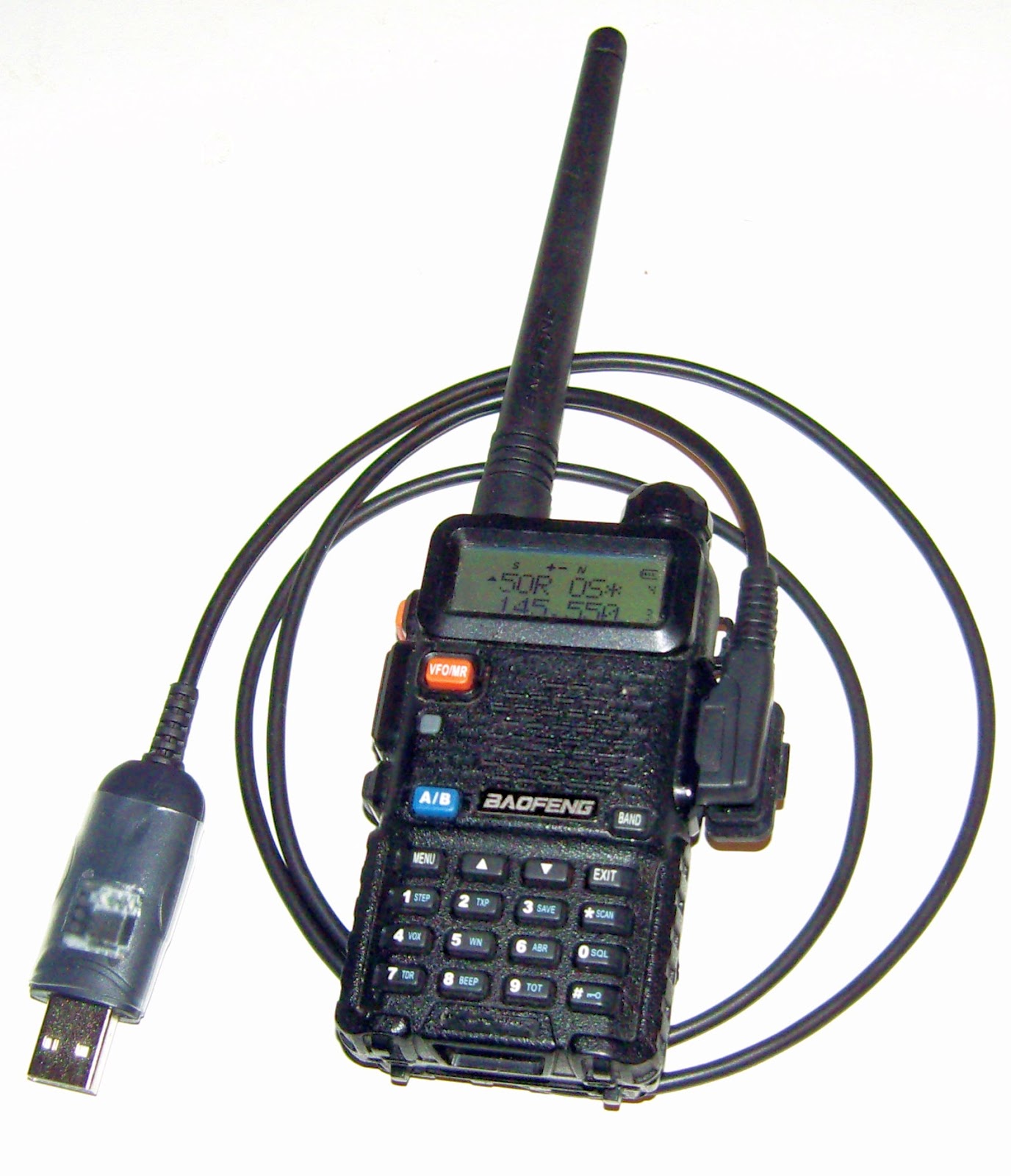
It wasn’t too hard to follow the instructions on the Miklor site. I ended up replacing the chip in the original Baofeng serial cable. I’m a hardware guy so I think it is a shame not to see the three LEDs for power, rx, and tx so I used my Dremel to make a 12×12 mm cut-out in the original case, and then I closed it by using transparent shrinkable tube. For a picture, see the top of the first image.
If it doesn’t work the first time, exchange the rx and tx connections and see if that works better. According to this site, the boards can be marked just opposite of what you might think.
The Sainsonic AP510 APRS unit has a cable that on first sight just looks like a standard USB cable, but it also contains such a chip. Here I made a completely new cable without any case. It is important that 5 Volts also passes through as this is used for charging. The pinout can be found on the site of DJ7OO (use Google translate if needed). I enclosed the board in shrinkable tube which is transparent enough for the LEDs to shine through as seen in the bottom of the first image. The board with the fake chip is found in the middle.
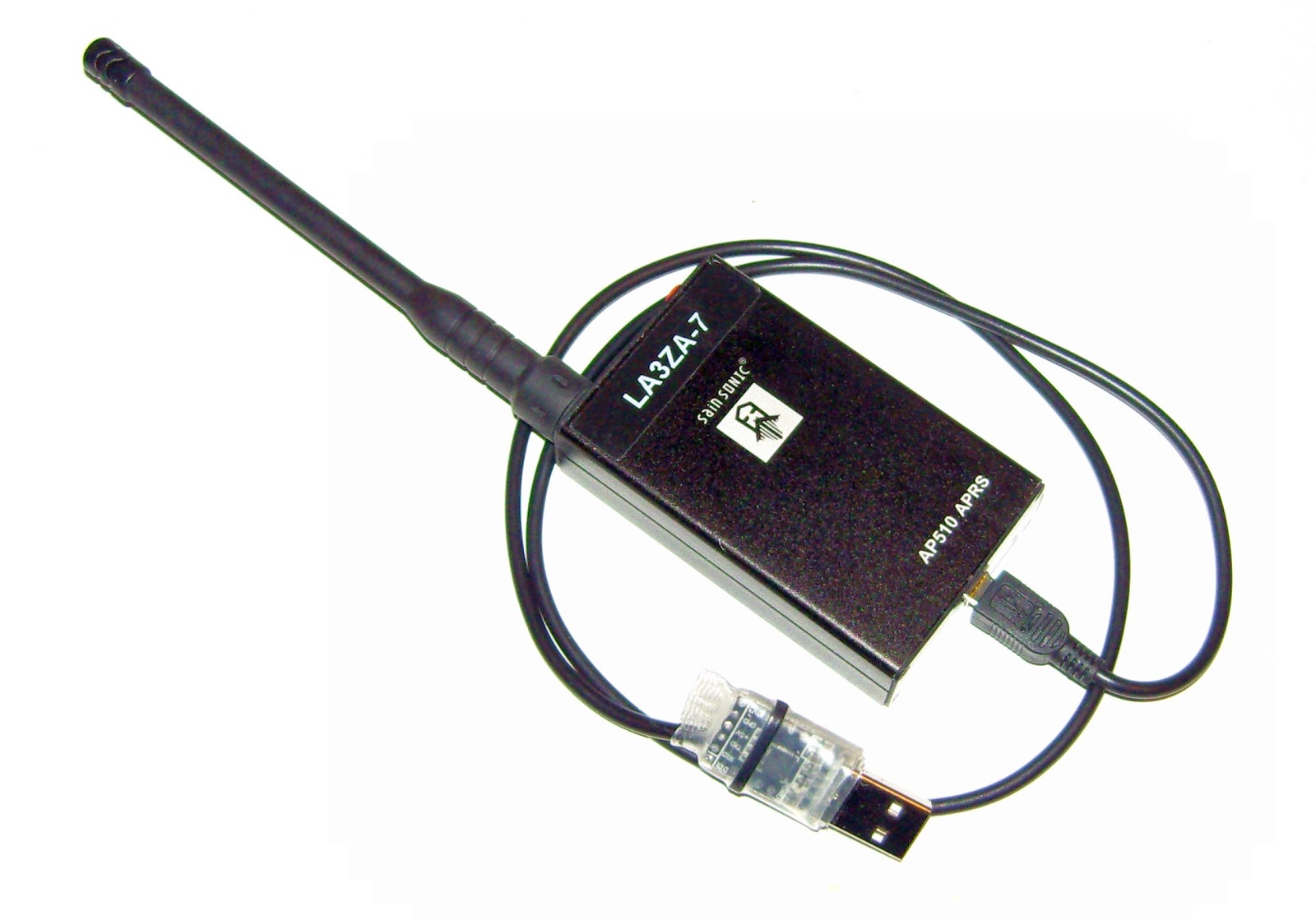 So now I have interface cables for both units that don’t require me to stop updates of drivers or any other special precautions and it is much easier to program the devices from any PC.
Sverre Holm, LA3ZA, is a regular contributor to AmateurRadio.com and writes from Norway. Contact him at [email protected].
Finally got rid of the pirated USB chips for the UV-5R and the AP510
Both the Baofeng UV-5R handheld UHF/VHF radio and the Sainsonic AP510 APRS tracker come with interface cables with pirated chips. These are clones of Prolific USB/serial chips. Since Prolific has taken measures against this, only old drivers will work with them. That means that one has to stop automatic driver updates as explained on the Miklor site for the Baofeng UV-5R. The same is true for the AP510. This is a nuisance.
I got tired of this and got myself some USB/serial modules from Ebay based on the CP2102 chip instead. The cost was US $1.43 a piece so it should be affordable for anyone. I also got some clear heat shrinkable tube.
It wasn’t too hard to follow the instructions on the Miklor site. I ended up replacing the chip in the original Baofeng serial cable. I’m a hardware guy so I think it is a shame not to see the three LEDs for power, rx, and tx so I used my Dremel to make a 12×12 mm cut-out in the original case, and then I closed it by using transparent shrinkable tube. For a picture, see the top of the first image.
If it doesn’t work the first time, exchange rx and tx and see if that works better. According to this site, the boards can be marked just opposite of what you might think.
The Sainsonic AP510 APRS unit has a cable that on first sight just looks like a standard USB cable, but it also contains such a chip. Here I made a completely new cable without any case. It is important that 5 Volts also passes through as this is used for charging. The pinout can be found on the site of DJ7OO (use Google translate if needed). I enclosed the board in shrinkable tube which is transparent enough for the LEDs to shine through as seen in the bottom of the first image. The board with the fake chip is found in the middle.
So now I have interface cables for both units that don’t require me to stop updates of drivers or any other special precautions and it is much easier to program the devices from any PC.
Sverre Holm, LA3ZA, is a regular contributor to AmateurRadio.com and writes from Norway. Contact him at [email protected].
Military Morse Code Training
http://swling.com/blog/2015/12/morse-code-training-in-the-air-force/
Mike Crownover, AD5A, is a regular contributor to AmateurRadio.com and writes from Texas, USA. Contact him at [email protected].
Military Morse Code Training
http://swling.com/blog/2015/12/morse-code-training-in-the-air-force/
Mike Crownover, AD5A, is a regular contributor to AmateurRadio.com and writes from Texas, USA. Contact him at [email protected].
 Ham Radio Deluxe |
 W5SWL Electronics |
 Ham Radio Prep |
 KB3IFH QSL Cards  Hip Ham Shirts  HamRadioAuctions HamRadioAuctions Reliance Antennas Reliance Antennas Enigma Shop Enigma Shop |  morseDX  Ni4L Antennas  R&L Electronics R&L Electronics antennas.us antennas.us QRV QRV |
- Matt W1MST, Managing Editor
