 |
 Weekly Propagation Summary – 2016 Apr 18 16:10 UTC
 18 April 2016 | by
Here is this week’s space weather and geophysical report, issued 2016 Apr 18 0325 UTC.
Highlights of Solar and Geomagnetic Activity 11 – 17 April 2016
Solar activity was at low levels throughout the period. Region 2529 (N09, L=342, class/area Eki/850 on 11 Apr) produced all of the C-class activity, the largest event a C5/Sf at 16/1958 UTC. An associated CME was observed off the west limb but was determined not to be Earth-directed.
No proton events were observed at geosynchronous orbit.
The greater than 2 MeV electron flux at geosynchronous orbit was at normal levels on 11 and 12 April. High levels were reached from 13-18 April following coronal hole high speed stream (CH HSS) effects.
Geomagnetic field activity was at quiet levels on 11 April. Unsettled to minor storm conditions were observed on 12-14 April due to effects from a negative polarity CH HSS. Active conditions continued into early 15 April but decreased to mostly quiet levels through midday on 16 April. A weak CME moved through late on 16 April increasing activity to unsettled to active levels. Quiet to active conditions continued into 17 April as CME effects subsided and a co-rotating interaction region (CIR) ahead of an approaching positive polarity CH HSS.
Forecast of Solar and Geomagnetic Activity 18 April – 14 May 2016
Solar activity is expected to be low with a slight chance for M-class flares on 18-20 April. As Region 2529 exits the west limb, activity is expected to decrease to very low levels with a chance for C-class activity from 21 April to 02 May. Low levels are expected to return from 03-14 May due to the return of old Region 2529.
No proton events are expected at geosynchronous orbit.
The greater than 2 MeV electron flux at geosynchronous orbit is expected to be at normal to moderate levels with the exception of 26-28 April, 01-03 May and 10-13 April following recurrent CH HSS events.
Geomagnetic field activity is expected to be unsettled to active on 18-19 April followed with quiet to unsettled levels on 20 April due to effects from a positive polarity CH HSS. Mostly quiet conditions are expected on 21-22 April. Unsettled conditions are expected on 23-26 April with isolated active periods likely due to a second recurrent, positive polarity CH HSS. Mostly quiet conditions are expected from 27-28 April. Unsettled to active conditions are anticipated on 29-30 April with minor storm periods likely on 29 April as a negative polarity HSS becomes geoeffective. Mostly quiet conditions are expected from 01-08 May with the exception of possible unsettled to active periods on 04 May due to an SSBC that has affected us the last few rotations. Unsettled to active conditions are expected on 09-11 May with minor storm periods likely as a recurrent negative polarity CH HSS moves into geoeffective position. Mostly quiet conditions are expected on 12-13 May followed by possible unsettled to active conditions on 14 May as a CIR impacts the Earth.
Don’t forget to visit our live space weather and radio propagation web site, at: http://SunSpotWatch.com/
Live Aurora mapping is at http://aurora.sunspotwatch.com/
If you are on Twitter, please follow these two users: + https://Twitter.com/NW7US + https://Twitter.com/hfradiospacewx
Get the space weather and radio propagation self-study course, today. Visit http://nw7us.us/swc for the latest sale and for more information!
Check out the stunning view of our Sun in action, as seen during the last five years with the Solar Dynamics Observatory (SDO): https://www.youtube.com/watch?v=zXN-MdoGM9g
We’re on Facebook: http://NW7US.us/swhfr
Visit, subscribe: NW7US Radio Communications and Propagation YouTube Channel
It was an NPOTA weekend …..
I worked about 5 or 6 new entities between Friday night and Saturday, so I am getting really close to my personal goal of working 100. The bands have been good the past couple of days, after totally stinking during the middle of the week, so that was a good thing.
I have lived relatively near Morristown National Historical Park my entire life. I think I've been there once before NPOTA. Yesterday, I decided to take Marianne and our dog, Harold up there for the afternoon, as dogs are welcome there. It was a beautiful Spring day, Marianne had an extremely rare Saturday off; and I wanted to do something with her. It seemed like a good opportunity to enjoy the gorgeous weather, walk the dog and get some good exercise in for ourselves. It's because of NPOTA that I discovered that dogs are welcome there. If I didn't see that while I was up there, activating the park, I wouldn't have known otherwise.
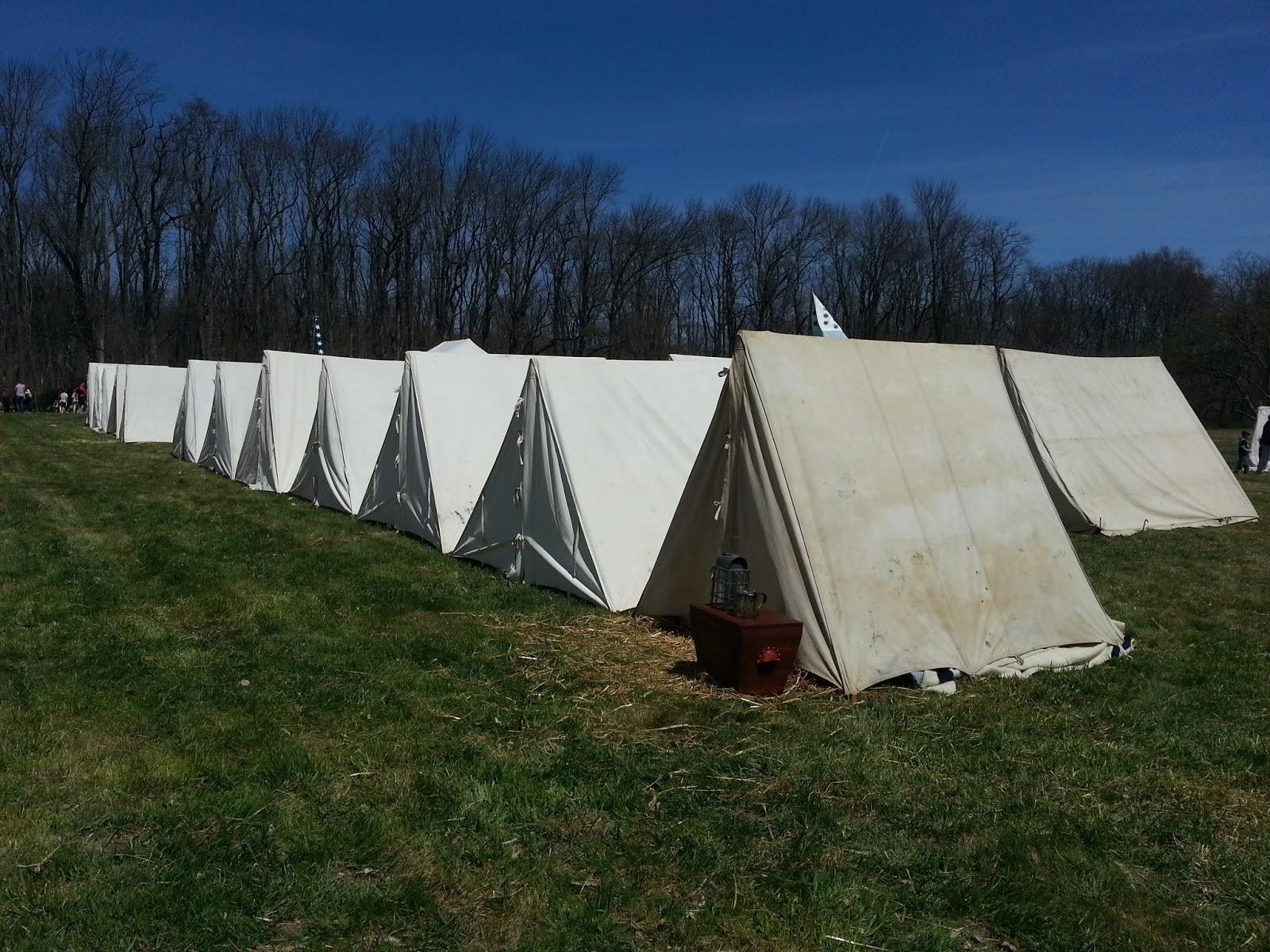
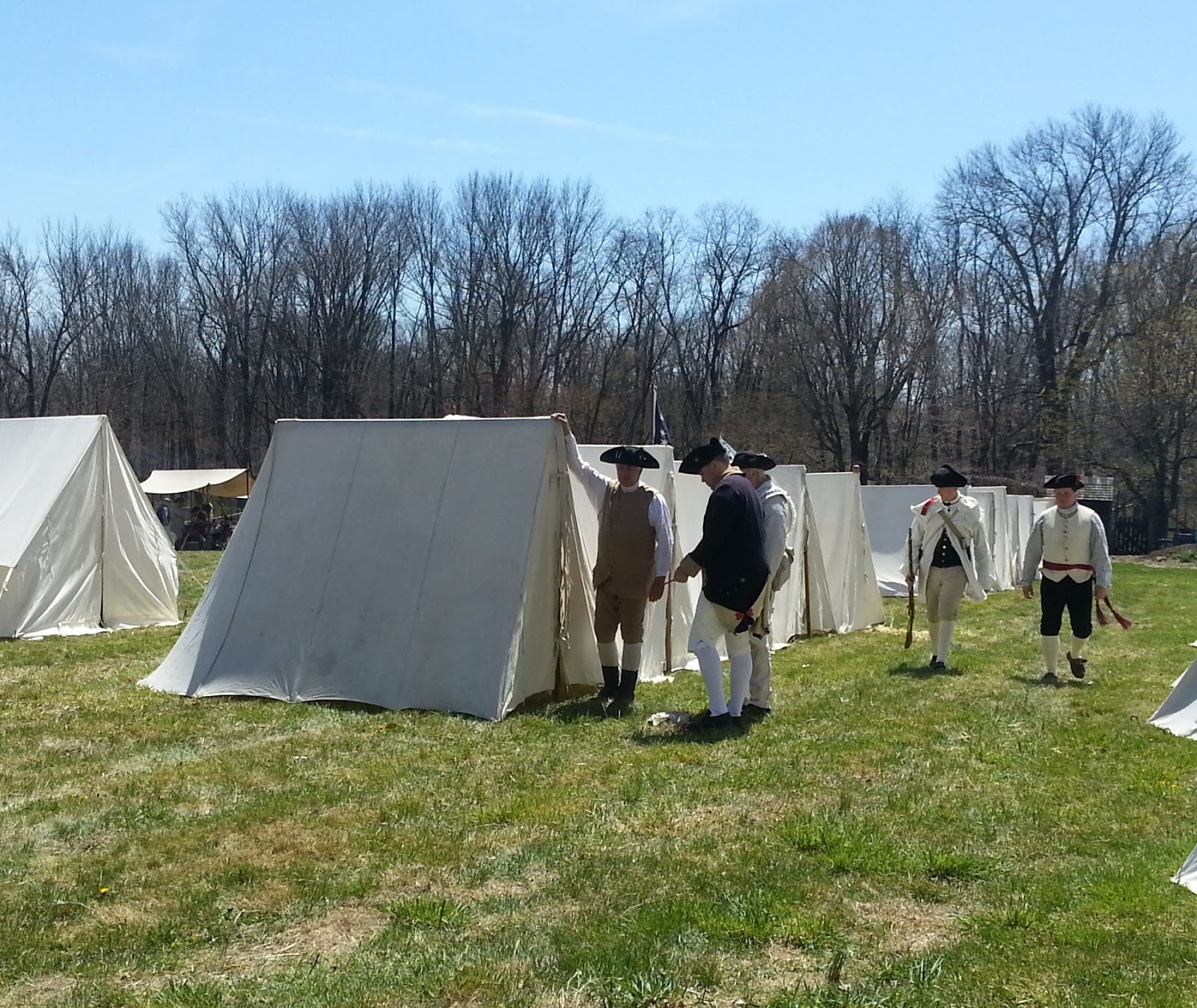
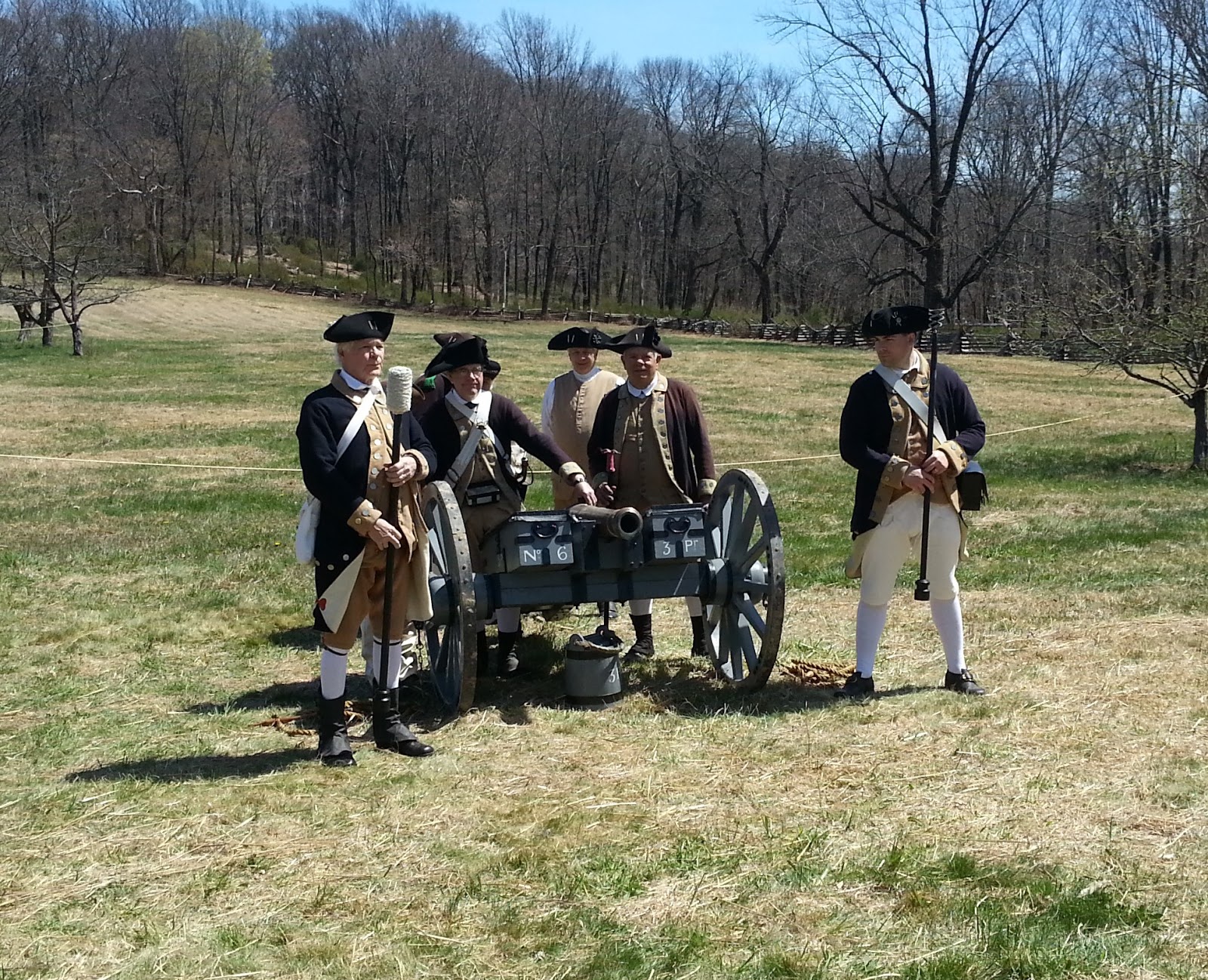
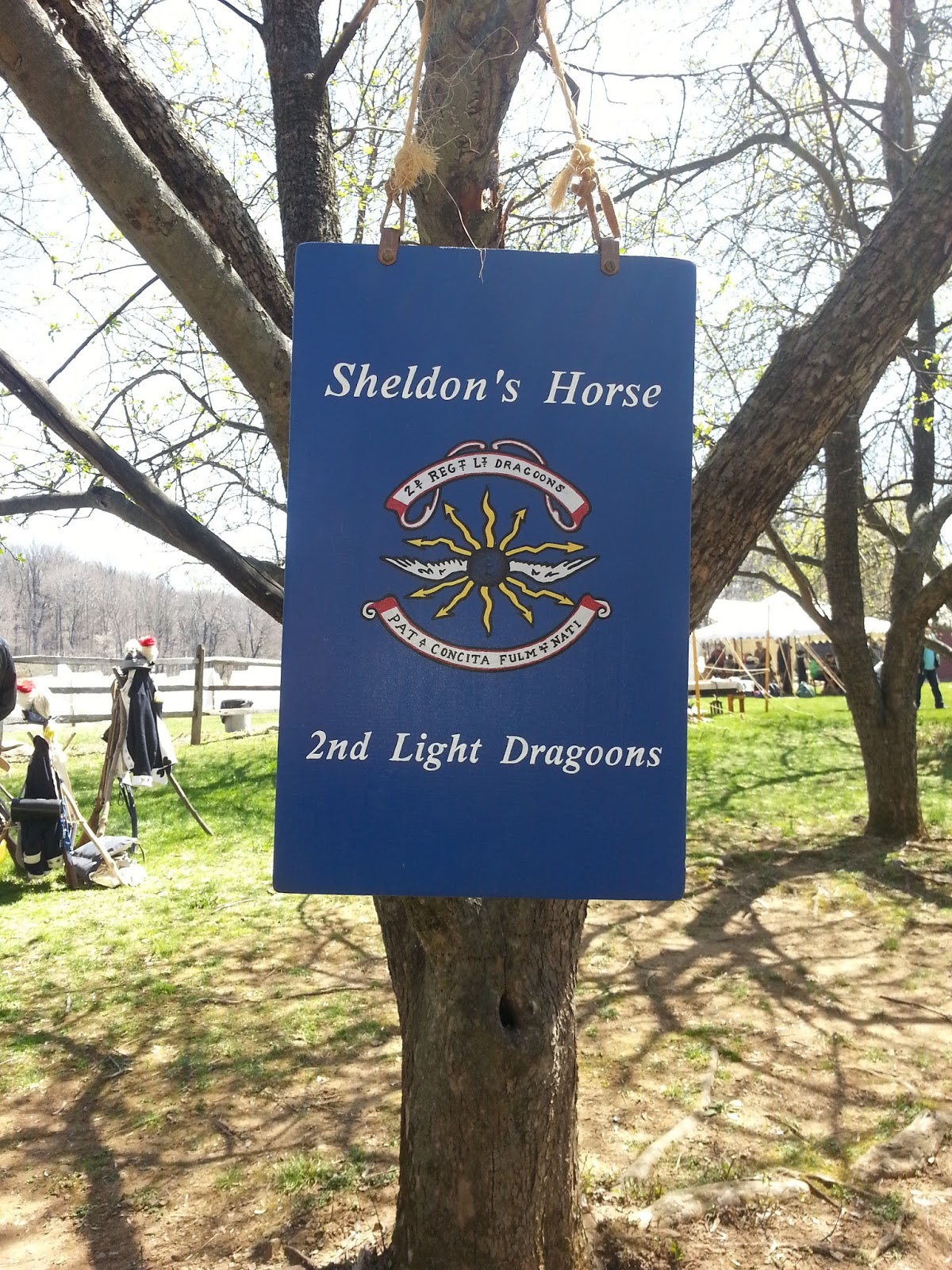
Much to our surprise, when we got there, we found out that a Revolutionary War re-enactment was taking place:

The highlight of the day was when one of the re-enactors came up to me and tapped me on the shoulder. He pointed to the American flag that is embroidered on the left sleeve of my jacket and he said to me, "Kind sir, a question, please. It appears that you have a United States flag on your coat; and yet there are so many stars? Certainly more than 13!"
I answered, "It's a long and sometimes bloody story, and I don't think we have time to go through it all, but I would like to thank you and your fellow soldiers for giving birth to the finest Nation on Earth."
He chuckled, and I chuckled at our impromptu time travelling scenario. In the end, it was great NPOTA day, even though this one didn't involve Amateur Radio. So hats off to the ARRL for reminding me about some of the really cool places that there are to visit around my QTH.
In the evening, I decided that I would go out early Sunday morning to activate Sandy Hook, which is part of the Gateway National Recreational Area - RC08.
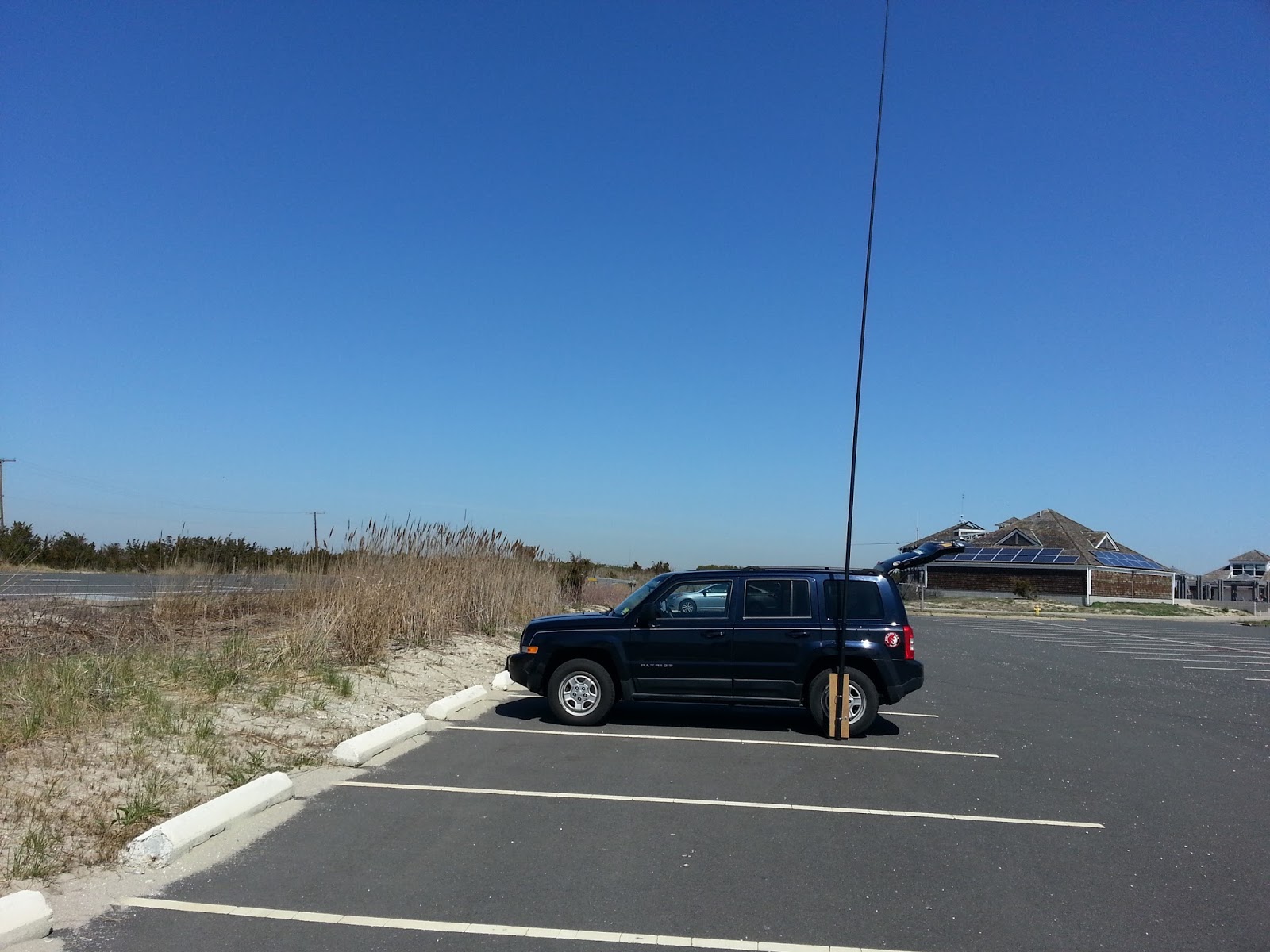
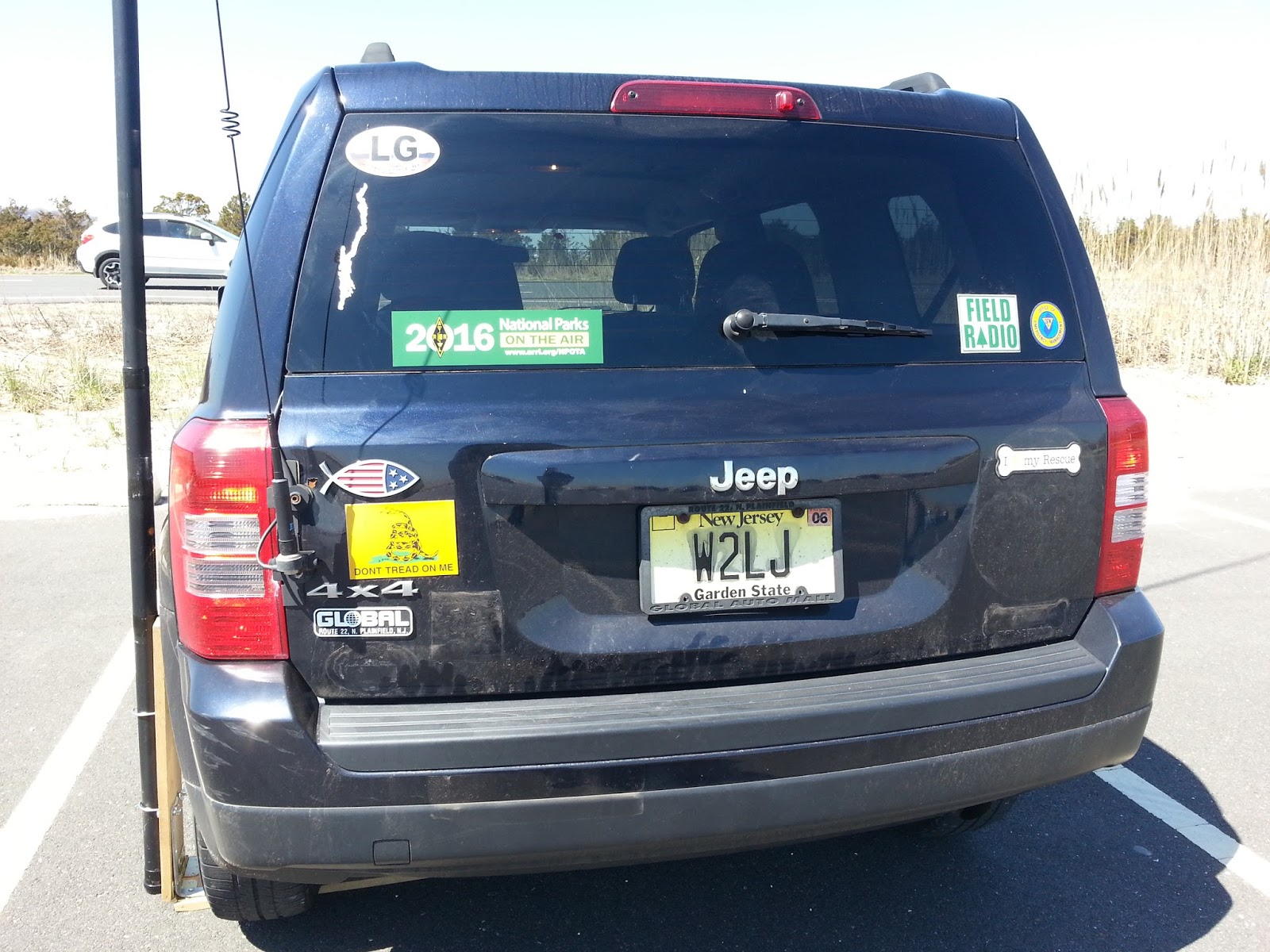

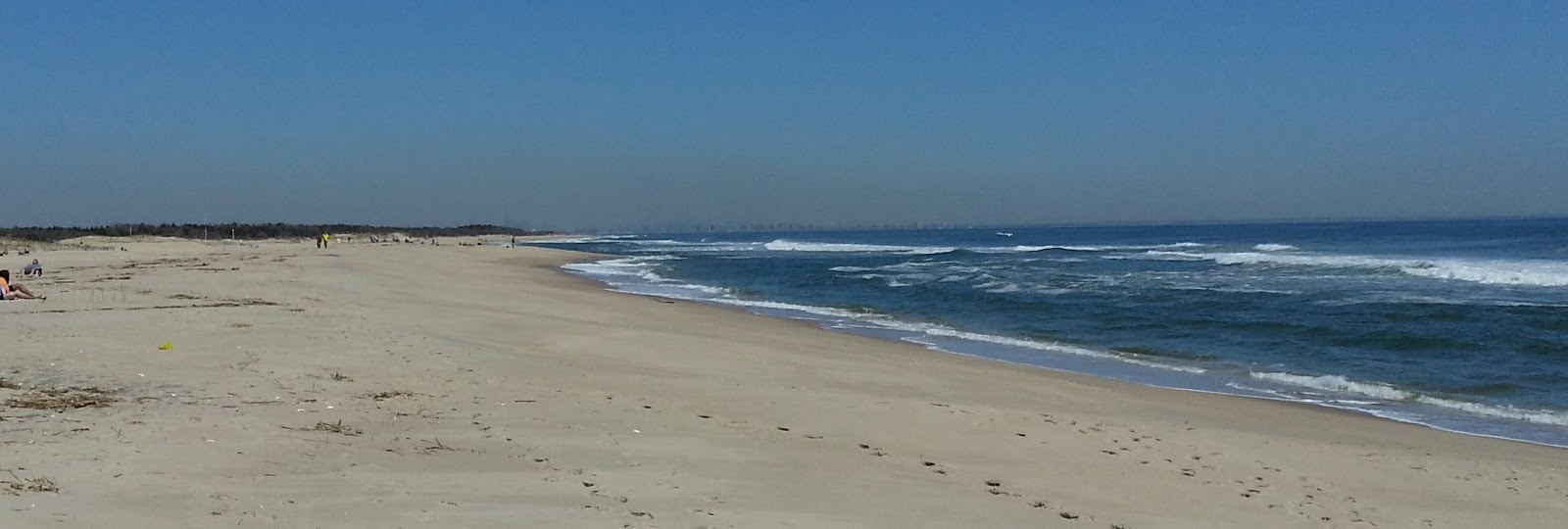
I used the Jackite pole and my homebrew mast holder and the PAR END FEDZ 40/20/10. In a little over an hour, I made over 40 contacts on 40 and 20 Meters. Bext DX was Alberta, Saskatchewan and California. Not bad for 5 Watts, and if at all possible, the PAR will be my preferred antenna for future activations.
I would have stayed longer, but I had somewhere to go with my daughter Cara, so I made due with the time I had. It was a bit brisk while I was there, but it was sunny and clear. If you click on the bottom photo, you just might be able to make out the New York City skyline in the distance, on the horizon.
Sandy Hook was my third activation, and I hope to do at least two more in New Jersey - the Pinelands and the Appalachain Trail in the Northwest part of the state. When we go up to Lake George this Summer, I also hope to spend one day at Saratoga and activate HP42 while I'm in the neighborhood.
72 de Larry W2LJ
QRP - When you care to send the very least!
Larry Makoski, W2LJ, is a regular contributor to AmateurRadio.com and writes from New Jersey, USA. Contact him at [email protected].
It was an NPOTA weekend …..
I worked about 5 or 6 new entities between Friday night and Saturday, so I am getting really close to my personal goal of working 100. The bands have been good the past couple of days, after totally stinking during the middle of the week, so that was a good thing.
I have lived relatively near Morristown National Historical Park my entire life. I think I've been there once before NPOTA. Yesterday, I decided to take Marianne and our dog, Harold up there for the afternoon, as dogs are welcome there. It was a beautiful Spring day, Marianne had an extremely rare Saturday off; and I wanted to do something with her. It seemed like a good opportunity to enjoy the gorgeous weather, walk the dog and get some good exercise in for ourselves. It's because of NPOTA that I discovered that dogs are welcome there. If I didn't see that while I was up there, activating the park, I wouldn't have known otherwise.
Much to our surprise, when we got there, we found out that a Revolutionary War re-enactment was taking place:
The highlight of the day was when one of the re-enactors came up to me and tapped me on the shoulder. He pointed to the American flag that is embroidered on the left sleeve of my jacket and he said to me, "Kind sir, a question, please. It appears that you have a United States flag on your coat; and yet there are so many stars? Certainly more than 13!"
I answered, "It's a long and sometimes bloody story, and I don't think we have time to go through it all, but I would like to thank you and your fellow soldiers for giving birth to the finest Nation on Earth."
He chuckled, and I chuckled at our impromptu time travelling scenario. In the end, it was great NPOTA day, even though this one didn't involve Amateur Radio. So hats off to the ARRL for reminding me about some of the really cool places that there are to visit around my QTH.
In the evening, I decided that I would go out early Sunday morning to activate Sandy Hook, which is part of the Gateway National Recreational Area - RC08.
I used the Jackite pole and my homebrew mast holder and the PAR END FEDZ 40/20/10. In a little over an hour, I made over 40 contacts on 40 and 20 Meters. Bext DX was Alberta, Saskatchewan and California. Not bad for 5 Watts, and if at all possible, the PAR will be my preferred antenna for future activations.
I would have stayed longer, but I had somewhere to go with my daughter Cara, so I made due with the time I had. It was a bit brisk while I was there, but it was sunny and clear. If you click on the bottom photo, you just might be able to make out the New York City skyline in the distance, on the horizon.
Sandy Hook was my third activation, and I hope to do at least two more in New Jersey - the Pinelands and the Appalachain Trail in the Northwest part of the state. When we go up to Lake George this Summer, I also hope to spend one day at Saratoga and activate HP42 while I'm in the neighborhood.
72 de Larry W2LJ
QRP - When you care to send the very least!
Larry Makoski, W2LJ, is a regular contributor to AmateurRadio.com and writes from New Jersey, USA. Contact him at [email protected].
HF Email From The Mobile?
Last summer when we were camping in the national parks, there were many campsites where we had no cell phone service. I am not complaining about that, but our work around to communicate back home to the XYL often required a trip to the pay phone (sometimes hard to find). I thought about perhaps using APRS’s capability of relaying short pieces of text as emails. Part of the problem is that there are many areas of the parks that don’t have any APRS digipeater coverage (Glacier and Yellowstone National Parks for example). How to get a message through?
Then I remembered my MARS station (AEN5AC) in Iraq. I was using an ICOM IC-7000 and an SCS PTC-IIusb modem to pass MARSGRAMS from my location north of Baghdad to another station at the US embassy in Qatar. The pairing worked quite well and I was consistently able to connect and pass traffic using PACTOR 3 at the 1400 baud rate. Could I use a similar setup to provide an HF email option while camping this summer?
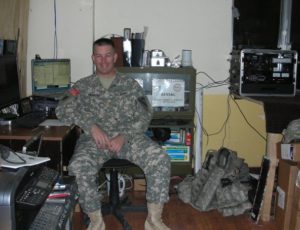
I dug out my SCS PTC-IIusb modem. I had not used it since shutting down the MARS station in June of 2008. Everything was still in the box. To include the cables necessary to interface the modem with an ICOM IC-706MKIIG… the same rig I use for HF mobile.
I pulled out my spare IC-706MKIIG. Coming back to Kansas from Field Day in California back in 2009, my IC-706MKIIG quit on me. I ended up buying a second at the HRO in Denver and sent the broke one to ICOM. ICOM fixed it and returned it. I kept it in the box and it went back on the shelf. I did order a 6 pin Molex connector with powerpoles to allow for an easy power connection (#9). I connected the two cables from the modem to the rig. Once cable is for the data and plugs into the 706’s 13 pin accessory connection (#4). The other cable connects to the 706’s CI-V interface (#6) to have the radio change frequencies based on what station is being contacted.
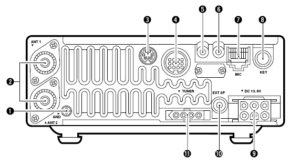
I had the basic hardware of a HF email station, except for a computer. I would need one that would function out of the vehicle. This would probably require a laptop. I also decided for the ease of simplicity that the computer should be Windows driven (instead of Linux). Gasp! The bottom line is that the software and drivers required to send email via HF and use the SCS PTC-IIusb modem is Windows based. The answer ended up being an Dell XPS 15.

Using a Windows based computer helped me with a number of summer travel tasks that could not be accomplished by my small Linux laptop:
(1) Run the software required for HF email (more on Winlink and Airmail later)
(2) Run ARRL’s TravelPlus for Repeaters
(3) Run RT Systems radio programming software for my TM-D710A
(4) Run RT Systems radio programming software for my VX-8RGs
(5) Read the SD card from my Canon digital camera
Interestingly enough, the new laptop does not have a CD/DVD drive nor an RJ-45 connection for a LAN cable. Neither of these have been a show stopper yet.
ARRL’s TravelPlus for Repeaters
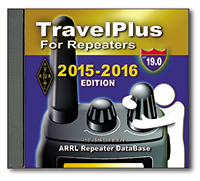 I had purchased TravelPlus for Repeaters with the intent of installing it on my existing Linux laptop and running it under a VirtualBox Windows session (similar to how I run iTunes on my Linux laptop). However the software failed to install. I tried troubleshooting and looking at suggested fixes found on the forum sites but still had no luck. I tried installing TravelPlus using WINE. It installed but would not run as well.
Dell XPS 15 to the rescue. As the laptop does not have a CD/DVD drive, I copied the drive onto network storage. I then was able to install TravelPlus over the network and it is working without issue.
RT Systems Programming Software
The RT Systems programming software works fine under a VirtualBox Windows session. As I was moving all my vehicle related radio/computer tasks to the new Windows laptop, I attempted to install the programming software for the TM-D710A (used for beaconing the location of my vehicle and talking on VHF/UHF). Following a similar procedure that worked for TravelPlus, I copied the programming software from the install disks to a network drive. The software installation for the TM-D710A worked without a hitch. The software for the VX-8RGs (HTs we use for around camp and hiking) failed to load. The error said that I must use the original disk to install. A big challenge when the laptop doesn’t have a CD/DVD drive. The work around is that you find another Windows computer with a CD drive, load the software CD, then back on the driveless laptop, map the CD drive (like you would map a network drive). That worked and I was able to install the programing software for the VX-8GR.
HF Email Software
There are two main choices for software to allow for HF email: RMS Express and Airmail. I installed both. Airmail was the same program I used in Iraq and it offered easy configuration with the IC-706MKIIG and the SCS PTC-IIusb.
I now had all my equipment for a test run setup in my basement hamshack: spare IC-706MKIIG, SCS PTC-IIusb, and the Dell XPS 15 with Airmail. I connected the IC-706MKIIG to my Elecraft tuner and used my existing G5RV antenna. Airmail configures easily. The software has a list of stations offering mailbox services that can be viewed on a propagation chart by frequency and distance. Based on time of day, I selected a station in Texas that offered a 40M PACTOR 3 connection. Airmail allows me to click on the frequency in the propagation chart which then changes the dial frequency of the radio. After listening to see if there were any ongoing connections, I initiated contact. The modem lights flashed and the rig clicked between transmit and receive. The connection was made and I was able to send a test email as well as a position report.
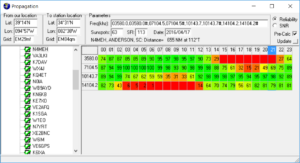
Success! The position reports that go into the Winlink system are copied over into APRS. Now, even if I am not able to reach a digipeater with my VHF APRS beacon, I can send a position report over HF to let the XYL know where we are.
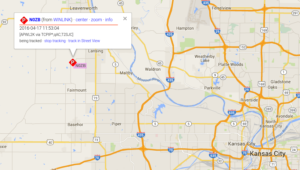
I then thought about the steps I would have to take of transitioning my IC-706MKIIG configured for HF mobile to be ready to work with the PTC-IIusb to send email. As the remote head is located up near the drivers seat, this would present problems with being able to observe the modem, laptop, and radio control head all at the same time.
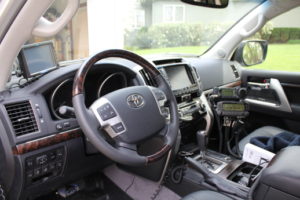
What if I just dedicated the spare IC-706MKIIG rig to the task of HF email? It would save me time and bother in pulling and plugging cables. It would also give the camping option of being able to operate HF from outside the vehicle.
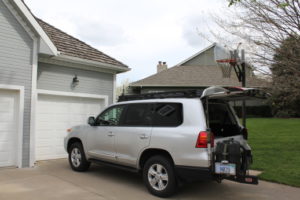
Using an additional iPortable box, I rack mounted the spare IC-706MKIIG and the SCS PTC-IIusb. Now I will have a spare HF rig with me, so if one goes out I will still be operational. I also attached the Tarheel screwdriver antenna’s rocker switch to raise and lower the antenna on the side of the box. During normal HF mobile operations, the TurboTuner (connected to the other IC-706’s tuner connection and CI-V connection) manages achieving a correct match between the operating frequency and the screwdriver antenna.
I only have the one TurboTuner. The TurboTuner requires a connection to the CI-V. So does the SCS PTC-IIusb. My solution was to leave the TurboTuner alone. Instead, using the rocker switch, I can manually tune the antenna while visually observing the 706’s SWR meter.
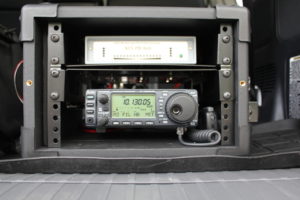
To transition between using the 706 dedicated to HF mobile to the 706 now dedicated to HF email, I have to do the following:
(1) disconnect the antenna feedline from the TurboTuner
(2) disconnect the control line that goes from the TurboTuner to the Tarheel screwdriver antenna
(3) connect the antenna feedline directly to the HF email 706
(4) connect the control line to the rocker switch
(5) connect the laptop to the SCS PTC-IIusb via a USB cable
(6) connect the iPortable’s powerpole connection to the junction box in the back of the vehicle
… then I am ready to go. The iPortable box rests nicely on the vehicle’s tailgate, next to the laptop. All at about lawn chair height. Not only can I use this setup to send email via HF, but I can also use it for causal National Parks On The Air contacts as well.
What’s left to do:
(1) Constant cooling fan modification for both IC-706s (see AD5X’s article)
(2) An extended control cable for the Tarheel screwdriver antenna. This will allow me to further remote away from the vehicle, but still use the antenna.
(3) A length of antenna feedline for remoting.
(4) A length of powerpole-ready powerline to attach to either the travel trailer battery or directly to the spare vehicle battery… again for remoting away from the vehicle.
(5) I have a set of Heil headsets that worked with my IC-7000. I think if I get the AD-1ICM, I should be able to use them with the 706.
(6) A Heil HS-2 hand PTT switch to use with the headset.
Scott Hedberg, NØZB, is a regular contributor to AmateurRadio.com and writes from Kansas, USA. Contact him at [email protected].
SatNOGS lives
The 3D printed satNOGS rotator that a few of us are building lives. Its a big deal for us as its taken us a while to get to this point. There’s still quite a few things to sort out but its good to see the thing running. Here’s the proof
Alex Hill, G7KSE, is a regular contributor to AmateurRadio.com and writes from Cumbria, UK. Contact him at [email protected].
AmateurLogic 89: Wires, Wireless & Pi Smack Down
AmateurLogic.TV Episode 89 is now available for download.
George shows us how to make a ‘Lineman’s Splice’. Emile introduces us to his Ubiquiti Wireless Point-to-Point bridge. Tommy benchmarks the various models of the Raspberry Pi with some interesting results. And Peter presents the Raspberry Pi 4???
1:04:13
George Thomas, W5JDX, is co-host of AmateurLogic.TV, an original amateur radio video program hosted by George Thomas (W5JDX), Tommy Martin (N5ZNO), Peter Berrett (VK3PB), and Emile Diodene (KE5QKR). Contact him at [email protected].
ICQ Podcast Episode 209 – Erecting Antennas
In this episode, Martin M1MRB / W9ICQ is joined by Chris M0TCH, Dan KB6NU and ED DD5LP to discuss the latest Amateur / Ham Radio news. Colin M6BOY rounds up the news in brief, and this episodes feature is Erecting Antennas.
- Shakespeare 400 Special Event Station
- SARL Amateur Radio Hall of Fame
- New Radio Antenna Avoids Unwanted Signals
- DSTAR Satellite in Space
- Sisters called to White House
- RSGB Announces New General Manager
- ARRL Establishes 'Youth Nets' Web Page
- Implosions Removes 48 Surplus VOA towers
- K1JT is Amateur of the Year
- SSB/CW Filter Modules
Colin Butler, M6BOY, is the host of the ICQ Podcast, a weekly radio show about Amateur Radio. Contact him at [email protected].
 Ham Radio Deluxe |
 W5SWL Electronics |
 Ham Radio Prep |
 KB3IFH QSL Cards  Hip Ham Shirts  HamRadioAuctions HamRadioAuctions Reliance Antennas Reliance Antennas Enigma Shop Enigma Shop |  morseDX  Ni4L Antennas  R&L Electronics R&L Electronics antennas.us antennas.us QRV QRV |
- Matt W1MST, Managing Editor
