 |
 Amateur Radio Weekly – Issue 168
 5 August 2017 | by
Hara Arena to be auctioned by IRS
The minimum bid is $850,000; proceeds will satisfy a tax lien.
ARRL
Amateur Radio and The Maker Community
Makers generally use radios as a means of achieving a larger goal whereas radio amateurs generally use radios as a means of communicating.
FaradayRF
A rediscovery of TV antennas
Almost a third of Americans (29%) are unaware television is available for free.
Southgate
The ghostly radio station that no one claims to run
MDZhB has been broadcasting since 1982. No one knows why.
BBC
Antenna Summer – part 2
I finally went further on my quest to erect a better antenna for 20 meters.
AmateurRadio.com
Ham pushes village to allow zoning exception for front-yard antenna
Should there be a way for government to give one person the right, just one time, to exceed the letter of the law, without changing that law for all time for everybody that comes after that person?
Chicago Tribune
Wolf River Coil Silver Bullet – the ultimate portable vertical antenna
Once I threw a few radials underneath the antenna, I was hearing like I had never heard before.
K5ACL
Deployable VHF crossed Yagi antenna for CubeSats
Sean Hum VA3SHV and Jeff Nicholls VA3NGJ worked on the design for a deployable VHF crossed Yagi antenna on the recently launched NORsat-2.
AMSAT UK
WSPR comparison: vertical vs. dipole
My quick analysis indicates the vertical had the edge over the dipole in distance and total spots.
N4KGL
Ham Radio promotional posters
The six posters are based around the theme, “Ham Radio Is…”
ARRL
Video
FT-8 HF/6m digital mode introduction for beginners
This is an introduction for someone who has never heard of FT-8, or has never used JT-65.
HamRadioConcepts
Antenna tram
2X Array installed @ 50′
YouTube
Solar power inverter interference 30mhz to 120mhz
This is what happens if you or your neighbors install a dodgy quality solar power system.
YouTube
Amateur Radio Weekly is curated by Cale Mooth K4HCK. Sign up free to receive ham radio's most relevant news, projects, technology and events by e-mail each week at http://www.hamweekly.com.
Another Black Mountain SOTA (W0C/FR-031)
There are (at least) 20 different summits named “Black Mountain” just in the state of Colorado. I’m sure there are many more nationwide. It seems to be a popular, if unimaginative, name. This is why we have a numbering system for Summits On The Air, else we would forever be talking about “which Black Mountain was that anyway?” Or Deer Peak or Sheep Mountain or …
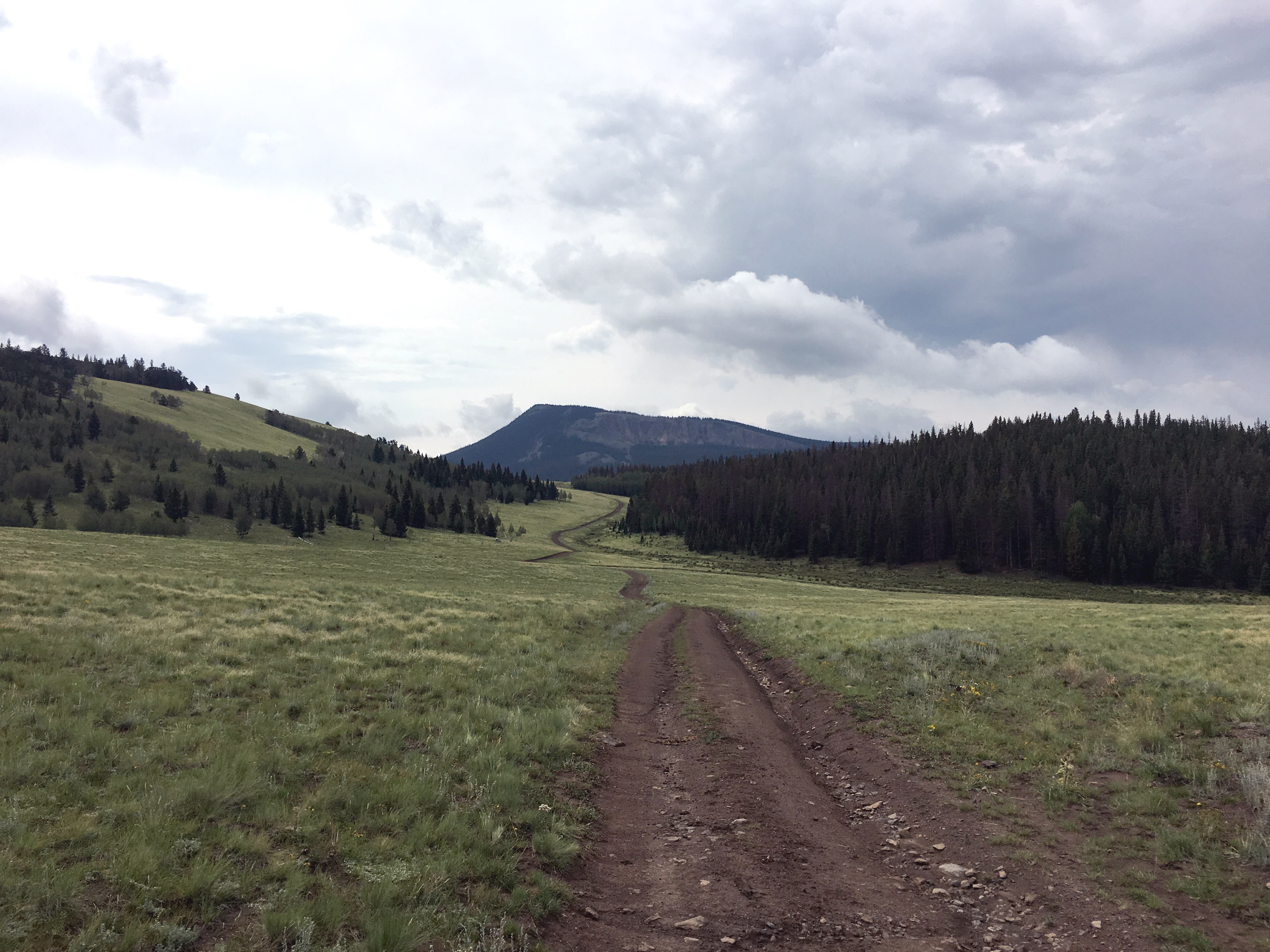
On Thursday, Joyce K0JJW and I activated another Black Mountain, this one with Summits On The Air (SOTA) designator: W0C/FR-031. I’m not sure why it has an FR or Front Range designation, as the summit is actually in the South Park region of the state. I can tell you that it is an awesome summit with great views.
To get to Black Mountain, take Highway 9 south out of Hartsel, CO (or come north on Highway 9 from the south). The Pike National Forest map is very helpful with getting into the vicinity of the mountain. Turn west on FS 108. (This is the same road that leads to Dicks Peak W0C/FR-041.) This road has a sign that indicated “Dicks Peak” and “Black Mountain”. Follow FS 108 S/SW and then take FS 107 to the south (right turn). Follow FS 107 to FS 268, then follow FS 268. About this time, you should have an excellent view of Black Mountain to the south. The roads were muddy and rutted, definitely 4WD. Our Jeep Wrangler had no problem but a AWD crossover/Subaru may be challenged to get through.
Black Mountain has a steep vertical rock face to the north, which is very visible. At this point, we wondered if we signed up for a difficult climb…but not so. FS 268 turns west, kind of parallel to Black Mountain, then heads away from it. At this point, we wondered if we were on the wrong road. Not so. At this point, the Pike National Forest map failed us…it seems to be incomplete in this area. Instead we used the gaiagps.com app on my smartphone which had a representation of the terrain and roads. As we headed west on FS 268 we saw a road heading off to the south. (I don’t recall if it is marked, but see map below.) Take this road south for about one and a half miles…looking for an unmarked road heading off to the east. The intersection with this road is easy to miss as it is not that distinct. But the road is very visible heading off to the east, so you’ll probably spot it later if you miss the turn and can circle back.
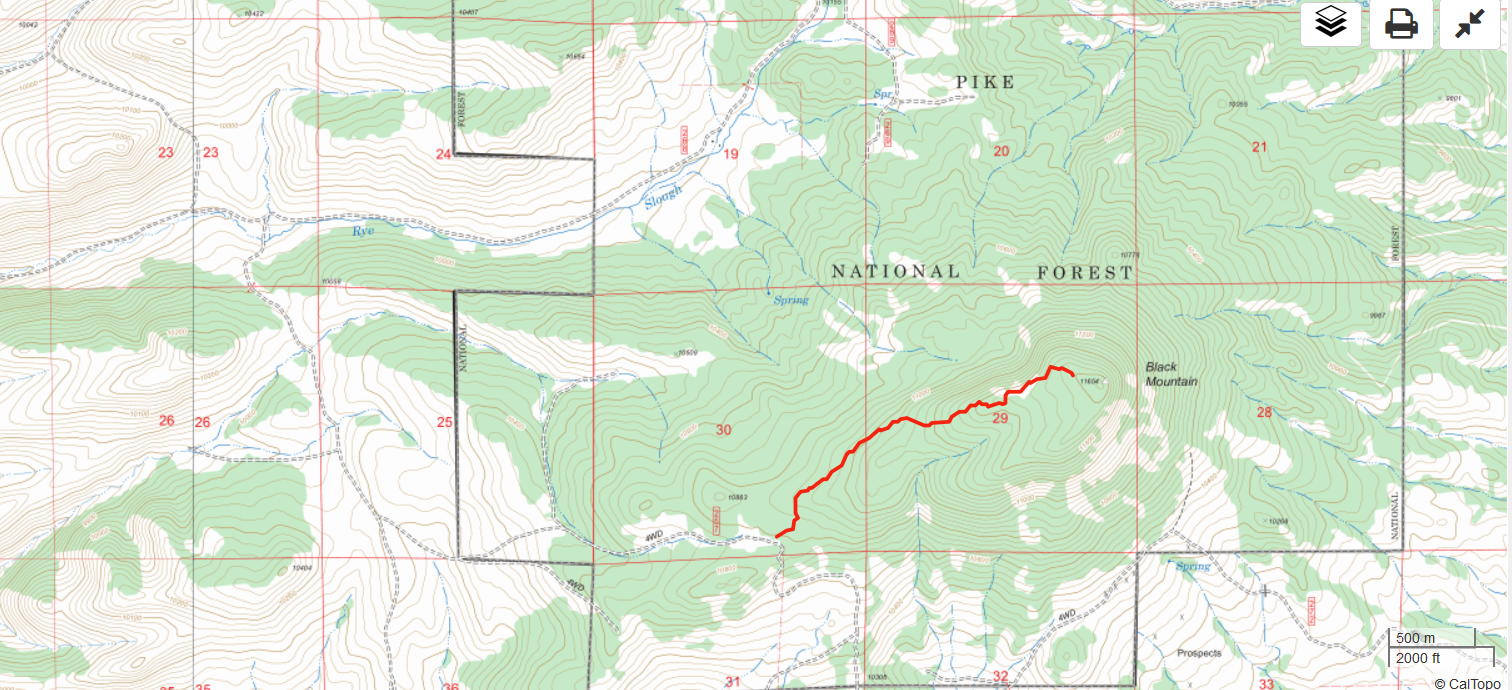
We took the unmarked road east until it deadended at a camping spot. We parked there and started the climb up to the summit. There are only random bits of a trail here and there, so we mostly just followed the GPS towards the summit. The route is forested with some downed timber but not difficult to navigate. The steep north side of Black Mountain provided some nice views. The hike is about 1.5 miles and 1000 feet vertical.
On top, we worked stations on 2m and 70cm fm without much trouble. It is an excellent VHF/UHF site and we found a number of locals hanging out on 146.52 MHz. We reversed our route on the way down and drove the Jeep out.
W0C/FR-222
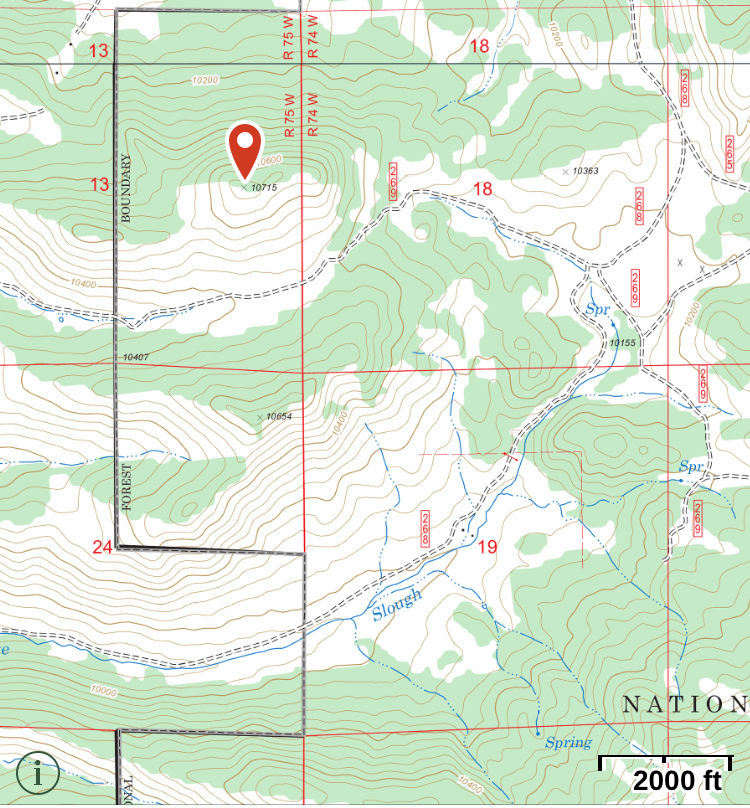
Steve WG0AT suggested that we could do an nearby unnamed peak (W0C/FR-222) on the same day. This is an excellent idea and we did just that. We headed back north and took FS 269 west, parking just south of FR-222. FR-222 is not shown on the Pike National Forest map but the Gaiagps.com app and other maps show it. The summit is easily seen from the road and a short hike gets you to the top (about 1/3 mile and 500 vertical feet).
73, Bob K0NR
The post Another Black Mountain SOTA (W0C/FR-031) appeared first on The KØNR Radio Site.
Bob Witte, KØNR, is a regular contributor to AmateurRadio.com and writes from Colorado, USA. Contact him at [email protected].
Amateur TV with Tom O’Hara, W6ORG – ETH080

Have you ever wanted to be in a movie? Or maybe on TV? Well while you can make your own movie and you could be on a TV, you probably won’t be on commercial TV. However you can be on Amateur TV.
In this episode I talk with Tom O’Hara, W6ORG. Tom has been a ham for a while and had a successful ATV business for over 50 years!! He retired and shut his business down at the end of 2014, but that hasn’t stopped him from working with Amateur TV!
Listen to this episode to find out more about Amateur TV and about Tom:
http://www.everythinghamradio.com/podcast/80
Curtis Mohr, K5CLM, is the author/owner of Everything Ham Radio Blog and Youtube channel. Contact him at [email protected].
Oh those Eqsl cards
Mike Weir, VE9KK, is a regular contributor to AmateurRadio.com and writes from New Brunswick, Canada. Contact him at [email protected].
Oh those Eqsl cards
Mike Weir, VE9KK, is a regular contributor to AmateurRadio.com and writes from New Brunswick, Canada. Contact him at [email protected].
Old, But Still Useful!
This old WWII military training video is still useful regarding Morse code:
[embedyt]https://www.youtube.com/watch?v=YqTn-165orw[/embedyt]
This is an antique United States Navy Training Film from 1943/1944, in which proper hand-sending of Morse code is demonstrated. The film covers some basic principles and mechanics of manual keying of the International Morse code, as used during WWII.
Amateur (Ham) radio operators find Morse code (and the ‘CW’ mode, or ‘Continuous Wave’ keying mode) very useful, even though Morse code is no longer required as part of the licensing process. Morse code is highly effective in weak-signal radio work. And, preppers love Morse code because it is the most efficient way to communicate when there is a major disaster that could wipe out the communications infrastructure.
While this military film is antique, the vintage information is timeless, as the material is applicable to Morse code, even today.
There’s more about Morse code, at my website: http://cw.hfradio.org
For additional joy, here are a few of old films regarding Morse code:
Morse Code – Principles and Basic Techniques (US Army Signal)
(Learn to Send Perfect Morse Code by Hand – Vintage Training Film (Ham Radio / CW))
[embedyt]https://www.youtube.com/watch?v=qmg1MlstxWM[/embedyt]
Vintage 1944 Radio Operator Training: How to Send Morse Code (CW) by Hand
[embedyt]https://www.youtube.com/watch?v=XjupJslRj5E[/embedyt]
This one is a pretty cool film:
1939 Film: New Zealand Shortwave Communications; Morse code (CW)
[embedyt]https://www.youtube.com/watch?v=H-KUat5WEkU[/embedyt]
I’ve also created a play list, and most of the videos are still online. Once and a while something changes and I have to update the list. Here is the list:
Original Title: TECHNIQUE OF HAND SENDING, by Department of Defense, Published 1944
Usage CC0 1.0 Universal
TECHNIQUE OF HAND SENDING
PIN 23735 1944
IMPORTANT PARTS OF THE TRANSMITTER, TENSION SPRING, ADJUSTING CONTACTS, ADJUSTING SPRINGS. ELEMENTS OF MORSE CODE, TIMING, AND PARTS OF BODY THAT FUNCTION WHEN TRANSMITTING CODE. IMPORTANCE OF CORRECT POSITION AND OPERATION.
Producer Department of Defense
Enjoy!
Visit, subscribe: NW7US Radio Communications and Propagation YouTube Channel
Antenna Summer – part 2
With some unavoidable chores out of the way I finally went further on my quest to erect a better antenna for 20 meters. The question asked last time on why the rooftop vertical performed below par was solved pretty quickly: the ground connection to the coax lead had come loose and after I fixed that it performed better, but still not as well as the garden vertical (the garden vertical about 10 dB better than the rooftop vertical).
VK3DZ made an interesting remark in the comments on my last article: “keep VHF antennas at least 12 meters high to avoid short-range noise.” My antenna is for HF, but the more distance from noise sources the better and maybe more distance from the metal roof would also help. So I got my fiberglass poles out and put the garden vertical up on the roof, 4 meters above the metal roof.

From a distance they look very faint: one vertical in the middle, one on the left.
A good comparison could be made with the other vertical, but the difference was minimal: signals strengths were comparable and noise levels were the same. After a couple of days I put the garden vertical back in the garden and put my delta loop for 6 meters on the roof.
In a private e-mail exchange a while back Steve (VE7SL) wondered if tying the ground connection directly to the metal roof would have an effect. The question was related to long- and medium wave reception, however it would be a good experiment to see if it would have an effect on my rooftop vertical. Up till now my ground connection has been a single 90 cm ground rod, which did a good job of syphoning off some noise. When I bought that rod my local hardware store said that the longest one they had was 90 centimeters (3 foot), but when I went out to buy some more there recently they gave me 180 centimeter ones (6 foot). I got two for about US$15, so well within my budget. I connected them with twin solid core electrical copper wire and after an hour of pounding on them in 35 degree heat (Celsius, not Fahrenheit) they were in.

The two ground rods prepared and ready to go underground.

A lot of sweat swept from my forehead later…..they’re in!

Some dirt shoveled over it and nobody would even guess what’s there.
Unfortunately we had a typhoon coming through and it damaged the garden vertical. After fixing it I will have to make plans for the next antenna experiment.
Hans "Fong" van den Boogert, BX2ABT, is a regular contributor to AmateurRadio.com and writes from Taiwan. Contact him at [email protected].
 Ham Radio Deluxe |
 W5SWL Electronics |
 Ham Radio Prep |
 KB3IFH QSL Cards  Hip Ham Shirts  HamRadioAuctions HamRadioAuctions Reliance Antennas Reliance Antennas Enigma Shop Enigma Shop |  morseDX  Ni4L Antennas  R&L Electronics R&L Electronics antennas.us antennas.us QRV QRV |
- Matt W1MST, Managing Editor
