 |
 Barn Door Wide! Hunting For NDBs In CLE253
 18 February 2020 | by
This weekend's upcoming CLE event will be the "Barn Door" listening event.
Participants are required to use receivers without the usual narrow filters. Some of the older tube radios can do this easily as can most homebrew receivers ... especially the regens!
If you've never listened to the NDB band with a wide bandwidth, it is a fascinating experience! If conditions are normal, you can typically hear a half dozen or more signals, all at various pitches, vying for your attention. It's almost as if you have plunked yourself down in the middle of the NDB forest of signals, and they are coming at you from all directions.
Many choose to use one of their homebrew receivers for this event, often as simple as a '1AD' or a '1 Active Device' circuit.
From organizer Brian Keyte:
Times: Start at Midday on Friday 21st, your LOCAL time
End at Midday on Monday 24th, your LOCAL time
Frequencies: Centred on 360 kHz (see below)
NDBs: NOT MORE than 100 'normal' NDBs including any UNIDs
(That is not intended to be a target to reach)

Whichever you choose, use the same receiver throughout the CLE.
**************************
These listening events serve several purposes. They:
- determine, worldwide, which beacons are actually in service and on-the-air so the online database can be kept up-to-date
- determine, worldwide, which beacons are out-of-service or have gone silent since the last CLE covering this range
- will indicate the state of propagation conditions at the various participant locations
- will give you an indication of how well your LF/MF receiving system is working
- give participants a fun yet challenging activity to keep their listening skills honed
The NDB List Group is a great place to learn more about the 'Art of NDB DXing' or to meet other listeners in your region. There is a lot of good information available there and new members are always very welcome. As well, you can follow the results of other CLE participants from night to night as propagation is always an active topic of discussion.
You need not be an NDB List member to participate in the CLEs and all reports, no matter how small, are of much value to the organizers.
Remember - 'First-time' logs are always VERY welcome!
Reports may be sent to the NDB List Group or e-mailed to CLE co-ordinator, Brian Keyte (G3SIA), whose address appears above. If you are a member of the group, all final results will also be e-mailed and posted there.
Please ... give the CLE a try ... then let us know what NDB's can be heard from your location! Your report can then be added to the worldwide database to help keep it up-to-date.
Have fun and good hunting!
Steve McDonald, VE7SL, is a regular contributor to AmateurRadio.com and writes from British Columbia, Canada. Contact him at [email protected].
LHS Episode #326: Ni Hao, Moto

Hello and welcome to the 326th installment of Linux in the Ham Shack. In this short-topic format show, the hosts discuss a major win for Motorola, the FCC and 5.9GHz, operating practices in Australia, iText, FreshRSS, GridTracker and much more. Thank you for listening and please, if you can, donate to our Hamvention 2020 Fund.
73 de The LHS Crew
Russ Woodman, K5TUX, co-hosts the Linux in the Ham Shack podcast which is available for download in both MP3 and OGG audio format. Contact him at [email protected].
Contest Morse Code, Computers, and an Icom Rig
This past weekend (third full weekend in February, February 15-16, 2020) is the ARRL International CW Contest (ARRL DX CW link: http://www.arrl.org/arrl-dx ). This is interesting to my study of radio signal propagation as a columnist and as an amateur radio operator because of the contest objective: “To encourage W/VE stations to expand knowledge of DX propagation on the HF and MF bands…” This contest is a good way to get a feel for current propagation–though there are caveats.
Speaking of Morse code and the CW mode on our amateur bands: those of you using CW during contests, do you send by hand or by computer? Do you copy the code by head, or do you use a computer for decoding?

Just curious about those of you who use CW. Do you send by hand or computer? Receive by head or computer?
In most contests like the ARRL DX CW contest, I copy by ear, and send mostly by rig keyer. If needed, I use a single paddle key with the Icom rig’s internal keyer to answer unique questions and so on.
Below is a quick demo of using the internal Morse code keyer in my Icom IC-7610 transceiver.
V47T, in the Saint Kitts and Nevis Island in the Caribbean, is calling CQ TEST in the ARRL DX CW contest.
Using the programmable virtual buttons, in which I programmed my callsign, NW7US, and other info, I answer and make a complete contest QSO.
In activity like the Straight Key Century Club (SKCC – https://SKCCGroup.com) K3Y special event, it is all manual. I send my Morse code using a WWII Navy Flameproof Signal Key, and decode with my ears. It is contextual for me.
[embedyt] https://www.youtube.com/watch?v=vm8UJst6umA[/embedyt]
How do you do contesting Morse code? Bonus question: How do you do logging while doing contest operation?
73 es best dx = de NW7US dit dit
Visit, subscribe: NW7US Radio Communications and Propagation YouTube Channel
ARRL DX CW contest.
Score breakdown:
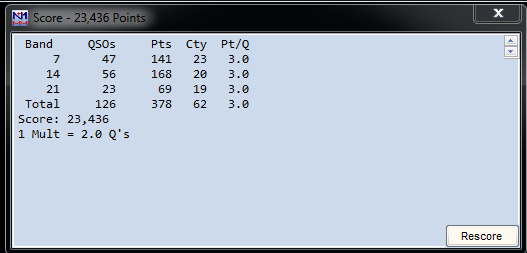
Mike Weir, VE9KK, is a regular contributor to AmateurRadio.com and writes from New Brunswick, Canada. Contact him at [email protected].
Weekly Propagation Summary – 2020 Feb 17 16:10 UTC
Here is this week’s space weather and geophysical report, issued 2020 Feb 17 0312 UTC.
Highlights of Solar and Geomagnetic Activity 10 – 16 February 2020
Solar activity was very low throughout the period. No active regions with sunspots were observed and no earth-directed CMEs were detected.
No proton events were observed at geosynchronous orbit.
The greater than 2 MeV electron flux at geosynchronous orbit reached high levels on 10-11 Feb and reached moderate levels on 12-16 Feb.
Geomagnetic field activity was generally quiet with isolated periods of unsettled activity.
Forecast of Solar and Geomagnetic Activity 17 February – 14 March 2020
Solar activity is expected to be very low throughout the outlook period.
No proton events are expected at geosynchronous orbit.
The greater than 2 MeV electron flux at geosynchronous orbit is expected to reach high levels on 05-09 Mar with normal to moderate levels expected for the remainder of the period.
Geomagnetic field activity is expected to reach G1 (Minor) geomagnetic storm levels on 04 Mar with active levels expected on 26 Feb and 05 Mar due to multiple, recurrent CH HSSs. Generally quiet and quiet to unsettled conditions are expected to prevail for the remainder of the outlook period.
Don’t forget to visit our live space weather and radio propagation web site, at: http://SunSpotWatch.com/
Live Aurora mapping is at http://aurora.sunspotwatch.com/
If you are on Twitter, please follow these two users: 1. https://Twitter.com/NW7US 2. https://Twitter.com/hfradiospacewx
– – – – – – – – – – – – –
Be sure to subscribe to our space weather and propagation email group, on Groups.io
https://groups.io/g/propagation-and-space-weather
Spread the word!
– – – – – – – – – – – – –
Links of interest:
+ Amazon space weather books: http://g.nw7us.us/fbssw-aSWSC
+ https://Twitter.com/NW7US
+ https://Twitter.com/hfradiospacewx
Space Weather and Ham Radio YouTube Channel News:
I am working on launching a YouTube channel overhaul, that includes series of videos about space weather, radio signal propagation, and more.
Additionally, I am working on improving the educational efforts via the email, Facebook, YouTube, Tumblr, and other activities.
You can help!
Please consider becoming a Patron of these space weather and radio communications services, beginning with the YouTube channel:
https://www.patreon.com/NW7US
The YouTube channel:
https://YouTube.com/NW7US
..
Visit, subscribe: NW7US Radio Communications and Propagation YouTube Channel
ICQ Podcast Episode 318 – South Essex Rally Review
In this episode, Martin M1MRB is joined by Chris Howard M0TCH, Martin Rothwell - M0SGL, Frank Howell - K4FMH and Bill Barnes - N3JIX to discuss the latest Amateur / Ham Radio news. Colin M6BOY rounds up the news in brief and this episode’s feature is - South Essex Rally Review.
ICQ AMATEUR/HAM RADIO PODCAST DONORS
We would like to thank our monthly and annual subscription donors for keeping the podcast advert free. To donate, please visit - http://www.icqpodcast.com/donate
- ARRL Expands its Roster of Online Discussion Groups for Members - Undersea Expedition Planned to Retrieve Titanic’s Radio Gear - Bletchley Park- Build a Radio Receiver - Mysterious Radio Signal from Space is Repeating Every 16 days - French look at 3-Tier CEPT ham radio structure - RSGB Train the Trainer - New Amateur Extra Question Pool Released - Turn the bands Green for St Patricks Day
Colin Butler, M6BOY, is the host of the ICQ Podcast, a weekly radio show about Amateur Radio. Contact him at [email protected].
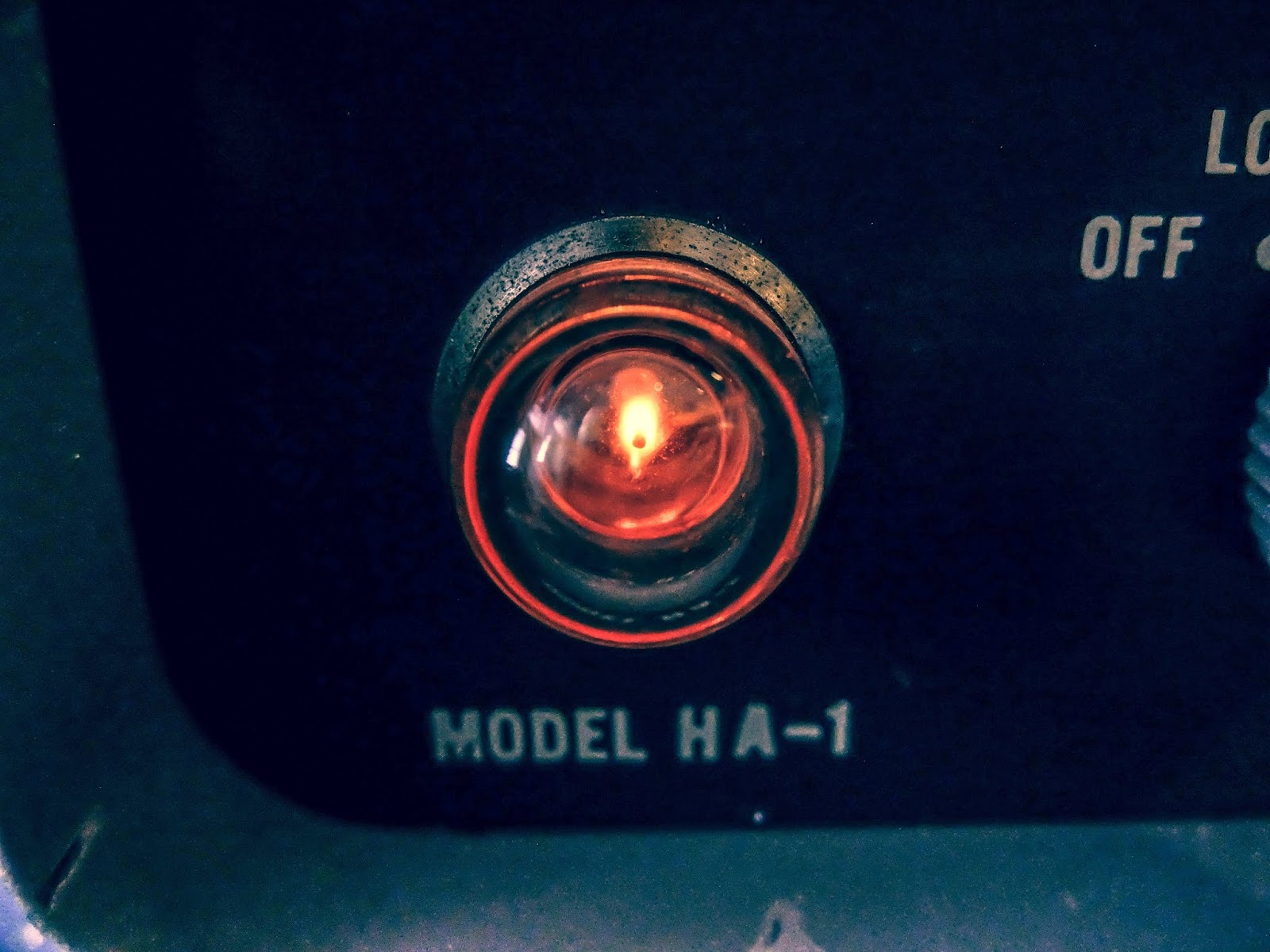
Hallicrafters HA-1 Electronic Keyer
High Voltage Electronic Keyer from 1960
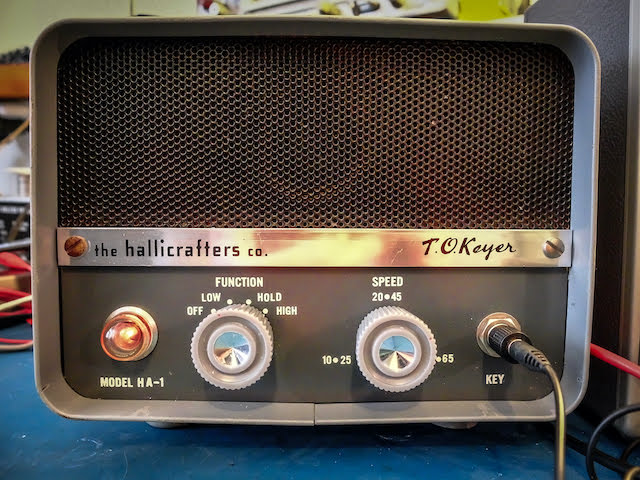
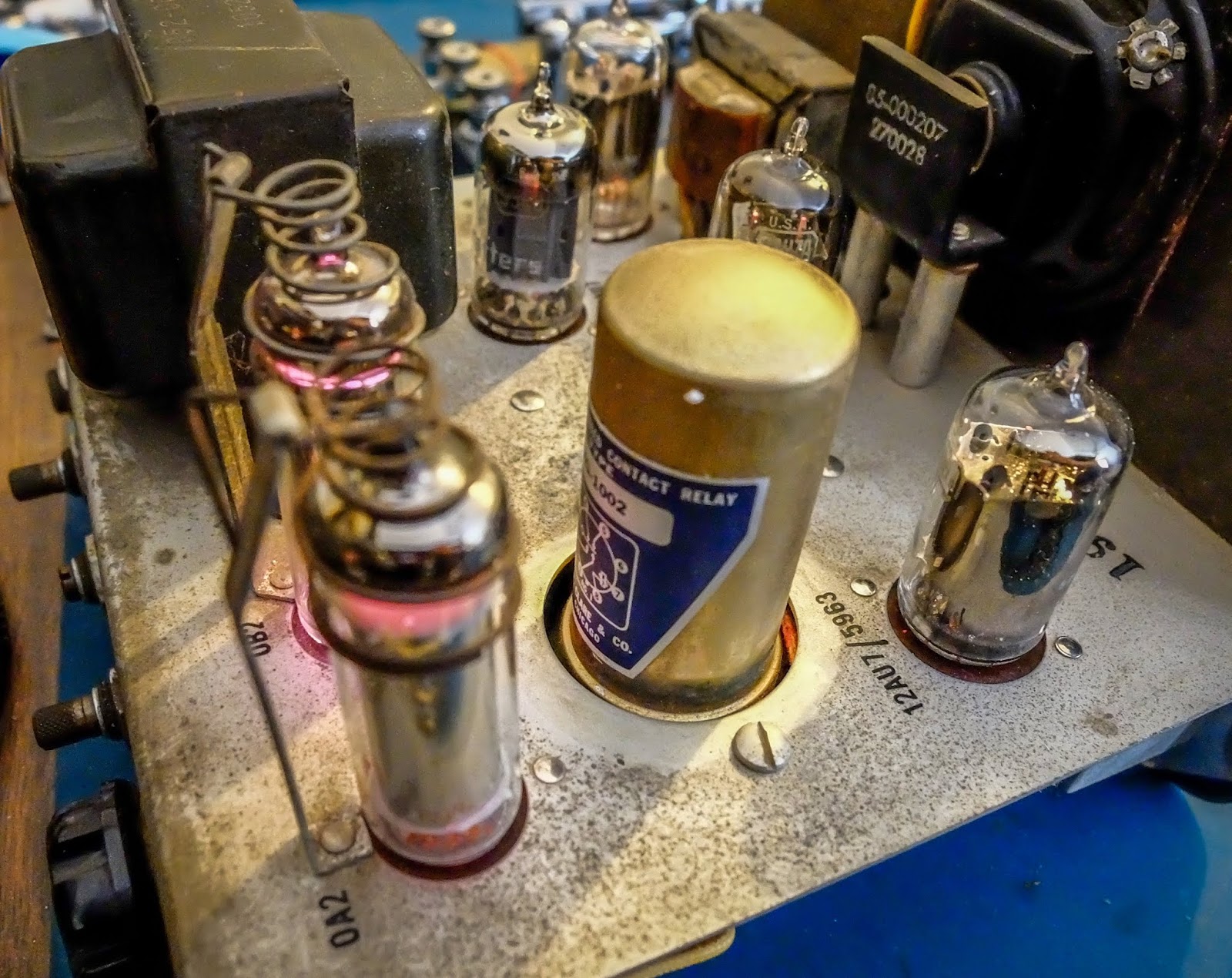
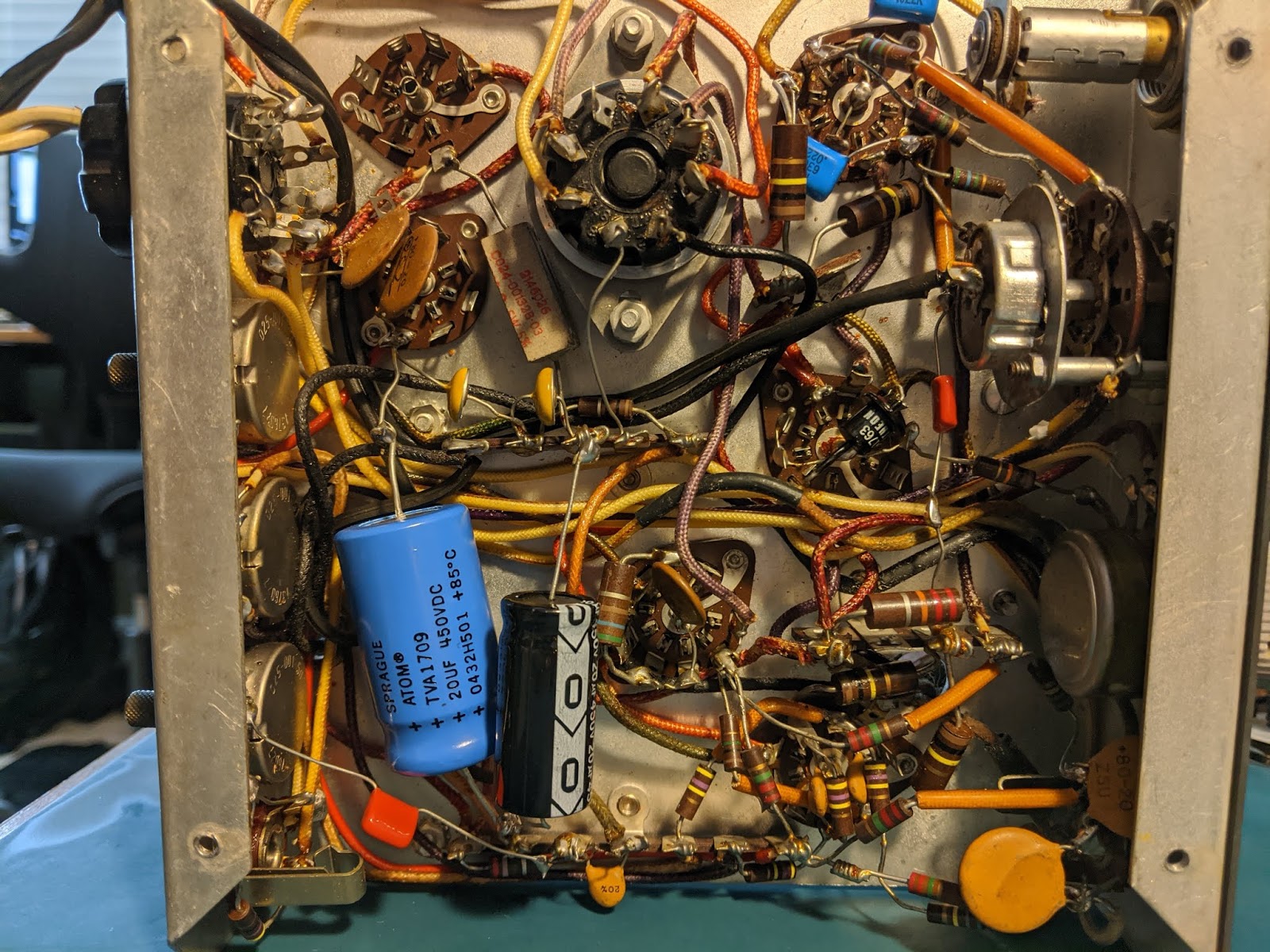
What an electronic keyer was like 60 years ago
A keyer without DIT / DAH memory
That really calls for a change in my paddle usage. My brain needs to keep in mind the length of DAHs so that I don't rush and release a following DIT before the current element completes. This is a bigger problem below 25wpm given the longer length of the DAHs.
The Hallicrafters HA-1 manual states that the keyer is different from other electronic keyers and requires "a knack" to use effectively. I think I've discovered whereof it speaks.
Conclusion
Richard Carpenter, AA4OO, is a regular contributor to AmateurRadio.com and writes from North Carolina, USA. Contact him at [email protected].
 Ham Radio Deluxe |
 W5SWL Electronics |
 Ham Radio Prep |
 KB3IFH QSL Cards  Hip Ham Shirts  HamRadioAuctions HamRadioAuctions Reliance Antennas Reliance Antennas Enigma Shop Enigma Shop |  morseDX  Ni4L Antennas  R&L Electronics R&L Electronics antennas.us antennas.us Ears to Our World Ears to Our World |
- Matt W1MST, Managing Editor
