 |
 Saying good-bye to my little buddy.
 8 January 2021 | by
Today we said good-bye to my best buddy of 15 years.....Oliver. Peace be with you, my little buddy you will be missed very much.
Mike Weir, VE9KK, is a regular contributor to AmateurRadio.com and writes from New Brunswick, Canada. Contact him at [email protected].
North America Adventure Frequency: 146.58 MHz
 Recently, on the nasota group, there was a discussion about designating an alternative 2m FM frequency for Summits On The Air (SOTA) use (instead of 146.52 MHz). The main driver for this is that 146.52 MHz can get busy with other radio traffic and/or a busy SOTA activation can tie up the calling frequency for a long time.
Rex KE6MT (SOTA W6 Association Manager) kicked it off with:
A friend of mine, George KJ6VU, has been talking with me and several others about the idea of an FM “Adventure Frequency.” It would be for more than just SOTA – other *OTA’s could also use it. There are other ideas to layer on top of it, such as tone signaling so that you don’t have to hear traffic you don’t want to hear, and repeater infrastructure for announcing someone’s on the frequency with a given tone, etc. But the core thing would be to decide on a frequency and really get it in use. The National Calling Frequency (146.52) can be great for a few contacts sometimes, but other times it’s problematic either because it’s being hogged or because nobody’s listening. Of course, this Adventure Frequency could have the same issues present themselves differently, but would alleviate some and pave the path for future additions mentioned above.
I have previously written about the challenges of using 146.52: The Use of 146.52 MHz
One important idea is to include the other “OTAs” in adopting this frequency, most notably Parks On The Air (POTA). Hence the name “Adventure Frequency,” and not “SOTA Frequency.” It is really about hams operating portable in an outdoor setting. Of course, like all amateur spectrum, this frequency must be shared with other users.
It may seem like a simple thing to choose a nationwide simplex frequency but VHF band plans are managed regionally. In particular, there is a mix of 15-kHz and 20-kHz channel spacings. (For more background on this see Simplex Channel Confusion on 2 Meters.)
After some discussion, the group settled on 146.58 MHz. There was some dialog around using CTCSS for signaling but nothing specific surfaced.
Some key points:
- The NAAF is 146.58 MHz.
- This frequency is in addition to, not a replacement for, the National Simplex Calling Frequency 146.52 MHz.
- Local usage will likely vary depending on needs.
- Program 146.58 MHz as The Other Simplex Frequency in your radio.
What does this mean to you?
Program 146.58 MHz into your radio and have it available. If you are doing SOTA (or POTA) activations, consider using this frequency, especially if you are in an area where 146.52 is used a lot. (I’ve already started using this frequency for SOTA activations near urban areas.)
73 Bob K0NR
The post North America Adventure Frequency: 146.58 MHz appeared first on The KØNR Radio Site.
Bob Witte, KØNR, is a regular contributor to AmateurRadio.com and writes from Colorado, USA. Contact him at [email protected].
Linux Mint 20.1 Ulyssa Xfce released.
Latest version of Linux Mint released https://blog.linuxmint.com/
I am hopeful there will be a version for Arm processors soon?
Steve, G1KQH, is a regular contributor to AmateurRadio.com and writes from England. Contact him at [email protected].
LHS Episode #385: The Weekender LXIII

It's time once again for The Weekender. This is our bi-weekly departure into the world of amateur radio contests, open source conventions, special events, listener challenges, hedonism and just plain fun. Thanks for listening and, if you happen to get a chance, feel free to call us or e-mail and send us some feedback. Tell us how we're doing. We'd love to hear from you.
73 de The LHS Crew
Russ Woodman, K5TUX, co-hosts the Linux in the Ham Shack podcast which is available for download in both MP3 and OGG audio format. Contact him at [email protected].
Starting the New Year with a new PC
 |
| And so it begins |
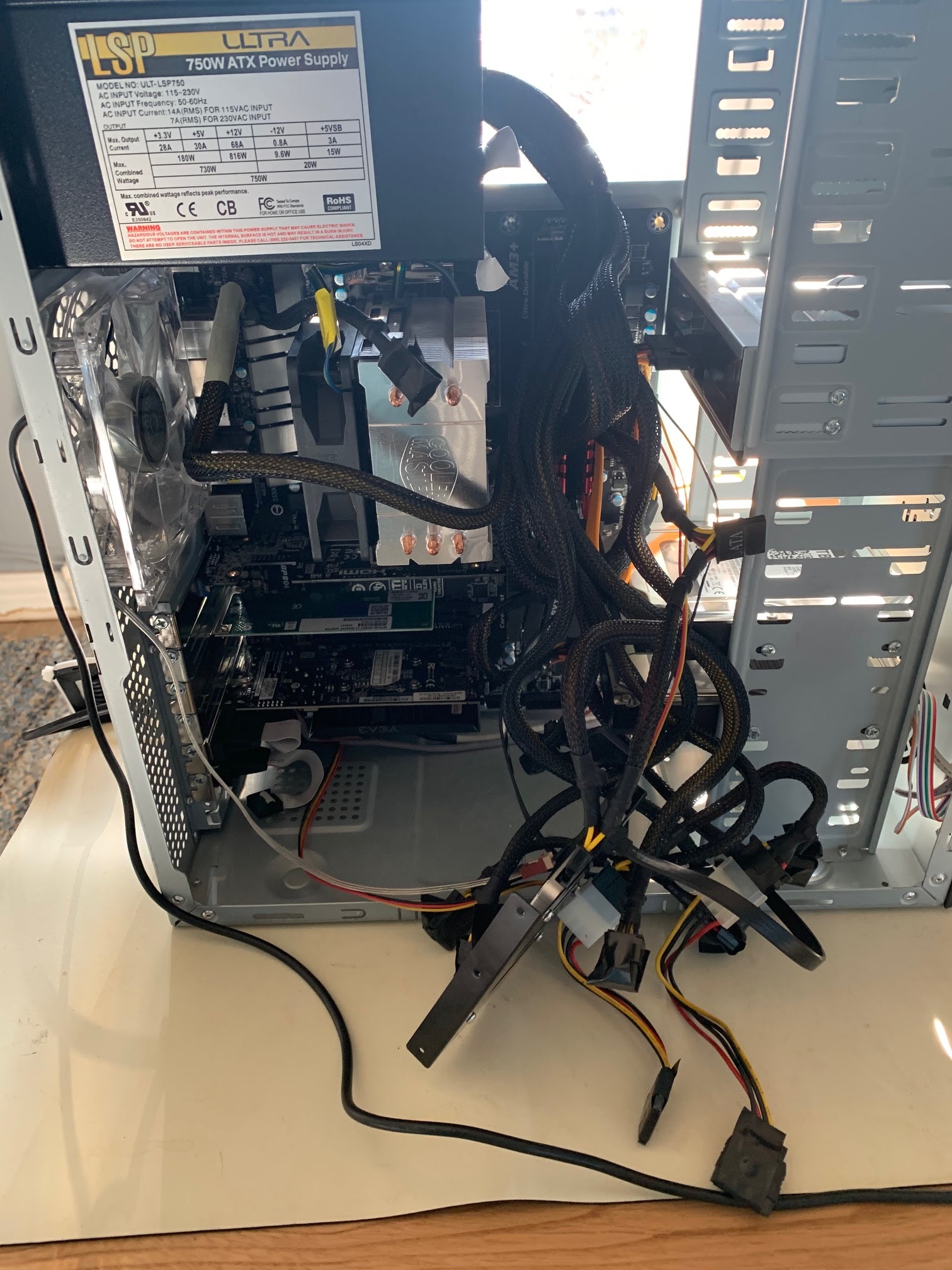
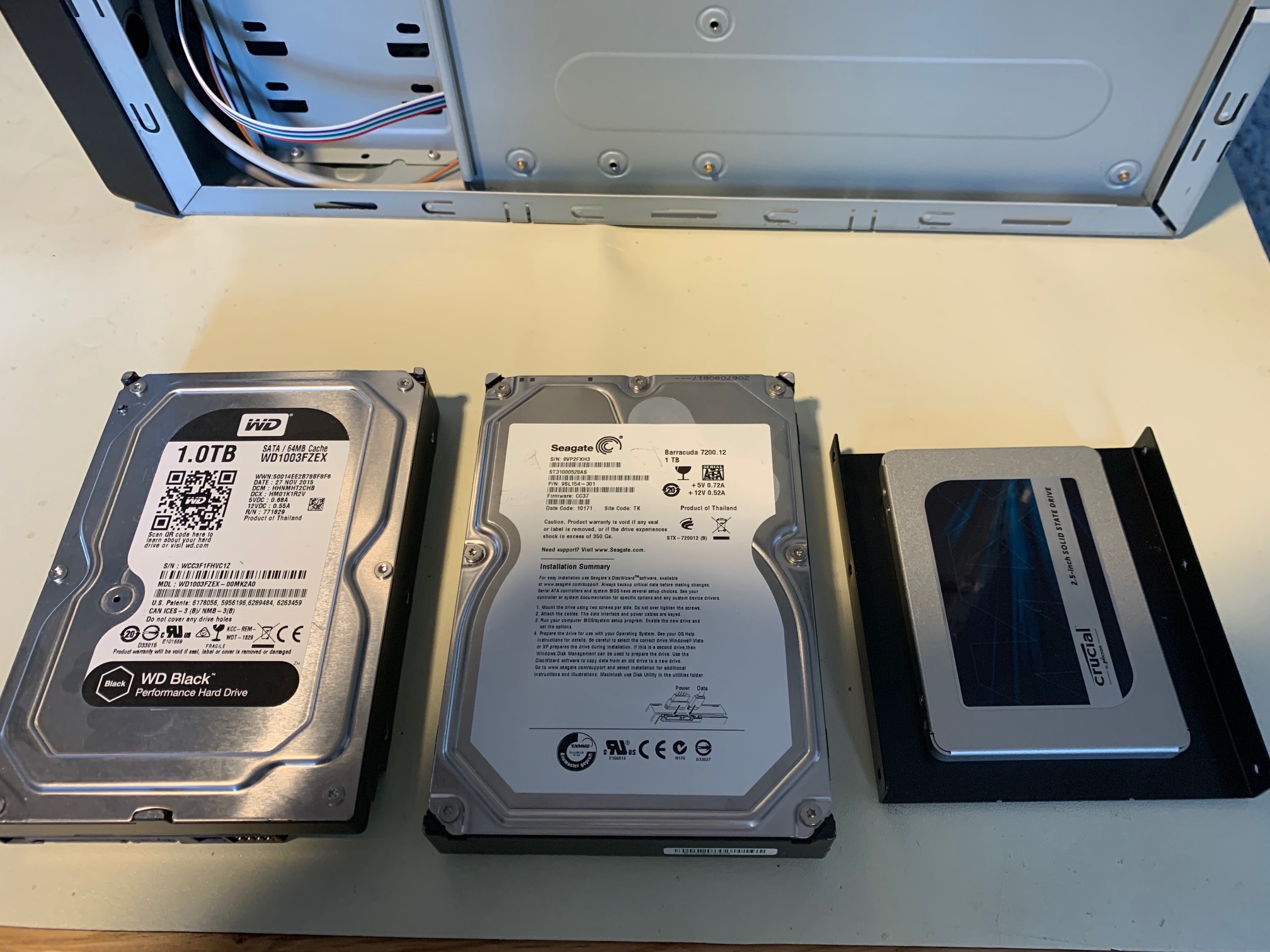
At the end of 2020, I decided it was time to update my PC as it has never been done for over 10 years. The choice I had was to purchase a new PC or rebuild what I have, I decided to rebuild the existing PC I have. I choose this as it gives me what I want, I do the upgrades, order the parts that I want and I can leave room for further upgrades in the future. The items I kept were my ATX tower, 750-watt power supply (as it was very new) GeForce GT 740 video card,1TB Western Digital Black and a 1TB Seagate hard drive for backup purposes.
 |
| One new 2 old hard drives |
The replacement parts were the following:
MSI MPG Z490 This is a very nice motherboard with room for expansion.
Intel i5 10600K Comet Lake 4.1 GHz
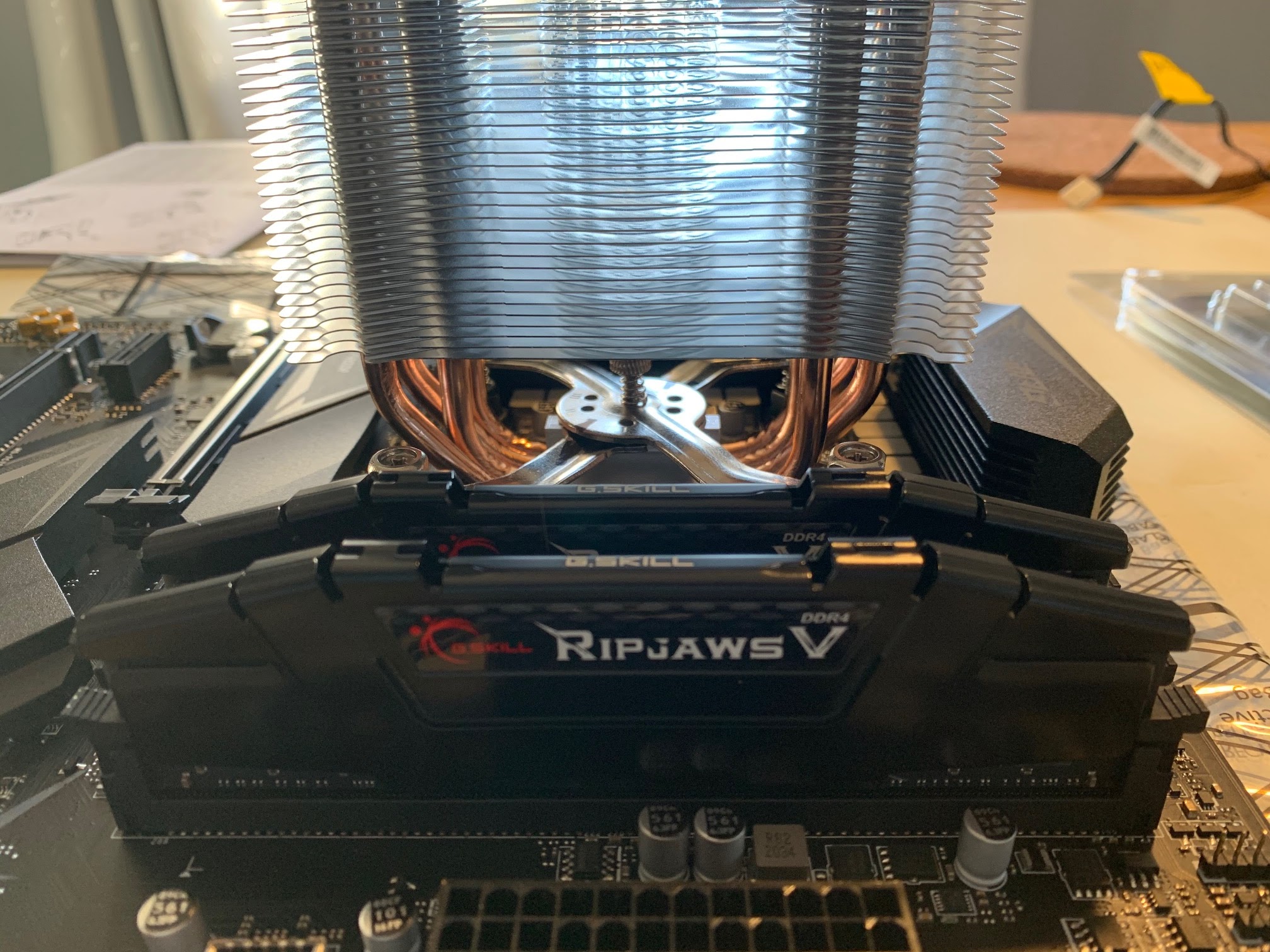
Cool Master Hyper 212 CPU cooling fan
Crucial MX500 1TB SSD Hard drive
The new PC build works great and I finally made the jump to Win10 as my OS. The SSD hard drive is a very nice change and the speed is great. My not so old Western Digital 1 TB hard drive now holds my SSD image files and my Seagate 1 TB drive hold my SSD hard drive clones. By the way, the backup software that I use is Macruim Reflect. It is easy to use and has worked for me without any issues and while using Windows 7 I had to use it twice. If you are a home user the software is free to download and use.
 |
| RAM and CPU fan installed |
While I was doing the build I did had a comment on my blog where a reader made me aware of a site called Ask woody. This site is a great resource for PC users and to have full access a donation is asked for. I made my donation and got full access as it's a great place to learn and get feedback. Did I have any issues with the build......yes I did. For starters the Cool Master CPU fan instructions were TERRIBLE and thank goodness I found a YouTube video on how to install the fan on my i5 chip. EVEN with a video I messed up a bit and installed the fan on the CPU facing the wrong direction and I only knew this once I tried to install the RAM and it did not fit. The fan and assembly had to be rotated 180 degrees and then all was good for the RAM installation. When I initialized and formatted the SSD hard drive I'm not sure what I did but it had to be done again as when the OS was in the process of the install I was getting error messages about the SSD hard drive.
Next, it was time to install all radio programs and the software that runs alongside them. I am happy to say that all software installed without issue and I am up and running and very happy with the upgrade.
Mike Weir, VE9KK, is a regular contributor to AmateurRadio.com and writes from New Brunswick, Canada. Contact him at [email protected].
VAT is the way we are going to collect it.
Already there are moans from buyers, "they have charged me VAT!"
ebay have now rolled into the mix now implementing the 1st January 21 VAT rules for UK buyers and EU. As I mentioned at the start of writing this thread, they will nail it at source at the time of purchase:
https://www.ebay.co.uk/help/listings/default/vat-obligations-eu?id=4650
Where this leaves the likes of Aliexpress, Banggood and individual traders from China and the rest of the world not registered, I guess HMRC rules in Notice 143 will click into place?
Steve, G1KQH, is a regular contributor to AmateurRadio.com and writes from England. Contact him at [email protected].
Recommended Colorado Hotspot Frequencies
A big trend in ham radio activity is the use of internet-connected transceivers commonly referred to as hotspots. These devices often use one (or more) of the popular VHF/UHF digital formats (DMR, D-STAR, Fusion) but analog FM is also used. They allow a radio amateur to have a local RF connection into one of the extensive radio networks (e.g., Brandmeister).
Unfortunately, there have been situations where radio amateurs arbitrarily chose hotspot frequencies that caused interference with existing radio activity. For example, a hotspot showed up on the 70 cm SSB calling frequency, 432.100 MHz. One of the worst examples of interference was a hotspot sitting on the input frequency of a satellite transponder. Not good.
The Colorado Council of Amateur Radio Clubs (CCARC) is the VHF/UHF frequency coordination body for the state of Colorado. Included in its spectrum management role, the CCARC maintains a detailed set of band plans (called Frequency Use Plans) for the 144 MHz, 222 MHz, 420 MHz, 902 MHz and 1200 MHz bands.
The CCARC recently decided to provide some guidance on what frequencies should be used for hotspot operation. Previously, the operator of a hotspot had to scan through the Frequency Use Plan and figure out where hotspots fit in. It wasn’t very obvious, so the CCARC now recommends 10 specific frequencies on the 70 cm band for hotspot use.
| Hotspot Channel | Frequency |
|---|---|
| 1 | 438.4500 MHz |
| 2 | 438.4750 MHz |
| 3 | 438.5000 MHz |
| 4 | 438.5250 MHz |
| 5 | 438.5500 MHz |
| 6 | 438.5750 MHz |
| 7 | 438.6000 MHz |
| 8 | 438.6250 MHz |
| 9 | 438.6500 MHz |
| 10 | 438.6750 MHz |
These frequencies are available for simplex hotspot use. However, for each of these simplex frequencies, there is also a corresponding frequency 5 MHz lower that can be used for hotspots that operate duplex.
Unlike repeaters, hotspots are not coordinated by the CCARC. With 10 frequencies available, it should be easy to find one that doesn’t have any co-channel interference from other users. See the complete CCARC hotspot guidance here.
These guidelines won’t solve every problem but it will help people find a hotspot frequency that plays well with others. These frequencies are valid for Colorado only. Check your local VHF/UHF band plans for more information.
73 Bob K0NR
Disclosure: I contributed to these CCARC guidelines but I don’t speak for the CCARC.
The post Recommended Colorado Hotspot Frequencies appeared first on The KØNR Radio Site.
Bob Witte, KØNR, is a regular contributor to AmateurRadio.com and writes from Colorado, USA. Contact him at [email protected].
 Ham Radio Deluxe |
 W5SWL Electronics |
 Ham Radio Prep |
 KB3IFH QSL Cards  Hip Ham Shirts  HamRadioAuctions HamRadioAuctions Reliance Antennas Reliance Antennas Enigma Shop Enigma Shop |  morseDX  Ni4L Antennas  R&L Electronics R&L Electronics antennas.us antennas.us Ears to Our World Ears to Our World |
- Matt W1MST, Managing Editor
