 |
 Hunting For NDBs In CLE 271
 26 August 2021 | by
 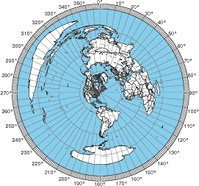 |
| https://ns6t.net/azimuth/azimuth.html |
It's CLE time! 'CLE's are 'Co-ordinated Listening Events, and NDB DXers around the world focus their listening time on one small slice of the NDB spectrum.
When tuning for NDBs, put your receiver in the CW mode and listen for the NDB's CW identifier, repeated every few seconds. Listen for U.S. NDB identifiers approximately 1 kHz higher or lower than the published transmitted frequency since these beacons are modulated with a 1020 Hz tone approximately.
For example, now decommissioned, 'AA' near Fargo, ND, transmitted on 365 kHz and its upper sideband CW identifier was tuned at 366.025 kHz while its lower sideband CW ident could be tuned at 363.946 kHz. Its USB tone was actually 1025 Hz while its LSB tone was 1054 Hz.
Often, one sideband will be much stronger than the other so if you don't hear the first one, try listening on the other sideband.
Canadian NDBs normally have an USB tone only, usually very close to 400 Hz. They also have a long dash (keydown) following the CW identifier.
All NDBs heard in North America will be listed in the RNA database (updated daily) while those heard in Europe may be found in the REU database. Beacons heard outside of these regions will be found in the RWW database. These databases have recently been re-vamped and are slicker than ever before!
From CLE organizers comes the following CLE info:
Hello all
Back in June 2007 and at Christmas - New Year 2017/18 we very much enjoyed our first ‘Bearings CLEs’. So it is now high time for a third one:
Days: Friday 27 August - Monday 30 August 2021
Times: Start and end at midday your LOCAL time
Range: 190 – 1740 kHz
Target: Up to 10 NDBs in each Radio Country on your chosen bearing
You choose a bearing in any one direction from you and try to log UP TO 10 normal NDBs (not DGPS, Navtex or Amateur) in each of the Radio Countries
crossed by your line. A country is OK even if your line slices only a little bit of it. Countries in the opposite direction (‘back bearings’) ALSO COUNT this time.
Any ONE bearing that you choose will be good, 0 to 180 degrees (clockwise from North) - it must be a whole number of degrees (not 34.5, etc.).
Remember that each USA and Australian State and each Canadian Province is a Radio Country. For the full list of our countries please see http://www.ndblist.info/ndbinfo/countrylist.pdf
(If your line crosses the sea, any platforms roughly in that direction would also qualify as a radio country for the CLE - e.g. XOE).
TO CHOOSE YOUR BEARING you can use a GREAT CIRCLE MAP centred on your location. Radio signals use these shortest routes round the Earth like planes try to do.
(For non-dx loggings an ordinary map (Mercator projection) would be OK, especially if your location is near the centre of it)
We recommend the program https://ns6t.net/azimuth/azimuth.html - it is very easy to download and use.
Just put in your location (ideally your 6-character Locator), choose a distance and click on ‘Create Map’.
It misses out some country boundaries, and a few countries, but looking also at a ‘normal’ map would help with that.
Also good would be GOOGLE EARTH, a powerful program for lots of purposes. Click on its ‘stubby’ Ruler icon, zoom in to your own location and draw a line from there with the mouse. It tells you the distance and Bearing ('Heading') as you extend it further away from home. When satisfied, ‘Save’ it with a description.
For this CLE you will enjoy planning your own tactics. You could try out a directional aerial, include favourite countries, concentrate on DX or on more local reception, exclude signals from the direction of your worst QRN - any or all of those things, and more. The aim is not to try and include as many countries or as many NDBs as possible, though you could of course do that if you want to!
Please send your CLE log to the List, if possible as a plain text email and not in an attachment, showing 'CLE271' and ‘FINAL’ in its title.
Please include on EVERY line of your log:
# The date e.g ‘2021-08-27’
# The time logged in UTC (days change at 00:00 UTC).
# kHz - the beacon's nominal frequency.
# The Call Ident.
It is important to show those main items FIRST – any other details that you want to add such as the Country, Location, Distance, etc., go LATER in the same line.
As usual, you can show your loggings in any sequence, though you may prefer to choose radio country order.
Don't forget to give your OWN location (e.g. Locator), your chosen BEARING and details of your receiver and aerial(s), etc. Any interesting details about your planning or listening would also brighten our reading!
Do make sure that your FINAL log has arrived on the List by 08:00 UTC on Wednesday 1st September at the very latest. We'll send a CLE271 'Any More Logs?' email at about 19:00 UTC on Tuesday 31st so you can check that your log has been found OK.
Good listening
Brian
(CLE Coordinator)
(If you wish you could use any one remote receiver for your bearings log,
stating the location and owner – and with their permission if required.
A remote listener may NOT also use another receiver, local or remote, to
make further loggings for the same CLE)
These listening events serve several purposes. They
• determine, worldwide, which beacons are out-of-service or have gone silent since the last CLE covering this range
• will indicate the state of propagation conditions at the various participant locations
• will give you an indication of how well your LF/MF receiving system is working
• give participants a fun yet challenging activity to keep their listening skills honed
Final details can be found at the NDB List website, and worldwide results, for every participant, will be posted there a few days after the event.
The NDB List Group is a great place to learn more about the 'Art of NDB DXing' or to meet other DXers in your region. There is a lot of good information available there and new members are always very welcome. As well, you can follow the results of other CLE participants from night to night as propagation is always an active topic of discussion.
You need not be an NDB List member to participate in the CLEs and all reports, no matter how small, are of much value to the organizers.
Remember - 'First-time' logs are always VERY welcome!
Reports may be sent to the NDB List Group or e-mailed to CLE co-ordinator, Brian Keyte (G3SIA), whose address appears above. If you are a member of the group, all final results will also be e-mailed and posted there.
Please ... give the CLE a try ... then let us know what NDB's can be heard from your location! Your report can then be added to the worldwide database to help keep it up-to-date.
Have fun and good hunting!
Steve McDonald, VE7SL, is a regular contributor to AmateurRadio.com and writes from British Columbia, Canada. Contact him at [email protected].
SOTA W0C 10-10-10 Challenge Report

We had a great time going after the W0C 10-10-10 SOTA Challenge. (See 2021 Colorado SOTA and 14er Event ) For activators, the objective was to activate 10 summits higher than 10k feet in 10 days. It turned out that some previous commitments would not allow us to do 10 days of activating, so we smushed 10 summits into 6 days. With careful choice of summits and doing multiple summits in a day, we put together a plan.

Saturday and Sunday started off with the Colorado 14er Event, so we opted to do Pikes Peak on Saturday and Mount Evans on Sunday. These are both drive-up summits, so not a lot of hiking. As previously reported, we had some good luck with 1.2 GHz from those summits. Then, on Monday we hiked Puma Peak and Little Puma, two 11k summits in South Park. On Tuesday, we did three summits on one day: Dicks Peak, 10090 and 10715. These three hikes were not particularly difficult but doing all three made for a full day.

On Wednesday, we took the Jeep up to Mosquito Pass and hiked two 13ers: Mosquito Peak and London Mountain. We had previously activated those two summits in 2018. Finally, on Thursday, we did our tenth summit with Walt/W0CP and Jerry/K0ES, one of our favorites: South Monarch Ridge. Walt and Jerry worked the HF bands while we did VHF/UHF. That was a slacker day, because we rode the tram up from Monarch Pass.

The weather was consistently fantastic, with no thunderstorms in sight. The smoke from western wildfires was thick at times and can be seen in some of the photos.
The Bands
As usual, we operated above 50 MHz, focusing on 2m, 70cm and 23cm FM operation. Most of the contacts were on 2m FM but we had significant activity on the other bands. The 1.2 GHz work was really fun: Using 1.2 GHz in the Colorado 14er Event. I made 162 contacts and Joyce made 94, for a total of 256 for the week. Not bad!
Thanks to all of our chasers and fellow activators: AC0FT, AC0FY, AC0V, AD1CT, K0AVU, K0BEJ, K0EHR, K0ES, K0FYR, K0GPA, K0GPA, K0MGL, K0MOS, K0REW, K0SJP, K0TRD, K1DDN, K5RHD, K6TUY, K7ASB, KA4EPS, KB0KQI, KB6VHF, KC0PBR, KC3BHI, KC5CW, KD0MRC, KD0VHD, KD0YOB, KD8EQA, KE0BTX, KF0DGK, KF0FOG, KG5APL, KJ4DER, KL7GLK,
KL7IZW, KM4PEH, KM5TY, KN0MAP, KX0R, KX3DX, N0DET, N0EMU, N0IPA, N0IVN, N0KM, N1SMB, N1XCO, N8XBD, W0ADV,
W0BV, W0CP, W0JSL, W0OOD, W0RW, W1KGH, W3REM, W5IG, W6AUN, W7UM, WA0KXO, WB0JNS, WB0TNH, WZ0N
Challenge Results
The results for the W0C 10-10-10 Challenge have been posted, for both activators and chasers. Here are the Activator results:

Six activators met the challenge of doing at least 10 summits during the event. That was our goal…not pursuing the top of the list but we did want to get 10 summits done. I am fifth on the list and K0JJW came in at sixth. We had the same number of SOTA points because we did the same summits. I had more QSOs though.
It was a fun event and we were happy to be able to activate 10 summits. Fortunately, the weather was good, otherwise we might have gotten rained out on the longer days.
73 Bob K0NR
The post SOTA W0C 10-10-10 Challenge Report appeared first on The KØNR Radio Site.
Bob Witte, KØNR, is a regular contributor to AmateurRadio.com and writes from Colorado, USA. Contact him at [email protected].
My POTA Activation Guidelines
Joyce/K0JJW and I have been doing Parks On The Air (POTA), in addition to our normal Summits On The Air (SOTA) activations. Sometimes we do both simultaneously. (See More on SOTA and POTA.) SOTA will probably continue to be our top priority because, well, you just can’t beat operating from the summit of a mountain.

SOTA and POTA
The programs have a lot in common but still have some significant differences. One of the key differences is that SOTA inherently puts you outdoors and away from your vehicle. This happens naturally if you hike some distance to get to a summit. But even on a drive-up mountain, the rules (W0C ARM) say:
Operations must not be in, or in the close vicinity of a motor vehicle, cannot use a permanent electrical power source, nor use a fossil fuel generator in any fashion. No part of the station may be connected in any way with the motor vehicle. All equipment must be operated from portable power source (batteries, solar cells, etc).
I have come to appreciate the wisdom of these restrictions as it helps keep the program “backpack portable,” without being overly restrictive. POTA does not have these restrictions, so it is common to see POTA activators operating from inside vehicles, inside RVs, even inside buildings using commercial power. Quite different from SOTA and I suppose that’s just fine. It does provide a higher degree of flexibility and radio hams can choose to participate in a manner that works for them. Certainly, this is a good thing for physically challenged individuals.

Here is a definition of “park” as it applies to national, state and local parks.
Park (noun):
an area of land, usually in a largely natural state, for the enjoyment of the public, having facilities for rest and recreation, often owned, set apart, and managed by a city, state, or nation.
The main idea of visiting a park is for people to enjoy being outdoors in a natural setting.
My POTA Rules Guidelines
Everyone gets to decide “how to POTA” as long as they stay inside the POTA rules. We’ve adopted these guidelines to keep POTA oriented towards outdoor, portable radio operating.
- Set up outdoors Get outside the vehicle and find a place to set up outdoors. At a picnic area or campsite, this might be using a picnic table or it might be setting up on a stump, on a rock, or on the ground. Whatever works. Even a tailgate-style operation is better than just sitting in the car.
- Take a hike Before or after the activation, take a hike. Get some exercise and explore the park. A mile or two of walking in the forest is usually a good thing.
- See the park Some parks are not very hikeable, but you can still explore what is special about the place. Look around to see what is interesting about the park and why it exists.
Note that these are guidelines and not strict rules. This is what we try to do for a POTA activation. There will be times when this is not practical and that’s OK, too. Sometimes we’ll do a Drive-Up/Drive-By activation when time is limited or the weather is bad. For example, I recall a recent winter activation in K-4407 where the temperate was -3 deg F. We stayed in the truck for that one!
So keep on POTAing and having fun with ham radio.
These are my thoughts, what do you think?
73 Bob K0NR
The post My POTA Activation Guidelines appeared first on The KØNR Radio Site.
Bob Witte, KØNR, is a regular contributor to AmateurRadio.com and writes from Colorado, USA. Contact him at [email protected].
LHS Episode #425: Crunch ‘n Munch

Hello and welcome to the 425th installment of Linux in the Ham Shack. In this short topics episode, the hosts discuss internal policing of the amateur radio airwaves, NASA grants for amateur radio research, OnlyOffice, code poisoning in the AI and ML worlds, FT4 via satellite, SDR++ and much more. Thank you for listening and have a great week.
73 de The LHS Crew
Russ Woodman, K5TUX, co-hosts the Linux in the Ham Shack podcast which is available for download in both MP3 and OGG audio format. Contact him at [email protected].
Back from vacation and back to my RFI……well kinda?

We are back from vacation and it was a last minute road trip decision which when you are retired you can do. We went back to Ontario to visit family and friends and again because we are retired we decided to stay longer than planned. The original plan was a 2 week trip but that turned into 3 weeks. I was not able to make it a radio/vacation since I sold my KX3. Looking back even I had the KX3 with me time would not have allowed really any operating. This is our first real vacation since retiring 2 years ago and it also has been 2 years since we went back to Ontario. For a vacation trip I was shocked at how very busy we were just driving around and visiting. Towards the end of our time away I was ready to get home and relax!
Speaking of "back home" shortly after my last RFI post in July, my RFI just vanished. I did not get my hopes up as this has happened in the past but only for a few days. Well days past and then weeks and no RFI issues. Once back from our Ontario vacation I checked again and the bands are RFI clear. As for investigating the non RFI...... I think I am going to let sleeping dogs lie!
Mike Weir, VE9KK, is a regular contributor to AmateurRadio.com and writes from New Brunswick, Canada. Contact him at [email protected].
Using 1.2 GHz in the Colorado 14er Event
Last weekend we held the Colorado 14er Event (Aug 7 and 8), the annual mountaintop event in Colorado. A group of us used this weekend as an opportunity to make 1.2 GHz (23 cm) Summits On The Air (SOTA) contacts: K0NR, K0JJW, KM4PEH, K5RHD, W0ADV, KL7IZW, W0RW, KC5RW, and K0BEJ.

Many of the 1.2 GHz operators used the Alinco DJ-G7T triband handheld transceiver. This radio covers the 2m, 70cm and 23cm bands. The RF output on 23 cm is only 1 watt but it is the lowest-cost way of getting a signal on that band.
Pikes to Uncompahgre
On Saturday, Joyce/K0JJW and I were on Pikes Peak (W0C/FR-004) and worked Randy/K5RHD on Mount Evans (W0C/FR-003) at a distance of 97 km (60 miles). Signals were strong and we had no problem making those contacts.
We also worked David/W0ADV on Uncompahgre Peak (W0C/RG-001) at a distance of 227 km (141 miles). David used the Alinco HT driving a 16-element Comet Yagi. We had a bit more power (10 watts) from our Kenwood TM-541A transceiver, also driving a Comet Yagi antenna. Signals were strong in both directions and these QSOs were a new personal best for both Joyce and me on 1.2 GHz.
Evans to Sunshine
On Sunday, we moved to Mount Evans and Randy/K5RHD activated Pikes Peak. We worked Randy on that peak, the reverse of the QSO on the previous day. Meanwhile, David/W0ADV was climbing two 14ers in the San Juan Mountains: Redcloud Peak (W0C/RG-002) and Sunshine Peak (W0C/RG-004). These two summits are close to each other, separated by a saddle, so it is common to climb them as a pair.

David’s route had him climbing Redcloud first and then continuing on to Sunshine, then returning to Redcloud on the way back down. We worked him on Sunshine and on the return trip over Redcloud, as he headed back to the trailhead.

We had trouble hearing David on Sunshine Peak but his signal was just strong enough that we could complete the contact. His signal was stronger from Redcloud, a surprise because the two summits are close in elevation. I expected them to be about the same in terms of signal path and strength. David reported that there was a ridge to the northeast of Sunshine that might be blocking the signal, but it was not in the way for Redcloud.
So these contacts with Sunshine Peak set a new personal best for both Joyce and me on 1.2 GHz (244 km, 152.6 miles). David clearly did the hard work, summiting two 14ers in a day. (We were on a drive-up mountain with a short hike.) Thanks, David/W0ADV!
I was very pleased with the results from the 14er weekend. Now I am wondering what’s next for us concerning 1.2 GHz. We can probably make radio contacts further out but it is going to depend on the topography of the path. We will have to do some investigation on additional summits to try.
73 Bob K0NR
The post Using 1.2 GHz in the Colorado 14er Event appeared first on The KØNR Radio Site.
Bob Witte, KØNR, is a regular contributor to AmateurRadio.com and writes from Colorado, USA. Contact him at [email protected].
AmateurLogic 16th Anniversary Contest

AmateurLogic.TV is celebrating our 16th Anniversary and you could win a complete Icom IC-705 prize package along with accessories from MFJ.
Get all the detail at www.amateurlogic.tv/contest
George Thomas, W5JDX, is co-host of AmateurLogic.TV, an original amateur radio video program hosted by George Thomas (W5JDX), Tommy Martin (N5ZNO), Peter Berrett (VK3PB), and Emile Diodene (KE5QKR). Contact him at [email protected].
 Ham Radio Deluxe |
 W5SWL Electronics |
 Ham Radio Prep |
 KB3IFH QSL Cards  Hip Ham Shirts  HamRadioAuctions HamRadioAuctions Reliance Antennas Reliance Antennas Enigma Shop Enigma Shop |  morseDX  Ni4L Antennas  R&L Electronics R&L Electronics antennas.us antennas.us Ears to Our World Ears to Our World |
- Matt W1MST, Managing Editor
