 |
 eBay bargain
 3 April 2010 | by
  Whilst buying on eBay can sometimes result in a piece of junk, it can also produce the occasional lucky find. The radio pictured on the right is my latest auction success which arrived this morning. It is a Trio / Kenwood TH-205E of 1986 vintage which was being sold as for spares or repair. It cost me all of ten quid ($15 for my US readers), four of which were for postage.
When it arrived it was a bit oily, for some reason, but a wipe over with some tissues took care of that. From the front it looks almost like new – no scratches or signs of wear on the markings or buttons. The rig has obviously had an active life though as on the back the paint has worn away and the serial number plate and the warning notice on the battery pack have been polished almost clean of lettering.
The seller stated that they could not get the radio to charge up, which is no surprise, as for 24 year old NiCads to still retain a charge would be nothing short of a miracle. I applied 9V of external power, switched on, and was pleased to see “144.000” appear on the display and hear the hiss of an unsquelched receiver from the speaker. My initial delight at having acquired a worker was short-lived, however, as the frequency display failed to respond to the up/down buttons and the squelch did not seem to work either.
After a while spent pressing buttons in the faint hope of getting the frequency to change, it suddenly did increment a few steps and the squelch also operated. Then the radio gradually became more responsive to the buttons and I was eventually able to persuade it up into the 145.500 region. I connected my QRP power meter and was delighted to observe that the TH-205E was putting out a good 5W in the high power position and 1W in low power. I could also receive the signal on the TH-F7E standing nearby, which was somewhat dwarfed by its older sibling. I’d forgotten hand-helds were still this chunky in 1986!
I connected an antenna and found that I could receive all the local repeaters, so sensitivity is acceptable. The TH-205E will only do 5kHz steps so it isn’t suitable for 12.5KHz channeling, but the receiver is broad enough to receive the GB3LA repeater on 145.7125 when tuned to 145.710 with perfect audio. There is no CTCSS, though there is a tone-burst switch (which I haven’t tested.)
Apart from the up/down frequency selectors the only other front panel button that appears to work is the Lamp button which backlights the LCD display. I can’t activate the repeater offset or program or recall any of the three frequency memories. Possibly these buttons will eventually spring to life after repeated pressing. Otherwise it may require a look inside to see if it is possible to clean the switch contacts. But to be honest I’m not all that bothered, as I’m unlikely to be using the TH-205E on any repeaters.
The most I hoped for when bidding for this was a radio that could easily be got working and could then be put to use as a dedicated rig for APRS on 144.800 or something similar. The least I expected was something I could cannibalize for £10 worth of useful parts. So already I have got more than I hoped for!

Julian Moss, G4ILO, is a regular contributor to AmateurRadio.com and writes from Cumbria, England. Contact him at [email protected].
This Weekend In RadioSport | AirWaves
 I wanted to take an opportunity at thanking Bruce Horn, WA7BNM for maintaining RadioSport’s competitive schedule. The WA7BNM Contest Calendar was recently revised and Bruce’s craftsmanship scores big time -Qs in the shack relaxation zone.
Immediately, on the landing page, one discovers niches occupying RadioSport space inside ham radio. Secondly, a schedule table is available with time bar graphic in each respective row — one can quickly analyze a weekend’s worth of activity at a glance. Furthermore, one can receive either a weekly schedule via email or subscribe to the calendar using really simple syndication.
Lastly, one can customize their calendar for specific events while toggling between custom and full calendar as well.
A job well done indeed! Thank you Bruce.
 RadioSport EU | LZ Open 40m Sprint.
The heavyweight exchange is back for a little fun on a low band space this weekend. This one is seeded number one USA East Coast conference against the 12th seed West Coast who may generate a few signals against that radio frequency wall.
LZ Open is all about -Qs not multipliers because everyone can log everyone. A station can be logged after a lapse of 30-minutes on the same band.
This event is not accepting paper logs.
Rules (link).
 RadioSport EU | SP DX.
This event is straightforward in its scoring system that is log Polish stations for three points in the log. Given current conditions, our East Coast competitors can pass out valuable -Q points too participating stations, it’s an event to practice, practice, practice one’s search and pounce skill.
Rules (link).
SFI = 76 | A- index = 15 | K-index = 2 | Current Sunspot Count is 25 @0011UTC.

Scot Morrison, KA3DRR, is a regular contributor to AmateurRadio.com and writes from California, USA.
Chinese crap
Several months ago I had a plan to build a project using Manhattan style construction so I decided to get a tool to make myself some Manhattan pads. Constructors in the US can buy a nice hand punch from Harbor Freight for $25 – that’s less than £18. Over here the nearest equivalent cost around £90 from a tool supplier, except on eBay. I bought the eBay one, but even that cost over £30 including postage.
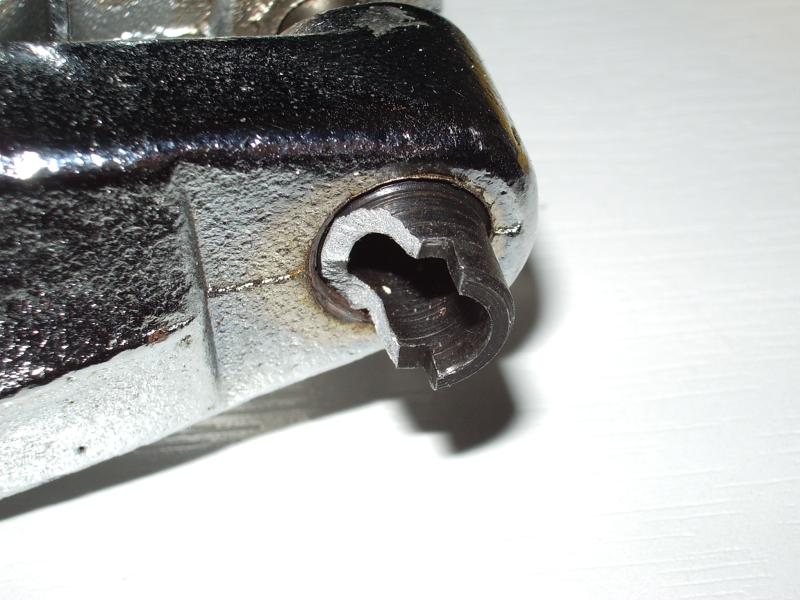 In the end, apart from punching a couple of test pads using the 7mm punch that was already fitted when I opened the box, I didn’t use it. Until this afternoon, when I wanted to make some smaller pads. That was when I discovered what a shoddy piece of manufacturing this eBay hole punch is.
The 7mm die was a bit stiff to remove but came out with the aid of a screwdriver in the slots provided. The 4.5mm one I put in would bind at each turn and got more and more stiff. Eventually it wouldn’t budge, so I put the screwdriver blade in sideways to get a bit of leverage. There was a crack and a whole piece of the die broke off! I guess it was made by the same firm that makes K3 knobs for Elecraft!
It’s far enough in that I can make 4.5mm pads, but not only does it not want to go in any further but it also doesn’t want to come out. I might be able to get it out with some Mole grips but this is probably the most useful size and I might never be able to get it back in again next time I need it. Crap!

Julian Moss, G4ILO, is a regular contributor to AmateurRadio.com and writes from Cumbria, England. Contact him at [email protected].
The NA-034 operation that almost wasn’t, Part IV
If you haven’t read Part I , Part II and Part III first, you might want to do that.
As I mentioned previously, once I got the power problem figured out I was able to easily make contacts with other stations, which is what I’d planned to do in the first place. In the first half-hour of operating, I made contact with about 25 stations. Compared to rare DX stations this is very slow, but my operation was very low-key and I’d often spend a bit of time to briefly chat with the other operators, so this was far from the typical “K2DBK you are 59 thanks QR Zed” that you hear in those operations. I was having a great time working stations, and after a while I started to hear folks in Europe calling me, but they were covered up by the US callers. I figured that I’d try to work as many folks outside North America as I could, so I asked for only stations outside of North America, and worked 9 stations in as many minutes, all outside the US. I worked folks in Italy, Poland, Spain, and Belarus all in fairly quick succession. Thanks very much to the folks in North America who very politely stood by while I worked the other stations. Not one single person from North America called when I was asking for the other folks. (By way of explanation, it is an unfortunate fact of life that all-too-often hams will “call out of turn” and ignore requests from contacts from specific areas. When they do that, it just slows down the process.)
After I had contacted the folks outside North America, I went back to working any station that was calling me, and I picked up a mix of both US stations and some more DX from Italy, Serbia, and Belgium. I had a couple of other chats during a few lulls with Larry, KH6ITY, and finally shut down for the day at around 4:45PM local time to head back to have dinner with the Sharon in St. Armands.
 |
| The Legendary Salty Dog |
The following day I got somewhat of a later start than expected, but I did want to stop at The Old Salty Dog again, this time to have what is one of the most delicious and presumably most unhealthy foods in existence: Their signature “Salty Dog”. A Salty Dog is a jumbo hot dog dipped in beer batter and deep fried. It is indescribably delicious. Of course, it must be washed down with a nice cold bevarage (a Bass Ale for me, thanks).
When I arrived at the park, the parking spot I’d had the first day was taken, and I was having trouble finding a place to park where I could be close enough to be able to set up on a picnic table, but as I was walking around (I’d parked temporarily “out of range”) someone left and I was able to pull in close to a different table, this time right out in the sun. The only downside to this location was there there wasn’t another table nearby so that I could set up the antenna on a different table, but I was able to set up the antenna on one end of the table and operate from the other without any issues. Well, not at first.
 |
| Buddistick set up for 20m with counterpoise thrown over a tree branch |
I started off working stations on 20 meters and worked a number of US and Canadian stations, as well as a station from Slovakia and one from Hungary. I’d been trying to set up a contact with Scott, NE1RD, who was now operating from the island of St. Thomas (as KP2/NE1RD) on and off for a while by this point. I emailed Scott from my BlackBerry that I was currently on 14.260Mhz and Scott quickly threw together an antenna for 20m, but by the time he got on the air, I’d lost the frequency that I was using and we didn’t make the contact. “Losing” the frequency means that I was using it to make contacts, but due to the way that propagation works, sometimes two (or more) stations will be using the same frequency, both unable to hear each other until the conditions change, then usually one of the stations will wind up “taking over” the frequency. This is what happened in my case, and I “lost”.
As it turned out, Scott had already built a 2 element beam for 15 meters using the Buddipole gear that he’d brought, which would provide a much better signal to me. I reconfigured my antenna for 15m (very easy to do), and coordinating once again via email we were able to contact each other. Neither Scott nor I consider ourselves as “rag-chewers”, which are folks who prefer to get on the radio and have a nice long chat with someone. I’ve certainly done that in the past, but most of my current interest is in working DX stations and contesting, both of which require very brief, specific exchanges of information. However, Scott and I found that we had a lot to talk about, so the contact was not a brief one. About 10 or 15 minutes into our conversation, I got another visit from Mr. Murphy.
As we were talking on the radio, I thought that I noticed the odd sound in my headset that I’d heard previously. This didn’t make any sense, since the car was still running (as you’ll recall, the battery alone was unable to provide sufficient power to transmit at full power). Scott then commented that he could hear my signal starting to distort, so it sounded like the problem was returning. We both tried to figure out what might be going wrong, and while trying to figure out what could have “broken” while operating (nothing had been touched since I originally got on the air that day), I thought that perhaps our relatively long chat had caused the power cables to heat, which in turn would increase the resistance in the cables, reducing the power available to the radio. I felt along the length of the cable but didn’t feel any warm spots. I was about to rule out the wire heating up when I realized that I’d closed the hood on the car almost all the way and when I opened it, obviously (in hindsight) the portion of the power cable that was closest to the battery, and under the hood, was quite warm. It hadn’t heated up solely from transmitting, but also because it was a warm day and with the engine running and the hood closed, the engine compartment was quite hot. The solution to the problem was now quite simple: Leave the hood of the car open.
After just a minute or two, the power cables cooled enough to allow enough power to flow so that my radio was again transmitting normally. Scott and I finished our chat, and I decided to stay on 15m where I worked stations from Puerto Rico, Italy, Portugal, and the US, finally finishing up with a nice chat with Andy, AE6Y who was operating from Aruba as P49Y, having just arrived there prior to the WPX Contest that was coming up. When I finished with Andy, it was time to shut the station down to head back for a final family dinner, since we were leaving for home the next day.
In all, despite losing a day of operating due to the power problem, I would rate this as a successful operation for a number of reasons. First, I did finally get on the air and made contact with 16 different DXCC entities (countries) and at least 10 different states. (It was almost certainly more than that, but I didn’t always get the name of the state for the station that I was talking to.) Second, I was able to give back a bit to the hobby by talking to, and with Larry, KH6ITY’s class. If even one of his students goes on to get his ham license that would really be a wonderful extra benefit. Third, I’ve made a number of new friends both as the result of both my operation on the air and the attempts to troubleshoot with the wonderful folks from the Buddipole Users Group. Fourth, I’ve learned a bit more than I already knew about troubleshooting this type of problem. Finally, and perhaps most important, despite the issues that I ran into, I had a really good time doing this.
I have really enjoyed writing this series, and I want to thank those of you who’ve commented about how you’ve enjoyed it as well. There is a bit more information that I want to share that I’m going to write as an epilogue to this series, please look for that soon.
Until then,
73,
David, K2DBK
Update: I’ve posted the epilogue.

David Kozinn, K2DBK, is a regular contributor to AmateurRadio.com and writes from New Jersey, USA. Contact him at [email protected].
Polar Bear on Hontoon Island
Look out Hontoon Island the Polar Bear of Florida is coming your way! Good Friday, 2 April 2010 Polar Bear QRP member #173 (aka K4UPG) will attempt to qualify Hontoon Island as a US Island on the Air by making 25 contacts including at least 2 DXCC entities.

Hontoon Island is a beautiful place for some QRP Portable Ops
Activity will start about 1400Z after the ferry ride over to the island. Plan is to use special callsign K4T for recognition.
Look for us on 30m cw (10.106-10.116 MHz) and 20m cw 14.050-14.070 MHz and on the hour we will check 15m 21.060-21.070. If anyone shows up to assist, will also attempt ssb on 14.250-14.260 MHz island corridor. All ops will be QRP so we’ll need your help to pull us out!
***************************************************************************************

Fishing is good!
If things go well, our Central Florida QRP group may consider this as a new operating site! If you are in the area, come on and check it out with us.

Hontoon Island closes when the sun goes down!
Thanks to Florida State Parks for the fine pictures!
P.S. We did it 4.2.2010! Over 30 QSO’s update coming! I am TIRED!
Kelly McClelland, K4UPG, is a regular contributor to AmateurRadio.com and writes from Florida, USA. Contact him at [email protected].
QRP Record Shattered
It's expected that Goblosovits will be nominated and inducted into the QRP Hall of Fame this year at Dayton.

Anthony Good, K3NG, is a regular contributor to AmateurRadio.com and writes from Pennsylvania, USA. Contact him at [email protected].
Interview with the Red Hot Chili Peppers
"I've got it loaded up for 160...the whole tower. Radials all over the [expletive] place. Damn thing was hell to put up!" he said.
Kiedis and Flea laugh as we walk inside. Flea's living room filled with old tube gear of every kind and parts are lying everywhere on tables, shelves and the floor. Amid the mess, various Hallicrafters, Collins, and Drake rigs can be seen, though Flea's affinity for Johnson equipment is obvious as it dominates the landscape.
"I love AM. A bunch of wankers told me AM was old and too wide on the band. I told 'em to [expletive] off and I went to AM and never looked back."
Flea takes us into a back room. A four bay Gates AM transmitter graces the room which is amazingly spotless in contrast with the previous room. Flea flips on a huge breaker mounted to a piece of plywood on the wall and the beast comes to life and a deafening roar of fans and tube air blowers fills the room. We go into the next room which is soundproof and contains his operating position with a mixing board and a high-end Heil microphone on a boom.
Kiedes explains that he currently doesn't have a station, though he often comes over to Flea's shack on the weekend and operates while having a few beers and grilling steaks.
(This is a brief excerpt from my upcoming book, Unknown and Undercover Amateur Radio, due out in September from Simon & Shuster.. )

Anthony Good, K3NG, is a regular contributor to AmateurRadio.com and writes from Pennsylvania, USA. Contact him at [email protected].
 Ham Radio Deluxe |
 W5SWL Electronics |
 Ham Radio Prep |
 KB3IFH QSL Cards  Hip Ham Shirts  HamRadioAuctions HamRadioAuctions Reliance Antennas Reliance Antennas Enigma Shop Enigma Shop |  morseDX  Ni4L Antennas  R&L Electronics R&L Electronics antennas.us antennas.us QRV QRV |
- Matt W1MST, Managing Editor
