 |
 NS Ladder (20 August 2010)
 20 August 2010 | by
 I used to be an ardent participant in the NCCC Sprint Ladder competition when I lived in the Central time zone. Now that I’m back in the Eastern time zone, 10:30 pm local is a little late for me. But, W9RE conned me into doing it. After some fits and starts last night (including using the NAQP module for TR instead of the Sprint module, which caused me to QLF my first two serial numbers), I had a good time. Here are the numbers:
NCCC Sprint Ladder - Aug 20

 Call: K8GU
 Operator(s): K8GU
 Station: K8GU

 Class: Single Op LP
 QTH: MD
 Operating Time (hrs): 0.5
 Radios: SO2R

 Summary:
 Band  QSOs  Mults
 -------------------
 160:
 80:   9      7
 40:   8      7
 20:  12      9
 15:
 10:
 -------------------
 Total:  29     23  Total Score = 667

 Club: Potomac Valley Radio Club
So, I have some work to do. I was getting up into the 40s of QSOs when I left off two years ago. More sprints!
Ethan Miller, K8GU, is a regular contributor to AmateurRadio.com and writes from Maryland, USA. Contact him at [email protected].
Cannot Get Enough QRP Portable
Now into the third week of my sabbatical, I am surprised how much I want to get out and operate my QRP portable gear. Guess I have deprived myself over the years of being a confirmed workaholic and avoiding time off, vacations, and time for my favorite hobby.

Grrrrr! The Polar Bears Are On The Loose!
This should be a good weekend for QRP portable. The Polar Bear QRP Group will be out for another Polar Bear Summer Picnic Event and Polar Bears from Spain to the West Coast of the US will be out looking for BSO’s. Grrrrr! I am PB #173 and we’re over 200 members now. With the new Twitter and APRS connections to QRPSPOTS.COM which also point to the excellent spotting site of K3UK with a section for FISTS/QRP Ops to spot and sked one another, there are plenty of ways to use technology to help find each other. Add in a few other contests and state QSO parties, and there should be some buzzing going on this weekend. Makes me wonder when the FOBB results will be announced! Buzzzz Buzzzzz
I’ll be out and if all goes well I will be field testing a new C Pole antenna based on the suggestion I received from Neil W0LVZ. I added some switchable capacitance to my BLT+ and have rewound the main toroid to see if I can push the range a bit more with it so will have a delta loop and probably my W3EDP in the air too. I love playing with antennas and am still amazed when the ones I build actually make contacts!
Give a listen for me on the QRP watering holes on 40m, 30m and 20m Saturday morning. I’ll be self spotting on QRPSPOTS and the K3UK sites to make it easier for you to find me. Let me know how my newest antenna is workin’.
72,
Kelly K4UPG
PB #173
Kelly McClelland, K4UPG, is a regular contributor to AmateurRadio.com and writes from Florida, USA. Contact him at [email protected].
K3 Killer imminent?
Kenwood Corporation recently announced the October launch of the long-awaited TS-590 HF/6m transceiver. Described in some quarters as a “K3 killer”, the new transceiver uses the novel (for modern Japanese radios) approach of a single conversion receiver with a low (11.374MHz) IF on the amateur bands to give what is claimed to be exceptional dynamic range.
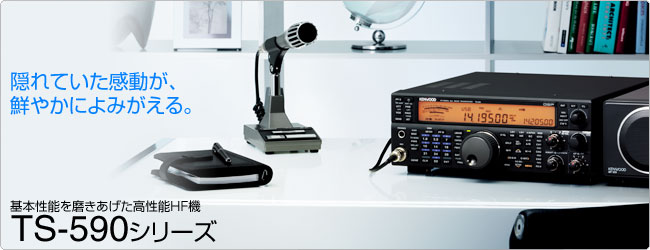
The news release bears careful reading, as what it doesn’t say is as interesting as what it does. The receiver will have a 6KHz roofing filter directly after the mixer, followed by a 500Hz or 2.7KHz filter (both included as standard) after the post-amplifier. But a footnote states that “For 1.8/3.5/7/14/21MHz amateur bands, when receiving in CW/FSK/SSB modes down conversion is selected automatically if the final passband is 2.7kHz or less” which suggests that a conventional (for the Japanese) up conversion will be used for the short wave bands, AM or FM modes, the WARC bands, 10 and 6m.
I think the current obsession with receiver performance figures is absurd. I am far from being a member of the Elecraft fan club, but even assuming the TS-590 does turn out to outperform the K3 on the main amateur bands, I think anyone considering swapping their K3 for the Kenwood on that basis would be foolish.
As far as I know, the Kenwood will not have an option for a second receiver, nor one for a panadapter. It will not have the transverter and external preamp interfacing (which I use to insert the MFJ noise canceller) nor an independent receive antenna input. I doubt that it will have fully isolated audio inputs for data nor a soft ALC in digital modes that allows you to vary the power output in PSK31 without fiddling with computer mixer settings to avoid IMD problems. I’m sure it won’t have an internal 144MHz option either.
Whenever I look at the features of the K3 that I am currently using, I realize that there is nothing else on the market at a price I am willing to pay, nor which would fit on my operating desk, that could do what my K3 is doing.
The price of the TS-590 will be 228,900 Yen, or about £2,000 by the time you have added on VAT (never mind the usual exorbitant UK dealer mark-up.) If it goes on sale here at £2,499 I will not be surprised. Compared to currently available HF radios and Kenwood’s previous HF models including the TS-570 to which this new rig bears a considerable similarity, the TS-590 looks overpriced for what in the end is nothing more than a compact HF/6m radio.
A K3 killer? I don’t think so!

Julian Moss, G4ILO, is a regular contributor to AmateurRadio.com and writes from Cumbria, England. Contact him at [email protected].
When Everything Has Failed

The main character of the story, Robert Earle, has lost all of his family due to epidemics and other bad stuff, but him and others in the town of Union Grove, NY are attempting to get back to normalcy, or the best that can be expected in this new world. Radio surprisingly doesn't get much of a mention in the story. At the beginning of the story the electricity comes on once every few weeks or months and for very short periods, sometimes seconds, with a household AM radio left on to signal its arrival. Earle is only able to find a few AM broadcast stations carrying evangelists and unfortunately he lacks a shortwave radio. Eventually Earle breaks with the past and his hopes for the old world to return and symbolically turns off the AM radio.
Being the radio artisan I am, my mind began to explore the technical side of this. I think in this post-apocalyptic world some form of amateur radio would survive and would likely be the only network for information and communications. We've proved over the years beyond a doubt that low power operation works, and with energy in such short supply, low power would be a necessity. Even a simple low power radio fashioned much like a Pixie or a Rockmite would be priceless. I envision radio communications networks forming, much like they did in the early 20th century, to pass messages. When the Big One (tm) hits communications won't involve florescent yellow vests and go kits, it will be scrounging wire and parts from landfills and making homemade batteries and generators. Who knows, maybe even spark will make a comeback. In the story it's clear that those with food, energy, natural resources, and people are those with power. Communications would undoubtedly be another source of power and those with the ability to communicate long distances would be an asset to their community, or as was often the case in the story, a feudal lord.
Despite being a story of gloom, pain, and despair, there were times of great joy, beauty, and simplicity. It certainly made me think, especially while reading on a huge hunk of metal in the ocean with nearly 5,000 people on board and enough fuel to power a small city.

Anthony Good, K3NG, is a regular contributor to AmateurRadio.com and writes from Pennsylvania, USA. Contact him at [email protected].
Mobile In New York City
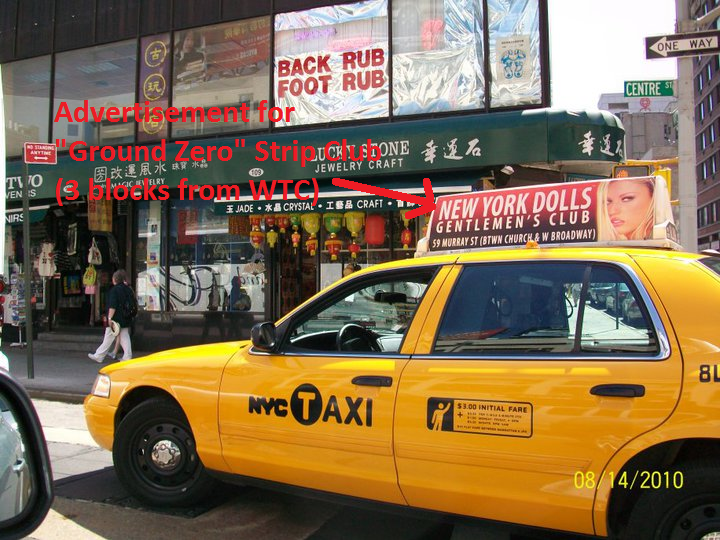
Hallowed ground?
But I digress....

Anthony Good, K3NG, is a regular contributor to AmateurRadio.com and writes from Pennsylvania, USA. Contact him at [email protected].
Handiham World for 18 August 2010
Welcome to Handiham World!
Second remote base station goes into beta testing phase
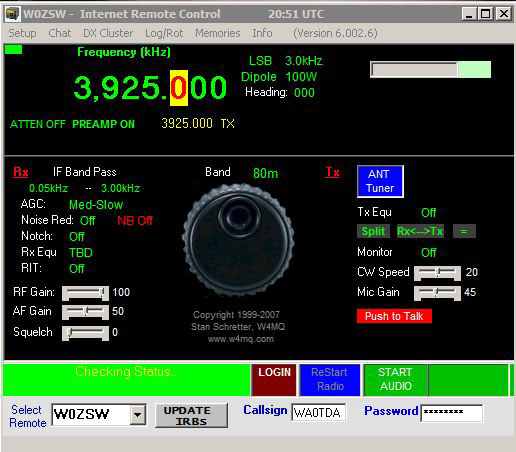
With the addition of the W0ZSW remote base at Handiham headquarters, members now have a choice of two remote base stations. Users who have signed up for access to the “Handiham Remote Base” (W0EQO) will be added automatically to the list for W0ZSW, with the same password. The remote base concept has been gaining in popularity as more of us want to be able to use an HF radio without the need to drag along a lot of extra gear while traveling. Some users live in condos or antenna-restricted areas and simply want to expand their operating horizons beyond VHF and UHF repeaters. The remote base stations allow users to operate real HF radios connected to real antennas, and make friends far and wide on the HF bands.
The W0EQO station at Courage North, a Kenwood TS-480SAT equipped with the VG-S1 voice module, is preferred by our members who are blind. We have a Kenwood TS-570S set up at this time in the W0ZSW station at Camp Courage. The two stations are quite a distance apart, hundreds of miles, so they can be used at the same time with no chance of interference between the two. W0EQO is in the tall pines of northern Minnesota, near the headwaters of the Mississippi river. The location is a very quiet one, with little interference. We have reports of users making very successful DX contacts. The station operates on 80 through 10 meters. This is due to the capabilities of the current antenna, a G5RV, which will not tune on 160 or 6 meters. The W0ZSW remote base station has a 300 foot “W0OXB Special” antenna, up an average of 45 feet. This antenna covers 160 through 6 meters, including the WARC bands. The W0EQO station will hopefully get an upgraded antenna system later this year, bringing it more in line with the W0ZSW station for band coverage and performance. Camp Courage is about 40 miles west of Minneapolis.
The DSL internet service has given us a great deal of trouble at Camp Courage, so the W0ZSW station has been off line as much or more than it has been on line. We hope to remedy this situation soon, but I have been tied up in meetings and office work and have been running behind with this project. One other issue with the W0ZSW remote is that we do not have the frequency speech readout working. The TS-570 does have the VS-3 voice module, but apparently the software does not support the voice readout. It may be necessary to replace the radio with another model for which the speech output will work if we cannot find a solution for the TS-570.
Lyle, K0LR, and Eliot, KE0N, have been working with me on this project and we are anxious to get it out of beta testing and on the air for our users. Please keep watching the Handiham website and this newsletter for the latest updates.
73,
Patrick Tice, WA0TDA
Handiham Manager
[email protected]

Pat Tice, WA0TDA, is the manager of HANDI-HAM and a regular contributor to AmateurRadio.com. Contact him at [email protected].
Sound card packet modem
Last night I spent a couple of hours trying a program that had been mentioned by Chris, G4HYG in the Cross Country Wireless Yahoo group called AX25-SCS. It is a sound card modem for 300baud and 1200baud packet which was written by Frank Perkins, WB5IPM for use with a now unsupported APRS program called APRS-SCS (nothing to do with the SCS that makes TNC hardware.) Chris claimed it works better than AGW Packet Engine at decoding HF APRS. It is also freeware. I had never heard of this program before despite quite a bit of time spent searching for packet sound card software. You can get it from the TAPR website, installation is simply a matter of unzipping it into a folder, and there is a .pdf file that tells you almost all you need to know to run it.
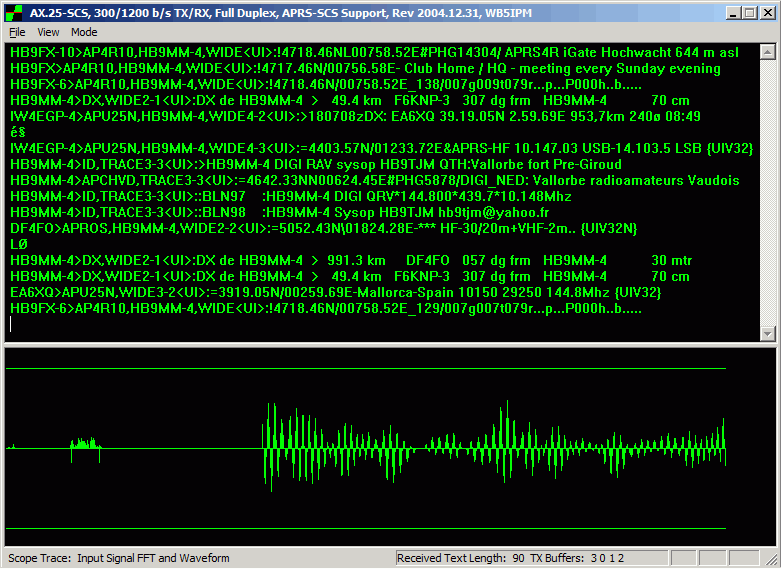
One of the things the documentation doesn’t tell you is that AX25-SCS uses the default Windows sound card. For testing, I had to make the sound card used by my Elecraft K3 the default. This is not convenient, as it robs my computer of the ability to play sound through the speakers (and risks broadcasting Windows sounds and web audio over the airwaves) so sadly I am unable to make permanent use of it.
The documentation also doesn’t advise you to select “Cancel APRS-SCS support” when you first run it. If you don’t, nothing will appear in the window until an APRS client connects to it, making you think that the program just isn’t working.
For HF use you need to select 300baud from the menu, as 1200baud is the default. You also need to select Enable SCS TX to allow transmission. It would be a bit of an annoyance that you have to do this every time you start the program as the settings are not remembered.
Once the receiver is tuned in – AX25-SCS uses the KAM standard 1600 / 1800Hz tones for HF – and the sound levels adjusted so that packets are being decoded, you can close and then restart the program this time choosing “Enable APRS-SCS support” from the initial dialog. After that, start APRSIS32 and create a KISS TNC RF port at address 127.0.0.1 port 4000. When APRSIS32 connects, the display should appear on the AX25-SCS window as it did before and this time any packets received should be displayed in APRSIS32 as well. Beacons and messages sent from APRSIS32 should result in audio being generated by the sound card modem for transmission.
For transmit, APRS-SCS requires the transceiver to use VOX. This is not a problem with my K3 which supports VOX via the rear audio connections and which allows the delay to be adjusted down to a very short interval, but it would make the program unusable with other transceivers like the FT-817 which don’t.
I tried running APRS-SCS and AGWPE Pro in parallel to see which was the better decoder but it was difficult to do a fair trial as APRS-SCS needs a lower level of audio input so the signal level was either too high for one program or too low for the other. As far as I could tell, APRS-SCS appeared more tolerant of off-frequency signals but less sensitive to weak ones than AGWPE Pro. This is also the verdict of Chris, G4HYG.
I would be willing to give APRS-SCS more of a try, but the inability to specify which sound card to use makes that impractical. It’s a pity that APRS-SCS is not open source so that someone could fix that and the other minor niggles, because it is a nice program that is quite easy to set up and use with APRSIS32.

Julian Moss, G4ILO, is a regular contributor to AmateurRadio.com and writes from Cumbria, England. Contact him at [email protected].
 Ham Radio Deluxe |
 W5SWL Electronics |
 Ham Radio Prep |
 KB3IFH QSL Cards  Hip Ham Shirts  HamRadioAuctions HamRadioAuctions Reliance Antennas Reliance Antennas Enigma Shop Enigma Shop |  morseDX  Ni4L Antennas  R&L Electronics R&L Electronics antennas.us antennas.us QRV QRV |
- Matt W1MST, Managing Editor
