 |
 QRSS Keyer
 12 October 2010 | by
 I have operated most of the reverse beacon and weak signal modes but one that I have never tried is QRSS. “QRS” is the Morse Q code for “send slowly” so QRSS means send very slowly indeed. QRSS beacons send your call using very, very slow Morse, which listeners receive using a “grabber”, which is a slow moving waterfall display. If you’re lucky, they will email you a reception report, but you can also look for your signal yourself on one of the various online grabbers.
One day I planned to build my own QRSS beacon. When I found out that Hans Summers G0UPL had produced a QRSS beacon kit I was disappointed to learn that all the kits had been sold at the US Dayton hamfest. However I recently discovered that he had made a new batch of kits and not wanting to wait and find out they were all sold at the G-QRP Convention I ordered one at the weekend. The order process was extremely professional (amateur components suppliers who expect you to email your order and credit card details please note) and the kit arrived this morning.
I opened the envelope and was very impressed to find that the package included a printed copy of the instructions as I had expected to have to print them myself from the website. The PCB is of very high quality. But as I tipped the parts on to the workbench my heart immediately sank.
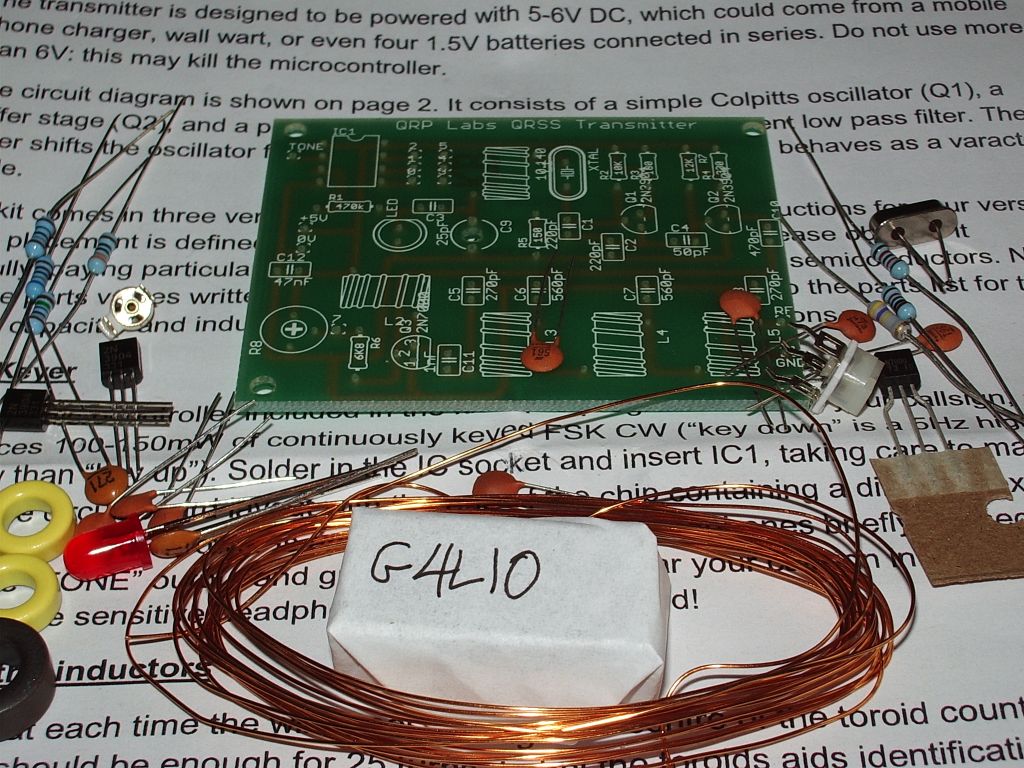
Because the microcontroller chip which keys the transmitter and has been preprogrammed with my callsign was wrapped in a slip of paper on which was written G4LIO, a transposition of my call that often afflicts people on the air as well – I don’t know why. The incorrect call was also written on the jiffy bag the kit came in. I checked the emailed copy of the order and the mistake was not mine.
After an exchange of emails with Hans I installed the chip in its socket, applied power and connected an earpiece to pin 2 which produces an audio tone to verify whether the chip had been programmed incorrectly. It sent G4LIO. 🙁 Why is it always me that gets the kits with the missing or faulty parts?

Julian Moss, G4ILO, is a regular contributor to AmateurRadio.com and writes from Cumbria, England. Contact him at [email protected].
And they’re racing!
Interesting thread on the softrock40 email list about how easy it is these days to get a good sense of how well your station and the ionosphere are performing in an almost ‘hands-free’ way.
Increasingly modes like WSPR and tools like SDR have enabled us to let the radio do its thing and in a short amount of time access detailed logs of our successes – where we were heard. The softrock40ers were using this approach to compare their SDR rigs performance to other sets.
Rob KL7NA joined in the conversation. He pointed to his recent paper on what he calls ‘Robotic radio‘ that he presented to the DCC meeting in Vancouver WA recently.
Your radio is doing what the operator used to do automatically, and as you have been finding out, it is really fun to horse race different software demodulators, receivers and antennas, and radio locations this way. I am trying to promote it as a way for our youth to get into amateur radio. They seem to be very enamored by robotics.
Rob’s paper is full of interesting ideas and he lists the building blocks of Robotic radio… hardware, software and networks. He introduces his open source project CW Robot which is still in alpha and explains the thinking behind it.
This looks like a very rewarding place to play and discover – and there’s already a road map.
Stephen Rapley, VK2RH, is a regular contributor to AmateurRadio.com and writes from New South Wales, Australia. Contact him at [email protected].
You know it’s autumn when the tropo starts
We’ve had a busy weekend which didn’t contain too much radio. Last week was a bit of a sad one for us; we scattered my Dad’s ashes on Monday and then on Thursday we had to say goodbye to our much-loved cat, Buttons who was 16. A cat-less house was not good for us and we were ‘directed’ to visit the animal rescue centre, run by the Blue Cross at Burford. There we met and fell in love with two new cat friends, Pippi and Max, who I am pleased to say have kindly consented to come and live with us. They moved in yesterday and needless to say, much fun and time is being spent, looking after them and trying to settle them in.
When I popped out to the garden centre yesterday, I noticed some reasonable 145MHz tropo to the east, with the GB3PO repeater in Ipswich coming in better than normal on the mobile. Just before I went to bed, I saw a tweet from G0PKT on the east coast saying that he’d been working some good DX on VHF/UHF. I stopped off in the shack on the way to bed and had a quick QSO with Juergen, DL5EBS (JO31) on 432MHz. Signals were great – also, DJ6JJ was on 432.200 working Polish stations. Interestingly, I was able to detect fragments of the signals from the Polish stations.
This morning, on the drive to work, conditions were still good. On 145.650, I heard ON0WV identify very clearly a couple of times. And during our commuter ‘net’ on GB3TD (433.075) we were surprised and delighted to be joined by John, G6HKQ from Norfolk.

Tim Kirby, G4VXE, is a regular contributor to AmateurRadio.com and writes from Oxfordshire, England. Contact him at [email protected].
On the cliffs in West Cumbria
Cumbria is famous as the county of the English Lake District but it has more to offer than mountain walks. I don’t agree with Alfred Wainwright who said he could not see the point of walking round a mountain when you could climb to the top of it. There are many beautiful walks in the valleys and round the lakes which my wife (and my knees) much prefer over climbing and descending even if they don’t offer much scope for making radio contacts. Less well known, but just as spectacular, are parts of the coastline. One of our favourite outings is to park in the village of Sandwith and go for a walk along the cliffs. This is where we went last Sunday.
 |
| Map of the walk (from aprs.fi Google Maps) |
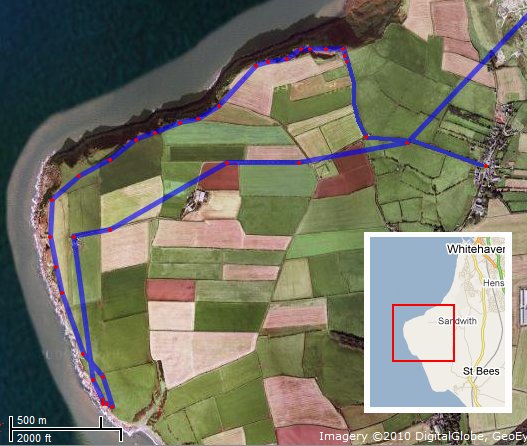
The map of the walk shows the path that was tracked on Google Maps APRS, with some additions by me where my position was not tracked.
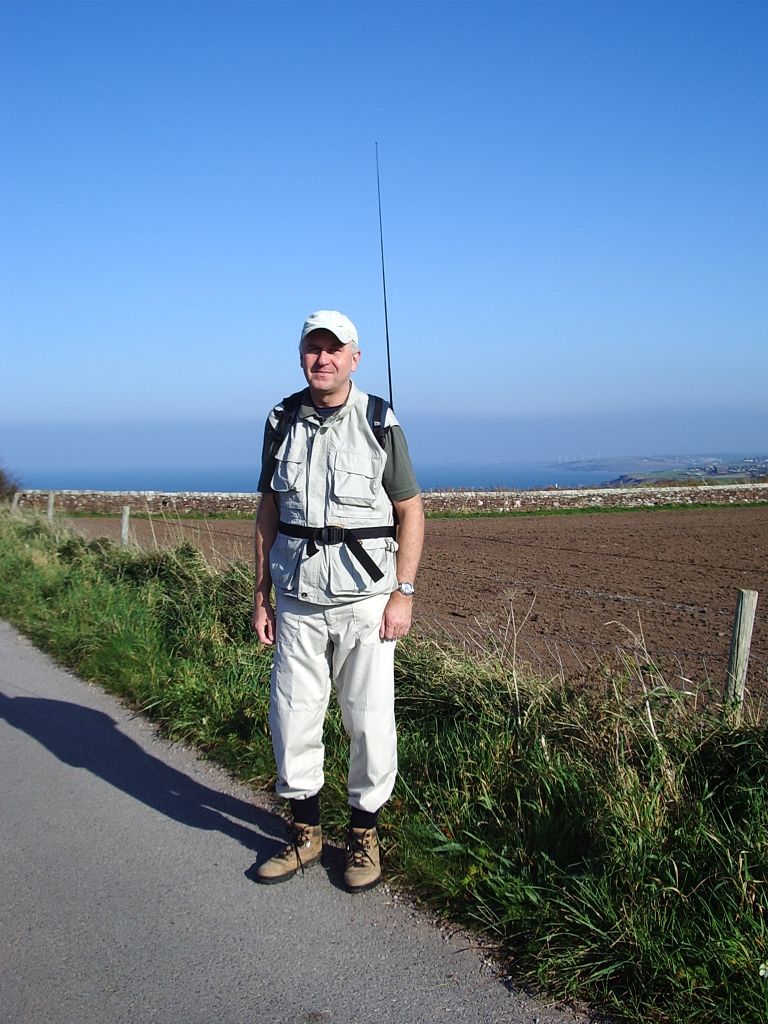
I was using my VX-8GR with the 5/8 telescopic whip in my rucksack, as shown in the picture on the right. I operate pedestrian portable like this when I don’t expect to encounter too many people who will give me strange looks or think I am a dork. The radio sits in a little mesh pocket on the side of the rucksack which was probably meant to carry a water bottle. The antenna is supported by pushing it through a string loop attached to one of the zips of the main pocket of the rucksack. It is quite stable and does not flex the spring or the mounting at all.
I don’t know what the SWR is like. Possibly it isn’t that good as the radio does not have me holding it to provide a ground plane. Perhaps I should try clipping a 19 inch “tail” to the outer ring of the BNC connector as a counterpoise? But even without it, it worked well. Most of my position beacons were received by MM1BHO across the water in Scotland so I was able to see the track after the walk. I also received some interesting APRS DX, of which more later.
But back to the walk. The weather was glorious, as you can see from the pictures. The temperature was around 20 degrees Celsius with only a slight breeze. The view from the cliffs was spectacular and always reminds me a bit of Cornwall. To think that people pay money to come on holiday to places like this!
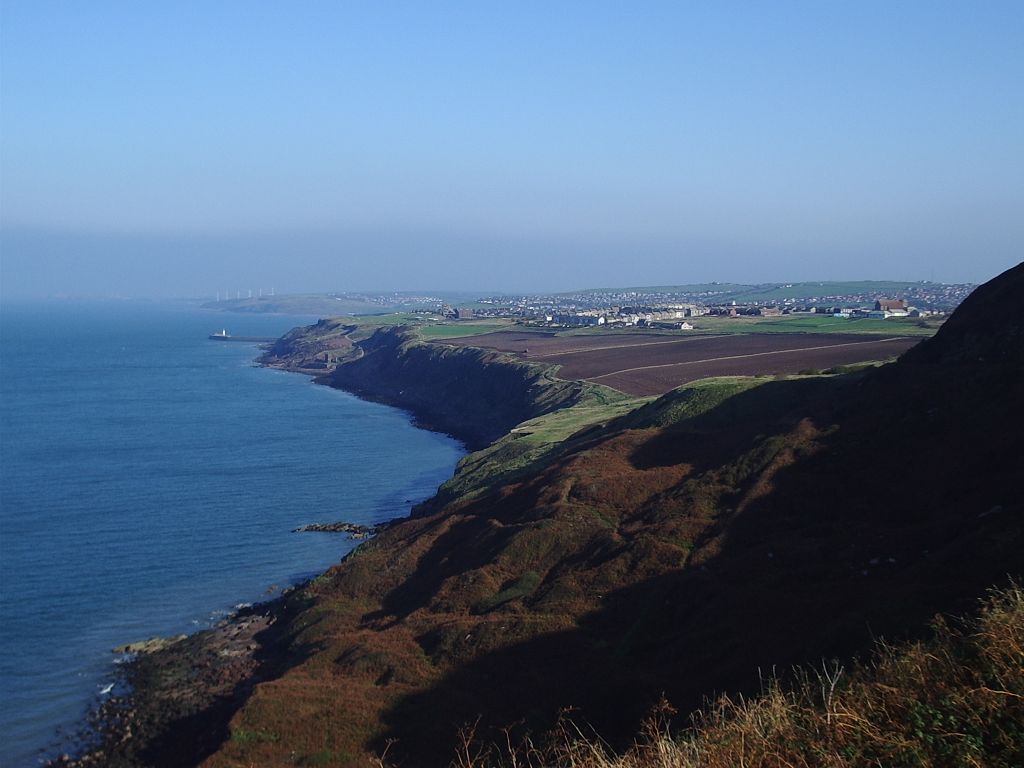
We walked for about an hour along the cliffs, stopping now and again to watch some birds through binoculars or just take in the view. This is an important area for wildlife and the Royal Society for the Protection of Birds (RSPB) has set up several places where you can watch them with safety on the edge of the cliffs.
You can walk right along these cliffs as far as St. Bees, where there are people and cafes and ice cream kiosks. But we usually stop at Fleswick Bay, a beach backed by the high cliffs that is always quiet and secluded even in the height of the season because it isn’t possible to reach it by car, it can only be accessed by footpaths. We call it our private beach because we often have it to ourselves.

This Sunday we didn’t go down to the beach because we saw from the clifftops that the tide was in and the sea was right up to the foot of the cliffs. So we had our picnic lunch in one of the RSPB birdwatching areas instead. I made a couple of FM contacts using the VX-8GR, including one with another portable station on a 2,500ft mountain top in Wales. Then we started the walk back.
On the way back I heard the VX-8GR braaping away constantly such as I hadn’t heard since we were in Prague. On my return home I scrolled through the station list and observed that for a couple of minutes between 12:28 and 12:30 UTC I had received beacons from several DX stations including F4EQD-1 and OZ2DXE-2. These beacons had actually been digipeated by a station in south west England but that was still an amazing distance to receive signals on a VHF handheld, even if I didn’t hear them direct.
The glorious weather had also produced fantastic tropospheric propagation which was enjoyed by people in most parts of Europe. I wished I had climbed to the top of a mountain as I would certainly have heard more there than I did down on the west coast and perhaps have worked some real handheld VHF DX. But you can’t predict propagation and it was still a wonderful day’s walk.

Julian Moss, G4ILO, is a regular contributor to AmateurRadio.com and writes from Cumbria, England. Contact him at [email protected].
Denmark on 2m!
I have just worked OZ1HXM on 2m SSB, using 100W to a SuperMoxon antenna in the attic of a house on the west coast of England with a lot of mountains between here and Denmark. The fact that he was using 200W to a pair of 10 element Yagis must have helped a bit!
This is my first European DX on 2m and I am thrilled to bits. I can only imagine what the band must be like for people with a decent VHF take-off. OZ1HXM is the only station I can currently hear on the band so there doesn’t seem to be much chance of working anyone else.

Julian Moss, G4ILO, is a regular contributor to AmateurRadio.com and writes from Cumbria, England. Contact him at [email protected].
ICQ Podcast Series Three Episode Twenty-One – Operating in Australia (10 October 2010)
Series Three Episode Twenty-One of the ICQ Amateur / Ham Radio Podcast. News Stories include:
- Chinese Antarctic base on-air
- Amateur Radio can prevent age-related dementia
- Isle of Man ARS on-air for JOTA
- Ham radio repeater at risk
- GB7DE D-Star gateway offline
- RSGB launch amateur radio survey
- Power Line Adapters interfere with ambulance frequencies
- Austrian Military Radio Society 50th anniversary
- Green Comet approaches Earth
- EU Radio Spectrum Policy
- New web-based HF SDR receiver
- Irish radio amateur achieves 10-band DXCC
Your feedback, upcoming events, and Martin (M1MRB) discusses operating in Australia with Adrian (M0GLJ).
Colin Butler, M6BOY, is the host of the ICQ Podcast, a weekly radio show about Amateur Radio. Contact him at [email protected].
2010 California QSO Party
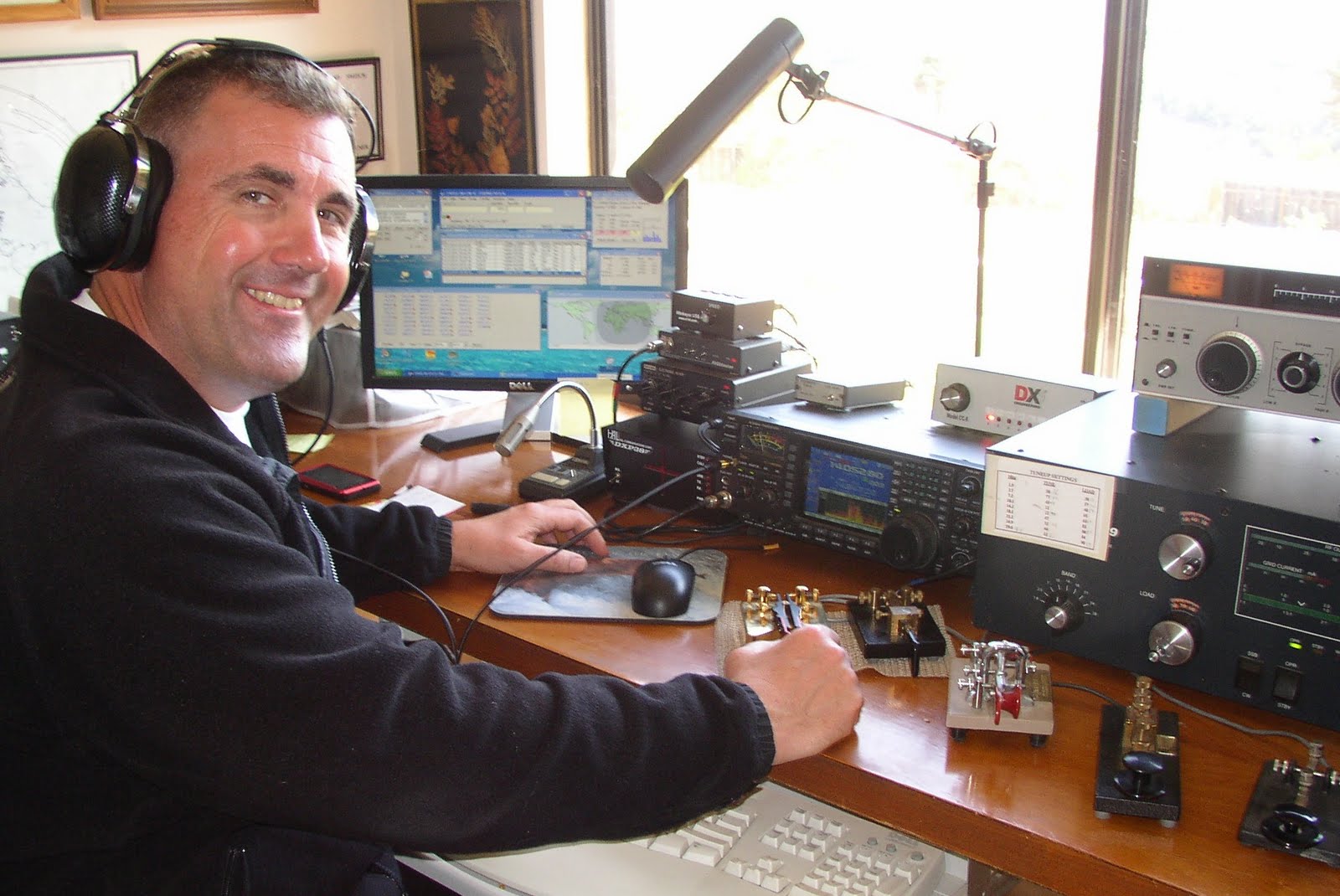 Photograph 1 taken Sunday afternoon as rate drops in half and I’m logging California counties on 20m with the yagi pointed due east.
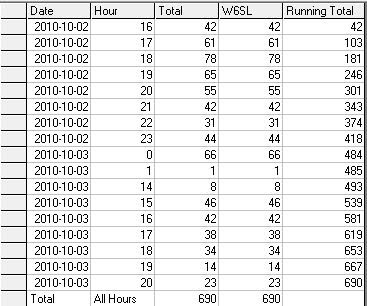 Photograph 2 illustrates my rate per hour through 17 hours of operation. What a blast operating CW through CQP weekend as 3 point Qs drove my score into six digits.
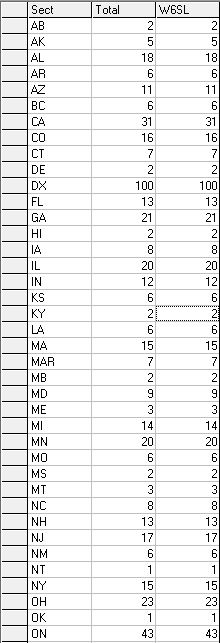 Photograph 3 is a list of sections worked and one notes band conditions were long especially on 15 and 20m however 10m never ionized over the weekend. I miss 10m activity and hope the band will finally play next year?
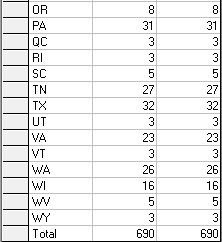 Photograph 4 is a continuation of sections worked and I did not log Nebraska, North Dakota, South Dakota, Nevada, or Utah in addition two Canadian sections as well.
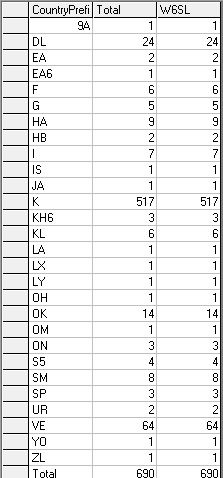 Photograph 5 breaks down my country total and each European counted as new one against my DXCC pursuit. What a joy finally hearing stations across the Atlantic on the wireless set!
California QSO Party.
Rest is important going into any RadioSport event and fatigue does not help one’s morale when butt-in-the-chair time is a priority. I was wiped out when Saturday evening rolled across the ionosphere and called it at 0100 UTC when CW signals blurred my brain. I slept 12 hours then returned to the keyer catching long skip into Europe on Sunday morning.
I recognized many stations who filled the log at the shackadelic in Shell Beach and, what a hoot, logging Dave, K2DSL and Victor, KD2HE both of whom journal their wireless activities on the Internet.
Likewise, logging Bill, N6ZFO who was booming through the ICOM wireless on Sunday morning from Lake County. A great signal from his location. I want to thank the North California Contest Club for sponsoring a stellar event. The California QSO Party is world class!
KA3DRR/6 CQP Score.
40m = 92Qs and 1 Section.
20m = 376 Qs and 25 Sections.
15m = 222 Qs and 26 Sections.
Total Qs = 690
Total Sections = 52
Total Points = 107, 640
Spirit of Ham Radio.
Likewise John, W6SL is a stellar example when speaking about the spirit of ham radio and the friendship that follows our hobby. He opened his operating chair and put me in the pilot seat of his accomplished station. John is a 5 band DXCC operator with 300 plus entities to his credit. He is one who patiently waits for a new country recently logging Andorra not an easy feat from the west coast given the mountainous terrain surrounding this country.
The spirit of ham radio moves through the ether in mysterious ways. I was speaking with Dick Norton, N6AA about moving to the next level in RadioSport during an annual swap fest in Santa Maria, California. He mentioned guest operating just as W6SL walked within range of our conversation. John asked about my guest operating interest and invited me over without hesitation.
I enjoyed operating a wireless set using an amplifier and competitive grade antenna systems through last weekend because of John, W6SL.
Conclusion.
Rest is important going into an event. RadioSport is fun and reasonably defined goals make a difference in the operating chair. I logged new countries, grid squares, and counties through last weekend while learning about propagation using competitive grade antennas.
The spirit of ham radio endures through men like John, W6SL, Bill, N6ZFO, and organizations like the Northern California Contest Club.
73 from the shackadelic.

Scot Morrison, KA3DRR, is a regular contributor to AmateurRadio.com and writes from California, USA.
 Ham Radio Deluxe |
 W5SWL Electronics |
 Ham Radio Prep |
 KB3IFH QSL Cards  Hip Ham Shirts  HamRadioAuctions HamRadioAuctions Reliance Antennas Reliance Antennas Enigma Shop Enigma Shop |  morseDX  Ni4L Antennas  R&L Electronics R&L Electronics antennas.us antennas.us QRV QRV |
- Matt W1MST, Managing Editor
