 |
 With a little help from my friends, Part II
 12 December 2010 | by
 You might want to read Part I of this if you haven’t done so already. It’ll be a lot less confusing that way.
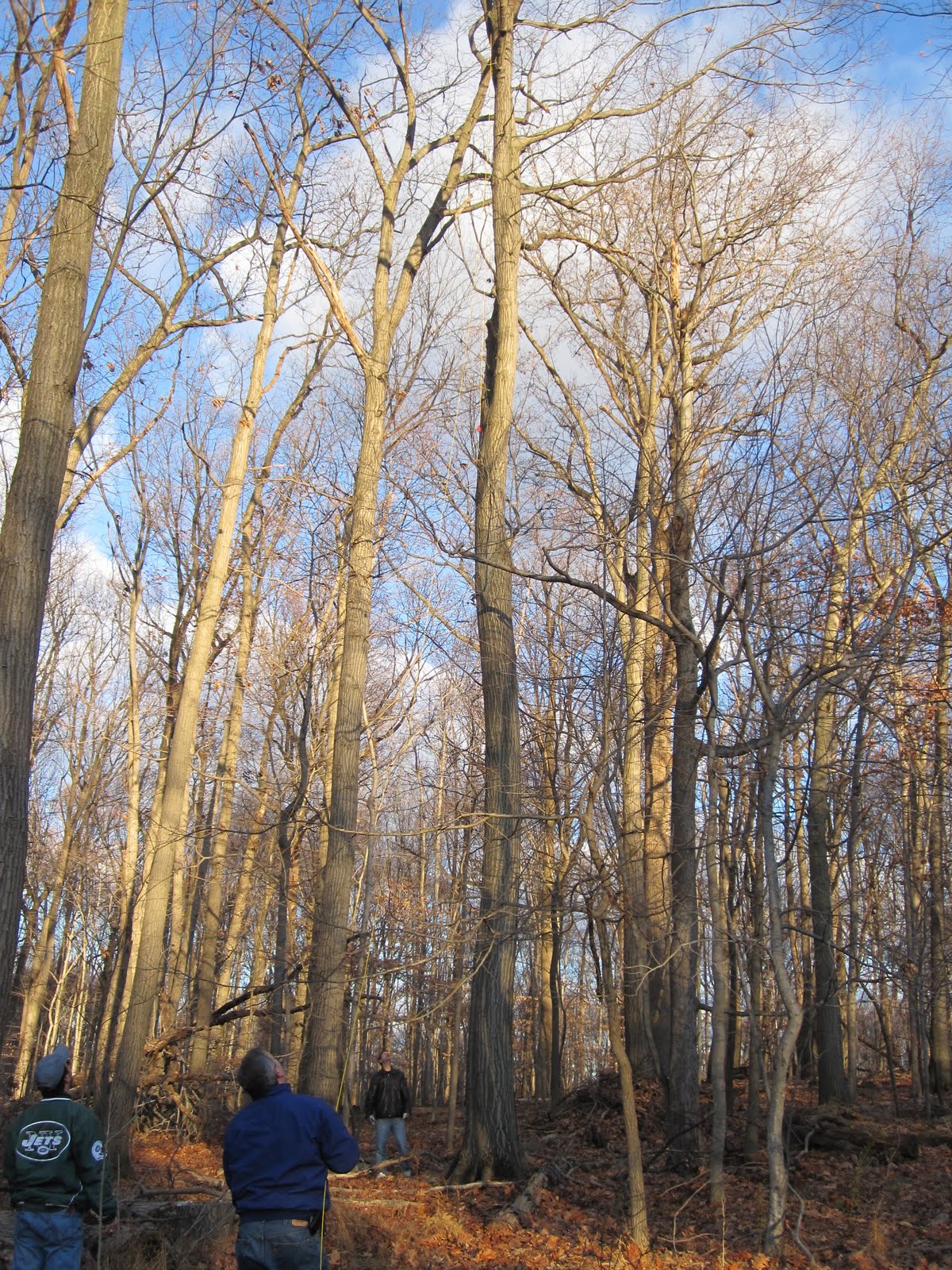
After we got the far-end rope over the correct limb, we tied off one end of the new G5RV and pulled it up in the air a bit just to make sure that we didn’t run into any unexpected issues. That went well, so we moved to the near-end tree to attach the other end to that rope, which I’d lowered before David and Matthew arrived. We attached the other end of the G5RV to the rope and I started to pull it up, but the insulator at the end snagged on a branch and we couldn’t get the antenna up nearly high enough. We dropped the antenna down to the ground and tried to use the rope itself as a kind of saw to see if we could break off the very small branch that was causing the problem. After about 5 or 10 minutes, we realized that 1) It was getting dark enough that we were having trouble seeing where the rope was going, and 2) The cold wind that had been blowing all afternoon wasn’t stopping, and with the lack of sun it had gone from chilly to “ok, we’ve just about had enough of this” cold. It was time for plan B.
Several years ago, when having some work done on that “near-end” tree, I had the tree service put a pulley with some rope as high as they could up in the tree. I’ve played with it a few times trying some wire antennas, but hadn’t used it at all for the last year or two. I figured that at least temporarily we could attach the remaining end of the G5RV to that rope to get it up into the air. If needed, Matthew could come back another time and try to get a rope over a higher branch with the potato gun, but there wasn’t enough light to try that. (The reason why I didn’t want to use the pulley permanently was because it wasn’t all that high up in the tree, plus I didn’t want to lose the use of that for any future experiments.) That worked out pretty well, and David, K2DSL, was nice enough to volunteer to head up to the roof to connect the antenna to the feedline. Next, it was into the shack to see if the antenna would load up (and to warm up!), which it did. I made sure that the tuner would be able to find a match as it had with the old antenna and was able to do so on all bands. By that point, we were all exhausted and cold, so after thanking Matthew and David they left. I did a little cleanup outside and headed in. I made one quick QSO (KP2B on 40m CW) just to make sure that the antenna actually worked, then headed out for dinner with Sharon.
The next morning I figured that I’d see what things actually looked like, and I was disappointed when I realized that the antenna was even lower than I’d thought. The pulley just wasn’t very high up in the tree, and my G5RV was nowhere near a “flat-top” installation. I figured that I’d take a look at the other rope to see if I could do anything with it, hoping that perhaps “something” had happened overnight that might allow me to use it instead of the lower-than-expected pulley rope. It seems that I finally got a little break: I got both ends of the old rope and pulled back and forth to see if the resistance caused by that little branch was any less. As soon as I did, I saw a small piece of ice drop off from where the rope was wrapped around the branch, followed by a small piece of a branch. I think that what happened was that the rope rubbing the night before had allowed some sap to get onto the branch, which froze overnight and must have caused the branch to break. As a result, the little branch that was not allowing the insulator to move when pulled up into the tree was no longer in the way.
I dropped down the antenna from the “pulley rope” (which required me to toss the throw bag over the antenna wire, and carefully pull it down) and attached it to the older rope, and pulled it up. It took a little bit of work, but I was able to get it back up to nearly the original height. I spent about another 30 minutes more permanently tying off the ends of the rope, including connecting the ends to bungee cords that I use as shock absorbers before heading inside. I was able to make a few DX contacts on several bands, and in the week since then, I’ve actually picked up a couple of new countries on 80m (Iceland and Faroe Islands) as well as some new bands or modes for other countries (Congo on 20m phone and CW and 17m RTTY, Gabon on 20m CW, and Dominica on 40m RTTY, among others), so I guess the antenna is working well.
I’m still not very happy with the mechanical connections, and in particular, the connection from the ladderline to the coax feedline. I don’t think they are nearly as sturdy as the antenna that I replaced, but I hope that what’s there now will work out until the spring. At that point I want to replace some of what I think are the weak points with something sturdier. I may also look into other types of antennas, but for now, I’m very happy to be back on the air.

David Kozinn, K2DBK, is a regular contributor to AmateurRadio.com and writes from New Jersey, USA. Contact him at [email protected].
APRS could have helped protect Charles and Camilla
The Metropolitan Police are denying that the incident in which a car carrying Prince Charles and his wife came under attack by student demonstrators occurred through a failure in radio communications. Reports that royal protection officers were using a different frequency to those policing the protest are “untrue”, the police insist. The two teams were in communication using email or mobile phones. They what?? Perhaps they had carrier pigeons as a backup.
It seems to me that someone needs to knock on the door of Scotland Yard and suggest that they need a tactical digital communications system on the lines of APRS. If the officers escorting the royal couple could have seen on a map display where the demonstrators were and exchanged brief tactical messages with other officers in the area, this embarrassing incident would never have happened. It makes you wonder just how competent our security forces really are.

Julian Moss, G4ILO, is a regular contributor to AmateurRadio.com and writes from Cumbria, England. Contact him at [email protected].
Lost memory
I am a strong believer that “if it ain’t broke, don’t fix it.” I also find that, particularly if it is anything to do with computers, the law “if something can go wrong, it will” operates with near 100% certainty. As a consequence, I an extremely reluctant to upgrade or update anything unless it fixes a problem I’ve experienced or am likely to experience, or provides new functionality that I actually need. I get anxious whenever the “Windows has new updates” balloon pops up, worrying about whether my computer is going to get screwed fixing some obscure vulnerability I don’t understand in some bit of Windows I may not even use.
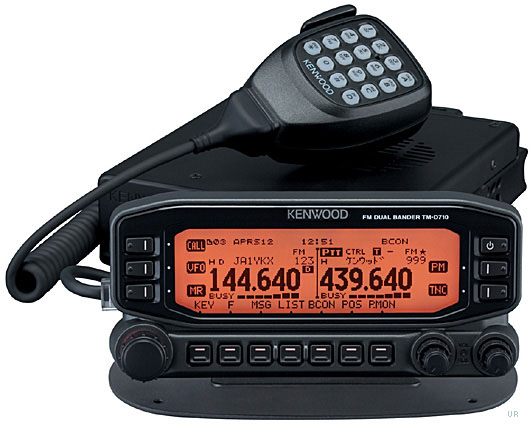
One of the problems of getting old is that you tend to forget things and sometimes I do something having forgotten that the day before I had decided there was no point in doing it. And so, this morning, I decided to update the firmware in my Kenwood TH-D710 in order that it could identify from APRS packets newer radios like the VX-8G and TH-D72, regardless of the fact that I hardly ever use the radio’s own APRS display and the update would not affect the ability of APRSIS32 to identify these radios on my PC.
I downloaded the update software, browsed the help file that came with it and then ran the program and followed the instructions it displayed. The update went without a hitch. I was a bit concerned when the concluding instruction was to perform a full reset, which I thought would erase all my settings, but I had not seen any dire warnings about this so I went ahead. Sure enough, on completion the Kenwood was now in factory default mode, with all my settings and laboriously entered memory channels lost forever! Arrghh! If only there was a System Restore for real life!
Kenwood does provide a free memory management program for the TM-D710, MCP-2A, which can be used to edit, back up and restore memories and settings. However it needs a second serial cable attached to a different port to the one used for the built-in TNC. I had never got around to making up another cable as I don’t need computer control of the radio and storing channels in memory manually isn’t that hard so I don’t usually bother with programming software. Besides, all four serial ports on the shack PC were already used. So I had never tried it.
In the hope that it would save me time re-entering the settings and memories, which I could then back up, I installed MCP-2A and moved my serial cable from the radio’s control head (the TNC port) to the PC port at the back. But no matter what I tried, the program could not communicate with the radio.
Now I’m completely stumped. I’m using the same PC serial port and cable as I used to perform the upgrade and access the TNC, so the port and serial cable work. I tried the “Auto” baud rate setting and several manual selections and it made no difference. As this is the first time I have used it, I’m wondering if the rear PC port is actually broken. Have I overlooked something stupid? Is there anything else I could try to test if it works?

Julian Moss, G4ILO, is a regular contributor to AmateurRadio.com and writes from Cumbria, England. Contact him at [email protected].
UPS: Useless Pathetic Shower
What a useless courier company UPS is. I ordered something from Martin Lynch on Tuesday afternoon and was informed that it had been shipped an hour later by UPS. At 7.45 on Wednesday morning the UPS tracking site showed the package had arrived in the depot at Carlisle and was marked as in transit for delivery that day. I waited in all day and nothing arrived. Later that evening I checked the site again and found the message at 6.45pm: THE PACKAGE WAS MISSED AT THE UPS FACILITY, UPS WILL DELIVER ON THE NEXT BUSINESS DAY / DELIVERY RESCHEDULE. The delivery date was changed to today (Thursday.)
So I waited in all day today and still no UPS man. Again I checked the UPS tracking site this evening and the same message had been added, this time at 7.48pm. The delivery date is now rescheduled for tomorrow (Friday.)
We have had poor weather conditions and the roads have been icy but FedEx called as usual around lunch time to the neighbour across the road who has a regular delivery. And Interlink Direct called to pick up two packages of items I’d sold on eBay the shipment of which I’d arranged online yesterday. (Tip: use the code XMAS10 to get £5 off a delivery before Christmas.) So I don’t think that’s a valid excuse, really.
I wonder what the chances are that I will actually receive my new toy tomorrow? I just hope that when it does arrive I don’t find they have lived up to the other meaning of their acronym: United Package Smashers.

Julian Moss, G4ILO, is a regular contributor to AmateurRadio.com and writes from Cumbria, England. Contact him at [email protected].
With a little help from my friends, Part I
As I wrote about last week, my G5RV antenna came down as the result of a storm. My original plan was to try to repair the existing antenna, but after examining it further, I decided that I’d be better off buying a replacement which is exactly what I did. (I’ll look at fixing the old one one of these days.) Matthew, K2NUD, and David, K2DSL, volunteered to come over last Saturday to help me get the antenna up in air, so we planned to meet at my house at around 2:30 which would give me enough time to run out to KJI Electronics to pick up the new antenna. The one that they had in stock from from MFJ and while it didn’t seem to be build as sturdily as what I’d had in the air, I figured that getting some copper in the air was better than nothing.
 |
| Throw bag |
The old antenna was suspended between two trees with the farthest end being at probably 60 or 70 feet in the air. (I’m terrible at estimating height, but I know that it’s significantly higher than the roof of my house, which is at about 35 feet or so.) The antenna snapped at the far end, leaving the line suspending it about 50 feet in the air and somewhat tangled in the branches. As a result, it wasn’t possible to get to that rope to re-use it, so Matthew came up with a better plan: a potato gun. The link tells you lots about potato guns, but in a nutshell, this is a gun made from PVC pipe that’s used to fire a potato. (Why would you do that? Because it’s unbelievably fun!) In order to get the potato to do something other than just shoot up in the air (and make a pretty cool sound), we put the throw bag which trailed 100 feet of line on top of the potato which worked like a champ.
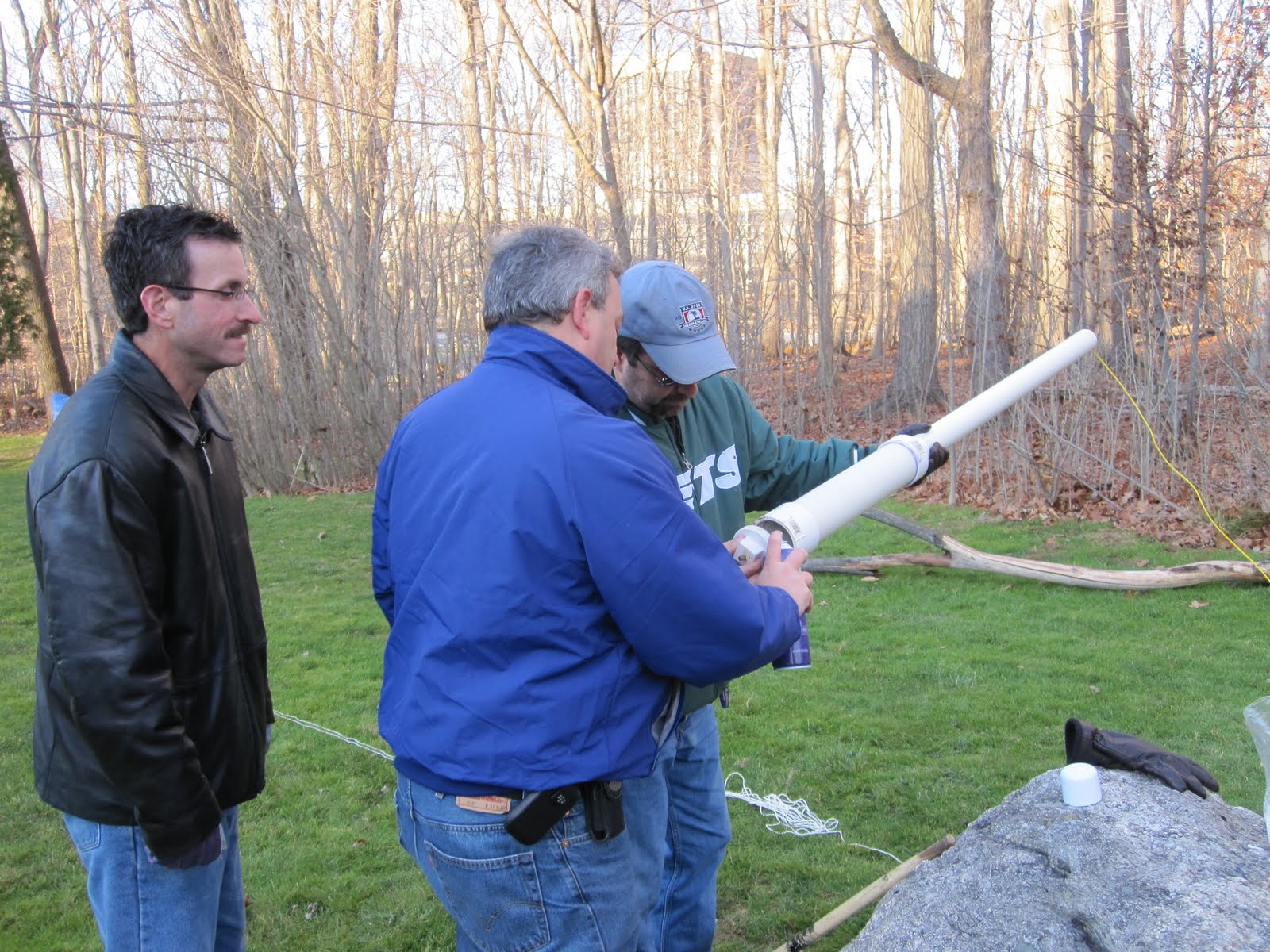
The way the potato gun works is that you put the “fuel” (old-fashioned non-environmentally friendly Aqua-Net hairspray) into a chamber and ignite it which forces a potato, previously jammed down the barrel, up and out of the barrel at a pretty high rate of speed. In the picture here, Matthew (green jacket) is holding the gun while I spray in the “fuel” into the combustion chamber. That’s David on the left. Somewhere out there I’m sure someone has done some calculations about amount of force that’s being generated to launch the potato that far (not to mention the added one-pound throw bag), but physics aside, as I mentioned earlier, it’s fun to watch.
It took a few tries, but Matthew managed to get the line over the right branch, which is a lot more difficult than it sounds. Although made somewhat easier by the fact that there are no leaves on the trees at this time of the year, it’s still a lot like threading a needle that’s about 50 feet away and 75 feet in the air. We came close a couple of times, but Matthew wanted to keep trying to get it exactly right, which I think was an excuse to fire off a few more shots. There’s more to the story which I’ll talk about in Part II, but here’s a video taken by my son Justin during one of the “firings”. (If you’re reading this in an RSS reader or email and can’t see the video, you click here to go directly to the video on YouTube.)

David Kozinn, K2DBK, is a regular contributor to AmateurRadio.com and writes from New Jersey, USA. Contact him at [email protected].
With a little help from my friends, Part I
As I wrote about last week, my G5RV antenna came down as the result of a storm. My original plan was to try to repair the existing antenna, but after examining it further, I decided that I’d be better off buying a replacement which is exactly what I did. (I’ll look at fixing the old one one of these days.) Matthew, K2NUD, and David, K2DSL, volunteered to come over last Saturday to help me get the antenna up in air, so we planned to meet at my house at around 2:30 which would give me enough time to run out to KJI Electronics to pick up the new antenna. The one that they had in stock from from MFJ and while it didn’t seem to be build as sturdily as what I’d had in the air, I figured that getting some copper in the air was better than nothing.
|
| Throw bag |
The old antenna was suspended between two trees with the farthest end being at probably 60 or 70 feet in the air. (I’m terrible at estimating height, but I know that it’s significantly higher than the roof of my house, which is at about 35 feet or so.) The antenna snapped at the far end, leaving the line suspending it about 50 feet in the air and somewhat tangled in the branches. As a result, it wasn’t possible to get to that rope to re-use it, so Matthew came up with a better plan: a potato gun. The link tells you lots about potato guns, but in a nutshell, this is a gun made from PVC pipe that’s used to fire a potato. (Why would you do that? Because it’s unbelievably fun!) In order to get the potato to do something other than just shoot up in the air (and make a pretty cool sound), we put the throw bag which trailed 100 feet of line on top of the potato which worked like a champ.
The way the potato gun works is that you put the “fuel” (old-fashioned non-environmentally friendly Aqua-Net hairspray) into a chamber and ignite it which forces a potato, previously jammed down the barrel, up and out of the barrel at a pretty high rate of speed. In the picture here, Matthew (green jacket) is holding the gun while I spray in the “fuel” into the combustion chamber. That’s David on the left. Somewhere out there I’m sure someone has done some calculations about amount of force that’s being generated to launch the potato that far (not to mention the added one-pound throw bag), but physics aside, as I mentioned earlier, it’s fun to watch.
It took a few tries, but Matthew managed to get the line over the right branch, which is a lot more difficult than it sounds. Although made somewhat easier by the fact that there are no leaves on the trees at this time of the year, it’s still a lot like threading a needle that’s about 50 feet away and 75 feet in the air. We came close a couple of times, but Matthew wanted to keep trying to get it exactly right, which I think was an excuse to fire off a few more shots. There’s more to the story which I’ll talk about in Part II, but here’s a video taken by my son Justin during one of the “firings”. (If you’re reading this in an RSS reader or email and can’t see the video, you click here to go directly to the video on YouTube.)
David Kozinn, K2DBK, is a regular contributor to AmateurRadio.com and writes from New Jersey, USA. Contact him at [email protected].
More real radio and Cyrillic morse
When I called Radcom VHF editor, David, G4ASR last weekend in the 144MHz AFS contest, it was fun when he replied “Good to see you doing real radio, Tim, don’t bother with the other stuff!”. Thanks for reading the blog, Dave!
There couldn’t be anything much more ‘real radio’ than 3.5MHz CW, could there? Last night Julie was out at a WI meeting (oooh – I haven’t mentioned her Etsy shop for a while – there are some lovely gifts for someone in your life – look out particularly for things she’s made featuring our home-grown lavender) and I switched on the HF radio for some ‘company’ as some people would the TV…
Looking around the low-end of 80m, I tuned from station to station to get a sense of what the band was doing and stopped on a CW ragchew to see who it was. My CW’s not quite as sharp as it used to be, but it’s not bad and I don’t miss much. But this QSO was getting me worried – I really couldn’t understand much at all. Fortunately all became clear when the callsigns were sent – it was a UA4 talking to a UA1. Of course, they were using Cyrillic Morse – hence it seemed like some of the characters might be familiar, yet weren’t! I always love to hear those Russian QSOs and on a winter’s evening, it’s surprising just how deep into the Asian continent you can hear if the band’s quiet.
And so it was until an expedition landed in the vicinity (ZL8X?) and all hell broke loose. Then, it was time to go and make a coffee…

Tim Kirby, G4VXE, is a regular contributor to AmateurRadio.com and writes from Oxfordshire, England. Contact him at [email protected].
 Ham Radio Deluxe |
 W5SWL Electronics |
 Ham Radio Prep |
 KB3IFH QSL Cards  Hip Ham Shirts  HamRadioAuctions HamRadioAuctions Reliance Antennas Reliance Antennas Enigma Shop Enigma Shop |  morseDX  Ni4L Antennas  R&L Electronics R&L Electronics antennas.us antennas.us QRV QRV |
- Matt W1MST, Managing Editor
