 |
 Ham Radio Needs a Super Hero!
 16 March 2011 | by
 What if we had a super hero for ham radio? Many hams are sci-fi fans and love movies and TV shows like Star Trek, Star Wars, Superman and all those other great gadget filled plots. Who hasn’t grown up dreaming of flying to the rescue of the world?
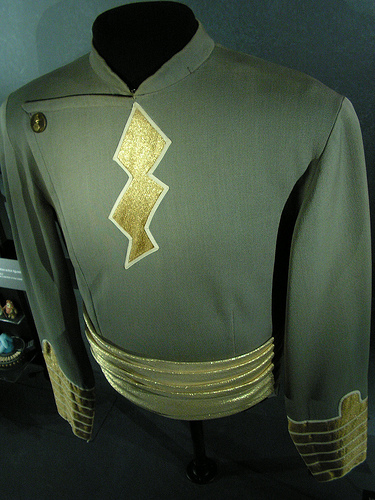
Wanted: Super Hero (tks to Wiki Commons)
If we were to design our own super hero, what would be the unique abilities and powers that he or she would have? Imagine the cw speed that a super hero could handle while building a surface mount kit using heat vision or x-rays. Hmmmm…. Antenna man? Sparks? Capt. Hertz? Contester Supremo? Commander QRP? Elmer? What would we call this super hero?
It’s your chance to sound off… let’s hear your thoughts. Leave a comment and dream on…
Kelly McClelland, K4UPG, is a regular contributor to AmateurRadio.com and writes from Florida, USA. Contact him at [email protected].
Silencing the Albrecht
Since writing about the Albrecht AE2990AFS 10m multimode handheld, where I wrote: “There is an annoying beep at every button press, but this can easily be silenced” I have received several emails asking “How?” The answer is in the manual, on page 25, under “Other Functions: Beep Tone and Roger Beep” which is how I found out how to do it.
To save any further questions, here’s how I did it. Press and hold the SCAN/M-SCN button for three seconds, then press it again. The display will show BP ON. Press the DOWN button and it will change to BP OF which is obviously short for BEEP OFF. There is a musical note icon on the LCD that appears when the beep tone is on. The roger beep is activated / disabled in the same way if you press SCAN/M-SCN twice after the initial long press. There is another icon of two musical notes to show when that is on. Easy, isn’t it?
Actually there’s no need to hold SCAN/M-SCN for as long as three seconds, only until the display changes to SH. This doesn’t seem to be mentioned in the manual at all but it is clearly where you set the amount of shift used when the “+” and “-” shift functions are invoked to work through a repeater (repeater shift is enabled by pressing FUNC followed by STEP/CH.FR, but it only works in the ham band modes.) On mine, the shift was set to 600kHz so you need to dial it down to 100 for 10m repeater use. It’s a pity the radio doesn’t support selectable CTCSS repeater access tones since most 10m repeaters in Europe use something other than the provided 88.5Hz access tone.
I suppose it is possible that this function is not available in similar radios to the Albrecht sold under other names. It appears to be the case that other radios don’t possess the ability to switch between 10m and 12m by pressing the CH 9/19 button.

Julian Moss, G4ILO, is a regular contributor to AmateurRadio.com and writes from Cumbria, England. Contact him at [email protected].
Dymo LabelManager 210D
This is my latest eBay acquisition: a Dymo LabelManager 210D. Clearly there is not a big demand for these things on eBay – I got it for £5.50, though the postage was nearly as much again. So the total cost was less than a third what it would have been to buy a new one. That is about what it is worth to me as I only wanted it to make front panel labels for my home-brew projects.
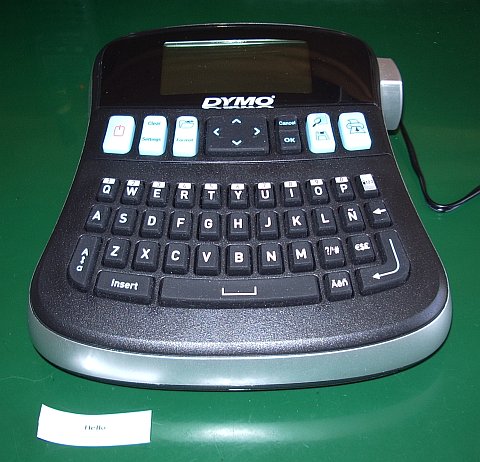
The labelmaker was used and didn’t come with a manual or power supply but that wasn’t a problem. Google quickly located a PDF manual to print out and I have plenty of power sources in the shack. The one thing I will have to watch is that although the DC input uses a standard barrel type connector the centre pin is negative which is the opposite of everything else that uses that type of connector. So I will have to remember to check the polarity before plugging it in.
The label tape that came with the machine produces black text on white. But you can buy cassettes of tape in different colours. This particular model accepts cassettes that include a choice of white on transparent, which will look better on painted front panels.

Black on transparent would look better on bare metal than these labels which I made for the front panel of my 10MHz rubidium frequency standard but they still look better than the old embossed Dymo labels we used to use in the 70s. (I also have none too fond memories of trying to label front panels using Letraset.) Life is much easier for those constructors who don’t care what their projects look like but I always like to try to make them look professional even if the construction itself is definitely amateur!

Julian Moss, G4ILO, is a regular contributor to AmateurRadio.com and writes from Cumbria, England. Contact him at [email protected].
Weird things heard on the radio
As I was sitting next to my radio this afternoon, I had tuned to a frequency on 12 meters sideband where I’d seen a spot for a station in Madagascar (5R). I need 5R on 12m so I was listening to see if the station would build (grow in strength) to the point where I could attempt a contact. While waiting for that to happen, I heard another US station call him, giving his callsign properly. Although I couldn’t hear the 5R station, what I did hear was this (callsign changed mostly because I don’t remember exactly what it was, and to protect the not-so-innocent): “5R8UI, did you come back to my-callsign question mark?“. The US station literally said the words “question mark“!
Ok, while I can understand that had this happened on CW, the operation would have sent the code for “question mark”, but given that this was a voice contact, wouldn’t you think that the tone of voice and the fact that the sentence was actually a question would have been sufficient?
There’s been a lot written about the overuse of the CW Q-signals when using a voice mode, and while you can debate some of those (saying “My QTH is River Vale” rather than saying “I live in River Vale”), it just struck me as pretty funny to hear someone actually say the words “question mark“.
By way of explanation, the reason the Q-codes were invented was to provide a shorthand way to send information over telegraph lines and later wireless. It does make sense in particular on CW, where the operators at both ends of the conversation might not both be fluent in a common language. So on CW, it does make sense to say “QTH River Vale New Jersey” rather than spelling it out. It becomes, along with some other abbreviations, it’s own common language.

Weird things heard on the radio
As I was sitting next to my radio this afternoon, I had tuned to a frequency on 12 meters sideband where I’d seen a spot for a station in Madagascar (5R). I need 5R on 12m so I was listening to see if the station would build (grow in strength) to the point where I could attempt a contact. While waiting for that to happen, I heard another US station call him, giving his callsign properly. Although I couldn’t hear the 5R station, what I did hear was this (callsign changed mostly because I don’t remember exactly what it was, and to protect the not-so-innocent): “5R8UI, did you come back to my-callsign question mark?“. The US station literally said the words “question mark“!
Ok, while I can understand that had this happened on CW, the operation would have sent the code for “question mark”, but given that this was a voice contact, wouldn’t you think that the tone of voice and the fact that the sentence was actually a question would have been sufficient?
There’s been a lot written about the overuse of the CW Q-signals when using a voice mode, and while you can debate some of those (saying “My QTH is River Vale” rather than saying “I live in River Vale”), it just struck me as pretty funny to hear someone actually say the words “question mark“.
By way of explanation, the reason the Q-codes were invented was to provide a shorthand way to send information over telegraph lines and later wireless. It does make sense in particular on CW, where the operators at both ends of the conversation might not both be fluent in a common language. So on CW, it does make sense to say “QTH River Vale New Jersey” rather than spelling it out. It becomes, along with some other abbreviations, it’s own common language.
David Kozinn, K2DBK, is a regular contributor to AmateurRadio.com and writes from New Jersey, USA. Contact him at [email protected].
Appalachian Trail Dreaming
Now that the snow has melted and ice fishing season is over, I’m looking forward to doing some Summits On The Air (SOTA) operation on the Appalachian Trail (AT). This video I found from Kevin Gallagher beautifully summarizes a six month AT journey into a few minutes and got me thinking about SOTA operation from the trail.


A nuclear disaster
I’m taking a bit of a break from radio. Perhaps it’s because I’m feeling a bit run down or perhaps I’m suffering from radio burnout but at the moment I can’t even be bothered to turn on APRS or WSPR or something that will run even when I’m not there.
I think the events unfolding in Japan may have an influence on my feelings too. We are used to seeing disasters on our TV screens but the scale of this one seems to eclipse anything in living memory. Hobby activity seems frivolous when you consider how the inhabitants of north eastern Japan must be feeling. The floods that hit my own home town seemed devastating at the time and after more than a year many people are still not back in their homes. But by comparison with what has happened in Japan, what happened to us pales into insignificance. It will take many years before life returns to normal for many people there – if it ever can for the tens of thousands who will have lost family members and loved ones in the disaster. My heart goes out to them. It is yet another reminder that the works of man are as nothing compared to the forces of nature.
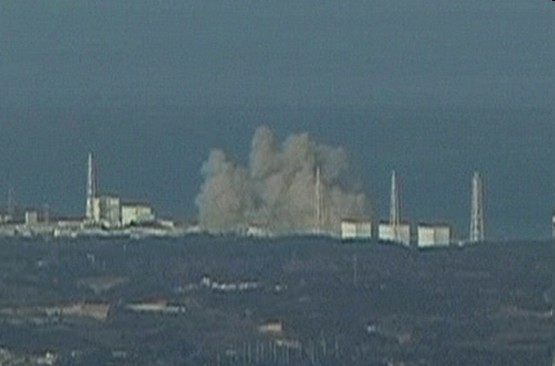
If the earthquake and tsunami were not bad enough there is also the impending threat of a nuclear disaster. One is eerily reminded of the Chernobyl disaster, the 25th anniversary of which is only just over a month away. Though the nuclear power experts assure us that everything is under control and there is no risk of another Chernobyl, the headlines scrolling across the screen still scream “Meltdown.” This is a disaster that is going to have repercussions across the world, and I’m not talking about the economic shockwaves from such a big blow to the world’s third largest economy though I’m sure we will soon feel them.
The Three Mile Island nuclear incident in 1979 halted the development of nuclear power in the USA for thirty years. It is unrealistic to expect that what is happening to the Japanese nuclear plants won’t have an impact on how people here feel about nuclear power. Engineers have and will continue to argue that the Japanese plants were 40 years old, that actually they coped with the effects of this major disaster pretty well, and that the UK is not in an earthquake zone so we would never experience such problems. But for as long as these images are fresh in people’s minds, nobody will want a nuclear power station in their back yard. And in a country as small and crowded as the UK if we are going to have nuclear power someone will have to.
This is a disaster, not just for Japan, but for the entire nuclear industry.

Julian Moss, G4ILO, is a regular contributor to AmateurRadio.com and writes from Cumbria, England. Contact him at [email protected].
 Ham Radio Deluxe |
 W5SWL Electronics |
 Ham Radio Prep |
 KB3IFH QSL Cards  Hip Ham Shirts  HamRadioAuctions HamRadioAuctions Reliance Antennas Reliance Antennas Enigma Shop Enigma Shop |  morseDX  Ni4L Antennas  R&L Electronics R&L Electronics antennas.us antennas.us QRV QRV |
- Matt W1MST, Managing Editor
