 |
 Hitting a century
 5 August 2011 | by
 I have just noticed that this blog now has 100 followers. I’d just like to say thanks for reading my ramblings and I hope you continue to find them interesting.
Yesterday I heard about a new web service called about.me. It’s a site that lets you build a personal profile page with links to all your online content: websites, blogs, Facebook, Twitter and so on. Your profile has a URL like: about.me/your.name so in order to grab my name before someone else does I set up my own profile page at http://about.me/julian.moss. It only takes a few minutes to do so if you are interested in making it easier for people to find you on the web it’s worth the effort.
There aren’t a lot of links on my profile as I’m still not into social networks. I can’t see the point of Facebook, though I guess that’s just me as I know it is very popular. And I don’t know that people would be interested in my tweeting what I’m doing any more often than I do in my blogs already.

Julian Moss, G4ILO, is a regular contributor to AmateurRadio.com and writes from Cumbria, England. Contact him at [email protected].
ARISSat–Successful Deployment (Sort of)
Like so many fellow hams I follow on Twitter, Facebook and Google+, yesterday I sat glued to a small 6 inch window which showed the events unfolding up at the ISS (International Space Station) during the launch attempt of the ARISSat-1, amateur radio satellite. The 6 inch window was a browser window I had sized to fit in the upper corner of my screen so I could also still work.
I had heard of the ARISSat-1 launch a few days before and to be honest at the time I wasn’t aware of just how the satellite would be launched. The past few days have been busy for me at work and the assumption was it would blast into orbit on the back of a Titan rocket along with other payload. It really wasn’t until I began streaming the NASA channel (since Comcast doesn’t offer it) that I realized the event wasn’t going to be as “eventful” as I had first thought.

My morning started off busy like most and the spacewalk had already begun by the time I settled in to watch. The two Russian spacewalkers were already outside of the ISS with ARISSat-1 in hand. I heard mention ARISSat-1 weighs in at 70 pounds and appeared to be about the size of a toaster oven. At one point the satellite was un-tethered and perhaps moments from being launched when it became clear something was missing from the satellite. The missing item was the 70cm UHF uplink antenna.
This immediately caused a flurry of conversation on Twitter and Google+ regarding what happened to the 70cm antenna. Really unsure just how the ARISSat-1 arrived to the ISS, I tweeted “I wonder if anyone found an extra antenna in the glove box of Atlantis STS-135”. Others imagined it sitting behind some books or boxes on someone’s desk back on Earth. Of course, it could have easily been floating around in the ISS. We later heard an update which ruled out the missing antenna was on Atlantis as the ARISSat-1 arrived some time ago on board a Russian supply mission.
The launch of ARISSat-1 was the first of several projects to be completed during the EVA. The Russian spacewalkers eventually returned the satellite to the holding bay and started work on project number 2 which was to install a laser based communication system. The comedy of errors continued. At one point one of the two Russian spacewalkers either unscrewed a wing nut or was trying to attach a wing nut. It went missing and was then discovered floating off into the deepest, darkest depths of space. More space junk?
This little boo-boo spurred more chuckles on social media and the entire event sort of reminded many of us of a typical field day weekend. It also reminded me of the time I had left my house on a Saturday morning for a DAREC training meeting. We were meeting just a few miles away from my house and I was extremely early. So early that I realized I had my hand-held, but no antenna. I quickly returned home to grab the antenna and still made it to the meeting with time to spare. Of course…returning to Earth to pickup the 70cm antenna was out of the question and this was well outside of the scope of “What can brown (UPS) do for you”?
My morning soon turned into lunchtime and I had a 12:30 dentist appt. By the time I arrived back home it was a little after 2 PM. I checked in with friends on Twitter to learn they had launched ARISSat-1 successfully without the 70cm antenna. This left many of us on earth scratching our heads. I saw this posted on Google+ “It appears that ARISSat-1 was deployed…without the UHF antenna. My brain keeps saying WTF?”

While I (and many) found humor and poked fun at the events unfolding some 240nm above Earth, the brave men and women (regardless of nationality) are true modern day pioneers. The duties performed are as important as those performed hundreds of years ago by names like Columbus, Magellan, Lewis & Clark and two brothers named Wright. These duties are performed in an environment which very few could or would even want to journey. Thank you to all these modern day pioneers for what you contribute to the rest of us on Earth.
As I said, once I returned around 2:15 PM MT, ARISSat-1 was tumbling away from the ISS. I guess the decision to launch without the 70cm antenna was weighed against the next scheduled EVA wasn’t until February 2012. It was confirmed the missing antenna will have no impact to the satellites ability to transmit to stations on earth, and receiving capabilities will only be marginally impacted. ARISSat-1 was given a gentle push by one of the two Russian spacewalkers and it began its 1-3 month journey.
Hams all around the world began pointing their antennas to the sky in hopes of receiving the signals from ARISSat-1. Images like the one below slowly began making their way into social media streams. This one received by Peter Goodhall, 2E0SQL in the United Kingdom. This was a low elevation pass, but clearly shows the onboard cameras are active and audio was also received. Similar images and audio have been received by many other hams and will continue to do so for many weeks to follow.

If you would like to learn more about the ARISSat-1 Satellite and working satellites in general, please check out the AMSAT website. You might also find this document a helpful read. In the US, hams holding at least a technician class license can operate most amateur radio satellites with nothing more than a dual-band hand-held transceiver and an external antenna. There are many plans available on the internet (Google is your friend) on how to construct your own. Also, the Arrow II satellite antenna is used by many hams (including myself). Check out this link for this antenna and watch videos by Randy Hall, K7AGE. Randy also produces many other helpful “how to” videos and makes them available on his Youtube channel. Please check them out.
Until next time…
73 de KD0BIK
Jerry Taylor, KD0BIK, is a regular contributor to AmateurRadio.com and writes from Colorado, USA. He is the host of the Practical Amateur Radio Podcast. Contact him at [email protected].
Track and Watch ARISSat-1 on The Go!
So when I checked my Mac yesterday for pictures from ARISSat-1′s for SSTV, I was a little disappointed I didn’t have any. I know one of the problems was that it was deployed late because of a 70cm antenna issue, but also of a dumb mistake on my part. But now I have to wait another day for a pass. But to keep track and pass the time, I have a couple mobile apps to help me.

Satelittle Tracker Icon
The first one is Satellite Tracker. It’s free and it’s a pretty good app for iOS. There is a paid version that gives you maiden head info too, but being that I am a poor working Ham, I need to pinch pennies when I can. The description from iTunes says,
Track satellites as they pass over your location. This application allows you to select any number of satellites and will show the track through the sky of the next pass(es) of each over your location. Frequency information can be added so you know how to tune into the signals. The satellite information is downloaded via the internet, and the iPhone GPS can be used to automatically track your location. Options allow the display of the sun and moon locations and the angle of the iPhone/iPod Touch to indicate to guide where to point your antenna. This application is primarily intended for those who use the Amateur Radio satellites but weather and other satellites can also be tracked.

NASA TV Icon
Another great app that I literally just found, like just before I was writing this, was the NASA TV app. I can now watch NASA TV as well as video on demand and see when NASA programming will be appearing on other TV networks. So this is pretty awesome that I can watch NASA TV on my lunch breaks at work. Here’s the description,
The NASA Television App brings live and on-demand TV programming to your iPhone or iPod Touch. Watch the latest NASA events unfold in real-time or select from a list of recently uploaded videos. Plan your viewing up to a week in advance with the NASA TV schedule, and check out a list of NASA-related programming on other networks.
These are the kind of apps I like. They offer a lot and at a real decent price. While FREE is obviously the best, the cost of some of these apps are well what they’re worth. So if you have an iOS device, please grab them and GO!
73.
Rich also writes a Tech blog and posts stories every Tuesday and Thursday on Q103, The Rock of Albany’s website, as well as Amateur Radio stories every Monday thru Friday here on AmiZed Studios.
Rich Gattie, KB2MOB, is a regular contributor to AmateurRadio.com and writes from New York, USA. Contact him at [email protected].
A day by the lake
The fine weather we have enjoyed for several weeks was forecast to change, so on Wednesday Olga and I decided to take the bus and go for a picnic lunch by Bassenthwaite Lake. For radio entertainment I took the UV-3R (in case of any SOTA or WOTA activations) and the FT-817ND.

HF conditions were pretty dire – WWV has been predicting blackouts – and I initially heard nothing above 20m. But even though I called the loudest stations that weren’t calling “CQ DX outside Europe” no-one even acknowledged my existence. (What’s wrong with working stations inside Europe, I’d like to know, especially when no-one is replying to your CQs anyway?)
The antenna I was using, the Wonder Wand L-Whip, could have been better. It does, however, have the advantage that it is small and light. At the moment I can’t carry much, needing one hand for my walking stick and the other for balance, so everything has to fit in a small shoulder bag. So I didn’t have anything else suitable.
The UV-3R produced a contact with Terry, G0VWP/P activating Walla Crag, the lowest Wainwright, prompting Olga to comment that the small radio was better than the big one!
After lunch I tuned around some more and heard some activity on 15m and 17m. And whilst tuning 17m I stumbled across this. Actually, that’s what I heard a couple of minutes later after I’d dug my smartphone out of my jacket pocket to make the recording using Voice Recorder. What I heard first was ZD8D (Ascension Island) calling CQ. Repeatedly. With no takers. He was not very strong – about S4 on the ‘817 S-meter – with some QSB, but perfectly clear. Clearer in fact than in the recording. I called, but needless to say he didn’t hear me.
As I’ve said before, I have little interest in working stations just to tick countries off a list. But I have a particular interest in the British colonies of Ascension Island and St. Helena as I visited both places during a “trip of a lifetime” in 1999 but have never worked either of them. Just my luck to come across a DX station calling CQ with no pileup when I’m surrounded by mountains and running just 5W to an extremely inefficient antenna!

Julian Moss, G4ILO, is a regular contributor to AmateurRadio.com and writes from Cumbria, England. Contact him at [email protected].
Ham Nation 11
Carole Perry talks about teaching ham radio to students, Clint is working with satellites, George tests the crystal radio he built last week, and more.
Guests: Carole Perry, WB2MGP, Clint Bradford, K6LCS and George Thomas, W5JDX
Download or subscribe to this show at http://twit.tv/hn.
We invite you to read, add to, and amend our show notes at wiki.twit.tv.
Thanks to Joe Walsh who wrote and plays the Ham Nation theme.
Thanks to Cachefly for the bandwidth for this show.
http://dts.podtrac.com/redirect.mp4/twit.cachefly.net/video/hn/hn0011/hn0011_h264b_864x480_500.mp4
http://dts.podtrac.com/redirect.mp4/twit.cachefly.net/video/hn/hn0011/hn0011_h264b_640x368_256.mp4
http://www.podtrac.com/pts/redirect.mp3/twit.cachefly.net/hn0011.mp3
Dr. Bob Heil, K9EID, is the founder of Heil Sound and host of TWiT.tv's Ham Nation which streams live each Tuesday at 6:00pm PT (9:00pm ET) at http://live.twit.tv. Contact him at [email protected].
Handiham World for 03 August 2011
Welcome to Handiham World!
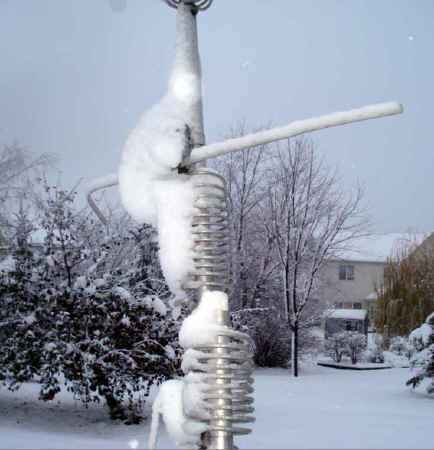
Handiham Radio Camp begins on Monday, 8 August. The weather across most of North America has been uncommonly hot, often setting new temperature records. Fortunately we did get a nice weather break today here in Minnesota as the humidity dropped a bit and the morning temperature was in the low 60’s Fahrenheit. Of course we would like to see nice, comfortable weather during our week at Camp Courage, but there is another reason I look forward to less heat and humidity in the atmosphere: there will be less interference from thunderstorms! Thunderstorm static is a common problem for amateur radio operators who enjoy making contacts on the lower frequency HF bands. The 75 m band is still somewhat usable during the summer months, but it does take patience to put up with all of the static from storms that are sometimes hundreds of miles away. Add to that the long summer days when absorption gets really high and makes signals so attenuated that they really have a hard time competing with the static crashes and you really have quite a challenging radio environment. Believe it or not, some amateur radio operators still even make contacts on the 160 m band during the summer. That is the absolute worst of our HF bands during the high summer season because it is most affected by absorption and QRN.
[email protected]
Handiham Manager

But first – Help us win the Dr. Dave Challenge!
Money is tight these days and we desperately need your support. Now, thanks to a generous challenge grant by Dr. Dave Justis, KN0S, we have a chance to help fill the budget gap. Dr. Dave will donate $5,000 to the Handiham System if we can raise a matching amount. That means we need to really put the fund-raising into high gear! If you can help, designate a donation to Handihams, stating that it is for the “Dr. Dave Challenge”. We will keep you posted in our weekly e-letter as to the progress of the fund.
Nancy can take credit card donations via the toll-free number, 1-866-426-3442, or accept checks sent to our Courage Center Handiham address:
Courage Handiham System
3915 Golden Valley Road
Golden Valley, MN 55422
Be sure to put a note saying “Dr. Dave Challenge” somewhere in the envelope or on the note line of the check. If you donate online as detailed toward the end of your weekly e-letter, be sure to designate to Handihams and then send me an email letting me know you donated to the Dr. Dave fund: [email protected].
Thank you so much for your support!
FCC seeks comments on change to allow exam credit for expired Amateur Radio licenses

The FCC is going to entertain the possibility of allowing examination credit for expired ham radio licenses and is seeking comments on the matter. As we know, if your license expires and is beyond the two year grace period, you must start all over again with the Technician exam and work your way back up to whatever your former license level was, taking every exam. The Anchorage VEC has requested this change.
DA 11-1318
Released: July 29, 2011
| Read more on Handiham.org |

Pat Tice, WA0TDA, is the manager of HANDI-HAM and a regular contributor to AmateurRadio.com. Contact him at [email protected].
Zero Bias: The Chinese Connection
 I’m in the middle of reading a fascinating book, 1421: The Year China Discovered America, about Chinese voyages of discovery in the early 15th century. The author claims to have evidence that, among other things, the Chinese landed and established colonies in the Americas about 80 years before Columbus “discovered” the New World. I haven’t gotten far enough in yet to comment on that, but the first part of the book lays the groundwork by discussing medieval Chinese history and culture and explaining how China spread its influence and came to dominate foreign trade in Asia and Africa at the time.
Despite having the world’s largest army and navy, and having already invented gunpowder and developed firearms, this book’s author says it wasn’t China’s style to simply invade a place and take it over. Rather, the Chinese sent treasure ships full of the finest goods, not only to trade but to bestow as gifts on local rulers. Once trading relationships were established, these rulers were given every imaginable luxury and invited to major events in China—with the Chinese providing transportation and picking up the tab for everything.
Of course, all this came at a price. If the foreign rulers wanted to continue to benefit from China’s largesse, and if they wanted their highly profitable trade with China to continue and grow, then they had to pay tribute to China, both financially and by swearing allegiance to the Chinese emperor. The Chinese came to dominate the region, generally without firing a shot (even though they were the only ones at the time with guns). It would do us well here in the west to study more Chinese history.
I bring this up because, as many of you are aware, the past year has seen the introduction to the U.S. market of ham gear from China. The two major brands we have seen so far are Wouxun (pronounced OH-shin) and TYT (Quanzhou TYT Electronic Co.). The prices are very low and from all reports we’ve heard, the radios work well, too. At Ham-Com in Texas this past June, one dealer selling these new rigs wanted to be sure everyone in the hall knew how well they were doing, so the booth staff banged a big gong every time a ham bought one. Following a commercial tradition that is at least 700 years old, the Chinese are establishing themselves in the ham radio marketplace with quality goods at low prices that significantly undercut their competition.
Of course, their competition is acutely aware of this, especially the Japanese manufacturers who know from their own experience how effective this strategy can be. After all, it’s been just over 40 years since the first ad for a Japanese radio appeared in U.S. ham magazines. The Japanese manufacturers used a similar approach, offering quality goods at low prices that significantly undercut their competition, starting with low-cost VHFFM gear and then moving into higher-priced HF equipment as well.
Most of the “long-established” U.S. manufacturers (I put that in quotes because many of them had only been in business for about 40 years themselves at that point!) could not or would not respond effectively and eventually dropped out of the amateur market, giving the Japanese manufacturers market dominance for the past three decades. Now, the Chinese manufacturers appear to be adopting similar tactics, and the question becomes whether the Japanese manufacturers will learn from their own success and how (or if) they will adapt to meet this new challenge.
Ultimately, it will be up to you, the consumer, to decide which radios from which manufacturers give you the greatest value for your dollar. Other issues that may merit consideration by consumers include possible Chinese government subsidies to hold down prices on exported goods, and questions about working conditions and worker pay at Chinese factories (we know nothing about these specific companies, only that this is an issue in the broader topic of U.S.-China trade). And, of course, we the consumers should not forget that the U.S. amateur radio manufacturing industry has rebounded, with newer companies taking leadership positions in several areas of the ham marketplace. One thing is certain: radios from China will be a part of the ham radio landscape for many years to come, and the presence of these new “players” in the market will continue to be seen in magazines, on dealers’ shelves and at hamfests around America.
Dayton and Dallas
Speaking of hamfests, both Dayton and Dallas (Ham-Com) seemed to be down a little in attendance this year, but most dealers reported strong sales nonetheless. Getting to and from Dayton proved to be challenging this year—it took me 13 hours to get there from New Jersey, which wouldn’t have been too terrible if I was driving…but I was flying! And after the show, both Ad Manager Chip Margelli, K7JA, and Popular Communications and WorldRadio Online Editor Richard Fisher, KI6SN, got stranded overnight at different airports while trying to get home to California.
Ignoring all that, actually being at Dayton was its usual incredible experience. Yes, there was the sewer backup that shut down nearly all of the restrooms on Saturday afternoon and sent sewage seeping across parts of the flea market. But on the other hand, there was the unplanned and unannounced visit on Saturday morning by FCC Chairman Julius Genachowski and the usual controlled chaos at the CQ booth.
Working a booth at Dayton is a lot like running a pileup on a DXpedition. There’s a constant line of people waiting to “work” you; you can only “work” one at a time, and you have to hope all the others behave until you get to them (99% of the time, they do). But the people you get to meet are the best part. Attendees at Dayton truly cover the full spectrum of the ham radio hobby. All, of course, are just-plain-hams, having fun and chatting on a first-name basis … even though among those just plain hams were at least one Nobel laureate, two retired admirals, a former ambassador and at least one astronaut. It sure is a good thing we don’t have to QSL all those “eyeball” QSOs at the booth!
A couple of issue notes: Our coverage of ham radio’s response to the wicked spring weather across the U.S. continues this month with a detailed look at how SATERN (Salvation Army Team Emergency Radio Network) volunteers helped out in Joplin, Missouri after a massive tornado struck that city (p. 13); and Youth Editor Brittany Decker, KB1OGL, shares her experience with—and lessons learned from—a too-close-for-comfort encounter with lightning at her home in New Hampshire (“A Striking Story,” p. 38). Plus, of course, we have the SSB results of last year’s CQ World Wide DX Contest. Once again, this truly worldwide contest made its own propagation — nearly two dozen new records were set – and we received over 6500 logs, showing operation from 232 countries … including China.
73, W2VU
Rich Moseson, W2VU, is Editor of CQ magazine and Editorial Director of all CQ publications, including CQ VHF, Popular Communications and WorldRadio Online. Contact him at [email protected].
 Ham Radio Deluxe |
 W5SWL Electronics |
 Ham Radio Prep |
 KB3IFH QSL Cards  Hip Ham Shirts  HamRadioAuctions HamRadioAuctions Reliance Antennas Reliance Antennas Enigma Shop Enigma Shop |  morseDX  Ni4L Antennas  R&L Electronics R&L Electronics antennas.us antennas.us QRV QRV |
- Matt W1MST, Managing Editor
