 |
 Handiham World for 24 August 2011
 23 August 2011 | by
 Welcome to Handiham World!

[email protected]
Handiham Manager

But first – Help us win the Dr. Dave Challenge!
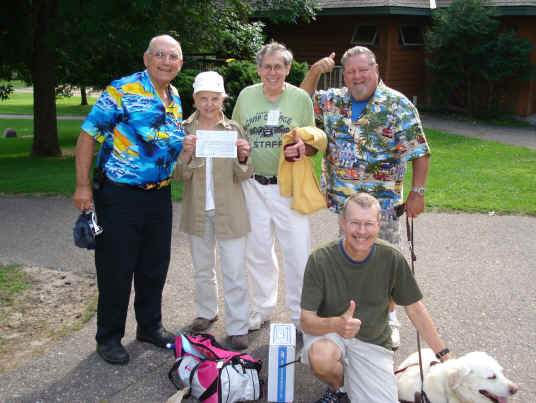
Photo: Bill, K9BV; Lucy, KE6QNX, Dr. Dave, KN0S, Bill, N6HBO & Guide Dog Heldy, and Pat, WA0TDA (kneeling in front.) Thumbs up for a pass for Lucy at the VE session.
Nancy can take credit card donations via the toll-free number, 1-866-426-3442, or accept checks sent to our Courage Center Handiham address:
Courage Handiham System
3915 Golden Valley Road
Golden Valley, MN 55422
Be sure to put a note saying “Dr. Dave Challenge” somewhere in the envelope or on the note line of the check. If you donate online as detailed toward the end of your weekly e-letter, be sure to designate to Handihams and then send me an email letting me know you donated to the Dr. Dave fund: [email protected].
Thank you so much for your support!

Pat Tice, WA0TDA, is the manager of HANDI-HAM and a regular contributor to AmateurRadio.com. Contact him at [email protected].
Randy, K7AGE Visits TWiT Open House [VIDEO]
I’ve seen a couple of stories about this video already, so I figured I would post it too, and get Randy a little more traffic to the YouTube video. Randy headed to Petaluma, CA, and hung out at the TWiT Brickhouse with Bob Heil, K9EID and Leo Laporte, W6TWT, for the first day of the new Ham shack in the Brickhouse Studio.While Randy was there, he of course recorded some video and shared it with everyone else. There was also a special event station on the air for the open house, which I talked about last week. I’m curious if anyone who reads me, also worked the special event? If you did, please share in the comments. I would love to hear how it went. But now, Lights! Camera! ACTION!
73.
Rich also writes a Tech blog and posts stories every Tuesday and Thursday on Q103, The Rock of Albany’s website, as well as Amateur Radio stories every Monday thru Friday here on AmiZed Studios.
Rich Gattie, KB2MOB, is a regular contributor to AmateurRadio.com and writes from New York, USA. Contact him at [email protected].
iGate QRT again
The G4ILO APRS iGate is off the air again. My Android smartphone is on its way back to Motorola for repair so for the time being I need to use the Windows Mobile as a phone again.
I’ll also be running APRSISCE on it as G4ILO-SP while travelling to and from radiotherapy treatment in Carlisle. That is so that Olga can look at aprs.fi and see when I am about to return home. As I am using the volunteer hospital car service, time and route can be somewhat variable. APRS does have its practical uses…

Julian Moss, G4ILO, is a regular contributor to AmateurRadio.com and writes from Cumbria, England. Contact him at [email protected].
Jumping Out of A Perfectly Good Airplane For Ham Radio
Jumping out of a fully working airplane from 13,000 feet is not exactly my cup of tea. When I stand to high on a ladder I get a little woozy. But this guy jumped from an airplane and using 70cm Amateur Radio Television, shared ti with other Hams. Mark, AF6IM, strapped on a parachute, and a 427 MHz ATV transmitter hooked to a helmet cam and jumped from an airplane to land safely while he transmitted, using a Drake mini-modulator with foldable dualband J-pole, that he released after his chute opened and he floated down to the ground.
As you can see from the video below and the info Mark gave about the jump, the Drake can act as a transmitter when an antenna is hooked to it, but the signal was weaker then expected and only worked when he got to about 2000 feet. He said he may try a linear or use a 5 watt Videolynx ATV transmitter next time he does it.
Mark was transmitting on 421.25MHz or cable tv channel 57, and the recieving station was using a 3-element 70cm UHF antenna connected to a Sansui TV set with built-in VHS deck set to catv channel 57. Improvements are being looked at from what was learned from this jump, and another may be in the future.
If you want to find out more, you can visit the Parachute Mobile website.
Rich Gattie, KB2MOB, is a regular contributor to AmateurRadio.com and writes from New York, USA. Contact him at [email protected].
VK on a whip antenna
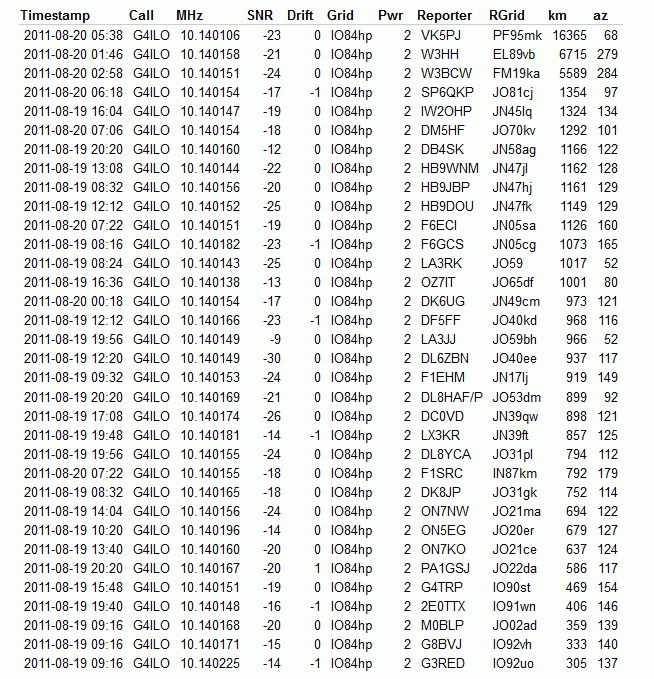
The amazing power of the WSPR mode to enable weak signals to be received over long distances was demonstrated conclusively when my 2 watt signals, transmitted into a 1.3m long telescopic whip antenna from inside the G4ILO shack,were received in Australia and the USA, not once but several times with SNR reports of up to -19dB.
These spots were not achieved using a hand held radio as they occurred early in the morning when I was asleep. But they were made using a home made portable 30m whip antenna that I designed to be used with the VCXO-AXE portable WSPR transmitter I recently built. Here is a picture of the antenna taken during the tests.
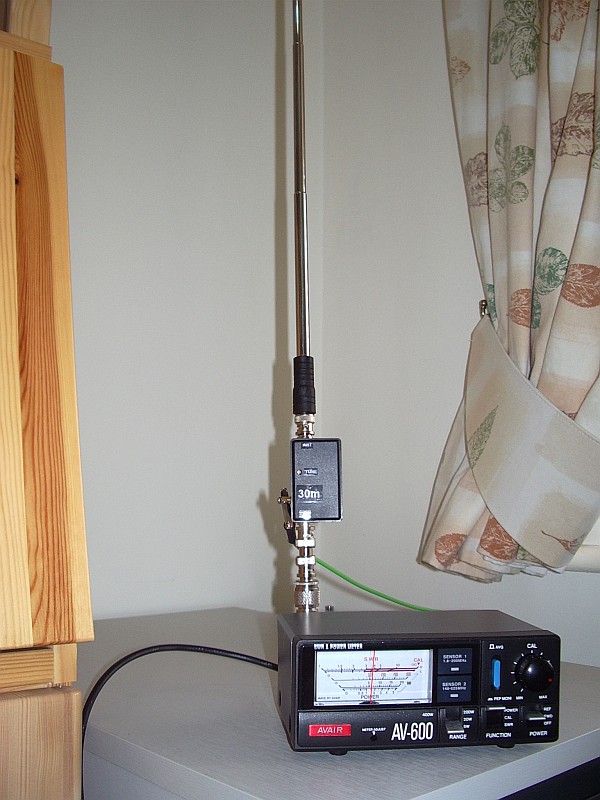
The antenna consists of an L-match mounted in a small plastic project box, with BNC sockets for the transmitter and the whip antenna.
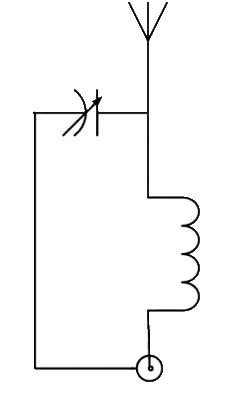
The constructional details can be gleaned from this internal view here. Click the image to see a much larger version.
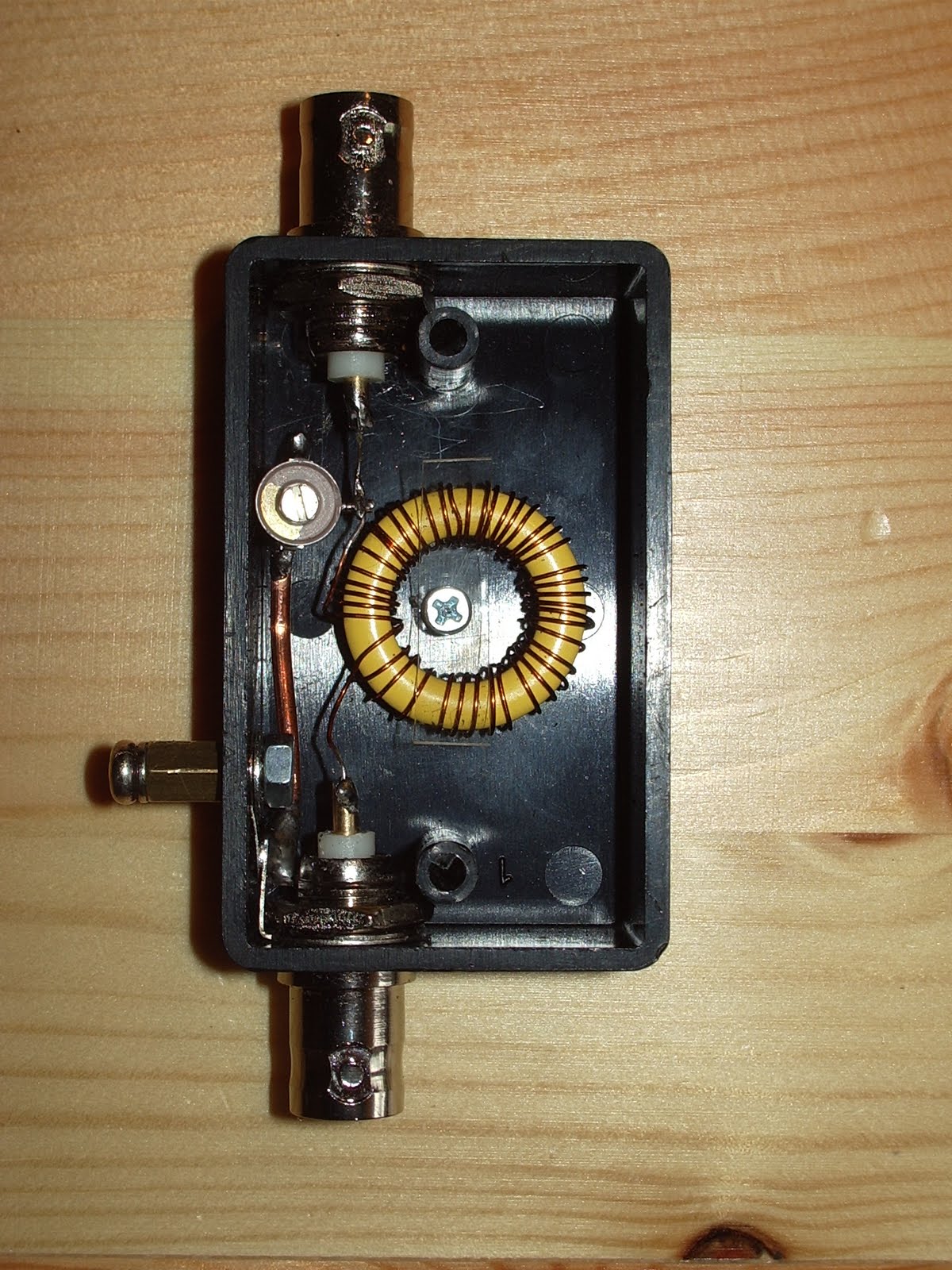
The loading coil consists of about 46 turns of 28SWG wire on a T80-6 toroid. The matching capacitor is a 4 – 40pF trimmer. The number of turns was determined empirically (i.e. using trial and error) so don’t ask me for details of how to make one for other bands. There may be formulas for calculating things like that but I don’t know them.
It would have been difficult to make this antenna without an antenna analyzer like my RigExpert AA-200 which displays the SWR across a range of frequencies graphically. With my first attempt at the inductor it was possible to obtain an SWR null at 10.140MHz but it was rather a broad dip and the minimum was around 3:1. However at lower frequencies I saw that I was able to obtain a much deeper, sharper null. This made it clear that what I needed to do was remove some turns until the deep, sharp null was at the frequency I wanted. A deep null indicates higher Q and therefore better efficiency.
You can see the SWR curve of the final version below.

Note, however, that this was taken inside the shack in the test position where reflections spoiled the SWR and broadened the dip. When measured out of doors the SWR curve dipped deeper and was narrower as long as I stood clear of the antenna. (It was interesting to note how the SWR was affected even if I was a metre away from the telescopic whip. This suggests efficiency would be adversely affected when used in true hand held fashion.)
A good ground or quarter wave counterpoise wire is needed with this antenna. The resonant frequency is affected by the ground system used as well as the length of the whip and the position of the trimmer. If you don’t want to take an antenna analyzer to the field to check and tune the antenna before operation you should use the same counterpoise. So it would be advisable to pair the counterpoise with the antenna.
Further tests would be useful to determine the extent to which a good match is reproducible in different locations using the same whip length and counterpoise without retuning.
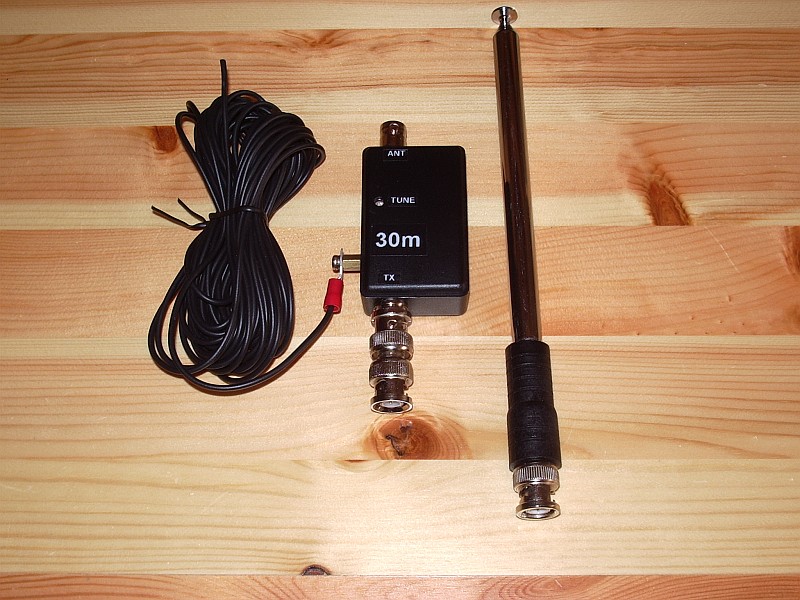
In case retuning is needed I added an access hole for the tuning trimmer. The resonant frequency can also be changed (increased) by shortening the telescopic whip a section or two.
This has been an interesting project. As a result of it I now have a completely portable, pocketable, battery powered system capable of sending a radio signal half way round the world, and I have developed a useful monoband 30m antenna.

Julian Moss, G4ILO, is a regular contributor to AmateurRadio.com and writes from Cumbria, England. Contact him at [email protected].
My Code Runneth Over
The code-writing squirrels at Radio Artisan Labs have produced another update to the Arduino Keyer code. This update provides a plethora of functions for the PS2 keyboard feature, increases the number of memories to 12, and the number of supported transmitters to six. I’ve never encountered the Ultimatic mode in the wild, but it’s now available as are Iambic A, Iambic B, bug, and straight key modes. Ham Radio Deluxe can now talk to the keyer, which can be used to provide a rather nice graphical user interface to most keyer settings and functions. A host of other logging and contest programs should interface with it as well as some kinks in the serial USB interfacing were worked out. And as if that wasn’t enough, the code now sports a GNU license like all good free software should.
The next features to be developed are an LCD display with eight soft keys and CW receive capability. The squirrels want to write some code that will automatically make QSOs while they’re on a DXpedition vacation in Aruba, wanting more time on the beach and less in the shack.


Eleccrafts AF1 enclosure.
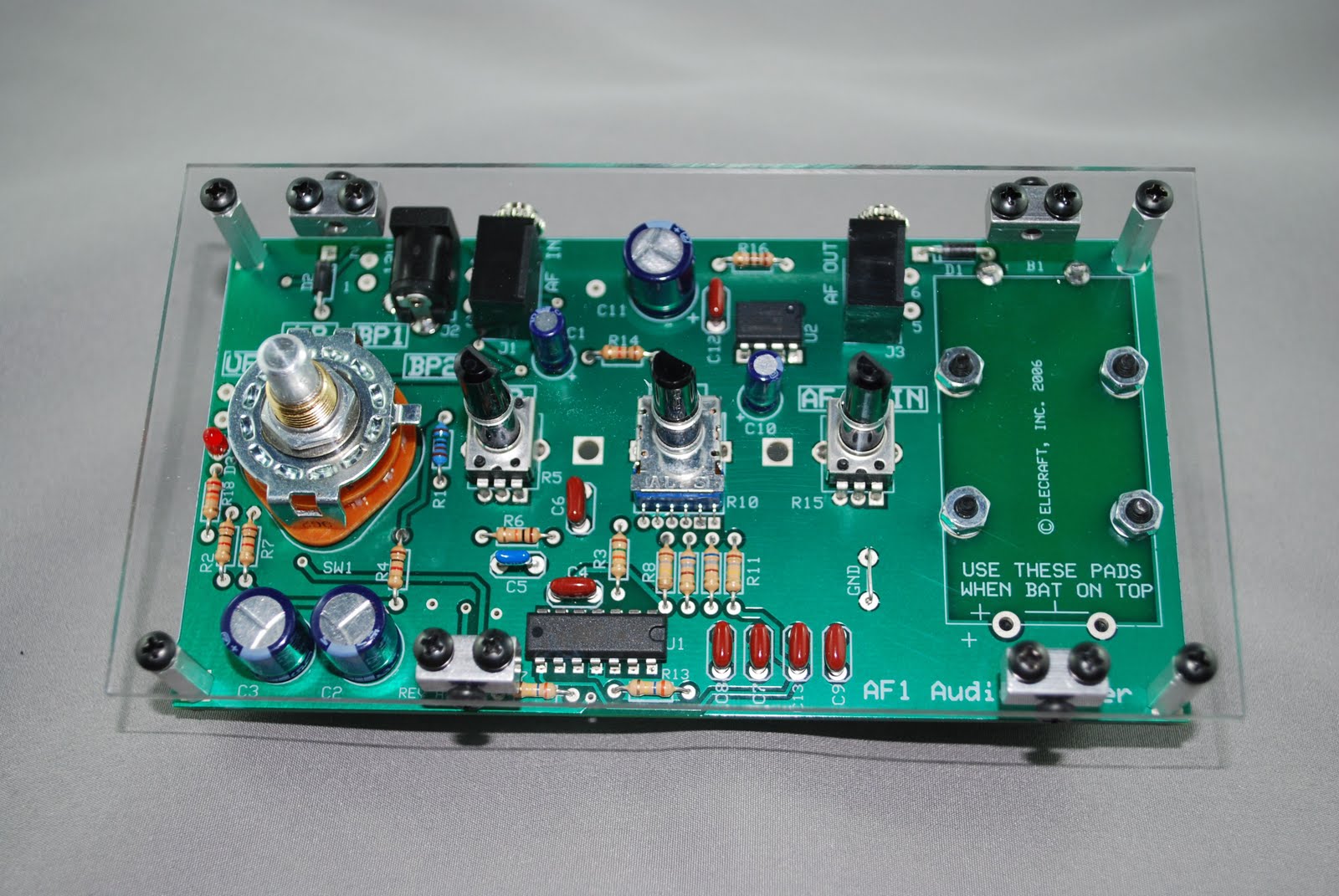 |
| Front mounted |
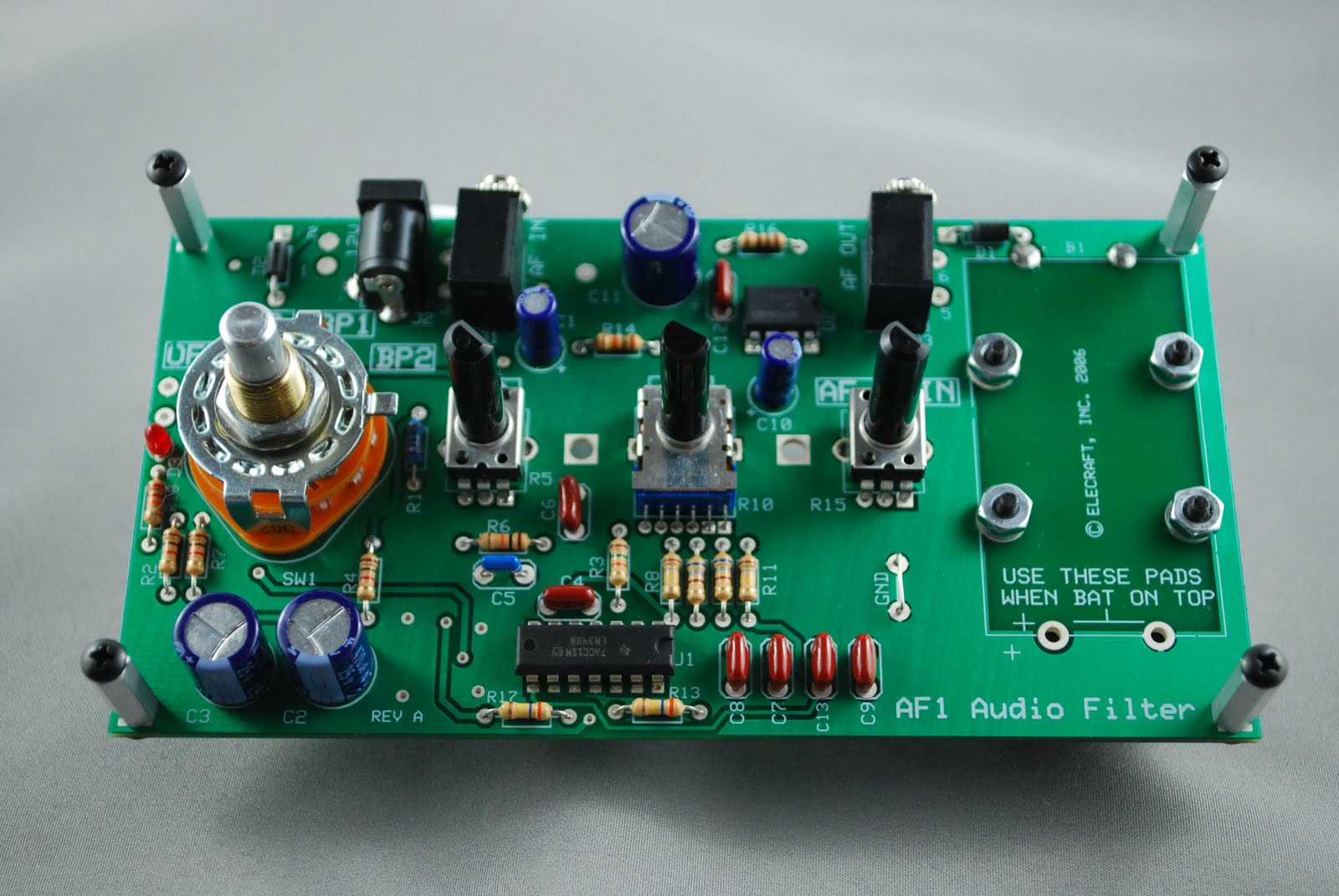 |
| Stand offs mounted |
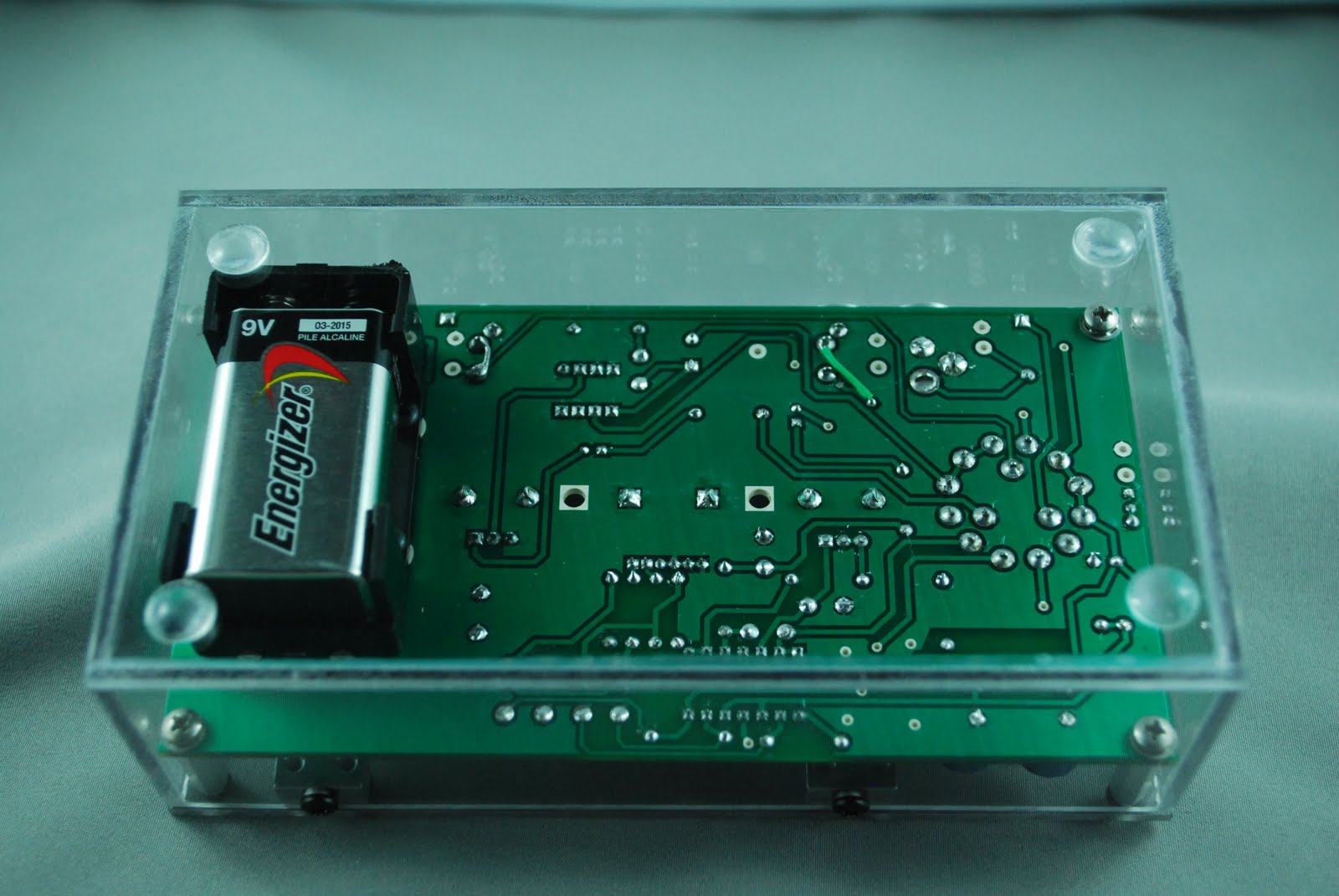
many out door situations. It was a must to get this unit in a case. This brings me to Dave W8FGU he offers a very good solution to my AF1 case situation. Dave
 |
| Tab on rotary switch bent |
 |
| Bottom of enclosure |
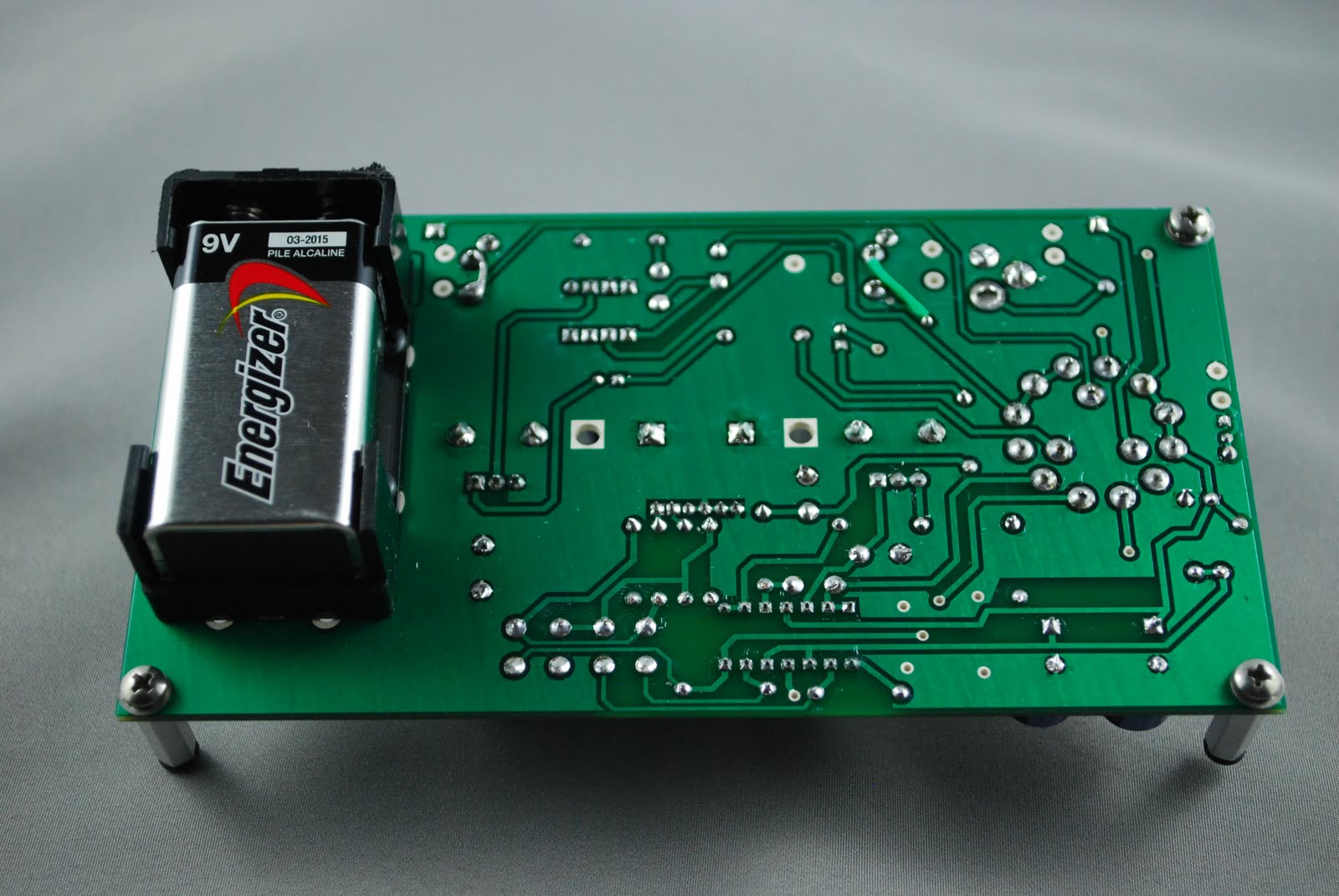 |
| Battery mounted on bottom |
AF1 for it to fit properly into the Lexan case. The 9 volt battery had to be mounted on the underside of the circuit board. That went very smoothly as Elecraft has provided for this and it is well laid out on the PCB.
The only other modification was the AF1's rotary switch had a tab which had to be bent down in a horizontal fashion.The case is very well made and along with the strength of the Lexan materiel makes the case well worth it. All edgings and corners were flush fitting, all the screw holes lined up with professionalism and attention to detail.
 |
| Finished product |

Mike Weir, VE9KK, is a regular contributor to AmateurRadio.com and writes from New Brunswick, Canada. Contact him at [email protected].
 Ham Radio Deluxe |
 W5SWL Electronics |
 Ham Radio Prep |
 KB3IFH QSL Cards  Hip Ham Shirts  HamRadioAuctions HamRadioAuctions Reliance Antennas Reliance Antennas Enigma Shop Enigma Shop |  morseDX  Ni4L Antennas  R&L Electronics R&L Electronics antennas.us antennas.us QRV QRV |
- Matt W1MST, Managing Editor
