 |
 What The Hell Am I Blogging About?
 30 December 2011 | by
 I am an entrepreneur (cofounder of 6 companies including Enigma Records, Restless Records, Enigma Digital, Bigger Picture Group and InnovAntennas), former music business executive (president of Rykodisc, SVP/GM of EMI Music’s Astralwerks and Caroline divisions, SVP/GM at Live Nation Artists, plus the aforementioned record labels I cofounded), amateur radio operator (currently callsign AA7XT, former callsigns include NT1Y, AA6TT and KC6EDP), family man (happily married to Christine since 1992, we have a rambunctious 8-year old daughter – are there any other kind? – and assorted pets), triathlete (3-time Ironman finisher) and cycling fanatic, early stage investor in tech companies, and owner of an Earthship house in Glade Park, Colorado.
This Blog will focus on amateur radio, Glade Park, Colorado and Earthship topics. Amateur radio has been a passion since I started SWL-ing (Short Wave Listening) in 1969 on a Zenith Trans-Oceanic transistor radio and hamming in 1970 when I passed the novice license exam, and Earthships, well, because we live in one and sustainable living is an interesting topic. I will be writing about Glade Park, Colorado – where we moved in 2011 – because it is a fascinating place in so many different ways.
Radio recently became more than a hobby to me when I became a partner in InnovAntennas with company founder Justin Johnson (whose amateur callsign is G0KSC). InnovAntennas is based in Canvey Island, England and I run the North American office here in Grand Junction, CO. InnovAntennas designs and manufactures extraordinary high-performance antennas for amateur, military and commercial use from HF up through UHF frequencies.
My perspective on sustainable living will take a different line from much of what I read about sustainable living which tends to have a political undercurrent if not an avowed political stance. I’m not that political a person to begin with – haven’t occupied much of anything lately except my Aeron chair, the driver’s seat of my diesel GMC Sierra 2500 truck, and my Bianchi road bike seat and I’m in favor of things that work whether from the right or left – and my interest in Earthships stems from (a) general admiration of well-engineered things and (b) affinity for not sending more money to utility companies than I absolutely have to. If I save the earth a little by living the way I do, well, hey, why not?
Bill
Bill Hein, AA7XT, is a regular contributor to AmateurRadio.com and writes from Colorado, USA. He is co-owner of Force 12 and InnovAntennas. Contact him at [email protected].
70Mhz and 500khz allocations for the Netherlands
I just saw a tweet from OY3JE containing a link to the IARU Region 1 website noting that the Netherlands will have allocations at 70MHz and 500khz from January 1st 2012.
Personally, I’m particularly pleased with the opportunities at 70MHz, though I suspect I will be lucky to work into the Netherlands with my current 70MHz setup.
See the Region 1 article here

Tim Kirby, G4VXE, is a regular contributor to AmateurRadio.com and writes from Oxfordshire, England. Contact him at [email protected].
Mixed Signals from Yaesu
This just in from the Things That Make You Go Hmmm Department: the amateur radio portion of Yaesu splits from Mother Motorola while the land mobile portion stays. This is right on top of an announcement that Yaesu will pursue a digital amateur radio offering based on land mobile technology (i.e., definitely not D-STAR).
The K0KDS blog has a post about the split, so go there for the full story. The ARRL has this news item about the organizational change. Here’s the paper that Yaesu published about their move into digital technology for amateur radio.
73, Bob K0NR
Bob Witte, KØNR, is a regular contributor to AmateurRadio.com and writes from Colorado, USA. Contact him at [email protected].
My amateur radio highlights of the year
1. JT65
If you’ve seen my posts recently you’ll see that I have been very active on JT65 on HF using the W6CQZ JT65-HF software. It’s excellent for working DX with low power. And actually I get just as much satisfaction from working a station using something like a loft dipole, knowing that on any other mode, I would struggle to make the contact. It’s a very relaxing mode too, also ideal for those late night contacts without keeping other occupants of the house awake.
Having seen how effective JT65 is on HF, I really want to try it on VHF. But that’s something for 2012.
2. The 50/144/432MHz collinear
The aerial was installed in April and it has given me a new perspective on 144 and 433MHz in particular. There have been plenty of surprises about how much variation there is on a day-to-day basis in terms of propagation. There have been some exceptional contacts and loggings too; a repeater from Norway completely out of the blue on 144MHz as well as more recently a 144MHz FM contact to the South of France.
On 50MHz during this year’s Es season, the antenna worked out well with many contacts being made.
3. 28MHz
During the summer the new Anytone AT5555 proved great fun with low power with the Es propagation. And earlier in the year, my bike ride portable operations with the FT817 and a simple antenna were always interesting.
In the autumn it was a real surprise and pleasure to find the band so good for worldwide DX again.
4. Practical Wireless
Being part of the team and writing for PW is great fun and I’ve enjoyed every column and review in different ways. It’s been great to engage with the contributors and find out what interests them. Thanks to Rob, Tex and the team in Poole for making it such a great experience.
5. Memorable contacts
Hard to single them out as there’s always something interesting in each contact. But a few contacts of different types spring to mind quickly:
The contacts that come out of apparently nowhere! Being fascinated by radio propagation, it’s magical to me how signals can come up out of noise and then fade back down again (hopefully having been worked in between); 9H1BT on 50Mhz late one May evening, EA1FDI on 144MHz in August, HB10K on 144MHz on a September evening, F4FGB worked on 144MHz FM via a repeater in the South of France and F5ICN on 144MHz SSB from the South of France more recently. Earlier this week, working Rene DL6NAA on 144 and 432MHz was really pleasing.
JT65 has been quite a mind shift for me. Working W7YES from the west coast with just a few watts on 28MHz as well as KP4ED on 3.5MHz JT65 on a noisy winter’s evening were QSOs that I know I would have struggled to make on other modes.
Of course it was good to work some real DX; my friends at T32C on the other side of the world did a wonderful job and it was great to work them with no hassle on 10 and 24MHz CW. In September, I realised that 28MHz was back in business when I worked NE0X with a huge signal on CW early one evening.
It’s no longer all about DX for me though. Working Larry G4OXY on 70MHz FM via the Tring parrot was great. We used to work on 50MHz when Larry was in Portishead and I was in Cheltenham back in the mid 1980s, so there was much to catch up on! Likewise with Mattias DH3NAN who I worked recently on 144MHz SSB – we remembered QSOs from the SquareBashers 1985 expedition to IN79 square GB2XJ.
I always enjoy radio contacts with my Twitter friends, so it was really good to chat with Jerry KD0BIK from Denver on D-STAR. Rob M0VFC persuaded me onto 18MHz SSB for the first time in many a year when the Camb-Hams were operating from St Pierre et Miquelon – that was a fun QSO.
D-STAR provides the ability to make some nice QSOs across the world or closer to home and I particularly enjoyed a lovely QSO one August morning with Rod G3TXA on the Isle of Wight and another QSO with old friend Gordon G8PNN in Northumberland.
All in all, an enjoyable year on the radio. Always something new and interesting to try and fascinating people to talk to. 2012 will mark the start of my 30th year on the air. Short compared to some – but a hobby has to be good to keep you keen after 30 years, doesn’t it?

Tim Kirby, G4VXE, is a regular contributor to AmateurRadio.com and writes from Oxfordshire, England. Contact him at [email protected].
New Year’s Resolutions
 Do you make them? Are they successful? Will you make New Year’s resolutions for 2012? What about resolutions geared specifically towards amateur radio?
If you’ve been listening to the Practical Amateur Radio Podcast for the past few years, you know the January episode features a few suggested New Year’s resolution ideas geared towards the amateur radio hobby. This January will be no different and episode 51 will provide you numerous ideas for your very own New Year’s resolutions. Of course, I’ll also share some of my own with you and provide a follow-up on how successful I was with my 2011 plans.
Again, amateur radio specific resolutions could be anything from upgrading to a new license class, trying a new mode, learning CW, volunteering in your community via ARES, RACES etc. or even something as simple as joining a local amateur radio club.
If you are thinking of specific amateur radio New Year’s resolutions of your own, please email me with your idea and how you plan to accomplish it. I’ll read some of the suggestions during episode 51.
Until next time,
73 de KD0BIK
Jerry Taylor, KD0BIK, is a regular contributor to AmateurRadio.com and writes from Colorado, USA. He is the host of the Practical Amateur Radio Podcast. Contact him at [email protected].
At last the wait is over
The final hours before the actual opening of orders for the new Elecraft KX3 saw a mix of bizarre behaviours on the KX3 email list from impatient petulance and other weirdly strange attention seeking. They were a tiny minority in a sea of patient fans happy with the frequent updates from the Elecraft team. In the end when they started taking orders it wasn’t really a surprise. And Elecraft met their December deadline and kept some holiday suspense to the end.
Stephen Rapley, VK2RH, is a regular contributor to AmateurRadio.com and writes from New South Wales, Australia. Contact him at [email protected].
An afternoon of frustration………
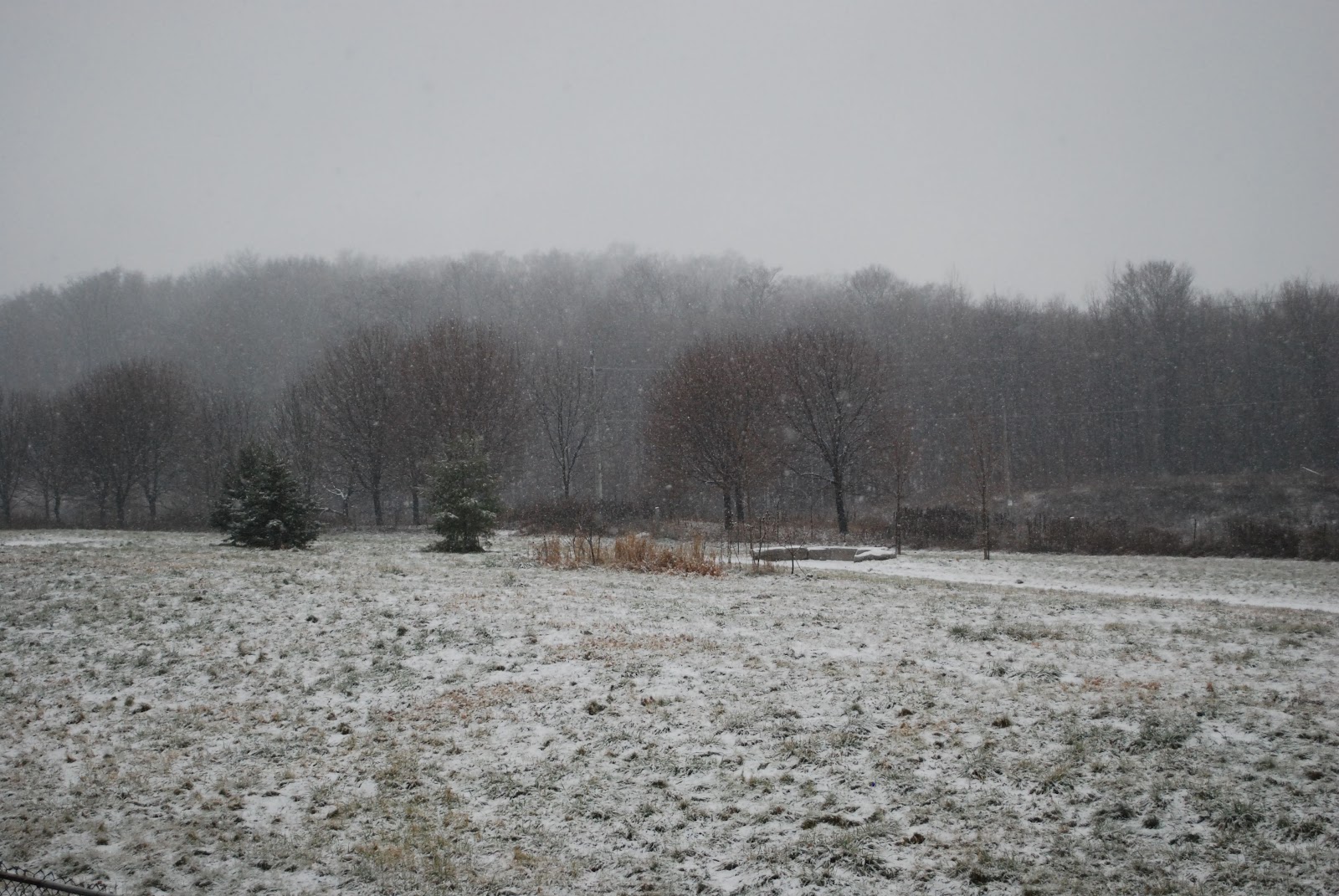 |
| Finally some snow for Christmas...... |
paddle with magnetic return. I played with the adjustments some time ago without testing it....thus the strange behavior of the key. It was time to adjust the key and on the Elecraft K3 you can put the rig into test mode. This way you can adjust the keyer with out transmitting on the air. After adjusting the key it was time to do some WSPR and maybe some PSK31. I wanted to see how the bands were doing so it was WSPR first. I have a sheet of paper on how to set up the radio for WSPR. (soon I am going to make up a macro so setup is just a push of a button on the K3) Well for some reason I was not transmitting a signal!! I checked and rechecked the settings of both the computer, K3 and sound card. All seemed to be good but still no signal so it was off to PSK31. I was able to decode signals on 20 meters and it seemed pretty active. After setting up things for PSK31 I again had no transmit !!!! I tried a little of this and some of that but nothing. Now I was muttering to myself how much a pain in the @#$& the digi modes were. Well it was back to good old CW and they can stick the digi modes for now. Back to CW and about 2 hours wasted playing with the silly digital modes I keyed my trusty Begali key.....NOTHING....I was not transmitting!!! Then it hit me the dam K3 was still in test mode from me adjusting the keyer!!! Sometimes these added features can be a real pain. Next time I will just switch to the dummy load and transmit into that........ like the old days.

Mike Weir, VE9KK, is a regular contributor to AmateurRadio.com and writes from New Brunswick, Canada. Contact him at [email protected].
 Ham Radio Deluxe |
 W5SWL Electronics |
 Ham Radio Prep |
 KB3IFH QSL Cards  Hip Ham Shirts  HamRadioAuctions HamRadioAuctions Reliance Antennas Reliance Antennas Enigma Shop Enigma Shop |  morseDX  Ni4L Antennas  R&L Electronics R&L Electronics antennas.us antennas.us QRV QRV |
- Matt W1MST, Managing Editor
