 |
 2012
2012
 31 December 2011 | by
 What would a blog be without the traditional year-in-review-and-here-are-my-New-Year’s-resolutions post? For a general overview of amateur radio in 2011, Jeff, KE9V, has a rather excellent summary over at KE9V.net worth reading. From a personal standpoint, it was a year that I spent less time on the air and more time tinkering with stuff.
Much of my activity was centered around the Arduino CW Keyer. I’m especially proud of the Winkey emulation mode which enables interfacing to many logging and contest programs and the PS2 Keyboard code. It’s been really satisfying to hear from folks, especially DX, who are using the code in their shacks.
Another project was the Yaesu Rotator Controller Emulator which interfaces most any rotator (not just Yaesus) to a computer for control via a terminal session or logging/contest program. It’s cool to be running Ham Radio Deluxe and just point-and-click to where you want to go and have the beam rotate automagically. Yea, I’m amused by simple things.
One of my 2011 resolutions was to do Summits On the Air or SOTA in a big way. I ended up doing only three SOTAxpeditions, but I’m finding outdoor operation much more interesting than sitting in a shack trying to bang out cookie-cutter QSOs.
I tried Weak Signal Propagation Reporter or WSPR. It’s an interesting novelty, but I’m not sure it will hold my interest for long.
My blogging suffered a bit. Quality over quantity has always been my goal and my post drafts folder continues to be littered with unfinished posts, half-baked ideas, and posts that never saw the light of day because I felt they were too controversial or critical for the intended tone of this blog.
My summary of 2011 wouldn’t be complete without acknowledging the influence of G4ILO on my daily thought. Julian’s announcement of a statistically-incurable brain tumor was a shock to all of us here in the amateur radio blogosphere, myself included. His writings in both his amateur radio blog and One Foot In The Grave have helped me remember what is really important in life and how valuable our time is. Now that I’m in my forties I’m realizing I need to start figuring out how to better spend my finite time here and do rather than just dream. Julian, I wish you the best for you and Olga in 2012, and know that your insights have helped this radio artisan.
So what’s on the roadmap for 2012?
Many more SOTA expeditions and outdoor operating in general. I’ve been talking for years about doing a spring Appalachian Trail overnight expedition. Time to just get some friends together and do it.
VHF Contest Mountaintopping. This goes along with the outdoor operation theme. Just do it.
Arduino CW Keyer. I may add more features in 2012, like LCD display support and CW decoding, but I’m probably going to focus my efforts on facilitating community efforts to build complete units. Oscar, DJ0MY, who has been helpful in suggesting and testing keyer functionality has recently been working on an “open source” design PC board and an enclosure. Perhaps kitting would be the next logical step.
Build an Az-El satellite antenna array using cheap homebrew yagis and a homebrew Frankenstein rotator setup with my Arduino rotator interface. That should make the neighbors wonder what I’m doing.
Develop the RadioCubeCache idea further and see where that goes.
Build an Arduino-based automatic antenna tuner. This one has been on my list for awhile. Like the keyer I think I can build something as good as commercial offerings and offer it to the community.
Try JT6M, JT65, and all the JT modes. I think this is going to be the bulk of my home on-the-air time in the new year.
Anyway, thanks for reading and have a Happy New Year!


Idea
I’ve been reading about the AMSAT Fox Project, an initiative to deploy small next-generation “cubesats”. The website includes several PowerPoint presentations on the design, testing, and engineering of these birds. A lot of work goes into building a satellite, and the number of considerations is just mind-boggling, with concerns about heat, materials, radiation, and resiliency to failures to name a few. This really is “rocket science.”
I’ve been thinking about a more down-to-Earth project for guys like me who aren’t rocket scientists but are intrigued with little devices like these. I’m not sure what to call this yet (perhaps “CubeCache” or “RadioCache”?), but the idea combines geocaching, fox hunting, beacons, microcontrollers, and a touch of repeaters all in one bundle. Imagine if you could build a tiny device similar to a cubesat and place it somewhere stealthy and have it act like a multi-purpose beacon, a simplex repeater, a fox transmitter, and a data gathering on-the-air geocache. The little box would have a small self-contained battery and be equipped with solar cells for charging them. A microcontroller would control all functions of the unit. During low battery times, the microcontroller would put the unit in power-saving sleep mode, turning off all modules. The unit would have a transmitter and receiver, and a second receiver for telecommand functions to comply with FCC rules.
The unit would have several modes. It would announce itself like a beacon periodically. It would act as a “radio geocache” and would receive digital callsign messages and acknowledge them, storing them in memory for later retrieval. The unit could also act like a real geocache, but with a twist. Users could activate fox mode and radio direction find their way to the unit.
Building such a unit would present some technical challenges. The first would be stuffing everything into a small, weatherproof package that can withstand the elements. Much like geocaches, the unit would have to be stealthy both in construction and placement to avoid being found by “muggles”, the geocaching term for people who are not geocachers. Power management is another challenge, with the need to keep track of battery capacity and make the best use of power. With an experimental project like this, it’s likely the microcontroller software would be changing quite frequently to improve performance and add new features, so a remote over-the-air firmware uploader and bootloader would be helpful.
I’m sure some will ask what the point would be of building such a contraption. Much like a lot of what we do in amateur radio, there often isn’t much of a point other than to experiment, learn, and have some fun. I may explore this idea further in 2012 and build a very simple prototype, place it in my backyard and see where this project goes. If anyone is interested in helping develop this idea, please let me know.


Idiom Press CMOS-4 Keyer………
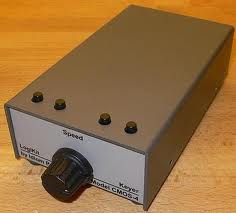
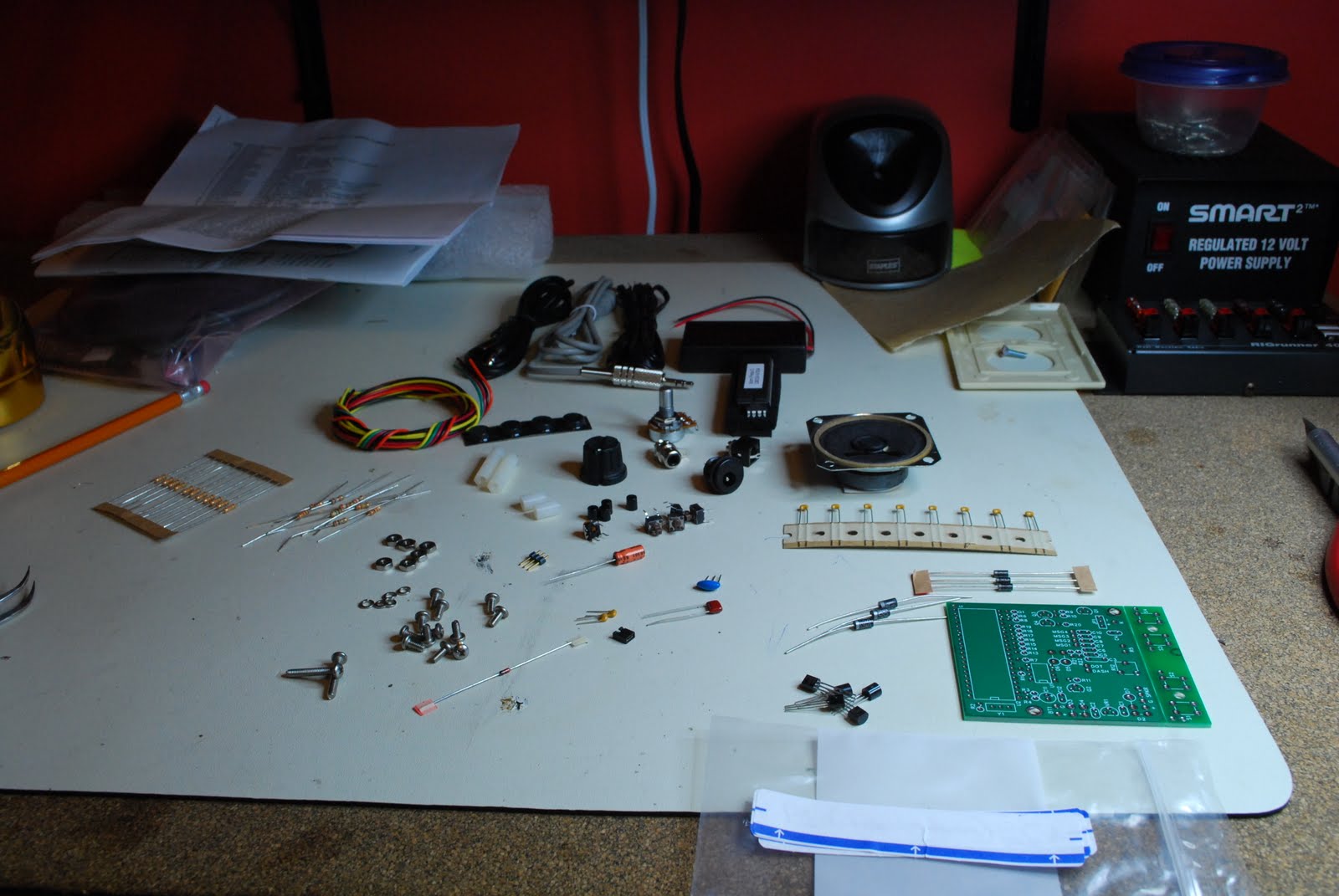 |
| Sorting the parts |
house one day. Anyway, I had read many great reviews about this keyer and has seen some YouTube demonstrations of it was well so I was eager to get it built and running. If you have read in
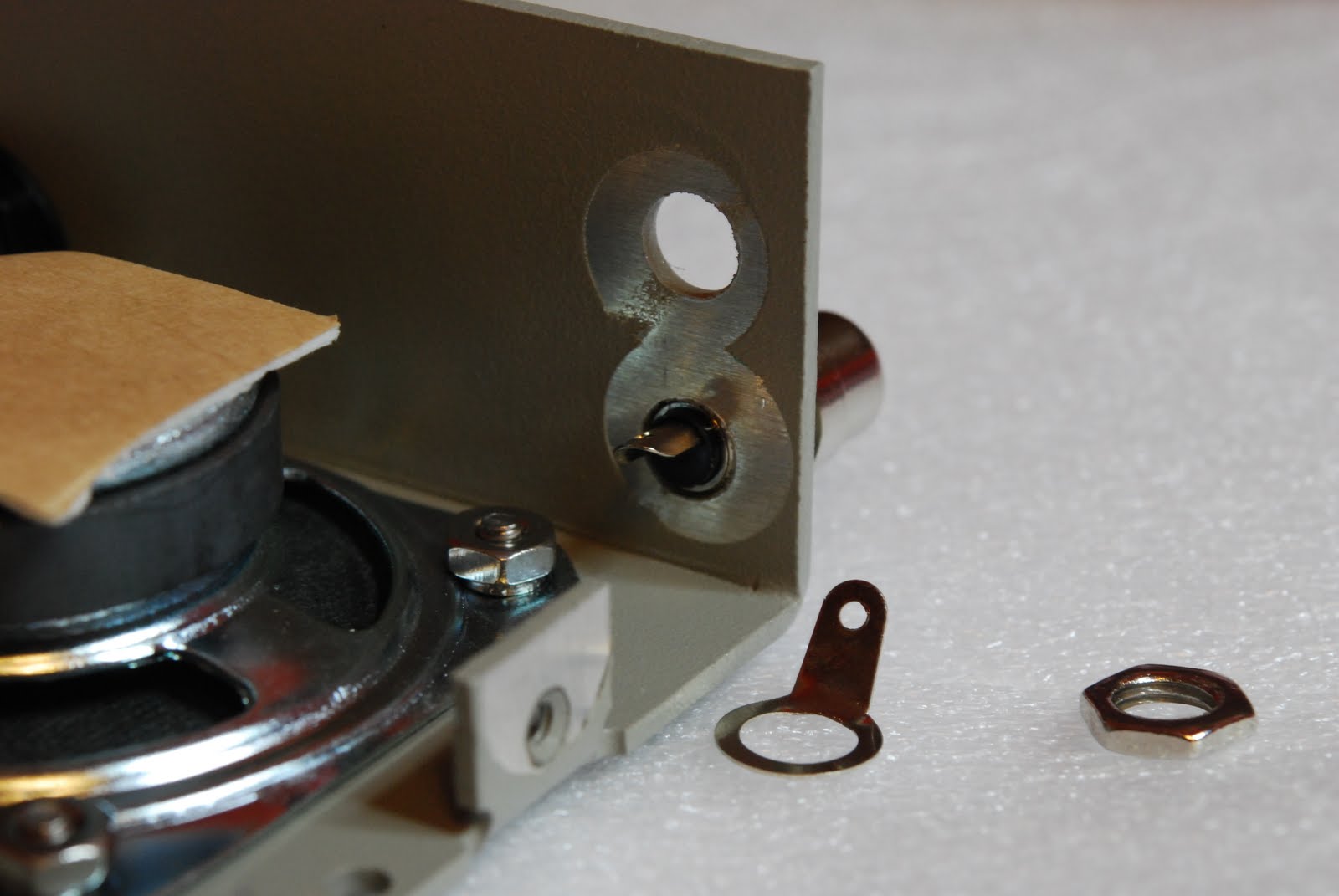 |
| RCA troubles |
my blog in the past the first thing I like to do with any kit I get is do the inventory of parts. It lets me know all is here as well familiarizes me with the parts. This kit like all the others had part numbers for the parts but for some reason the list gave you a part number and told you it was a 15 ohm resistor for instance and that there were 20 of them and that was it!! So these 15 resistors were they R1, R20, R3 or what, as the kit had other resistors with other part numbers and values assigned to them. So for all the parts I had to go through the build
 |
| Resistor and diode layout |
instructions and identify that transistor part number ZC4005 which was a MPSA92 transistor was in fact Q1 in the assembly instructions. Each part had to have this done and I then put the parts in a bag and labeled the bag with the assembly part number on it. The assembly instructions were very clear but more pictures would be very helpful during the build. Steps that involved an odd detail were marked out very clearly and at times in BOLD print. One part issue during the build was an RCA jack that would not fit through the per-drilled hole. This is not a disaster but a bit of a pain having to get the cordless drill out to open up the hole. The only other issue I ran into and should be rectified in my humble opinion is.....there are some diodes that have to be installed and there is a polarity to follow. To make this easier the
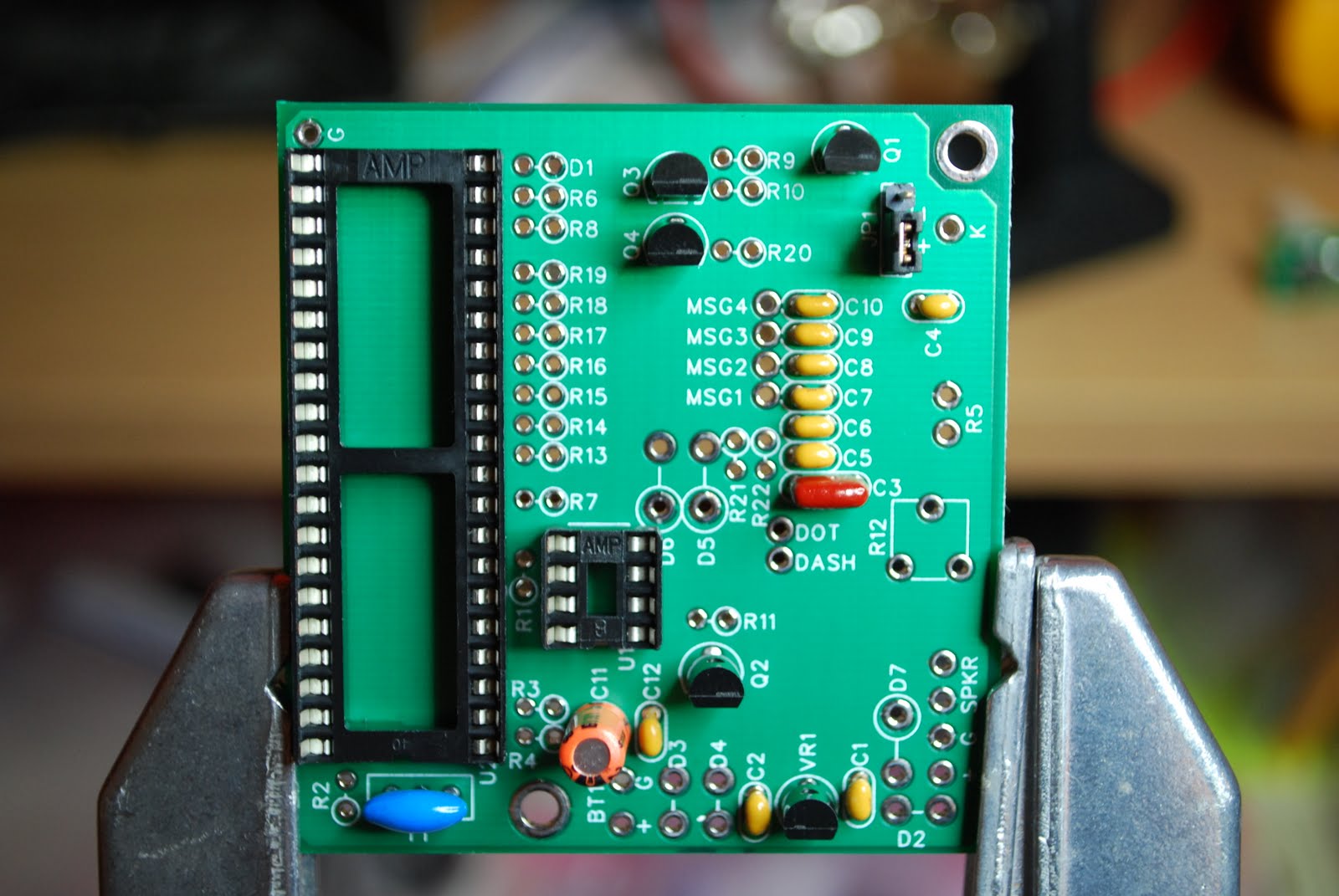 |
| Diode circles missing at bottom |
silk screen on the PC board has a large circle place over one of the diode holes. This is to help with placing the diode on the PC board with the right polarity. Well for some reason there are 3 areas D2,D3 and D4 were the circle did not make it onto the PC board. You are told of this in the instructions and shown on a layout diagram with the proper polarity. How about fixing the boards as well.........Those were the only issues I had with the build. The kit tested great once it was done and if you do order the CMOS-4 as a kit or already built make sure you read the operating manual cover to cover. This is were the kit really shines great detail has been put into the manual. Because this keyer is a real stand alone keyer all programing is done with your key no computer is needed. In the manual you are given exercises to do and make sure you do them!!! This will get you accustomed how the keyer works and how to program it as well. If you are in the market for a keyer this is one to take a close look at. In this post I wanted to include some assembly pictures as I found on the internet there were very few. As you are going through the build a picture would really help at times.
 |
| DC power jack very close to speaker |
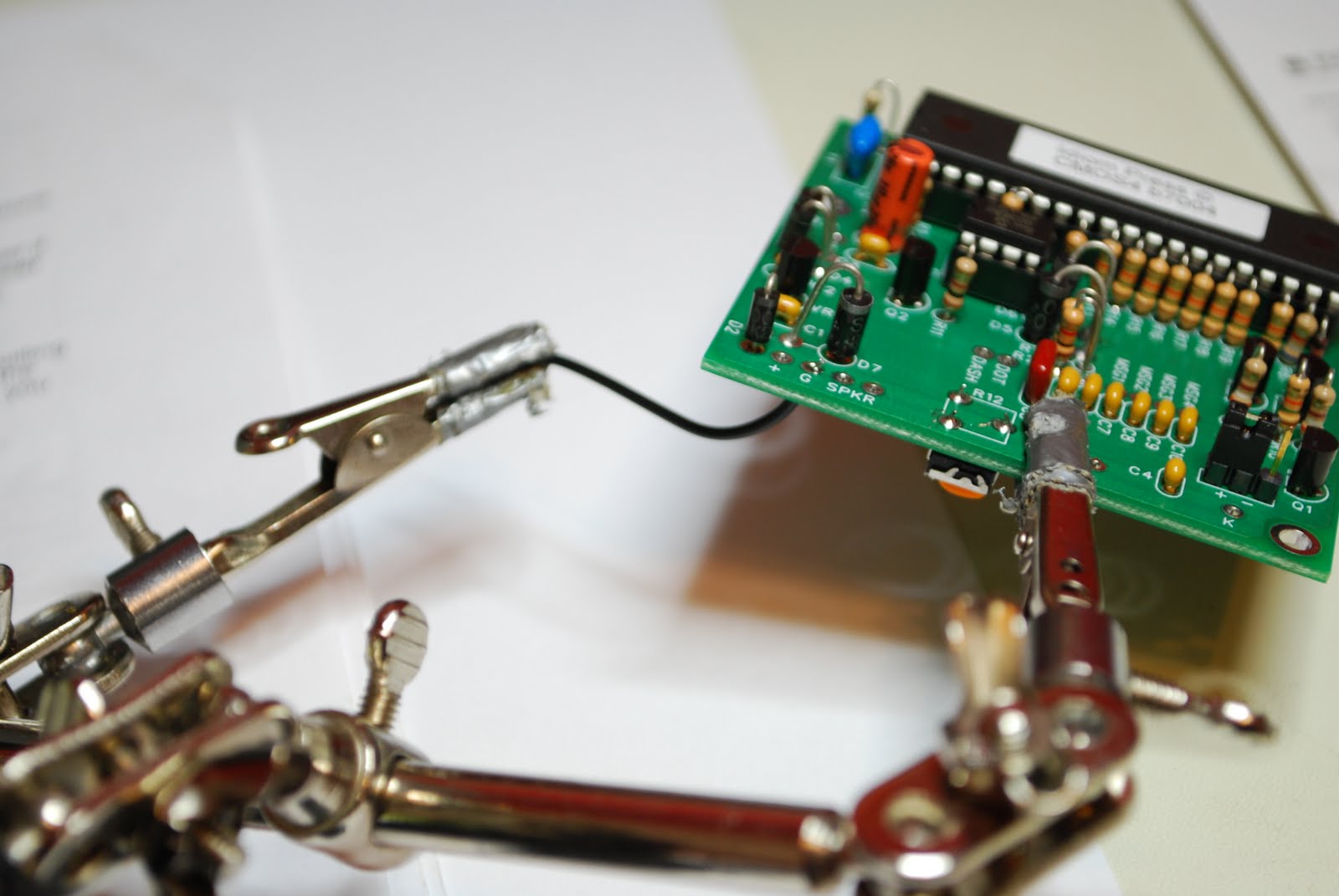 |
| Adding wires to board |
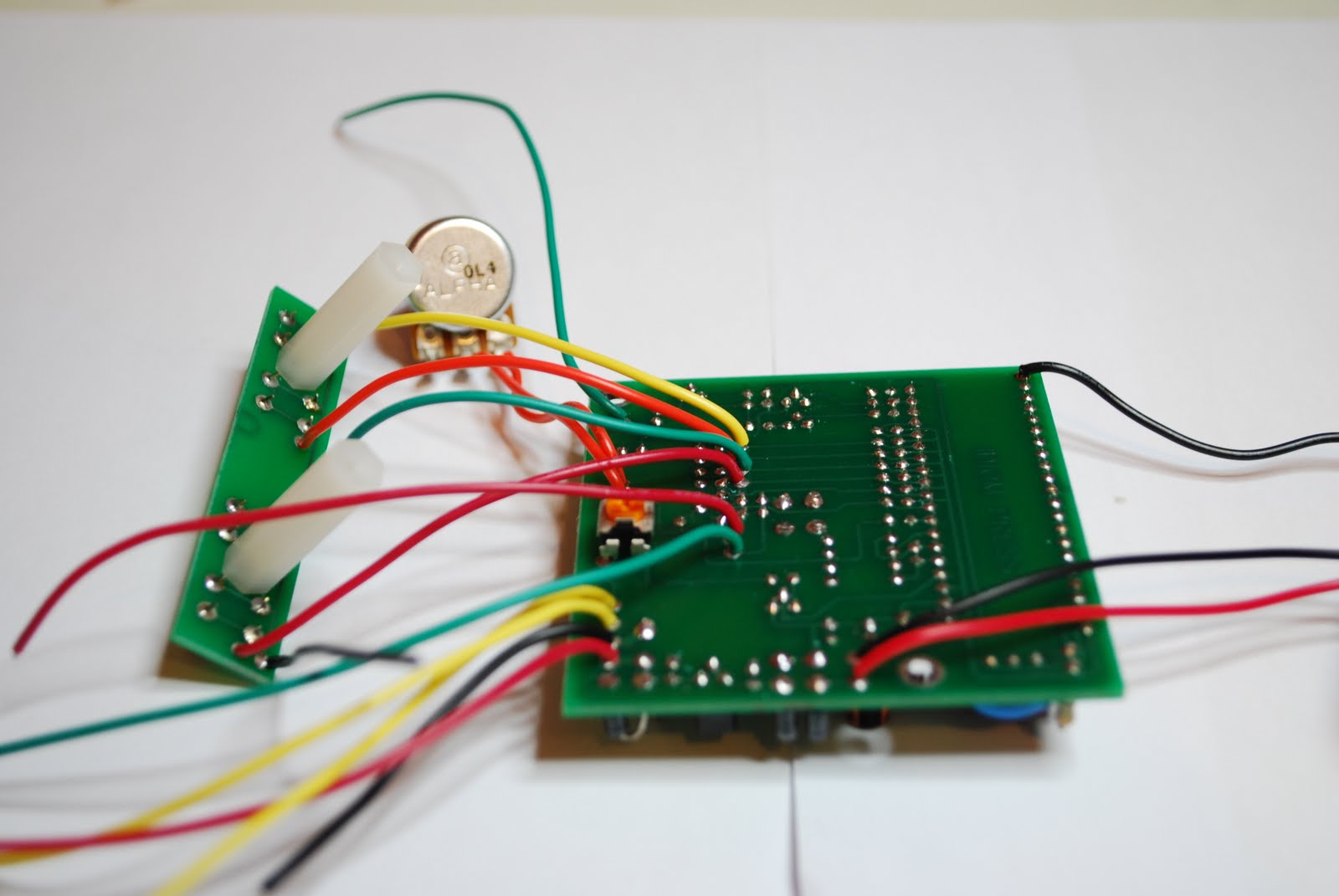 |
| All wires added |
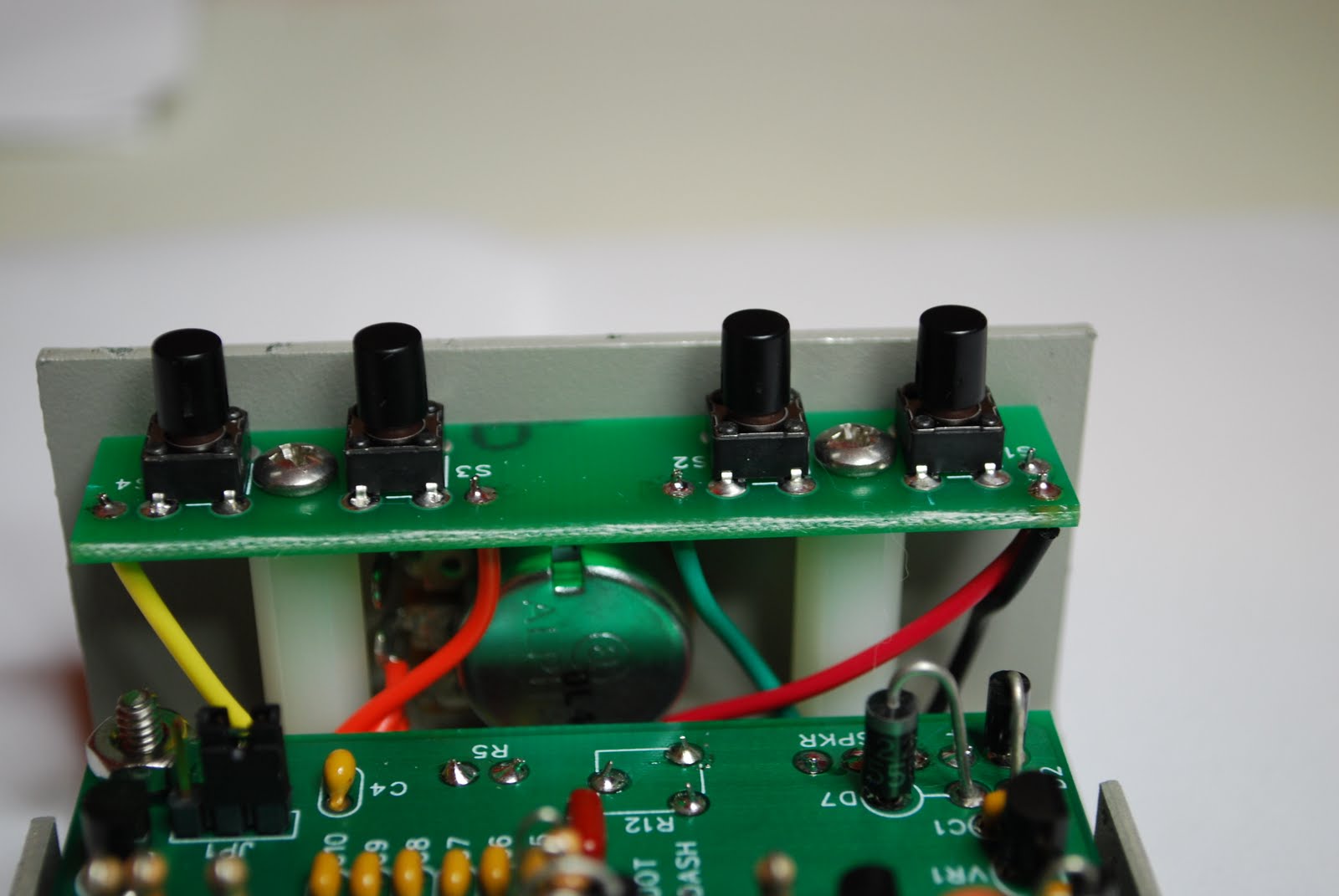 |
| Push button setup |
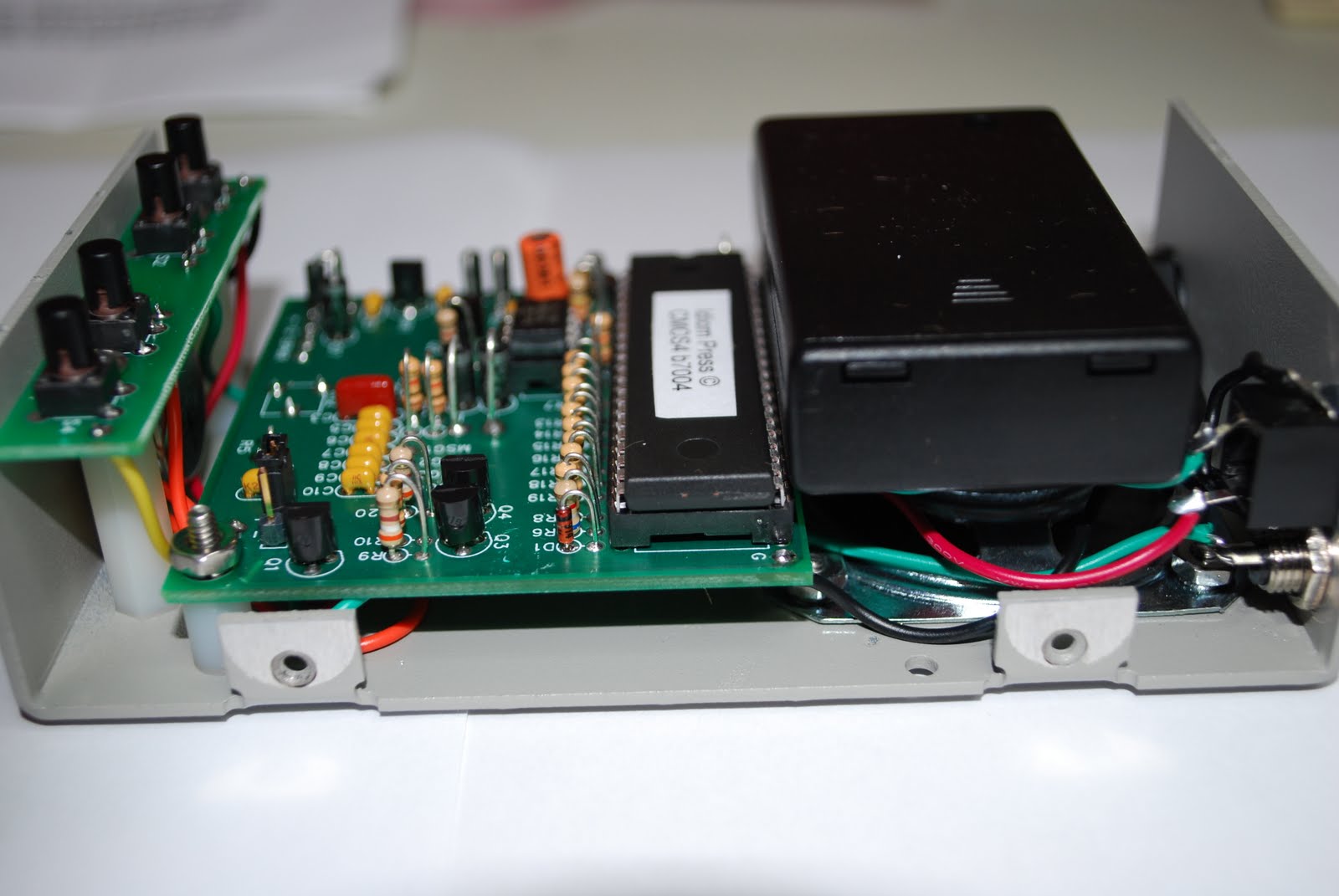 |
| Battery pack added |

Mike Weir, VE9KK, is a regular contributor to AmateurRadio.com and writes from New Brunswick, Canada. Contact him at [email protected].
Pinyon Airport
There is a small airport – one grass runway and a single windsock – a few miles from my home (and ham radio station) here in Glade Park. According to Google Maps (see graphic bel0w) this airport – Pinyon Airport – lies 5.586-km away as the crow, and presumably Piper, flies. I’ve seen a small propeller plane land here after passing rather low over my house on approach. A concern seeing as how I’ll be building ham radio antenna towers later this year.
I checked the FAA “TOWAIR” Website and plugged in the coordinates of my first likely tower location – 39.013949 N, 108.744371 W – and got the response “Structure does not require registration.” Nevertheless I’ll be registering my towers with the Federal Aviation Administration so they appear in a NOA (Notice To Airmen) and appear on FAA maps. I’ll also try to find out how owns the aircraft mentioned above and politely suggest they find a new approach or fly a bit higher.

Bill
Bill Hein, AA7XT, is a regular contributor to AmateurRadio.com and writes from Colorado, USA. He is co-owner of Force 12 and InnovAntennas. Contact him at [email protected].
Goodbye 2011, Hello 2012

Where did the year go? Like many of you, yes I’m asking myself that question. It seems just yesterday we were saying goodbye to 2010 and hello to 2011. But this is what they say about getting older. Time passes by much faster or certainly appears to do so. I’m sure 2012 will also speed past, best sit down and buckle our seat belt.
My 2011 started off a bit slow in the area of my amateur radio hobby involvement. This partly was due to other work and life commitments. I believe it was sometime in early summer when I really got rolling again both with this blog and my amateur radio podcast. I would have to list both of these (the blog and the podcast) as major accomplishments to 2011. Mainly because they both got very close to extinction. With better focus and organization, I’m proud to say that I kept up my publishing schedule and both will be around for a long time. Here are a few of my other highlights for 2011.
1. Amateur Extra
As my regular readers (and listeners of PARP) know. I was licensed as a technician in August 2007 and upgraded to general in January 2008. Since perhaps January 2008, certainly since January 2009, every one of my annual New Years Resolutions involved upgrading to extra. Of course I failed to accomplish this in 2008, 2009 and 2010. But just like clock work I put it on my 2011 list with somewhat of a soft-target of getting accomplished before June 30, 2012. Why June 30, 2012? Well that is when the current extra class question pool expires. I told myself I couldn’t purchase another study guide and I better just get it done.
The half way point of 2011 came and went and I hadn’t really made any progress towards extra preparation. The book was on the bookshelf collecting dust. Then one Tweet from Twitter in early August changed everything. From this tweet I learned about an online (via Echolink) extra class study group which planned to meet twice a week. This was hosted by the South Coast Amateur Radio Service. I signed up and it was exactly what I needed. Even before the 6 week class was finished, I was passing sample tests and on Saturday, 28 August I attended a local VE session where I passed the amateur extra exam.
2. New Amateur Radio Club
I’ve always believed in the importance of belonging to a local amateur radio club. I talk about this on a regular basis on the podcast as I feel it is the best way for new amateur’s to gain experience and also share a common interest with likeminded individuals. Having said that, I certainly realize not all amateur radio clubs are created equal. I’ve heard some real horror stories and while I must state I’ve never experienced any rude behavior towards other hams, I had grown extremely bored with my old club and simply had stopped going to monthly meetings.
Sometime in early September I was invited to attended a club meeting with the Tri-Lakes Monument Fire Radio Association from Bob Witte, K0NR. I attended my first meeting in September and proud to say this is my new home. In addition to Bob being a member, I’m also extremely fortunate to also share the club with Steve Galchutt, WG0AT. I’ve certainly learned a lot from both.
3. Summits On The Air (SOTA)
I certainly couldn’t end the previous paragraph of talking about Steve and not mention SOTA. I’ve previously explained how I stumbled onto SOTA and will let you read that blog posting if you haven’t already. As we all know, the amateur radio hobby is extremely diverse in what it offers those who participate. SOTA has been a way for me to combine the love of the great outdoors with amateur radio. I’ve completed two SOTA activations and am counting the days until I can get out for #3. If you would like to learn more about the Summits On The Air program, please listen to episode 50 of the Practical Amateur Radio Podcast.
4. JT65
JT65 is the weak signal mode that has a lot of our fellow amateur’s talking and for the right reasons. The QSO’s I’ve been able to make and not even always in the best band conditions, really have me excited about this mode. Since I started running JT65, I’ve worked a little over 350 different and unique call signs and it continues to gain in popularity. In addition, JT65 has been successful at allowing me to work many new DX entities. If you would like to learn more about JT65, please listen to episode 46 of PARP.
5. Worked All States
Now one might think having been licensed for over four years I would have collected multiple WAS certificates by now. Especially after holding a general class license with its great HF privileges for almost the entire duration of this time. Yes it is true I’ve also seen many brand new amateurs obtain WAS within their first year or so.
To be perfectly honest, it was never really anything I looked into until just this year. I set my sights on obtaining the basic (mixed mode) version of Worked All States as a New Years Resolution and begin mapping out how to accomplish it. With the help of both my HRD logbook and both eQSL and the ARRL Logbook of the World systems, I identified what I had versus what I needed.
Of course what I found was I had worked many of the states I needed and in some cases multiple times. However, the contact had not been confirmed in either eQSL or LoTW by the other operator. Around the late summer timeframe I worked both the Colorado and Texas QSO parties and along with just casual operating I had managed to get my list down to just two remaining states Wyoming and South Dakota.
Wyoming went into the logbook and was confirmed in early November. This just left South Dakota. Up to this point I had worked and confirmed 49 of the 50 US States without the need of a sked. I had hoped to do this with South Dakota, but time was running out. So in early December I contacted a fellow ham in South Dakota who routinely operates JT65 and asked if he would be willing to work me for SD. He agreed and between me getting sick and the Christmas holiday, we finally managed to complete the sked and South Dakota was in the logbook and confirmed on 26 December. Ironically, two days later I worked another station from SD completely random on JT65. So I suppose even if the sked wouldn’t have been possible, I would have still earned WAS in 2011.
Final Thoughts…
In closing, 2011 has been a very good year for me in the area of amateur radio. As I approach my 5th year of being licensed I’m reminded of what this hobby truly is all about. The friendships I’ve made over the years and especially those who I interact with on a regular basis are truly very important to me. It is these friendships made possible through this hobby which truly help to complete who I am as a person.
The hobby of amateur radio and those who participate in it, are often referred to as ambassadors. We are ambassadors who are not restricted by political, religious or even geographical boundaries. We do what we do and are who we are as individuals because of a common shared interest. It is my wish for the new year for all of us to use this common shared interest and our roles as ambassadors to continue to bridge peaceful relationships around the world.
Until next time and next year,
73 de KD0BIK
Jerry Taylor, KD0BIK, is a regular contributor to AmateurRadio.com and writes from Colorado, USA. He is the host of the Practical Amateur Radio Podcast. Contact him at [email protected].
2011: Annus Horribilus
Well, what a year 2011 turned out to be! As I write this it will be six months since I learned that I have incurable brain cancer.
Let me tell you, nothing prepares you for the shock of being told you have a terminal illness. One day I was a reasonably fit 58-year-old who had never been seriously ill in my life, enjoyed long walks in the outdoors, didn’t eat junk food, never smoked and drank only in moderation. I fully expected to live until my 80s – the average expectancy of people in Britain.
A week later and our world had been turned upside down. Within hours of being referred to hospital after complaining of a persistent slight headache and fuzzy vision I had been give a CT scan and told that there was something in my brain that shouldn’t be there, something that might be a tumour.
Then I was told that whatever it was, I would need brain surgery, and asked to sign a form to show it had been explained to me that I might never recover from the operation, I might be left in a coma, or unable to speak or recognize my wife. The thought of brain surgery was scary but with no time to even think about alternatives I signed. A couple of hours after that and I was being whisked by ambulance across the breadth of the country in the middle of the night to the Royal Victoria Infirmary in Newcastle. There, they made an MRI scan and then performed the brain surgery to remove as much as they could of the tumour without harming normal brain function.
A few days later I was recovering in hospital from the operation, feeling better by the day and fully expecting that I would be home soon and in a few weeks life would get back to normal. Then a grave-faced hospital registrar accompanied by a nurse drew the curtains round my bed, sat down and informed us that the material taken from my brain had been analyzed. It was a brain tumour, and not just any old brain tumour but the worst sort possible (glioblastoma multiforme grade 4) that only one in 40,000 people are unlucky enough to get. I’d hit the brain tumour jackpot. The prognosis was from a few months to a year, but I would receive treatment to “prolong quality of life as far as possible.”
The news was like being punched in the stomach. Nothing in our life would ever be the same from that moment on. And Olga and I, stunned and numb, were left to find our way home to Cockermouth from Newcastle.
Since then, we have been through a whole gamut of emotions. At first, I felt that nothing I did before I knew I had a tumour mattered as much as making the best of whatever time was left to myself and Olga. In that frame of mind I felt that ham radio was a fairly pointless activity and posted in this blog what I thought would be The Final Over.
But I soon came to realize that life wasn’t over yet. Because of the need for rest and treatment, Olga and I couldn’t just take ourselves off on a world cruise anyway. I needed to be available to see the doctors and go to the hospital. So I regained my interest in my hobby and was soon very thankful for it as gave me something to do during the weeks spent at home, something that took my mind off the darker thoughts I often had.
Learning that I had a brain tumour and that my life was likely to be shorter than I had hitherto expected has made me a different person. I now live from day to day and try to be grateful for whatever each day brings me. I used to be the archetypal “grumpy old man” ranting about the government or other people. I haven’t altered my opinions about bankers, politicians and the EU but now I don’t waste precious time grumbling about things I can’t change.
After I began writing my brain tumour diary one or two people pointed out that it wasn’t just me, we are all mortal and we all die eventually. Some people go off to work and die in car accidents or suddenly drop dead of a heart attack giving their loved ones no opportunity even to say goodbye to them. Others die after long and painful illnesses with months in hospital. We don’t know for how long the treatment will keep my tumour at bay. At the moment I’m feeling no pain, just frustration sometimes at not being able to do things I could when I was fit. But I’m at home with my wife and expecting that I will eventually get back to something more akin to normal.
The realization that time is precious means that Olga and I will do things that we otherwise would probably never have got around to. I am lucky that I have been able to give up work and devote my energy exclusively to recovery and recreation. We are both savers not borrowers so we are fortunate not to have money worries – well, not apart from the possibility of a world economic collapse making all of our savings worthless! Being diagnosed with a terminal illness has even allowed me to fulfil a goal I thought I never would – that of retiring before I was 60. Every cloud has a silver lining.
Most of all, I am so fortunate to be married to my wife and soulmate Olga. She has never once complained about the stresses and strains of suddenly finding her husband has brain cancer. She is always there for me, making sure I take all the right pills at the right time and helping me keep my strength up with lots of tasty home-cooked food, fruit and vegetables.
My situation has been harder for Olga to bear than for me. I have always had a bit of a fatalistic view of life – that what will be will be – and a tendency to look for dark humour in a situation. But I only have to imagine how I would feel if the situation was reversed to know how Olga must be feeling. I would be heartbroken to lose her and it won’t be easy for her if she loses me.
For Olga, even more than for myself, I need to beat this tumour. I need to prove the doctors wrong and show that you can survive a glioblastoma. I’m optimistic about it. So my one and only resolution for 2012 is to beat the bugger and still be here in a year’s time to write about all the things we have done despite my having a brain tumour.
Thank you for reading my blog and for all the messages and cards of support sent by many of you. They have all made a difference and helped us both to feel better about the situation. I hope that 2012 will be a great year for you and not spring any nasty surprises like 2011 did for us.

Julian Moss, G4ILO, is a regular contributor to AmateurRadio.com and writes from Cumbria, England. Contact him at [email protected].
Simple keyer trouble
It should have been simple. I needed a basic CW keyer that would allow me to use a paddle with my homebrew QRP / QRPP rigs because my shaky hands make sending Morse with a straight key too difficult at the moment. I also needed to be able to record a message and play it once or repeatedly until I heard someone reply or was spotted on the reverse beacon network.
A couple of years ago I built a DC20B QRP transceiver. I didn’t like it very much and eventually sold it on eBay but I did like the keyer built into it which used an ATTiny13 microcontroller. One day, I thought, I would build a keyer using this chip. I got two of the Atmel chips and Steve Weber KD1JV sent me the hex file so I could program them but I never got around to doing anything more until a couple of days ago.
The simple keyer circuit uses only a handful of components but due to my condition it took a lot longer than it would have done pre-tumour to work out a perf board layout and build it. So you can imagine that I was a bit upset when after all that effort the keyer didn’t work. It responded to the dash key and the function button, but not the dot key. Also the sidetone was very high pitched and the Morse speed was about 100wpm!
Thinking I had made a mistake programming the clock setting in the chip I tried programming the other one. This ended up just the same. Unfortunately with the simple keyer program you have to disable the reset pin that is used by the programmer so you only get one chance to write the code to the EPROM. But as I don’t have the source code and so can’t try modifying it that shouldn’t have been a problem. If I hadn’t sold the DC20B I could have tried the keyer chip from that, but now I am now stuck with no idea what to try next.
I have the code for another keyer that uses a PIC12F509A – the K9 from K1EL’s freeware page. But I’d have to start over with the circuit board as the pinouts of the Atmel and Microchip microcontrollers are not compatible. The functionality of the K1EL keyer program is not what I was after either, so I don’t feel much like trying it at the moment.

Julian Moss, G4ILO, is a regular contributor to AmateurRadio.com and writes from Cumbria, England. Contact him at [email protected].
 Ham Radio Deluxe |
 W5SWL Electronics |
 Ham Radio Prep |
 KB3IFH QSL Cards  Hip Ham Shirts  HamRadioAuctions HamRadioAuctions Reliance Antennas Reliance Antennas Enigma Shop Enigma Shop |  morseDX  Ni4L Antennas  R&L Electronics R&L Electronics antennas.us antennas.us QRV QRV |
- Matt W1MST, Managing Editor
