 |
 Drywall and DXCC Progress
 5 March 2012 | by
 If you’ve been following my ham shack updates from the past couple of weeks, you know I’m in the final stages of finishing the space in my basement which will be used as my ham shack, podcast studio, home office and overall man-cave. The space is really starting to come together and I can see what the finished space will look like. I’m truly excited and especially so after staring at nothing but stud walls for several years.
If you go back to this blog post and also read this one, you’ll get an idea of how I’ve spent the past couple of weekends. While I believe we made great progress this weekend, we did fall short of my goal of getting all the walls done. This delay was due to the extra time it took me to hang two doors. These two doors will access the utility closet I framed in to hide the HVAC systems. Because of the way the two furnaces are situated, I had to include two doors. Otherwise, should anything happen to the hot water heater, it would have required demolition to remove it.
The remaining work on the walls (about 5 more sheets of drywall) should get completed this coming weekend. I then plan to take a weekend off and reward myself (and my wife) with doing something else that weekend and then it will be time to start hanging drywall on the ceiling.
Finally, I worked a total of about two hours in the ARRL DX phone contest this past weekend. During this time I worked about 20 DX stations, adding four new to my growing DXCC list. The four new DXCC entities worked this weekend were Bahamas, Barbados, Trinidad & Tobago and Portugal. This brings me to a total of 54 DX entities worked to date.
Sorry no pictures with this update. I’ll hopefully get some pics in the next update or two showing progress.
Until then…
73 de KDØBIK
Jerry Taylor, KD0BIK, is a regular contributor to AmateurRadio.com and writes from Colorado, USA. He is the host of the Practical Amateur Radio Podcast. Contact him at [email protected].
DIY Magnetic Loop Antenna – Part 3
Well, I finally have had time to sit down and put together part three of the DIY Magnetic Loop Antenna, sorry it has taken so long!
This post will cover building and coupling the loop to your transceiver. After reading through posts one and two you should have a good idea of the parts you’ll use and the physical dimensions of the main loop.
DIY Magnetic Loop Antenna – Part 1
DIY Magnetic Loop Antenna – Part 2
Most magnetic loops have the capacitor at the top of the main loop and the gamma match or matching loop at the bottom, this arrangement avoids running the feed-line through the center of the antenna.
You can assemble the main loop from continuous copper tube or from eight straight sections and 45 degree joiners. Make sure you have a blow torch or propane torch to solder the joints as you’ll need more heat than a soldering iron can supply. Whichever way you decide to build the main loop make sure that all joints are soldered or clamped as securely as possible, you want the lowest resistance possible to avoid your output power turning into heat. Other materials can be used for the main loop such as aluminium or low loss coax but copper pipe is easy to work, has low resistivity and available from just about every hardware store.
To construct the frame of the antenna you can use PVC pipe. It is a cheap and relatively sturdy building material and is available in a range of thicknesses, just about any hardware store will stock a wide selection of fittings. It insulates well and can be glued once you are sure your project is in its final form.
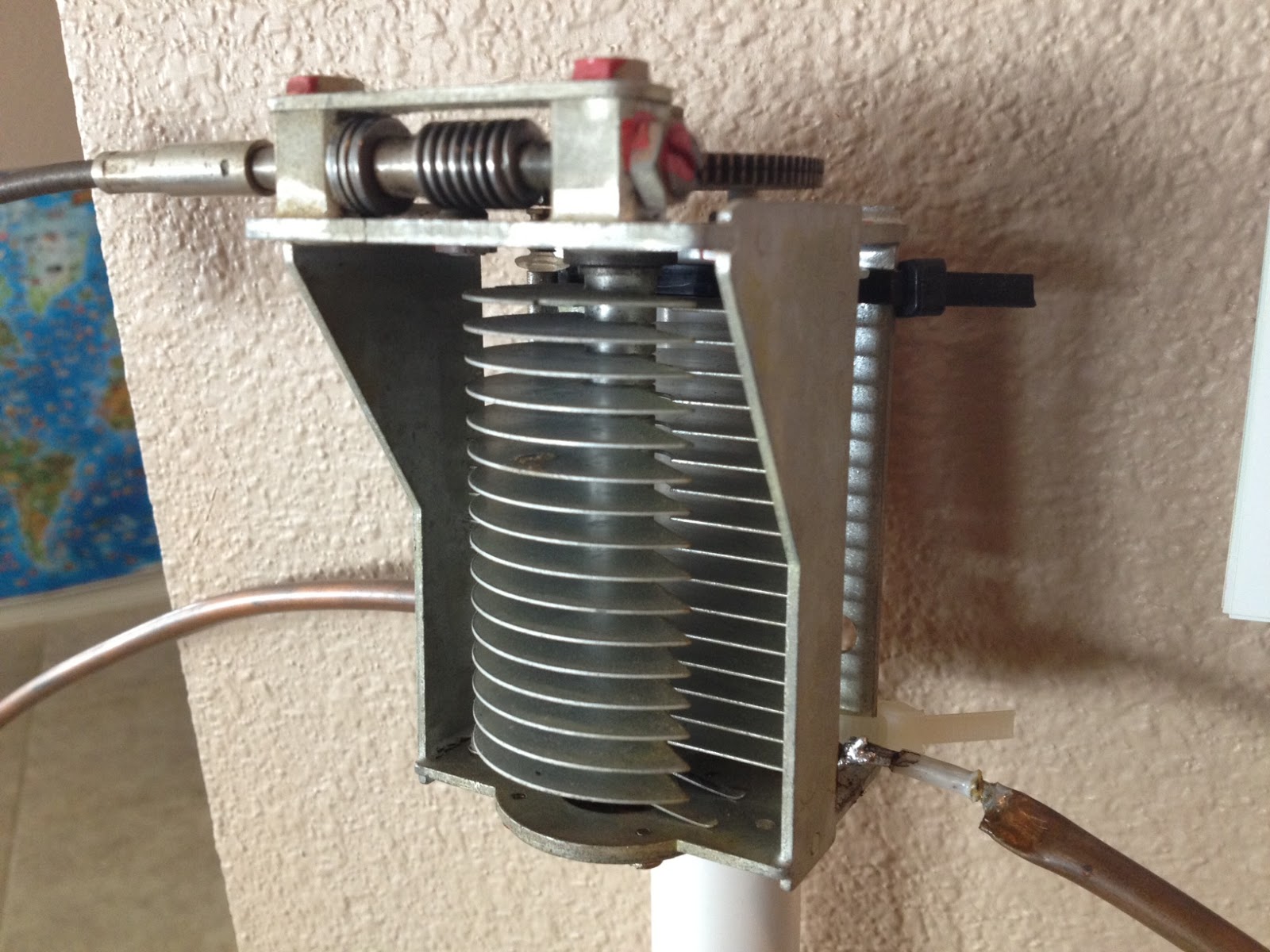
Once the main loop is constructed you’ll need to connect your capacitor to the two ends of the pipe at the top of the loop. Depending on the capacitor you may want to solder tags to the ends of the loop so they will be easier to attach. Copper pipe is a great conductor of heat and takes a lot to heat up and solder while it is not advisable to apply the same amount of heat to your capacitor.
It is also a good idea to attach the capacitor to a solid support so that the connections are not under strain.
The main loop and the capacitor forms the resonant circuit of the magnetic loop antenna.

To couple the main loop to your transceiver and match the expected 50 Ohms impedance you can use one of two methods. Probably the easiest is to use is a loop of insulated wire 1/5 the circumference of the main loop. The smaller loop is placed at the bottom of the main loop and can be shifted around to provide the best match. If you have an antenna analyzer you’ll be able to set it to the desired frequency, tune the variable capacitor for resonance and then move the small matching loop around till you have achieved close to 1:1 SWR. If you don’t have an antenna analyzer you can tune the capacitor for the greatest received noise and then on low power tweak the capacitor and move the coupling loop around for best SWR. Do NOT touch the loop while it is transmitting, use a wood or plastic rod to make adjustments as there are high voltages and intense RF fields near the loop.
An alternative to the coupling loop is the gamma match. The shield of the coax feed cable is connected to the base of the main loop while the inner conductor is connected to a point approximately 1/5 of the circumference around the loop. Its a good idea to use stiff wire (large gauge) for the gamma match as it can be critical of the position and orientation and once you have it in the right position you won’t want to move it again.
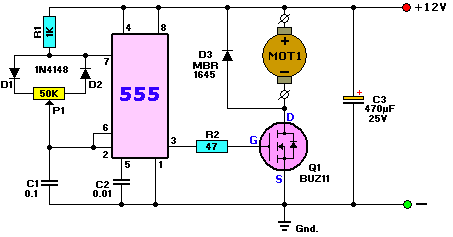
It would be preferable to have the ability to remotely tune the loop. A motor with a reduction gear could be used to move the variable capacitor but because the point of resonance is very narrow there should be a way of slowing the motor down. A simple control circuit using variable pulse width modulation could be used to slow the motor down while still retaining enough torque to move the capacitor. Whatever method is used to move the capacitor it should be well insulated from the other components of the antenna. Several thousand volts are generated on the MLA and care should be taken to ensure they don’t find their way onto control leads and back into the shack. Control leads should also be wrapped around toriod inductors as they leave the near field of the antenna to reduce the possibility of RF travelling along them.
With a SWR bridge and microcontroller you could build a fully automatic tuner that swept through the range of the tuning capacitor when the SWR rose above a defined limit indicating that the transmit frequency had changed.
With a little creativity and knowledge you could have an impressive MLA the equal of multi-thousand dollar military style units.
Hopefully this has given you some ideas for constructing your own loop antenna. Regardless of if you go top-of-the-line and buy a vacuum variable or build for economy and QRP you’ll have a compact, useful and unique antenna.
Owen Morgan, KF5CZO, is a regular contributor to AmateurRadio.com and writes from Texas, USA. Contact him at [email protected].
Code academy
As I am messing around with Arduino and its various bits and pieces I noticed quite quickly that whilst I can look through a bunch of code and pick out familiar items like serial.print and lcd.print. They seem fairly self explanatory to me. Other commands and, I’m going to call them words but you’ll understand why in a minute, just seemed a world away from my vocabulary.
My background is mechanical engineering, so limits and fits, materials, stress and strain are the areas of vocab I’m familiar with. Calling functions, variables and strings needed a bit more explanation in my world and previous attempts at understanding this went a bit wrong as there the language is the barrier. By language in this sense I mean C++, VB etc. See its getting complicated already!
If its all getting too much for you then try Codeacademy. I’ve had a few lessons with the primary idea of  learning the lingo and nothing else really. The lessons are very well structured and the little exercises that go with them as well as the projects help to test your knowledge. I’m still finding that its worth while writing things down in a notebook but understanding the difference between a function and a variable has helped me get my head round a new subject for me. I will never be a code ninja but being able to understand more than a few keywords in someone else’s code will undoubtedly help me get into the position where I can look through other peoples code and understand what is going on as well as adapt it if necessary for my own purposes.
Alex Hill, G7KSE, is a regular contributor to AmateurRadio.com and writes from Cumbria, UK. Contact him at [email protected].
It’s been one of those weeks………..
 |
| This is the powerport box without the battery |

Mike Weir, VE9KK, is a regular contributor to AmateurRadio.com and writes from New Brunswick, Canada. Contact him at [email protected].
HRD
HRD Software, LLC has released version 5.11a of Ham Radio Deluxe, the first version since their acquisition of HRD from Simon Brown, HB9DRV. The release appears to be a minor update with the most notable changes being cosmetic updates to splash screens, showing the new ownership of the product.
As many predicted at the time of the acquisition, the next version of HRD, 6.0, will be a pay-only product. The 5.x version will continue to be free and will have bug fixes released for an unidentified amount of time. Version 6.0 will be released at the Dayton Hamvention, but customers can receive a $20 discount for the product by subscribing to HRD support for $59.95 prior to Dayton. At Dayton and afterwards the price for 6.0 will be $79.95. That is a one year subscription. Subsequent support subscription renewals are $39.95 for two years of support. The software doesn’t expire and can continue to be used after support expiration, however users must have a subscription in order to get software updates.
Personally I think Ham Radio Deluxe is worth this price. As I’ve mentioned in previous posts, I think it’s the best amateur radio logging software ever written (though in a sea of outdated and badly designed sophomoric applications, the bar is often set low). But considering how good version 5.x is, it may take quite awhile for people to actually want or need to upgrade. Unless the trial version of 6.0 really knocks my socks off, I’m going to wait until perhaps version 6.1 or 6.2 to consider upgrading.


It isn’t spring yet…

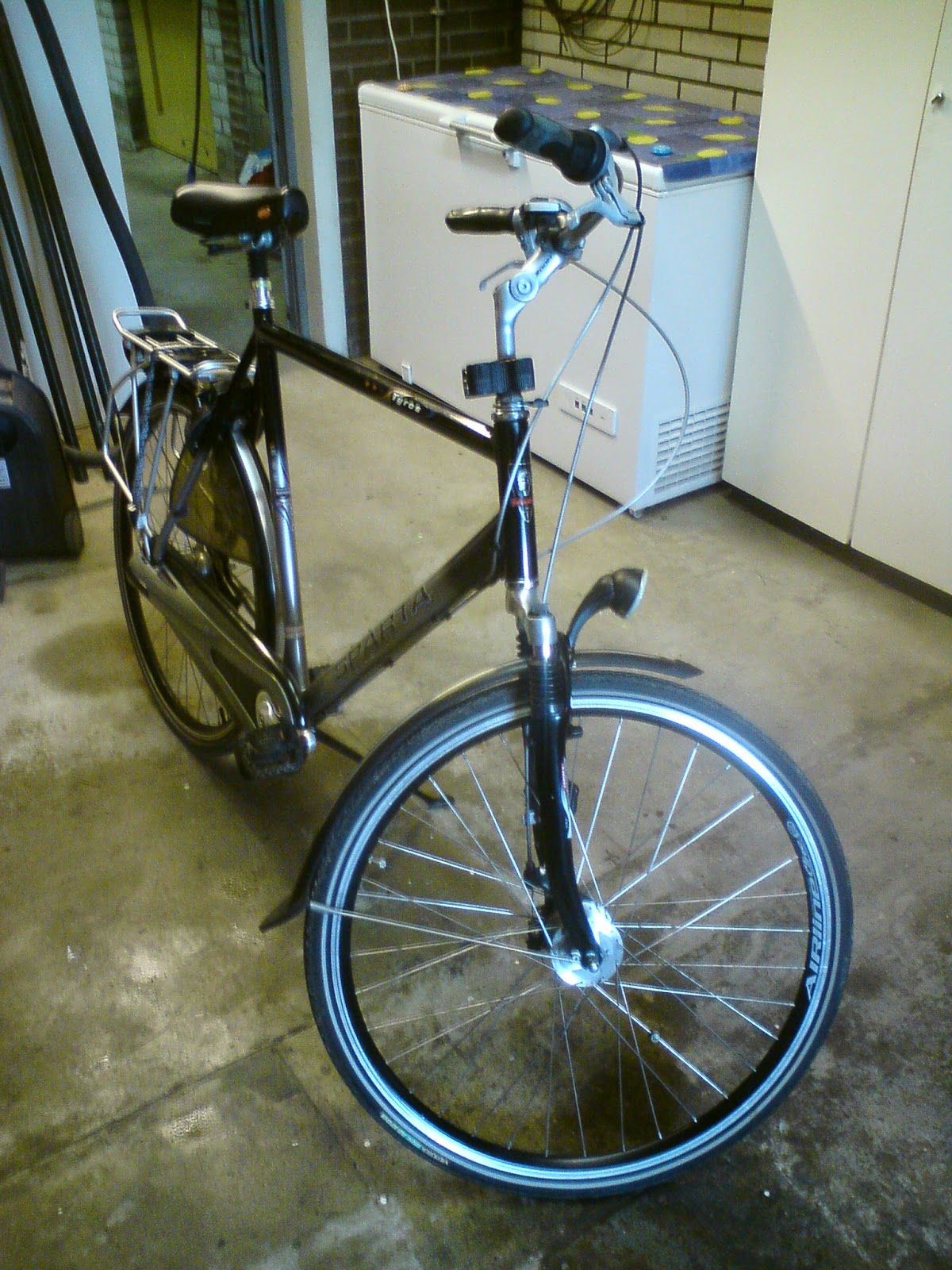
Snowdrops are blooming in our front garden though it is still more then a month before spring. I think everyone had it with winter at the nortern hemisphere and are desperately looking out for the spring to come. Hopefully we don’t get any snow and ice anymore. Luckely the days are already getting longer. March means I go to the job by bicycle. Before I had my drivers license (long time ago) I did everything by bicycle. But the posession of a car makes you lazy. Now, with the increasing fuel prizes in mind I started to use the bicycle again and leave the car in the garage for as long as possible. Last year I cycled about 1900 Km in total. I checked the bicycle today and want to try the little Baofeng HT together with the mini headset while cycling. The mini headset has been modified as it did hang on TX due to RFI. Luckely there is nice video of this little headset mod.
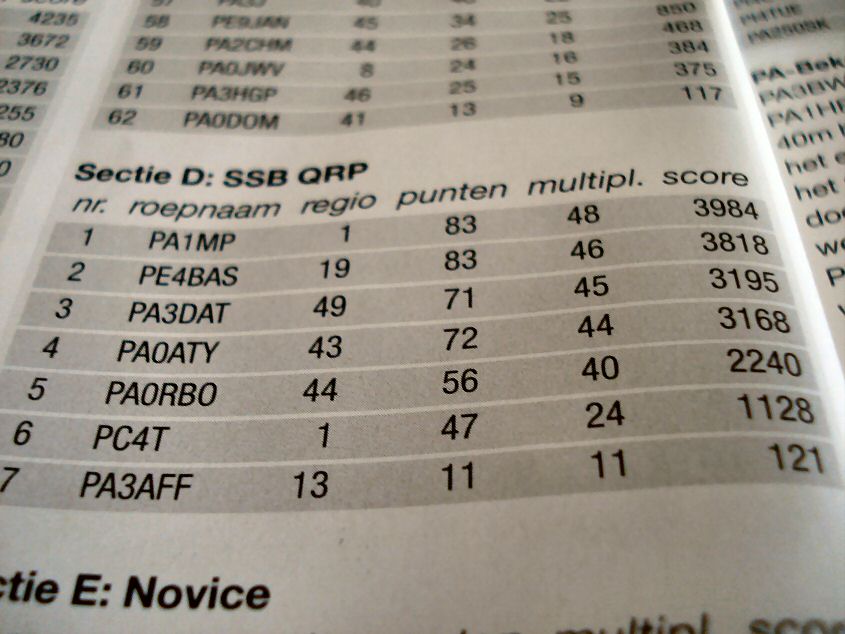
The results of the PA-beker contest last year are published. I became 2nd again, just 2 multipliers short. Fellow blogger Paul PH0TO (PC4T last year) became 6th, not even the last place Paul. I will do my best to win this years QRP-SSB section. It’s just a matter of persistance I think…
Bas, PE4BAS, is a regular contributor to AmateurRadio.com and writes from Groningen, Netherlands. Contact him at [email protected].
Sorry for my absence
But it’s been a heckuva week. Not any Ham radio activity or blogging for W2LJ this past week as my Mom was in the hospital and that was my main focus.
She was having a lot of pain in her right side and it finally got to be too much for her to take. My sister texted me very early Tuesday morning that she was with our Mom and had called 911. I didn’t go into work that day; and spent most of it in the Emergency Room. First thoughts were either gall bladder or kidney stones. All the sophisticated tests didn’t reveal too much of anything. A thorough “old fashioned” exam by an “old school” Chinese doctor led to a hunch and another X-ray revealed a slight fracture to a rib.
Today my Mom was sprung from the hospital and is currently staying at my sister’s house and should be there for the next few weeks to a month. She’s looking rested and more relaxed now that she knows what was causing the pain. I think that finding out the cause of something like this is more than half the battle. Once you can get a little peace of mind, the rest can fall into place.
I did get a chance to get back on the radio for a bit this afternoon to find not much going on. 10, 12, 15 and 17 Meters were all dead when I listened this afternoon. I finally worked EA3DD, Manuel on 20 Meters for a brief QSO. He was very loud – 599 into NJ and I was graced with a 549 report back. I’ll take that any day.
Oh, even though it seems that 2011/2012 will be known as the “Winter That Never Was” here in the NorthEast (I saw robins this morning and the crocusses are already popping up in the front yard), here’s K6BBQ’s homage to FYBO:
Hey, according to the KX3 reflector – the Operator’s Manual will be released on Monday at the Elecraft Website! Getting closer!
72 de Larry W2LJ
QRP – When you care to send the very least!

Larry Makoski, W2LJ, is a regular contributor to AmateurRadio.com and writes from New Jersey, USA. Contact him at [email protected].
 Ham Radio Deluxe |
 W5SWL Electronics |
 Ham Radio Prep |
 KB3IFH QSL Cards  Hip Ham Shirts  HamRadioAuctions HamRadioAuctions Reliance Antennas Reliance Antennas Enigma Shop Enigma Shop |  morseDX  Ni4L Antennas  R&L Electronics R&L Electronics antennas.us antennas.us QRV QRV |
- Matt W1MST, Managing Editor
