 |
 Now THAT was fun!
 8 July 2012 | by
 I participated in the QRP-ARCI Summer Homebrew Sprint for only a very little this afternoon. But thankfully, quality is not defined by quantity, so the QSOs, while few in number were great in fun.
I began by operating on 20 Meters. The Buddistick was set up with two 11 inch arms, the coil and the super long whip atop the Jeep on the magmount. With my coil tapped in the normal 20 Meter spot that I am accustomed to, the Autek analyser displayed an SWR of 1.4:1. I hit the ATU button anyway, for a very short “Brrrrp” and got a 1:1 match.

While on 20 Meters, as I was calling “CQ QRP” for a bit, and much to my surprise I was answered by Fred G4HOM out of Birmingham, England. He was much louder than the stateside stations that I was working; so I immediately thought “tower and beam”. Nope! Fred was using his K2 at 10 Watts to a simple wire – propagation, being what it was, favored a QSO between Lake George and Birmingham. Signal reports were good both ways.
Shortly thereafter, I switched to 40 Meters by undoing the tap from the coil to take advantage of the entire Buddistick coil, and I added two more 11 inch arms. After a bit of a scare that I won’t go into here (due to my own stupidity), the KX3 had matched the Buddistick to 1.4:1 on 40 Meters. I had several QSOs down around 7.030 MHz, including one with my very good friend Bob, W3BBO. This was our first QSO while I have been at Lake George. He had a good 579 signal and gave me a good report as well.
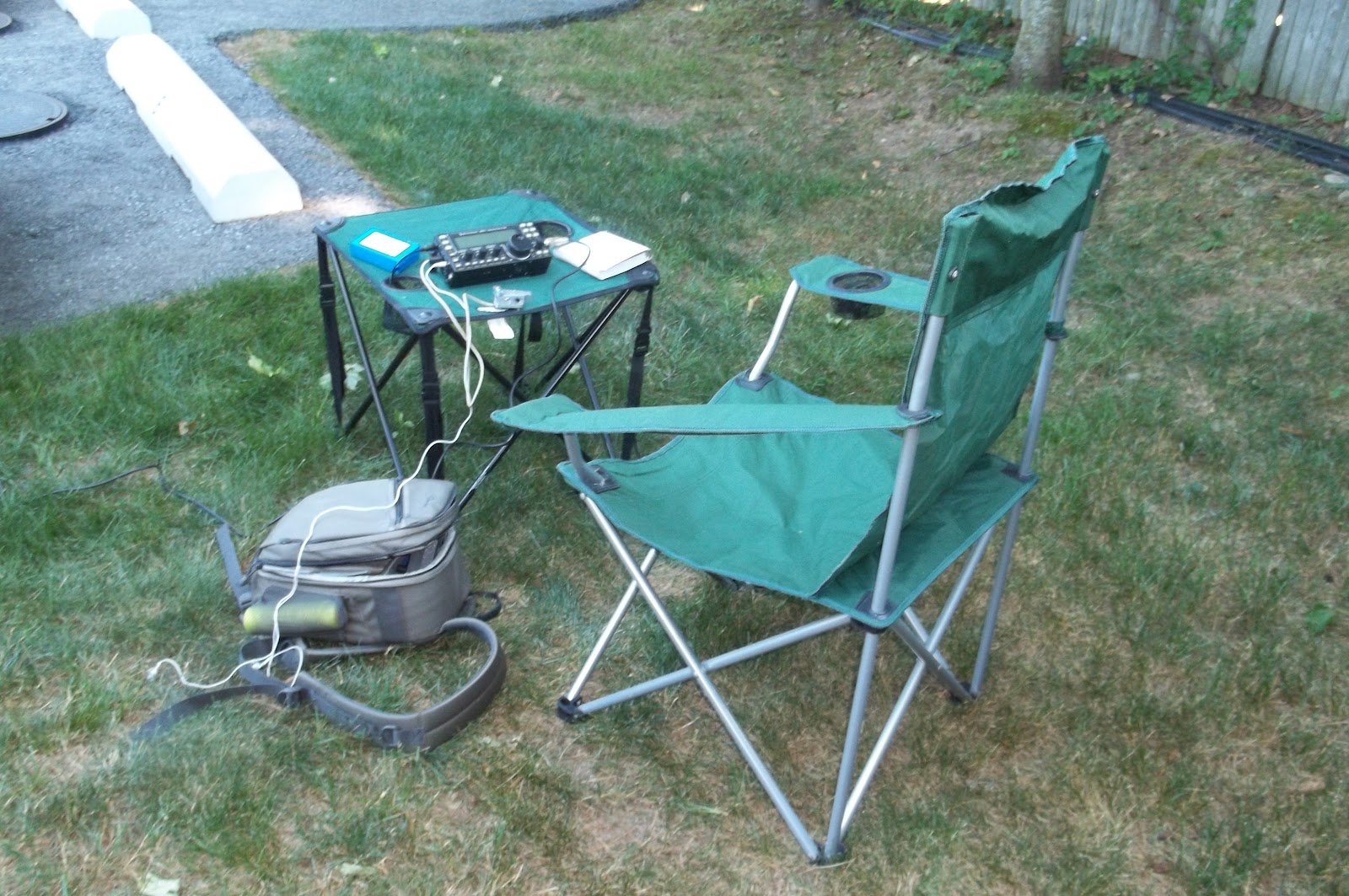
The Buddistick on the magmount, using the vehicle as a ground plane is great combination. Thanks to W3BBO for getting me to try that. It works so well that I may just forego using the EFHW wires unless I am on the hiking trail later this week.
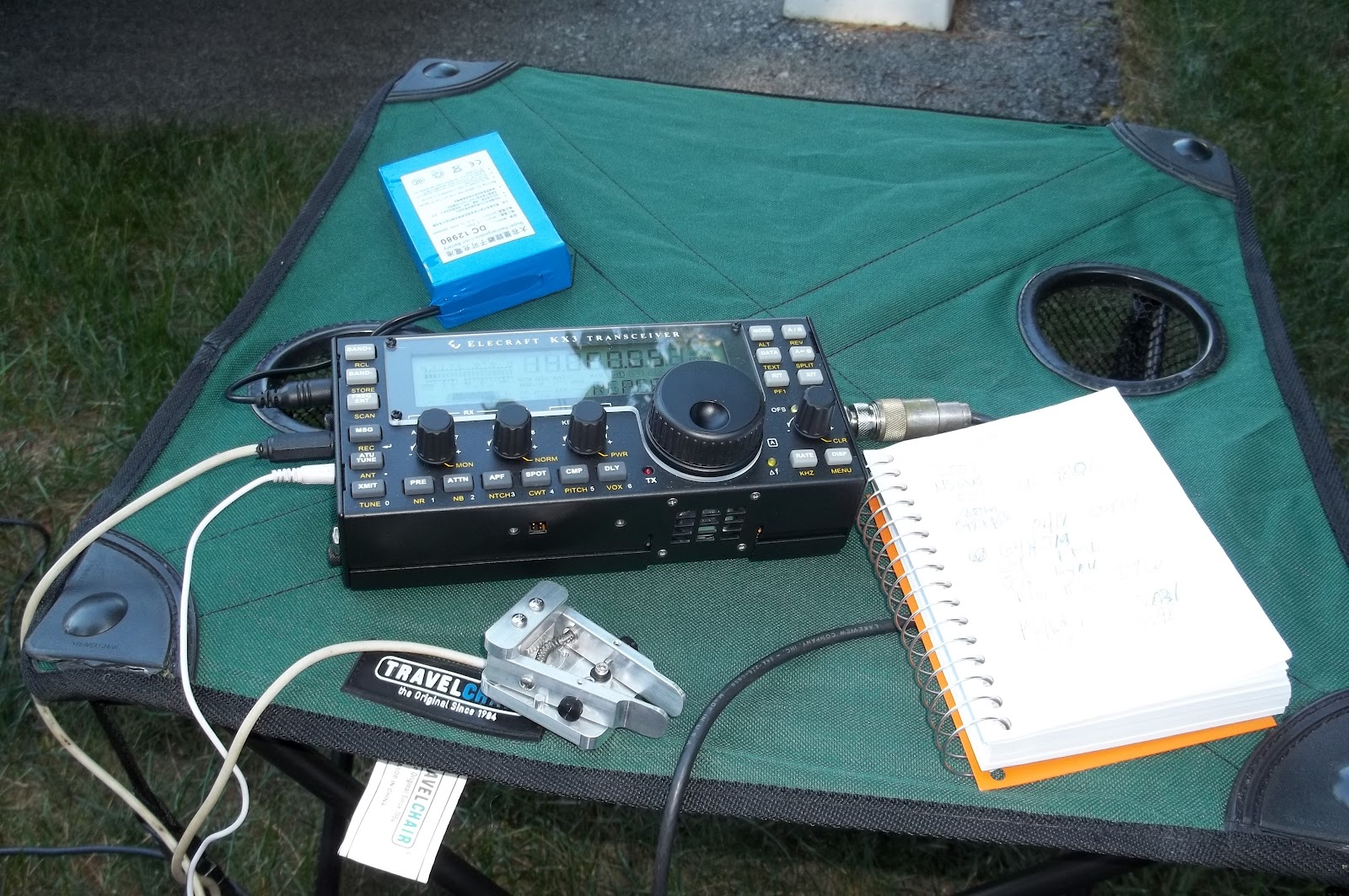
Oh, I don’t remember if I mentioned this; but I decided to leave the Lead Acid battery home. I am going strictly with the Lithium Ion this week. It held up very well this afternoon. I never dropped from 5 Watts output throughout the couple of hours of operating time this afternoon, including a few prolonged “CQ QRP” sessions. I think “The Little Blue Guy” will be quite adequate for my needs.
72 de Larry W2LJ
QRP – When you care to send the very least!

Larry Makoski, W2LJ, is a regular contributor to AmateurRadio.com and writes from New Jersey, USA. Contact him at [email protected].
The KARS 2012 Summer Field Day Video
It took a little while but I finally got the video for the Katy Amateur Radio Society summer field day together. I didn’t shoot as much video or as many photographs this year as I actually spent time a fair amount of time operating for a change!
Hopefully it will still be an entertaining, if short, reminder of those two days in June.
Katy Amateur Radio Society – Summer Field Day 2012 from Owen Morgan on Vimeo.
 Posted with Blogsy
Owen Morgan, KF5CZO, is a regular contributor to AmateurRadio.com and writes from Texas, USA. Contact him at [email protected].
QRP-ARCI Homebrew Sprint tonight
Well, this afternoon and tonight. It starts at 4:00 PM Eastern and lasts until 8:00 PM. And this will be the first big test of the KX3 in the portable environment.
We are up here at the Lake (George); and what a difference location makes. When we got here, I called my friend who is staying at our house and is dog sitting for us. He told me that back in South Plainfield, it was 102F (39C). Up here at the lake, it was a beautiful 78F (26C).
So the plan for today will be to operate from right near the cabin. I think I will go with the Buddistick attached to the magmount using the Jeep as the ground plane. That arrangement has worked well in the past. I will probably stick to 20 and 40 Meters; but may also give 15 Meters a try. According to the latest solar-terrestrial chart, 15 Meters should be in good condition today.
I brought the Autek antenna analyzer along to help quicken the process of setting up the Buddisitck. Thinking about it, I probably could have left it home. Using the Buddistick on the magmount is actually quite easy to set up. All I really have to do is set up the “standard” configuration, set the tap on the coil for loudest receive noise and let the KX3’s auto tuner handle the rest. The analyzer comes in real handy when setting the BStick up in the field and for dealing with finding the best length for the counterpoise wire.
So hopefully, i will hear some of you on the bands later today. Please give a listen for ol’ W2LJ.
72 de Larry W2LJ
QRP – When you care to send the very least!

Larry Makoski, W2LJ, is a regular contributor to AmateurRadio.com and writes from New Jersey, USA. Contact him at [email protected].
Colorado 14er Event – Now With SOTA!
 Amateur Radio operators from around Colorado will be climbing many of Colorado’s 14,000-foot mountains to set up amateur radio stations in an effort to communicate with other radio amateurs across the state and around the world. The prime operating hours on August 5th are from approximately 9 AM to noon local time (1500 to 1800 UTC), but activity may occur at other times during the day.
New this year: Summits On the Air (SOTA) activity, which adds 1700 additional potential summits! If you aren’t up to climbing a 14er, there are many other summits to choose from (with a wide range of difficulty). See the W0 SOTA web page for details.
Radio operators that plan to activate a summit should register their name and intended peak at the ham14er Yahoo! group. To subscribe to the event mailing list, visit the yahoo groups site at . Also, be sure to check out the event information at 14er.org
Frequencies used during the event
Activity can occur on any amateur band including HF and VHF. The 2M FM band plan uses a “calling frequency and move up” approach. The 2M FM calling frequency is 147.42 MHz. At the beginning of the event, operators should try calling on 147.42 MHz. As activity increases on that frequency, operators should move up the frequency using the standard channel spacing used in Colorado (15 kHz). Don’t just hang out on 147.42 MHz…move up! The next standard simplex frequency up from 147.42 MHz is 147.435 MHz, followed by 147.45, 147.465, 147.480, 147.495, 147.51, 147.525, 147.54, 147.555, 147.57 MHz.
Don’t just hang out on 147.42 MHz…move up and share the band.
| Frequency (MHz) | Comments |
| 147.42 | Primary 2M FM Frequency, then up in 15 kHz steps |
| 223.5 | Primary 222 MHz FM frequency |
| 446.000 | Primary 70 cm FM frequency |
| 446.025 | Alternate 70 cm FM frequency |
| 52.525 | Primary 6M FM frequency |
| 1294.5 | Primary 1.2 GHz FM frequency |
| 144.200 | 2M SSB calling frequency |
| 50.125 | 6M SSB calling frequency |
| 14.060 | 20M CW Frequency |
| 21.060 | 15M CW Frequency |
| 28.060 | 10M CW Frequency |
| 14.260 | 20M SSB Frequency |
| 18.1575 | 17M SSB Frequency |
| 21.330 | 15M SSB Frequency |
| 28.350 | 10M SSB Frequency |
| Other Bands/Modes | Standard calling frequencies and/or band plans apply. |
Warning: Climbing mountains is inherently a dangerous activity.
Do not attempt this without proper training, equipment and preparation.
Sponsored by The Colorado 14er Event Task Force
Bob Witte, KØNR, is a regular contributor to AmateurRadio.com and writes from Colorado, USA. Contact him at [email protected].
Where did I find those other 60 hours a week?
So I finally pulled the plug on the day job six weeks ago. For the first time since I was 18 years old, I don’t have a regular pay check coming in. Unless you count that Social Security thing, which is hardly enough to call a “paycheck.” I had big plans for all the new spare time I was going to have in retirement, including actually getting on the air more, seeking out long, rambling ragchews, working more PSK31 and RTTY, doing some QRP, maybe even building a kit or two and trying out an antenna idea I’ve been contemplating. Contemplating for a dozen years.
Truth is, I only retired from one of my several jobs. For some reason, I quit the only one that actually paid me a regular wage, which automatically brings my sanity into question. But like a gas occupying a vacuum, the other things I do quickly expanded to take up all my available time, including what the day job once took. I have no idea how I was able to work those sixty hours a week at the old vocation!
Some of you may be aware that I am a writer, too, and just published my 24th book. I’ve also finally gotten around to putting one of my novels–my second book, published way back in 1997–up on Amazon.com as an eBook. (I hope it finds a bigger audience this time because it is near to my heart, the story of a young man who falls in love with the magic of radio, goes on to a career in broadcasting as a deejay, and eventually his best friend, who just happens to be a ham, saves his bacon…using a trick many of you will recognize. It’s titled WIZARD OF THE WIND and, yes, there is a lot of me in that story!)
I’m also finishing up an amateur radio book, one that has been in the works for a while, too. It will include some of the articles and short stories I’ve put up on eHam.net and more. I want it to not only entice those who develop an interest in ham radio to go ahead and take the plunge but to also encourage those already in the hobby to explore other aspects and become true evangelists for it.
When I was writing WIZARD OF THE WIND, I actually took a weekend job at an oldies radio station for a year, working a weekend deejay shift, just to get that old feeling back. It really helped me put it into words as I worked on the novel. Maybe now is the time that I should be getting on the ham bands more, broadening my own horizons so I can capture the magic of the hobby as I work on the new book.
I think I just talked myself into getting off this blog and seeing what the DX clusters are saying. Or watching the waterfall for a bit on 20M PSK31. Time’s wasting!
Don Keith N4KC
(A blog about rapid technological change and its
effect on society, media, and ham radio)
Don Keith, N4KC, is a regular contributor to AmateurRadio.com and writes from Alabama, USA. Contact him at [email protected].
Solar storms VS QRPp
K3MM in M.D. 21dB
WZ7I in P.A. 18dB
K1TTT in M.A. 11dB
KB9AMG in W.I. 9dB
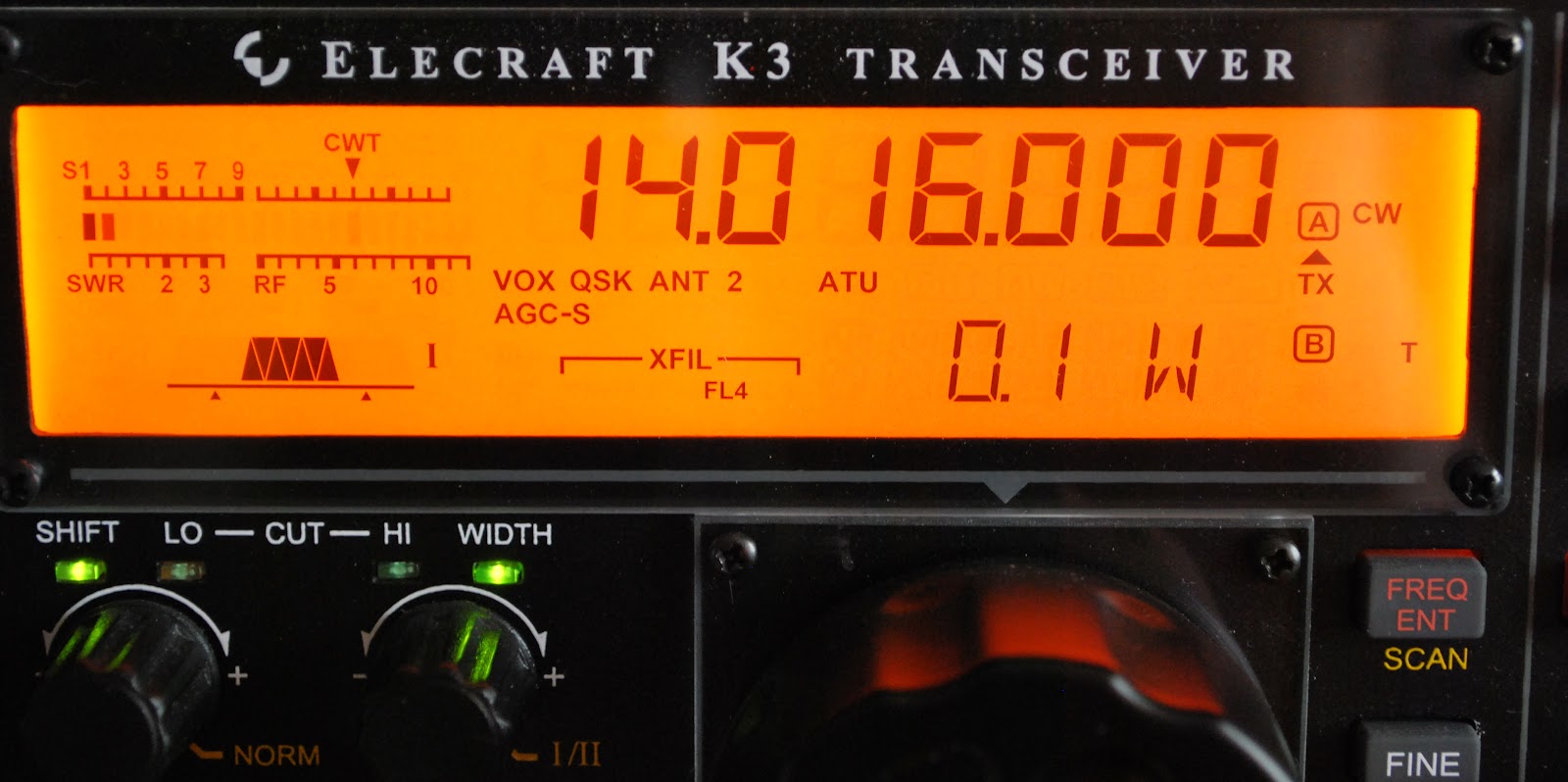
Most of the time I would be heard in Europe but with conditions the way they are the U.S. seems to be my DX destination for the time being. I fired up the K3 along with DxLabs. Right off the bat I saw lots of spots for Europe but was not able to hear them on this side of the pond. I then heard an S5 signal from SM5EPO from Sweden. I knew conditions were not that great and after all the RBN confirmed that on 20m's it was the U.S only.........So I dropped the K3's power to 100mW's Heee Heee Heee and gave it a go. SM5EPO came back to me and with a few repeats the contact was complete at 39,111 miles per watt. In the past when conditions were good and I was making QRPp contacts and logging the miles per watt I wanted to see how I would do if conditions were not ideal.

Mike Weir, VE9KK, is a regular contributor to AmateurRadio.com and writes from New Brunswick, Canada. Contact him at [email protected].
Zero Ohm Resistors
Mark Frauenfelder innocently (or cleverly) asks the question “What are zero ohm resistors for?” on BoingBoing. The fun really starts in the comments section, with replies such as “They’re a novelty gift for electronic engineers.”
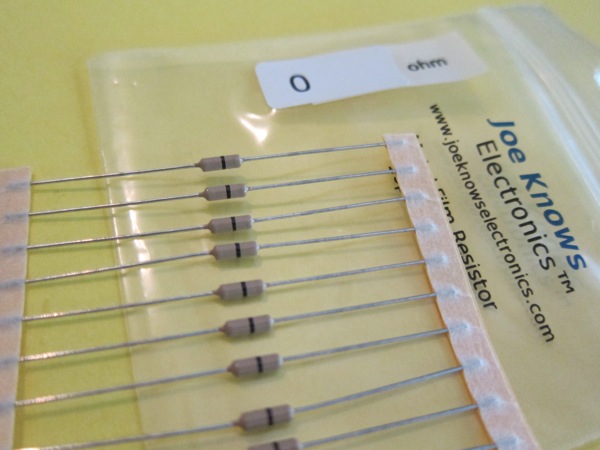
Take a look at the article here.
Yes, zero ohm resistors really do exist. Think of them as jumpers on a PC board.
73, Bob K0NR
Bob Witte, KØNR, is a regular contributor to AmateurRadio.com and writes from Colorado, USA. Contact him at [email protected].
 Ham Radio Deluxe |
 W5SWL Electronics |
 Ham Radio Prep |
 KB3IFH QSL Cards  Hip Ham Shirts  HamRadioAuctions HamRadioAuctions Reliance Antennas Reliance Antennas Enigma Shop Enigma Shop |  morseDX  Ni4L Antennas  R&L Electronics R&L Electronics antennas.us antennas.us QRV QRV |
- Matt W1MST, Managing Editor
