 |
 Big or Small: Radio, Key and Antenna
 28 May 2013 | by
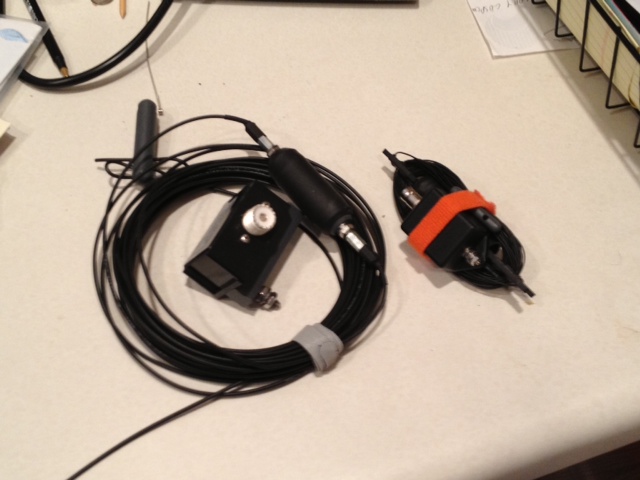
 In the picture below there are two keys, actually three if you count the Begali Adventure key on the KX3. Also in the picture, on the left side, is the Te Ne Ke and next to it is the Micro Key. Clearly a size difference, but also a weight difference. Also in the picture is the KX3 (160 - 6m)and the KD1JV designed Mountain Top'er Rig (MTR), (40m/20m CW only). Again, the bigger radio brings more options, the smaller one easier to carry.

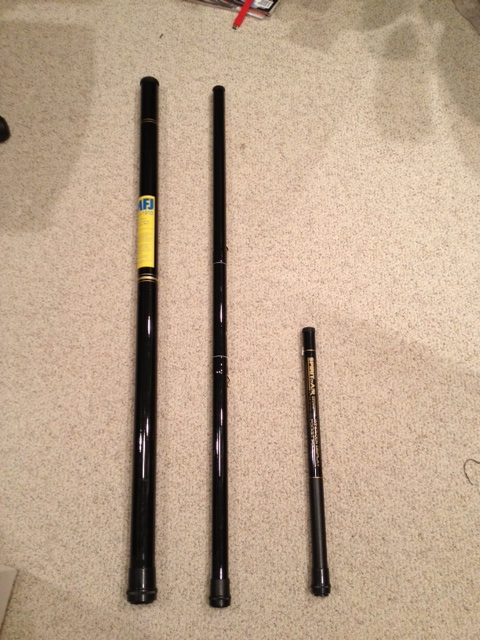
Of course you must have an antenna support. Below are three telescoping poles to choose from, a 33ft. MFJ Telecsoping Pole, a 20ft Black Widow and a 13ft Spirit of Air. Again, size, weight and optionality.
So many options and so little time. As WA0ITP says, "I like this radio stuff".
Mike Crownover, AD5A, is a regular contributor to AmateurRadio.com and writes from Texas, USA. Contact him at [email protected].
(A)Typical LBR installation
Like I mentioned, today Paul Harden, da boss, and I installed two more low-band receivers today, but with only a 50% success rate.
The receiver is dual banded for 74MHz/350MHz and is housed in a big and heavy 8″x12″ metal box. for thermal stability. We call them LBRs or 4/P receivers — 4 band is 58-80MHz (eg 4 meter wavelength) and P-band is 325-420 MHz or so. P comes from it’s old military designation, like L, S, C, X, Ka, K, Ku, radar bands, etc.
She’s mounted on a sturdy mount inside the “barrel” also known as the Focus Rotation Module, or simply the apex. It’s also my second home. Inside the barrel is a central square steel through which the 4-band antenna and receiver output cables go through. The receiver mounts near the bottom of the apex, and plugs in to 8 different cables – two pairs of Heliax for the 4/p band crossed dipoles, one Heliax pair for the output, a power cable, and a calibration signal cable.
Each antenna input requires two pair because of the dipole design — they’re orthogonal crossed dipoles that are fed into the receiver as two linear polarizations. Some magic happens in the LO-IF rack that either sends them as a linear polarization to the correlator (mainly for ionospheric observations) or combines them in quadrature to provide left- and right-circular polarization for observations outside our own solar system.
The first installation went smoothly — we removed a malfunctioning receiver from antenna 18 and replaced it with a fresh one — it’s pretty much plug and play. Somewhere through, we lost a two-way radio. No idea where it went. I think it always existed in some kind of quantum state, and now it’s hiding.
The second was troublesome. Each output, left and right polarization (or X and Y) should show clearly the band passes of each band through a spectrum analyzer. What we saw was spikes caused by the 74MHz *something* oscillating like a runaway Hartley. (that was a pretty poor play on words)
So we hit it a few times, jiggled the cables, and poof, it was back to normal! We came back down to the vertex room to find it again went nuts. So we went back up, wiggled some more, and took the SA with us. Now the X side was gone! We took the cover off and poked around, but it was dead. Methinks the oscillation was strong enough to saturate an LNA, bust a cap or diode or two, and kill X.
Paul’s gonna play with it tomorrow, and we’ll see if we can make our pseudo-deadline of getting everything working by Tuesday night. Lots of pressure from the higher ups.
Tonight, I’mma gon’ write a blurb about the SDR demonstration at the ARRL Youth Lounge at Dayton for Ward Silver, N0AX, upvote and argue things on reddit, and buy some wire and ladder line for field day. Need to make a 9:1 balun by then too.
 |
| View of South baldy and the Magdalena Ridge from the bus ride home |
Sterling Coffey, NØSSC, is a regular contributor to AmateurRadio.com. He is ARRL Youth Editor and an electrical engineering student at Missouri S&T. Contact him at [email protected].
What I’m up to at the VLA
Back last November I was offered this internship to work for up to 8 months at the Very Large Array, as you see pictured behind this post. The VLA is the worlds most prolific radio observatory, having the most citations in of any radio observatory in all of science. I could not turn this offer down/
The VLA is a well oiled machine of 27 cassegrain feed parabolic reflectors each 25 meters, or 82 feet wide, that send concentrated RF to massive feedhorns at its vertex. One VLA dish covers all frequencies from 1-50 GHz, and has two extra bands at 74 and 350 MHz using extra antennas. Together, they can make a dish that theoretically measures over 20 miles in diameter!
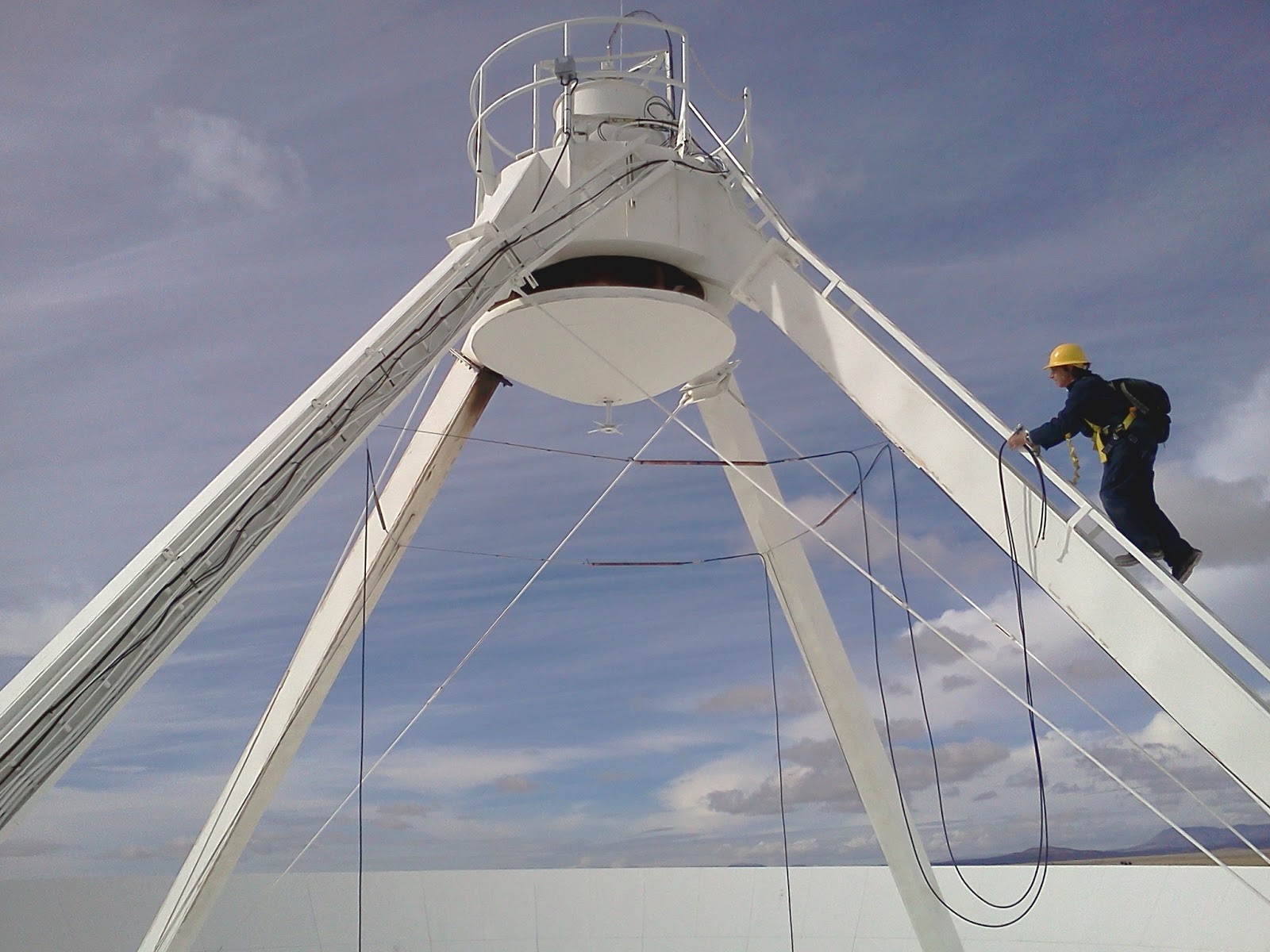 |
| Apex of a Dish Showing the Cassegrain Subreflector, 350MHz cross-dipole at the center of it, and the new strut-straddling sleeve-dipoles for 74MHz around the edges being installed |
My primary job at the VLA is to learn. Everything RF exists here, so I’m soaking up as much as I can. I’ve learned more about microwave RF design, Radar, synthetic aperture synthesis, correlation, radio astronomy, antenna design, transmission lines, test equipment, RFI, and much more that I have ever (and perhaps will have ever) at college.
Learning is a sort of meta-job. What I really do is two-fold.
The first fold is Interference Protection. The IPG specializes in the detection, location, analysis, and mitigation of radio frequency interference that has the potential of ruining and/or corrupting observations of the radio sky. The VLA is located in a lake bed, 20 miles away from any town, 90 miles from Albuquerque, surrounded by 360° of mountains that buffer the observatory from radar, wifi, cellular, aircraft, and other terrestrial sources of RFI. Satellites are also a source of RFI, so they must be documented and their transmissions well understood so that the VLA Correlator can learn how to discern orbiting transmitters from galactic transmitters.
On IPG, we’ve done a few RFI Site Surveys at places like the Magdalena Research Observatory on South Baldy and at the Pie Town VLBA site. Unfortunately, a Verizon 4G LTE cell tower exists on a hill only 5 miles from the center of the array. The signal it produces isn’t bad — it’s the amount of visitors who show up with a full signal, assuming it’s okay to use their smartphones to upload photos, videos, sprout WiFi APs, and cause all kinds of problems. That’s when we break out the CELL PHONE DESTROYER 6000.
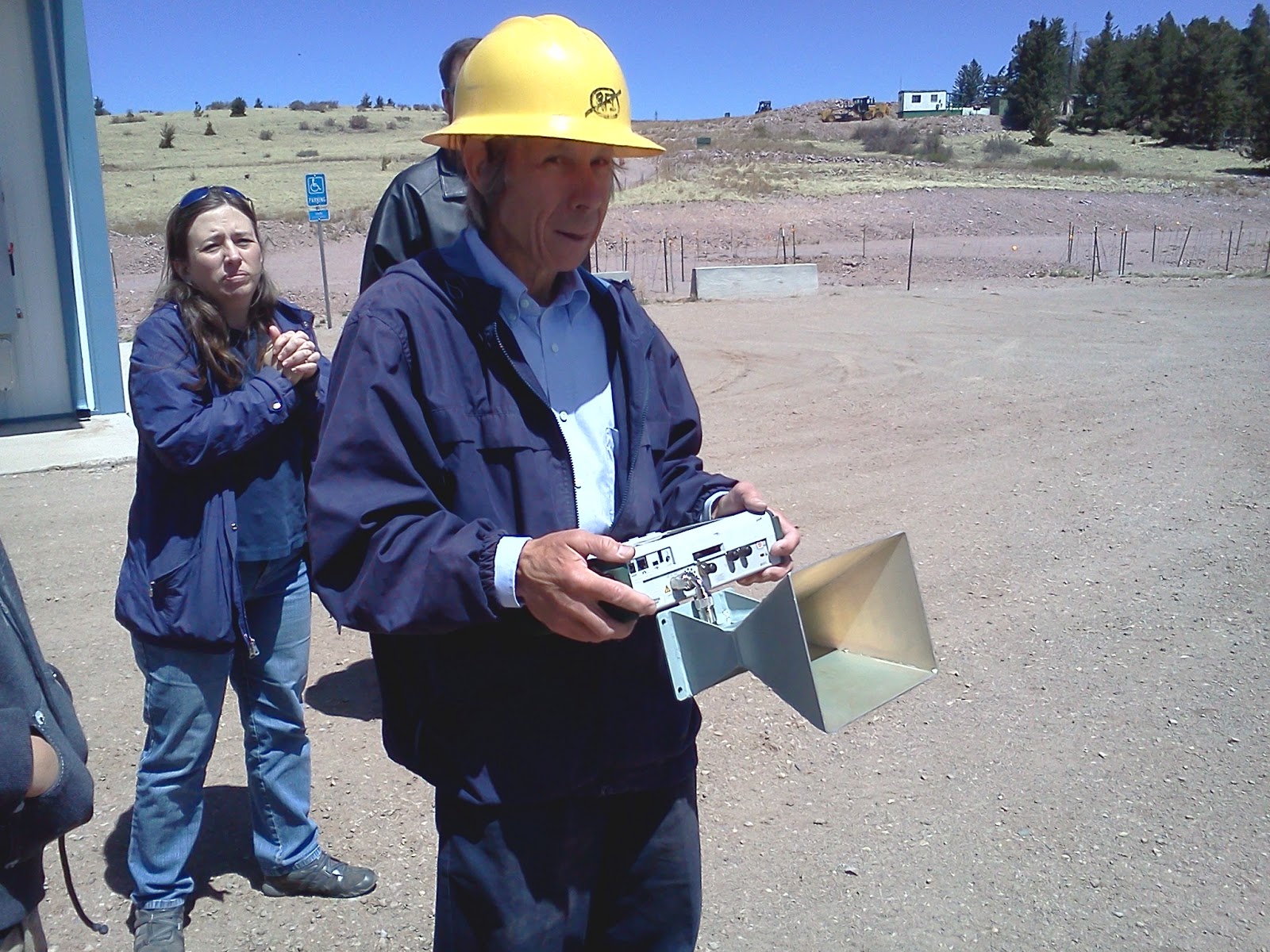 |
| THE CELL PHONE DESTROYER 6000 is nothing more than a 1.8-2.4 GHz feedhorn attached to a spectrum analyzer, which is directly integrated into the neural cortex of this RFI Seeking Unit known only as Mert. |
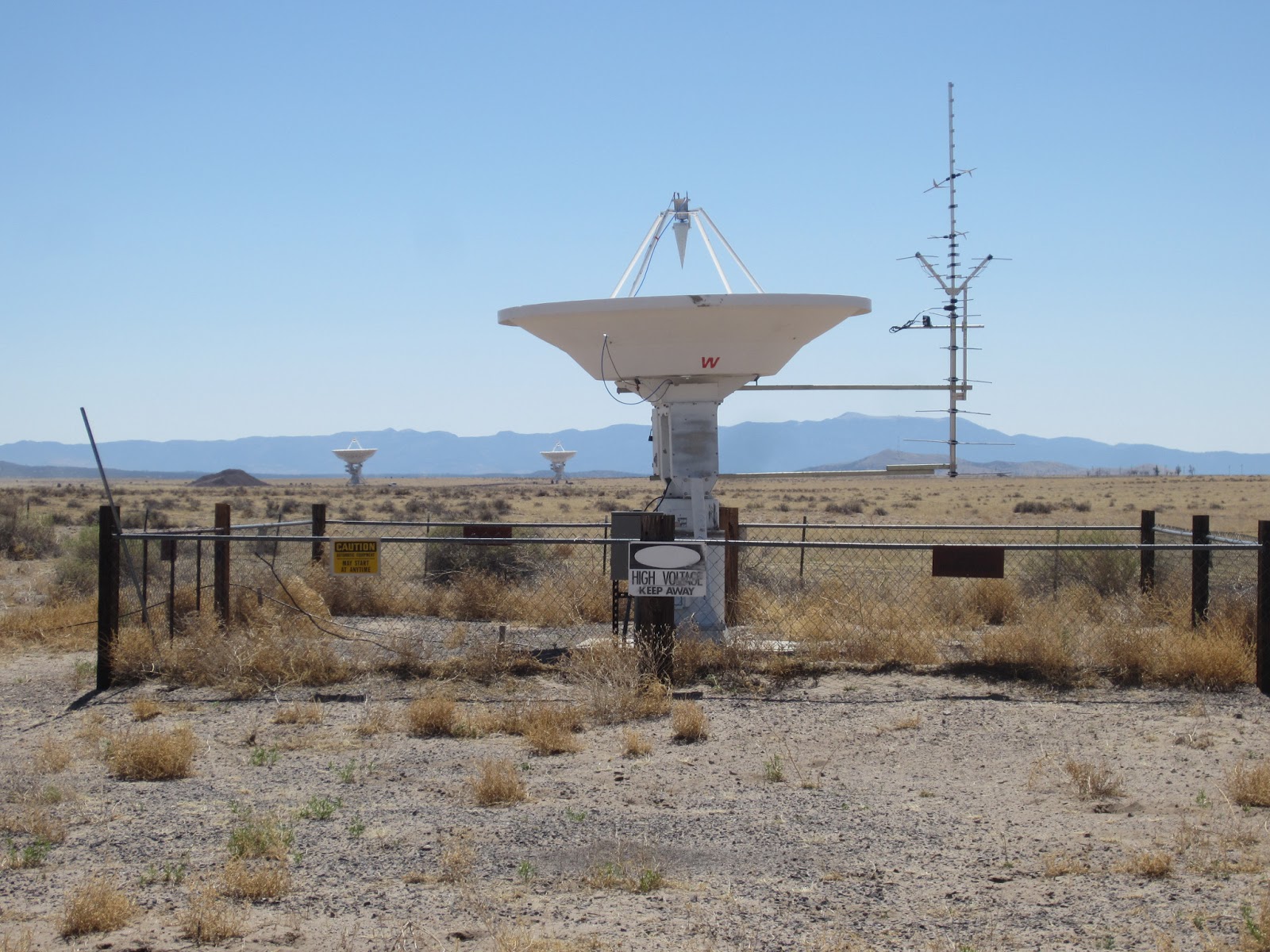
For quieter RFI, like satellites and terrestrial transmitters, we use a big-ugly 10-foot dish with a wideband conical-log spiral feedhorn to determine bearings to RFI:
Along with intentional radiators, unintentional transmitters like microprocessors, screens, TVs, and other electronics produce noise that can be detrimental to the RF environment. Such electronics need to be tested in the Reverberation Chamber, and shielded if necessary.
The second fold is Front End — Front end of receivers that is. On the FE group, I’ve been tasked of removing old low-band receivers (74 and 350MHz) and installing new consolidated ones along with about 200 feet of heliax and control cables for them. I’ve also been building and improving antenna designs for the LBRs, including the new strut straddling dipoles pictured above. I’ve come across a cool 74MHz widebanded antenna design that may or may not be patentable, so we’ll see from it’s creator if I can get acknowledged in a paper or something 🙂
The LBRs are located in the apex, also pictured above. It’s fun becoming a grease monkey while getting a view of the VLA few have seen.
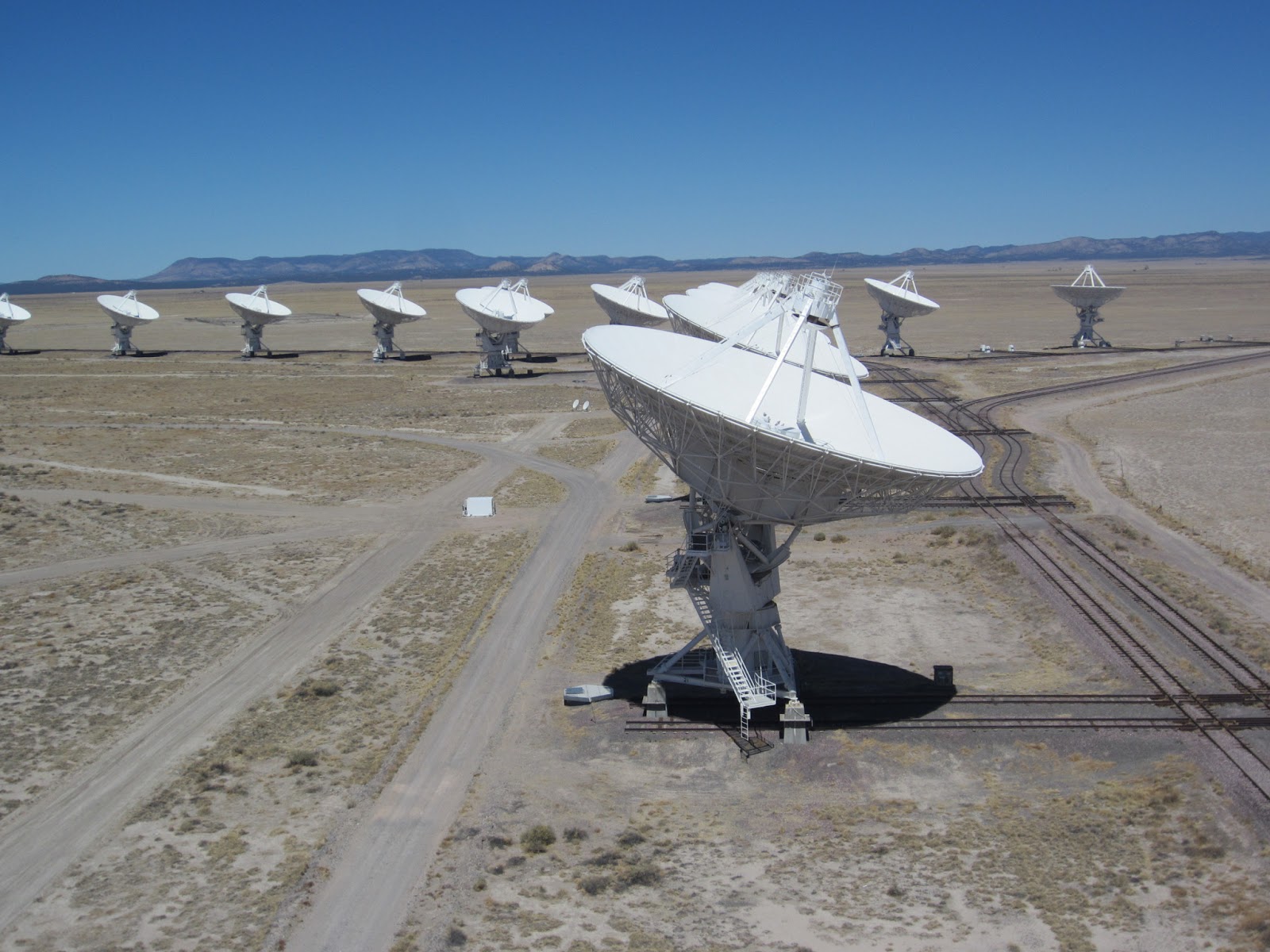 |
| Such a view |
So how did I get this job? Ham radio of course! My boss actually e-mailed me after an unsuccessful run through career fairs and internship searches for this summer. He noted my experience with the Missouri S&T ARC, W0EEE, as a big kicker on my resume. At S&T I’ve done a lot of work mitigating RFI, fixing repeaters, learning about radio, and having fun with it. He himself is a ham, albeit inactive, but still understands the value a license can have at such a job.
Ham radio gets jobs! (Girls? No.)
Today Paul Harden (NA5N) and I will be installing a few new LBRs in antennas 18 and 20. The weather looks beautiful for it too! Check out Paul’s personal website, chock full of receiver data, photos, and the history of the area.
That’s about the gist of it. 73 for now!
Sterling Coffey, NØSSC, is a regular contributor to AmateurRadio.com. He is ARRL Youth Editor and an electrical engineering student at Missouri S&T. Contact him at [email protected].
A Zero in Five Land – Welcome
With midnight inspiration comes morning desperation. For sleep. Heh heh.
Welcome to the new blog of N0SSC — ARRL Youth Editor, EE degree seeker, Very Large Array intern, and among other things, a radio amateur. Ideas have been flowing from my mind into thin air, so I have done up this blog to start to capture them.
I’m a zero in five land. My call sign – N0SSC, shows that I am from zero-land: the ham radio call district that makes up most of the midwest. Due to my internship, i’ve been displaced to New Mexico, which is in the fifth call district – 5 land.
So, this blog will focus on my ham radio activities while in New Mexico, as well as my internship at the Very Large Array. I have a lot of fun stories to share!
Stay tuned for more! For now, follow me on your favorite social networking site — just google N0SSC and you’ll find me.
Sterling Coffey, NØSSC, is a regular contributor to AmateurRadio.com. He is ARRL Youth Editor and an electrical engineering student at Missouri S&T. Contact him at [email protected].
Perfect Day for Radio Adventure
I rode my bike to the Pemigewasset River today. I worked Mexico City, New Jersey and Maryland.

I stopped about half way down to the old bridge abutment and snapped a quick shot up-river. It’s rained every day for a week and the river is about 6 feet higher than normal. Today is gorgeous… 70 degrees with a stiff breeze to keep the bugs at bay.
I left my bike under some huge pine trees and walked down to the bridge abutment.

The old bridge used to cross to Hill Village. It was removed in the late 1940s. I stood on the edge of the old concrete support and looked upstream.

I found a sunny spot with some nice grass and heaved a line about 40 feet up into a maple tree. I was using a 33 foot wire straight up with the Elecraft T-1 tuner and the ATS-4 at a bit more than 3 watts. I started out on 20 meters and worked XE1RK in Mexico City. Ralph gave me a 569 and we completed the exchange before the QSB got us. 20 meters was pretty poor, and I only heard a few stations there so I switched to 40 meters.

I re-tuned the same wire on 40 meters without a counterpoise. Signals were stronger here. Right away I heard W2WSC/100 calling CQ. This is a special event station honoring the old Tuckerton WSC shore station in New Jersey.
We exchanged 599s and I called N3WT in Maryland as he was finishing up another QSO. John said he had to run, but he gave me a 579. He was 599. When I told him I was running 3 watts, he sent back,” VY GUD JIM UR 3W IS TRUE 579.”
With this I packed up and headed south along the river. I stopped at a favorite spot to take one more photo.

It was great to get out for a while after being stuck indoors for so long. Today was really well worth the wait… it doesn’t get much better than this.
Jim Cluett, W1PID, is a regular contributor to AmateurRadio.com and writes from New Hampshire, USA. Contact him at [email protected].
CQ WPX CW contest in the books
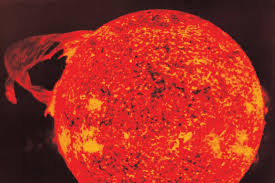 |
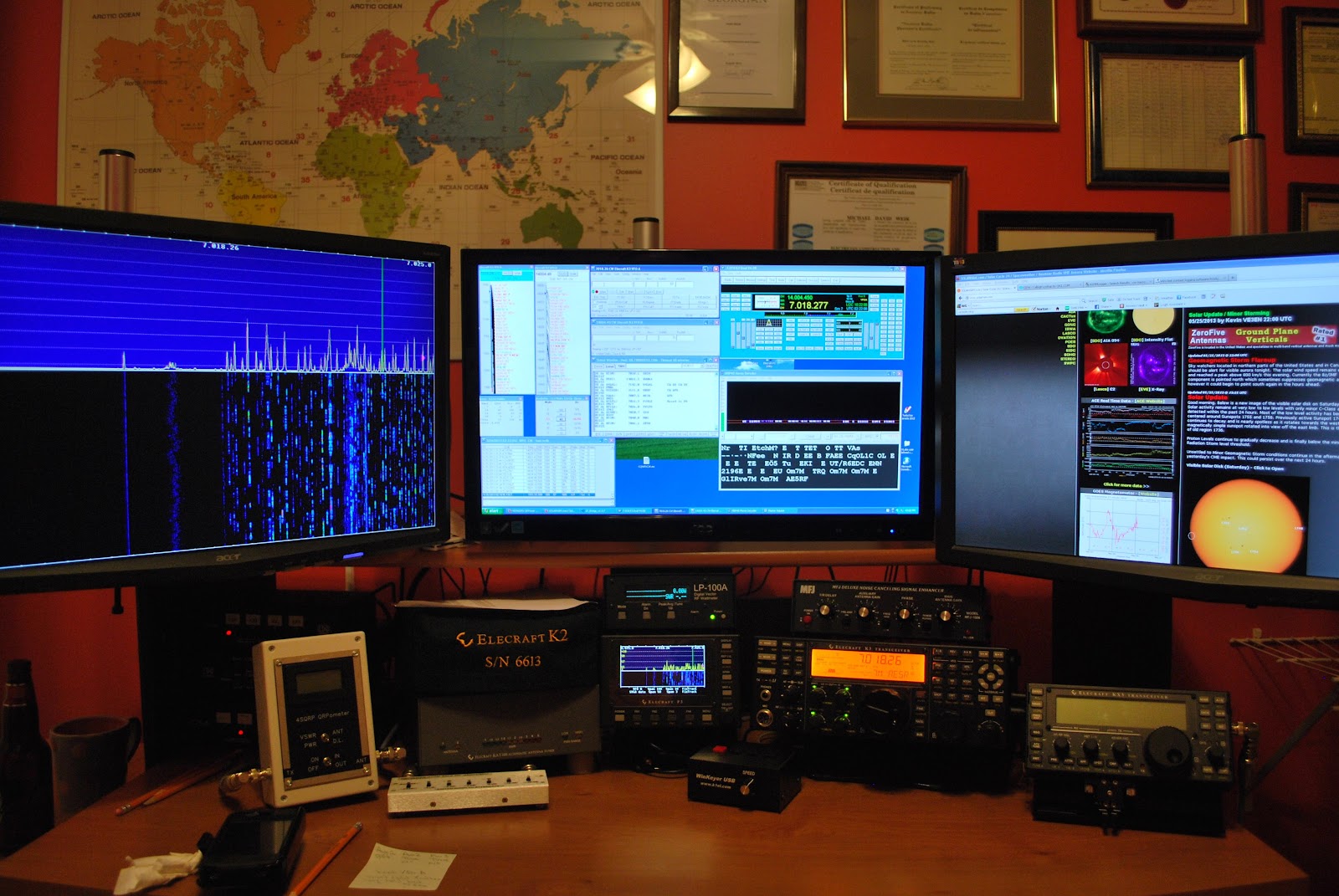
| Lots of Solar action |
- When running N1MM logging program, N4PY rig control software and the Flex Radio Flexcontrol vfo knob all together through LP-Bridge some very very strange things can happen. This resulted in some lost contacts and down time due to software issues.Going to have to get these programs to shake hands and get along.
- Funny thing.....I have been practicing my contest CW code with Morse runner and using my laptop. Well it would seem that my fingers became very familar with the smaller keyboard on the laptop. When I contested on my home PC and regular sized keyboard I was making mistake after mistake while keyboarding calls and exchanges. I do have a smaller keyboard for the desktop PC and started to use it towards the end. Going to have to stick to the same keyboard as it seems size does matter.
- It seemed to me that most of the contesters CW speed was in around 25-30 wpm and I did find that very comfortable.
- At least the bummer conditions were world wide and leaves us all in the same playing field more or less.
- I contacted OQ5M in the contest and soon after he commented on my blog of how good my signal was. This fast interaction is kinda cool.
- My contact with Australia, Cuba and Hawaii.
- The politeness of the op's whom I had to give several repeats too, those who still could not make out my call just said "bad QRM and hope to contact later 73"
Mike Weir, VE9KK, is a regular contributor to AmateurRadio.com and writes from New Brunswick, Canada. Contact him at [email protected].
Watch Hill – LDO100
It has turned to rain for this Bank Holiday Monday, but the weather on Saturday and Sunday was glorious. Clear blue skies and a fresh breeze. Perfect days for walking. On Saturday I felt quite depressed thinking about what I might have been doing on such a day before I became ill with a brain tumour. So I determined on Sunday to try to reach a summit. There is really only one possibility from home without transport to get to the starting point: Watch Hill a mile or so to the east of Cockermouth.
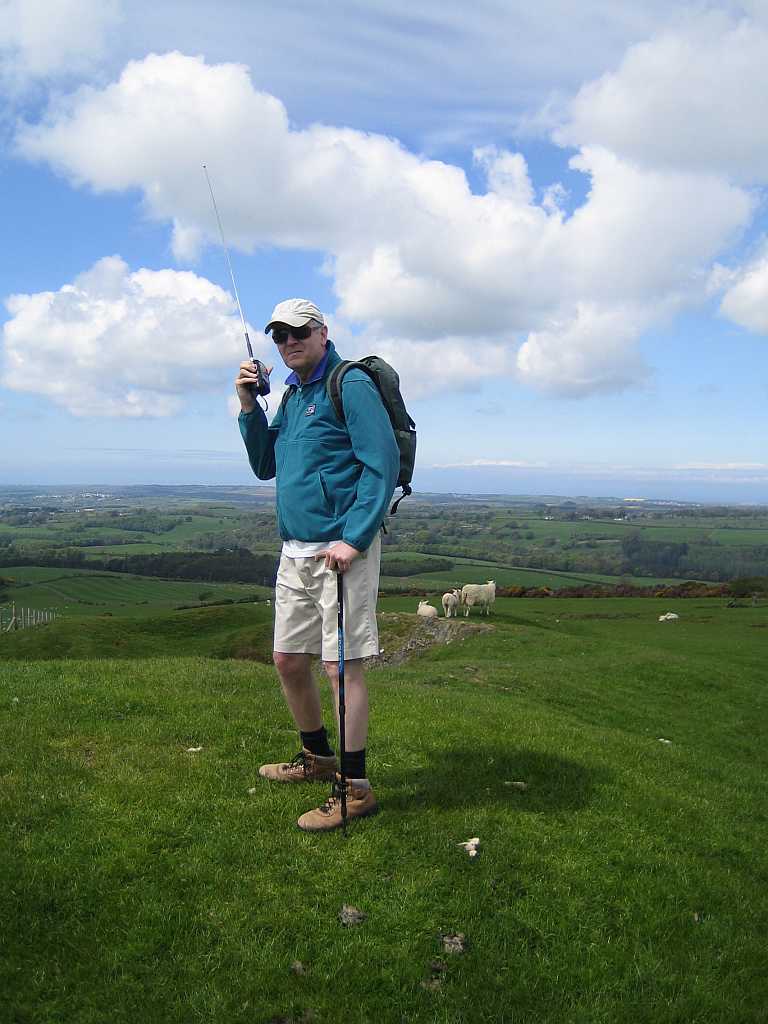 |
| G4ILO on LDO-100 |
Back in the ’90s when I lived on the east side of the town I regularly used to walk to this summit. It used to take me about half an hour of brisk walking from my front door to the lower of the two summits; forty-five minutes to reach the higher one known as Setmurthy. (Cockermouth locals also know it as The Hay.)
Today we live on the opposite side of Cockermouth which adds at least another mile through the centre of the town. I still was a regular visitor to the hill but having a car I could drive to a point on the farthest side where there was a lay-by and I could reach the top in just 15 minutes. So it was one of my favourite spots for portable operating.
Today my walking pace is somewhat slower than it used to be. It took us about two hours to reach the first summit, including a stop for coffee. I half expected that we would have to turn back before reaching the summit but the sight of it was just too tempting and that kept me going.
Given that I wasn’t certain I would even make it to the top I carried just a hand-held VHF rig, the Kenwood TH-D72. I intended that the walk would be tracked on APRS but for some reason only a small section was recorded. I carried a 5/8 wave telescopic antenna to improve the range on 2m but my first CQ calls didn’t raise anybody.
The Kenwood is rather a complicated radio and it is too easy to turn a knob or press a button accidentally. I also need reading glasses to read the display and see what buttons I am pressing. Some setting had been disturbed and I had managed to get the ‘B’ side of the radio, used for APRS, switched to 70cm. With Olga’s help reading the display I was able to get the radio set up as it should be and I made two QSOs to activate this summit which is LDO-100 in Wainwright’s Outlying Fells.
Returning home it was downhill all the way to the town centre. It should have been easy but I my legs were tired. I think I’d overdone it! There was still a climb back up to reach home so we finished the journey in a taxi!
I’m still a long way from back to normal. I doubt that I’ll ever get back to how I used to be for reasons I’ll enumerate in the other blog. But for now I feel that a milestone has been passed and I’m happy with what I managed to do today. If only I could get my driving licence back I would be able to reach many other easy summits.
Julian Moss, G4ILO, is a regular contributor to AmateurRadio.com and writes from Cumbria, England. Contact him at [email protected].
 Ham Radio Deluxe |
 W5SWL Electronics |
 Ham Radio Prep |
 KB3IFH QSL Cards  Hip Ham Shirts  HamRadioAuctions HamRadioAuctions Reliance Antennas Reliance Antennas Enigma Shop Enigma Shop |  morseDX  Ni4L Antennas  R&L Electronics R&L Electronics antennas.us antennas.us QRV QRV |
- Matt W1MST, Managing Editor
