 |
 A Simple Wilderness Protocol: 146.52 MHz
 26 May 2013 | by
  “The Wilderness Protocol” (ref. June 1996 QST, page 85), recommends that stations (fixed, portable or mobile) monitor the primary (and secondary if possible) frequency(s) every three hours starting at 7 AM local time, for five minutes (7:00-7:05 AM, 10:00-10:05 AM, etc.) Additionally, stations that have sufficient power resources should monitor for five minutes starting at the top of every hour, or even continuously.” The primary frequency is the National Simplex Calling Frequency…146.52 MHz. The secondary frequencies are 446.0, 223.5, 52.525 and 1294.5 MHz.
Here in Colorado, the summer months mean that many people head for the mountains. Mobile phone coverage has improved in many parts of the high country but is still not reliable in all areas. Amateur radio VHF/UHF repeater coverage is extensive but also does not cover the entire state.
The Wilderness Protocol is a good idea but is overly complex for practical use. Here’s my proposal to make it much simpler for practical backcountry use:
Principle #1: Don’t ever rely on a radio or mobile phone to get you out of trouble in the backcountry. Your primary strategy must be self-sufficiency. Avoid trouble. Be prepared for the unexpected.
Principle #2: Know what repeaters are available in your area. We have many wide coverage repeaters available but you need to know the frequency, offset and CTCSS tone (if any). The Colorado Connection is a linked repeater system that covers many remote parts of the state.
Principle #3: In remote areas, monitor 146.52 MHz as much as possible. This applies to backcountry travelers, mobile stations and fixed stations.
I’ve been making it a habit to monitor 146.52 MHz in the backcountry. I often come across hikers, campers, fisherman, 4WD enthusiasts, SOTA stations, mobile operators and others monitoring that frequency. It is fun to chat with other radio amateurs having fun in the mountains.
Just my opinion.
73, Bob K0NR
Note: This is a repost of an older article with minor edits.
Bob Witte, KØNR, is a regular contributor to AmateurRadio.com and writes from Colorado, USA. Contact him at [email protected].
Memorial Day 2013
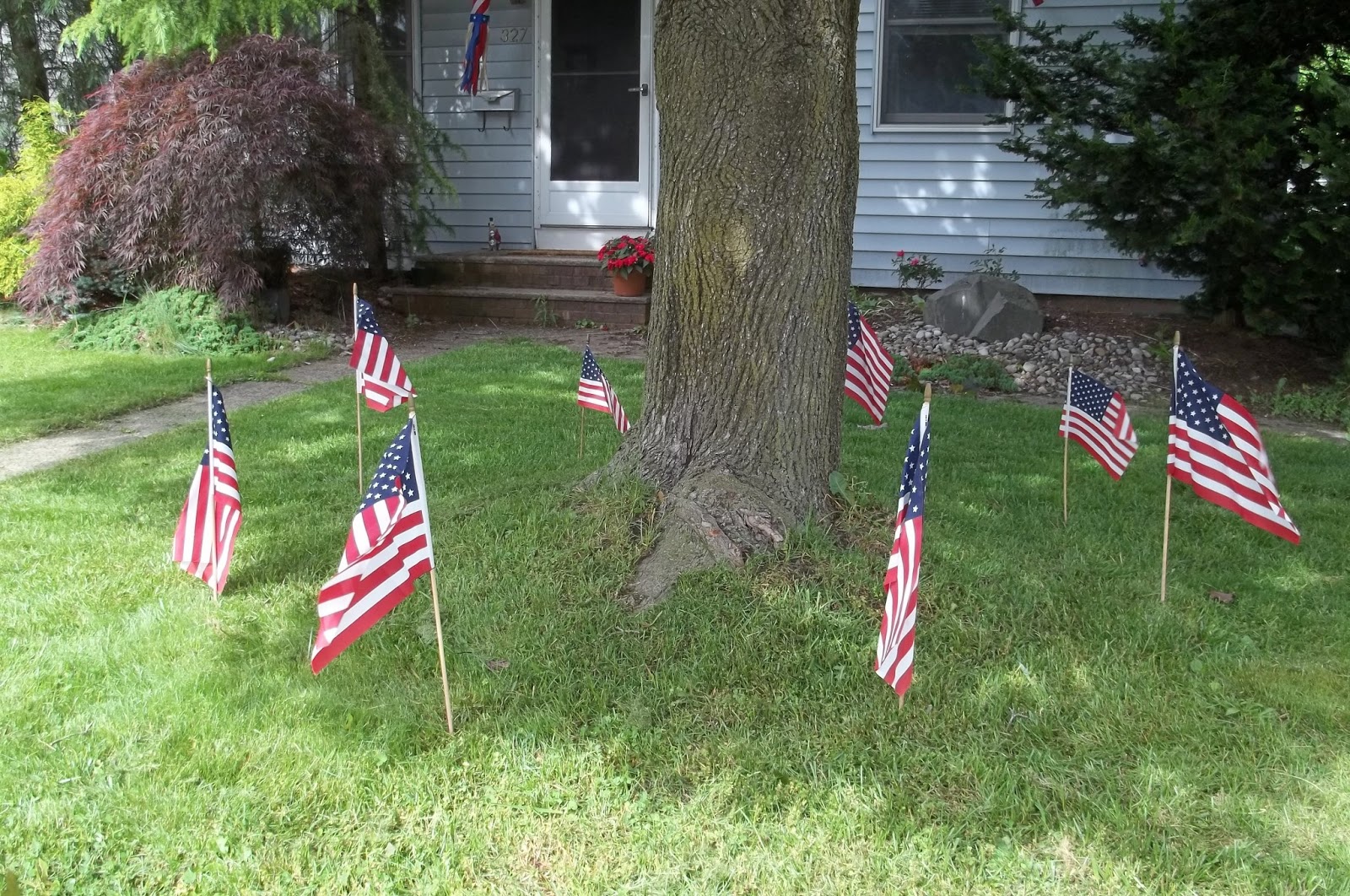
This weekend is Memorial Day weekend in the United States. Originally the day was known as “Decoration Day”, when families would decorate the graves of their husbands, fathers, uncles, sons, brothers and nephews who died in battle.
Today the holiday weekend has become known as the “unofficial start of summer”, and like everything else has taken on more of a secular connotation. Please take time from your busy weekend, in the midst of your cookout, party, ballgame, travel, or whatever to say a prayer and remember all those who made “the ultimate sacrifice”.

Larry Makoski, W2LJ, is a regular contributor to AmateurRadio.com and writes from New Jersey, USA. Contact him at [email protected].
Day one of CQ WW CW contest
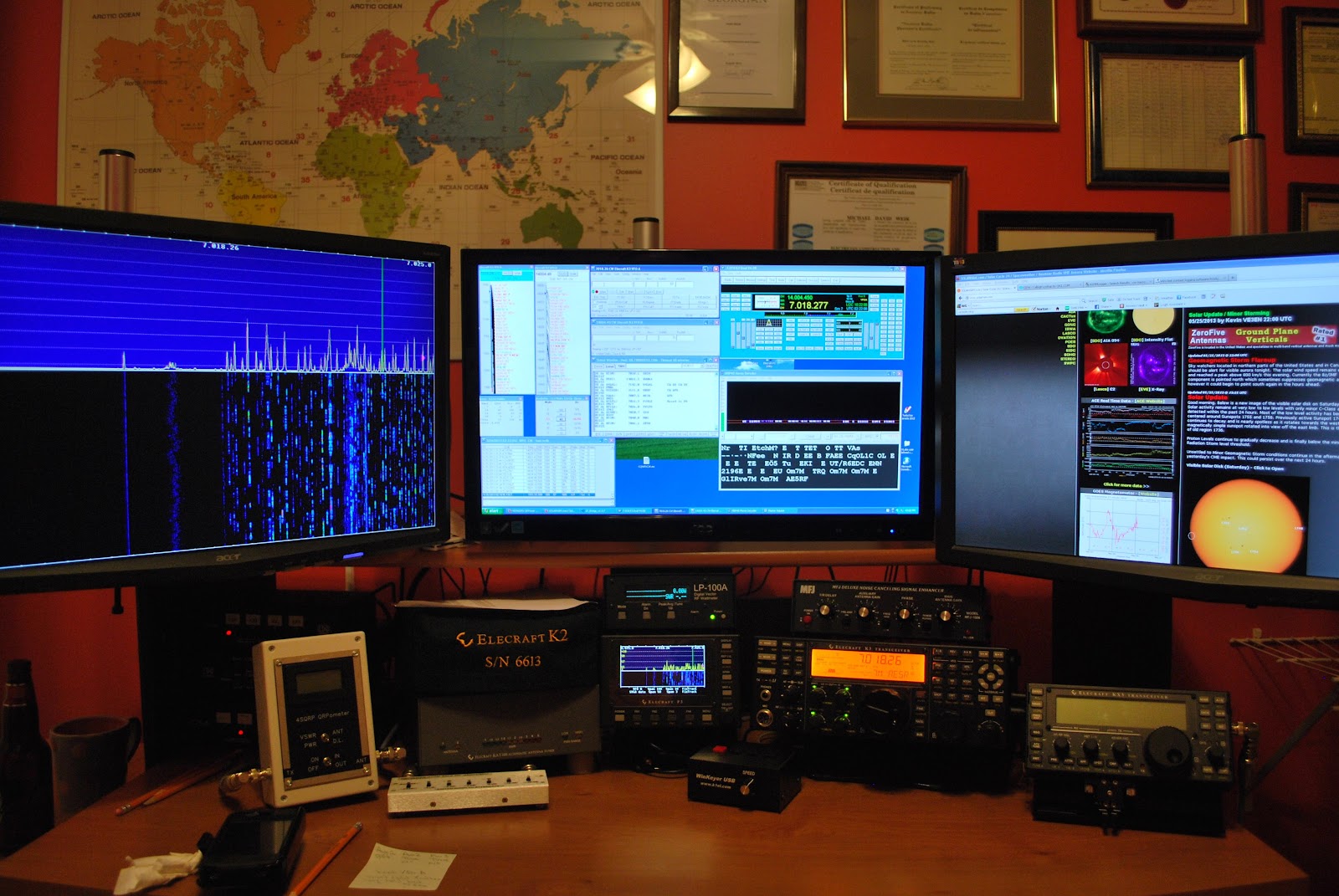
- The propagation was.....shall we say (because this is a family blog) crap!!
- I was in the contest for a grand total of 5 hours today.
- There was some down time as you can tell from fact number 2...software troubles, USB port trouble and K3 updates and the list can go on. (This is normal contest OMG stuff)
- The attic dipole once again did very well considering the conditions.
- The evening once 20m closes down I am done as with the poor conditions for some reason 40m has not been a great band for me with the attic dipole.
- So far I have not used any paper and pencils to copy call's I have been able to just use the keyboard. Now yes in the picture above in the center monitor bottom right you will see MRP40. (cw decoding program and the BEST one out there) That was up and running for the contester who for some reason send at @#@%$$# SPEEDS!!
- With the propagation conditions in the dumps I was very please to get my QRP signal heard in Hawaii, Australia, South America and Cuba.
- I have been practicing my contest code with some programs and for the first time code at 30-35wpm was clear and understandable!
Mike Weir, VE9KK, is a regular contributor to AmateurRadio.com and writes from New Brunswick, Canada. Contact him at [email protected].
Hoot Owl Sprint Bust
The regular bands were wall to wall WPX tonight. I tried calling “CQ QRP” for a long time, near both the 20 and 40 Meter QRP watering holes (I even went up to the 7.122 MHz neighborhood for a bit), but netted no QRP sprinters. I just did not feel like taking part in WPX, so I migrated on over to 30 Meters.
Once there, I heard K9DTH, Ron in IL calling “CQ DE K9DTH QRP” near 10.106 MHz. I put out my call and Ron came back to me for what was the beginning of a really enjoyable QSO.
It turns out that Ron was using a K1 that he just got yesterday. 5 Watts to an off center fed dipole garnered Ron a 579 report from me. I received a 599 report in return.
The weather by Ron seemed to be about the same that was here – cloudy and cool. Not exactly the kind of weather you’d expect for the weekend touted as “the unofficial start of summer”. The high for the day here was 57F and there were on and off spritzes of rain all day.
Hopefully the weather will improve over the next few days.
72 de Larry W2LJ
QRP – When you care to send the very least!
Larry Makoski, W2LJ, is a regular contributor to AmateurRadio.com and writes from New Jersey, USA. Contact him at [email protected].
SOTA Sloth Award

 Today I qualified for the SOTA Sloth award, working W6UB on 40m from Black Balsam Knob in North Carolina to put me over the 1,000 point level. It has been a lot of fun to get to this point and honestly the program is quite addicting. A synonym for the award is SOTAholic, which is very appropriate. Since peaks can be worked once each day for points there is no worrying if you need it or not and you always have something to work.
The SOTA community are usually well versed not only in QRP operation, but also in hiking and backpacking. There is a Yahoo group (nasota) that has many knowledgeable members on the best way to get to the top of the mountain and put out a good signal. So if you are inclined toward such things, you would enjoy the program.
So I suppose my slothfulness has be officially certified and I can no longer deny it. I can't wait go get the award.
More information on SOTA can be found at http://www.sota.org.uk/
Mike Crownover, AD5A, is a regular contributor to AmateurRadio.com and writes from Texas, USA. Contact him at [email protected].
FT1000MP and data modes: low level audio
When I first got the G4ZLP interface, I bought leads to connect both the FT847 and the FT1000MP to the computer. I hadn’t really got the FT1000MP connected up, and had used the FT847 for pretty much all my digimodes activity on both HF and VHF.
Given that the receiver on the FT1000MP is a bit nicer, particularly on LF, this seemed a bit of a waste, and particularly now the Es season is upon us, the FT847 is pretty much continuously busy on 50 and 70MHz. That meant no JT9 on HF.
So yesterday, I hooked up the FT1000MP. No problem at all with the interface. However, I did notice that I needed to crank the input volume control on the computer much further up. Not a problem on WSJT-X but actually on JT65-HF there was barely enough audio output for proper decoding.
Reading around the net, it seems that a number of people have found the Audio Out jack to be quite low level on the MP. Obviously, there are options – the speaker socket would offer more audio – but at the expense of losing the ability to listen. Or even a small audio amp to increase the audio level a bit.
Either way, it is working now and it’s nice to be able to play JT9 on HF and keep an eye on 50/70MHz simultaneously.
Tim Kirby, G4VXE, is a regular contributor to AmateurRadio.com and writes from Oxfordshire, England. Contact him at [email protected].
Pleasant surprise
Today was a strange day. It was my last day at my current job at Goldman Sachs. I’ve been there just over six years, managing all the Technology Department inventory (servers and networking and storage equipment) for the offices of the NY/NJ Campus. I was the manager of the department responsible for receiving, inventorying, warehousing, and prepping for install a multi-billion dollar cache of equipment. I was also responsible for shipping re-purposed equipment both domestically and internationally. Believe me, you haven’t lived until you’ve been tasked with shipping millions of dollars of used equipment to places like Seoul, Sao Paolo, and Kuala Lumpur, and you were told it had to arrived undamaged (even though the original shipping containers had since long been discarded) and it had to arrive “yesterday”. I can proudly attest that in the six years that I was there, my department oversaw that inventory with a shrinkage percentage (loss due to theft, damage or mis-shipping) of less than 0.001%.
Last summer, Goldman felt that they had too many vendors, so they decided to downsize the number that they have on board. Our contract was farmed out to another vendor, and while my team was RIF’ed (reduction in force) I stayed on for six months to basically teach my replacements how to do the job. My actual employer is Pitney Bowes Management Services, and through them, I will be starting at a new, non-management (actually glad for that, for a change) position with IBM next week.
My co-workers, the other outside vendors (IPC, Scholes, EMC, CBRE) who also serve Goldman Sachs are the best. Totally unexpected, I walked into work this morning to find this waiting for me on my desk.

Larry Makoski, W2LJ, is a regular contributor to AmateurRadio.com and writes from New Jersey, USA. Contact him at [email protected].
 Ham Radio Deluxe |
 W5SWL Electronics |
 Ham Radio Prep |
 KB3IFH QSL Cards  Hip Ham Shirts  HamRadioAuctions HamRadioAuctions Reliance Antennas Reliance Antennas Enigma Shop Enigma Shop |  morseDX  Ni4L Antennas  R&L Electronics R&L Electronics antennas.us antennas.us QRV QRV |
- Matt W1MST, Managing Editor
