Archive for the ‘Uncategorized’ Category
 We’re Giving Away Over 50 NooElec SDR Receivers! Enter to win…
 July 31st, 2016 |
  Author:
If you thought our last SDR giveaway was BIG,
this one is even 25% bigger!
NooElec and AmateurRadio.com have teamed up (again!)
to give away
Over 50 SDR Radio Receivers
to 30 lucky ham radio operators worldwide.
…and they’ll even pay the shipping worldwide!
The deadline to enter is 7 August 2016 at 20:00 UTC.
Prize Packages

Two (2)
NESDR SMArt HF Bundles
 One (1)
Raspberry Pi 3 NESDR SMArt Bundle
Includes Raspberry Pi 3, enclosure, SD card, and
2-pack of NESDR SMArt sets with antennas
 Three (3)
NESDR SMArt sets with antennas
2-pack
 Ten (10)
NESDR SMArt SDRs
2-pack
Ten (10)
NESDR SMArt sets with antennas

Ten (10)
NESDR SMArt SDRs
Eligibility
All licensed ham radio operators worldwide!
 (Free worldwide shipping is included!)
How to Enter
It’s very simple!
Leave a comment to this post.
(e-mail address will not be shared)
Entry Duration
Only 1 week!
You may enter only once from
31 July 2016 20:00 UTC
to
7 August 2016 20:00 UTC
(multiple entries from the same entrant will be discarded)
Winner Announcement
8 August 2016
You can get the winner announcement by
subscribing to our free Amateur Radio Newsletter (subscribe below),
following our posts via RSS feed, via Twitter (@amatradio),
or via Facebook (facebook.com/amatradio).
[widgets_on_pages id=”Inline Subscription”]
Sign up so you won’t miss our next prize drawing!
Please tell your friends about this giveaway!
Thank you to NooElec for offering these fantastic prizes!
Visit their website at NooElec.com / eBay store / Amazon store
The winner will be chosen at random (using random.org) from all valid comment entries to this post received by the contest deadline. Entries will be deemed valid at the sole discretion of AmateurRadio.com and may be rejected for any reason, including inappropriate comments. Entries received after the deadline will not be considered. The prize may not be transferred. The prize may not be exchanged for cash. Winner agrees to allow AmateurRadio.com to use their name and callsign to announce them as a winner on our site, and to share their contact information with the sponsor for the purposes of awarding the prize. No purchase necessary to win. Odds of winning dependent on total number of entries received. Winner is responsible for any applicable taxes or fees imposed by their jurisdiction. Void where prohibited by law. Winners limited to licensed Amateur Radio Operators and subject to export restrictions, where applicable. E-mail addresses of all other entrants will not be shared with any third party, including the sponsor. Entrants will not receive any unsolicited e-mail or be placed on any e-mail list.Don’t forget to enter! Just leave a comment to this post.
Amateur Radio Weekly – Issue 122

Hara Arena to shut down
Hara Arena is closing its doors after 60 years.
WDTN
Hamvention to remain in Dayton area
The event will take place on the same weekend and it will be within the region.
Hamvention
Utah County ham radio club draws attention
In less than six months, the club has amassed more than 340 members.
Daily Herald
Antennas on a Boeing 777
Antenna locations on a Boeing 777 aircraft.
Reddit
Alive and Well: Post-Coup Amateur Radio in Turkey
I can confirm that I’ve heard a number of Turkish amateur radio operators on the air since the coup attempt.
The SWLing Post
VHF/UHF Digital Voice – a peek into the future
Digital Voice on VHF/UHF is clearly here to stay. Even though the mainstream manufacturers are supporting it (their own version of it), it’s still fairly niche now. It will grow.
AmateurRadio.com
A tour of Elecraft
At a time in our hobby where many businesses are consolidating, closing their doors or failing to innovate, Elecraft is one of the few bright and innovative companies in our hobby.
N6PSE
Georgia Ham fined $1000 for failure to properly identify
Failure to transmit call sign information undermines the purpose of the Amateur Radio Service by preventing licensed users from identifying a transmission’s source.
ARRL
New SDR client, Kukuruku
RTL-SDR compatible software features multiple demodulators running at once and history browsing.
Kukuruku
Video
National Parks on The Air – Satellite Activation
This was filmed on Sunday July 17th, 2016 on the Craggy Overlook Trail on the Blue Ridge Parkway in North Carolina.
KG4AKV
Sparks by static charge on a groundplane antenna
A short video showing static discharges in the form of sparks, a PL259 connector connected to a groundplane antenna, during a lightning storm.
PA2OLD
The Spectrum Monitor – August, 2016
 Stories you’ll find in our August, 2016 issue:
TSM Reviews: LD-5 HF Ham Radio QRP Transceiver
By James Hannibal KH2SR
The LD-5, made in USA by LNR Precision Inc., is an amazing little QRP, 5-band SSB/CW amateur radio transceiver that’s small and light enough to fit in just about any backpack, making this one of the most portable SSB, multi-band, HF rigs currently on the market. James puts this little rig through its paces on a trip down the length of the US west coast with pleasing results.
Vacation Scanning on the Rails
By Eric Beheim
For scanner enthusiasts, traveling by rail offers an opportunity to monitor the radio communications that are being sent and received onboard their trains. These communications include conversations between the train’s crewmembers, conversations between dispatchers and the engineer, and the periodic reports from radio alarm detectors. Listening in on these transmissions not only helps to make the trip more interesting, but also provides greater insight into what it takes to keep a passenger train running in a safe and timely manner.
China Radio International: Evolution of a Shortwave Radio Station
By Fred Waterer
China Radio International is one of the largest broadcasting agencies in the world, as befits one of the world’s economic and military superpowers. Today’s CRI is a mainstream voice of Asia, portraying a sense of order and normalcy. One could easily mistake a current broadcast from China as being from BBC or Radio Japan. This is in stark contrast to broadcasts of past decades, which mirrored the chaotic political situation in the country. Fred looks back at his many years of listening to the radio voice of China.
CB Radio and More: Two-Way Radio No-License Alternatives
By Cory GB Sickles WA3UVV
There are many facets to the communications receiving hobby—shortwave listening, scanner monitoring, exploring utility stations and more. If you develop the urge to transmit and hold conversations with others, we typically think about earning an amateur radio license and exploring all it has to offer, which is quite a bit, indeed. However, there are some avenues to enjoying two-way communications that you may have overlooked such as CB (HF), GMRS and FRS (both UHF) and MURS (VHF). In this series of articles, we’ll explore these options and find ways to get as much enjoyment out of them as possible.
A Classic Dozen: When it comes to Vintage Ham Gear, what’s in a (Great) Name?
By Richard Fisher KI6SN
Over many decades, there have been scores of radio manufacturers that have come-and-gone or are thriving yet. Here are a dozen whose products, in one way or another, qualify as “vintage.” You will find many of their classic radios are not only still on the air every day, but readily available, some inexpensively, in today’s vintage market. Richard traces the origins of some venerable radio names.
Scanning America
By Dan Veenaman
Madison County (MO), Fire Service & Amtrak
Federal Wavelengths
By Chris Parris
When Federal Frequencies aren’t Federal
Utility Planet
By Hugh Stegman NV6H
When the Going gets Tough, the Tough Tune the Radio
Digital HF: Intercept and Analyze
By Mike Chace-Ortiz AB1TZ/G6DHU
Army MARS and TSA PACTOR Network Changes
HF Utility Logs
By Mike Chace-Ortiz and Hugh Stegman
Digitally Speaking
By Cory Sickles WA3UVV
Evangelists and Cheerleaders
VHF and Above
By Joe Lynch N6CL
Juggling VHF/UHF Contests and a DIY Antenna for 2-Meters
Amateur Radio Insights
By Kirk Kleinschmidt NT0Z
Let’s Talk!
Radio 101
By Ken Reitz KS4ZR
Radio and TV via FTA Satellite on Intelsat 21
Radio Propagation
By Tomas Hood NW7US
Did He Really Do it?
The World of Shortwave Listening
By Rob Wagner VK3BVW
Something Old, Something New: Kenwood R-5000 and Tecsun PL-680 Receivers
The Shortwave Listener
By Fred Waterer
Top Shortwave Programs and a Tiny Change in Time
Amateur Radio Astronomy
By Stan Nelson KB5VL
Using FITS Viewers with Radio Astronomy Images
The Longwave Zone
By Kevin O’Hern Carey WB2QMY
Contributor’s Guide to TLZ
Adventures in Radio Restoration
By Rich Post KB8TAD
Wakening the Knight: Allied Radio’s TR-106 6-Meter AM Transceiver
Antenna Connections
By Dan Farber AC0LW
Antenna 101: Review of the Basics Part 2
The Spectrum Monitor is available in PDF format which can be read on any desktop, laptop, iPad®, Kindle® Fire, or other device capable of opening a PDF file. Annual subscription is $24. Individual monthly issues are available for $3 each.
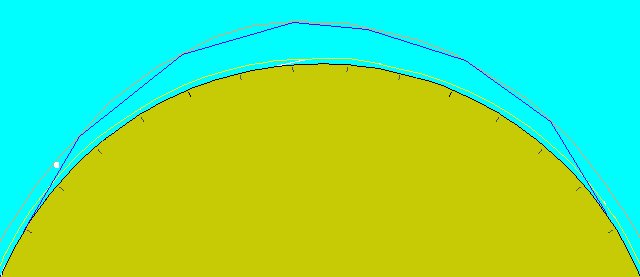
Magicband Morphs
 |
| Chordal Hop courtesy: http://g4fkh.co.uk/projects/lp-experiment/ |
 |
| Inter Layer Ducting courtesy: http://g4fkh.co.uk/projects/lp-experiment/ |
 |
| courtesy: http://www.dxmaps.com/ |
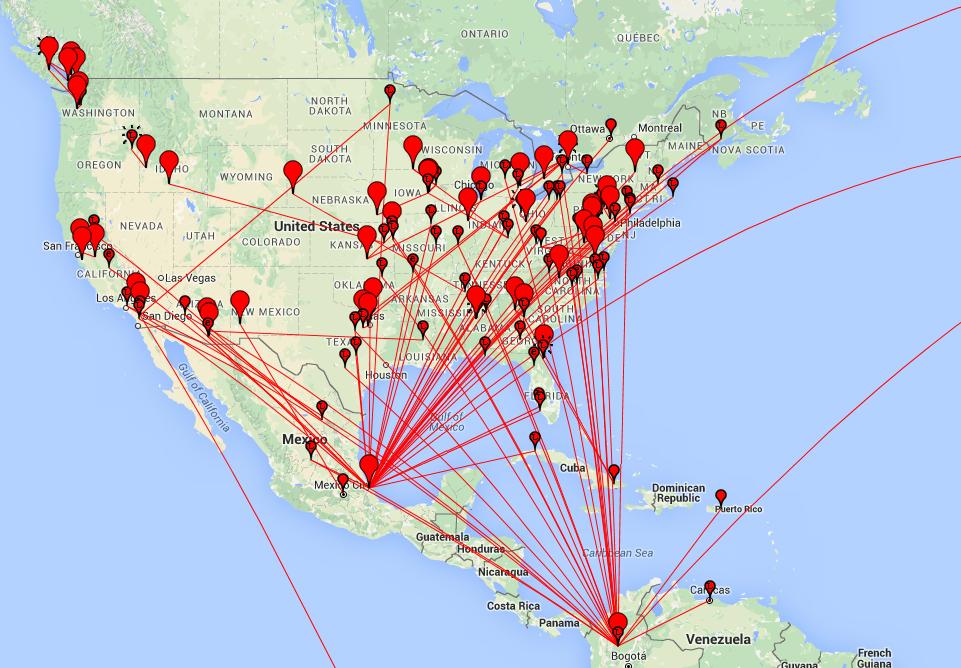 |
| courtesy: https://pskreporter.info/pskmap.html |
TX Factor – Episode 12
The next show in the series has just hit the airwaves. In this extended summer episode, there is not one, but two rig reviews. The Sun Expert Electronics Transceiver MB1 and the elusive Icom IC-7300 are comprehensively analyzed by ML&S’ Gary Spiers M0TIG and Chris Ridley G8GKC from Icom UK.
Also in this show, Bob teaches Mike a thing or two about amateur satellite operating, and our free-to-enter-draw is back with a chance to win a copy of the recently revised and updated Getting Started with Amateur Satellites book featured in the item.
We hope you enjoy watching the show.
VHF/UHF Digital Voice – a peek into the future
Digital Voice on VHF/UHF is clearly here to stay. Even though the mainstream manufacturers are supporting it (their own version of it), it’s still fairly niche now. It will grow. But what’s it going to look like in the near future?
As things have developed, we have several walled gardens: D-STAR, DMR, P-25, C4FM (Yaesu System Fusion), and a little NXDN. As NW Digital’s John Hays K7VE has said in talks at several ham gatherings, they are “95% the same, and 100% incompatible.” They all rely on the same AMBE vocoder to encode and decode the digital voice, but they all package it differently.
I’ve been living in a bit of an alternate reality, thanks to shooting video at the ARRL/TAPR Digital Communications Conferences and at some of the more esoteric forums at Dayton and other hamfests. In that universe – actually more of a future than a present – we don’t have to choose which closed system we want to buy into. We don’t have to carry three or four handhelds around to cover all the modes, and hope our belt is strong enough to keep our pants up (and guaranteeing a feature spot on HamSexy). We can operate a single radio that can run all the DV modes, along with analog FM.
That radio doesn’t exist today, but it will.
Bruce Perens K6BP and Chris Testa KD2BMH have been working on a radio they eventually calledKatena, an SDR designed for any mode you could stuff into it (FM, SSB, various digital voice modes), but especially a version of FreeDV for VHF/UHF – a little different than the FreeDV used on HF. The radio would use the open source CODEC2 vocoder for FreeDV, and it could also use the AMBE chip (or derived software… Bruce has been looking into getting around AMBE patents) to do the other modes.
You can follow the progress of the Katena (originally called Whitebox – as opposed to black box, because it’s all open source) in various HamRadioNow videos, starting with Chris Testa’s initial presentation at the 2012 DCC in Atlanta. That’s Episode 44, A Practical Handheld SDR, on YouTube at https://youtu.be/YrbmlP1M1AI. I’ll list the string of videos that cover this topic at the end of this post.
Chris and Bruce have laid it all out there, so it’s a little painful to watch their talk at the 2016 Dayton Hamvention® where they admit defeat… temporarily. That’s in the newest episode, #262, at https://youtu.be/ZK_qLSKlqIY. Goodbye Katena, hello Phoenix.
Chris got as far as a 3rd generation prototype. But Chris isn’t an experienced RF engineer, and he discovered what a more seasoned RF guy might have known already, and probably from the same hard lessons. Wideband RF is very hard. As Bruce explains, making an SDR board that can transmit from DC to Daylight is possible (HackRF and others). But that doesn’t make it a transmitter. The RF it generates is dirty – it has harmonics, noise and spurs all over the place. It takes a lot of work, and filters, to clean that up. So making a radio that can transmit from, say 50 to 3000 MHz with reasonable power and good purity is a challenge. Chris’s design wasn’t up to the challenge, and he explains it in the forum.
They aren’t giving up, but they are going back to the drawing board to take advantage of newer technology (and that train isn’t going to slow down anytime soon). Bruce hopes for a prototype by the Orlando HamCation next February, but I wouldn’t hold him to that.
Meanwhile, Wireless Holdings has announced the DV4mobile, and listed some general specs on their web site. It’s pitched as a 20 Watt, 3-band mobile (144, 222 and 440) with FM plus “C4FM, D-Star, DMRplus, dPMR, P25 and NXDN (later via software update).” It will also include and LTE radio for connection to the cell network, and the software to let you keep using the digital modes through their networks the way you use the various dongles now. Wireless Holdings makes their own series of dongles for D-STAR, DMR, P-25 and Fusion, with varying capabilities. Their announcement doesn’t include FreeDV. Their development has been behind closed doors – they haven’t appeared at the DCC or given talks at hamfests.
Another company, Connect Systems, announced a multi-digital mode radio a couple years ago, and keeps pushing back the release date. They’ve been delivering popular FM/DMR radios (monoband, chose VHF or UHF).
So far, none of the big guys – ICOM, Yaesu, Kenwood or Alinco – have shown interest in making a radio that would do “the competition’s” modes. Kenwood, of course, has thrown in with ICOM on D-STAR, at least for one handheld coming out later this year. Alinco, the company that actually produced the firstdigital voice amateur radio (that went nowhere, but they did it), has yet to commit. Chinese companies are jumping on the DMR bandwagon, but none has produced either a D-STAR or Fusion radio.
The FreeDV radio is sort of a wild card. David Rowe VK5DGR, the ham who developed the free, open-source CODEC2, is working on a radio for FreeDV (and FM). He’s calling it the SM-2000. Bruce talks about it a little in the Dayton forum, and David has published some details on his blog, but it hasn’t crossed over to any kind of polished marketing. I found a recent video of David detailing it on YouTube: https://youtu.be/sg08zgiSFG8. It’s a fairly terrible video with bad audio (mic on camera in the back of the room, so full of reverb), but the information is worth the pain.
He begins with a review of the current FreeDV system for HF Digital Voice. The new VHF stuff starts about 5 minutes in. At about 12 minutes you’ll hear the most amazing comparison of FM and DV I’ve ever heard. The FM is too noisy to understand. The DV is solid. It turns the typical FM/DV comparison on its head. The rest is semi-deep technical stuff that hits my limit, but I get the broad strokes (and all the coughs and sneezes of the audience – I think I might catch a cold just from watching).
Bruce Perens has noted that any of the big or little manufacturers could implement FreeDV for free – it’s open source. FlexRadio has incorporated the HF version in their 6000 series. Nobody had expressed interest in the VHF version, yet. It’s pretty new. So David is developing a radio mostly as a demonstration project, but it will be something you can buy. It won’t be your main radio.
If FreeDV VHF catches on, it’ll be somewhat game changing. A bit narrower than D-STAR, it is also TDMA like DMR – it can switch between TX and RX rapidly. DMR uses that to put two ‘voice channels’ on one RF channel. David Rowe talks about building an on channel repeater that needs no duplexer. Paging Frequency Coordinators!
I would love to have a radio that can do all the digital voice modes. I would like to see what FreeDV could do to VHF/UHF operation, though I’m conflicted about the TDMA repeater concept. That could make repeaters so cheap and easy that everyone could do it… and they would! And the bands would be a mess. Part of the reason the frequency coordinators can more or less cap the number of repeaters in bands that are “full” is that repeaters are fairly difficult and expensive to build and maintain. But if David’s radios work well, that’s what’s gonna happen.
Index:
HRN 44 – Practical Handheld SDR, from the DCC https://youtu.be/YrbmlP1M1AI
HRN 149: What’s a Whitebox? https://youtu.be/WF9SK5f0NUM
HRN 193: Digital Voice is Exploding (maybe) (David Rowe interview) https://youtu.be/SmyVEwjhG_k
HRN 194: HT of the Future https://youtu.be/wq29i8gMm8c
HRN 226: K6BP – Open Hardware Challenges https://youtu.be/kE6mrwTCxus
HRN 238: ‘Front Panel’ (for the HT of the Future), from the DCC https://youtu.be/xHaYrDVYPO8
HRN 262: Digital Modes Now and for the Future https://youtu.be/ZK_qLSKlqIY
FreeDV SM2000 Presentation at Gippstech 2016 https://youtu.be/sg08zgiSFG8
Wonderful Sweden
Back from a month in Europe and we had a good time there. Two weeks in Sweden, touring in a motor home and the rest in my native the Netherlands, visiting family and filling our bellies with Dutch goodies like drop and kroketten.
If you have never been to Sweden then I heartily recommend you to visit it. Beautiful scenery with free camping wherever you like and wonderful people who have a very relaxed lifestyle. And they all speak English, too. We rented this motor home….

…and after two days of acclimatizing we parked it in the driveway of Rune and Heide, SM5COP and SM5NZG respectively. Rune was the first Swedish contact in my Taiwanese logbook and I had mailed him some questions before our trip, which he answered more than elaborately. We hadn’t planned to visit his part of Sweden, but the invitation to celebrate the midsommar festivities with them was more than worth the detour. Rune and Heide are such friendly and hospitable people and their guest book shows this abundantly. Rune took us fishing, swimming and rowing on the nearby lake and Heide showed us how her bees keep the honey flowing in (over 300 kg already, this year). Rune also gave us a tour of Strängnäs on the first hot day of the year in Sweden: 27 degrees Celsius. Coming from Taiwan we had less problems with it than Rune did, the poor guy.
We did little ham radio stuff as we were too busy with other fun things (and jet lagged), but I did admire the 40+ meter tower with mono-band antennas in his garden a lot. What a dedication went in to the building of this marvelous outfit, not at least because Rune and Heide moved to their present location especially to be able to do this. Can’t think of a more dedicated ham couple. Their shack features various TenTec rigs and a K3 line with scope and 500W amp. I tuned around a lot, heard some familiar calls from Asia, some from Field Day stations in the US and a lot of Italians. Ah, as if I never left Europe. The one and only QSO I made was with ON5DN and what a nice chat with Diane in Dutch it was.


Apart from the Taiwanese treats I also wanted to bring something special and personal, so I delved into my small key collection and parted with my Chinese DX20-1 straight key. A lot of SKCC contacts were made with this key, but in the hands of two experienced hams like Rune and Heide it would be of much better use.

After getting a lot of honey from Heide and some good advice from Rune we parted to experience more of amazing Sweden.













