Archive for the ‘Uncategorized’ Category
 Droid
Droid
 April 4th, 2010 |
  Author:
 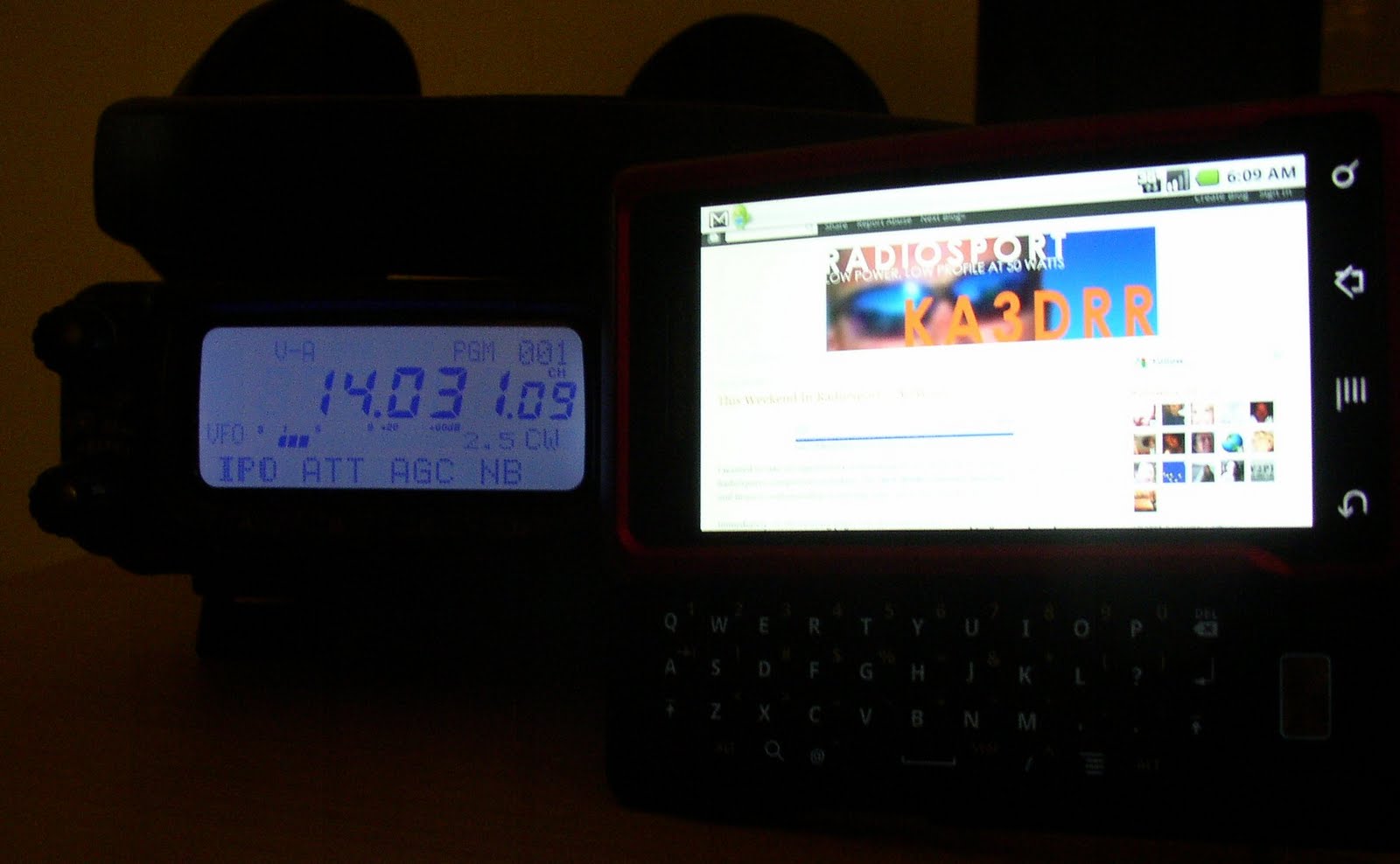 Mobile device disruption of current social and/or business models is a brave new future, perhaps, ultimately displacing one’s desktop computer. Frankly, in comparison, my Droid can accomplish most tasks albeit with a much smaller screen and miniaturized QWERTY keyboard.
I’m impressed with my Droid thus far and can’t help drawing parallels between it and Issac Asimov’s iRobot in addition to Star Trek communicators.
Reviews.
- Engadget Motorola DROID review (link).
- Gizmodo Motorola Droid review (link).
- Ubergizmo Motorola Droid review (link).
The last thing needed in my life is a device that drains scarce time from the mortal hourglass. I want my Droid to accomplish the following tasks —
- Synchronize email.
- Content production.
- Integration with recreational activities specifically ham radio and surfing.
- Social network integration when mobile.
- Decision data such as product and/or service(s) review.
I’m observing a mobile device viewing trend using Google analytics. I recommend thinking about one’s blog layout through the lens of Droid-like devices. Likewise, the presentation of one’s introduction, body, and conclusion as viewed on these screens.
Additionally, when producing video for YouTube, compare it against a desktop monitor and a mobile device screen.
Overall, with 24-hours of experience, I’m pleased with Droid’s near intuitive Google operating system, connectivity to the Internet, its baseline package of applications, and industrial design.
73 from the shack relaxation zone.

This Weekend In RadioSport | AirWaves
 I wanted to take an opportunity at thanking Bruce Horn, WA7BNM for maintaining RadioSport’s competitive schedule. The WA7BNM Contest Calendar was recently revised and Bruce’s craftsmanship scores big time -Qs in the shack relaxation zone.
Immediately, on the landing page, one discovers niches occupying RadioSport space inside ham radio. Secondly, a schedule table is available with time bar graphic in each respective row — one can quickly analyze a weekend’s worth of activity at a glance. Furthermore, one can receive either a weekly schedule via email or subscribe to the calendar using really simple syndication.
Lastly, one can customize their calendar for specific events while toggling between custom and full calendar as well.
A job well done indeed! Thank you Bruce.
 RadioSport EU | LZ Open 40m Sprint.
The heavyweight exchange is back for a little fun on a low band space this weekend. This one is seeded number one USA East Coast conference against the 12th seed West Coast who may generate a few signals against that radio frequency wall.
LZ Open is all about -Qs not multipliers because everyone can log everyone. A station can be logged after a lapse of 30-minutes on the same band.
This event is not accepting paper logs.
Rules (link).
 RadioSport EU | SP DX.
This event is straightforward in its scoring system that is log Polish stations for three points in the log. Given current conditions, our East Coast competitors can pass out valuable -Q points too participating stations, it’s an event to practice, practice, practice one’s search and pounce skill.
Rules (link).
SFI = 76 | A- index = 15 | K-index = 2 | Current Sunspot Count is 25 @0011UTC.

Chinese crap
Several months ago I had a plan to build a project using Manhattan style construction so I decided to get a tool to make myself some Manhattan pads. Constructors in the US can buy a nice hand punch from Harbor Freight for $25 – that’s less than £18. Over here the nearest equivalent cost around £90 from a tool supplier, except on eBay. I bought the eBay one, but even that cost over £30 including postage.
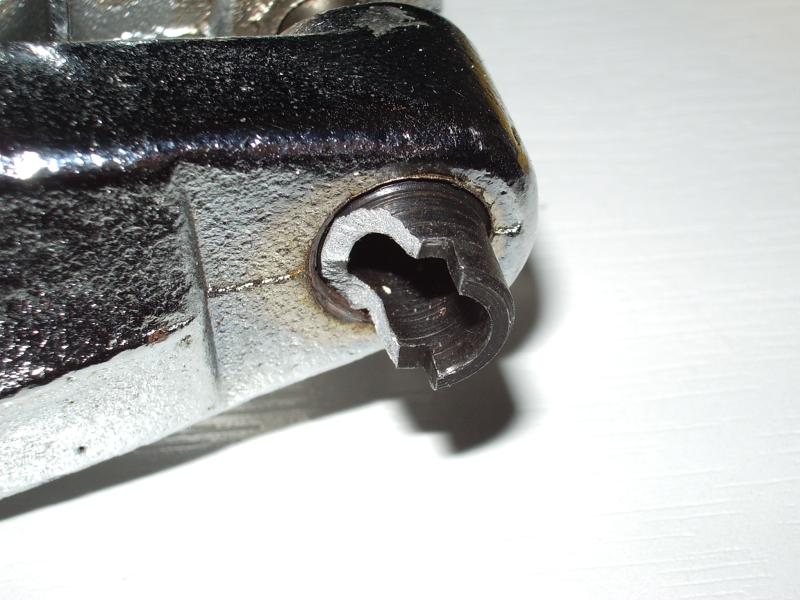 In the end, apart from punching a couple of test pads using the 7mm punch that was already fitted when I opened the box, I didn’t use it. Until this afternoon, when I wanted to make some smaller pads. That was when I discovered what a shoddy piece of manufacturing this eBay hole punch is.
The 7mm die was a bit stiff to remove but came out with the aid of a screwdriver in the slots provided. The 4.5mm one I put in would bind at each turn and got more and more stiff. Eventually it wouldn’t budge, so I put the screwdriver blade in sideways to get a bit of leverage. There was a crack and a whole piece of the die broke off! I guess it was made by the same firm that makes K3 knobs for Elecraft!
It’s far enough in that I can make 4.5mm pads, but not only does it not want to go in any further but it also doesn’t want to come out. I might be able to get it out with some Mole grips but this is probably the most useful size and I might never be able to get it back in again next time I need it. Crap!

QRP Record Shattered
It's expected that Goblosovits will be nominated and inducted into the QRP Hall of Fame this year at Dayton.

Interview with the Red Hot Chili Peppers
"I've got it loaded up for 160...the whole tower. Radials all over the [expletive] place. Damn thing was hell to put up!" he said.
Kiedis and Flea laugh as we walk inside. Flea's living room filled with old tube gear of every kind and parts are lying everywhere on tables, shelves and the floor. Amid the mess, various Hallicrafters, Collins, and Drake rigs can be seen, though Flea's affinity for Johnson equipment is obvious as it dominates the landscape.
"I love AM. A bunch of wankers told me AM was old and too wide on the band. I told 'em to [expletive] off and I went to AM and never looked back."
Flea takes us into a back room. A four bay Gates AM transmitter graces the room which is amazingly spotless in contrast with the previous room. Flea flips on a huge breaker mounted to a piece of plywood on the wall and the beast comes to life and a deafening roar of fans and tube air blowers fills the room. We go into the next room which is soundproof and contains his operating position with a mixing board and a high-end Heil microphone on a boom.
Kiedes explains that he currently doesn't have a station, though he often comes over to Flea's shack on the weekend and operates while having a few beers and grilling steaks.
(This is a brief excerpt from my upcoming book, Unknown and Undercover Amateur Radio, due out in September from Simon & Shuster.. )

Code Requirement
"It has been known throughout the ages that knowing and using Morse code makes one a more whole person. We today officially make it a requirement of canonization....one must know the code to be recognized a saint."The move was applauded by millions in countries throughout the world. "This should keep the quality of saints high" noted one blogger in France. One person interviewed in Times Square in New York City exclaimed "It's about time. This should keep the riff-raff out of sainthood. Several hundred years ago you had to perform real miracles to become a saint. Today you can just feed a few million starving people and, like, instantly you're considered for sainthood. Having to know Morse code will finally raise the standards back to where they need to be."

A five-star blog
A new posting by Dan KB6NU alerted me to the fact that eHam.net is now allowing users to rate ham radio blogs. I followed his link, selected the Blogs category and found that of all the blogs currently rated, G4ILO’s Blog is (or was, when I went there just now) the only blog that had a rating of five stars! I am amazed, humbled and proud, even if only two people had actually contributed to the rating. 🙂
If you would like to help keep my blog at the top of the table, please pop over to eHam, click on the stars next to G4ILO’s blog and add your rating and comment. Thanks!














