Archive for the ‘Uncategorized’ Category
 Digi-Key vs. Jameco vs. Mouser
 November 20th, 2013 |
  Author:
 I found myself in the unenviable position of having to place a small parts order from one of the larger electronics distributors. Often you find a decent price on the component, only to get hit by an outrageous shipping charge. I usually try to wait and group my items so as not to be hit too hard.
Here’s the little item I needed, a little 1mW Digi XBee for a project I’m working on (similar to this):
 Here is the pricing for one, shipped to the northeastern U.S. via USPS:
- Digi-Key: $19.00 + $2.92 shipping = $21.92 *
- Mouser: $19.00 + $4.99 shipping = $23.99
- Jameco: $24.95 + $2.43 shipping = $27.38
The more expensive option (Jameco) is almost 25% more than the cheapest (Digi-Key). Sometimes it’s worth shopping around a little bit.
Have you found a good (and inexpensive!) source for electronics components?
* I did a little research and found that Digi-Key will give you free shipping if you mail in an order form with a check or money order:
When a check or money order accompanies your order, Digi-Key pays all shipping and insurance (our choice for method of shipping) to all addresses in the U.S. and Canada.
Sunspots!
With smoothed sunspot number of 282 nd a solar flux of 177 we are continuing to enjoy great conditions on the higher HF bands. I can’t remember the last time the sunspot number has been that high – though that joins a long list of other things I can’t remember either. I’m surprised that more bloggers haven’t commented on it – they were happy to spread gloom and despondency when the predictions said that this solar cycle ws going to be a dud.
I’ve spent most of my operating time on my favourite mode – PSK31. Truth is, I’ve always felt more comfortable at the keyboard than in front of the mic. But I really should try to get some time in on phone while conditions are this good. Who knows how long it will last?
WebProp– my solar weather web widget is proving to be a bit of an embarrassment with its prediction that HF band propagation will be poor. The algorithm clear places too much emphasis on the effect of high A and K index values.It would be better for users to use the condx=no option which will show only the raw ininterpreted data.
St. Vincent on 3 Bands QRP
This afternoon I took a quick hike up Shute Hill. I had a great two-way QRP QSO with N0UR and then I worked J88HL on three bands.

I walked down the range road and turned into the woods. Farther on I came to Will Ellis’s field. I sat down near the east edge and turned on the KX3. I heard Jim N0UR in MN calling CQ on 14.060. He was booming in, and he gave me a good report too. “UR portable ANT doing FB,” he sent. I had the ten meter wire over a branch with the earchi.org 9:1 unun. He was running a K2 at 5 watts to a 3-element beam. His signal was over S9. What fun to have a 2-way QRP QSO.

After that I went up to 15 meters. A group of Polish operators was running a DXpedition from St. Vincent. J88HL was working split with a pretty large pileup. But it was orderly and his signal was strong. I had no trouble making the QSO.
When I switched to 10 meters, there was the St. Vincent station again working split. So I worked J88HL on 10 meters and moved to 17 meters. I was surprised to hear them again on another band. Once again I made the QSO. So I worked them on 3 bands in the course of 15 minutes.
With that I packed up and headed back down the hill. What a beautiful afternoon for a quick outing… sunny with temps at nearly 50F.
Just how crazy is 10 Meters right now? This crazy:

Fleets Cove Beach
Yesterday, on a day off from work, I had to head up to the Huntington Village post office to pick up a kit I ordered from China. Why my post office is a 15 minute drive (in traffic) from my home when there’s a beautiful, brand new post office, with a large self-service lobby half a mile from me is a story for another day. As-is the reason why my postal carrier is too lazy to actually leave me notices that I have a package, or ring the bell and ask for a signature. I retrieved the kit, and decided that since I was a few minutes from the North Shore, I would try for some 10 Meter mobile contacts from the beach. I headed to Fleets Cove Beach.
I plunked the mag mount to the old Buick, and plugged in my HTX-10. The band was busy, as it has been lately, but to the point where my 25 watts wasn’t getting through a lot of the pileups. One operator heard me and I logged that contact with Croatia. Not bad, but still disappointing, considering how busy it was. I was beginning to get discouraged, and thinking about calling it a day when I twirled the dial up to the AM portion of the band (29 MHz). Now, keep in mind that my HTX-10 only puts out about 7 Watts AM, and my antenna is tuned for 28.4. I had a nice QSO with M5AFD in Shropshire England. He was surprised at how well I was coming in, but there were a few deep fades. He also complimented me on the audio on the old mobile, and suggested that it would be close to optimal with a punchier mic. I may do just that.
England. AM. 7 Watts. WOW
–Neil W2NDG
QSO with Russian Research Ship at Sea
I just worked the Russian Research Vessel, Akademik Fedorov, at sea.

It’s always a thrill for me to work ships at sea. This was an ordinary QSO on 12 meters… but not ordinary for me. RW1AI/MM was calling CQ. I answered and we exchanged 599s. Then I asked Mik for the name of his vessel. I looked it up on “ship track” and found its current location off Portugal with a destination of Cape Town. My guess is it will re-supply there and head to the Antarctic.

The vessel is 463 feet long and was traveling at 14 knots. I think I was traveling a lot faster than that! Even though I was sitting in my warm shack, a maritime QSO just brings adventure and the thrill of remote radio contacts to me. Thanks Mik for the nice QSO. Good sailing OM.
EA2LU QRP from Knox Mountain
I made a quick hike to Knox Mountain this afternoon. It was a typical, bleak November day. But I had a great time working my old friend Jorge EA2LU from Spain. He was also running 5 watts. As I approached the pond three wild ducks took off from the quiet water.

It was a cold misty day. Last night it had snowed a half an inch. The snow had all melted by this afternoon. The walk was invigorating…

Because everything was wet, I set up on the cabin porch. I had tossed a 10 meter wire over a branch and hooked up the KX3 with the internal tuner. There were a few DX stations working split with big pileups, so I went up to 14.060 and called CQ.
EA2LU, Jorge came right back, and it was so good to hear him. We’ve had nearly 20 QSOs since 2008. Most of them were 2-way QRP.
Just as Jorge said his weather was ugly with rain, it started to sprinkle. I could see the rain drops on the pond.

“UR KX3/10M wire are doing a great job,” he sent. He gave me a 569 and he was a 579.

After the QSO with Jorge, I packed up and hiked the mile and a half back to the car. It’s supposed to snow again tonight.
The Elecraft k3 stopped working
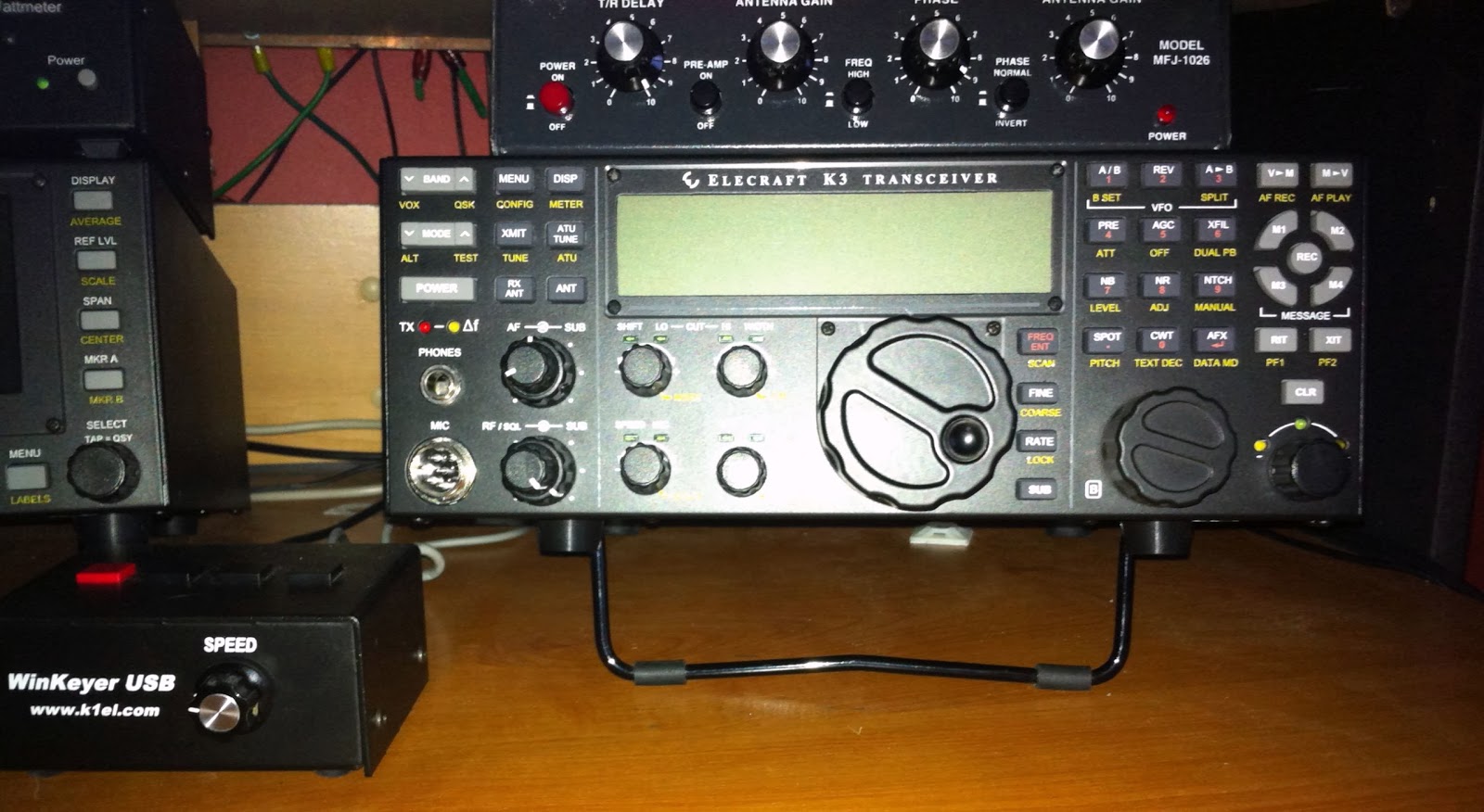 |
| The K3 just stopped! |
There was one heart stopping moment, it was during a tuning session of the Alexloop and the rig. I tuned the Alexloop for max receive I then hit the tune button on the K3 with the power on 3 watts the SWR was around 3.1 to 1 so some fine tuning was needed. As I tuned the Alexloop the SWR did a sharp rise and the rig powered off!! I waited for a moment and tried to power the K3 on again and NOTHING! I then checked the incoming power and it was dead. Well I thought better the Astron 20 amp supply taking a hit than the K3. Looking at the Astron supply the lights were on and 13.8 volts was showing on the meter. As I narrowed things down it was a fuse on the power bar that the Astron feeds power to. The K3 was fused at 1 amp at the power bar and not 5 amps and the fuse on the power bar went. After the proper fuse was installed all was well again.
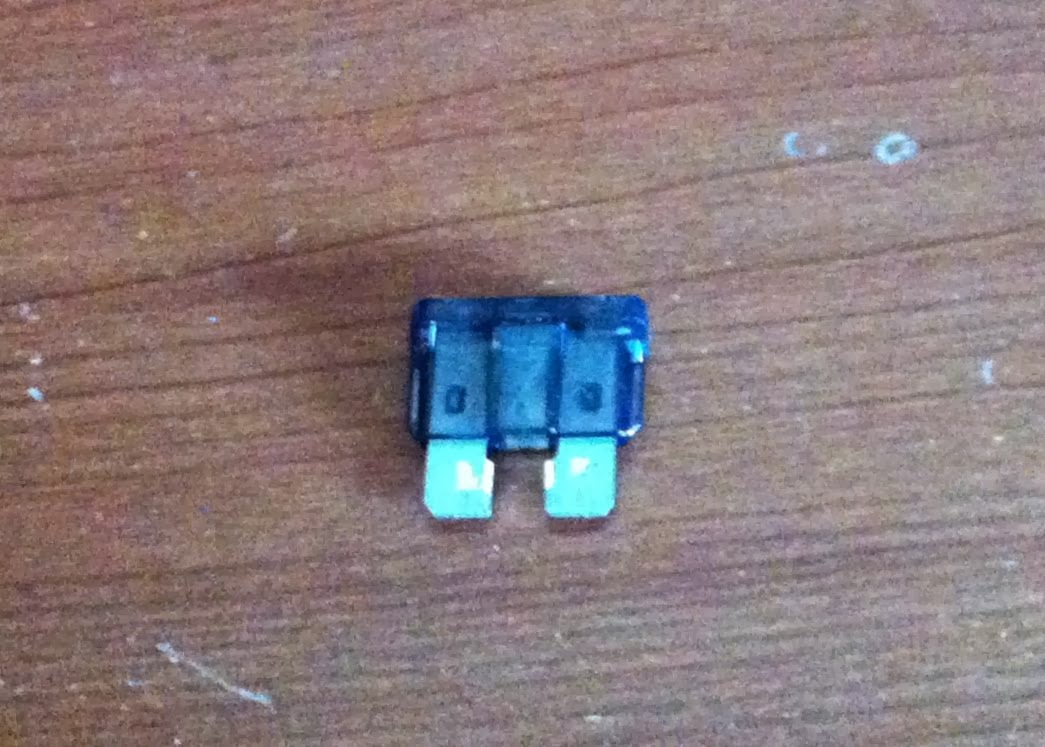 |
| Blown fuse |
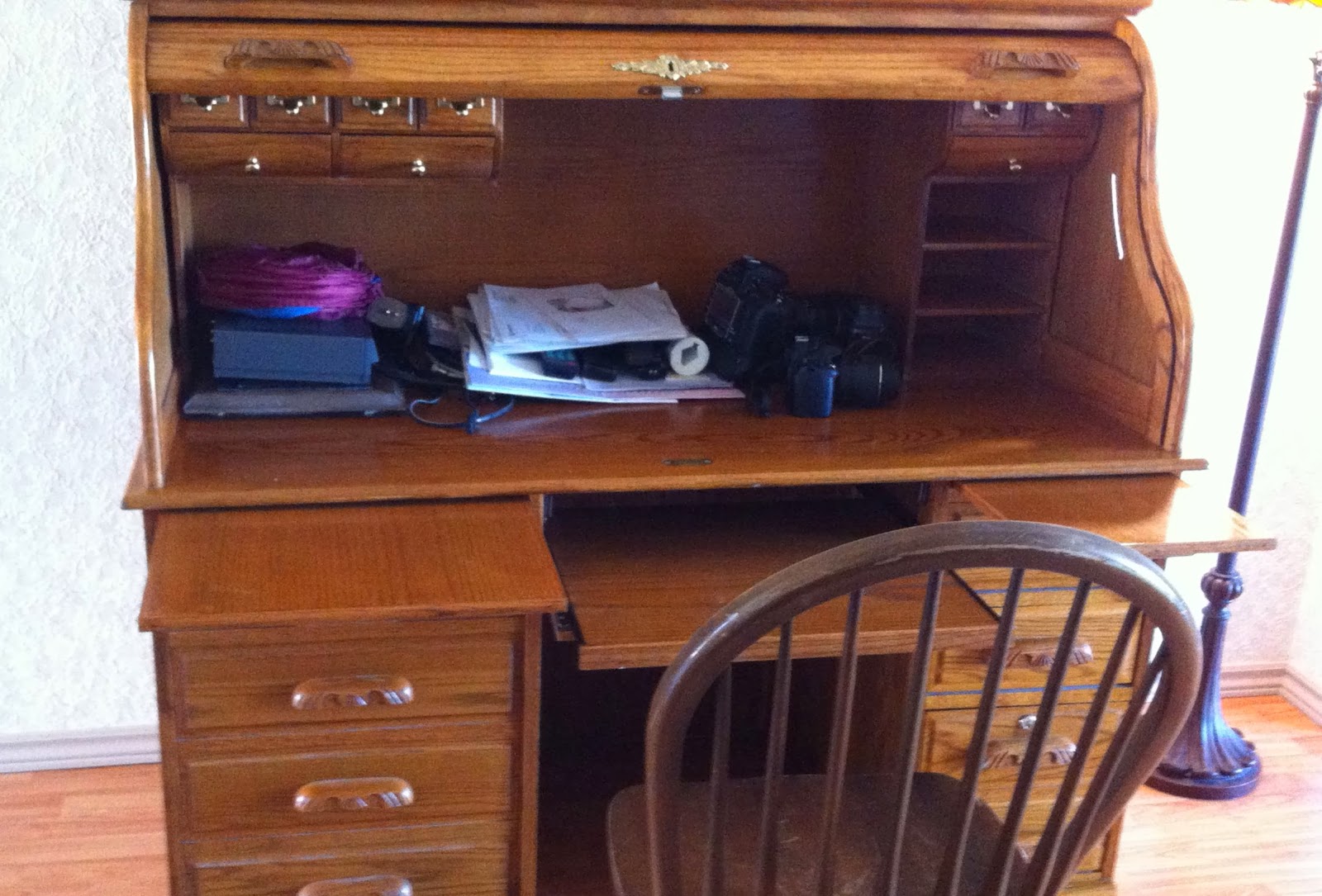
As for radio time Saturday was spent getting the K3 setup and my heart restarted when it powered down. There was a contest going on so the band were very busy but it did give me a change to see how Skimmer works under a contest situation. I can see how this piece of software will give my limited size station some advantages. The picture below is what sold me on the desk, the keyboard tray and the two pull outs.