Archive for the ‘Uncategorized’ Category
 Plagued with noise in radio room, culprit? Battery (Smart) Chargers
 June 7th, 2015 |
  Author:
 I do not do much operating in my radio room in the house, most of my operations are done portable. But for some time now I have been plagued with some major noise to my rigs, the noise is about S9 or more at times and varies on certain frequencies and sometimes with odd sounds.
Not too long ago I had rebuilt my 24v battery pack for my PRC-104 with NiMh batteries, what I had found when the charger was working was the noise was atrocious, once battery was charged the noise would subside but I guess it was never totally gone. So one day when all of our power was down for a tree on the line I tested the radios with battery and found zero noise levels, none what so ever, so it lead me to start searching a bit deeper, looking at TV noise, routers etc, but still no luck nailing the problem.
So I continued to do a bit of more pulling of plugs and seeing what and where the noise could be coming from. I own many types of battery packs and chargers, batteries for radios, cameras and scanners, so I had to start one at a time. I leave the chargers always plugged in ready to go, so never really anticipated that this would be my issue. But I was very surprised when I found two of my chargers that were the problem.
The one charger was indeed my smart charger for my NiMh battery pack for my PRC-104.
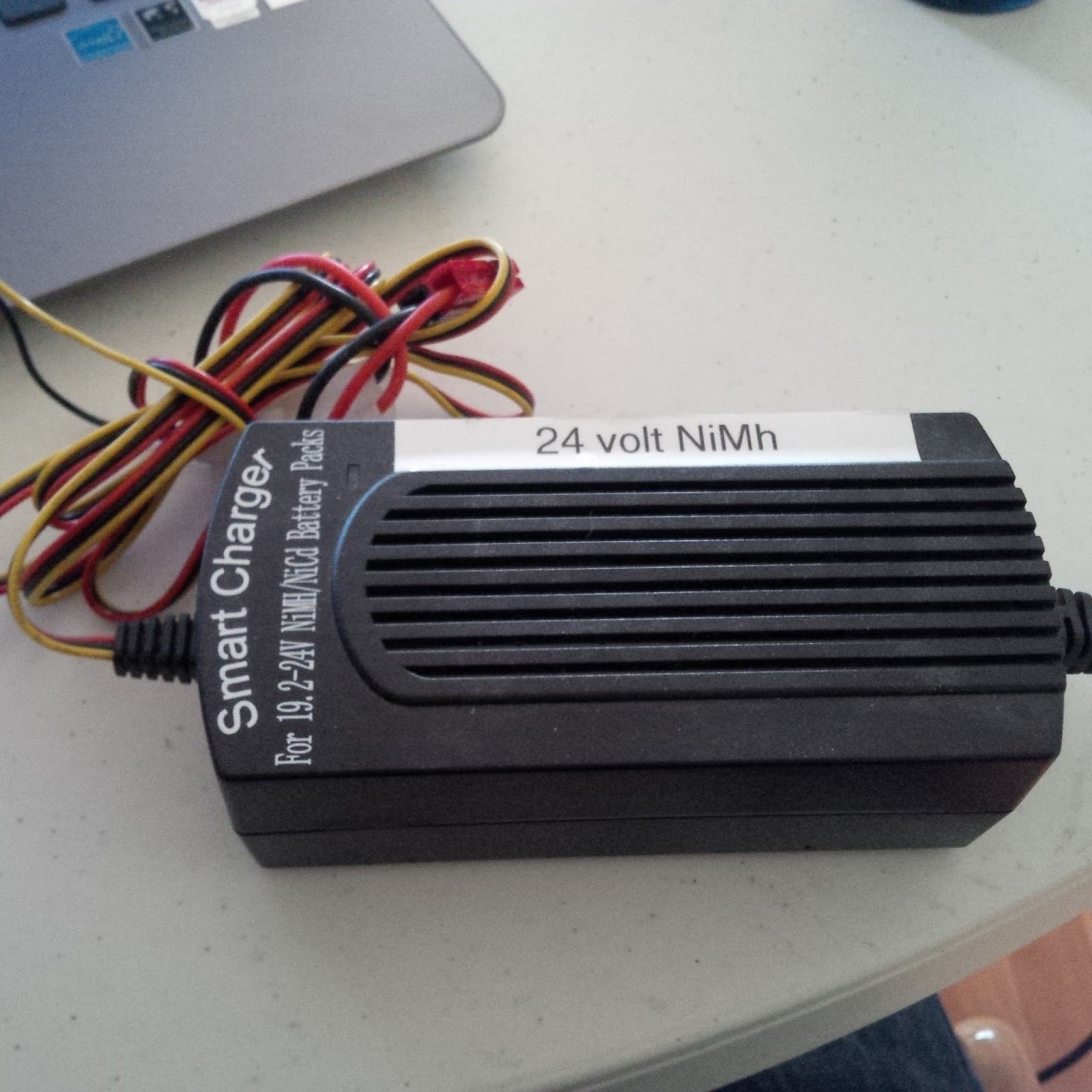
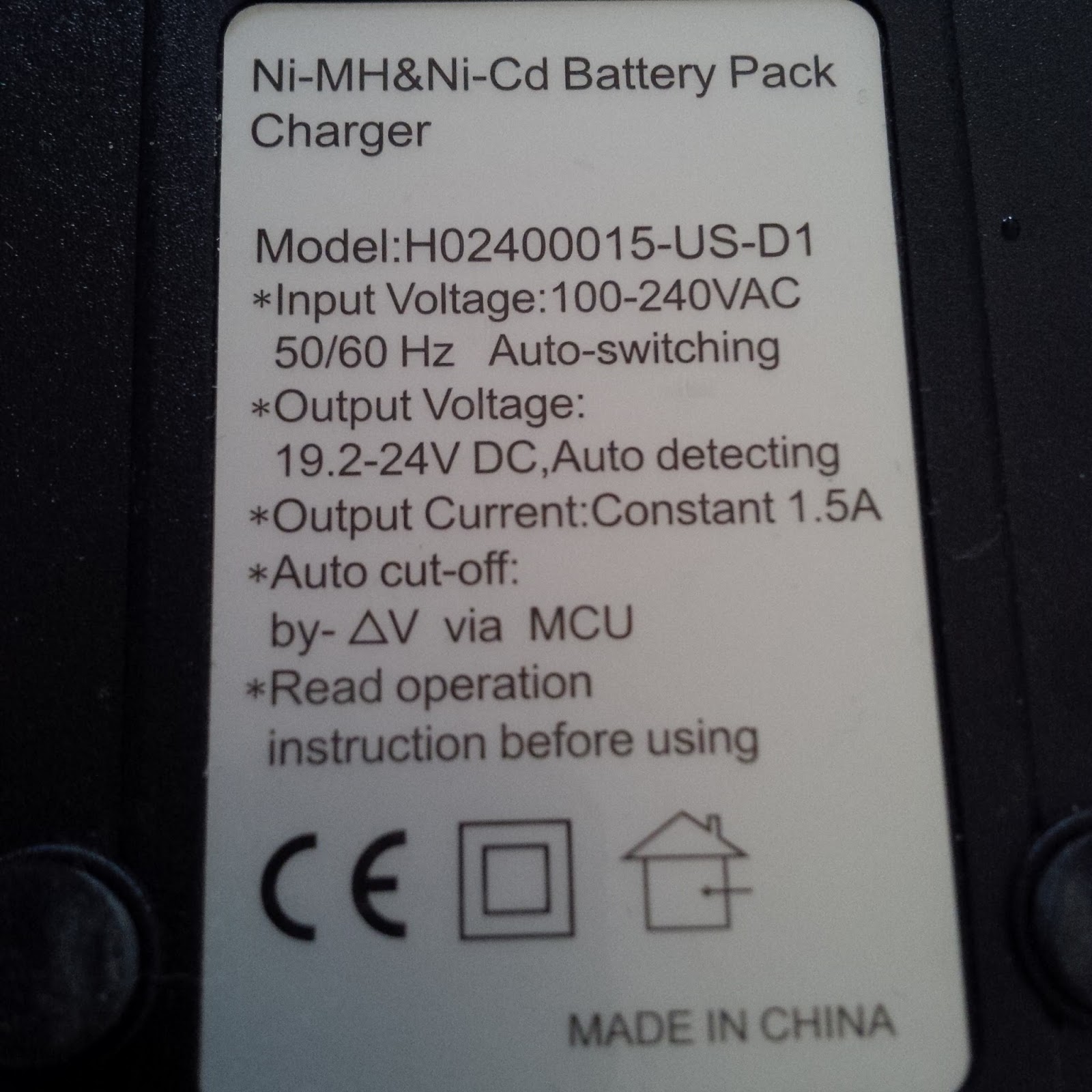
The other charger that turned out to be an issue was a Duracell battery charger that I use for my camera batteries. It was amazing at how quiet things got once they were unplugged. The noise on my VX-1700 with these chargers plugged in and not being used would be a solid 9 and more, once I unplugged both of these units the noise dropped to a 3 and I could hear stations once again. I need to look at some of the other chargers in the house that are used for routers and other items in the house.
The NiMH charger when charging makes all bands useless when it is actually charging, the charger for my VX-1210 is the same, very loud noise levels emitted from these units.
So I am glad I did a bit of unplugging and checking and have found some of the issues that have plagued the home shack. Many of today’s electronics is just plain noisy and does emit all kinds of stray RF and noise.
WISPY 10m WSPR rig

Some years ago (in my fit days) I build a simple DSB WSPR rig for 10m based around a low cost 14.060MHz crystal bought from the GQRP club. The idea was to pull and double this crystal and use it in a simple DSB TX and direct conversion RX. Both TX and RX have been built separately, but I was ill before I got around to combining the 2 into a 10m WSPR transceiver. Both parts worked well.

Amateur Radio Weekly – Issue 63

Large plasma tubes confirmed to exist above the Earth’s atmosphere
These structures are the likely cause of unwanted signal distortions affecting both civilian and military satellite-based navigation systems.
io9
Britain’s pirate radio stations are not going down without a fight
Tied to a branch in the canopy of an old birch tree is the transmitter for Rage FM, Taunton’s only pirate radio station. Owning it could get Alfie, the proprietor, two years in prison.
Newsweek
Tytera TYT MD-380 DMR Handheld review
DMR, Digital Mobile Radio, seems to be taking off as the digital voice mode of choice, and the arrival of the Tytera TYT MD-380 DMR is great news.
Essex Ham
DMRUK: all digital worldwide TDMA repeater network
Time-Division Multiple-Access (TDMA) preserves the full channel width and divides it into alternating time slots that can each carry an individual call.
DMRUK
Switching power supply noise more common than power lines
LED-type lightbulbs that are becoming more common also can be noise-generators.
ARRL
Not all Jameco power supplies are linear and regulated
I cracked open one of these to see what was up here and sure enough it was using a MC34063A inverting switching regulator.
The SWLing Post
High performance radio – operating the Hilberling PT-8000A
The Hilberling PT-8000A Transceiver is much like a new high-end AC Cobra sports car – a classic format product fine-tuned to as close to perfection as the manufacturer can engineer, executed with near-jewelry precision & finish.
With Varying Frequency
Flex 6500: 11m band opening
I thought I had seen band openings before, but this is what I saw with the new Flex 6500 this morning.
AA6E
How to
Paper clip paddles [PDF]
The actuation is reliable and the contacts seem to be reliable as well. I plan to switch to this new paddle for at least my portable work.
K8AG / North American QRP CW Club
Ten steps to mastering Morse Code
James Altucher is one of those guys that seems to be able to do just about anything. Here’s how I’d apply his advice to mastering Morse Code.
KB6NU
Video
Testing the Yaesu FT-991 on 2m
We compare the FT-991 receiver performance on 2m with two other radios. Justin, G0KSC, from Waters & Stanton, puts them through their paces.
Waters & Stanton
Siru SDR20 Multi-Touch Software Defined Radio
Siru Innovation’s SDR20 multi-touch radio is a high performance scalable software defined radio platform for designing and deploying next generation radios.
Vimeo
Testing a New Antenna Along the Pemi River
I rode my bike along the Pemigewasset River today and made eight QSOs in the CWT sprint with a new lightweight dipole antenna.

It’s been raining for three days, so it’s a relief to have some sunshine! AND… the mosquitoes are out. They’re pretty prolific at home, but they weren’t too bad along the river today. There were some puddles along the trail and the river is high, but it was beautiful on the bike.

I stopped about a mile down the trail at a corner along the riverside. I thought there would be a breeze to keep the mosquitoes away, and I was right.

Yesterday I built a new antenna because I saw a note from Steve WG0AT that he had been testing it out. I bought 50 feet of twisted pair with #22 wire and teflon insulation. I untwisted 22 feet and built a 44 foot dipole. I had about 30 feet of feed line left. I didn’t use a center insulator, but instead put an inch of heat shrink at the feed point with an underwriters knot.

I set the dipole up between two giant pine trees. The antenna was up about 25 feet. I started out on 15 meters because I could hear lots of activity from the CWT sprint there. The antenna tuned right up with the KX3 and the internal tuner. Later, I switched to 20 meters.
Here’s my log:
3 Jun-15 1913 21.031 K9QVB CW 599 599 Ill
3 Jun-15 1914 21.028 K5OT CW 599 599 TX
3 Jun-15 1915 21.027 N4ZZ CW 599 599 TN
3 Jun-15 1917 21.028 K7SV CW 599 599 VA
3 Jun-15 1919 21.030 W7SW CW 599 599 AZ
3 Jun-15 1925 14.029 K9QVB CW 599 599 Ill
3 Jun-15 1929 14.033 K4LTA CW 599 599 TN
3 Jun-15 1930 14.027 NW2K CW 599 599 NY
I only operated for about 20 minutes, but the antenna seemed to do pretty well. I packed up and headed back. On the way, I stopped to watch two Canada geese and 5 chicks swimming in the cove. I was too late to catch them on camera.

Eddystone EC10 receiver

When I was young (that is now a very long time ago!) I coveted the Eddystone EC10 all transistor receiver. When I first had my call I had one on loan from a local SWL. I used it on 160m AM and CW. A few years later a friend at work managed to get me one from his dad who worked for Eddystone. This was a pre-production unit. I used it as a tunable IF for several years.
Looking back it was rubbish! On 10m the whole band was about 0.5 inches on the dial. On MW and bands up to about 6MHz it was OK. It had a low IF and germanium transistors (OC171s). It was mechanically a nice radio, but almost all modern receivers are a lot better.
Prices on the second hand market for EC10s are very high. Even though a far from great radio they are still sought after receivers.

Coat hanger 70cm beam

Some years ago, I was in need of a 70cms antenna for portable use and had to improvise by raiding my XYL’s wardrobe! The result was a 2 el Moxon antenna made in about 30 minutes which worked some impressive QRP (2.5W) DX into France on 70cms. Gain is quite low but all you need is a wire coat hanger and a few bits for insulation and to attach the coax feed. Simplicity! It does not look pretty, but it works. The mast was made from a short length of PVC pipe.
See https://sites.google.com/site/g3xbmqrp3/antennas/70cm_moxon .

Tenner – a 500mW CW transceiver for 10m
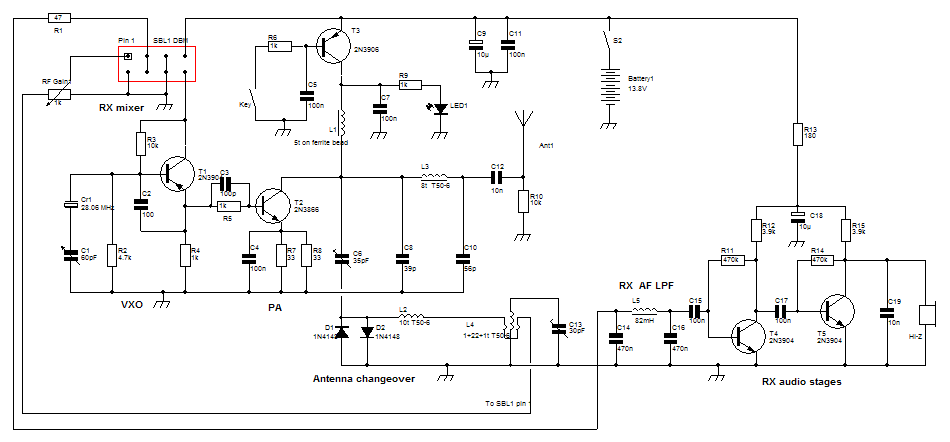
This was a rig I built and used a few years ago for 10m CW. As you can see, the design is simple but it worked across the Atlantic many times. Pull the crystal too much and the RX-TX offset becomes too great. Ideal as a simple rig for 10m CW.














