Archive for the ‘Uncategorized’ Category
 "Web price is best or call"
 August 15th, 2015 |
  Author:
 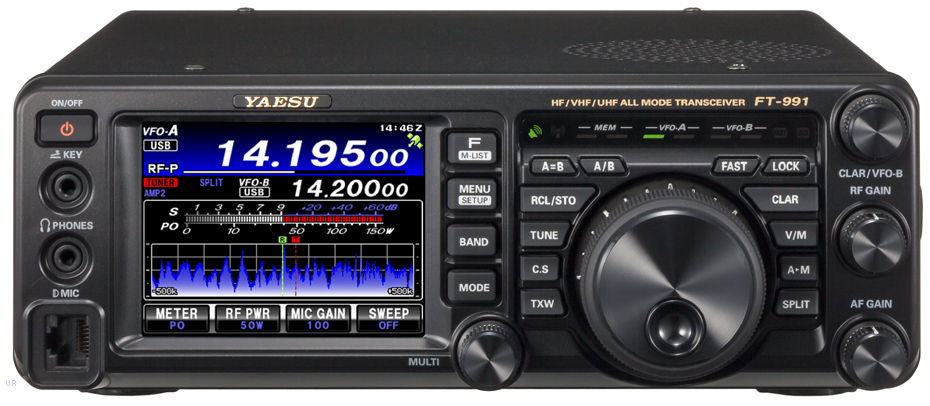 |
| FT991 from Yaesu |
The ongoing saga of the FT991 price fall continues. The phrase in the title is from the latest advert by MLS in Radcom. It looks like they know the price is too high but are looking to see who drops the price first – a kind of game of “chicken”. The best price advertised is £1139. Meanwhile the FT450D (HF and 6m) is just £499 from Waters and Stanton. I confidently predict the price of the FT991 from the major retailers will drop to £999, or even less, soon.

Global Overlay Mapper ham radio mapping suite gets major update

The Global Overlay Mapper has been around for some years. The previous version was built as a series of browser pages within a Windows shell, and reached the end of its life once Window introduced ‘User Account Control’, making remote updating too difficult. At the time I was away from Ireland, back-packing around the world as a pro-travel photographer (http://www.gnomeplanet.com/) for 8 years.
Now back home again, I decided to completely re-write the Global Overlay Mapper as a proper Windows program that was compatible with Win 7, 8, and 10. Its 38 maps were updated to include all the new countries, prefixes, flags, and IOTA entities. (The Global Overlay Mapper is the only ham map-suite that displays all IOTA entities.) As a proper Windows program, I could now add a variety of features that I’d been planning for some time. You can now geocode a Cabrillo or ADIF log – in other words, you can add positions to each QSO and then plot your log on a map, thanks to the nice guys at HamQTH.Com. You can plot lists of positions or Maidenhead Locators. You can see, display, and plot callbook information. You can see real-time NCDXF Beacon transmission schedules, and plot the beacons.


The Global Overlay Mapper is ideal for every ham, no matter where their special field of interest might be. The local ragchewer, the HF and VHF dxer, International or Local Contester, Field Day Team, Emergency Communications Specialist, DXCC and Award Hunter, IOTA expeditioner; all will find the Global Overlay Mapper an important tool for everyday use. The Global Overlay Mapper is now shareware – it works for 30 days, then requires registration, which costs just USD15. If you registered a previous version, you can upgrade for just USD5.
To find out more, and download your copy, please visit:
Coax losses
If you are like me, then you always want to know the loss of your coax at 6m,2m and 70cm, possibly higher I found this very useful table to compare various coax cables at different frequencies. You may have your own favorite table! If not, I hope you find this one useful.

2m big wheel
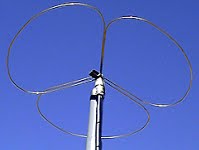
Well, I have ordered one (yes I know I could have made one although not in my present state) so I hope this can be erected in the next few weeks, although I shall need help to do this as I am no good on ladders in my current poor state of health. It would be good if I could get a long wire erected at the same time for LF/MF use, although this could wait. At this time I am going for a single big-wheel rather than a stack.
I have decided against buying a 70cm big wheel at the same time as this would require a new length of low loss cable too. I also checked my existing low loss cable and this seems in good condition, so it will be reused. I may make my combined 2m/70cm antenna into a portable antenna when I have found out why the VSWR is poor.
See https://sites.google.com/site/g3xbmqrp3/antennas/bigwheel .

Amateur Radio Weekly – Issue 72

FreeDV QSO Party Weekend
The Amateur Radio Experimenters Group would like to invite all amateurs interested in HF digital voice communications to join us on the weekend of September 12th and 13th in a FreeDV Codec2 digital HF voice QSO Party!
AREG
Do not Digipeat via PCSAT
Although this is the correct frequency for APRS operation in IARU Region 2, it is not compatible with our Region 1 bandplan.
AMSAT UK
My Amateur Radio bucket list. What’s yours?
There is just so many possible things you can do within the hobby that it could possibly take a lifetime to achieve.
NT1K
Chinese Amateur Radio Satellites set to launch in early September
The XW-2 series satellites are equipped with substantially identical Amateur Radio payloads — a U/V mode linear transponder, a CW telemetry beacon and an AX.25 19.2k/9.6k baud GMSK telemetry downlink.
ARRL
Simplex, Duplex, Offset and Split
Simplex is a term that applies on all of the ham bands, because it is the simplest way to communicate. However, it is not the “opposite” of using a repeater.
Ham Radio School
What happened when I added a counterpoise to my HT
By adding a 1/4-wave counterpoise, you, in effect, turn the antenna into an off-center-fed, vertically polarized 1/2-wave dipole.
KC4LMD
Facebook. What is it good for?
Notable Amateur Radio Facebook Groups.
W2LJ
DX from Bald Ledge
EA5GX Sergio in Spain was calling CQ and we made a quick contact. There was some QSB, but he gave me a 579. Finally, I heard LZ1GU in Bulgaria calling CQ. Harry was strong and he gave me a 569.
amateurradio.com
In Pacific islands, radio remains the most accessible news source
Newspapers are a luxury item. On average, each newspaper in the Pacific will be read by seven people, which helps explain why the daily paper’s print run is so low.
The Saturday Paper
How to
QRV from a new apartment
This mainly amounted to mounting and tuning my 20m hamstick and running cable to the radio. This doesn’t sound like much on paper but it was a lot more engineering than that.
W0EA
Video
Ham Radio fun with tropospheric ducting propagation
This is a sample of stations I worked or heard during a nice tropospheric ducting 2 meter band opening from my location in Albert Lea, Minnesota.
RadioHamGuy
Homemade yagi antenna field test
I demonstrate some local QRM that I have been receiving there, check access to 4 distant repeaters (GB3SC, GB3JB, GB3WH and GB3VA), and have a nice QSO with Andy (G6TRW).
YouTube
Amateur radio enthusiast contacts space station
We live in a world fascinated by space, but very rarely does the ordinary man reach up into the stars for a chat.
CNN
New versions K1JT weak signal digital modes
Bob, G3WKW, has passed on this information from Joe Taylor K1JT:
“Date: Fri, 07 Aug 2015 16:28:19 -0400
Several people have asked for an update on development of the “Fast modes” in WSJT and WSJT-X. So here’s a brief summary.
First, a review of some relevant terms and motivations. It’s convenient to think of the various WSJT protocols (“modes”) in two groups:
*Slow modes* — JT4, JT9, JT65, and WSPR. These modes are designed for communication with extremely weak signals — often too weak to be heard. Target propagation modes include EME and long-distance troposcatter on HF-and-up bands, and QRP Dxing on the LF, MF, and HF bands. Relevant signal amplitudes are approximately constant over a minute and more, aside from so-called “libration fading” for EME. Transmit/receive sequences are 1 minute for JT4, JT9, and JT65, and 2 minutes for WSPR.
*Fast modes* — JTMS, FSK441, ISCAT, and JT6M — and now also *FSK315* (implemented in WSJT) and *JT9E* through *JT9H* (implemented in WSJT-X. These modes are made for communication with rapidly varying signals:for example, meteor scatter, ionospheric scatter, airplane scatter, and scatter off the International Space Station. The decoders are designed take advantage of short enhancements of signal strength. T/R sequences are 30 seconds (or sometimes even shorter).
Bill, ND0B, has implemented a trial version of FSK315 in WSJT. Think of this mode as FSK441 slowed down to 315 baud; the bandwidth is therefore narrow enough to make the mode legal in the “CW and data” portion of the 10 meter band. Bill and a few others have been experimenting with FSK315 and also ISCAT-A on 10 meters, under dead-band conditions, using meteors and ionospheric scatter propagation.
I have implemented experimental submodes of the JT9 protocol in the program branch WSJT-X v1.6.1. As with JT4 and JT65, letters following the “JT9” designator indicate increased spacings between the FSK tones. Traditional JT9 (now also called JT9A) has tone spacing 1.736 Hz, so the signals used at HF and below have total bandwidth 9*1.736 = 15.6 Hz. The widest of the new submodes, JT9H, has tone spacing 200 Hz and therefore bandwidth 9*200 = 1800 Hz.
When used with the standard 1-minute periods, the wide JT9 submodes should be useful for the same purposes as the wide JT4 submodes: microwave EME, for example, where libration fading can cause Doppler spreading of 100 Hz or more. Used in this way, all JT9 submodes are “slow” modes; they use 1-minute T/R periods and keying rate 1.736 baud, and they send the full 85-symbol message protocol in 85/1.736 = 48.96s.
Optionally, the wide JT9 submodes can now also use “fast” keying rates equal to their tone spacing. “Fast JT9H”, for example, uses keying rate 200 baud, so the full message protocol is transmitted in 85/200 = 0.425s. The message is sent repeatedly for the full Tx period, in the same way as done for the other fast modes.
The fast JT9 submodes should be very effective for meteors and ionoscatter propagation, especially on the 6 meter band. Sensitivity should be similar to ISCAT, or perhaps slightly better. Because JT9 includes strong forward error correction, decoding results are like those for all the slow modes: you should see messages exactly as they were transmitted, or nothing at all.
Tests of the fast JT9 submodes are currently under way, with excellent results.
— 73, Joe, K1JT”

So just how sporadic is sporadic E (Es)?
Time and again I have been struck by just how unsporadic Es is. OK, good days are random but there seems to be a pattern that more northerly and Scandinavian stations on 10m and 6m are better later in the day and later in the season. I actually wonder if these more northerly reports really are Es at all. There is every chance I am totally wrong, but I have noticed this over several summers and I question that Es is truly “sporadic”. I’d be interested to hear the views of others on this.
One thing is certain: we still have a great deal to learn about E-layer DX propagation. Es is certainly a fact on many summertime EU QSOs on the higher HF bands and 6m, but I am sure the multi-hop explanation for some very long distance QSOs is not right.














