Archive for the ‘radio’ Category
 Talking Back To Home
 April 18th, 2015 |
  Author:
 Having an EchoIRLP node here at home allows me the option of communicating with the XYL (who holds a Tech license) when I am on the road. I found this very useful when I was stationed in Korea. With the time difference, the end of my day was the beginning of hers. I could check APRS to see when she started her morning commute and then connect to my home node. This allowed me to check in with her as well as saying “Hi” to the kids.
With the Summer Trip, the XYL will not be with us the whole time. Therefore, IRLP may well offer a solution.
Time change will not be a significant factor – which means the best times to schedule IRLP QSOs with the XYL would be during the commute times. That should work fairly well because I do not plan to be on the road either too early in the morning or much past the late afternoon.
What is the availability of IRLP nodes along the route I am taking and will they be near our overnight stops? Enter the ARRL’s Repeater Directory. I remember my dad almost always having the shirt-pocket version of this directory by his easy chair along with his HT and a mechanical pencil that he used to make notes. I have consistently followed his lead, although I usually keep a copy in my truck as I am not too much of an HT guy. Another difference is my excitement about the Desktop Edition of the Repeater Directory. I find the shirt pocket edition way too tiny and difficult to use. The Desktop Edition is the Business Class of directories…. spacious, roomy, and comfortable.
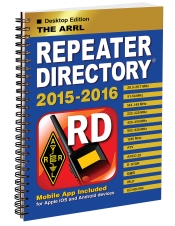
I took advantage of ARRL’s birthday coupon to purchase the 2015-2016 directory and am using that to start my IRLP node research. Without digging up my maps and looking too much at the surrounding areas, here is what I found:
Sioux Falls, SD, IRLP Node #7346, 444.2, 82.5
Gillette, WY, IRLP Node #3307, 449.75, 123
Cody, WY, IRLP Node #7194, 146.85, 103.5
Great Falls, MT, IRLP #7908, 147.3
Great Falls, MT, IRLP #5670, 147.36, 100
Bozeman, MT, IRLP #3692, 448.35, 100
Billings, MT, IRLP #3398, 449.75, 100
What I will probably do is use my home node to connect to these nodes to see if they are in operation and get an idea as to what their coverage areas are.
LHS Episode #144: Amateur Radio Resources
 Hello, folks! We're happy to say that Pete has rejoined our crew for this episode of the show, and he brings with him some excellent information for all you listeners out there. We take a look at several great video and audio resources for amateur radio adventures this fortnight. On top of that, we give a detailed description of YFKtest in action during a contest, and an overview and introduction to the latest version of the Tucnak logger. Lots more news, reviews and excitement as well. Please enjoy!
73 de The LHS Guys
What to do during a contest
With the exception of the UKAC events, weekends are the only time I get on the radio really. I occasionally sneak on during the week but it generally attracts a groan from ‘er indoors. This weekends CQWPX contest is a great opportunity to chase a bit of DX. I got my first and so far only VK contacts from home with my homebrew loft mounted Cobwebb during a contest so I can’t complain.
But what else is there. Well apart from the CW portions of the bands there are other things to do on the air. One of them is something I’ve never even looked at before Wefax.
Normally my weather information comes from t’internet nowadays and maybe this kind of thing is a bit legacy and perhaps not long for the airwaves but I’m sure it serves a purpose for shipping and perhaps far off places.
So how do you ‘do’ Wefax? In my case I tuned to 8,039.100 USB (Have a look here for a good primer and the frequencies and schedules are here) with the trusty Angelia SDR and coaxed the audio in fldigi with a less than ideal set of patch leads and a rather noisy Soundblaster USB souncard. The Angelia is a great receiver so it gave the best chance for this compromised solution. Fldigi will decde Wefax for you so its just a case of selecting the Wefax mode and aligning the signal on the waterfall, nothing to it.

After some awful screeching and scrawing that reminded me of when fax machines were in offices and hey presto images started coming through. Adjusting the slant and horizontal alignment is easy with fldigi and as you can see the raw images are pretty good.

And here is the output. I’m guessing its going to rain!

So if you’re thinking that SSB contesting isn’t for you and you’re at a loss as to what you might want to do with your expensive rig, then have a scout about the bands outside of the usual ham bands. You never know what you might find.
Rockmite
As I’m moving towards CW as an operating mode I took the plunge and bought a Rockmite kit from Kanga. Lets just say its not working quite as I had anticipated. This time I was very careful to look at the various instructions. Lid everything out and then checked every component as I assembled it.
 Next time I’ll throw these things together in the usual manner. I might have a bit more success. Power on and I get little in the way of audio, a gentle hiss but not much else. So troubleshooting has to begin. Fortunately there is quite a bit of help for this but to be honest I’m not holding out much hope as I did such a thorough job of checking the first time round. Must be a faulty (insert component here)
All good fun and not as if the world will end if I have to spend some time on it.
January Special Event – Straight Key Century Club and K3Y/0
All month long, during January 2015, a group of volunteers using the special event callsign, “K3Y” with a slant-region number (i.e., “K3Y/3” or “K3Y/0”), were on the amateur radio HF bands (and some, on six meters). I was one of these volunteers, operating nearly every day of the month for at least one hour, but some times a few hours per day.
“K3Y,” the Straight Key Century Club’s annual January celebration, commemorates the club’s founding in 2006 following the American Radio Relay League’s Straight Key Night. A small group of participants wanted to extend the fun of SKN throughout the year. The SKCC is the result.
For the first three years, the club’s founders used K1Y, K2A, and K3Y as the celebration’s special-event calls. But someone cleverly noticed that a 3 is nothing more than a backwards, curvaceous E. This “KEY” event has operated under the K3Y call ever since.
The on-air party is open to members and non-members alike. It runs from 0000 UTC Jan. 2 through 2359 UTC Jan. 31. It’s a great time to introduce others to the joys of hand-crafted Morse code using straight keys, bugs, and side swipers.
In this video, you can see this operation at my ham radio shack, as I am the control operator of the special event station, “K3Y/0”, during one of the many shifts. “K3Y” is the special event callsign of the Straight Key Century Club (SKCC). The special event operates each January.
In the following video, you can see some of the QSL cards associated with this year’s operation, and then some other QSL cards in my collection.
https://www.youtube.com/watch?v=gOsNjT7OCyc
+ The SKCC website is at http://skccgroup.com
+ The “K3Y” special event page is http://www.skccgroup.com/k3y/index.php
+ My page is at http://NW7US.us
+ My Morse code page is http://cw.hfradio.org
Pictures from KH8 (second trip)
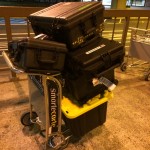
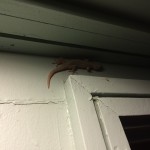
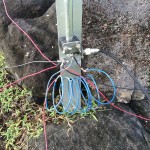
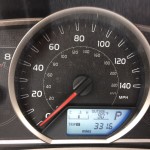
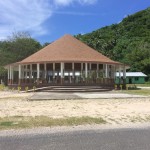
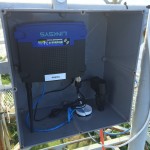
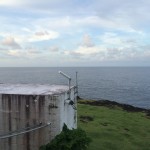
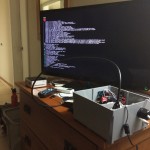
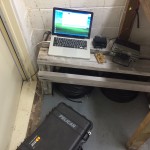
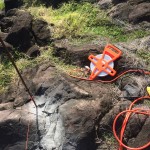
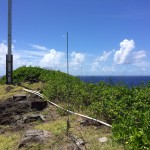
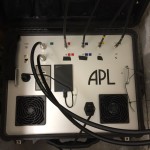
I made another trip to American Sa’moa (KH8 for the radio amateurs in the audience) to deploy instrumentation. It was a tight timeframe but the instruments seem to work and I managed to make a few ham radio contacts as well.







The Hallicrafters SX-88: a rare find and a gem of engineering
[Note: this post first appeared on my shortwave radio blog, the SWLing Post.]
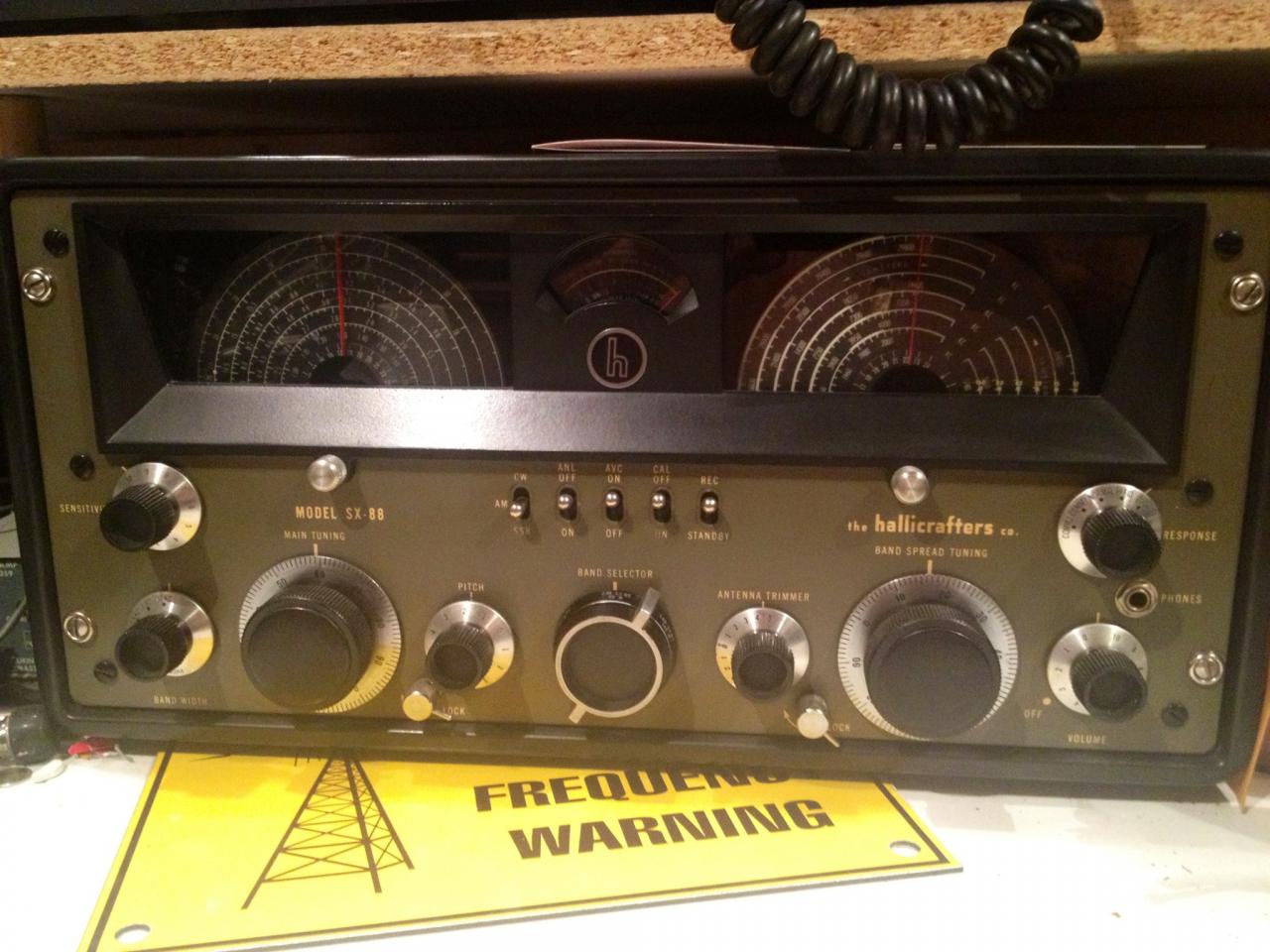
Yesterday while glancing through the QTH.com classifieds ads, I noticed a rare boat anchor for sale: the Hallicrafters SX-88.
The seller, Jeremy, describes this SX-88 as follows:
Hi [t]here, I have one SX88 in minty shape and is one of a handful that came in military green on [the] front panel for evaluation by the military. This is an exceptional radio in amazing condition. I can provide pics for someone who is seriously interested. I am open to a fair offer on radio. Please, no low-ballers. We all know what [it’s] worth…
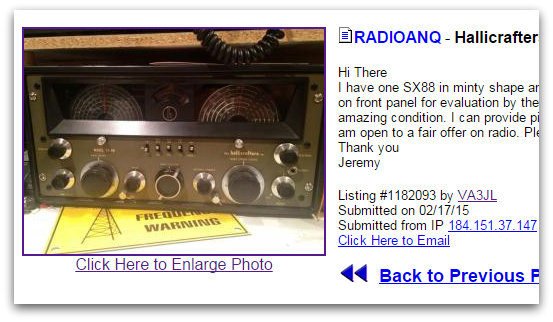 “We all know what it’s worth“–?
Well, it just so happened that my good friend (and Elmer, or ham radio guru) Mike Hansgen (K8RAT) had recently provided me with a little history lesson on the subject of the SX-88, so I did know what this rig is worth: a great deal of money.
But curiosity got the best of me, so I contacted Jeremy (a nice fellow, by the way) and asked what he was expecting to receive in exchange for his Hallicrafters SX-88? Jeremy’s reply:
“…$5,500 USD will take it. It is a very rare unit; it was… only one of about 6 [painted green]…for presentation to the military for evaluation.
That price is firm. [I] will not negotiate downward, and shipping [from Ontario, Canada] is extra.”
After receiving this response from Jeremy, I happened to think that I have the reference guide to rare/used shortwave receivers: Fred Osterman’s Shortwave Receivers Past and Present 4th edition. (Click here for more info.)
Osterman’s wonderfully comprehensive guide mentions that the SX-88 is a “highly regarded, rare and collectible model.” As for the rarity of the SX-88, he describes it thus: “Extremely Scarce.” The used price range he gives is from $3,500-7,000 US.
I also have Chuck Dachis’ book, Radios By Hallicrafters; in it, he states that the SX-88 is, “the most sought-after Hallicrafters model.” Wow.
After thanking Jeremy for his response, he replied:
“It’s a lot of money for a receiver for certain, but it is a fantastic shortwave receiver as the audio that comes out of it is amazing.
It has 10 watts of audio and into a big speaker–it is second to none. The fidelity is amazing and it is the king of its kind. [For those who like] tube rigs, it is the best of its kind.
For ham purposes on AM it is amazing, and on CW I find it incredible to use.
[W]hen they built this thing they intended to pull all [the] stops out and build the best radio they could for the day with the military in mind. It was an engineering marvel for the day.
Anyway, I have played with it for years now and need to thin out the herd.”
Impressive. And while I just don’t have that kind of money to fork out for a receiver, I did ask myself the question: “If I had $5,500 to blow, would I get that Hallicrafters SX-88?”
And my answer? Yes. In fact, I would personally drive to Jeremy’s home in Ontario and bring it back; no way I’d trust it to a parcel carrier or the post office…
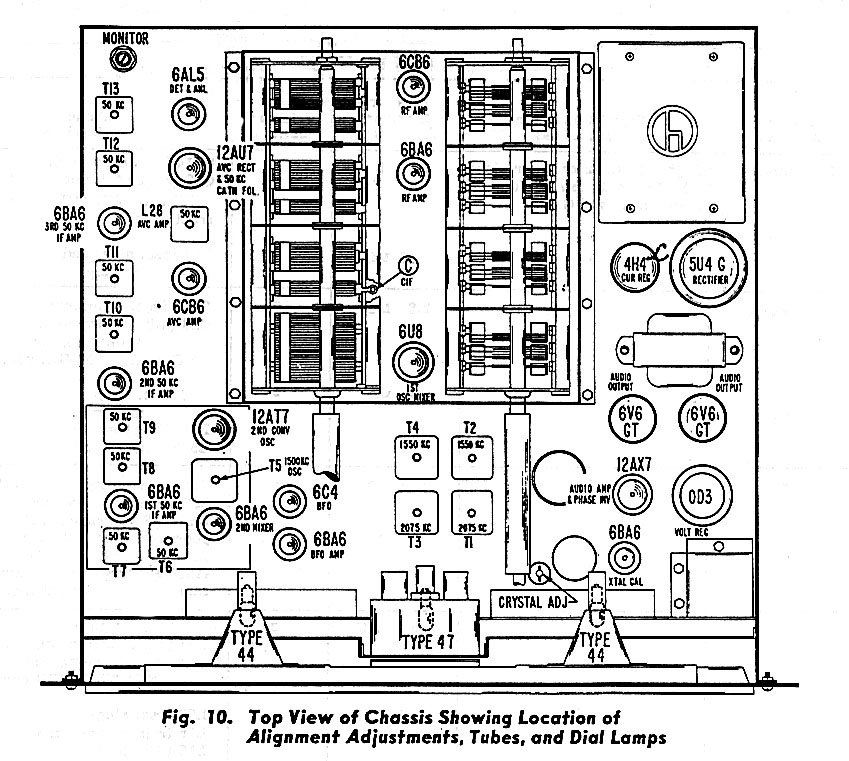
Click to enlarge (Source: AntiqueRadio.org)
Come on, you may say. For a guy who rarely pays over $50 for a vintage receiver, how could you possibly justify that kind of financial and time commitment–?
Well, let’s think of it this way. I remember when when I paid well over two thousand for my first laptop in college. How much is it worth now? Maybe twenty dollars–?
Many people have retirement funds in investments, some of which are in a variety of innovative companies that they actually patronize–for example, Apple or Microsoft. But how often can you find an investment that you can actually play with? One which you can turn on, tune in, work the controls, and enjoy?
Yes, I’m sure this is just the sort of justification voiced by many a vintage car collector…So, why not for a museum-worthy radio? After all, they’re not making these anymore.
I expect this Halli will not only hold its value, but will probably increase in value over time.
Ah, well; fun to ponder. My question to you: Would you buy a $5,500 vintage receiver if you had it to spare?
If your answer is yes, and you do have the money, then you might want to contact Jeremy.
I’m very curious if there are any SX-88 owners among our readership? If so, please comment with your thoughts about the ’88!
And for the rest of us, just so we can revel in the vicarious pleasure of ownership, I’ve included some additional information about the Hallicrafters SX-88 below, including two videos.
Resources (courtesy of Jeremy):
[youtube http://www.youtube.com/watch?v=ozclVUwZ_mM]
[youtube http://www.youtube.com/watch?v=clF5HsewTnU]













