Archive for the ‘qrp’ Category
 One More Winter For The Tri-Tet-Ten?
 September 27th, 2014 |
  Author:
Having completed the transmitter just in time for Cycle 24's hoped-for great 10m conditions, it turned out that only a couple of one-week periods over the past three winters where good enough to reach Europe. During the two "double-peaks" I worked many dozens of Europeans, all of them in response to my crystal-controlled CQ's, mostly on 28.042kHz.
 |
| Courtesy: http://www.noaa.gov/ |
Nobody was more excited than I, the first time I heard a reply from Europe....it was from G4RRA who, as fate would have it, recorded my signal on that early October morning.

There were a few mornings when I had long pileups and worked Europe for several hours, most of the time shaking my head in disbelief that such a simple transmitter could provide so much DX pleasure...but really of course, it was mostly the great performance of Ten....the "other magic band".
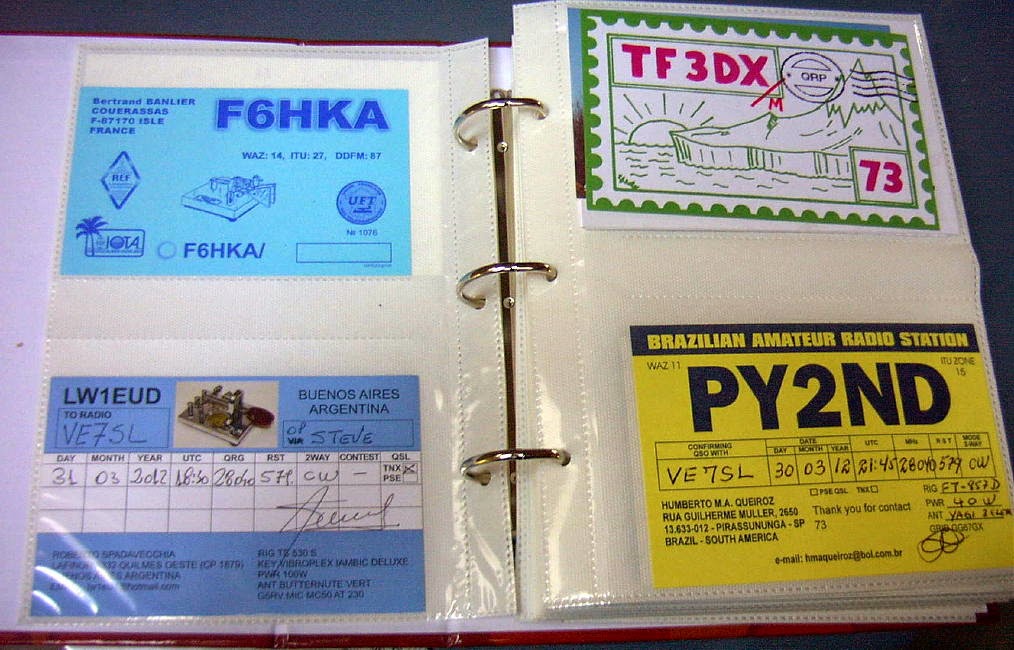
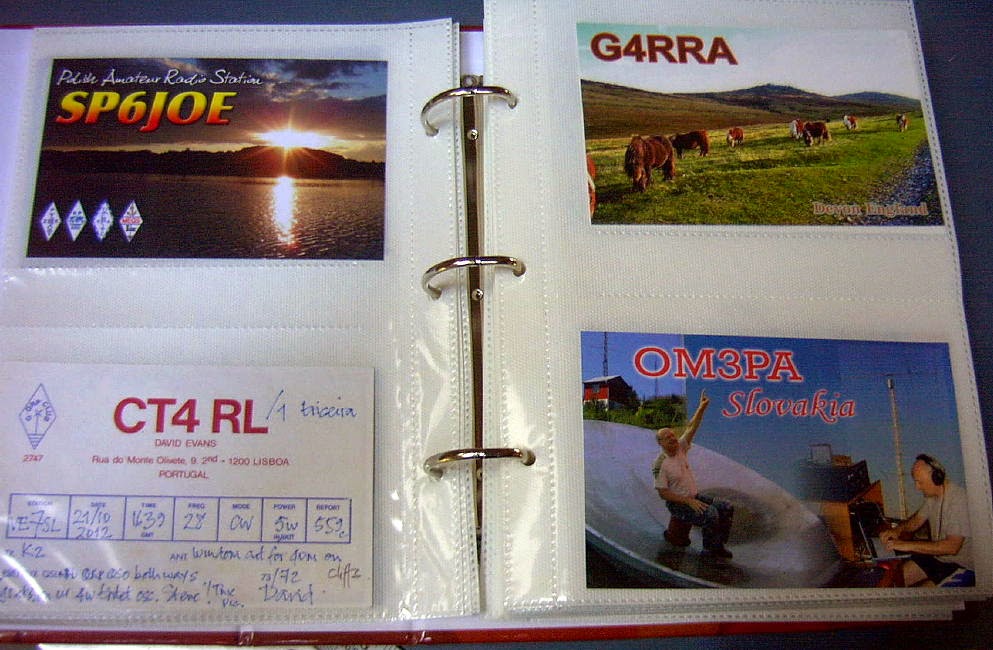
I really doubt that 10m will once again support European conditions good enough for my one-tuber but it's still fun to work the U.S. With Cycle 24 on the decline I was happy to see that F2 has returned to Ten once again and this week I sparked-up the tri-tet to enjoy the propagation.
My chirpy return to the band produced many enjoyable QSO's..... NG2T (NY), KD8IFJ (MI), K9DP (IN), KA2MLH (NY), W4NA (VA), N4OW (FL), K8NS (FL), N5AF (TX), WA5AFD (OK), K5TIA (TX), K9DX (IL) and VE3IKV/m, boldly travelling along the freeway at 120kph!
So....if you hear a chirpy CQ just a smidgen below 28.042, please.... give me a call!
Will I be lucky enough to squeeze out one last winter of tri-tet fun before having to move down to 15 or 20m? Time will tell....but somehow it won't be quite the same as riding that delicate 10m ether over the pole to Europe, on just one tube.
Keep trying and you will finally get it!
 |
| My first PSK31 contact |
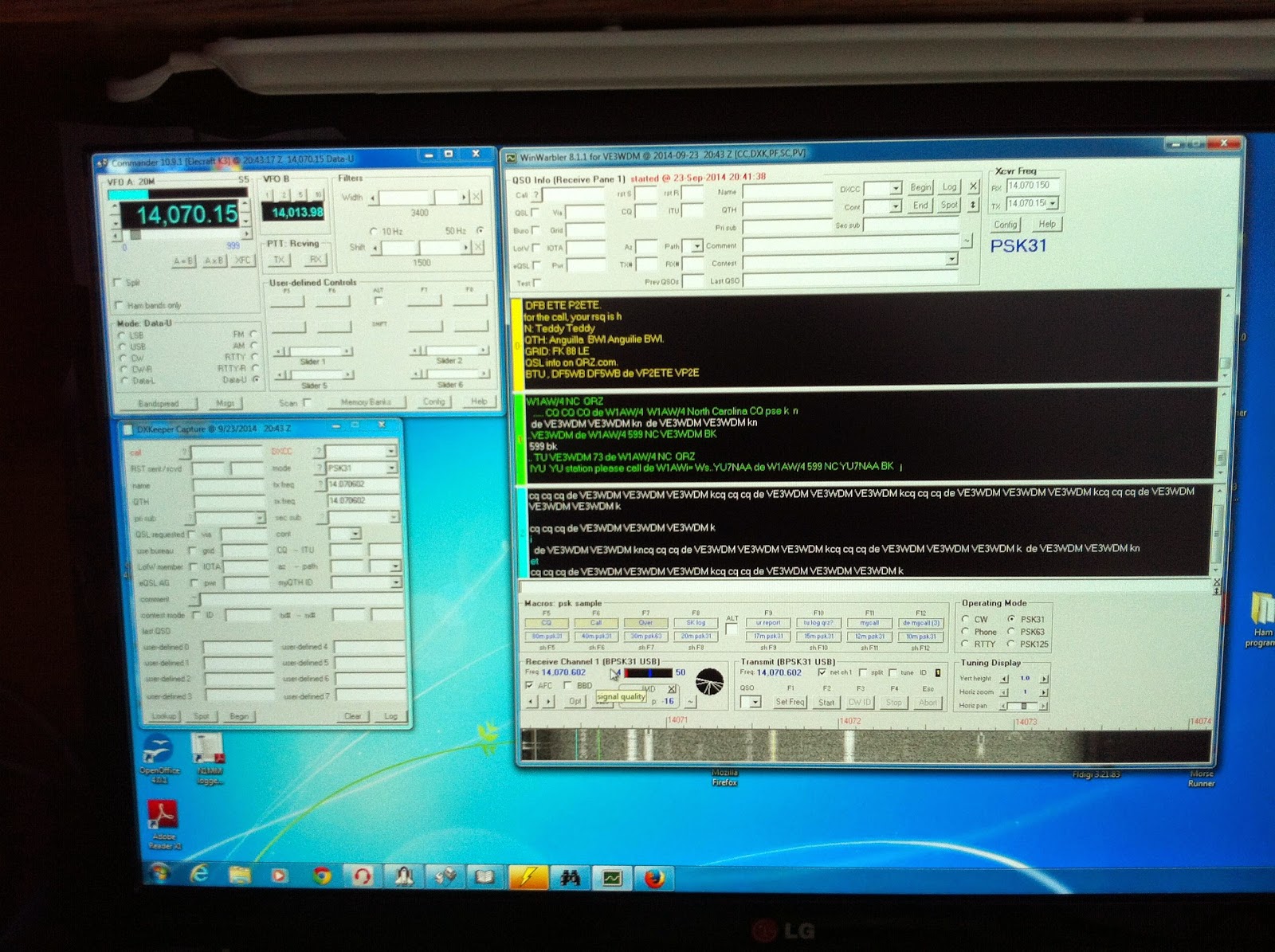 |
| Screen shot |
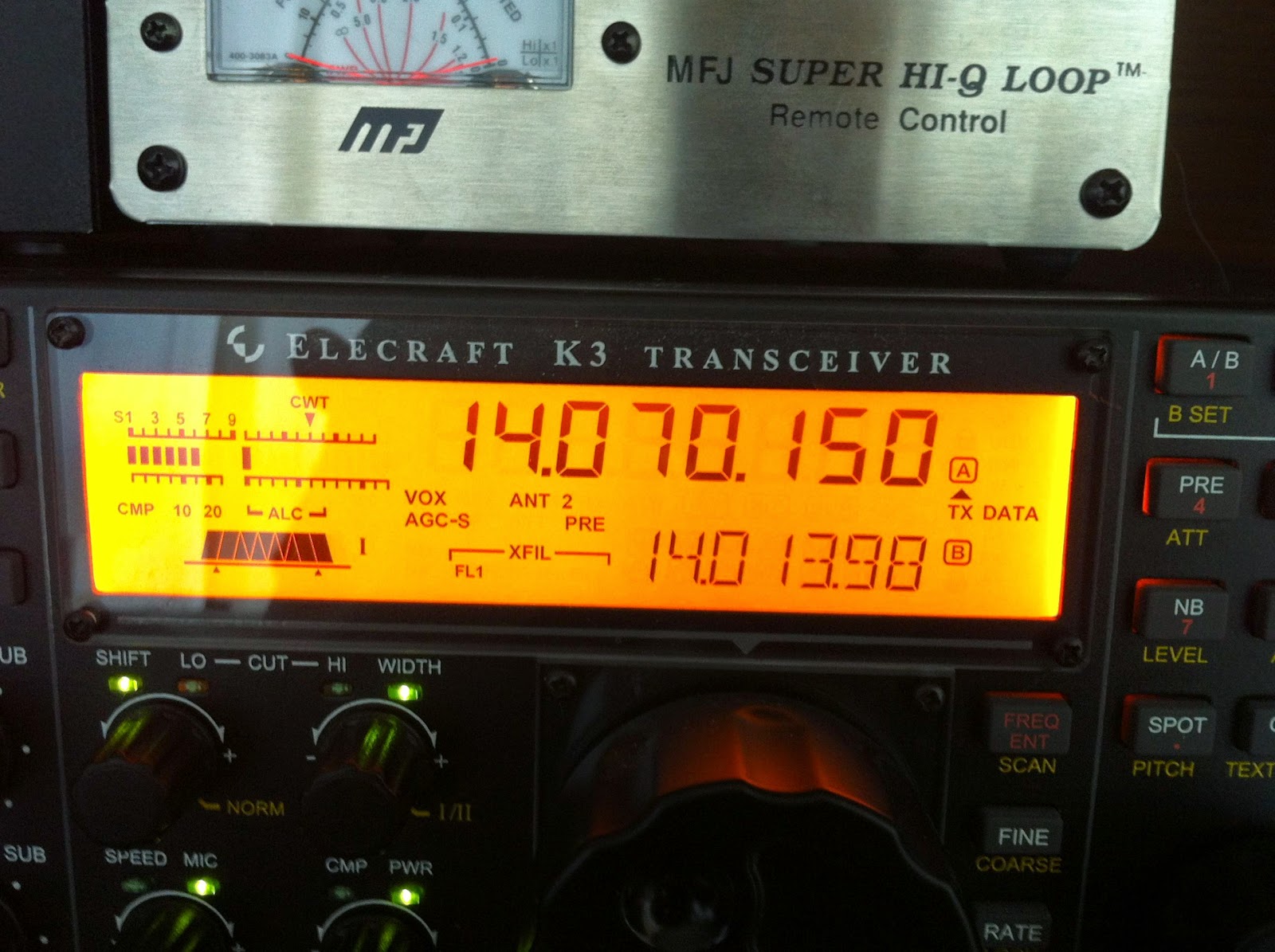 |
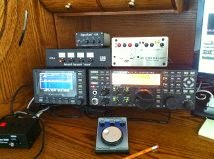
| The K3 all ready to go |
Rig is the Elecraft K3 in DATA A mode set at 5 watts
The sound card interface is the Signalink USB
Software is DXlab's Winwabler
Antenna is the MFJ 1788
Some of the items on the "to do list" are
1. Set the macro's up as they are generic ones right now.
2. Learn more about the Winwabler program.
Making your radio time interesting is what counts!
Take time to listen it pays off.
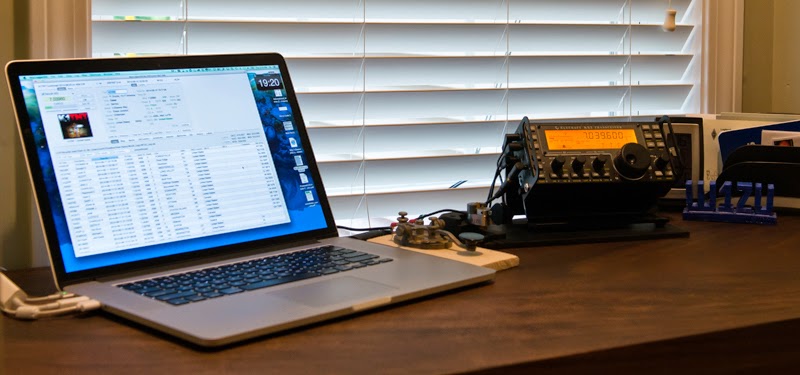 |
| W1ZU's home setup. |
So you want to play with a Pixie?
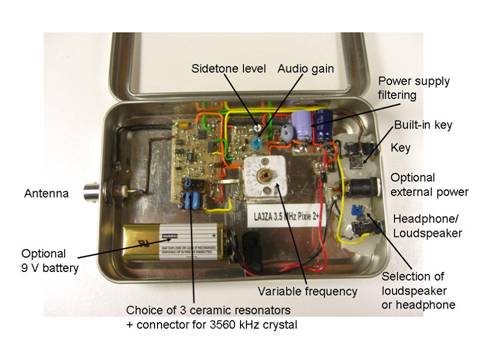 |
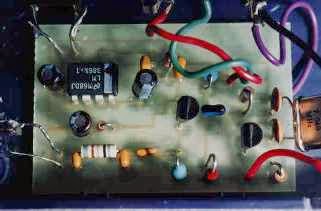
| My own surface mount version of the Pixie2 |
This page provides a guide to Pixie and related kits in a table format. These are simplistic single-band transceivers which are fun to build, yet they perform well enough to be used, although with some effort, for real contacts.
The idea of using the power amplifier transistor as a mixer seems to come from George Burt – GM3OXX – whose five transistor FOXX was described in 1983 in SPRAT. The basic design of the oscillator, PA/mixer and the simple keying has been more or less unchanged since RV3GM – Oleg Borodin – described the four transistor Micro-80 in 1992 in SPRAT. Later the Pixie 2 by WA6BOY replaced two of those transistors with the LM386 audio amplifier (QRPp 1995). Most later versions are variants of these designs.
Foxx | |
 Foxx-3 kit from Kanga, £29.95 | Incorporates a sidetone oscillator, changeover relay and low-pass filter. Different versions for the 80, 40, 30 or 20 m bands |
Micro-80 | |
 Kit from QRPme, $35.00 | Micro80D. Updated version with choice of high or low impedance headphone, polyvaricon tuning cap and board mounted connectors, 80 m. |
Pixie2 | |
 Kit from HSC Electronic Supply, $14.95 | For 80 and 40 m. Eham review |
 Kit from Kenneke, $29.95 | Includes 80 m crystal |
 Kit from QRPme, $40.00 | Lil Squall Transceiver ][. Several components and the output low pass filter are on sockets. Comes with a crystal for 40 m. |
 Ali Express Ham QRP DIY Kit Shack 40 m, $15.07 | 40 m version. Tuning pot for VXO. |
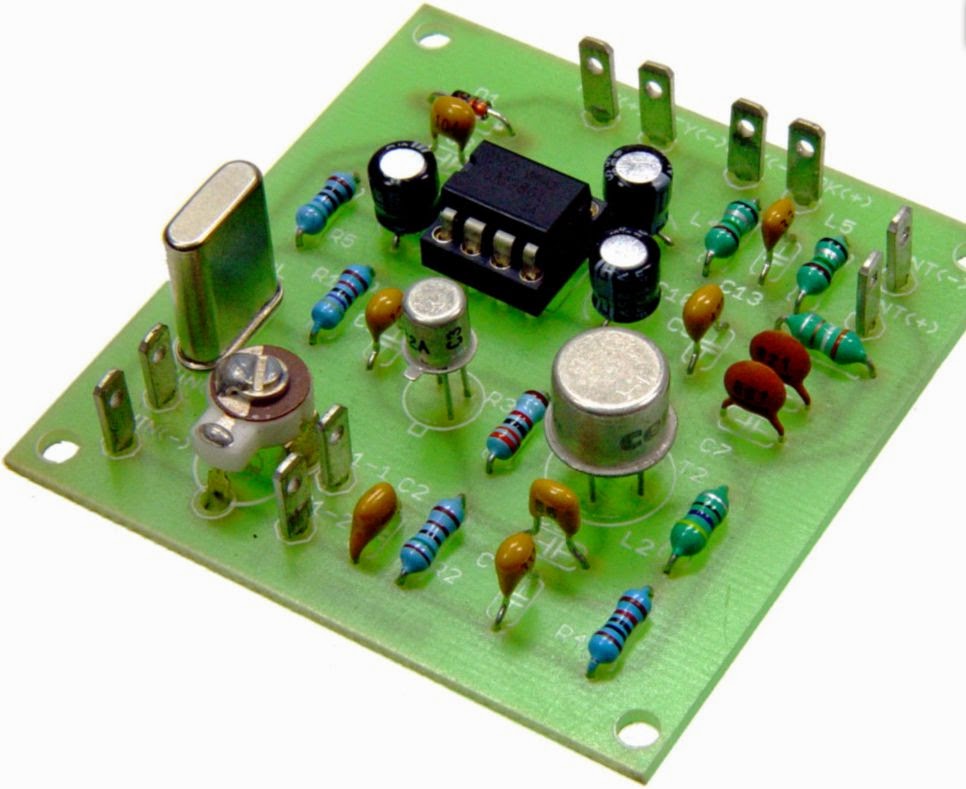 Radi0kit, £22.00 | Enhanced Pixie2 which comes in 80, 40 and 20 m versions. Judging from the PCB layout it has an improved pin 7 muting circuit. |
What can we say to characterize these designs? One the one hand they are very simple to build and get to work. One the other hand they are also simple in the sense that they do not always perform very well. Therefore I don’t think I would recommend them to any novice ham. It takes some understanding of frequency offsets and sidebands in order to make real contacts. But many have had great fun with this minimalist transceiver which in its basic version puts out some 2-300 mW. And it encourages experimentation and modifications. Also, it should be remembered that it isn’t really necessary to get a kit, as the Pixie 2 is quite simple to build from scratch also. I did that myself.
The original designs and many variants and modifications are documented in the Pixie file document of SPRAT. There are many, many more clever modifications out there and I have my share on this blog also. To sort out and link to all the other pages is too daunting a task, so therefore I have focused on kits here. Finally I wouldn’t be surprised if the table is incomplete so I would appreciate comments if you think that something is missing.
The list of projects is huge!
I have been having serious radio withdrawal – I am really itching to get on the air and operate! Unfortunately, life is happening and I have had zero time to operate.
When this happens I usually watch a lot of videos and read blogs. This then leads a big list of “I wanna do that” type projects.
So I thought I would list the top 3 or 4 here and set a goal of getting them done by Christmas:
1. Get a long wire inverted L 9:1 UNUN antenna installed at the house. I have the UNUN built and I have the small gauge “stealthy” wire from the Wire Man – just need to get it up in the trees!
2. Rockmite 40 – I have had this kit along with the Mitybox for several years – just need to get it built.
3. DIY Powerpole Distribution Block – There are some great plans for this here: http://www.qsl.net/wd4bis/connect.htm
4. Magnetic loop antenna with automatic controller. I have the board, just need some components to get the board built up and working – I really want to get this going early this fall!
The list is much longer – but this is the top four I want to get done right now.
What is on your project list?
The list of projects is huge!
I have been having serious radio withdrawal – I am really itching to get on the air and operate! Unfortunately, life is happening and I have had zero time to operate.
When this happens I usually watch a lot of videos and read blogs. This then leads a big list of “I wanna do that” type projects.
So I thought I would list the top 3 or 4 here and set a goal of getting them done by Christmas:
1. Get a long wire inverted L 9:1 UNUN antenna installed at the house. I have the UNUN built and I have the small gauge “stealthy” wire from the Wire Man – just need to get it up in the trees!
2. Rockmite 40 – I have had this kit along with the Mitybox for several years – just need to get it built.
3. DIY Powerpole Distribution Block – There are some great plans for this here: http://www.qsl.net/wd4bis/connect.htm
4. Magnetic loop antenna with automatic controller. I have the board, just need some components to get the board built up and working – I really want to get this going early this fall!
The list is much longer – but this is the top four I want to get done right now.
What is on your project list?













