Archive for the ‘qrp’ Category
 Rock ‘N Radio — QRP Style
 November 20th, 2015 |
  Author:
 Operating QRP
Can mean operating from a "Quiet Restful Place"
I had the day off today and it was a beautiful morning. I decided to spend part of it at Lake Wheeler Park in Raleigh, NC operating QRP from a stone bench under a tall oak tree. |
| rock 'n radio |
I threw a line over a tree using a throwing weight. I hit my mark the first time, untied the weight, tied on the end of the antenna, and hoisted the 31 foot end-fed up exactly where I wanted it with the feed point a couple of feet off the ground.
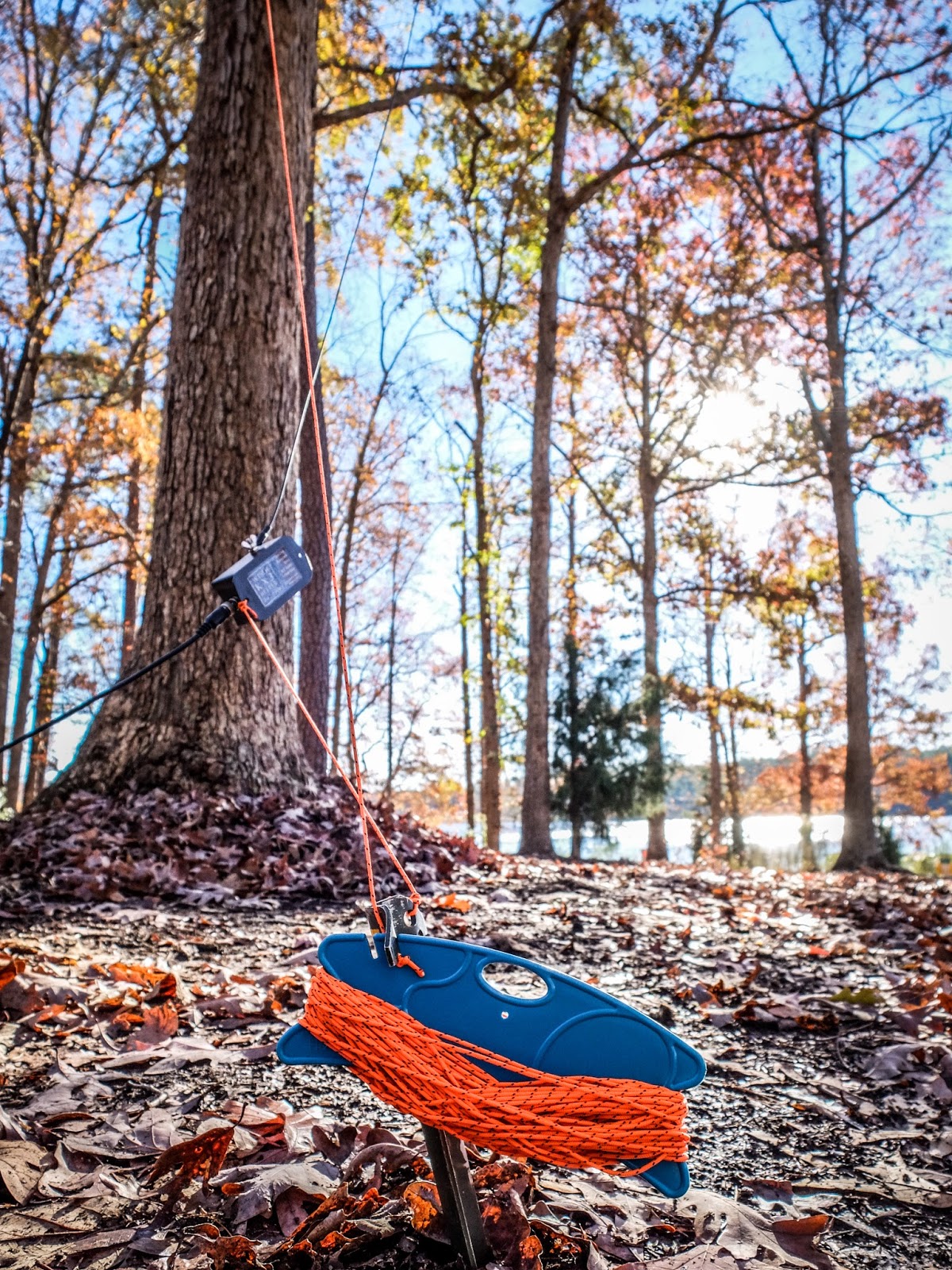 |
| 31 feet of wire end-fed by a 9:1 balun. A kite string winder holds the throwing line A metal stake with a bit of rope anchors the balun and the other end of the rope |
 |
| Another view of the end-fed with 9:1 balun, stake and coax |
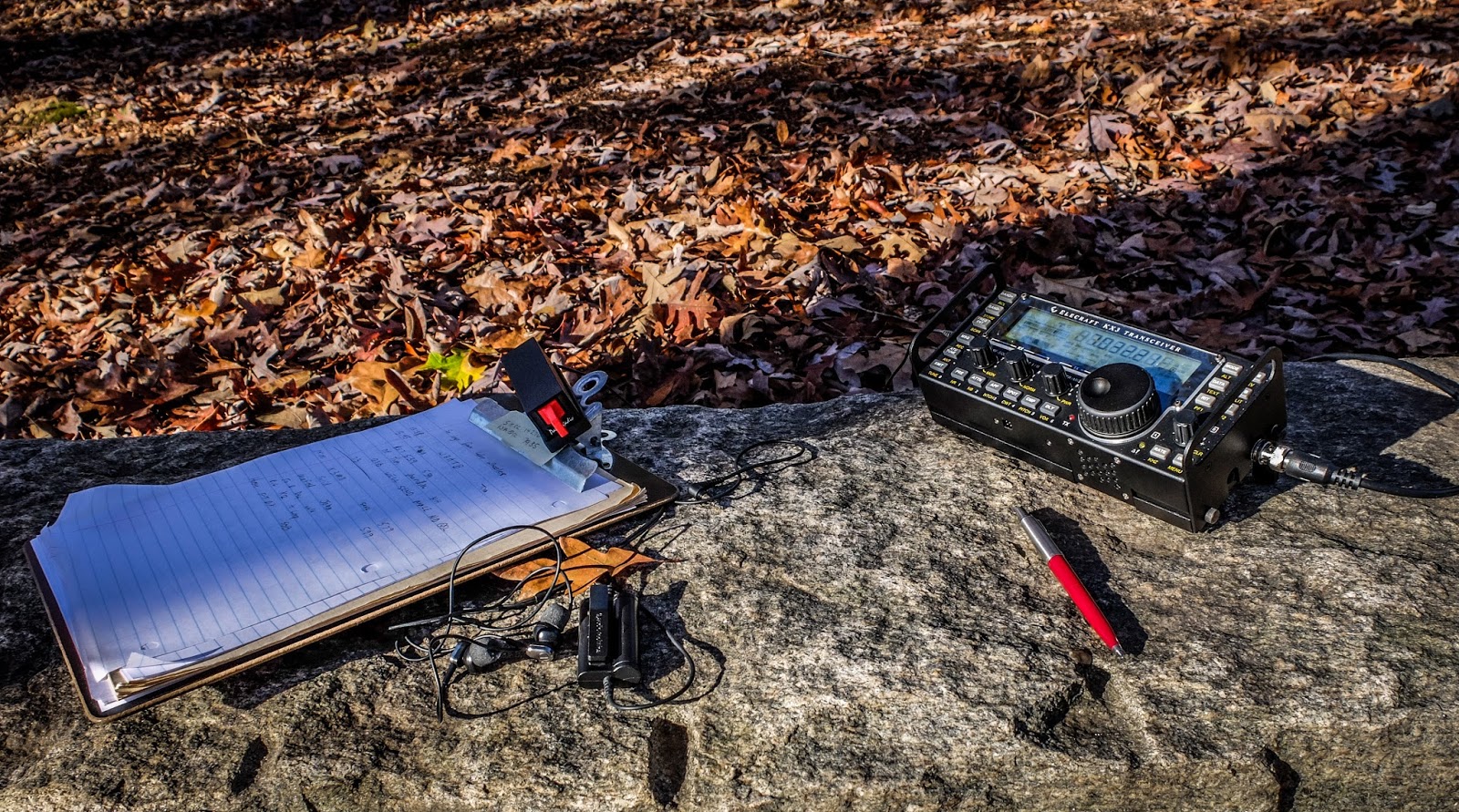 |
| QRP operating position |
I called CQ on the 20m QRP calling frequency (14.060) and had a brief QSO with a lot of QSB (fading). I didn't hear much activity that early in the morning on 20m so I dropped down to 40m and worked the QRP calling frequency (7.030) and had my call answered right away. After that QSO another station jumped in there calling for a specific station so I moved on. 40m was busy. Every time I thought I'd found an open frequency someone would jump back in or if I called QRL? I'd get an R R.
The Palm key has a clip-on, magnetic base which I use to temporarily attach it to my clipboard when I'm not sending. When I'm ready to send I simply pull it off the clipboard and hold it in my left hand. As I noted in an earlier review of the Palm Single Paddle it can be used as a straight key if you turn it on its side. The long ragchew I had on 30m was with a gentlemen who sent me his SKCC number in the first exchange so I quickly turned off the electronic keyer in the KX3's and turned the Palm Single on its side. That station sent me a nice compliment on my straight key FIST; so the little Palm Single key can serve duty as a paddle into a keyer or (in a pinch) as a straight key. I far prefer to use my Kent Hand Key if I'm operating manual key but it's too big to bring along for portable operations and I can't quite picture myself trying to hold onto the giant Kent Hand Key with one hand whilst operating it with the other like I can the Palm Single.
 |
| The Palm Single Paddle works great in portable operating positions |
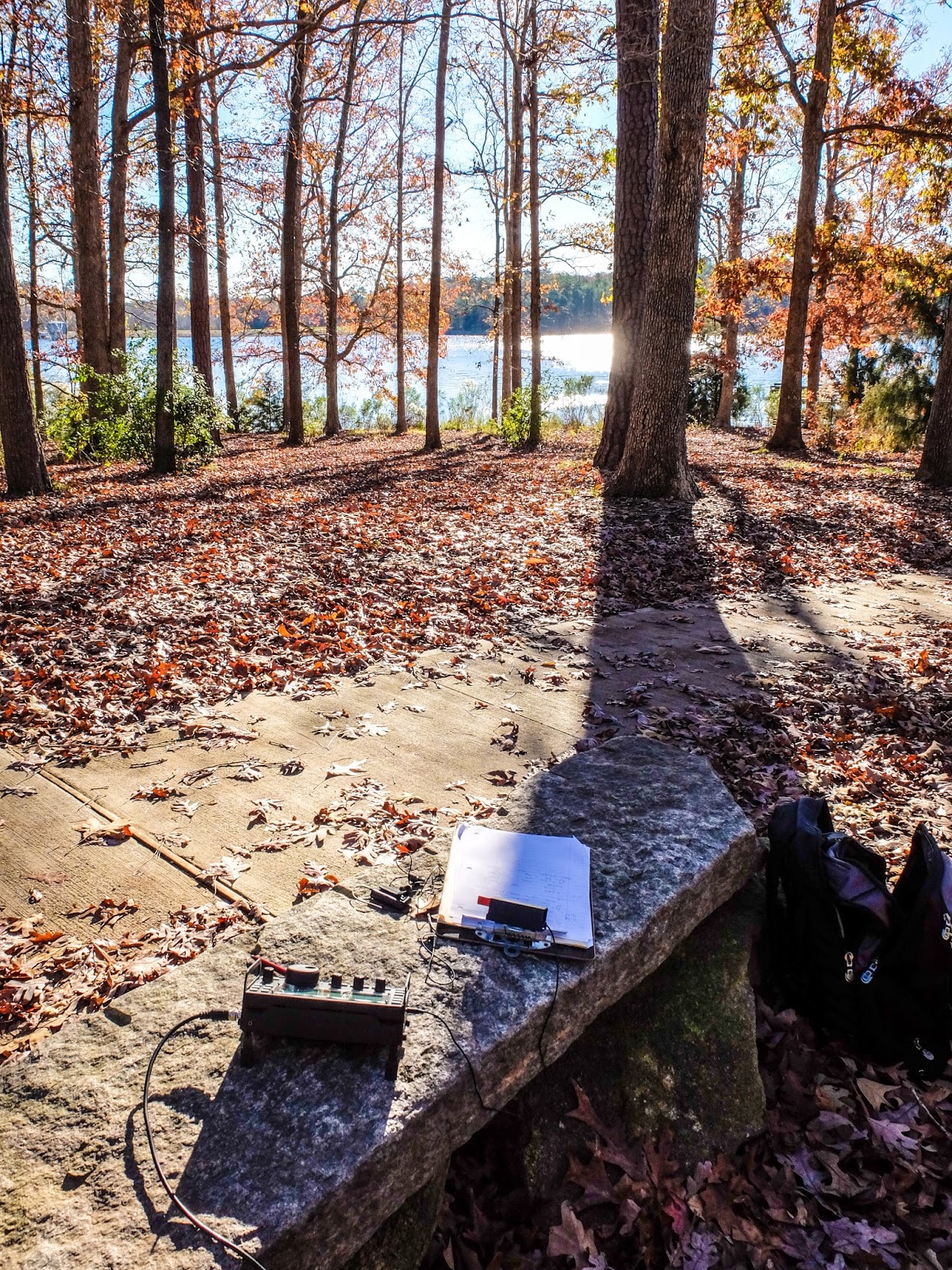 |
| What could be finer than to be in Carolina in the Mooo-oor-ning |
 |
| Enjoying the last nice days of our Fall... birds singing and morse code beeping |
What is the big deal with amateur radio? What is it that you hear? (Part 1)

Shortwave radio has been a source for great sci-fi plots, spy intrigue novels, movies, and so on, since radio first became a “thing.” But, what is the big deal, really? What is it that amateur radio operators listen to?
In this video, I share some of the types of signals one might hear on the high frequencies (also known as shortwave or HF bands). This is the first video in an on-going series introducing amateur radio to the interested hobbyist, prepper, and informed citizen.
I often am asked by preppers, makers, and other hobbyists, who’ve not yet been introduced to the world of amateur radio and shortwave radio: “Just what do you amateur radio operators hear, on the amateur radio shortwave bands?”
To begin answering that question, I’ve taken a few moments on video, to share from my perspective, a bit about this shortwave radio thing:
Link to video: https://youtu.be/pIVesUzNP2U — please share with your non-ham friends.
From my shortwave website:
Shortwave Radio Listening — listen to the World on a radio, wherever you might be. Shortwave Radio is similar to the local AM Broadcast Band on Mediumwave (MW) that you can hear on a regular “AM Radio” receiver, except that shortwave signals travel globally, depending on the time of day, time of year, and space weather conditions.
The International Shortwave Broadcasters transmit their signals in various bands of shortwave radio spectrum, found in the 2.3 MHz to 30.0 MHz range. You might think that you need expensive equipment to receive these international broadcasts, but you don’t! Unlike new Satellite services, Shortwave Radio (which has been around since the beginning of the radio era) can work anywhere with very affordable radio equipment. All that you need to hear these signals from around the World is a radio which can receive frequencies in the shortwave bands. Such radios can be very affordable. Of course, you get what you pay for; if you find that this hobby sparks your interest, you might consider more advanced radio equipment. But you would be surprised by how much you can hear with entry-level shortwave receivers. (You’ll see some of these radios on this page).
You do not need a special antenna, though the better the antenna used, the better you can hear weaker stations. You can use the telescopic antenna found on many of the portable shortwave radios now available. However, for reception of more exotic international broadcasts, you should attach a length of wire to your radio’s antenna or antenna jack.
WSPRing on 30M
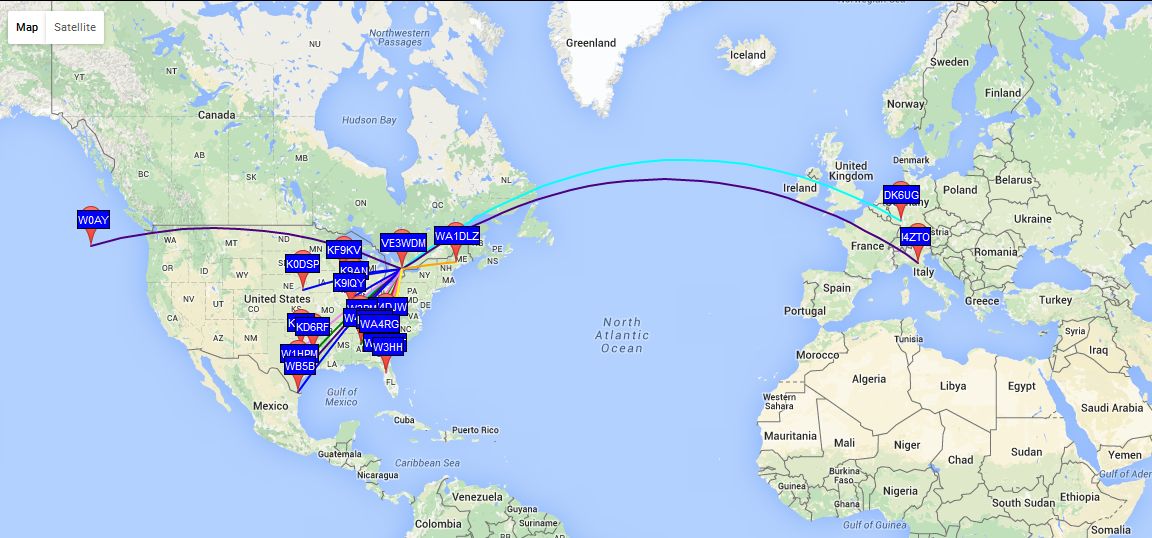 |
| 30m WSPRing |
The MFJ 1788 is on the air and a contact in log!
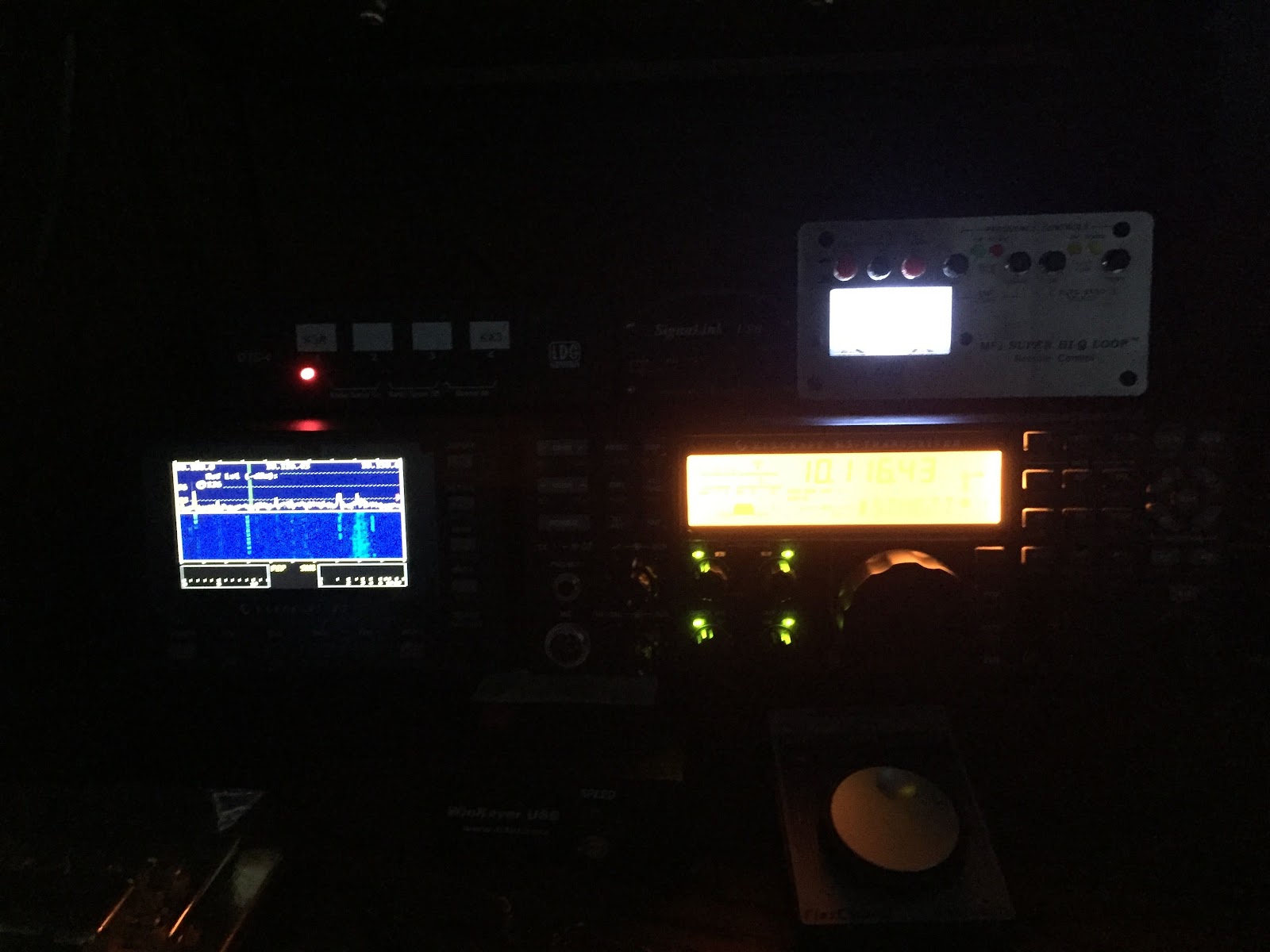 |
| Not the best shot but it's an evening shot |
The Perception of Power
Power... or lack thereof
SX-2000 HF (to 4m) QRP transceiver and SunSDR-MB1
This was news to me. I have never seen this before although the post on the website below was earlier this summer. It looks like a poor man’s IC7300 and covers the same range but at QRP power levels. It is an Italian transceiver. Personally I prefer the ICOM. I have no idea about price. It looks like a “back shed job” to me.
See http://www.cqdx.ru/ham/qro-qrp/qrp-hf-transceiver-with-touch-screen/ .
On the same website are details of the Sun SDR-MB1 assembled prototype, which is another rig I have never heard about! There is a video of this at https://youtu.be/SIfvVUw0774 . This rig looks more professional and the YouTube link quotes a price of $5500. This was 3 months ago.

QRP commercial rigs
The FT817 successor may be announced at Dayton next year. If correct, this is about 3-4 years too late.
The ICOM IC703 is not being replaced by the 10W version of the IC7300 outside of Japan. Personally, I do not understand the major Japanese manufacturers. Surely there is a worldwide demand for a 5-10W SDR based, radio?
It seems the huge world-wide QRP market is not being well addressed by the Japanese. It is their loss. I think they are all nuts!
Ten-Tec seem to be struggling with their latest Argonaut judging by recent price cuts. See http://www.rkrdesignsllc.com/products/transceivers-receivers/ten-tec-model-539-argonaut-vi-qrp-1-10-watt-transceiver/ .
No, personally I think we are seeing QRPers getting a rough deal of late.














