Archive for the ‘ham radio’ Category
 Hey, My Yaesu Beeps When I Transmit!
 November 15th, 2013 |
  Author:
 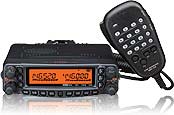 I own a variety of Yaesu ham radio transceivers and like them a lot. Except for that one little annoying feature that the FM rigs have: WIRES.
About once every two weeks, one of the local radio hams gets on the repeater with a DTMF beep at the start of every transmission. We’ve come to expect it now, so the first question to the ham is “are you by chance using a Yaesu radio?” They always say “yes” and then we talk them through the process of turning off the WIRES “feature.”
The WIRES function sends a DTMF signal at the start of every transmission for use with Yaesu’s version of internet repeater linking (which is not used much in the US). The problem is that it is very easy to bump the wrong button on your radio and accidently get it into this mode. This means that this is mostly a nuisance feature in the US.
I recently came across a way to disable this feature on your Yaesu radio so that it won’t sent the DTMF tone even if you activate it by accident. Basically, you set the WIRES tone to be empty, so nothing is transmitted if you accidentally turn on WIRES. I did not come up with this clever hack…in fact, I am not sure who put this together. (If you do, let me know and I’ll give them credit.) Take a look at this pdf file and follow the instructions to de-WIRES your radio: Turn Off Wires
73, Bob K0NR
When All Else Fails or SHTF?
 A while back, Dan KB6NU noted the increasing number of preppers getting involved in ham radio. Preppers are people who are actively preparing for emergencies, natural disasters and disruption of social order. In our Technician license course, we’ve noticed an increase in the number of people identifying themselves as preppers.
Of course, amateur (ham) radio has a long history of emergency service and disaster preparedness. FCC Rules Part 97 says this is one of the purposes of the Amateur Radio Service: Recognition and enhancement of the value of the amateur service to the public as a voluntary noncommercial communication service, particularly with respect to providing emergency communications.
Historically, most radio amateurs approach the hobby from a technical or radio operating point of view, then find ways to apply it to emergency preparedness. The prepper tends to work the equation the other way…starting with the desire to have emergency communication capability and then working to get an amateur radio license.
Many prepper sites just give a quick overview of ham radio, positioning it with GMRS, FRS and CB radio. See Prepper Communications. Articles like this one give a more complete introduction to ham radio: The Skinny On Ham: Getting Licensed. This one, too: Every Prepper Should Be A Ham.
You may run into some creative acronyms on these prepper sites:
SHTF = ”Stuff” Hits The Fan
EOTW = End Of The World
TEOTWAWKI = The End Of The World As We Know It
YOYO – You’re On Your Own
There are web sites devoted to prepping with radio communications:
Prepared Ham
RadioSurvivalist.com
RadioMaster Reports
Many of these sites have useful information that may stretch your thinking on “being prepared.” Of course, some of these prepper sites (not the ones listed above) are a bit over the top and may have resulted from people going off their meds. Draw your own conclusions.
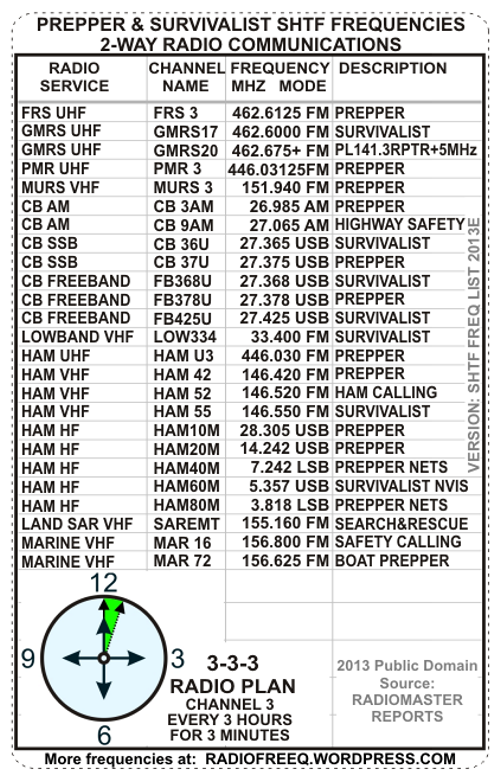
I’ve noticed a pattern of people creating prepper frequency lists, such as the one shown below. (Note that some of the ham frequencies listed do not conform to generally accepted band plans.) I can see the usefulness of having some assigned frequencies but its not clear to me how they’ll actually get used. I think the challenge for new prepper hams is to think through who they are going to communicate with and for what purpose. It’s also important to get familiar with the equipment and gain experience on the air, so when the EOTW happens you aren’t sitting there reading the radio manual.
Whether you think of emergency communications as “When All Else Fails” or when SHTF, amateur radio is a resilient communication tool.
73, Bob K0NR
Added 7 Dec 2013: I came across this video that does a good job of introducing ham radio to the prepper crowd: So you want a ham radio for emergency communications!
MGM 1939 film: Radio Hams / More than a Hobby
“Radio Hams” do more than play with their machines. They are also invaluable in relaying vital information during times of tragedy and disaster.
Here is a mildly entertaining look at radio hams, those amateurs sending and receiving coded messages during the late thirties when films first dealt with the subject of “radio hams.” In this case, the ham operators manage to be helpful during situations of stress, using their abilities with code to help someone in distress and to seek aid for pilots flying a missing plane.
The humorous ending has the family gathered around the radio listening to someone speaking Chinese while the narrator tells us how impressed the family was to be hearing someone across the world on their radio set.
http://www.youtube.com/watch?v=bZi7LiPNMt8
This little vintage film, a rather more serious film than many of Pete Smith’s other presentations, takes a look at how ham radios can become priceless aids during emergencies. The two stories shown, one dealing with sickness, the other with a missing plane, are bookended by a humorous look at a typical three-generation family’s fascination with their ham radio.
Of course, amateur radio, or “ham radio”, is alive and doing very well, in our modern times. Using satellites, moon-bounce communications, repeater networks, as well as shortwave, mediumwave, and longwave telecommunications technology, amateur radio continues to provide emergency services in times of need, from hurricanes, tornadoes, earthquakes, and even during such times as the infamous 9/11 atrocity. But, amateur radio also breeds invention and experimentation, always at the cutting edge of science. It is a hobby worth investigating, having room for a wide-range of interests. Preppers, science lovers, experimenters, and those with a passion to meet people from all over the world by way of radio waves, all together make up the radio hobby of amateur radio.
Clayton Moore, later famous as the Lone Ranger, appears uncredited as a ship radio operator.
Directed by Felix E. Feist
Writing Credits Buddy Adler (screenplay) (as E. Maurice Adler)
Cast (in alphabetical order)
Barbara Bedford – Mrs. Crane (uncredited)
Eleanor Counts – Miss Mulligan, Jimmy’s Sister (uncredited)
Jack Daley – Pa Mulligan (uncredited)
Robert Homans – Lighthouse Keeper (uncredited)
Clayton Moore – Ship Radio Operator (uncredited)
Alonzo Price – Clyde DeVinna (uncredited)
Jason Robards Sr. – Pilot in Distress (uncredited)
Pete Smith – Narrator (voice) (uncredited)
Harry Strang – Man in Montage (uncredited)
Phillip Terry – Co-Pilot (uncredited)
Dorothy Vaughan – Ma Mulligan (uncredited)
Produced by Pete Smith – producer (uncredited)
Music by David Snell (uncredited)
Cinematography by Robert Pittack
Film Editing by Philip W. Anderson (as Philip Anderson)
Music Department Jack Virgil – orchestrator (uncredited)
Other crew Douglas Smith – technical advisor
According to https://archive.org/details/wwIIarchive this film is in the Public Domain.
Creative Commons copyright.
1920 film: How the Telephone Talks (A Silent Film)
This is for you vintage science film buffs: here is a circa 1920 film: How the Telephone Talks (A Silent Film).
This is an educational film from 1920 that explained the “modern” telephone. The concepts are still relevant to today’s modern versions, including the cell phone, which is both radio and telephone.
From Wiki:
A telephone, or phone, is a telecommunications device that permits two or more users to conduct a conversation when they are not in the same vicinity of each other to be heard directly. A telephone converts sound, typically and most efficiently the human voice, into electronic signals suitable for transmission via cables or other transmission media over long distances, and replays such signals simultaneously in audible form to its user. The word telephone has been adapted into the vocabulary of many languages. It is derived from the Greek: τῆλε, tēle, far and φωνή, phōnē, voice, together meaning distant voice.
First patented in 1876 by Alexander Graham Bell and further developed by many others, the telephone was the first device in history that enabled people to talk directly with each other across large distances. Telephones became rapidly indispensable to businesses, government, and households, and are today some of the most widely used small appliances.
The essential elements of a telephone are a microphone (transmitter) to speak into and an earphone (receiver) which reproduces the voice of the distant person. In addition, most telephones contain a ringer which produces a sound to announce an incoming telephone call, and a dial used to enter a telephone number when initiating a call to another telephone. Until approximately the 1970s most telephones used a rotary dial, which was superseded by the modern Touch-Tone push-button dial, first introduced by AT&T in 1963. The receiver and transmitter are usually built into a handset which is held up to the ear and mouth during conversation. The dial may be located either on the handset, or on a base unit to which the handset is connected by a cord containing wires. The transmitter converts the sound waves to electrical signals which are sent through the telephone network to the receiving phone. The receiving telephone converts the signals into audible sound in the receiver, or sometimes a loudspeaker. Telephones are a duplex communications medium, meaning they allow the people on both ends to talk simultaneously.
A landline telephone is connected by a pair of wires to the telephone network, while a mobile phone, such as a cellular phone, is portable and communicates with the telephone network by radio transmissions. A cordless telephone has a portable handset which communicates by radio transmission with the handset base station which is connected by wire to the telephone network.
The telephone network, consisting of a worldwide net of telephone lines, fiber optic cables, microwave transmission, cellular networks, communications satellites, and undersea telephone cables connected by switching centers, allows any telephone in the world to communicate with any other. Each telephone line has an identifying number called its telephone number. To initiate a telephone call the user enters the other telephone’s number into a numeric keypad on the phone.
Although originally designed for simple voice communications, most modern telephones have many additional capabilities. They may be able to record spoken messages, send and receive text messages, take and display photographs or video, play music, and surf the Internet. A current trend is phones that integrate all mobile communication and computing needs; these are called smartphones.
Solar Plasma Filament Eruption – The Sun – November 6,7 2013
The Sun currently is active, with powerful, complex magnetic structures that have formed a healthy number of sunspots. We are seeing a fair number of x-ray flares, which push the 10.7-cm flux higher than we’ve seen in a while.
Sunspots and flares means better propagation in general, especially on the higher frequencies of the shortwave spectrum. While a flare can cause a short period of “blackout” conditions (especially on the lower frequencies) on the sunlit side of the Earth, such activity is part of the positive activity that ionizes the F-region, providing for DX.
Here’s a movie of one such flare and the release of solar plasma, a release known as a coronal mass ejection (CME): At about midnight, UTC, on 6 November 2013, a moderately-strong M-class flare erupted, with a “beautiful” CME: http://g.nw7us.us/18a0QvI
(Source: SOHO/SDO/NASA)
We will see continued flare activity over the weekend, so expect great conditions on the HF bands, with momentary blackouts. Keep up to the minute on space weather at http://SunSpotWatch.com
73 – de NW7US
Propagation Columnist, CQ Communications Magazine, Popular Communications Magazine
http://NW7US.us
Farewell, Rooster
Many of you have gotten to know Rooster and Peanut, through the videos by Steve WG0AT, the Alpha Goat. Some of you have been fortunate enough to meet the goats in person, which is always a real treat. I blogged about Steve and his goats a number of times, see this posting that highlights one of Steve’s videos.
Today we received the sad news that Rooster has died, a Silent Key in ham radio jargon.

Rooster and Peanut, the most famous SOTA Goats in the entire world
Steve sent this message:
It’s with deep sorrow I have to make this announcement …”Rooster” goat died suddenly last night of unknown causes …his trail buddies will soon be scattering Rooster’s ashes on many SOTA peaks throughout western NA
73, Bob K0NR
Expect Uptick in HF Propagation Even on 10m, This Week
New sunspot region, NOAA Active Sunspot Region Nr. 11890, far left on the solar disc, will produce flares, this week.
The Sun continues to produce sunspots, and this week looks active, too. Expect another uptick of activity on higher HF bands such as 10 meters, as a “new” sunspot region has now rotated into full view. It has a complex magnetic structure, so it could produce moderate and maybe strong x-ray flares. We expect flaring activity to pick up, as a result.

With all of the recent activity, and the continued train of spots, right now, it certainly appears to be a sign of a “second” peak in the cycle. Most cycles exhibit such double peaks. Is this one of them in this current Sunspot Cycle 24?
Enjoy the DX!
73 de NW7US (Your CQ Magazine and Popular Communications Magazine propagation columnist)













