Archive for the ‘ham radio’ Category
 January Special Event – Straight Key Century Club and K3Y/0
 March 10th, 2015 |
  Author:
 All month long, during January 2015, a group of volunteers using the special event callsign, “K3Y” with a slant-region number (i.e., “K3Y/3” or “K3Y/0”), were on the amateur radio HF bands (and some, on six meters). I was one of these volunteers, operating nearly every day of the month for at least one hour, but some times a few hours per day.
“K3Y,” the Straight Key Century Club’s annual January celebration, commemorates the club’s founding in 2006 following the American Radio Relay League’s Straight Key Night. A small group of participants wanted to extend the fun of SKN throughout the year. The SKCC is the result.
For the first three years, the club’s founders used K1Y, K2A, and K3Y as the celebration’s special-event calls. But someone cleverly noticed that a 3 is nothing more than a backwards, curvaceous E. This “KEY” event has operated under the K3Y call ever since.
The on-air party is open to members and non-members alike. It runs from 0000 UTC Jan. 2 through 2359 UTC Jan. 31. It’s a great time to introduce others to the joys of hand-crafted Morse code using straight keys, bugs, and side swipers.
In this video, you can see this operation at my ham radio shack, as I am the control operator of the special event station, “K3Y/0”, during one of the many shifts. “K3Y” is the special event callsign of the Straight Key Century Club (SKCC). The special event operates each January.
In the following video, you can see some of the QSL cards associated with this year’s operation, and then some other QSL cards in my collection.
https://www.youtube.com/watch?v=gOsNjT7OCyc
+ The SKCC website is at http://skccgroup.com
+ The “K3Y” special event page is http://www.skccgroup.com/k3y/index.php
+ My page is at http://NW7US.us
+ My Morse code page is http://cw.hfradio.org
Tubular Bells and VLF interference
 Remember that album from Mike Oldfield? A user on YouTube found out that this album contains a hidden and unintentional CW message.
This was caused by a powerful VLF station located next to the recording studio, which interfered with the recording equipment. Because the signal is very weak nobody ever noticed it — until now.
The video below shows you how to receive VLF signals with nothing else than an antenna plugged into the microphone input of your sound card and SDRSharp to make it visible and audible.
The decoding of the the Tubular Bells signal is shown at 9:54.


2015 SOTA VHF Activity Days
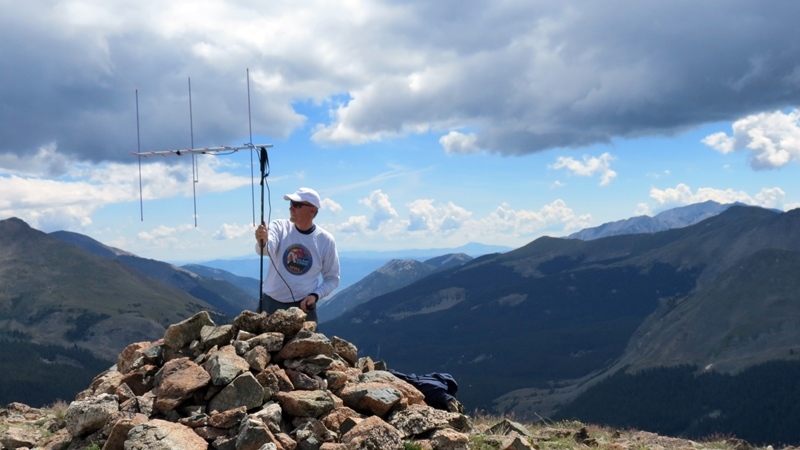 On the topic of operating events for Summits On The Air (SOTA) activations, Guy N7UN suggested focusing on six major events for 2015. Most of these are VHF-oriented but HF activity can also occur on these days.
- Jan 24-26: ARRL Jan VHF Contest + NA SOTA Winter Activity Weekend
(oops, I guess we already missed that one) - Apr 18-19: North America SOTA Spring Activity Weekend
- Jun 13-15: ARRL June VHF Contest + NA SOTA Summer Activity Weekend
- Jul 18-19: CQ WW VHF Contest + optional for SOTA
- Aug 1-2: Colorado 14er Event + NA SOTA Rocky Mtn Rendezvous + W7 SOTA Activity Weekend + ARRL UHF Contest
- Sept 12-14: ARRL Sept VHF Contest + NA SOTA Fall Activity Weekend
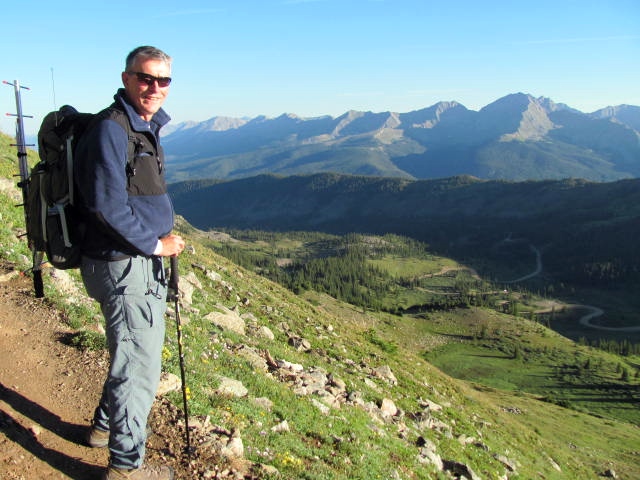 Of course, any day is a good day for SOTA activity. I also think six weekends are a great way to focus our operating activity and create S2S (summit to summit) radio contacts. The August 1-2 weekend looks to be the alignment of the planets with four events happening on that weekend. Early August usually offers excellent conditions for hiking the highest peaks in Colorado, so come on out and play.
For more info on VHF SOTA, see How To Do a VHF SOTA Activation.
Get off the couch, put on your hiking boots, grab your backpack, grab your radio but most important: get on the air!
73, Bob K0NR
The post 2015 SOTA VHF Activity Days appeared first on The KØNR Radio Site.
Nice.
 Without much (if any) advertising the Google+ ‘Chinese Ham Radio Equipment‘ community reached a 1000 members today. I intentionally made the community public, so there’s no need for a Google account in order to read there.
The downside of a community becoming larger is spam. Some of it is captured by Google itself and kept in a moderation queue, but some of it slips through and has to be deleted by the moderators. Because the moderators live in different time zones, spam never lives long.
What I still miss a bit there is the interactive part. If the community would be just another URL with the same content, it’s basically pointless. Questions about Chinese ham radio? Ask there, there’s a lot of knowledge and experience there.
Also nice: a carton box.
The carton box didn’t waste much time to cover the distance between the USA and Europe, but took almost the same amount of time to travel from Amsterdam Schiphol airport to my QTH — a one hour drive under the most challenging traffic conditions. Customs took their time…


HackRF on Sky Loop Antenna and Talented Balun
Icom IC-7100 firmware update E3
Icom Inc. has published firmware update E3 for the IC-7100 on their global website. This new firmware has been designed to improve RX audio quality.
The following firmware have been updated:
• CPU M to Version 1.04
• DSP I to Version 1.02
 The new firmware can be downloaded here.


What’s All the Fuss About K1N?
If you have been paying any attention to the world of ham radio DX, you have heard about the DXpedition to Navassa Island. According to Wikipedia, Navassa Island is a unorganized, unincorporated territory of the United States. Haiti (just 40 miles to the east) also claims ownership of the island but it appears that the US currently has control. The island is designated as the Navassa National Wildlife Refuge by the US Fish and Wildlife Service and access to the island is severely limited. (There is some interesting reading about the various territories of the US on Wikipedia.)
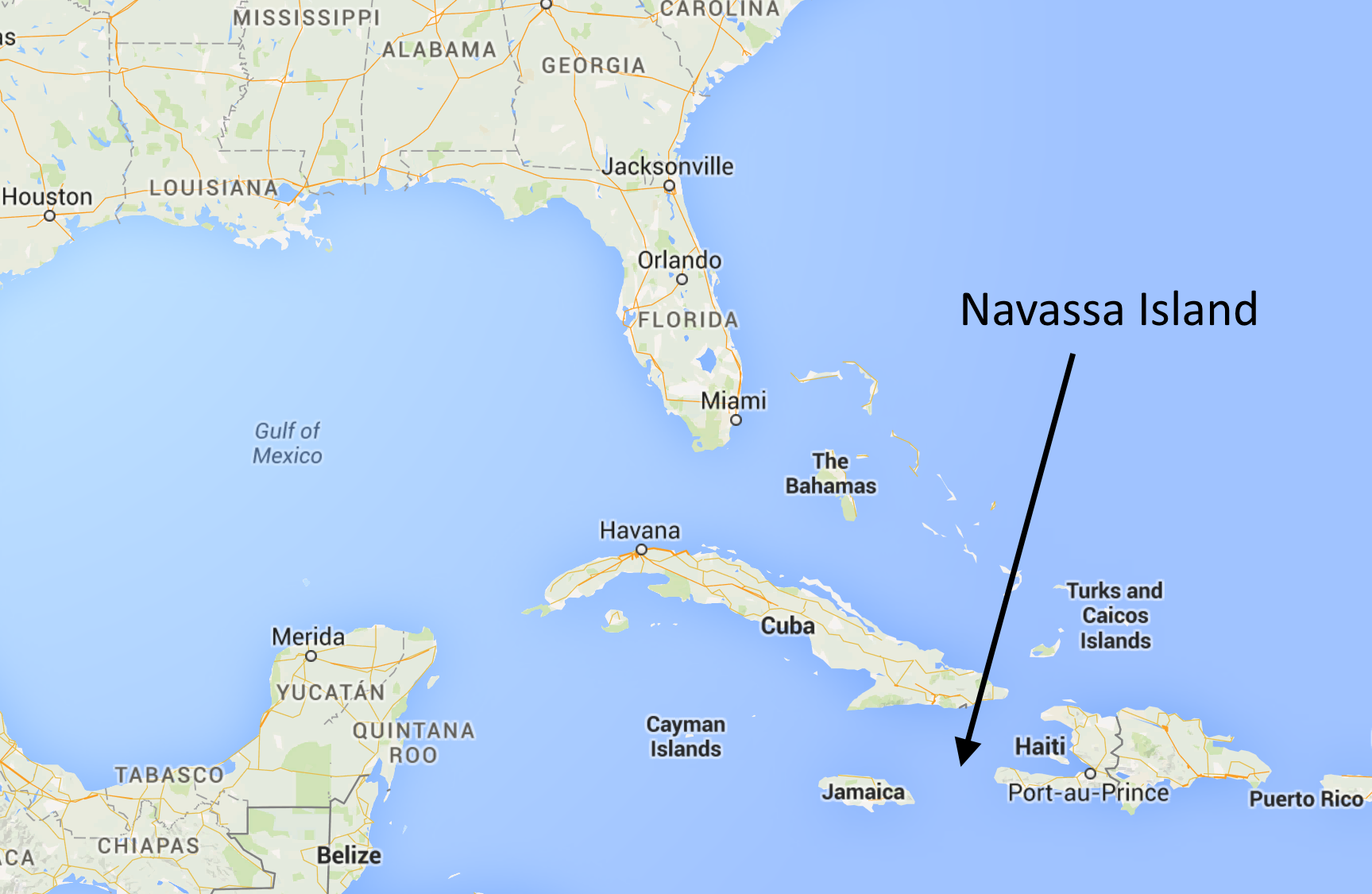 For the purposes of DXCC, Navassa Island is considered a separate country (I mean entity), one that is very difficult to work because no one lives there. Actually, its worse than that because hardly anyone is even allowed to set foot on the island, let alone install a ham station. This means that Navassa is near the top of the list of the most wanted DXCC entities.
An enterprising and persistent group of radio hams managed to get permission to visit the island and put it on the air. The logistical challenge is large, including the use of ships and helicopters to get all of the people, radio gear and supplies on and off the island. As you can imagine this gets quite expensive.
This is where I have to chuckle at the silliness of the situation. Imagine explaining this to someone that drops in from another planet. We have this hobby that involves communicating long distances via electromagnetic waves. One of the pursuits in this hobby is counting up how many countries you have contacted. Well, they aren’t all true independent countries, so we have to keep a special list to keep track of which ones are considered countries. Now, we have this one island that is on the list but we also have this rule that no one is allowed to live on this island. This causes a group of people to assemble a major expedition, costing a great deal of time and treasure, with the sole purpose of enabling electromagnetic communication from the island.
At this point, I should mention I am a slacker DXer. Many years ago, I did take the time to get >100 countries confirmed so that I could claim DXCC but I don’t spend much effort trying to chase new countries. When I heard about the Navassa DXpedition, it did peak my interest because I knew it was such a rare opportunity. Who knows when and if I would get another shot at working this country? I also knew the getting enough RF from my station to Navassa would not be very difficult. It is only 2300 miles from Colorado, a slam dunk on 20m, even with my modest 100W to a dipole antenna. Except that there would be 20,000 other hams called at the same time, creating a huge pileup. Which is why I don’t get into chasing rare DX. While I love the challenge of bouncing my signal off the ionosphere to reach distant locations, I don’t groove on the pile up that normally ensues. That quickly turns into a contest of who has the biggest signal (size does matter) and who is most adapt at getting the attention of the DX station.
About the time that K1N started operating from the island, I was out of town on business. I began to think that working Navassa was not for me. However, I did manage to find some operating time on Feb 14, which turned out to be the last full day of K1N operation. After just a couple of calls, I got through the pileup and worked them on 20m SSB. (I’d like to think that it was superior operating technique but it was probably just dumb luck.)
Thanks to the team that put Navassa Island on the air. (Yes, I did send in a small donation to help the cause.) From what I experienced, this DXpedition was very efficient and well run. Take a look at the interview with one of the participants, Glenn W0GJ, who had some interesting comments about the experience.
73, Bob K0NR
The post What’s All the Fuss About K1N? appeared first on The KØNR Radio Site.













