Archive for the ‘ham radio’ Category
 Winter Assault on Mt Herman (W0C/FR-063)
 January 1st, 2016 |
  Author:
 On the last day of the year, it seemed like a good idea to get in one more SOTA activation. It turns out that I had not been up Mt Herman (W0C/FR-063) all year, even though it’s close by. See this page for the trail description. Joyce KØJJW and I decided to hike up in the morning, reaching the summit around 11 AM local time. This was my third SOTA activation of Mt Herman, but I’ve operated from there many more times in various VHF contests (back before SOTA was a thing in Colorado).
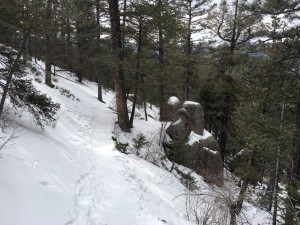
Winter conditions on Mount Herman trail.
The road to the trailhead was in good condition but snowpacked and icy. This road is not plowed during the winter but it is often passable with a decent 4WD vehicle. Today, you could make it to the trailhead with 2WD and some careful driving. The trail conditions were typical for winter time: almost completely covered in snow with a few bare spots showing here and there. The trail was packed powder and not particularly icy. Still, we appreciated having traction devices on our boots. This trail can be downright treacherous when it ices up, so traction devices (Yaktrax, Microspikes, etc.) are highly recommended. Trekking poles can be helpful, too.
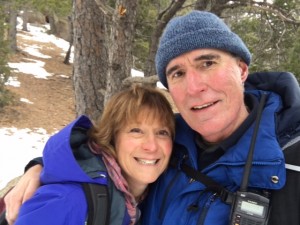
Joyce K0JJW and Bob K0NR on the trail.
Once at the summit, I used my Yaesu FT-60 handheld radio and a half-wave vertical antenna to work people on 146.52 MHz. Having notified a number of people that I would be on the air, I actually had a bit of a pile up on 2m fm. In short order, I worked KE5QNG, WA6MM, KH7AL, WG0AT, W7AWH, K9MAP, K0JQZ, K9DBX, W0STU, KD0MFO, WB0ROK, KD0VHD and KL7IZW. Best DX was about 50 miles with W7AWH in Pueblo West. Thanks to everyone that got on the air to work me.
The weather was cold, about 15 deg F, so we didn’t stay too long on the summit and headed back down the trail. OK, maybe “winter assault” is a bit of an exaggeration. Let’s call it a fun hike in cold weather.
73, Bob K0NR
Other postings on SOTA activation of Mt Herman:
Soggy Mount Herman SOTA Activation (W0C/FR-063)
Mt Herman: SOTA plus VHF Contest
The post Winter Assault on Mt Herman (W0C/FR-063) appeared first on The KØNR Radio Site.
Danger in Calm Seas
It’s tempting to say that amateur radio is about to close the book on its best year ever.
The number of licensees is up, attendance at Dayton Hamvention was up, participation in contests and other on-the-air operating events is up, the number of ARRL members is up too. The League has spent much of the year promoting the Amateur Radio Parity Act in Washington and is seeing real progress on that front.
When it comes to publicity, ham radio is HOT. Not a day goes by without a news item about our activities appearing in major publications — we’ve finally figure out how to proselytize our service!
Yes, it’s been a very good year for ham radio and it’s certainly nice to savor this moment…
There. Enough.
Now let’s look at the work that lies ahead in the New Year…
Amateur radio has weathered all kinds of storms, and there seems no immediate threat to our service. Of course, that might have been said by almost any US ham radio enthusiast on December 6, 1941 too. Still, our position seems as secure as it can as we face another year. But just like owning a home, our hobby requires constant maintenance and attention if we want it to be a secure dwelling that lasts a long time.
There’s always room for improvement, but I’ve compiled here a list of just three things that I believe to be the most vexing to the amateur radio service. These three things present a clear and present danger to our continued growth and enjoyment of the radio hobby.
Intentional Interference to DXpeditions
Whether you enjoy it or not, DXing is the crown jewel of amateur radio. There’s nothing else that we do that captures the imagination of fellow hobbyists and the unwashed masses, the way a DXpedition can. The human spirit craves adventure, like climbing into a boat to cross dangerous stretches of ocean only to arrive at some of the most remote and inhospitable places on the planet, for the sole purpose of handing out contacts to home-bound hams half a world away.
It is exhilaration squared!
But sadly, there are a few around the globe who derive pleasure from interfering with the activities from these exotic locales. And it’s enough of a problem to erode the patience of even stalwart DXers to continue the practice. After all, major DXpeditions require untold hours of planning and preparation. Large sums of money must be raised and passage on planes and boats booked. Permission must be obtained from whatever country pretends to be in charge of some rock in the ocean. And having cleared those hurtles and being completely at the mercy of HF propagation, to beat all those odds only to be foiled by some idiot intent on jamming the operation — who wouldn’t throw in the towel?
With no hope of convincing all of the mentally disturbed people around the planet who own transmitters to cut it out, the big operations are turning to technology for a solution. Maybe it will work or maybe it will become such a hassle that we all just give up in despair?
This is a big problem not only because we could lose an integral activity inside the hobby, but if a handful of radio terrorists can so easily ruin a DXpedition, then it’s fair to question the value of our service during an actual emergency.
And yes, these same mentally ill terrorists jam those communications too.
We’re Losing Ground in the Brain Game
Life on this planet is driven by technology yet shockingly few of its inhabitants have a clue about how anything works. I’m purposely trying to avoid the phrase, “the dumbing down of amateur radio”, because it might offend, but I believe it captures the essence of a festering problem. Our hobby is based on radio which in turn, is based on electronics. The days of new radio discoveries made by teenage radio hams burning the midnight oil in their basement laboratories is long past. But there needs to be at least a modicum of knowledge to keep this thing moving forward.
I don’t believe this trend was caused by changes in amateur radio licensing methodology. Eliminating the code requirement didn’t suddenly make people ignorant. Rather, it mirrors the trend of the general populace who now carry more technology in their shirt pocket than we took to the Moon in 1969 and yet have no clue how any of it works — or harbor any interest in finding out.
Fortunately, radio has advanced to the point where high-quality equipment can be purchased ready to use. We no longer have to build our stations from parts salvaged from a junked television chassis. Not all of us will have the knowledge or wizardry to design advanced electronic circuits or develop cutting edge software. But all of us have the ability to understand antennas, radio propagation, to learn how to properly check into a net, pass traffic, or prepare for emergency communications.
If the sum of your radio knowledge is how to work the push-to-talk button and chew the fat with your buddies, you might have an amateur radio license, but you’re not a radio ham.
Local clubs could take the lead here. We need a “no ham left behind” training policy. It is virtually impossible to run out of ideas for club meetings. Sessions on how to build a dipole, soldering, how and when to best use radio filters, repairing a rotor, working a satellite with a handheld, how to call CQ, how to work DX — including a lesson on split operation. The list is endless once you fully buy into the notion that every radio ham needs to know a hundred things and needs to be curious enough to learn a thousand more.
It’s no coincidence that Apple has become the most valuable corporation on the planet by selling high-tech gadgets that “just work”. That attitude may work (for a season) in the outside world, but the contagion of not knowing and not caring to learn technical things is a certain slow death for amateur radio.
Declining Activity and Interest
I’ve saved our biggest problem for last. While amateur radio licensing may be on the upswing in the United States, interest in our hobby continues to wane. We’ve gotten really good at getting “them” in the door, but we’re downright lousy when it comes to inspiring “them” to take advantage of all this hobby offers.
All of us use the excuse of not having ‘enough time’ to do all the things we would like to do. But that’s something of a cop out. The number of hours in a day, week, month or year haven’t changed from one generation to the next. What we choose to do during those hours is subject to change. It’s an attention deficit problem. During those times I’ve become very passionate about a particular activity, I’ve managed to pursue it almost without limit. Admit it, you have too.
Over 700,000 licensees in the FCC database yet only about one-third of those are actually “active”.
350,000 Technician licensees are floating out there yet one of the biggest complaints in all of hamdom is that thousands of repeaters sit silent and unused. When the random stranger does break squelch, no one answers his call.
Full participation isn’t realistic. There are doubtless thousands who continue to hold a license yet now reside in a nursing home or senior living facility without access to radio. Some are young and busy with career or starting a family. Others have taken time off to pursue a degree or specialized training. Since licenses are issued for ten years with a grace period before cancellation, it wouldn’t be surprising to discover that thousands of licensees are dead — their call signs not yet purged from the database.
Approach the data any way you like, it’s a major problem.
We’re going to have to discover new methods for getting hams motivated and activated. Sorry, the old ways are no longer valid. Just coming up with a new contest, for instance, won’t cut it because our lifestyle arrangements are considerably different in this new century. We’re more mobile, constantly on the move. Few of us under 60 years of age want to be quarantined in a radio “shack” for an entire weekend.
(I predict two-hour sprints will completely replace contest weekends in the coming decade).
The ARRL may have a hit on its hands with the upcoming National Parks on the Air event where they’ve combined the opportunity to operate from the trail with online ‘leaderboards’ to encourage further participation. I don’t know if this was intentional or merely leftover serendipity from their hugely successful Centennial QSO Party but it’s brilliant and we need more like it.
The decline in solar activity certainly won’t help motivate HF operators so we’re going to have to think outside the box. More VHF/UHF activities, six meters, and I’m hopefully optimistic that we will soon see a lot more ham radio activity in space — given the many new planned transponders and even a geo-synchronous payload.
Rekindling the flame for many who have lost interest and become radio inactive won’t be easy but it should become our top priority. In fact, I would suggest that clubs who are too busy cranking out new licensees to focus on this problem — are actually hurting the amateur radio service.
We don’t need more licensees. We need more active hams. Chew on that and see what you can come up with because, we need a solution and we need it fairly soon.

Top Five K0NR Blog Posts from 2015
 As we approach the end of the year, it is fun to look back to see which blog posts were read the most. WordPress has some great tools that make this easy to do.
The most read post on k0nr.com concerns the use of amateur gear outside the ham bands: Can I Use My Ham Radio on Public Safety Frequencies? Actually, I have two blog postings that cover the same topic but one of them is a bit out of date. They both get lots of hits, but I’ve linked to the one that is updated. This is a hot topic as many people still believe strongly that no ham gear is legal on Part 90 frequencies (read through the comments on that post). This is why I took the time to write about it, attempting to explain it and educate the ham community.
The second hottest post was quite controversial: Are Kids the Future of Ham Radio? I got a ton of feedback on this one. People either resonated with its message or just thought it was crazy. I wanted to start a discussion on the topic so I guess it met that objective. Although it is hard to have a discussion when someone says your post is ridiculous. (Disclosure: the original title of the posting was Kids Are Not the Future of Ham Radio, which I later toned down.)
It’s a bit sad that this next post is still so popular: Solving the Baofeng Cable Problem. There is a really frustrating problem with how the Windows driver works with certain USB interface chips. Many folks who went out and bought low cost Baofeng (and other) radios got totally hosed up by this. Hence, the need for and the popularity of this blog posting.
Mobile radio installations are always a bit of an exploration, so I try to share what I learn when doing one. People seem to appreciate this kind of article and often ask followup questions via email. For whatever reason, my 2012 Jeep Wrangler Radio Install post continues to be a popular post on my blog.
One of my classic articles is the FM/VHF Operating Guide, just some basic information to help people get started with FM and repeater operating. I update it from time to time and it gets quite a few hits.
Hey, thanks for stopping by k0nr.com. Best of luck to you in the New Year.
73, Bob K0NR
The post Top Five K0NR Blog Posts from 2015 appeared first on The KØNR Radio Site.
Ten Year Trends in US Ham Licenses
In November 2005, I took a look at some statistics on FCC amateur radio licenses. At that time, I compared the number of ham licenses to such things as the US population, number of cell phones in use and the number of birdwatchers in the US. Interesting stuff.
Ten years later, we can take a look at the how the composition of FCC licenses has changed. The total number of licenses has grown to over 733k, increasing 11% over 10 years. This is a small growth rate, only 1% Compound Annual Growth Rate (CAGR).
| Extra | Advanced | General | Technician | Novice | Total | |
| Nov 2005 | 107,177 | 74,351 | 135,023 | 317,839 | 26,882 | 661,272 |
| 16% | 11% | 20% | 48% | 4% | 100% | |
| Nov 2015 | 139,515 | 48,272 | 172,239 | 362,580 | 10,988 | 733,594 |
| 19% | 7% | 23% | 49% | 1% | 100% | |
| % Change | 30% | -35% | 28% | 14% | -59% | 11% |
Source: www.ah0a.org
No surprise that the number of Advanced and Novice licenses has decreased because the FCC stopped issuing those licenses. Technicians represent about half of the licenses, a proportion that has remained steady over the decade, increasing 1 point. The percent of Generals increased by 3 points, to 23%. Similarly, Extra Class licenses increased by 3 points to 19%.
I reported the ARRL membership as approximately 152k in 2005. The 2014 ARRL Annual Report shows 165,663 members resulting in a growth rate of about 9% over 9 years (not ten). I’ll go ahead and “spot them” another point of growth in the tenth year and call it 10% over ten years. So it seems that ARRL membership is roughly keeping pace with the growth in amateur radio licenses, put probably not gaining on it.
Another question is how are amateur radio licenses keeping pace with US population growth? During the period of 2005 to 2015, the US population grew about 9%, which means that the number of FCC licenses is actually growing slightly faster than the overall population. Source: http://www.worldometers.info/world-population/us-population/
At this point, many of us will ask how many of those FCC license holders are actually active in ham radio. Hard to say…perhaps a topic for another post.
73, Bob K0NR
The post Ten Year Trends in US Ham Licenses appeared first on The KØNR Radio Site.
Get Ready: Month-long Special Event for SKCC, the 2016 K3Y Celebration
Are you ready for the annual, month-long special event by the Straight Key Century Club (SKCC)? The SKCC Group membership is free, and celebrates the longest tradition of amateur radio: Morse code. But, not just any Morse code. The manual creation of Morse code by “straight” keys means no electronic origin, only mechanical. This is a month-long event, during January 2016, modelled after the ARRL Straight Key Night.
Here’s a video that I made showing my activity as the control operator of the special event station, K3Y/0, during one of the many shifts during January (2015). K3Y is the special event callsign of the Straight Key Century Club (SKCC). The special event operates each January. I’ll be doing this again, this coming month, January of 2016.
K3Y, the Straight Key Century Club’s annual January celebration, commemorates the club’s founding in 2006 following the American Radio Relay League’s Straight Key Night. A small group of participants wanted to extend the fun of SKN throughout the year. The SKCC is the result.
For the first three years, the club’s founders used K1Y, K2A, and K3Y as the celebration’s special-event calls. But someone cleverly noticed that a 3 is nothing more than a backwards, curvaceous E. This “KEY” event has operated under the K3Y call ever since.
The on-air party is open to members and non-members alike. It runs from 0000 UTC Jan. 2 through 2359 UTC Jan. 31. It’s a great time to introduce others to the joys of hand-crafted Morse code using straight keys, bugs, and side swipers.
This year, January 2016, we’ll be fielding K3Y operators in each of the 10 US call areas, plus KH6, KL7 and KP4, along with specially scheduled stations in each of six IARU continental regions. Your QSOs with event operators in all these 19 areas will be tabulated in the Statistics section and can be confirmed with a K3Y QSL card and Sweep Certificate.
+ The SKCC website is at http://skccgroup.com
+ The K3Y special event page is http://www.skccgroup.com/k3y/
73 de NW7US
dit dit
Sorry, I’ve Been On 2m FM Again
This recycled post from 2008 is still accurate, but I do have my HF antenna up and recently used it for the CQ WW SSB Contest.
 I was looking out the window the other day and noticed that my wire HF antenna is laying on the ground. Hmmm, probably doesn’t radiate very well that way. But if I put a long, lossy coaxial cable in line, the SWR will still be good at the transmitter. And I can tell my buddies that it works just fine because “I can work everyone that I hear.” (What a dumb thing to say.)
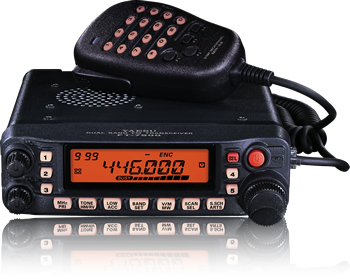
This made me realize that most of my ham radio activity lately has been on 2m FM. Actually it has been on 2m and 70cm FM, as I tend to lump these two activities together. These days, my VHF/UHF FM rigs have at least 146 MHz and 440 MHz in them (FT-7800, FT-8900, etc.). I cruise down the road and flip on the rig, talk to the locals, talk to the XYL, etc. It is just too easy and too convenient. It fits the mobile lifestyle, whether it means operating a mobile rig in the car or grabbing an HT to take along on a business trip. (I used to run HF and SSB VHF mobile but found that the rigs were rarely used, so I removed the gear from my vehicle.)
Of course, I need to apologize to the rest of the ham community for this failure to act according to accepted social norms. You know how it is…Real Hams operate HF, weak-signal VHF, microwaves, etc……almost anything that is not 2m FM. Every so often I hear that comment about “well, those techs just hang out on 2m FM,” implying that those guys are permanently stuck in ham radio middle school, unable to graduate to the next level. Or sometimes the FM operators are referred to as having “shacks on the belt” which are dependent on the “box on the hill.” The main message is that 2m FM is just too easy, too plug-n-play, too much like an appliance….too convenient. We certainly can’t have that!
Don’t get me wrong…I enjoy HF, DXing, contesting, digital modes, almost anything to do with amateur radio. That’s the cool thing about the hobby…so many bands, so many modes. One of my favorite activities is operating the major VHF contests. (I’ve even been known to make a few CW contacts.) But on a day-to-day basis 2m FM just seems to fit in better.
Some people call 2m FM the Utility Mode, because it is the mode that gets the job done. Last week, we had a weather net activated to track thunderstorms and a few tornadoes. Did this happen on 40m? I don’t think so. Two meters carried the load. Where do most of the ARES and RACES nets meet? Two meters. How is most public service communications handled? Two meter FM. Even some hard core HF DX enthusiasts are known to flip over to 2m FM to tell their buddies that the DXpedition to a rare country is on the air. It is the Utility Mode.
Over the weekend, I was driving through the mountains and heard an aeronautical mobile working stations simplex on 146.52 MHz…lots of fun. Another time, I heard a station calling about 80 miles away (I was in a high spot) and I had the pleasure of making that contact….again, on 2m FM. A few weeks ago, I operated in the Colorado 14er Event from the summit of Pikes Peak. Since many of the mountaintop stations had hiked up, the most popular mode of the day was (you guessed it) 2m FM.
So sorry, I have been hanging out on 2m FM. I’ll try to get that HF antenna back in the air one of these days.
73, Bob K0NR
The post Sorry, I’ve Been On 2m FM Again appeared first on The KØNR Radio Site.
Announcing: Technician License Class (Black Forest, CO)
 Ham Radio Two-Day License Class
Sat Feb 27 and Sat Mar 5 (8 AM to 5 PM) 2016
Location: Black Forest Fire Station 1, Black Forest, CO
The Technician license is your gateway to the world-wide excitement of Amateur Radio …
- Earn your ham radio Technician class radio privileges
- Pass your FCC amateur radio license exam right in class on the second day
- Multiple-choice exam, No Morse Code Required
- Live equipment demonstrations
- Learn to operate on the ham bands, 10 Meters and higher
- Learn to use the many VHF/UHF FM repeaters in Colorado
- Find out how to participate in emergency communications
There is a non-refundable $30 registration fee for the class ($20 for students under 18).
In addition, students must have the required study guide and read it before attending the two-day class: HamRadioSchool.com Technician License Course $20.95
(make sure you get the most recent edition of this book, updated for the new FCC exam questions)
Advance registration is required (no later than one week before the first session, earlier is better! This class usually fills up weeks in advance.)
To register for the class, contact: Bob Witte KØNR
Email: [email protected]
Sponsored by the Tri-Lakes Monument Radio Association
For more information on amateur (ham) radio visit www.arrl.org or www.wedothat-radio.org
The post Announcing: Technician License Class (Black Forest, CO) appeared first on The KØNR Radio Site.













