Archive for the ‘ham radio’ Category
 The May-June 2023 Communicator
 May 1st, 2023 |
  Author:
 Here's The Communicator!
'The Communicator' digital periodical of Surrey Amateur Radio Communications is now available for view or download.
Read in over 145 countries now, with almost 14,000 downloads for the March-April issue, we bring you 130 pages of Amateur Radio news from the South West corner of Canada and elsewhere. With less fluff and ads than other Amateur Radio publications, you will find Amateur Radio related articles, projects, profiles, news, tips and how-to's for all levels of the hobby.
You can view or download it as a .PDF file:

Previous Communicator issues are at:
https://ve7sar.blogspot.com/search/label/The%20Communicator
and a full index is HERE.
As always, thank you to our contributors, and your feedback is always welcome.
The deadline for the next edition is June 15th.
If you have news or events from your club or photos, stories, projects or other items of interest from BC or elsewhere, please contact us at [email protected]
73,
John VE7TI
'The Communicator' Editor
Is RG-8X the General Purpose Coaxial Cable?
 While doing a presentation about choosing the right coaxial cable, someone suggested that RG-8X (also called “Mini 8”) might be the best general-purpose cable for amateur radio. There is a lot to like about RG-8X. It is about 1/4-inch in diameter, and is flexible and affordable. This comment made me realize that I default to a larger cable (LMR-400 or RG-8) for everyday use and consider RG-8X as the cable for lightweight, portable applications (such as SOTA and POTA). But perhaps I am underestimating the capabilities of RG-8X.
So let’s take a look at the specs on RG-8X, using the DXEngineering RG-8X datasheet. Other manufacturers of RG-8X will have similar specs.
Power Rating
Most general-purpose amateur radio operation occurs at power levels of up to 100 watts for frequencies of 3 MHz to 54 MHz and up to 50 watts from 144 MHz to 450 MHz. I am thinking in terms of a station that has a 100-watt radio for HF and 6m and a typical 50-watt FM dual-band radio for 2m and 70 cm.
These power levels are easily handled by RG-8X. In fact, the cable is spec’d for over 1 kW for all of the HF bands. At 50 MHz, the power rating drops to 900 watts and further reduces to 400 watts at 150 MHz. DX Engineering does not specify the power at 440 MHz, so I looked at other websites and found that the power rating drops off to about 100 watts. So power handling is not going to be an issue.

Signal Loss
Signal loss may be a more significant limitation. How much loss are we going to be comfortable with? That is difficult to answer because each of us may make different tradeoffs to accomplish our radio operating objectives. As an upper bound, I hate to see the cable loss go as high as 3 dB, which corresponds to losing half the power in the cable! But living with 1 dB might be acceptable, which is 20% power loss. So let’s use that.
(Someone reading this is thinking: 3 dB is only half an S-unit, it won’t matter that much. To which I say: it won’t matter unless you are operating near the noise floor and 3 dB is enough loss to have your signal disappear.)
The table above shows the loss in dB per 100 feet. At 100 feet, the loss creeps up to 1.5 dB at 30 MHz. Let’s stretch our 1 dB rule of thumb to 1.5 dB, which means the loss is reasonable for all the HF bands using a 100-foot cable. At 50 MHz, the loss increases to 2.3 dB/100 feet, so to stay within 1 dB or so, we would need to limit our cable length to 50 feet. At 150 MHz, the loss rises to 3.8 dB/100 feet so we should keep our cable length less than about 25 feet. We don’t have a spec for the loss at 450 MHz but checking other websites reveals a typical loss of 6.6 dB/100 feet at 400 MHz. A 25-foot cable at 450 MHz will have a little over 1.6 dB loss.
So now the problem becomes clear: signal loss at high frequencies will be the limiting factor. (This is why I tend to grab a larger cable because I’m often operating above 50 MHz.)
Conclusions
So what can we conclude in very broad terms? Is RG-8X a good choice for a “general purpose” coaxial cable? I am going to say “Yes, But”. The key issue is signal loss and that is driven by the frequency being used and the length of the cable. So Yes, RG-8X is a good general-purpose coaxial cable but watch out for signal loss and cable length at high frequencies.
Here’s my Rules of Thumb for this cable:
For HF, RG-8X is great for all bands with cable lengths of 100 feet (maybe longer).
For 6m, RG-8X is good with a cable length of up to 50 feet.
For 2m and 70 cm, RG-8X is good with a cable length of up to 25 feet.
In all cases, checking the manufacturer’s specs and doing your own calculations is recommended. For a slightly deeper look at coaxial cables, see Hey, Which Coaxial Cable Should I Use?
73 Bob K0NR
The post Is RG-8X the General Purpose Coaxial Cable? appeared first on The KØNR Radio Site.
International Morse Code Day (April 27)
Morse Code Day on April 27 (every year) honors one of the inventers of the Morse code, Samuel Morse, who was born on this day in 1791.

Happy Morse Code Day, April 27 (every year).
Samuel Finley Breese Morse (April 27, 1791 – April 2, 1872) was an American inventor and painter. After having established his reputation as a portrait painter, in his middle age Morse contributed to the invention of a single-wire telegraph system based on European telegraphs. He was a co-developer of Morse code and helped to develop the commercial use of telegraphy.
Alfred Vail developed the dot-dash structure, and Leonard Gale along with Vail was instrumental in developing the mechanical receiving apparatus for code.
Samuel Morse gets most of the credit because of his work in promoting this code as a viable means of communication. Morse code is still used now. Amateur radio is one of the communities in which Morse code is popular and in daily use.
73 de NW7US dit dit
https://NW7US.us
..
A Pop-up Ham Sale
April 29 at our Training Site
5746 142 Street, Surrey

Lots to choose from!
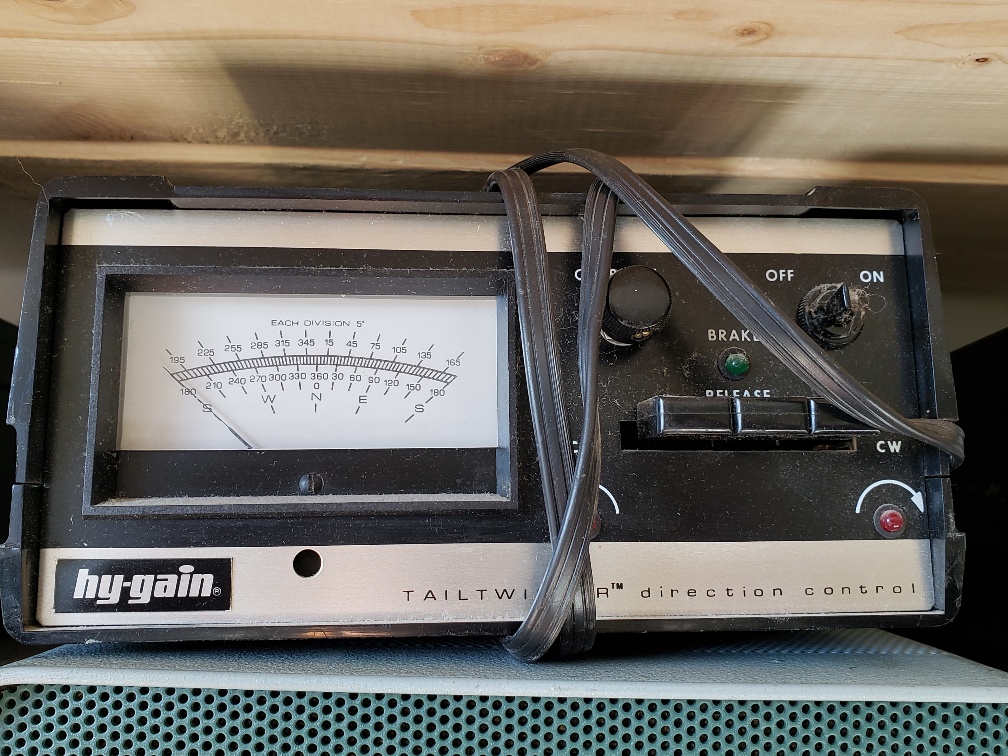
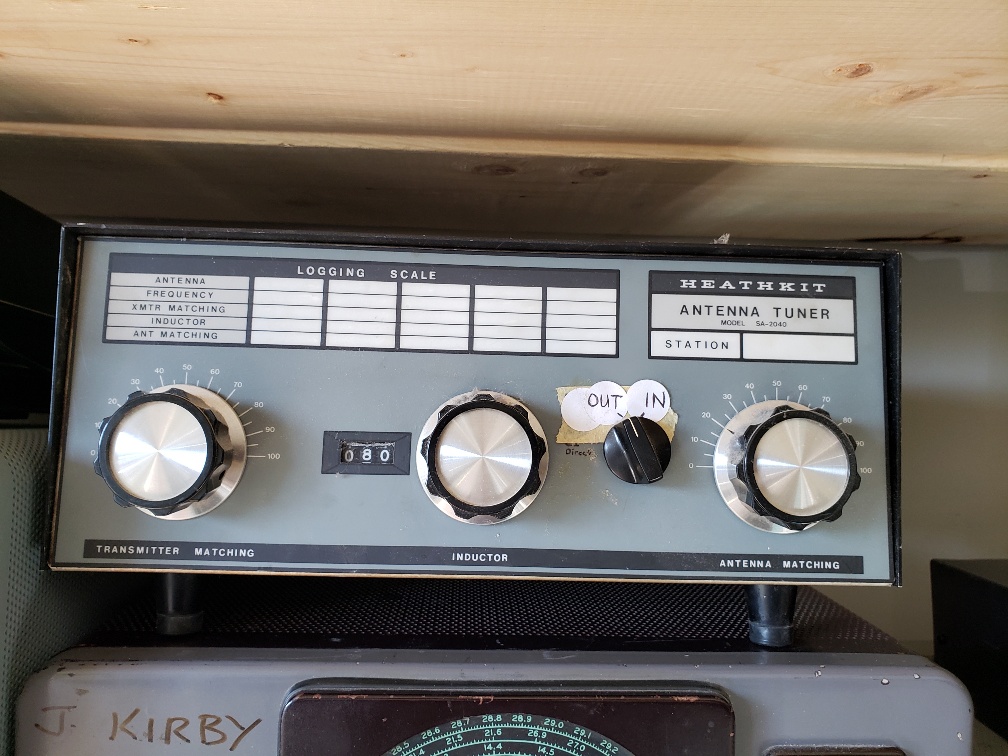
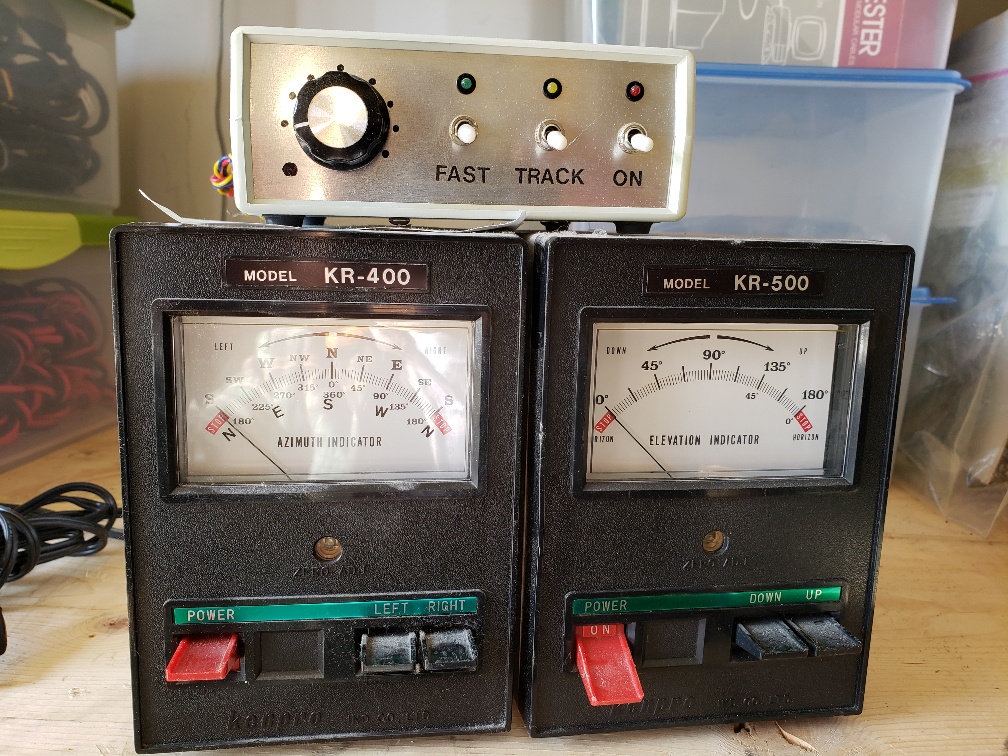
Items for sale include HF and mobile transmitters, receivers, transceivers, antennas, rotators, test instruments, coax and other cable, swr and power meters, power supplies, tuners, scopes, dummy loads, misc. accessories etc. We also have a utility trailer for sale.
The sale is at our Ops & Training Centre 5756 142 St. Surrey, BC. from 11 am to 2 pm. No early birds please (Map link: : https://what3words.com/daunted.rarity.parrot)
SARC/SEPAR members and non-members are also invited to set up a table or sell personal items from their vehicles. There is no charge for this.
Before the event, you may also wish to join us for our club breakfast at Denny’s Restaurant 6850 King George Blvd between 7:30 and 9:00 am.
Questions? [email protected]
Here is a partial list










Kilo Zero Naval Reserve
I don’t usually get pulled into historical investigations, but I recently found something interesting about my call sign, KØNR. I received this vanity call in April 2002. Before me, Craig Larson W3MS held this call sign starting in 1975. These are the only two entries in the FCC database (Universal Licensing System).
The story starts with me poking around the Digital Library of Amateur Radio & Communications (DLARC), an online archive of radio communications media. I search on “K0NR” and got a number of hits, including an entry from a 1962 Callbook. Back in the olden days, ham radio callsigns and contact info were published in a thick book, kind of like a phone book.
The callsign was listed with “USNR” in the name or organization field. I wasn’t sure what USNR meant so I asked for help via Twitter. Quite a few people came back with “United States Naval Reserve”, which did turn out to be correct. The graphic below is from the 1962 call book and it has multiple callsigns labeled USNR and one labeled USN.
 Then Jason W5IPA came up with a page from the July 1949 issue of QST.This article shows there were many amateur call signs assigned to naval reserve stations.

Click to access QST-1949-07.pdf
Then N8URE poked around and came up with this from a 1960 telephone book:
 I suspect the 5-digit telephone number is long been obsolete. There still is an address for the Naval Reserve in Dubuque but it is on Jet Center Drive, near the airport.
So there you have it: it was common for Naval Reserve centers to have amateur radio call signs assigned to them. For obvious reasons, they tended to have NR in the call sign. K0NR was assigned to the station in Dubuque, IA.
Thanks for the help from: W5IPA, N8URE, K8BCR, K4ZDH
73 Bob, Kilo Zero Naval Reserve
The post Kilo Zero Naval Reserve appeared first on The KØNR Radio Site.
I Am Back After Life Distractions
The last three years have been, well, challenging.

In 2021, I became ill with Covid. That was rough, but I bounced back. That bout with illness caused me to lose my job, though, because I was ill too long. What is worse is because I was not hospitalized, I did not fall under the protections of “disability,” and had to step down from my employment at that time. After I recovered, I found employment.
In 2022, I again fell ill to a second Covid. That illness was significantly worse! I nearly WAS hospitalized, but I resisted this, and hung on by a thread. I made it through, though the illness lasted a lot longer the second time around. Because I was ill for about five months, I again had to step down from employment. This second Covid was the worst illness I have ever experienced, physically, emotionally, and financially. I am thankful for my friends and family that were very supportive.
After I recovered, I found employment in late 2022. It took a while for my health to stabilize, but the new job leadership has been supportive. I have been happily working at this new job since late 2022.
But, the challenge to recover was high. I sought answers.
In December 2022, I was diagnosed with Primary Hyperparathyroidism. Sure enough, the many tests I endured confirmed that I had more than one tumor in at least two of my four parathyroid glands (we each have four of them, because we’re given redundancy for this critical body part).

We each have four parathyroid glands. They are on the back side of the thyroid. The regulate the body’s calcium. Calcium is critical to all body functions and health.
I had surgery at the end of February 2023 to remove these tumor-riddled glands. The surgeon, once in my neck, found that THREE of my four glands were tumorous! He removed the three. I now have just one parathyroid gland.
Recovery has gone well. My health is improving nicely. It is like a switch was flipped, and I no longer have some of the debilitating symptoms like brain fog, extreme fatigue, and an out-of-control metabolism. I have a stable function of the remaining parathyroid gland, and that is supporting the proper function of the rest of my body. It is amazing how the whole body relies on these four glands for running correctly!
All of these challenges of the last few years caused enough distraction that my YouTube channel, and my writing, here, as well as other hobby activities, suffered my absence. Now that I am getting back on my feet with my health, and because my job continues nicely, I am beginning to spend some energy and time on these hobby areas. I plan on creating and releasing a few series on amateur radio, radio propagation, and space weather, on my YouTube channel. If you are already a subscriber, you probably saw my latest video where I announce that I am, indeed, back:
[embedyt] https://www.youtube.com/watch?v=vhL8CKbLkZY[/embedyt]
If there are topics that you would like me to cover in the new educational videos I am planning and will create, please let me know with a comment to this post, or, look my email address up on my profile at QRZdotCom. I will do my best to answer your questions and cover amateur radio and space weather topics in which you are interested.
If you are not yet familiar with my YouTube channel, you can find my channel here: https://YouTube.com/NW7US — Please subscribe and hit the bell to be notified when I release new video content.
I will also post more often on this site. I appreciate the opportunity to share with you my love of amateur radio, and the science of propagation and space weather which affects our radio signals.
Best regards,
Tomas, NW7US
https://NW7US.us
Announcing: Extra Class License book
 Followers of this blog know that I like to write stuff. My work shows up in many different venues, with a variety of purposes, but mostly I write with the goal of explaining technical topics to help people learn. My most recent project is co-authoring an Extra Class license book with Stu/W0STU for Ham Radio School.

Building on the successful formula of the popular Technician & General License Courses from Ham Radio School, we’ve crafted an Extra License Course that…
Prepares you to ace the exam
Imparts valuable practical knowledge
Is easy to digest
Serves as a handy future reference
It’s everything you expect from a Ham Radio School course:
Explains all 621 Extra exam question items.
Over 230 professionally crafted instructional illustrations.
Bite-sized topical sections in conceptual building block sequence.
Free online quizzes, section-by-section, and comprehensive practice exams.
Tons of free online learning supplements, section by section, including video, audio, articles and links.
Our goal with the book is to have you learn the exam material, not just memorize questions.
73 Bob K0NR
The post Announcing: Extra Class License book appeared first on The KØNR Radio Site.













