Archive for the ‘dx’ Category
 Some Summer Short Wave Listening
 October 6th, 2018 |
  Author:
  |
| courtesy:americanradiohistory |
Over the past few months I’ve spent some time tuning around the international shortwave bands.
I vividly recall how jam-packed these bands were when I first discovered the magic of radio, back in the peak years of Solar Cycle 19. Much has changed in this part of the radio spectrum since then, but after having read so many dire comments describing the demise of international SW broadcasting, I was pleasantly surprised at what I discovered.
Although there are certainly not the large numbers of stations there once were, there is still a large amount of activity to be found throughout the various bands allocated to international SW broadcasting.
 |
| courtesy: https://communicationwhiz.com/short-wave-radios-guide/ |
Trying to keep track of station schedules and frequencies is a hobby unto itself but now made easier with the availability of so many online information sources. As when younger, I found the best way to stay organized was to keep a SW logbook, eventually settling on a simple ‘diary’ format which is still evolving.
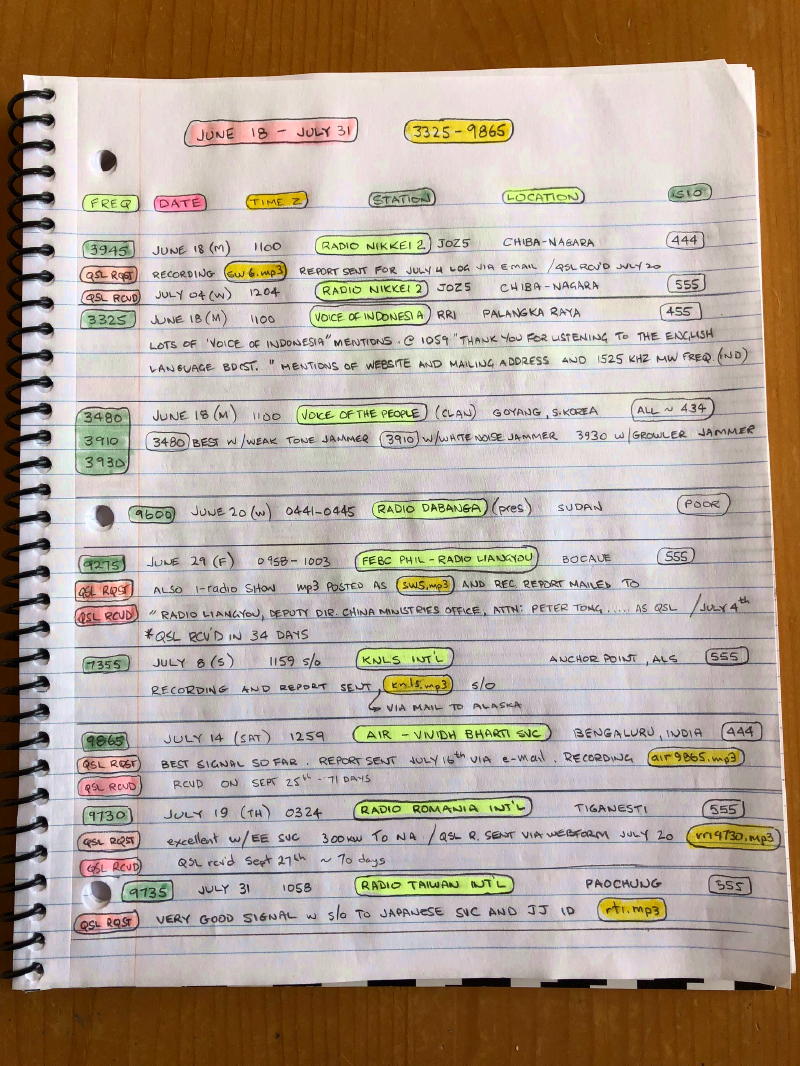
Its next refinement will be an additional notebook having separate pages devoted to each individual frequency within a given SW band. This will allow for updating frequency information from various postings of the daily online ‘heard’ reports.
I’ve always had a great interest in QSLs and collecting cards was one of the things that initially attracted me to SW radio back as a pre-teenaged DXer. For me, not much has changed in the last several decades and I still enjoy QSLs ... the real, traditional cards, as opposed to the now popular e-card. For me, an e-card just doesn’t have much appeal for some reason but for many others, they work just fine.
As I slowly re-learn much of what I had forgotten about SWL’ing, I discovered that there are still many SW broadcasters that will acknowledge a reception report with a real paper card ... just like the good old days!
If you are keen on doing some serious listening, I cannot recommend the WRTH highly enough.

Studying the latest WRTH revealed the QSL policies of most international as well as domestic SW broadcasters as well as contact information. It is a superb annual reference and well worth the investment! With this information in hand, my listening has become more focused on recording and submitting reception reports to those stations still practicing the courtesy of acknowledging reports with a traditional QSL. Many stations also issue an e-card, but these are of little interest to me at present.
With a small amount of spring-summer time devoted to SW listening, I generated and submitted a few reception reports along with linked audio files on my website ... so far, the following QSLs have arrived:
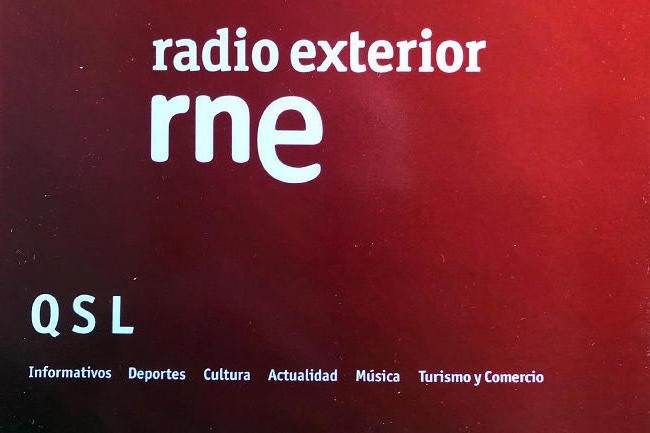 |
| Radio Exterior de Espana |
 |
| 15520 kHz - Noblejas, Spain |
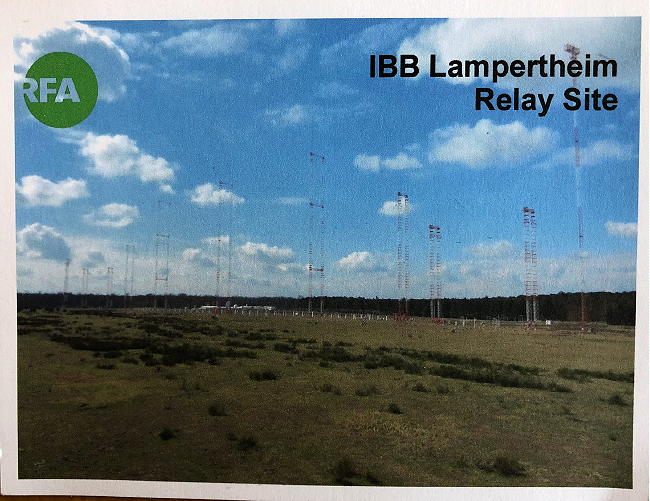 |
| Radio Free Asia |
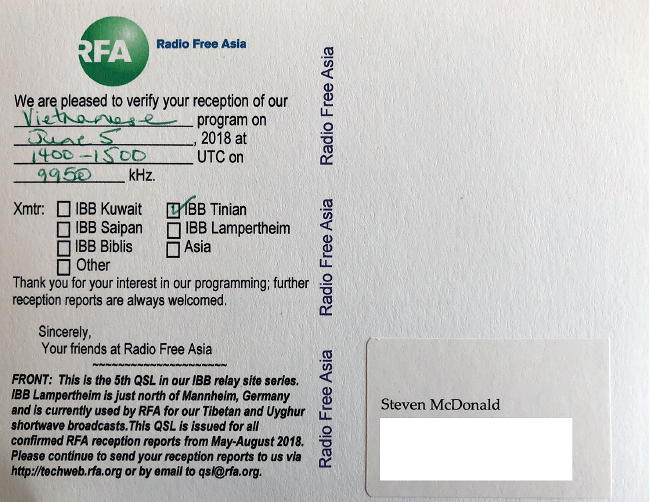 |
| 9950 kHz - via IBB on Tinian Island, S. Pacific |
 |
| All India Radio (AIR) |
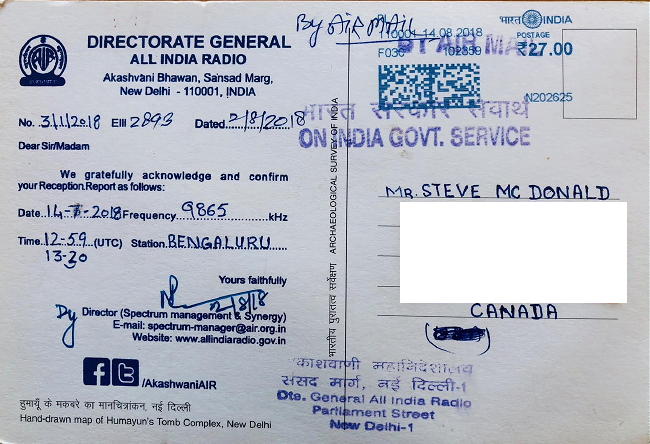 |
| 9865 kHz - Bengaluru, India |
 |
| DX Clube Sem Fronteiras Broadcast via WRMI 7730 kHz, Miami |
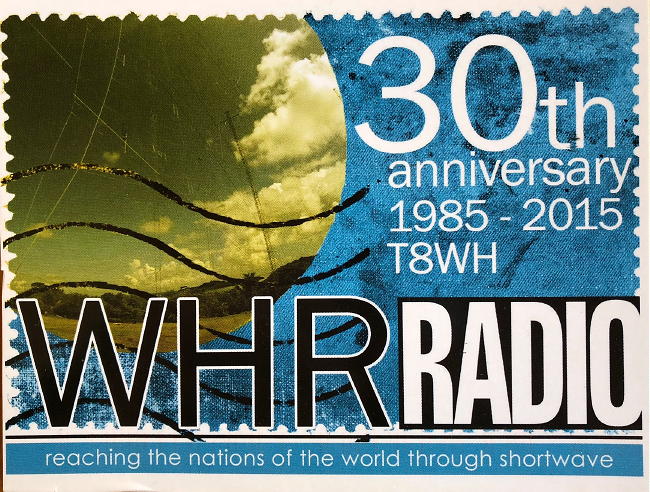 |
| T8WH - 9965 kHz Palau, South Pacific |
 |
| HSK9 - 5875 kHz Udon Thani, Thailand |
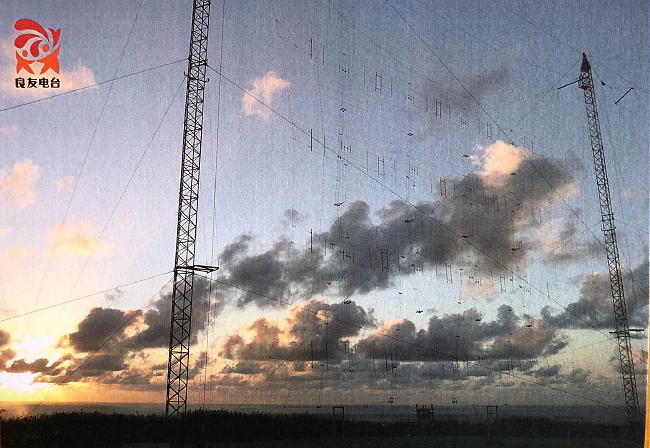 |
| Radio Liangyou - Hong Kong |
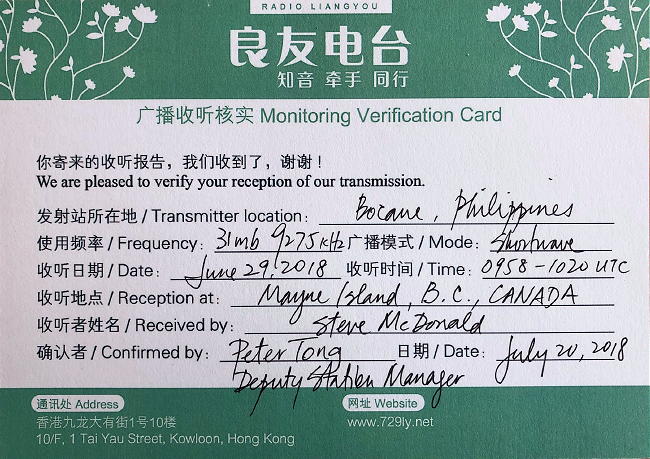 |
| 9275 kHz via Bocaue, Philippines site |
 |
| Radio Romania - 9730 kHz - Bucharest, Romania |
 |
| Radio Nikkei 2 |
 |
| 3935 kHz - Chiba, Japan |
I’ll do an upcoming blog on some of the great information and online sites to support international SW listening activities.
6m … Where’d The Magic Go?

This summer's 6m sporadic-E (Es) DX season is now well past the half-way mark and things have been different ... a lot different. For me, the past 40 plus summers of activity on the magic band have always been interesting, if not down right exciting ... particularly when the band opens to Europe from the west coast.
These usually very short-lived paths have been my main interest for the past several years and the bread and butter mode is normally a fast CW exchange, usually taking less than 20 seconds before signals would vanish, as the always quirky west coast path to Europe would jump to another region. But this has all changed dramatically.
I have seen many strong openings involving loud FT8 signals from various parts of North America but when tuning down to the CW/SSB section of the band, found nothing but ghostly silence! Gone are the familiar voices of friends met every summer for decades or the recognition of an old friend's fist on CW ... for me personally, most of the magic was missing this summer. I wonder if this is all part of the natural evolution of amateur radio or does the FT8 revolution signal the long term fate for many of the older conventional modes?
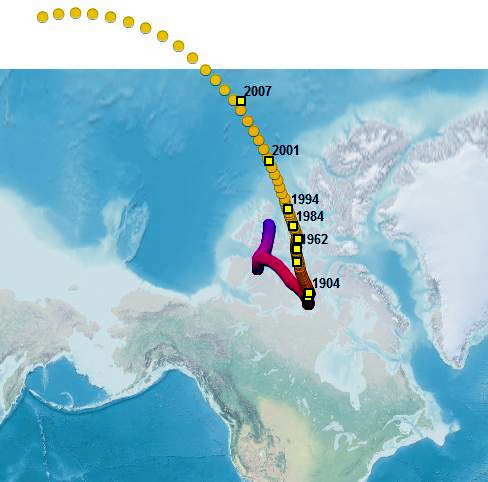 |
| Track the pole's movement here. |
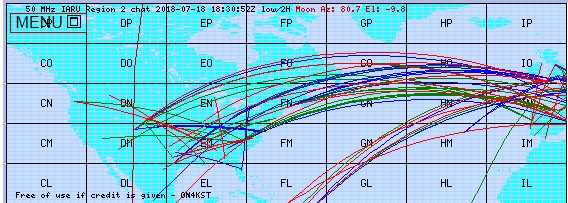 |
| July 18th courtesy: http://www.on4kst.org/chat/index.php |
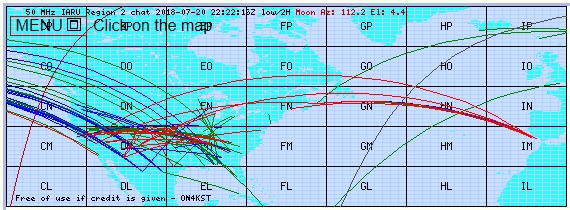 |
| July 20th courtesy: http://www.on4kst.org/chat/index.php |
 |
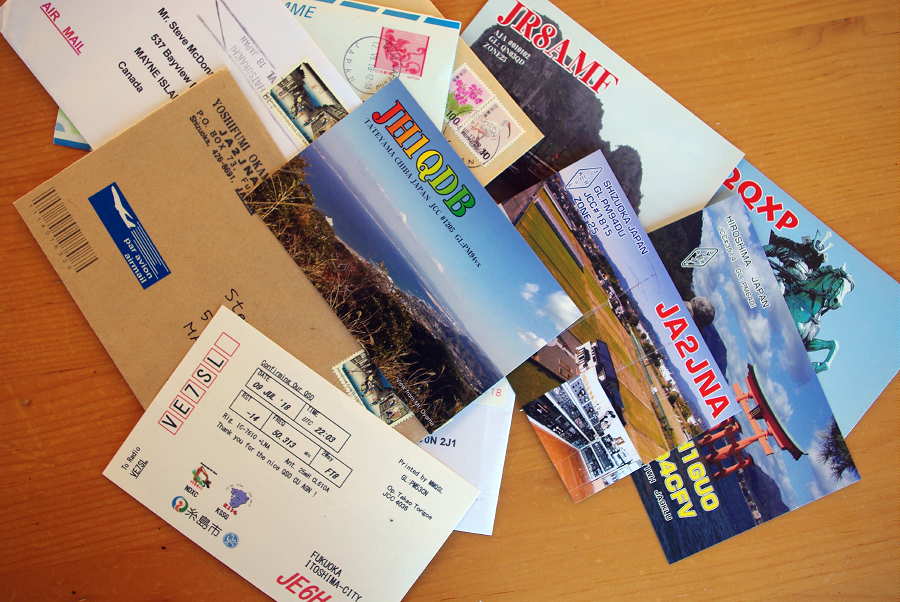
| Overnight decodes July 8-9 |
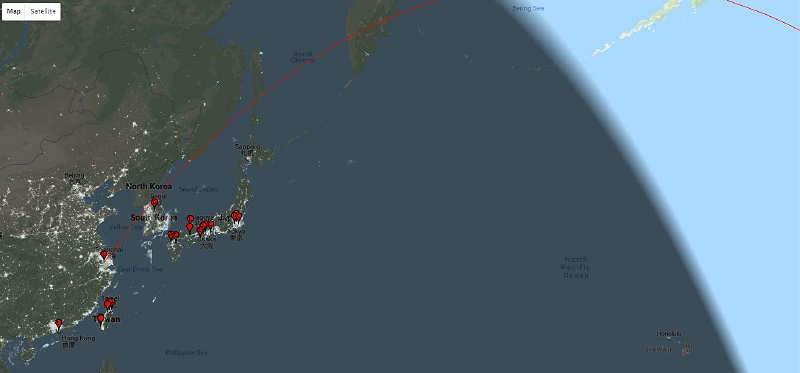
BM6GJL PL02
HL1BRU PM37
HL2IFR PM37
BG4QNE PM01
VR2VAZ OL72
BV2FB PL05
BV6CC PL03
BV1EK PL05
BM3GFU PL04
Thanks to Paul, K7CW, for doggedly sorting through my all-night decode file which may be viewed in full here.
With just a couple of weeks left in the normal Es season, it will be interesting to see if FT8's extra few db will extend it longer than usual!
Trouble Free HF Antenna For The Apartment Dwelling Ham
 Unfortunately we all know of or hear about hams that have given up all hope of getting on the air, once moving into an apartment or condo, where antennas are normally prohibited. One enterprising local amateur has combined early established antenna fundamentals along with sound engineering, to arrive at an elegant and highly successful solution. If you are also a 'location challenged' amateur, it may just be the thing that will help you, and others, take back your hobby and get on the air!
John, VE7AOV, has been operating from his apartment, in the heart of the very large and noisy greater Vancouver, for several years now ... not simply 'operating', but thriving, from his cozy fourth-floor apartment radio station. The wallpaper shown below would not usually be expected to grace the shack walls where antennas are not permitted!
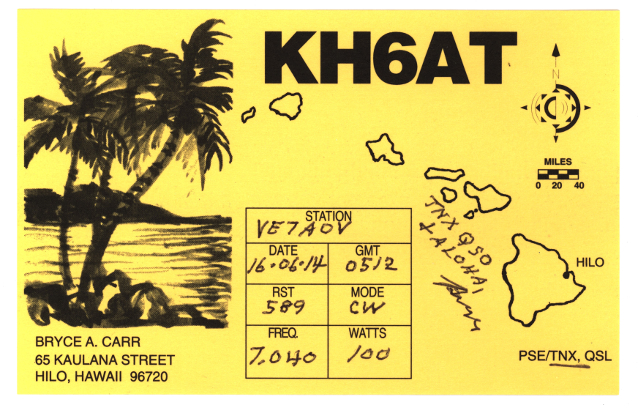

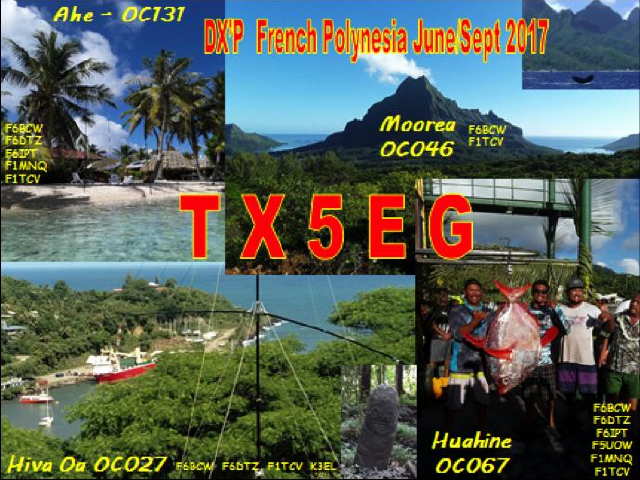
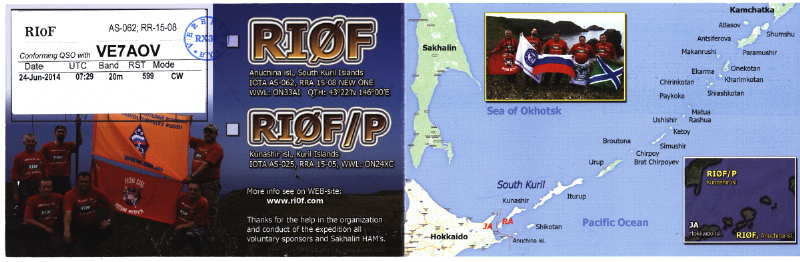
It's soon apparent that John has also overcome the usual problem of noise ingression, from every appliance and random RFI generator in the complex. This is no lucky fluke but all by design, and delivered via an all but invisible classic antenna system made of #26 wire and a few Starbuck's stir-sticks!
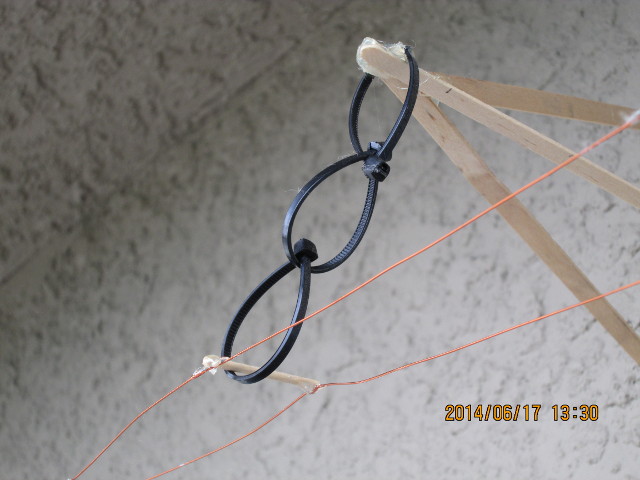 |
| 600 ohm #26 balanced line |
I'll let John tell you a bit more before sending you to his fascinating website, Intuitive Electronics, where you can learn more about his system and the engineering behind his successful, low-noise installation.
When it comes to a high frequency ham station, the antenna alternative chosen by most apartment dwellers is no antenna at all. The design here is a wisp of an antenna that bothers no one and which can work Japan, Australia, France, European and Asian Russia, the Caribbean, Central America, Polynesia and South America from the Pacific coast of Canada. It is a simple solution for apartment dwellers, it is a cheap solution and it causes no t.v.i. or other r.f. problems. It is far preferable to the alternative selected by so many fellow apartment dwellers: no antenna at all.
An implication that it seems to be impossible to rid from the minds of fellows using a Marconi antenna is that they are not just pumping 100 watts of r.f. into their antenna but that they are also pumping that same 100 watts of r.f. into their ground, that is to say the building’s wiring, the safety ground wiring. R.f. in the safety ground is well coupled into the power and neutral conductors of a residence and, in North American code, is even hard connected to the neutral line at the service entrance. The house wiring becomes part of the antenna system.
The ground wiring and everything connected to it is every bit as much a part of the antenna as is the live element. Both radiate just the same amount of r.f. power, fellows. The ground wiring along with every electrical power consumer in the building is worked against the live element. Thinking of what is connected to ground in your house is thinking about one side of your antenna. It’s not just appliances that get the “benefit” of r.f. The land line telephone system, the cable television system, the garage door opener, the security lights and…you name it. They are all “feeling” that 100W of r.f. With regard to r.f., there is no distinction whatsoever to be made between “hot” and “ground”.
You know the reason why vertical antennas have gained a reputation for being noisy on receive now, too. Most verticals are Marconi antennas. Both the safety ground and the neutral serve all the houses in the neighbourhood. The receiver is wired into the electrical appliances of the entire neighbourhood.
This radio station, located four stories above grade and in a wooden building full of apartments would be a worst case for r.f. in “ground”. This station has no r.f. in the station. It has no r.f. in “ground”.
The station has no interference issues. The Building Manager, the Building Superintendent and the administrator for this building’s cablevision have been aware of the station from the beginning. There has not been a single complaint of t.v.i. or any other complaint about the station. That’s a clean record extending back to 2006. There are no red faced, spluttering tenants hammering on the door of this station! At this station, all the r.f. produced by the transmitter makes its appearance out on the antenna. The radio station’s r.f. is not referenced to station ground. Station ground “knows nothing” about the r.f. being generated.
In the present case, that is to say a station to be operated in an apartment building, it is required to have an antenna that is “invisible”. Now it’s not possible to achieve that literally but at least the antenna should be so inconsiderable that there will be no complaints from neighbours about having to look at it. The antenna here is made of #26 A.W.G. wire. That’s wire that is 0.40mm, 0.016 of an inch, in diameter. Four stories up, it’s difficult to see the antenna and that’s even when knowing where to look for it. Part of the antenna’s run is through trees and in among the tree branches it pretty much is invisible. It does not annoy neighbours by casting a shadow; there is no shadow.
In spite if the naysayers, John's small gauge antenna has survived years of winter storms, regular occurrences here on Canada's western edge ... simply because it presents such a low cross-section compared to most conventional antenna wires.
To read more about enjoying your hobby again from your new 'restricted' location and more than likely, learn something new about old fundamentals, give John's website a very close inspection ... there is much wisdom and many gems to be found, even if you don't live in an apartment!
Phone Contesting Tips For DX Contests (AE6Y)
Proper use of a phonetic alphabet can be very helpful when working phone under marginal conditions. I’ve written a basic article on phonetics over at HamRadioSchool.com, so you might want to review that. I recently came across an article by Andy/AE6Y on some tips and tricks to use during contests. He does a super job of explaining why the ITU phonetic alphabet isn’t always the best choice. I don’t usually reprint other author’s work on this blog but somehow this article really got my attention. Reprinted here with permission. – Bob K0NR
Phone Contesting Tips For DX Contests
Andy Faber, AE6Y
3/29/18
This article is prompted by the recent WPX SSB contest, in which I worked thousands of guys from Aruba as P49Y, which engendered much reflection (and teeth-gnashing, to be sure) about how U.S. hams can be best understood from the DX end. I’m not addressing this to relatively clear-channel domestic contests but to the situation where you are trying to get through to a DX station that may be hearing a pileup, plus noise, ear-splitting splatter from adjacent stations and all of the other sonic annoyances that make many contesters prefer CW. If there is no pileup and you know the DX station can hear you completely clearly, then you’ll get through regardless, but if not, here are some suggestions:
First, be sure you are calling on his exact frequency. In CW contests, it can be helpful to separate yourself from the pack by calling off frequency, but that’s not true in SSB. Off-frequency stations sound distorted and are hard to understand. The DX station may well come back to a weaker, but more intelligible station that is on frequency, even if you are louder. In order to work you, he has to figure out which way to adjust the RIT, and then go ahead and do it. A tired operator on the other end may just not bother, until he has worked everyone else.
Second, make sure your audio is clean. It is so much easier to understand clear audio, even if it is weaker than a louder, distorted signal. KH7XS mentioned in his 3830 posting that this year there particularly seemed to be over-processed signals coming from South America, and I noticed the same thing. It used to be that the Italians who were the worst offenders, but they seem to be better now. This weekend, the Cubans were particularly hard to understand. The prize for the easiest audio to understand goes each contest to the hams from the British Isles. The G’s, M’s and their derivatives invariably have very clean (and usually nicely treble) audio that can be understood even when the signal doesn’t budge the S-meter. On several occasions I chose a weak but clear Brit over a loud, but distorted, competitor.
Ok, so you have a clean signal and are calling on frequency, now how do you get the information through, both your callsign and your contact number (for WPX)?
Here are some tips:
If you are loud enough and have an easily recognizable call, you can skip phonetics. So this weekend, when K1AR called, he was easy to pick out, same for K3UA, K3ZO, N6AA, and a few others. But for most guys, and when in doubt, use phonetics. Endless bandwidth has been expended on the subject of phonetics, and people have differing opinions on the topic, but here are my thoughts from being on the DX end:
The first thing to understand is that the standard, “recommended” international alphabet works dismally in marginal conditions. The words are too short, and some don’t have unique sounds. Generally speaking, the one-syllable words just get lost, while the two syllable words are better, and the longer ones are even better.
Thus, one-syllable words like “Fox”, “Golf” and “Mike” are horrible. Some of the two-syllable ones are OK (e.g., “Hotel” and “Quebec”), but others, such as “Alpha” and “Delta”, or “X-ray” and “Echo”, “Kilo” and “Tango” sound very similar, so are easily confused. I worked a guy with the suffix XXE, and had to get a number of repeats until he finally said “X-Ray X-ray Ecuador,” which did the trick.
There are two basic cures for these problems. The first is only to use these crummy phonetics the first time as a trial. If the DX station asks for a repeat, say your call twice, once with the standard phonetics and once with different ones. Don’t just keep repeating your call the same way. Something in either the way you say it or the way the DX hears it is creating ambiguity. If you keep repeating the call the same way it may well be that part of it is just hard to decipher, and it may not get any easier.
If the DX station is a good English speaker then custom phonetics may work, such as “King George Six…” In fact when I thought a KK4 station was a K4, he used a very effective phonetic, “King Kong Four…” WA2JQK uses “Jack Queen King” in domestic contests, but that won’t work well for non-native speakers. The Wyoming station N7MZW uses “Many Zebras Walking” sometimes domestically, but I noticed he was using normal phonetics in WPX.
The second approach is to switch to the geographical phonetic alphabet. This features longer and more distinctive-sounding words, which are much easier to understand. For example if your suffix is, say, HLF, then you can say “Hotel Lima Fox,” then try “Honolulu London Florida.” When I give my call with last letter “Yankee” and get asked for a repeat it works much better to say “Last letter Yankee, last letter Yokohama.” Many of the geographic phonetics work particularly well for speakers of Romance languages like Spanish and Italian (e.g., terms like “Guatemala”, “Nicaragua”, and “Santiago”). There are a few letters for which there are not good geographic equivalents. Obviously, “X-ray” is one of them. For “Echo”, “England” is sometimes used, but “Ecuador” is better. Although “London” and “Lima” are both geographic terms, “London” is much better. And “Denmark Mexico” is many times superior to “Delta Mike.”
Numbers in the callsign can also cause trouble. What if the station comes back to “K3” instead of “K6”? In general, just try to repeat the number, but if he still doesn’t get it, you can try counting, e.g. “Kilo Six, 1, 2, 3, 4, 5, 6.” Or for us West Coasters, “Kilo Six in California, West Coast” can be useful.
Which brings me to the subject of numbers in exchanges like WPX. I commented in a 3830 post a few years ago that the English numbers that everyone uses are just too ambiguous, most of them being plain too short. I recommended using some Spanish numbers, like “cuatro” and “ocho”, but that suggestion went nowhere, so I hereby drop it, unless you are trying to get through to a native Spanish or Italian speaker. In fact, In WPX, I just couldn’t understand a number from a CO8 station with terrible audio. I kept asking, “your number 424?”, “your number 242?”, “your number 224”, etc. Normally, one doesn’t confuse “two” and “four,” but this guy’s audio was driving me crazy and I wasn’t sure how well he was understanding me either. Finally I had the presence of mind to ask in Spanish, and when he said “dos cuatro cuatro,” he was in the log. If he had said that in the beginning I would have understood him in spite of his maladjusted audio.
One source of confusion for the DX station is not knowing how many digits there are, particularly later in the contest when a number can have 1, 2, 3, or 4 digits. There are a couple of ways to help. For example: suppose the DX station thinks he hears “[garble] six six” and he asks: ”your number six six?” If your number is just 6, you can say to be helpful “Negative. My number zero zero six, number six.” Adding the word “number” in front of the digit indicates there are no missing digits. If your number is 66, just say “Roger, roger.” If it’s 56, say “Negative, number five six, fifty–six.” If it’s 256, say, “Negative. Number two five six, two fifty-six (or even “two hundred and fifty-six”). I know we were taught that it is incorrect to say “two hundred and fifty-six,” and we should just say “two hundred fifty-six,” but using the “and” makes it more intelligible.
In general, it’s usually best to say your number twice, in two different ways. For example it’s often hard to discern, “two three” from “three three”. So you can say: “five nine, two three, twenty-three,” since “twenty” and “thirty” sound very different. Similarly if your number is 15 and you say “one five”, that might be confused with “one nine”, so say “one five, fifteen.” If it’s late in the contest and you might be expected to have a three-digit number you can say “zero two three, only twenty-three”. And if you have a one digit number late in the contest, it’s best to add zeros, saying, e.g., “zero zero nine, number nine”, not just “nine.”
I hope these tips from the DX end are helpful. They should be even more useful in the next few years, as declining sunspots forcing us increasingly into the QRM alleys of 20 and 40 meters.
The post Phone Contesting Tips For DX Contests (AE6Y) appeared first on The KØNR Radio Site.
How I Reunited Two Devils Brigade Canadian and American Veterans of World War Two
In the 1990s while living in eastern Montana, I had the amazing experience of reuniting two soldiers that served in the Devil’s Brigade. They both trained near Helena, Montana.
One day, I was operating on the amateur radio shortwave Ten-Meter band, and a gentleman answered my, “CQ, CQ, CQ, this is N7PMS in Montana, Over”. I took notes of our conversation.
The next day, when again I called for any station to answer my call for a conversation, another fellow, from Canada, answered me. I learned something amazing: Both of these two men mentioned that, during World War Two, they both were in the same special forces unit, training near Helena, Montana.
One of these Veterans served in the Canadian Armed Forces, and the other in the American Armed Forces. Listen to my story, for the full details of this amazing experience I had as an amateur radio operator.
Jump to 3:22 if you wish to skip my introduction to the story, during which I give some background on when and so on:
https://youtu.be/YFMplHjxy6s?t=3m22s
This certainly was one of the most memorable moments in my amateur radio hobby experience! The joy of reuniting friends is good.
From https://en.wikipedia.org/wiki/First_Special_Service_Force:
The 1st Special Service Force (also called The Devil’s Brigade, The Black Devils, The Black Devils’ Brigade, and Freddie’s Freighters), was an elite American-Canadian commando unit in World War II, under command of the United States Fifth Army. The unit was organized in 1942 and trained at Fort William Henry Harrison near Helena, Montana in the United States. The Force served in the Aleutian Islands, and fought in Italy, and southern France before being disbanded in December 1944.
The modern American and Canadian special operations forces trace their heritage to this unit. In 2013, the United States Congress passed a bill to award the 1st Special Service Force the Congressional Gold Medal.
Thank you for watching, and sharing. Comments are welcome: do you have a memorable moment in your radio hobby experience on the air?
73 de NW7US
Radio Virgin: the First QSO
My first QSO (and, yeah, it was with Morse code) was petrifying and…
What’s your story of your first QSO?
73 de NW7US
My Rebuttal Regarding the Petition by ARRL to the FCC to Expand Technician-Class Privileges
This is my reply to many responses that I have been receiving on my original blog entry, located at this AmateurRadio.com website,(my shortened URL: https://g.nw7us.us/arrl2fccR2) as well as to the original video, posted in that blog entry.
I wish to reply to all of those who are against the idea of expanding the privileges of the Technician-class licensee, the expansions including the ability to operate Voice and Digital in limited slices in a subset of lower-than-Ten-Meter amateur radio shortwave allocations.
It seems to me, that…
…the issue is not one of Technician-class licensees wanting more privileges, as a whole. What the ARRL is addressing is the *lack* of desire by most current Techs to upgrade.
The logic behind the idea of expanding privileges concludes that if you give them a taste of lower-shortwave propagation and excitement (by moving past the CW-only restriction on the lower tech allocations), then they *will* want to upgrade.
This logic is already proven as applicable by the fact that the General class exists! All that this proposal will do is allow the Tech to experience what could be very attractive–just like for the General. If it worked in the past with Novice, Technician, General, Advanced, and Amateur Extra (exposing to all of HF, even if by way of a CW-only requirement), then it will work, now. The difference is that the CW-only requirement on lower HF bands is highly restrictive because the mode is no longer needed to operate on any frequency, and, most will not take the time to learn it just to see if they WANT to explore the lower HF bands, or ever upgrade.
The bottom line is that we should make the Tech ticket more relevant. The expansion is not dumbing down, nor does it give away the farm.
I discuss this original point in the two videos that were lower down in the original post:
[embedyt] https://www.youtube.com/watch?v=ty9HINa3nAg[/embedyt]
and,
[embedyt] https://youtu.be/83I3EEQxfZA[/embedyt]
Thanks for reading, watching the videos, and having a useful dialog about this very important change to the amateur radio regulations in the USA.
P.S.,
That aside: This may, in the long term, reveal one of two possible truths:
1. There is no real need for three license classes. Two would suffice. General and Amateur Extra, or Technician (merged with General) and Amateur Extra.
2. There is no real need for three license classes. One would suffice. Make the test hard enough to cover the Extra-class material, and all material under that class, and merge everyone into one tested class. I believe that this has been tried in other countries, and it appears to work well.
I’ll be crucified for stating those ideas, but, hey, this is just a hobby.














