Archive for the ‘arrl’ Category
 Space Weather, HF Radio Propagation – The Interview on ‘Ham Radio Now’
 June 30th, 2014 |
  Author:
 Why would an amateur radio operator be interested in space weather? Is it worth the time and resources to forecast propagation, in the daily operation of a typical ham radio station?
Gary, host of the popular ‘Ham Radio Now’ video podcast, talks with Tomas Hood (NW7US), propagation and space weather columnist for CQ Amateur Radio Magazine (and in the late ‘Popular Communications Magazine’ as well as ‘CQ VHF Quarterly Magazine’) and The Spectrum Monitor Magazine. Gary discusses with Tomas how scientists forecast space weather, and how the average ham radio operator can also make predictions, and what propagation forecasting can bring to the daily operations of an amateur radio enthusiast.
Watch on YouTube: ‘Ham Radio Now’ Episode 156: Propagation…

Tomas, NW7US, talks about radio propagation on shortwave (HF) as well as space weather.
Radio propagation and space weather course
As the propagation columnist for several amateur radio magazines, I hear from a diverse group of interested people that find space weather and the propagation of radio waves fascinating. I admit: I am a space weather and radio propagation nut, and it is always good to correspond or meet with other interested folks. This is an aspect of our hobby that never grows old, as there is so much that we don’t yet know–we communicators are in a perfect space to make discovery and to make improvements to our understanding of this science. Over the years, I’ve heard a lot from readers of my columns, expressing their fascination with the science of radio and solar phenomenon.
Are you interested in learning about the Sun and the Sun-Earth connection (space weather), including topics of sunspots, solar flares, coronal mass ejections, and so on? Do you want to delve deeper into topics including the ionosphere, the magnetosphere, and how radio waves propagate from transmitter to receiver?

The critical frequency (foF2) for mornings during June 2014.
You might consider a time-proven “course”–material that is very comprehensive–that you can self-study, to become well-versed in this information. The course (one that has been used in professional disciplines) is offered either stand-alone, or bundled with the ray-tracing PropLab PRO software.
Some may say, “But, I like the magic of just getting on the air and trying my luck! If I learn all this stuff, then it becomes science, and not a hobby.” It is true that there’s a joy at being dazzled with the magic of radio; buy a super cool transceiver, and a factory-made antenna with coax already fitted with connectors, adding the necessary accessories to make it come alive, then begin exploring the shortwave frequencies. Magical, indeed! But, there are many in the hobby that wish to learn how all of that works. Some even begin learning how to build antennas, radio kits, and discover the joy of the “science” of radio. A few eventually take the step with gained “scientific” knowledge of electronics, and they design and build equipment for their hobby. The course is part of that mix: learning how the Sun affects getting a radio signal from point A to point B, and how to leverage their time and efforts, is a joy, indeed.
Interested? Here’s the web page: http://hfradio.org/swp_course/

PropLab PRO creates ray-traced radio wave analysis
If any disclosure is necessary, here you go: The proceeds from a purchase of this course go to the funds I use to keep cw.HFRadio.org, swl.HFRadio.org, and other resources at HFRadio.org, plus http://SunSpotWatch.com up and running. There are monthly fees, yearly fees, and software licensing to cover, as well as the purchase of hardware from time to time. These operating and maintenance funds are mostly covered by me, Tomas, NW7US, out of my personal funds. Any donations and sales helps out. Haters and Hecklers can send their comments to the bit bucket.
73 de NW7US
There’s a new radio hobby magazine in town!
Recently, a number of hobby radio magazines have either retired, or have merged into a digital mix of several. Filling that void is the new The Spectrum Monitor, a creation of Ken Reitz KS4ZR, managing editor for Monitoring Times since 2012, features editor since 2009, columnist and feature writer for the MT magazine since 1988. Ken offers this digital, radio communications magazine monthly. The web site is at http://www.thespectrummonitor.com/

The Spectrum Monitor magazine – get your’s, today.
Ken, a former feature writer and columnist for Satellite Times, Satellite Entertainment Guide, Satellite Orbit magazine, Dish Entertainment Guide and Direct Guide, is also contributing editor on personal electronics for Consumers Digest (2007 to present). He is the author of the Kindle e-books “How to Listen to the World” and “Profiles in Amateur Radio.”
The Spectrum Monitor Writers’ Group consists of former columnists, editors and writers for Monitoring Times, a monthly print and electronic magazine which ceases publication with the December, 2013 issue. Below, in alphabetical order, are the columnists, their amateur radio call signs, the name of their column in The Spectrum Monitor, a brief bio and their websites:
Keith Baker KB1SF/VA3KSF, “Amateur Radio Satellites”
Past president and currently treasurer of the Radio Amateur Satellite Corporation (AMSAT). Freelance writer and photographer on amateur space telecommunications since 1993. Columnist and feature writer for Monitoring Times, The Canadian Amateur and the AMSAT Journal. Web site: www.kb1sf.com
Kevin O’Hern Carey WB2QMY, “The Longwave Zone”
Reporting on radio’s lower extremes, where wavelengths can be measured in miles, and extending up to the start of the AM broadcast band. Since 1991, editor of “Below 500 kHz” column forMonitoring Times. Author of Listening to Longwave (http://www.universal-radio.com/catalog/books/0024u.html). This link also includes information for ordering his CD, VLF RADIO!, a narrated tour of the longwave band from 0 to 530 kHz, with actual recordings of LW stations.
Mike Chace-Ortiz AB1TZ/G6DHU “Digital HF: Intercept and Analyze”
Author of the Monitoring Times “Digital Digest” column since 1997, which follows the habits of embassies, aid organizations, intelligence and military HF users, the digital data systems they use, and how to decode, breakdown and identify their traffic. Web site: www.chace-ortiz.org/umc
Marc Ellis N9EWJ, “Adventures in Radio Restoration”
Authored a regular monthly column about radio restoration and history since 1986. Originally writing for Gernsback Publications (Hands-On Electronics, Popular Electronics, Electronics Now), he moved his column to Monitoring Times in January 2000. Editor of two publications for the Antique Wireless Association (www.antiquewireless.org): The AWA Journal and the AWA Gateway. The latter is a free on-line magazine targeted at newcomers to the radio collecting and restoration hobbies.
Dan Farber ACØLW, “Antenna Connections”
Monitoring Times antenna columnist 2009-2013. Building ham and SWL antennas for over 40 years.
Tomas Hood NW7US, “Understanding Propagation”
Tomas first discovered radio propagation in the early 1970s as a shortwave listener and, as a member of the Army Signal Corps in 1985, honed his skills in communications, operating and training fellow soldiers. An amateur Extra Class operator, licensed since 1990, you’ll find Tomas on CW (see http://cw.hfradio.org ), digital, and voice modes on any of the HF bands. He is a contributing editor for CQ Amateur Radio (and the late Popular Communications, and CQ VHF magazines), and a contributor to an ARRL publication on QRP communications. He also wrote for Monitoring Times and runs the Space Weather and Radio Propagation Center at http://SunSpotWatch.com. Web site: http://nw7us.us/ Twitter: @NW7US YouTube: https://YouTube.com/NW7US
Kirk Kleinschmidt NTØZ, “Amateur Radio Insight”
Amateur radio operator since 1977 at age 15. Author of Stealth Amateur Radio. Former editor,ARRL Handbook, former QST magazine assistant managing editor, columnist and feature writer for several radio-related magazines, technical editor for Ham Radio for Dummies, wrote “On the Ham Bands” column and numerous feature articles for Monitoring Times since 2009. Web site: www.stealthamateur.com.
Cory Koral K2WV, “Aeronautical Monitoring”
Lifelong air-band monitor, a private pilot since 1968 and a commercial pilot licensee since 1983, amateur radio licensee for more than 40 years. Air-band feature writer for Monitoring Times since 2010.
Stan Nelson KB5VL, “Amateur Radio Astronomy”
Amateur radio operator since 1960. Retired after 40-plus years involved in mobile communications/electronics/computers/automation. Active in radio astronomy for over twenty years, specializing in meteor monitoring. Wrote the “Amateur Radio Astronomy” column for Monitoring Timessince 2010. A member of the Society of Amateur Radio Astronomers (SARA). Web site: www.RoswellMeteor.com.
Chris Parris, “Federal Wavelengths”
Broadcast television engineer, avid scanner and shortwave listener, freelance writer on federal radio communications since 2004, wrote the “Fed Files” column for Monitoring Times.http://thefedfiles.com http://mt-fedfiles.blogspot.com Twitter: @TheFedFiles
Doug Smith W9WI, “The Broadcast Tower”
Broadcast television engineer, casual cyclist and long distance reception enthusiast. “Broadcast Bandscan” columnist for Monitoring Times since 1991. Blog:http://americanbandscan.blogspot.com Web site: http://w9wi.com
Hugh Stegman NV6H, “Utility Planet”
Longtime DXer and writer on non-broadcast shortwave utility radio. Former “Utility World” columnist for Monitoring Times magazine for more than ten years. Web site: www.ominous-valve.com/uteworld.html Blog: http://mt-utility.blogspot.com/ Twitter: @UtilityPlanet YouTube: www.youtube.com/user/UtilityWorld
Dan Veeneman, “Scanning America”
Software developer and satellite communications engineer writing about scanners and public service radio reception for Monitoring Times for 17 years. Web site: www.signalharbor.com
Ron Walsh VE3GO, “Maritime Monitoring”
Retired career teacher, former president of the Canadian Amateur Radio Federation (now the Radio Amateurs of Canada), retired ship’s officer, licensed captain, “Boats” columnist and maritime feature writer for Monitoring Times for eight years. Avid photographer of ships and race cars.
Fred Waterer, “The Shortwave Listener”
Former “Programming Spotlight” columnist for Monitoring Times. Radio addict since 1969, freelance columnist since 1986. Fascinated by radio programming and history. Website: http://www.doghousecharlie.com/
Thomas Witherspoon K4SWL, “World of Shortwave Listening”
Founder and director of the charity Ears To Our World (http://earstoourworld.org), curator of the Shortwave Radio Archive http://shortwavearchive.com and actively blogs about shortwave radio on the SWLing Post (http://swling.com/blog). Former feature writer for Monitoring Times.
KDØBIK operating as W1AW/Ø
Colorado’s first week to host the W1AW/Ø portable station in celebration of the ARRL Centennial events has come and gone. This particular week was a busy week for me both at work and in the hobby of amateur radio. In addition to working two shifts operating W1AW/Ø, I also presented the Summits on the Air program presentation to two area amateur radio clubs. Yes…I also managed to keep my streak of at least one QSO a day alive.
As Colorado began hosting the W1AW/Ø portable operations, we also fell right into the middle of a weather pattern which almost like clockwork the heavy storms would roll into the Denver area from the west. These storms produced all your typical spring storm weather scenarios including rain (lots of rain in some areas), hail (enough to bring out the snow plows), thunder bolts and lightning (all very, very frightening) and yes…tornados. Tornados are somewhat rare in the metro Denver area, but this particular week we had sightings just about every day.
My first shift to operate W1AW/Ø was scheduled to begin at 0000z on Friday, (Thursday evening local). The storms rolled through Denver right on cue with tornado sirens and flashing of lightning around the area. Below radar image captured about two hours before my shift would start.

Thankfully the clouds parted just before the start of my shift.

On time, I began calling CQ on 20m. There had been a short gap between operators and our fellow hams were ready to attempt to work Colorado. Quickly I built a small pileup and began operating the strongest stations I could hear. I’m really glad I spent many evenings operating just as my own callsign and sharpening my skills in working small pileups.
If you’ve been listening to the HF bands in the past week or two, you certainly know conditions have been poor with noise levels very high on the bands. Of course the storms which had moved through Colorado certainly were not helping with overall conditions.
My friend Martin, W3MLK was my first contact and he was kind enough to run a few minutes of video/audio and posted on YouTube. Martin’s QTH is in Delaware. Thank you Martin for recording my audio.
Statistically speaking, my Thursday shift was far easier and a lot more enjoyable as band conditions were stronger. I managed 348 QSO’s during my three hour shift compared to only 156 on Sunday morning (1500 – 1800z). While I’m not sure how this compares with other operators, I enjoyed my time operating W1AW/Ø and representing the Centennial State of Colorado in the ARRL Centennial Event. It was a lot of fun!
OK….it’s now time to get back to work. My lunch break is over and this is another busy week in the office.
Until next time…
73 de KDØBIK
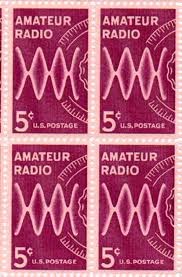
Happy Birthday, ARRL!
Happy 100th Birthday, ARRL! You don’t look a day over 50!
.jpg)
I wonder if there will be another special stamp issued this year?
72 de Larry W2LJ – Lifemember
QRP – When you care to send the very least!
LHS Episode #125: YFKTest Lives!
 In this episode of Linux in the Ham Shack, Pete goes AWOL. While he’s out being dishonorably discharged, Harrison and Cheryl step in to fill his medium-sized shoes. We also get an interview with Bob, W9YA, current maintainer of YFKTest. He tells us all about the new and exciting world of YFKTest and how it’s not, in fact, dead.
73 de The LHS Guys
Centennial QSO Party
I truly had a blast this past weekend working 20m SSB contacts and giving away 5 points as a VE during the year long ARRL Centennial QSO Party. As I mentioned in an earlier blog posting, I will be representing the Centennial State of Colorado when the W1AW/Ø portable operations schedule makes a stop in Colorado. W1AW/Ø will be on the air from Colorado 21-27 May. My contest operating is typically limited to Field Day and the Colorado QSO Party, so I wanted to spend some time on the air over the next few weeks brushing up on my “operating a pile-up” skills.
I spent about 3 hours “on the air” over the Easter weekend and managed to add about 180 SSB contacts to my log. If you’ve done any operating the past few days you are well aware that band conditions have been up and down. I was surprised at the feedback I received regarding my audio quality. I think fellow hams are surprised to know that I’m running just 100w into a hamstick dipole mounted just above my roofline. But this is the way for those of us living in HOA-hell.
Of course, I also have some weird issue going on with my Yaesu FT-950. I promise I didn’t let the magic smoke out, but something is seriously wrong with my SSB workhorse. You can read more about some of the testing I’ve done here. As I stated in that blog posting, I do plan to try another power supply. I’ll be pleasantly surprised if the issue is with my current power supply. But I’m also prepared to quickly send my 950 to Yaesu California. I need to get it back in time for when I operate W1AW/Ø.
If I had the privilege to work you over the past weekend, thank you for answering my CQ and I most certainly look forward to working you again soon.
Until next time…
73 de KDØBIK













