Archive for the ‘antennas’ Category
 EME In The ’80s
 December 21st, 2016 |
  Author:
  |
| VE7SL - my original 2m EME antenna. |
Unlike today's widespread JT65B usage on eme, where signals can be many db into the noise and inaudible by ear, eme contacts could only be completed by actually copying signals that you could hear with your ears. This usually required big antennas and lots of power.
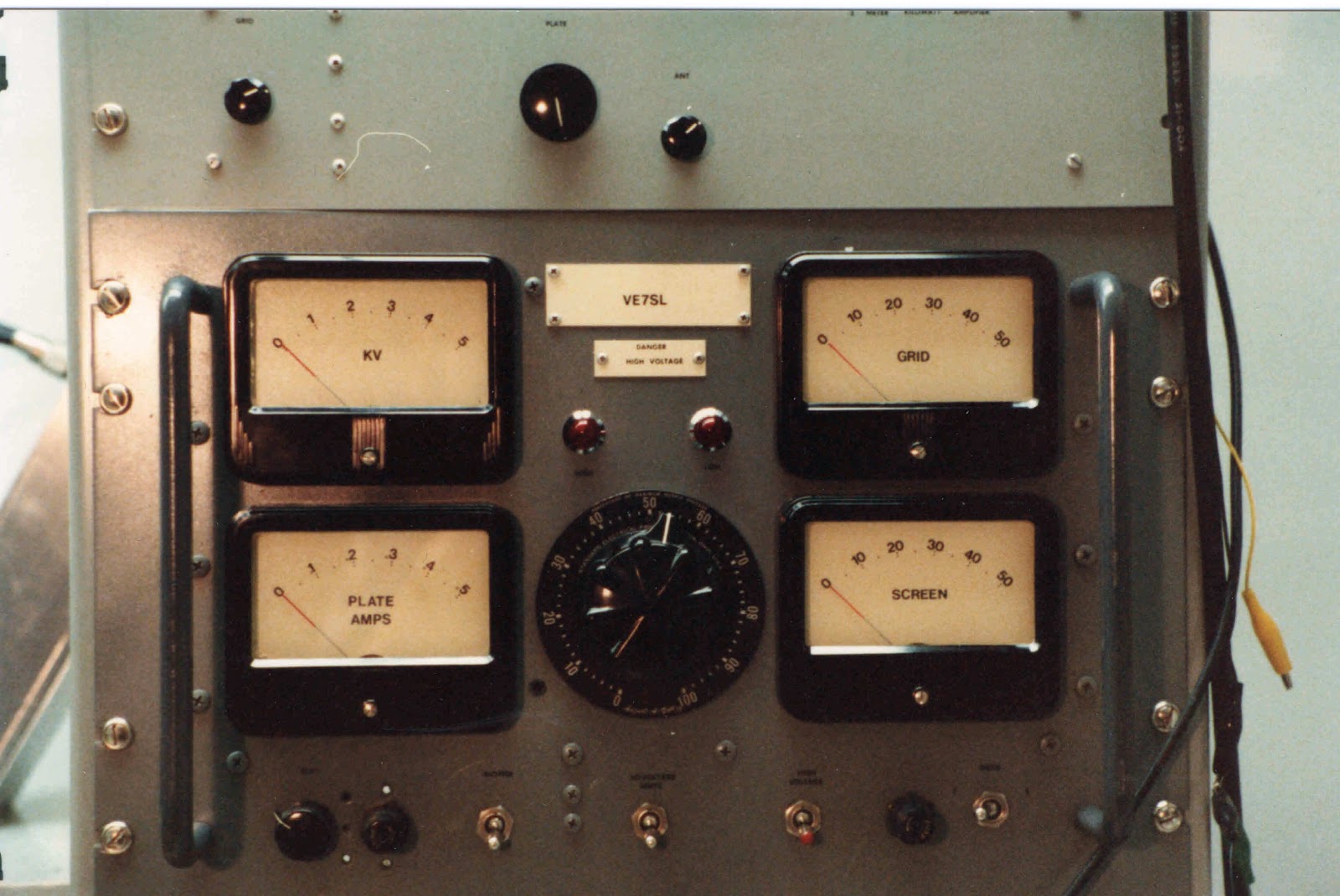
After a year and a half of evening work in my basement shop, my system was pretty much ready to go. I built a kilowatt amplifier, from the ARRL's VHF Handbook, along with its plate and screen power supplies.
 |
| 2m 'Plumbers Delight' handbook amp. |
My antennas (see above), as well as the large H-frame support, were also built in the basement and used all scrap aluminum from one of the numerous scrap yards that were in Vancouver at the time. The system consisted of sixteen separate 6 element NBS-styled yagis, all phased. Many of the two-dozen plus N connectors were bought at Boeing Surplus near Seattle, another interesting source of parts, also now long gone. Keeping water out of the phasing lines and connectors was a real challenge here in the rain forest and if one connector was not done exactly right, would create a lot of headaches.
The antenna took up a large portion of my small, 33'-wide suburban backyard. Pointing was all done by hand, using homemade scales to indicate elevation and azimuth angles, so that it could be pointed accurately even on cloud covered days and nights. A hand-cranked boat winch took care of elevation. I had a switch-box full of surplus VHF relays out at the antenna that protected my JFET preamp and also allowed me to compare sky and sun noise against a 50 ohm load.
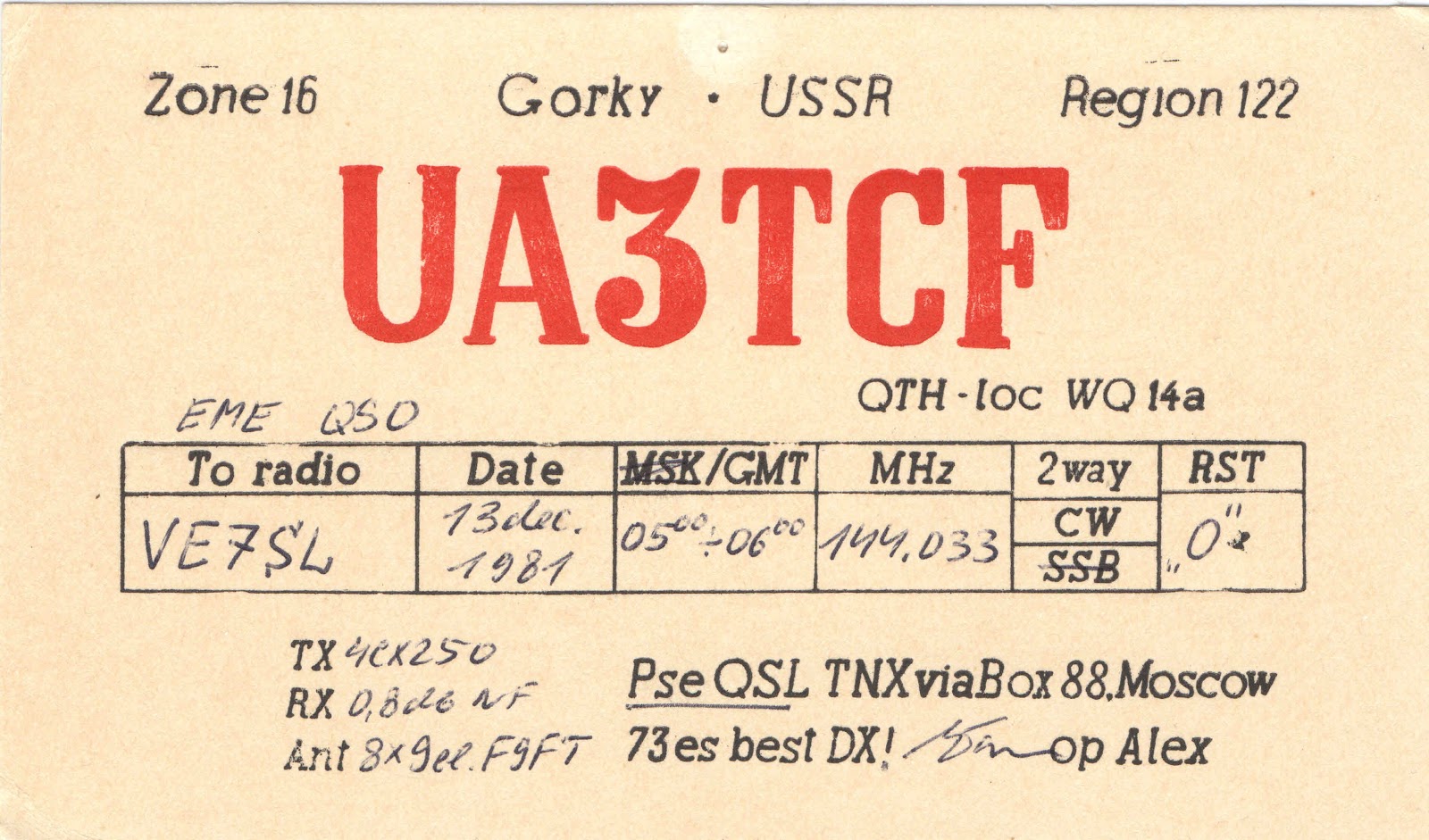
Over the course of a few years, the system was employed to work many Europeans as well as North American VEs' and Ws'. The one contact that stands out memorable for me, was with UA3TCF, east of Moscow. This was because I had to aim the array directly into my two-story house, located about 20' away! The moon was very low as well, so that not much elevation was required.
I eventually found that trying to hold down a full-time high school teaching job and running sked requests at 0300 were not very compatible! It also became a lot of work just to maintain the system properly. I had met and completed my original goals and it became time to move on.
Eventually the array was broken down into smaller sections and sold to local 2m guys, along with the amplifier ... but it was a huge learning experience for me and the fact that I survived building and playing with a 2,000 volt power supply, still scares the heck out of me!
 |
| Plate & screen supply for the 2m amp. |
 |
| The VHF rack with xvrtrs and amps 50mHz-432mHz. |
 |
| My gal Sal adorning the 2m tower on a snowy Sunday morning. |
More On The PAØRDT E-Probe
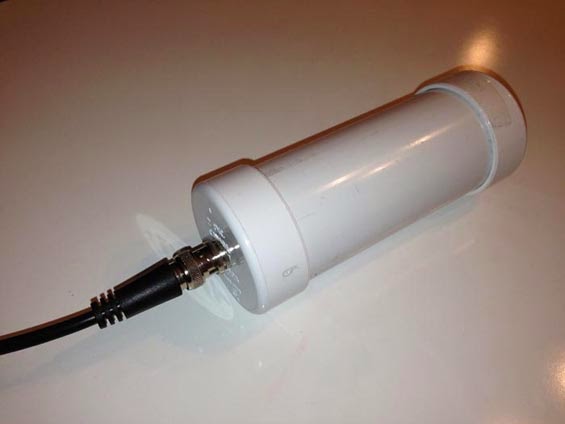 |
| Courtesy: http://www.leeszuba.com/projects/ |
Another recent reflector question about noise mitigation for active e-probe antennas brought further incite from Roelof Bakker, PAØRDT.
I found particular interest in his method of determining if the noise is being picked up by the antenna or being introduced by the feedline. As well, Roelof suggests one of the most important aspects of homebrewing ... keeping detailed notes of all tests or changes. He also suggests maintaining a healthy outlook regarding noise and rather than getting discouraged, take on the challenge of overcoming it!
Hello all,
I have been dealing with this subject for more then 10 years now and
I am pleased to pass on what I did learn so far.
The first item to look at is noise pick up on the feed line. This
can be a coax cable or a CAT5/6/7 network cable. Looking for noise
pick up on the feed line should be done without the active antenna
connected. Otherwise everything should be the same as when using the
antenna.
Ideally the antenna should be replaced by a 50 ohm termination that
can handle the power that is supplied by the DC-power supply feeding
the antenna. However, this is not necessary to achieve good results.
I am fortunate to own a PERSEUS SDR, that besides an excellent
receiver is also a nice piece of test gear. For noise pick-up
measurements I use HF-Span that changes the PERSEUS into a 0-40 MHz
spectrum analyser with a noise floor of -112 dBm. For narrow band
measurements the PERSEUS is used with Linrad, which can provide
accurate results.
Whilst looking at noise pick-up on the cable, one can unplug all
suspect devices and check if the noise is still present.
The most effective measure is grounding the shield of the coax cable
at the bottom of the mast, but I had still noise ingress of about -
100 dBm around 15 MHz. This could be solved by moving the power
supply and interface of the antenna from the operating position to
the location of the cable entry to the house. This minimises the
length of cable inside the house before the a rf-isolating
transformer used in the interface.
It is mandatory to use a separate radio earth, isolated from the
mains earth. My PC is connected to a mains outlet with a mains earth
connection, but no other equipment in the shack is using the mains
earth. This works for me.
There is also a discussion about the use of a common mode choke
versus a rf-isolating transformer. I have tried both and they both
work. However a rf-isolating transformer is much easier (and
cheaper) to build than common mode chokes with a winding of coax
cable.
In this regard, I should mention a source of interference that is
easily overlooked: receivers. It is not uncommon to own more than
one receiver and it appears that the antenna port is often far from
clean. I am using four SDR's which are fed from a balanced Norton
amplifier / four port splitter and these produce noticeable noise.
Using four rf-isolating transformers at the outputs of the splitter
eliminated the noise. My mini-whip is feeding up to 8 receivers
(hardware) via amplifiers /splitters / rf-isolating transformers
without degrading the receiver noise floor by mutual noise ingress.
The last point is about masts. A metal mast will decrease the signal
level when the antenna is mounted close to it. A short PVC extension
mast will help. The reason I am using a non-conductive mast is a
practical one as cheap and sturdy stackable camouflage net mast
sections were and are still available in western Europe. These are
ideal for either testing antennas and for permanent installations.
Metal masts can introduce problems by being resonant at a certain
frequency and receiving noise that can be transferred to the feed
line. However, checking the feed-line as described above will make
clear if this is the case or not. If there are no problems, there is
nothing against the use of a metal mast.
As every location is different, it is no use to provide an exact
recipe to solve noise problems. I believe that a systematic approach
is mandatory; take notes etc. as it is too easy to run in circles.
By all means do measure what you are doing, otherwise you will walk
in the dark for sure.
The good news is that it is still possible to build a low noise
reception system in the city and doing so can be fun! What might
also help is to change the attitude from 'it should not be there
after all' to 'what can I do about it!'
Best regards and 73,
Roelof Bakker, pa0rdt
If you're thinking about having a listen on LF or on 630m, the e-probe antenna can be a very effective solution .... and it takes up very little space. The finer details regarding the PAØRDT active antenna may be found here and here. All previous blog postings related to this topic may be found here.
NPOTA success – WR03
The day dawned gray. misty and chilly, but it wasn't downpouring. So I collected this bag of bones out of bed. I showered, shaved, got dressed and packed the Jeep with everything necessary for a ride to NPOTA land.
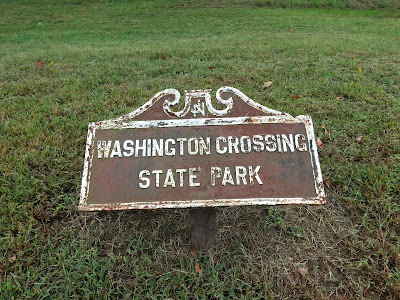
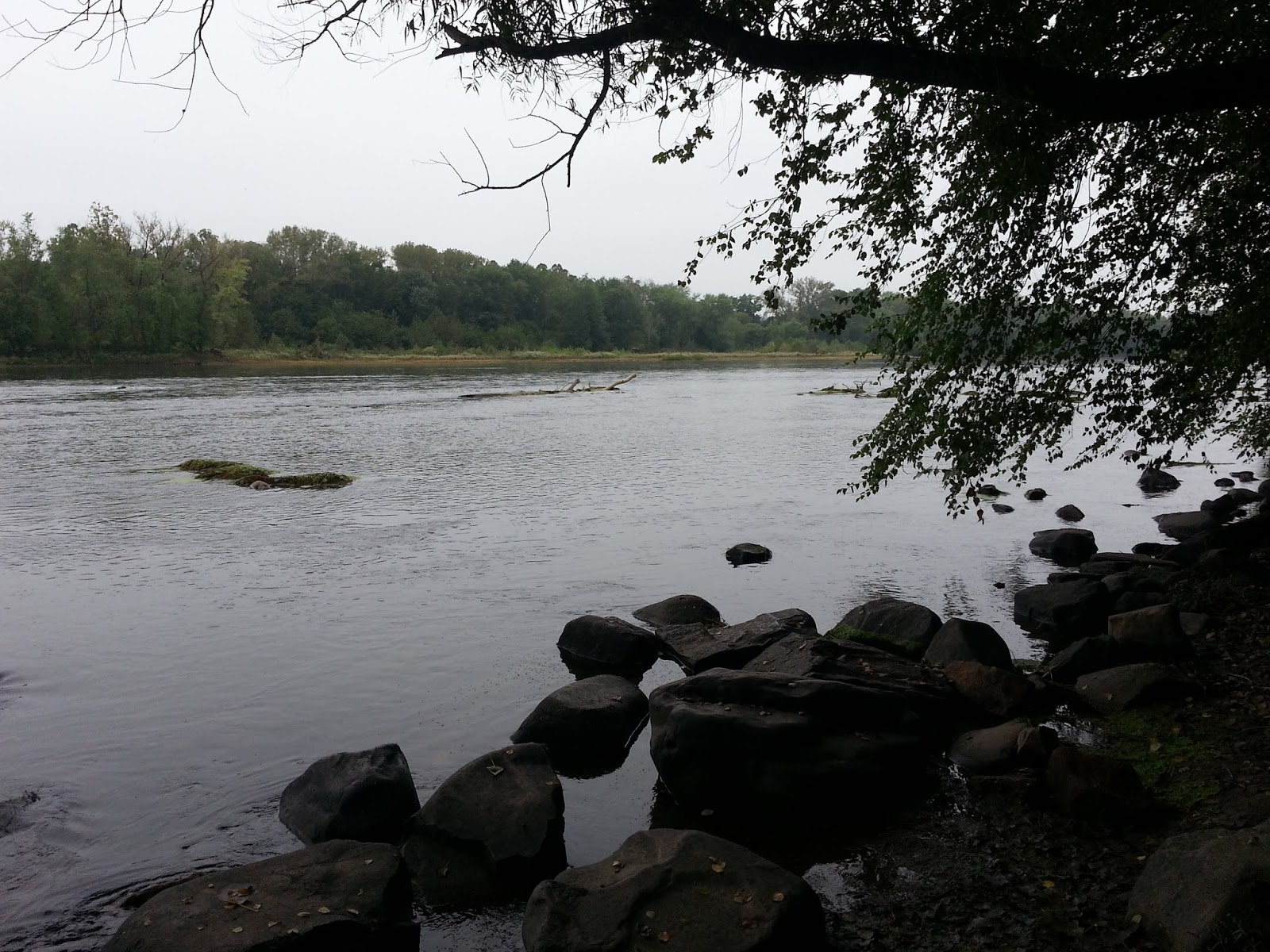
As stated a few days ago, the destination was WR03, the Delaware National Scenic River, via Washington's Crossing State Park, in Titusville, NJ. Thanks to the fact that there was hardly any traffic on an early Sunday morning, I arrived in about 45 minutes.





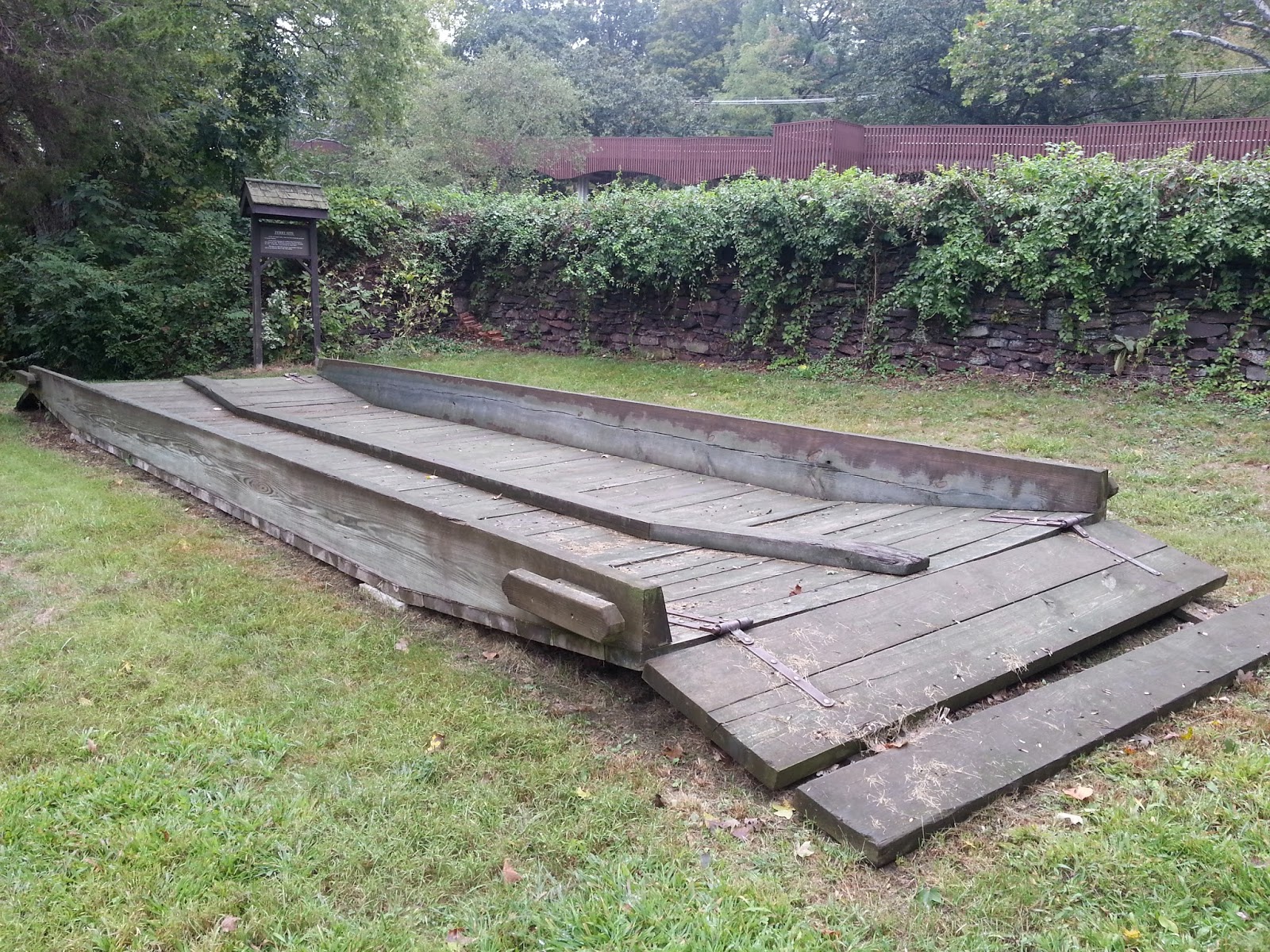
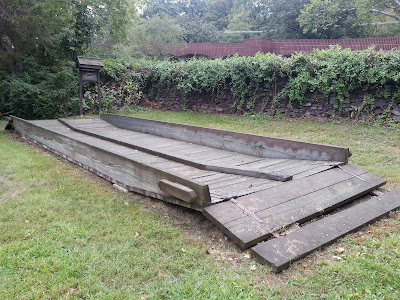 This is a re-creation of one of the "boats" that were in use during Colonial times to ferry people and supplies across the river. It's really not much more than a glorified raft. So the painting IS right. Washington stood ...... and do did everyone else!
As stated a few days ago, the destination was WR03, the Delaware National Scenic River, via Washington's Crossing State Park, in Titusville, NJ. Thanks to the fact that there was hardly any traffic on an early Sunday morning, I arrived in about 45 minutes.
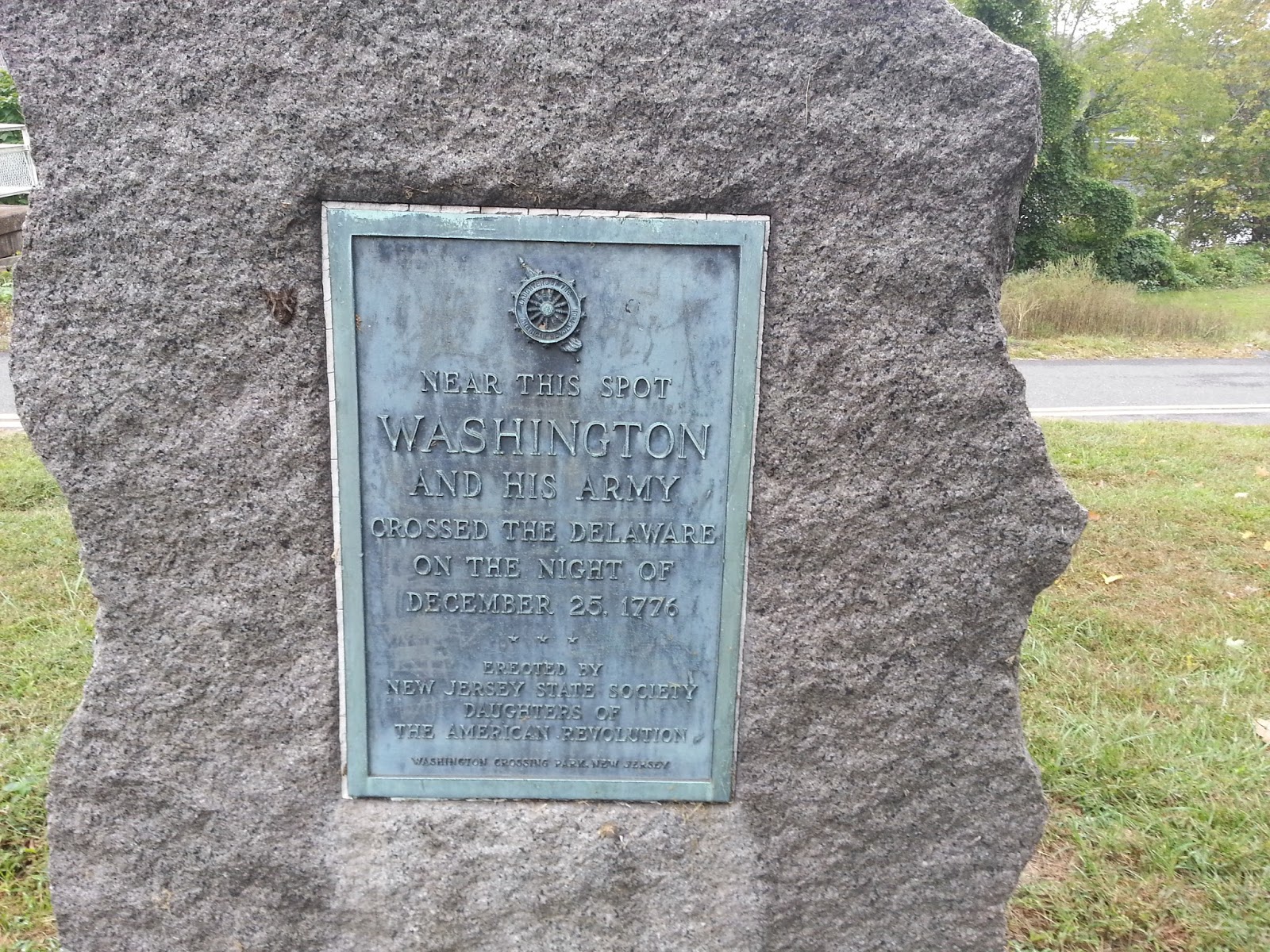
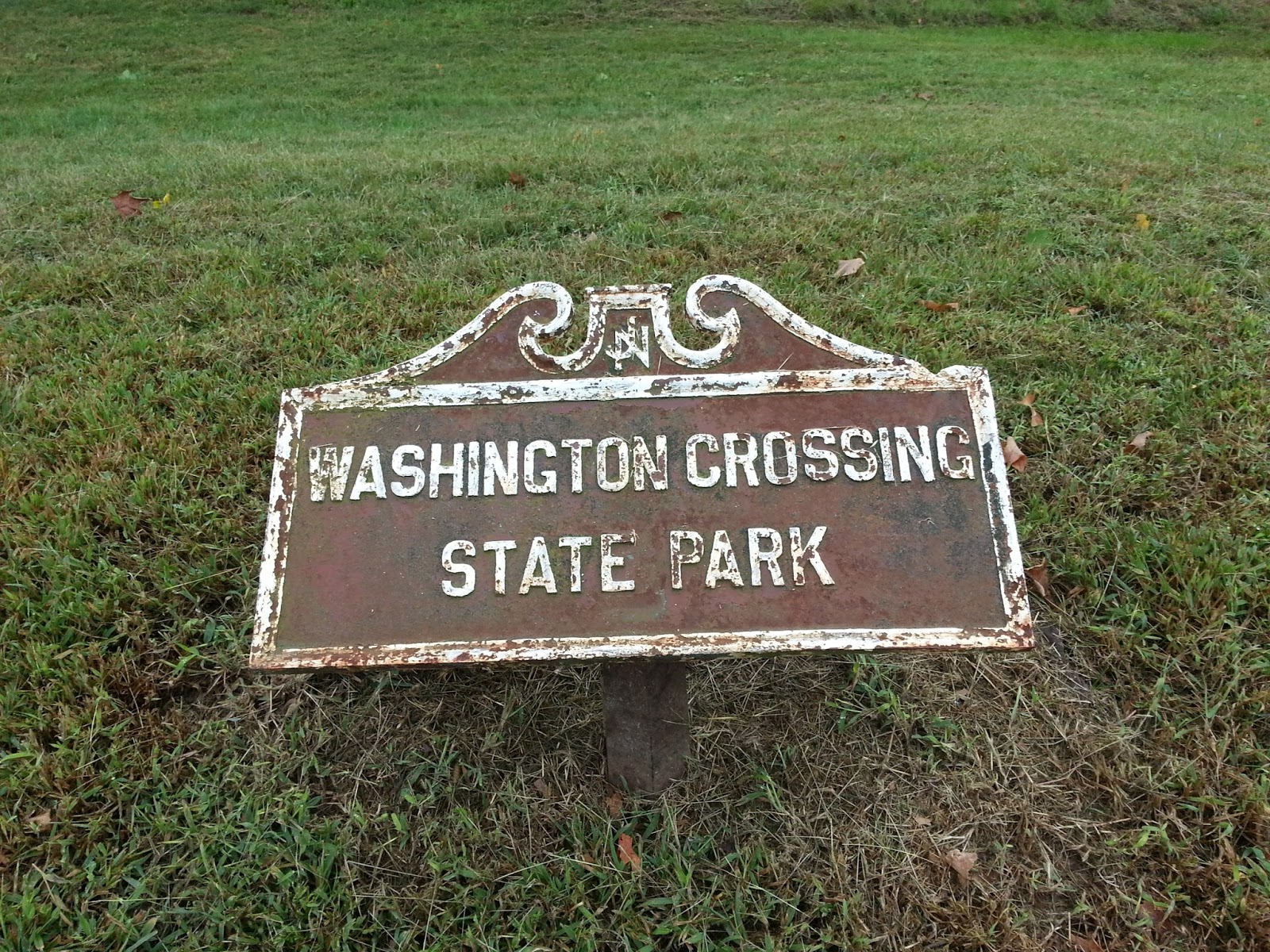
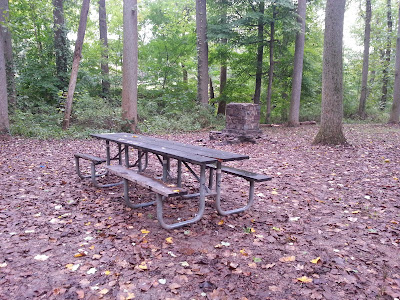
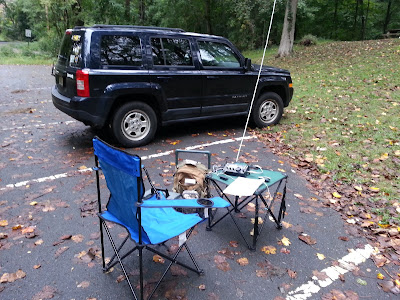
Everything was wet from the light rains and heavy mist that fell throughout the night. I made the decision to forgo using a soggy, leaf covered picnic table and used my camping table and folding chair from the parking lot, instead. This was not the main parking lot, but a smaller one, farther in the park. It was literally a stone's toss from the river.

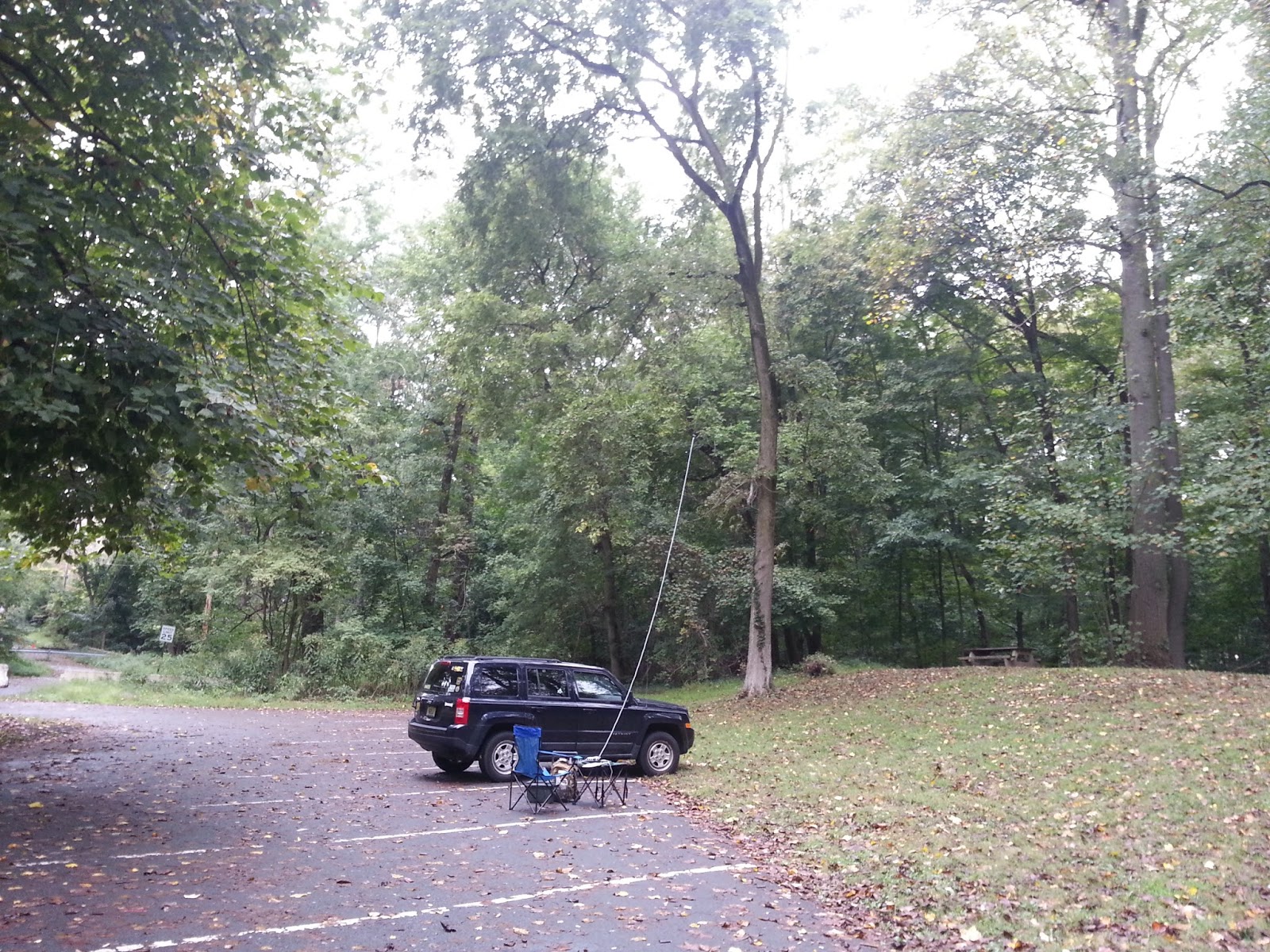
You can see the 25' piece of coax going up to the PAR in the tree.
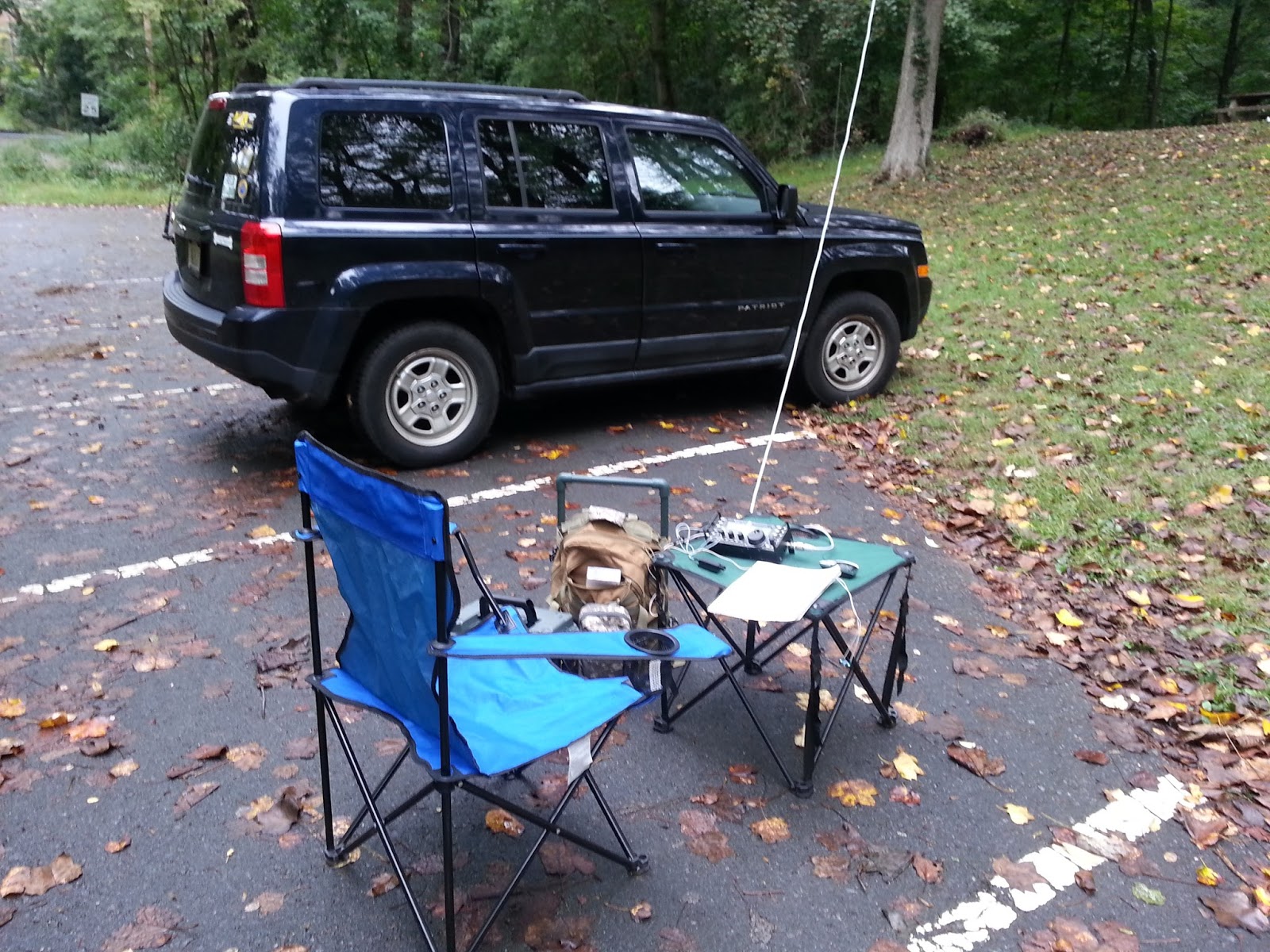
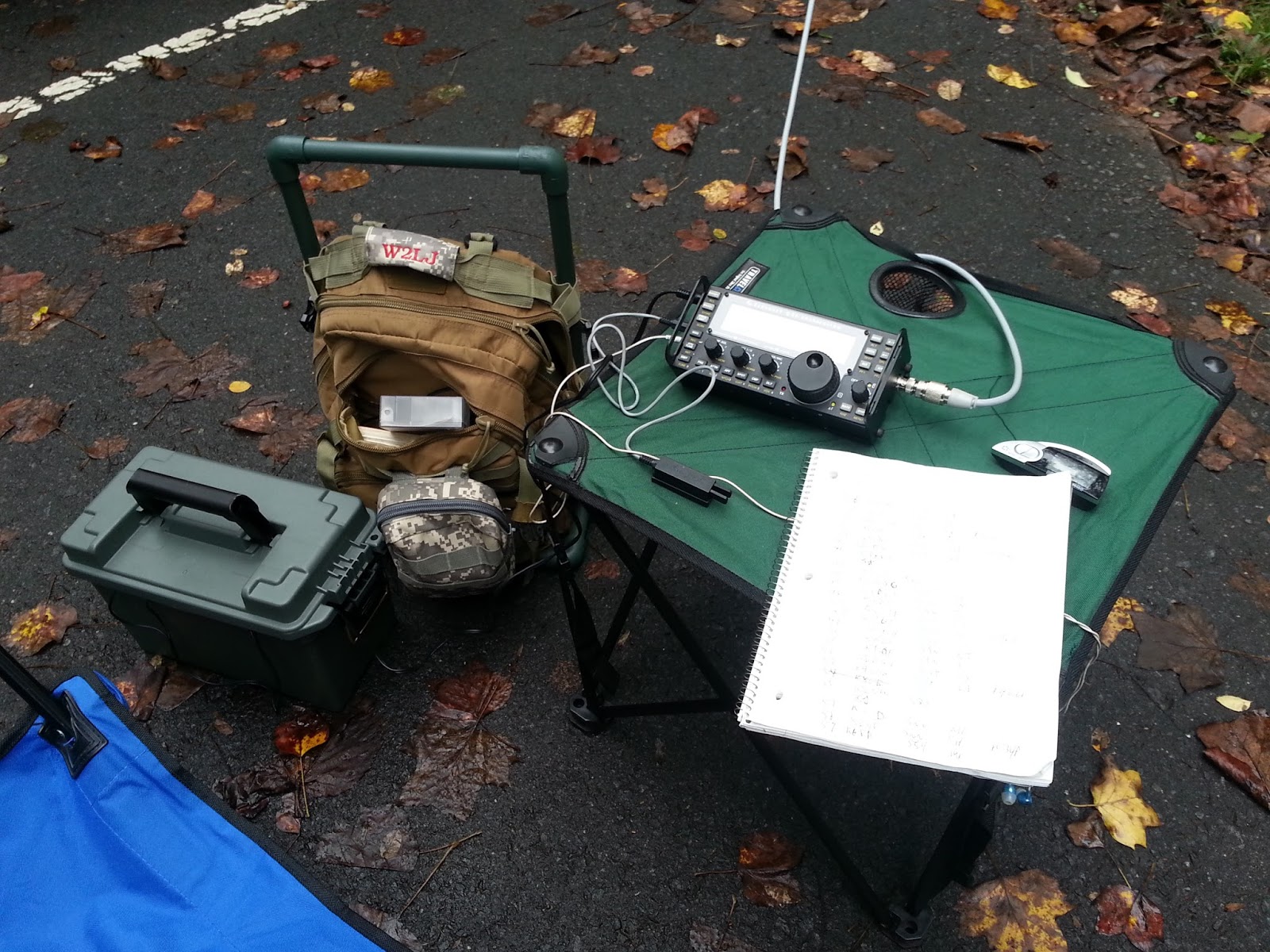
The set up was the usual, the KX3 at 5 Watts to a PAR END FEDZ 40/20/10 in a tree. I got really good height this time. The PAR was easily 50 -60 feet up in the air this time. And that was evident with the results - 43 QSOs in under 90 minutes. 20 Meters was LONG! I worked Belgium, Croatia, Hungary, Slovenia, Mexico, California, Montana and appropriately enough, Washington State. 40 Meters got me up and down the east coast and as far west as Minnesota.
I called it quits after about 90 minutes as the QSOs were drying up and I was starting to get a bit chilled. Oh, and there were skeeters! But NOT the kind that I like. I was swatting at them the whole time I was there. Who would have thought that mosquitoes would be out and about on a damp, and chilly day in the high 50s? After I packed up, but before leaving, I walked around to snap a few more photos.


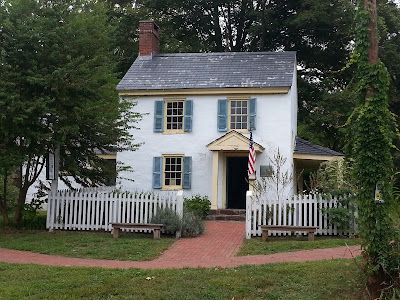
The house owned by the "ferry operator".
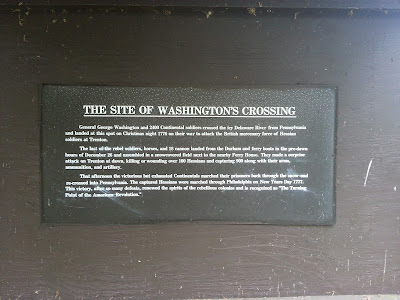
Later, when I had time to think about all of this, it was truly amazing. 2,400 men, some horses and artillery began silently crossing the river as soon as it got to be dark (There were British spies all over). Once they all reached the New Jersey side,they all marched the 20 or so miles to Trenton throughout snowy fields and made it there by daybreak. The effort just to get to Trenton must have been exhausting given the distance, the cold and the snow. Then they surprised the Hessians and won the battle without one Continental soldier being lost. Astounding!
All in all, it was another good NPOTA day. I thank all the chasers who worked me and I look forward to another adventure in a few more weeks - this time, maybe the NJ Pine Barrens.
72 de Larry W2LJ
QRP - When you care to send the very least!
NPOTA success – WR03
The day dawned gray. misty and chilly, but it wasn't downpouring. So I collected this bag of bones out of bed. I showered, shaved, got dressed and packed the Jeep with everything necessary for a ride to NPOTA land.
As stated a few days ago, the destination was WR03, the Delaware National Scenic River, via Washington's Crossing State Park, in Titusville, NJ. Thanks to the fact that there was hardly any traffic on an early Sunday morning, I arrived in about 45 minutes.
This is a re-creation of one of the "boats" that were in use during Colonial times to ferry people and supplies across the river. It's really not much more than a glorified raft. So the painting IS right. Washington stood ...... and do did everyone else!
As stated a few days ago, the destination was WR03, the Delaware National Scenic River, via Washington's Crossing State Park, in Titusville, NJ. Thanks to the fact that there was hardly any traffic on an early Sunday morning, I arrived in about 45 minutes.
Everything was wet from the light rains and heavy mist that fell throughout the night. I made the decision to forgo using a soggy, leaf covered picnic table and used my camping table and folding chair from the parking lot, instead. This was not the main parking lot, but a smaller one, farther in the park. It was literally a stone's toss from the river.
You can see the 25' piece of coax going up to the PAR in the tree.
The set up was the usual, the KX3 at 5 Watts to a PAR END FEDZ 40/20/10 in a tree. I got really good height this time. The PAR was easily 50 -60 feet up in the air this time. And that was evident with the results - 43 QSOs in under 90 minutes. 20 Meters was LONG! I worked Belgium, Croatia, Hungary, Slovenia, Mexico, California, Montana and appropriately enough, Washington State. 40 Meters got me up and down the east coast and as far west as Minnesota.
I called it quits after about 90 minutes as the QSOs were drying up and I was starting to get a bit chilled. Oh, and there were skeeters! But NOT the kind that I like. I was swatting at them the whole time I was there. Who would have thought that mosquitoes would be out and about on a damp, and chilly day in the high 50s? After I packed up, but before leaving, I walked around to snap a few more photos.
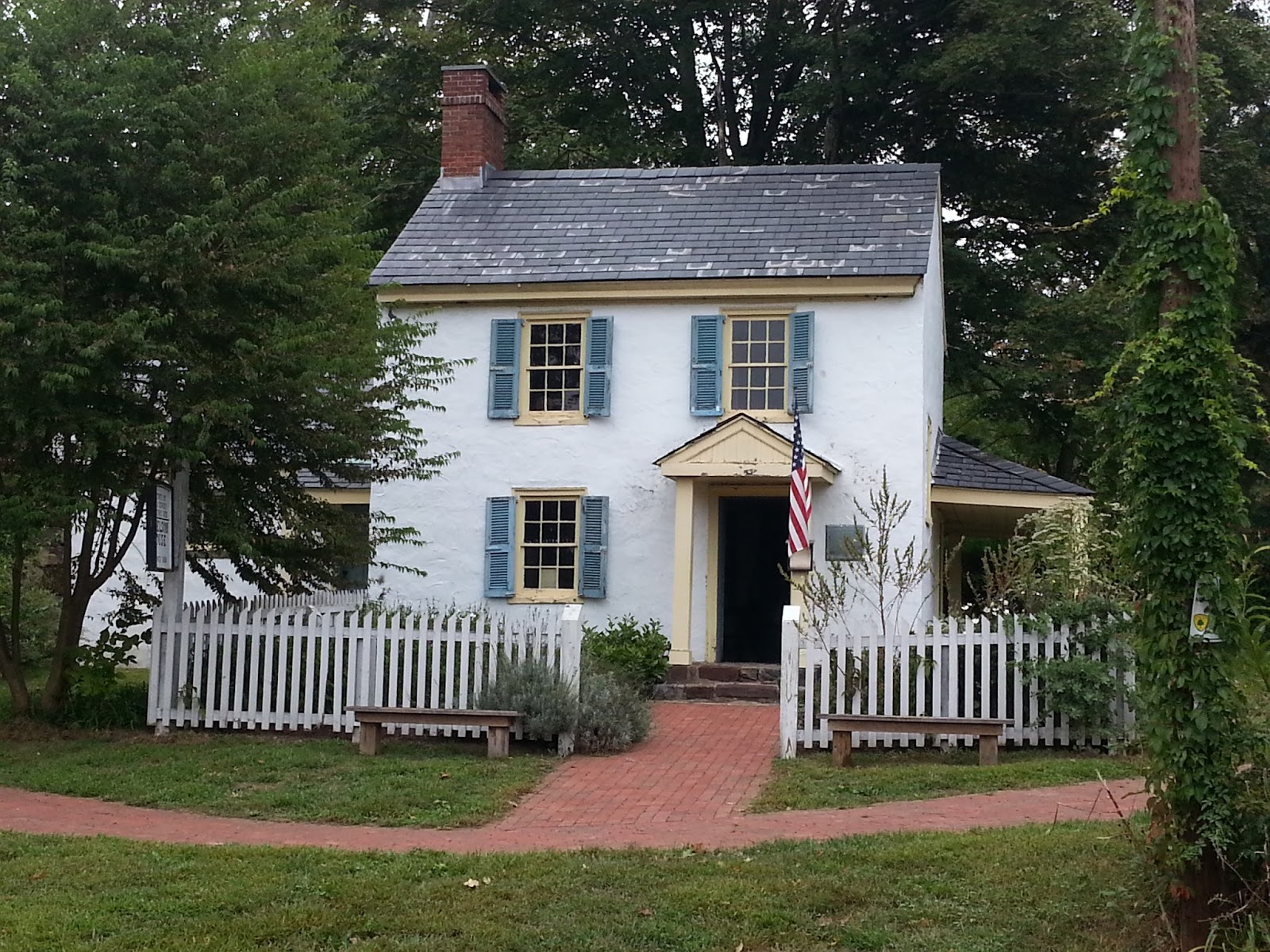
The house owned by the "ferry operator".
Later, when I had time to think about all of this, it was truly amazing. 2,400 men, some horses and artillery began silently crossing the river as soon as it got to be dark (There were British spies all over). Once they all reached the New Jersey side,they all marched the 20 or so miles to Trenton throughout snowy fields and made it there by daybreak. The effort just to get to Trenton must have been exhausting given the distance, the cold and the snow. Then they surprised the Hessians and won the battle without one Continental soldier being lost. Astounding!
All in all, it was another good NPOTA day. I thank all the chasers who worked me and I look forward to another adventure in a few more weeks - this time, maybe the NJ Pine Barrens.
72 de Larry W2LJ
QRP - When you care to send the very least!
The Amazing BOG
 |
| courtesy: http://www.wd0m.com/antennas1.html |
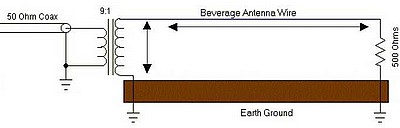
A recent inquiry about 'BOG' antennas on the topband reflector reminded me of my own experiences with this simple yet very effective antenna. A 'BOG' or 'Beverage On Ground' seems to come in many varieties and is usually, out of necessity, shorter than a 'real' beverage.
In many instances, BOGs are as simple as running a wire out on the ground as long and as straight as practical. Not always, but usually, the BOG is fed by a small homemade balun to isolate and match the impedance to a 50 ohm feedline. Most real Beverages are terminated at the far end with a resistor to ground, while for BOG builders, some use it and some don't.
My own experience with a BOG, or as close as I could come to one, was an extension of my 160m half-sloper. The topband half-sloper was quite normal, being about 132' long and fed at the top of its supporting metal tower with 50 ohm coax ... the hot-side of the coax going to the wire and the shield going to the metal tower.
One afternoon I wondered how the antenna would work lower in frequency, in the NDB band below the broadcast band, if I were to extend the sloping 132' element further. I added another length of wire to the lower end and proceeded to run the wire along the ground on the bankside above the beach. I was able to run out another 500' approximately, in a straight line to the east, before running out of beach. I left the far end unterminated and waited for darkness to to have a listen.
The first thing I noticed when tuning the NDB band was how quiet it sounded. There seemed to be almost no noise, man-made or nature-made. Disconnecting the antenna showed a small drop in what little noise there was, indicating that sensitivity levels were still being determined by skynoise ... a good thing.
What amazed me however, was that signals just popped-up everywhere and although not as strong as on my normal NDB antenna (a loop at the time), they were much better copy since there was virtually no noise. The BOG produced a significant improvement in my SNR on all signals. It had been several months since I had logged any new beacons on the NDB band but over the next three weeks I was able to put 65 new catches in the log ... all previously unheard! Switching between the loop and the BOG almost always produced no copy at all on the new signals, compared to an easily copied one on the BOG.
My experience was very similar to that shown in these videos by VO1HP ... with solid signals well out of the low noise background and no sign of atmospheric noise to mask them.
It is clearly evident that the BOG delivers a much better SNR than the comparison loop and is the reason so many topbanders use a separate antenna for receiving. The next video compares the BOG with a 160m 'Inverted-L', a very popular antenna on topband.
BOGs need not be really long and good results can be had with just 200' of wire. Many BOG users employ a simple preamp to boost the low level of signal but often the switchable 'preamp' built into a receiver or transceiver will be enough to overcome the low gain of shorter wires.
I've often thought that if I had a lot of acreage, the ideal receiving system for MF and LF work would be a centrally located radio shack with long Beverage wires fed-out in various directions ... like the spokes of a wheel. Having the ability to directionally switch antennas would produce 'beam-like' capabilities on LF.
There is a ton of web information available on the BOG and the Beverage should you want to give this simple antenna a try and have a narrow strip of space where one might be laid out without causing a problem.
A very comprehensive source of BOG and Beverage information can be found on WØBTU's Beverage Receiving Antennas page here.
A nice compilation of Beverage / BOG exchanges from the Topband Reflector may be found on N1EU's Beverage Antenna Tips page here.
In addition, N1EU has a useful page of discussion about transformers used in these antennas.
PA5MW offers a colorful description of his own BOG experience here.
Bruce, K1FZ has a nice BOG 'hint's' page here and also passed this advise to the original BOG inquiry:
A BOG can do a good job unterminated. If too long they self terminate. Depends upon the soil as to length.
The biggest mistake is making the BOG antenna too long. Try not to go
over 200 feet for 160 meters. Longer will work in some locations
soil like desert, sand, other non/ partial conducting types.
Its been a few years since my last experience with a BOG but I may run one out again for the DX season, now that most of my neighbours have left the island for the winter.
Weekend plans go semi awry.
I had planned on two Amateur Radio activities this weekend. I almost ended up going 0 for 2, but ended up batting .500 instead.
My first planned activity was to participate in the NJ QSO Party on Saturday. The work party that I attended at the Middlesex County Office of Emergency Management went longer than I anticipated. I'm glad we got the work done that we did, though, as it was important that it got done before the Simulated Emergency test in October. When I got home, there was still plenty of time to participate in the contest - no doubt. Other chores had to be taken care of first, though; and I made sure I got those done. End result? One very tired W2LJ and no NJQP on Saturday.
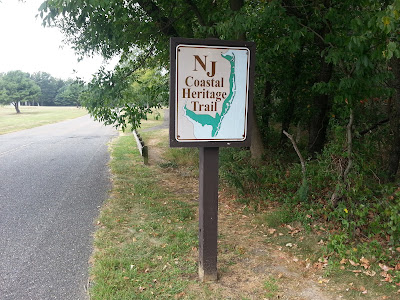
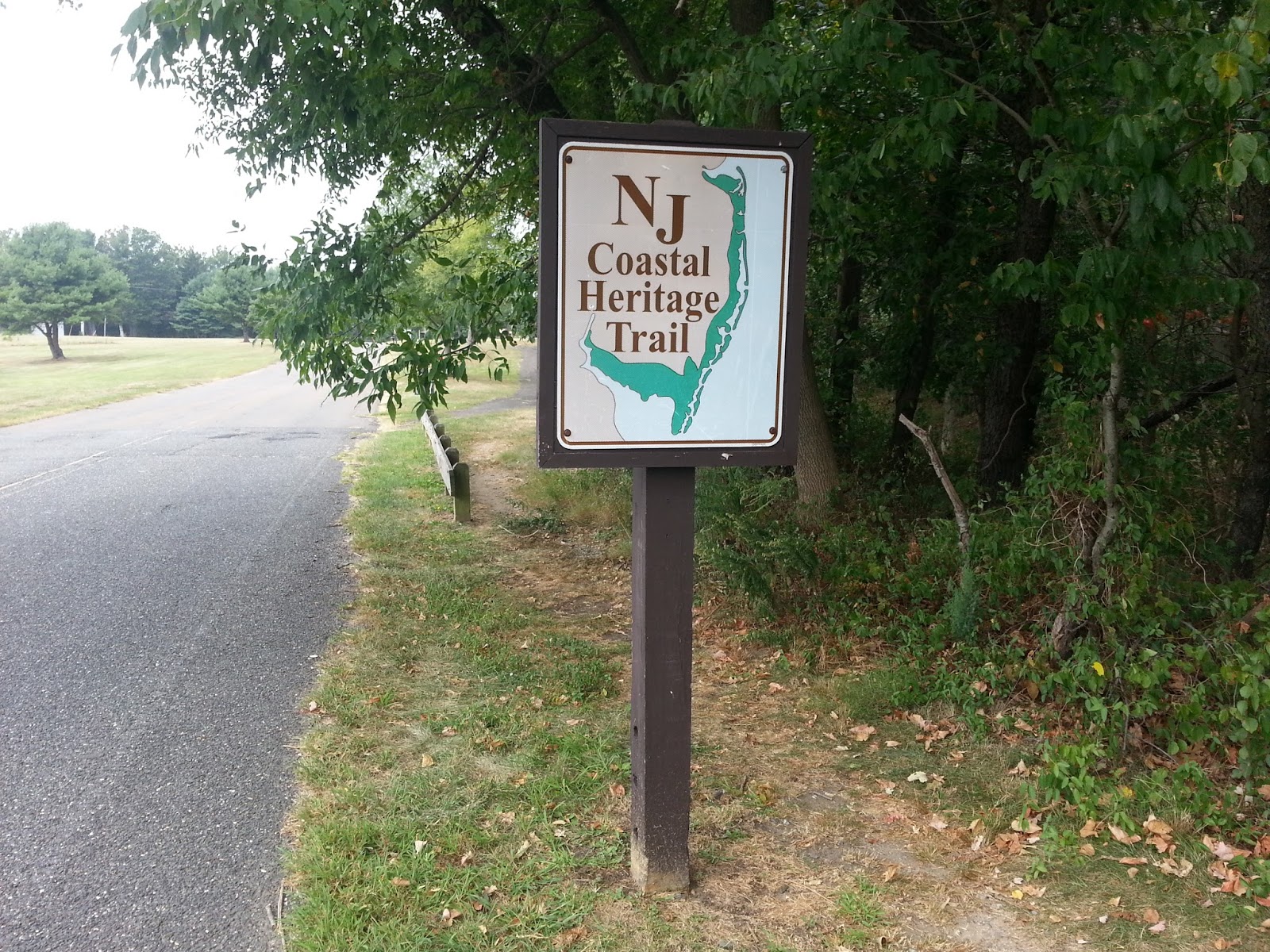
After dinner, I sat down with the tablet and saw on the ARRL NPOTA Facebook page that Peter K0BAK was doing a sweep of NJ activations this weekend, including AA17, the New Jersey Coastal Heritage Trail. My heart sank a bit because he's such a superb operator and activator - does AA17 really need to be activated twice the same day? And if you had the chance to work either me or Peter .... heck, even I'd rather work Peter than me !!!
My first planned activity was to participate in the NJ QSO Party on Saturday. The work party that I attended at the Middlesex County Office of Emergency Management went longer than I anticipated. I'm glad we got the work done that we did, though, as it was important that it got done before the Simulated Emergency test in October. When I got home, there was still plenty of time to participate in the contest - no doubt. Other chores had to be taken care of first, though; and I made sure I got those done. End result? One very tired W2LJ and no NJQP on Saturday.
After dinner, I sat down with the tablet and saw on the ARRL NPOTA Facebook page that Peter K0BAK was doing a sweep of NJ activations this weekend, including AA17, the New Jersey Coastal Heritage Trail. My heart sank a bit because he's such a superb operator and activator - does AA17 really need to be activated twice the same day? And if you had the chance to work either me or Peter .... heck, even I'd rather work Peter than me !!!
When I went to bed last night, I was really iffy about making the effort. The weather was supposed to be suspect but I decided to sleep on it, thinking perhaps that maybe it might be better to wait for another weekend.
Sunday morning dawned muggy and overcast. Not exactly the greatest of weather conditions. But then the thought occurred to me that K0BAK normally does most of his operating on SSB, and mine was to be CW; so I decided to throw caution to the wind and decided to go to Cheesequake State Park, anyway.
I left the house a little after 9:00 AM and got to the park just around 9:30 AM. I found the Spring Hill Picnic Grounds to be deserted, save for a few parked cars. The occupants of those cars were all going off on hikes as the lot also served as the starting point for one of the park's many trailheads. With the picnic tables all to myself, I set up the PAR ENDFEDZ 40/20/10. The line went up over a 60 foot tree with ease thanks to my trusty Joplin MO ARC Antenna Launcher. I literally had the antenna up within minutes. I've had enough practice with the launcher to now get a good shot on the first try, at least 90% of the time.
The setup was the usual, KX3 to antenna, the Power Werk deep cycle battery, the Palm Micro paddles and a set of ear buds. The ear buds turned to be a life saver, as the picnic area turned out to be pretty gosh darn close to the Garden State Parkway, and there was lots of highway noise. In some cases, there were also some ignition noise moments. I thought I was far enough away where that wouldn't be a concern; but there must be a few vehicles out there that are close to being spark gap transmitters!
I got on the air at 1400 UTC, calling "CQ NPOTA" on 40 Meters at 7.034 MHz, and had my first QSO with W3JRR at 1415 UTC. I stayed on 40 Meters for about 45 minutes before taking a break to stretch my legs and to use the rest facilities. Thank the Lord they were open! I came back to the ear buds, and I could have sworn that I heard "BBO". I thought that was my good friend W3BBO looking for me; as I spotted myself on the Cluster. I called him a few times and heard no come back; so I decided to move on up to 20 Meters.
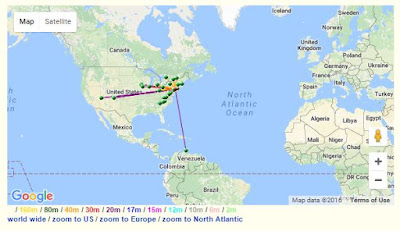
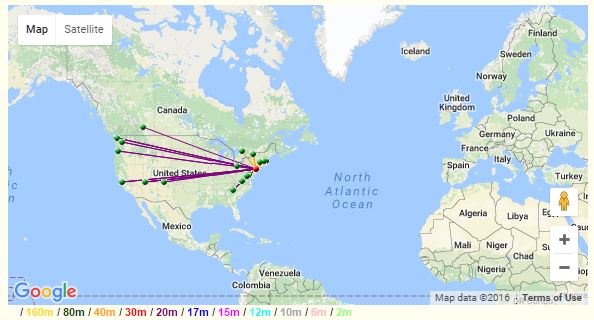
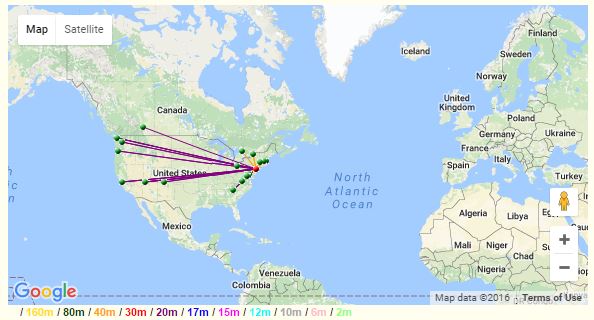
20 Meters turned out to be the better band. My farthest DX QSOs happened there with S58AL in Slovenia and ON4RO in Belgium. I also ended up working Arizona and Washington state on 20 Meters. So even though I made it to Europe, this is where the Reverse Beacon Network picked me up:
Just before 1600 UTC, I was visited by a Park Ranger who came to put up a sign showing that the picnic grounds had been reserved by a Baptist Church group for a BBQ. It was booked for 1:00 PM local or 1700 UTC. I decided to pack it in, anyway. My original plan was to put in about two hours, so that I wouldn't be away from the family for the entire day; and I put in my two hours, so I was happy.
The highlights of the day were working Kay Craigie N3KN, Dave Benson K1SWL of Small Wonder Labs and Rockmite fame, as well as Paul Signorelli W0RW, of QRP and Paraset Pedestrian Mobile fame. It's always cool when you go on an outing like this and hear the call signs of people you regard as friends. Not to say that ALL of you aren't friends ........ but you know what I mean!
37 QSOs later, my activation of AA17 was in the books for the day. I still hope to join up with Dave Hackett KD2FSI to activate the Pine Barrens and the Delaware Water Gap and the Appalachian Trail before NPOTA comes to a close - so stay tuned!
72 de Larry W2LJ
QRP - When you care to send the very least!
Weekend plans go semi awry.
I had planned on two Amateur Radio activities this weekend. I almost ended up going 0 for 2, but ended up batting .500 instead.
My first planned activity was to participate in the NJ QSO Party on Saturday. The work party that I attended at the Middlesex County Office of Emergency Management went longer than I anticipated. I'm glad we got the work done that we did, though, as it was important that it got done before the Simulated Emergency test in October. When I got home, there was still plenty of time to participate in the contest - no doubt. Other chores had to be taken care of first, though; and I made sure I got those done. End result? One very tired W2LJ and no NJQP on Saturday.
After dinner, I sat down with the tablet and saw on the ARRL NPOTA Facebook page that Peter K0BAK was doing a sweep of NJ activations this weekend, including AA17, the New Jersey Coastal Heritage Trail. My heart sank a bit because he's such a superb operator and activator - does AA17 really need to be activated twice the same day? And if you had the chance to work either me or Peter .... heck, even I'd rather work Peter than me !!!
My first planned activity was to participate in the NJ QSO Party on Saturday. The work party that I attended at the Middlesex County Office of Emergency Management went longer than I anticipated. I'm glad we got the work done that we did, though, as it was important that it got done before the Simulated Emergency test in October. When I got home, there was still plenty of time to participate in the contest - no doubt. Other chores had to be taken care of first, though; and I made sure I got those done. End result? One very tired W2LJ and no NJQP on Saturday.
After dinner, I sat down with the tablet and saw on the ARRL NPOTA Facebook page that Peter K0BAK was doing a sweep of NJ activations this weekend, including AA17, the New Jersey Coastal Heritage Trail. My heart sank a bit because he's such a superb operator and activator - does AA17 really need to be activated twice the same day? And if you had the chance to work either me or Peter .... heck, even I'd rather work Peter than me !!!
When I went to bed last night, I was really iffy about making the effort. The weather was supposed to be suspect but I decided to sleep on it, thinking perhaps that maybe it might be better to wait for another weekend.
Sunday morning dawned muggy and overcast. Not exactly the greatest of weather conditions. But then the thought occurred to me that K0BAK normally does most of his operating on SSB, and mine was to be CW; so I decided to throw caution to the wind and decided to go to Cheesequake State Park, anyway.
I left the house a little after 9:00 AM and got to the park just around 9:30 AM. I found the Spring Hill Picnic Grounds to be deserted, save for a few parked cars. The occupants of those cars were all going off on hikes as the lot also served as the starting point for one of the park's many trailheads. With the picnic tables all to myself, I set up the PAR ENDFEDZ 40/20/10. The line went up over a 60 foot tree with ease thanks to my trusty Joplin MO ARC Antenna Launcher. I literally had the antenna up within minutes. I've had enough practice with the launcher to now get a good shot on the first try, at least 90% of the time.
The setup was the usual, KX3 to antenna, the Power Werk deep cycle battery, the Palm Micro paddles and a set of ear buds. The ear buds turned to be a life saver, as the picnic area turned out to be pretty gosh darn close to the Garden State Parkway, and there was lots of highway noise. In some cases, there were also some ignition noise moments. I thought I was far enough away where that wouldn't be a concern; but there must be a few vehicles out there that are close to being spark gap transmitters!
I got on the air at 1400 UTC, calling "CQ NPOTA" on 40 Meters at 7.034 MHz, and had my first QSO with W3JRR at 1415 UTC. I stayed on 40 Meters for about 45 minutes before taking a break to stretch my legs and to use the rest facilities. Thank the Lord they were open! I came back to the ear buds, and I could have sworn that I heard "BBO". I thought that was my good friend W3BBO looking for me; as I spotted myself on the Cluster. I called him a few times and heard no come back; so I decided to move on up to 20 Meters.
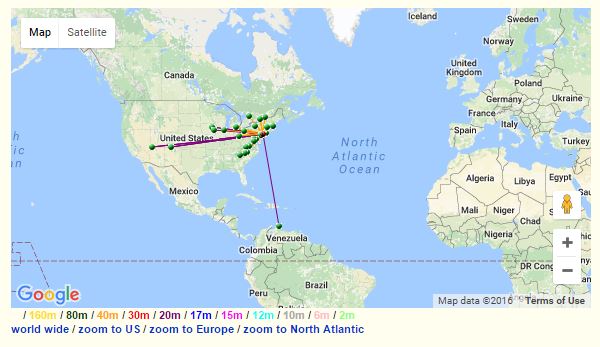
20 Meters turned out to be the better band. My farthest DX QSOs happened there with S58AL in Slovenia and ON4RO in Belgium. I also ended up working Arizona and Washington state on 20 Meters. So even though I made it to Europe, this is where the Reverse Beacon Network picked me up:
Just before 1600 UTC, I was visited by a Park Ranger who came to put up a sign showing that the picnic grounds had been reserved by a Baptist Church group for a BBQ. It was booked for 1:00 PM local or 1700 UTC. I decided to pack it in, anyway. My original plan was to put in about two hours, so that I wouldn't be away from the family for the entire day; and I put in my two hours, so I was happy.
The highlights of the day were working Kay Craigie N3KN, Dave Benson K1SWL of Small Wonder Labs and Rockmite fame, as well as Paul Signorelli W0RW, of QRP and Paraset Pedestrian Mobile fame. It's always cool when you go on an outing like this and hear the call signs of people you regard as friends. Not to say that ALL of you aren't friends ........ but you know what I mean!
37 QSOs later, my activation of AA17 was in the books for the day. I still hope to join up with Dave Hackett KD2FSI to activate the Pine Barrens and the Delaware Water Gap and the Appalachian Trail before NPOTA comes to a close - so stay tuned!
72 de Larry W2LJ
QRP - When you care to send the very least!













