Archive for the ‘antennas’ Category
 Give a Hoot? How NOT to Avoid Mosquito Bites!!
 May 31st, 2011 |
  Author:
 The Hoot Owl Sprint sponsored by the QRP-ARCI requires one to operate from 2000-2359 local time. The objective (?) is to test our ability to operate QRP Portable in the night hours, portable if possible. I chose a secret location with TALL pine trees next to an alligator occupied lake in the SE suburbs of Orlando for my site. Knowing the place is prone to giant mosquitos, I planned to use my screen house enclosure. Weather was HOT and WINDY with gusts of over 25mph so that killed option to hide from the critters inside my screen house. SHUCKS. But, the good news was the wind also blew the mosquitos out of the air so I settled in for operating from my portable table in the middle of the tall trees.
Wind did blow Ole’ Murphy in and added a couple hours to getting my 88 ft doublet up into the pines as my 1 oz sinkers hung in mid-air. The tension on the line with all that wind equaled the weight of the sinker and once it got up over the 60 ft limb it merely hung in space and didn’t descend no matter how many things I tried. Very frustrating! Eventually my Scottish and Irish nature won out over nature and I settled for a 45 ft high perch for my antenna in a slight horizontal vee config favoring NNW direction. From FL this is not a bad direction to point as it covers the better part of the USA! So with my jeans and a light jacket to break the wind, I began my contest effort, missing the first hour due to delay in getting the antenna up, so it was really dark by the time I made my first contact which was my good friend and fellow Polar Bear QRP group member the Hill Billy Bear, AF4O in Tennessee.
What a mess, I had just turned the rig on and had not even setup my BLT+ tuner but heard a quick CQ from AF4O and wanted to make the contact. I didn’t notice until afterwards that I was still in SWR position and not in operate, so the contact I made with him was thru the LED SWR Bridge which must have reduced my 2+ watt output to the lowish milliwatt range. How’s that for QRPp? Amazing that we even connected and my keying was so poor as the wind was blowing so hard the tuner was getting airborne during our brief exchange! Finally settled down and taped it to the table for the rest of the evening. Thanks for hanging in there with me Chuck! Operating in a strange place, in the middle of nowhere in the dark was a bit unsettling I was to learn.
The night effort was fun and I got to work several Polar Bear friends, Larry W2LJ, Hank WQ8RP using his club call, and Martin VA3SIE/VE2/P (what fun to send that call each time, eh?) Sure worth the effort to get out and experience the wierd band conditions. 20m was open until midnite but was pipelining to various parts of the country with STRONG sigs until it shifted to another region without much warning. It was either good or bad like that all evening but much more reliable than 40m here in the FL area.

Achilles HEAD shot
The lesson of the night was an itchy one. I was well covered from potential mosquitos and the wind was in my favor. BUT, they found my Achilles heel (or should I say Achilles HEAD?) They managed to bite my head without my noticing in the upside down U-shaped area where the cap adjuster is in the back. I am sporting about a dozen (almost the same as my 3 hr QSO total of 13) bites that itch like crazy in that small area that was not well covered by clothing or insect repellent. So next time I go out contesting in the night, I’ll be prepared… Look out, I’m ready for ya skeeters. Grrrrrrrr!
Another eBay dud
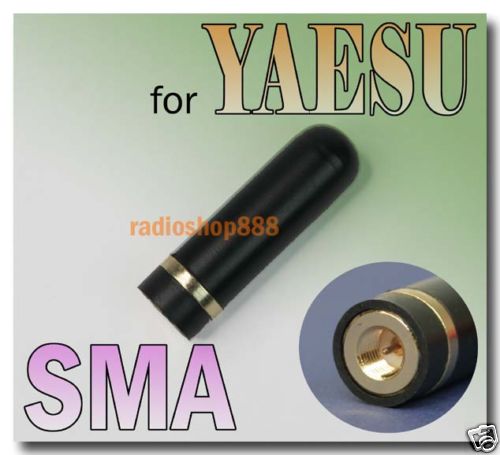

It’s the same on 433MHz as well.
In fact I couldn’t find any frequency at which this so-called antenna is resonant!

Another eBay dud
It’s the same on 433MHz as well.
In fact I couldn’t find any frequency at which this so-called antenna is resonant!
QRP in the Park – Lakeland, Florida
QRP In the Park–Lakeland is your chance to show the rest of us how you do it!

Lots of ways to do QRP!
For the past several months we have considered traveling to nearby communities in Central Florida to help QRP operators connect with one another. We’ve gotten a good response from hams in Lakeland and Port Orange areas, and we hear of active groups in the Melbourne and Daytona Beach areas. Lakeland has an advocate, Ren KG4BAS who contacted us about getting together and a possible Central Florida QRP Group in Lakeland. WAHOO!
We’re excited to see the interest and look forward to our first meet up Saturday 14 May, 2011 at Lake Parker Park in Lakeland at 0900. Here’s directions from Ren:
I-4 West to exit 32.
Make left onto 98S and go .4 miles to Griffin Rd.
Make left and go .7miles to the end of Griffin Rd.
Make right onto Lakeland Hills Blvd and go .3 miles to Granada.
Make left onto Granada and go .2 miles to Gate 2 entrance of Lake Parker on left.
Hope you can join us. Bring something to drink and snack on, your QRP gear, operate, show n tell, get ideas for your portable ops and enjoy the outdoors.
Questions? Contact Ren or Kelly K4UPG. See ya in the park!
72,
Kelly K4UPG, Jim K4AHO, Ren KG4BAS and the Central FL QRP Group!
2m HT antenna shootout
I’ve been wanting to do this for a long time. I wanted to try to compare the difference between various antennas for 2 metre band handhelds so as to see how much you lose using a small inconspicuous antenna or how much you gain by using an extra long one. The results were broadly as expected. The longer the better. But there were a couple of surprises.
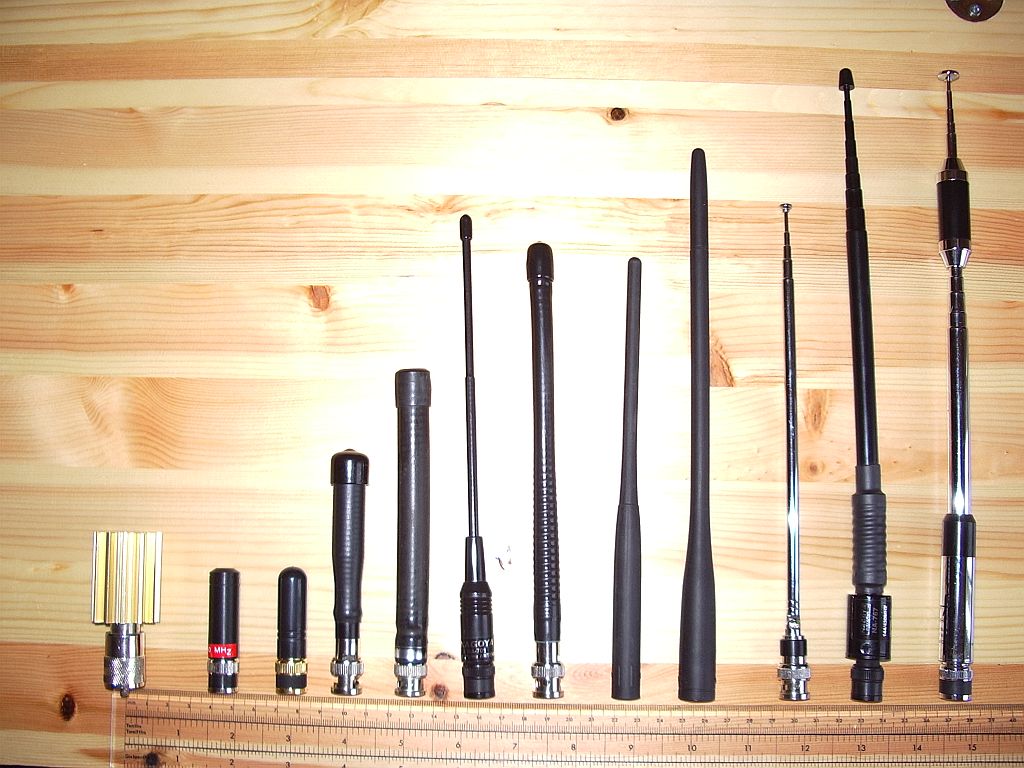
The efficiency of the antennas was compared using my Yaege FC-1 frequency counter, which has a relative dBm scale. I transmitted into each of the antennas in turn, noting the dBm reading on the FC-1 which was positioned a couple of metres away. This is hardly an antenna test range. However, the results were validated in on-air tests where various local amateurs were asked to report on my signal strength as I swapped antennas. The on-air results were in agreement with the measurements, which allow me to believe that they are a fair representation of the performance of these antennas in the real world.
As an aid to comparison, the performance is given as effective power out relative to a manufacturer supplied antenna driven with 5 watts. The antenna provided with the Yaesu VX-8GR is used as the reference antenna. Choosing a manufacturer supplied antenna turned out to be rather a poor reference, as although the Yaesu standard antenna performs very well, the antenna supplied with the Kenwood TH-D72 performed very poorly. It was 5dB down on the Yaesu antenna, putting it in the same range as the short stubby antennas. This is probably because the Kenwood antenna’s resonant frequency, as checked on my antenna analyzer, is around 158MHz. Although it would be reasonable to suspect a fault with the antenna supplied with my TH-D72, the one supplied with my Kenwood TH-F7E (which I have since sold) was identical. If you are using a Kenwood radio then you have even more reason to throw away the supplied antenna and buy a better one.
The antennas in the picture from left to right are:
- A dummy load. This is just my little joke! Many “experts” like to say that the short stubby antennas are no better than dummy loads. In fact, my results suggest that they perform quite well for their size and are much better than dummy loads. However, as with all of these antennas, the best results depend on the antenna being resonant (having a good SWR) at 145MHz. All these antennas have quite a narrow bandwidth and if they are off-frequency it has a significant effect on their performance.
- A 2in. 144MHz stubby bought on eBay. This antenna is 5dB down on the reference Yaesu dual-band whip and would be the equivalent of reducing power on the handheld from 5W to 1.5W.
- An A-137 dual band stubby bought on eBay. I have two of these. The first one was tuned spot on 145.5MHz so I got a second one which was resonant just above 146MHz. Performance is slightly better than the single band stubby, being the same as reducing power to 2W.
- A 2m Stubby Duck from Smiley Antenna. I got this because I thought it would deliver better performance than the small stubbies while still being small enough to sit comfortably in a pocket. This proved correct. Performance is just 2dB down on the reference stock antenna, the equivalent of running 3W instead of 5W.
- A 6in. 2m helical antenna. This antenna came with the old TH-205E handheld and as far as I know is the original antenna supplied with the radio. Checked on an antenna analyzer it was resonant a few MHz high in frequency but I brought it down to 145MHz by dropping a ferrite tuning core down inside the helical and securing it with Blu-Tack. This enabled me to open a repeater I could not open before the modification, illustrating the importance of tuning these antennas to get best performance. This antenna is just 1dB down on the reference antenna, like using 4W instead of 5W – hardly noticeable.
- A Nagoya NA-701 dual band BNC antenna. I purchased this antenna as a replacement for the manufacturer supplied antenna due to my converting all my handheld radios over to BNC sockets by permanently fitting adapters. It is almsot exactly the same size as the supplied antenna and its performance is identical to it.
- An 8in. 2m helical antenna. This antenna was bought as an untuned helical which required cutting to frequency. I got it from Waters and Stanton and it is of extremely poor quality. However, the RF isn’t bothered by the shoddy manufacture. It performs exactly the same as the supplied VX-8GR antenna.
- The antenna supplied with the Yaesu VX-8GR. This is the reference antenna for this comparison. As mentioned above, the antennas supplied with other radios (notably Kenwood) may not be as carefully tuned and may perform more poorly than this.
- The antenna supplied with the Yaesu FT-817ND. This is slightly bigger than the one supplied with the VX-8GR and has a BNC mount not an SMA. It performs about 1dB better, equivalent to running 6.3W. Adding the tip which makes the antenna work on 6m has no effect on 2m performance. As I have come to expect from Yaesu, this antenna is resonant precisely on 145MHz, as was the one with the original FT-817 that I had many years ago.
- A quarter wave telescopic BNC whip. These 19in telescopic antennas are available from a variety of sources. I think this one came originally from Maplin. It gives your signal a 3dB boost, equivalent to doubling your output power (and doubles the received signal strength also.) At a cost of £8, it is a cheap way to double your effective power and not too long to be cumbersome in use.
- A Nagoya NA-767 bought on eBay. This is a dual band telescopic antenna which is 38 inches (97cm) long when extended. It has a heavy metal base which presumably contains a loading coil. The BNC connector is made mostly of plastic, but the base is sprung which should take some strain off it. The telescopic sections are quite stiff. The build quality of the antenna is not great but it is quite cheap. The performance gain is substantial, giving a 4 times power boost over the quarter wave antenna, equivalent to running 40 watts output.
- A Sharman RH-770 dual band antenna bought from Capital Stores. This appears to be a clone of the Diamond RH-770 which is sold at the usual rip-off prices by certain ham radio dealers. The Sharman version is half the price. It is a dual band antenna with centre loading and is 93cm (36 inches) long when extended. It looks and feels a better quality antenna than the NA-767. It also performs slightly better on 2m, giving your handheld a full ten times gain on transmit and receive compared to the supplied rubber duck. It’s the equivalent of running 50 watts from a handheld!
- Not shown in the picture is the 45.5inch Black Whip from jeepbangkok on eBay. This is a 5/8 wave single band (2m) antenna and was the best performing handheld 2m antenna of all, giving 11dB of gain over the manufacturer supplied whip, the equivalent of running 63 watts of power! Sadly the telescopic whip was of poor quality and pulled apart during a recent WOTA activation.
Clearly one should not use such long antennas as the last three on a typical modern handheld radio with SMA antenna socket unless you are using a stout SMA to BNC adapter that tightens down to rest on the body of the radio so that no twisting moment is applied to the SMA socket. Even then, you may rightly be wary of using such a long antenna in the windy conditions often encountered on Lake District summits, which often bent the sprung base of the Black Whip into a 45 degree angle. Because of this I have made up a rucksack mount with a BNC socket and a 19in. quarter wave counterpoise so these high gain antennas can be used off the radio.
I was unable to test the free standing WOTA Pole (ribbon cable Slim Jim inside a plastic tube) under the same conditions but on-air reports suggest that it may give even more gain than the Black Whip. However, it isn’t always convenient to set up a guyed antenna on a summit, so one of these telescopic high gain antennas could be the answer to improving your signal when using a handheld radio.
These test results have related exclusively to the 2m band. I do not have test equipment that works up to 440MHz, nor is there any activity on 70cm in this part of the world so I have no plans to compare the performance of these antennas on UHF.

Two more northern fells
Yesterday I was out hiking round the back of Skiddaw in Wainwright’s Northern Fells to activate Great Sca Fell (LDW-114) and Brae Fell (LDW-134). One reason for being out and about in that area was that Phil G4OBK was planning to activate Great Calva (LDW-095) which is one of the three summits I need to complete the Northern Fells as a chaser. I’d have been less keen if the weather had been miserable, but Thursday was a glorious day, sunny but not too hot and without the breeze that can often make it icy cold on the tops even when it is warm in the valleys.

It is a long, steady plod up from Longlands and I reached the summit of Great Sca Fell around 12:30. I put up the WOTA Pole and then sat down to eat my lunch. To raise the height of the antenna I used my walking pole for the bottom section. This didn’t give me as much extra height as I’d hoped as the inner sections of the telescopic pole slid up inside the PVC tubing so I had to collapse it and just use the thickest, topmost section.

I connected the VX-8GR to the antenna to beacon my position on APRS while I ate the lunch Olga had made me. I tuned around whilst I was eating and heard a couple of distant stations. I observed their signals being desensitized intermittently. Clearly the VX-8GR receiver is not up to being connected to a good antenna in a good location.
After lunch I connected the Motorola GP300 – which has a much more robust receiver – to the antenna and began calling CQ WOTA. I worked 11 stations in all from Great Sca Fell, but they were all from the northen area as signals to the south were blocked by the great bulk of Skiddaw and Blencathra. I waited for Phil G4OBK to arrive on his first summit of the day, Bakestall, so we could have a summit-to-summit contact. I then called upon Mark MM1MPB and Colin 2E0XSD to help with my second objective of the day, which was to do some tests to see how much difference the WOTA Pole made to my signal compared to other antennas.
First I compared the signal between the WOTA Pole (which is a Slim Jim made of 300 ohm ribbon cable inside some PVC electrical conduit) and the 5/8 wave telescopic Black Whip antenna from jeepbangkok on eBay. I’d been pretty impressed with the 5/8 telescopic on previous activations but the reports from Mark and Colin suggested that the WOTA Pole was a couple of S-points better.
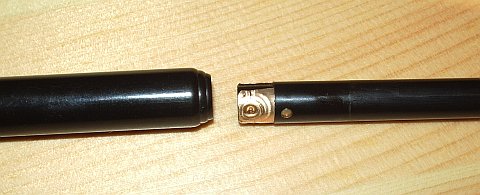
Unfortunately while extending the telescopic antenna to make the test I broke it! That’s the end of that, which is a pity because I’m sure there will be circumstances – such as on busy summits or rocky ones where there is no earth to drive the guy pegs in – where the telescopic would still be useful.
For an additional test I tried an 8 inch long single band helical “rubber duck” which I’d previously established to be comparable to a quarter wave whip and a noticeable improvement over the stock dual band antenna that comes with Japanese handhelds. Colin couldn’t hear me on the helical at all, while Mark’s verdict on my signal was “awful.” So the WOTA Pole is very definitely worth the trouble of erecting it and enables me to give points to stations that would not otherwise be able to hear me.
I packed everything up and made my way over to Brae Fell which was half way back to the car by another route. I set up the antenna and finished the rest of my coffee. A lone skylark, perhaps the first of the year, circled calling overhead. I began calling on the radio. Again there were plenty of takers. I worked 12 stations in all including another summit to summit with G4OBK/P on Great Calva.

So a successful day out (apart from breaking an antenna.) I just need to work someone on Mungrisdale Common and Souther Fell to complete the Northern Fells. They have been activated before: unfortunately they are not workable from home due to being of only moderate height and on the other side of Skiddaw. As they are probably the two most boring hills in the entire Lake District they are not often visited so I may have a bit of a wait until I can claim my Wainwrights On The Air Northern Fells chaser certificate.

Foiling the copper thieves
The price of copper has risen by 300 percent over the last two years. Other metals have also risen in value. According to GB2RS News, this is making radio amateurs targets for copper thieves. An amateur in Yorkshire had all his cabling stolen including the coax and ladder line for his G5RV antenna.
I presume the action of an irate neighbour fed up with receiving TVI has been ruled out. The RSGB is encouraging amateurs to make sure access to cables is restricted and that their installations are as secure as possible. Looks like another benefit of stealth operation and attic antennas!














