Archive for the ‘antennas’ Category
 February 6th, 2013 |
  Author:
  80 Meter Fox hunt fun
We had two very good QRP ops serving Fox duty tonight. Dave N1IX in New Hampshire and another Dave, AB9CA in Alabama. Double barrel Daves!
As the hunt began, my gut instinct was to listen for N1IX first. I mean, go figure, right? New Jersey to New Hampshire — 80 Meters — in the Winter and at night. No brainer, right?
Right! But even though Dave N1IX was a relatively easy catch, he wasn’t as loud as I thought he would be. I was expecting 599 or better. He ended up being 569/579 at best. But I did get his pelt in my bag, so it was off to hunt for Alabama Dave.
I found him, rather easily, also. However, his signal swung wildly. He was either 559 at best, or was completely in the mud. I ended up having to turn the K3’s AGC off so I could hear him decently. The static crashes did wonders for my bleeding ears!
Even though I was able to hear Dave AB9CA throughout, it seemed he just wasn’t hearing me. I kept switching between the HF9V, the W3EDP and the EDZ, but no matter which antenna, nothing seemed to be working. I was considering lighting a signal flare, but that would not have been Kosher.
And Dave must have been having receiving problems also. He went back to several stations, only to have them fade away on him, and forcing him to send them a “nil”. And he was also changing his listening frequency often, probably to get away from local QRM and QRN on his end. In all, it made for an interesting time.
But luck was on my side, and with about 15 minutes left in the hunt, Dave finally picked me out of the muck. Conditions were bad enough that I had to repeat my half of the exchange for him once. But in the end, I got a “TU”, so all’s well that ends well.
QRP – patience and perseverance DO pay off!
72 de Larry W2LJ
QRP – When you care to send the very least!
Snow on the roof

This morning we woke up to a covering of a couple of centimetres of snow. It’s fairly wet snow: The temperature is just above freezing so it is already beginning to thaw. This is about as much snow as we usually get here, but the less time it hangs around the better. When it’s cold the smow doesn’t melt and eventually gets compacted into ice which, especially as we are on a hill, is a real nuisance.
I am often asked whether snow on the roof affects the performance of attic antennas. My answer is: Not so as I’ve noticed. The SWR of my attic antennas remains exactly the same (in fact it changes more on hot days when the attic temperature reaches 40 degrees plus, due to expansion.)
My magnetic loop on 30m did not need any re-tuning this morning and the first APRS packet sent was received by a German digipeater. My 2m APRS gateway is also functioning normally. I’ve put the K3 and multiband dipole on beacon monitoring duty and the beacons are coming through just as I would expect. In other words, all is normal.
Perhaps if there was a metre or more of snow I might notice a difference. But I think the amount of frozen water the RF has to pass through on the roof is negligible compared to the clouds it must traverse on its way to and from the ionosphere.
Antenna switch
I played in the 80 Meter QRP Foxhunt tonight and was quite successful. I ended up bagging both pelts, but it was a close call.
Jim N0UR in MN was first in the bag and was pretty easy. He was using the “standard” 1 kHz “up” split and it was just a matter of working him.
Ray K9XE in IL was another matter. Ray was loud, but was buried under some even louder local QRN. I wasn’t getting a feel for hearing Ray, no matter how I adjusted the K3. With time running out, I decided to switch on over to the KX3. Both radios are new to me, but over the past few months I have acquainted myself with the KX3 just a bit more.
In a matter of minutes, using the Dual Watch feature, and by adjusting the passband tuning, I was able to isolate Ray’s signal. I was also able to determine his split via Dual Watch, as mentioned before, and nabbed his fur with six minutes to go.
There are various reasons that I prefer the K3 as my main station rig. One of the best features, for me, is the built in antenna switch. I can switch between the vertical and the wires in an instant, and use whichever antenna is best suited for the job.
The KX3 only has the single antenna input. To switch between all my antennas, I will have to acquire a better antenna switch than what I currently have. I am thinking of perhaps a Daiwa or a Diamond. In the past, I had been using a no name, bargain brand switch with my K2. Quite by accident, I had found out that when I removed my Butternut from the antenna switch, and connected the vertical directly, the difference was like night and day. Due to the poor quality of that particular switch, it was as if I had an attenuator in line. Needless to say, that switch got tossed. The remaining one that I am using now, is better quality but only has two positions – I need at least three.
I think a Diamond or Daiwa will do a better job and will allow me to use the KX3 more often from the shack. It’s a great rig for Fox hunting!
73 de Larry W2LJ
QRP – When you care to send the very least!
More portable QRP antenna thoughts
Harry K7ZOV left this comment on AmateurRadio.com – thought I would re-post it here (for those of you who might not visit that fine site).
“I was in TX for the holidays. I brought 2 antennas. But used only one with both my TenTec Eagle and my KX3. No counterpoise. No Ground. 20 ft of coax. Worked 80-6 with the KX3 internal ATU. Worked Cuba, South America to Canada. The West coast from the far east side of Texas and lots of States.
Check out the link for more detail. Oh and the “wire” part was only a bit over 50 ft and hanging from a tree at about 30 ft at the highest point and 10 feet at the lowest point. My favorite antenna now.. LINK: http://www.earchi.org/92011endfedfiles/Endfed6_40.pdf
For a 40 meter and 20 meter only… Here is a second link:
http://www.earchi.org/proj_homebrew.html
Have fun and 73 one and all
Harry K7ZOV”
Thanks, Harry – great links to EFHW antennas that you can buy or build.
And here’s another thought – although I have never used them, I do have friends who have had great success with small magnetic loop antennas. Not only are they great for portable ops (WGØAT uses one) but they are also great for those of you who are antenna restricted. A friend of mine here in NJ thought his Hamming days were over when he moved into an apartment that was constructed from materials that in essence, created a live-in Faraday shield. He started using magnetic loops and was shortly working DX again at QRP power levels from inside the apartment! http://www.alexloop.com/
You might also want to check out the Yo-Yo-tennas that Bill WA8MEA sells – they look pretty good for taking out to the field – http://hamradiofun.com/, if you’re not inclined to “roll your own”.
72 de Larry W2LJ
QRP – When you care to send the very least!
LHS Episode #097: Sheer Hamshackedness
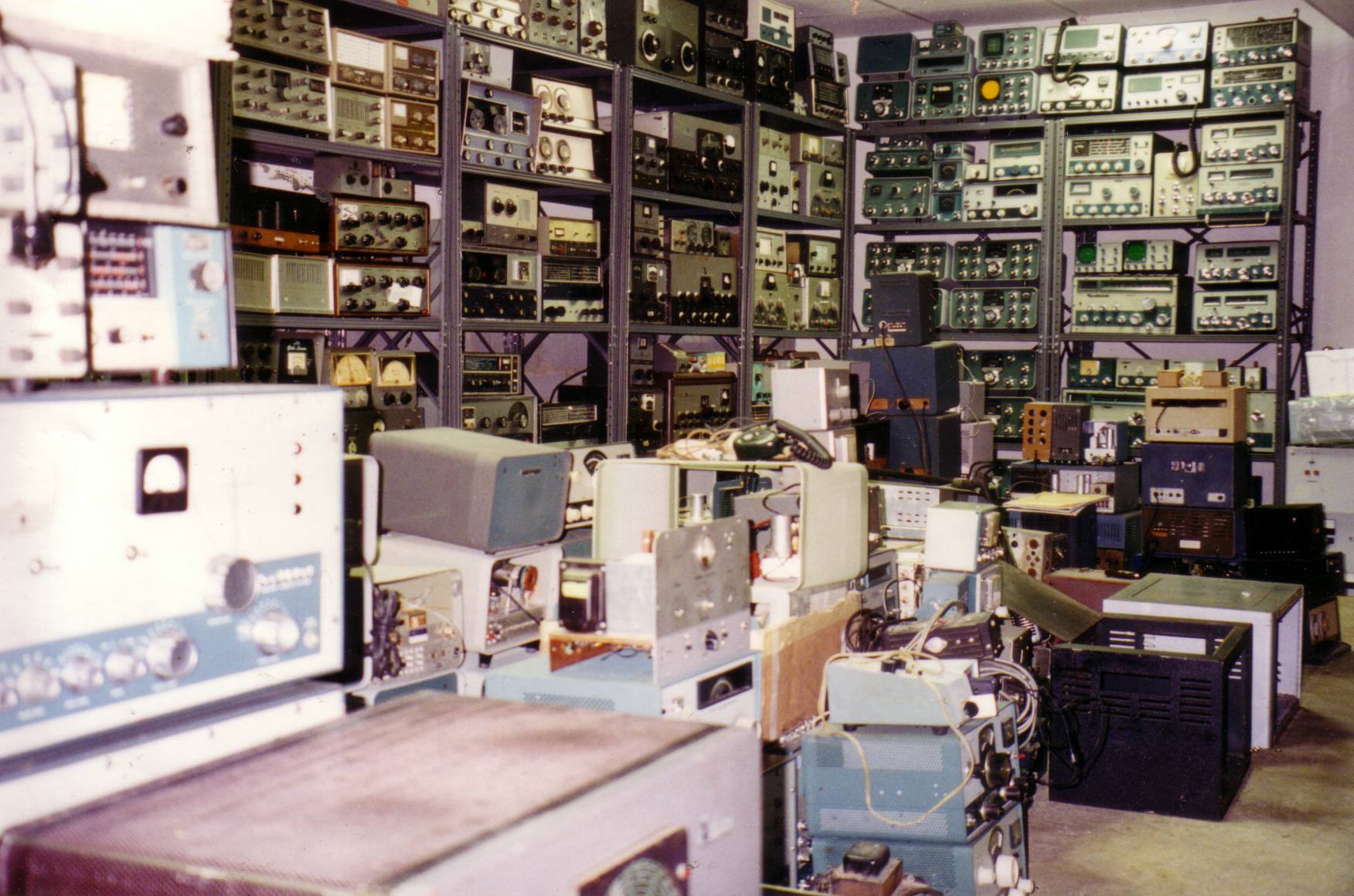 Welcome once again to the Wonderful World of Linux in the Ham Shack. As indicated in the title, this episode is full of Sheer Hamshackedness. If you’re unsure what that is, we encourage you to pour yourself a nice glass of dark beer or a 100-proof spirit of your choice, put on your headphones and immerse yourself in the pure hedonism that is LHS. And if you believe any of that, we have a large vehicular conveyance over the East River in New York City up for sale as well. Anyway, we talk a little bit about Raspberry Pi computing, APRS, WSPR, Echolink, svxlink, Qtel and a bunch of other stuff in this episode. Hope you enjoy, as always.
73 de The LHS Guys













