Archive for the ‘antennas’ Category
 Field Day 2014 – Wow!
 July 1st, 2014 |
  Author:
 That’s all I can say – wow! A magnificent time was had at the first Field Day for the South Plainfield Radio Club. I posted the following to QRP-L, and I’ll insert some other thoughts at the end.
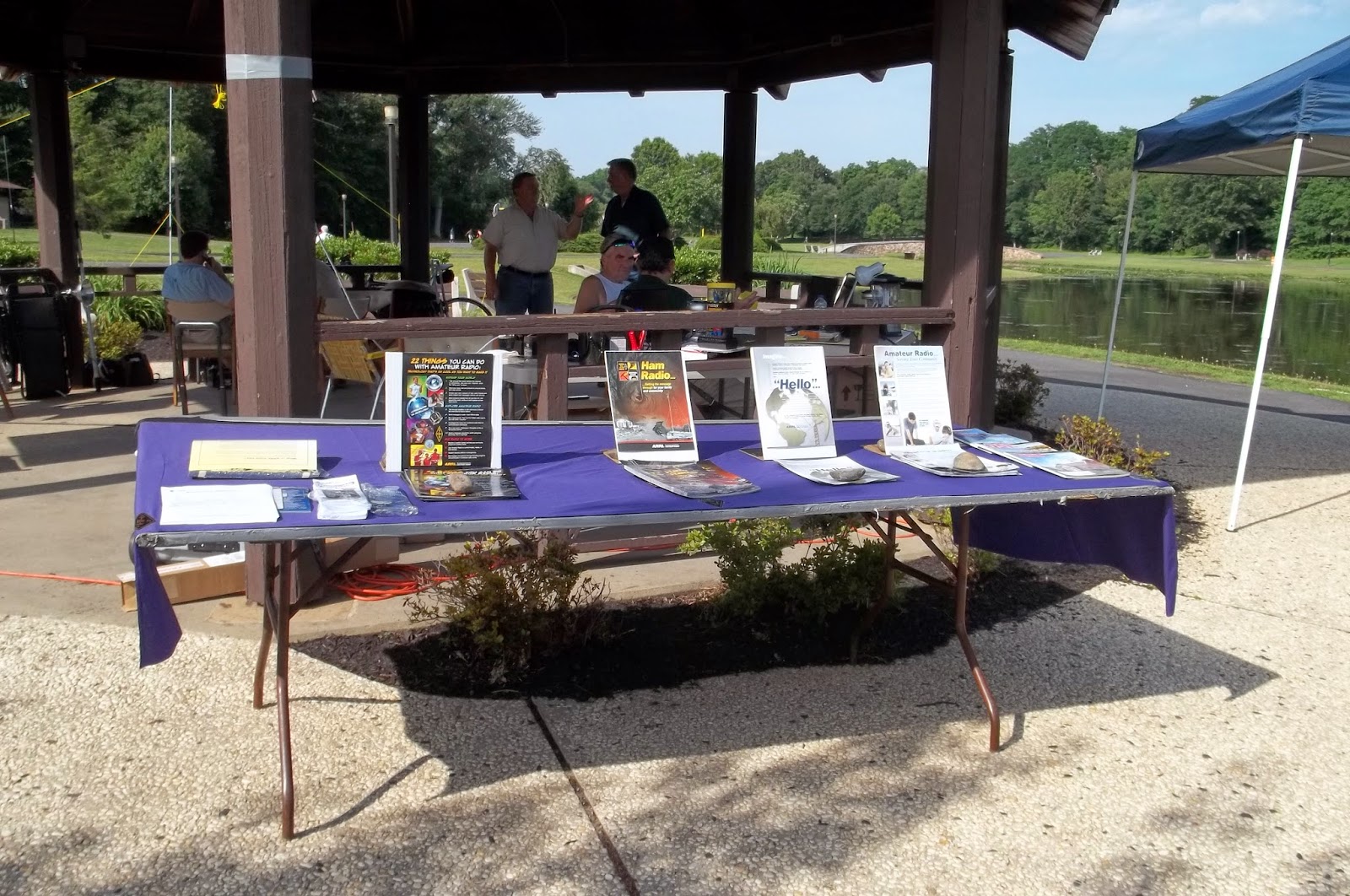
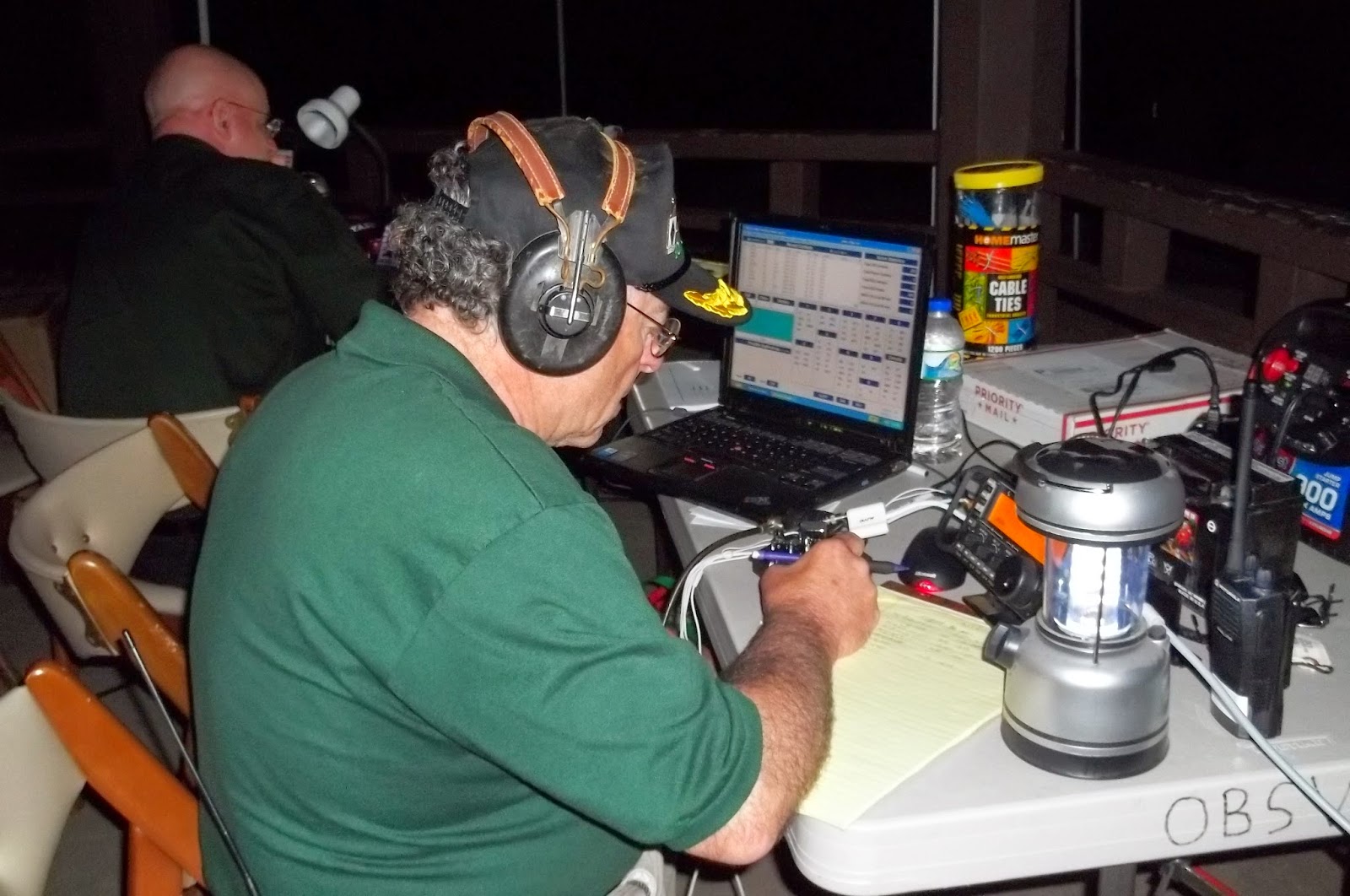
The South Plainfield Amateur Radio Club operated Field Day in Spring Lake Park in South Plainfield, NJ. We used Club call NJ2SP, and ran as 2A (Battery). The “2A” were two Elecraft KX3s. The CW station ran to a EARCHI antenna (53 foot radiator, 9:1 UNUN, 25 foot length of coax). The elevated end of the EARCHI was about 30-35 foot up in a tree. The SSB station used a G5RV, about the same height between two trees.
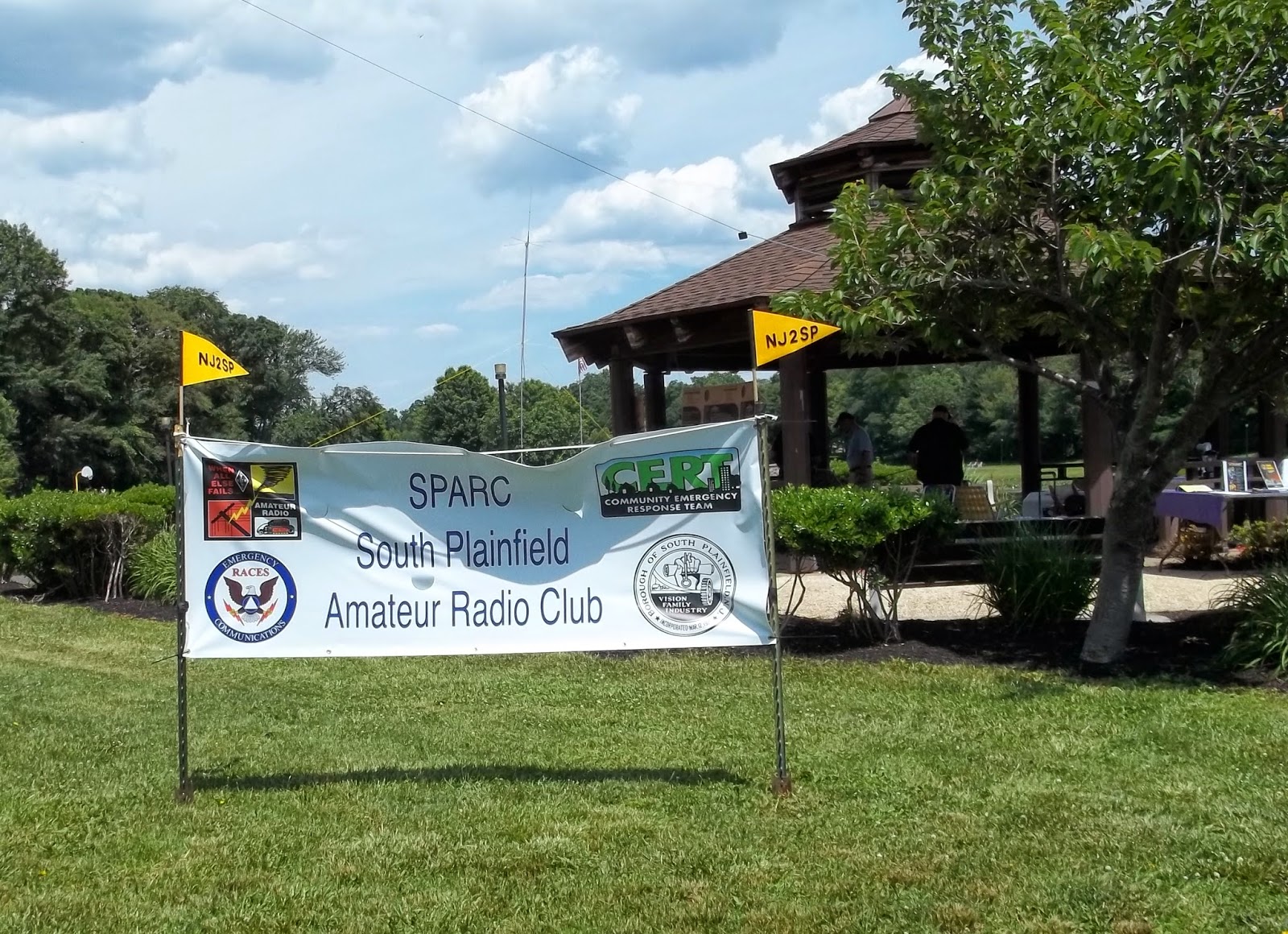
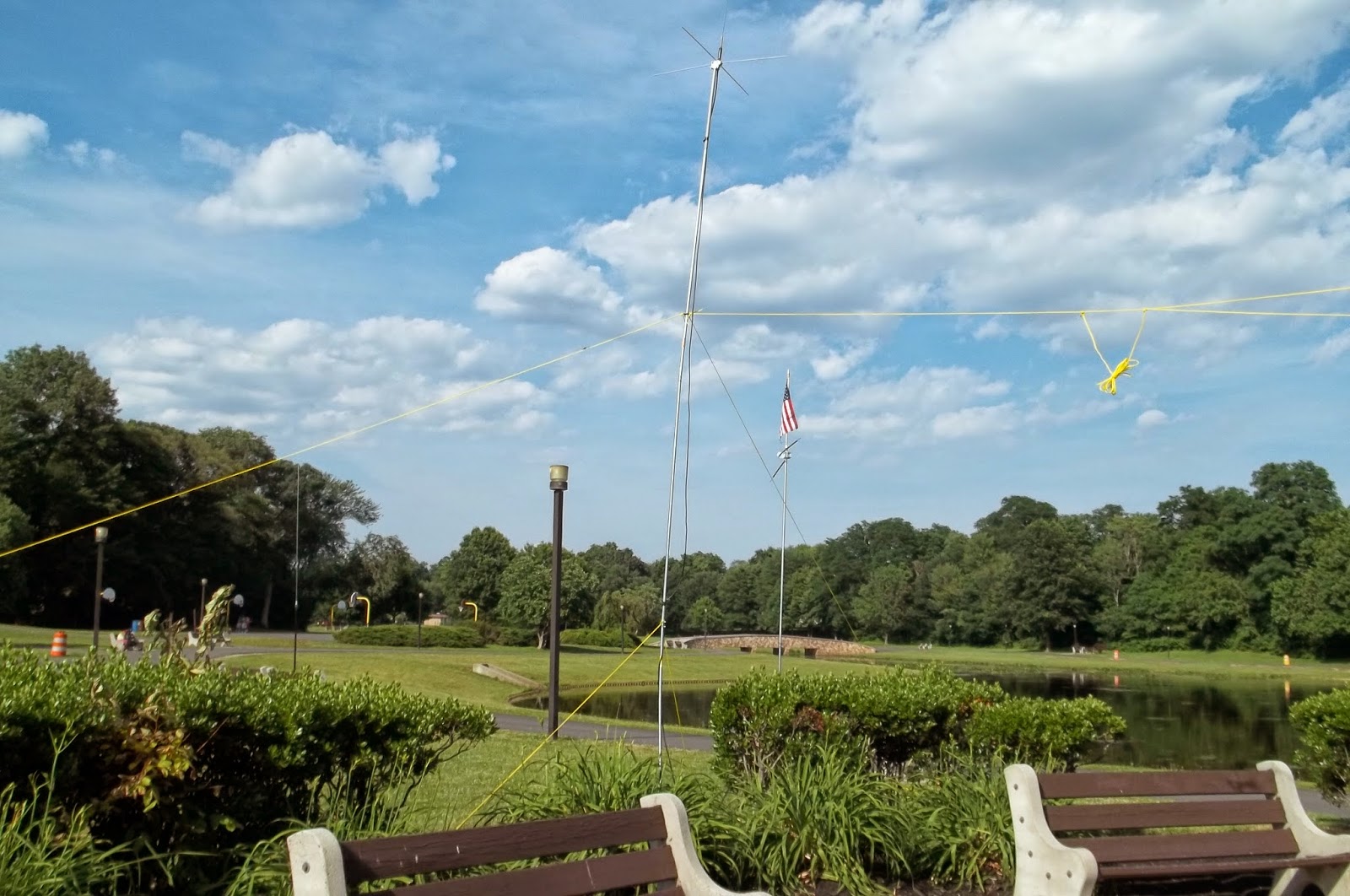
And if you look closely (click on the picture for a bigger image) you can see the EARCHI antenna sloping upward and away towards the tree it was anchored in.
The EARCHI antenna was a resounding success. The KX3’s internal tuner handled it exceedingly well on all bands. We made just a tad over 270 CW QSOs, with our best DX being Hawaii, Puerto Rico, the US Virgin Islands and the Cayman Islands.
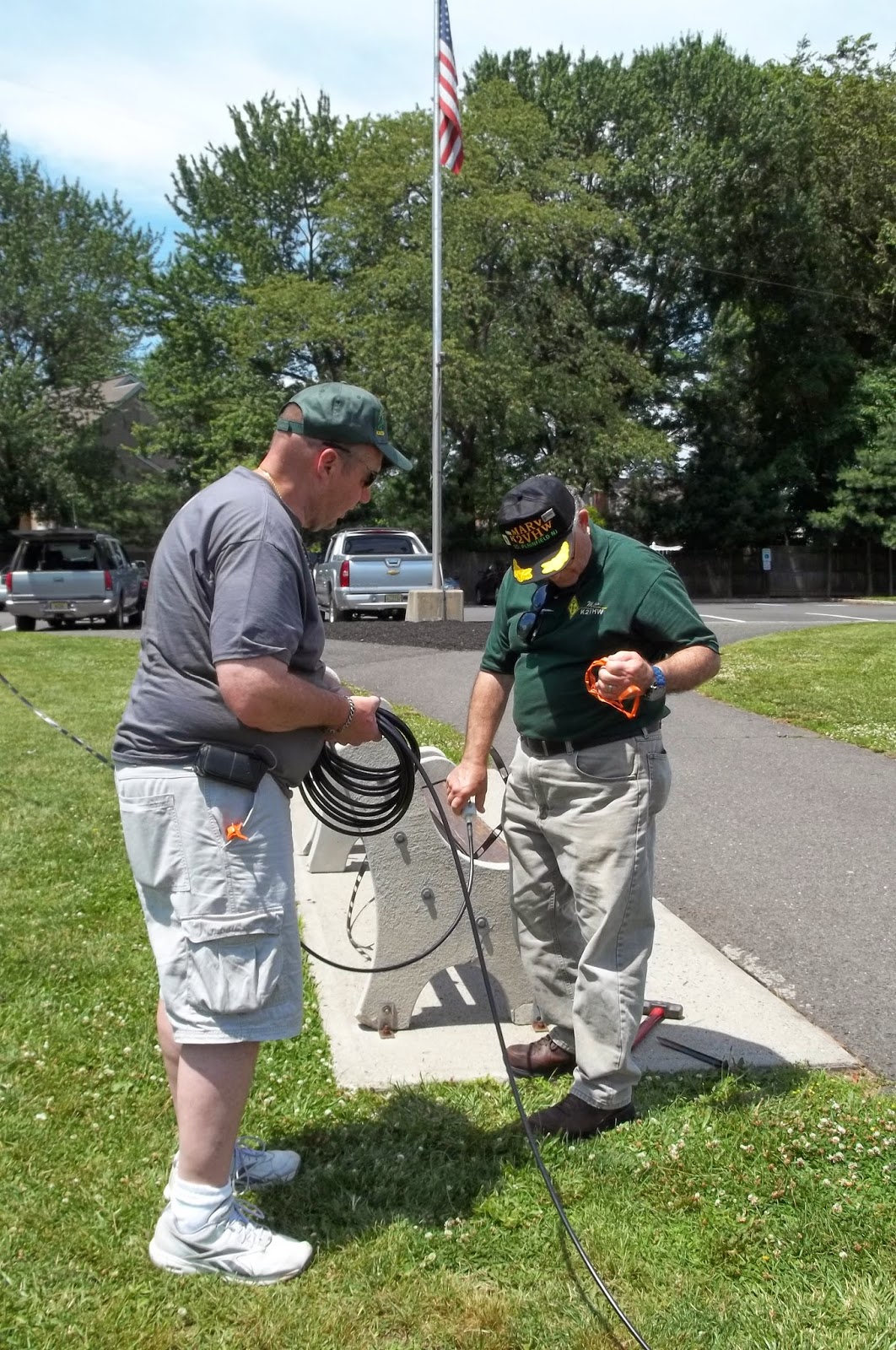
The G5RV worked exceeding well, also. The KX3 again tuned without a hiccup. The SSB team completed just over 100 SSB QSOs – these guys are all QRO ops and they were skeptical about completing even a single QRP SSB QSO. They ended up surprising themselves, and they ended up being quite amazed at what they were able to accomplish. Yes, it was not as easy as using 100W rigs, but even in keeping with the ARRL’s 5 Watt limit for the battery category, they were quite pleased.
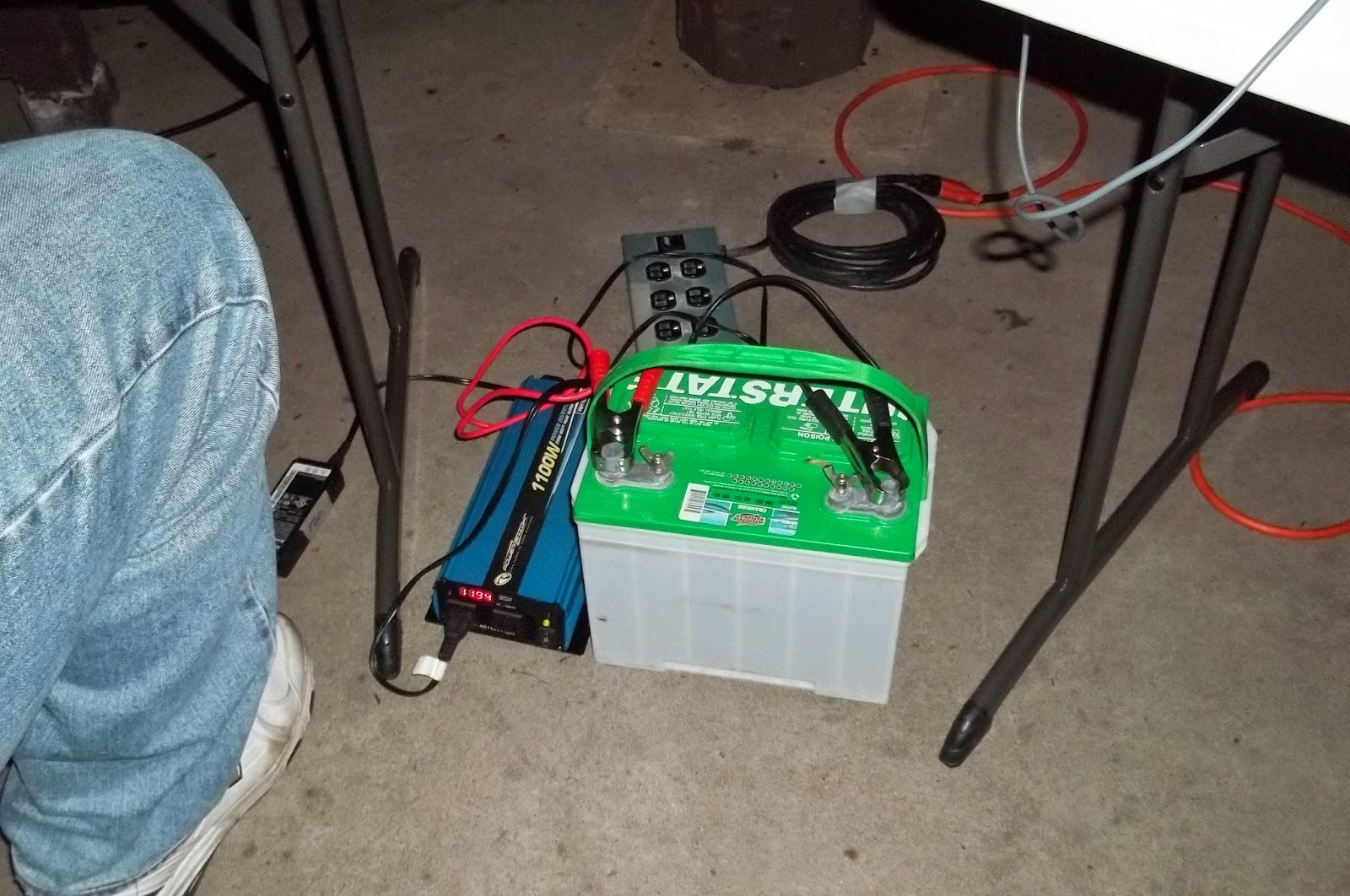
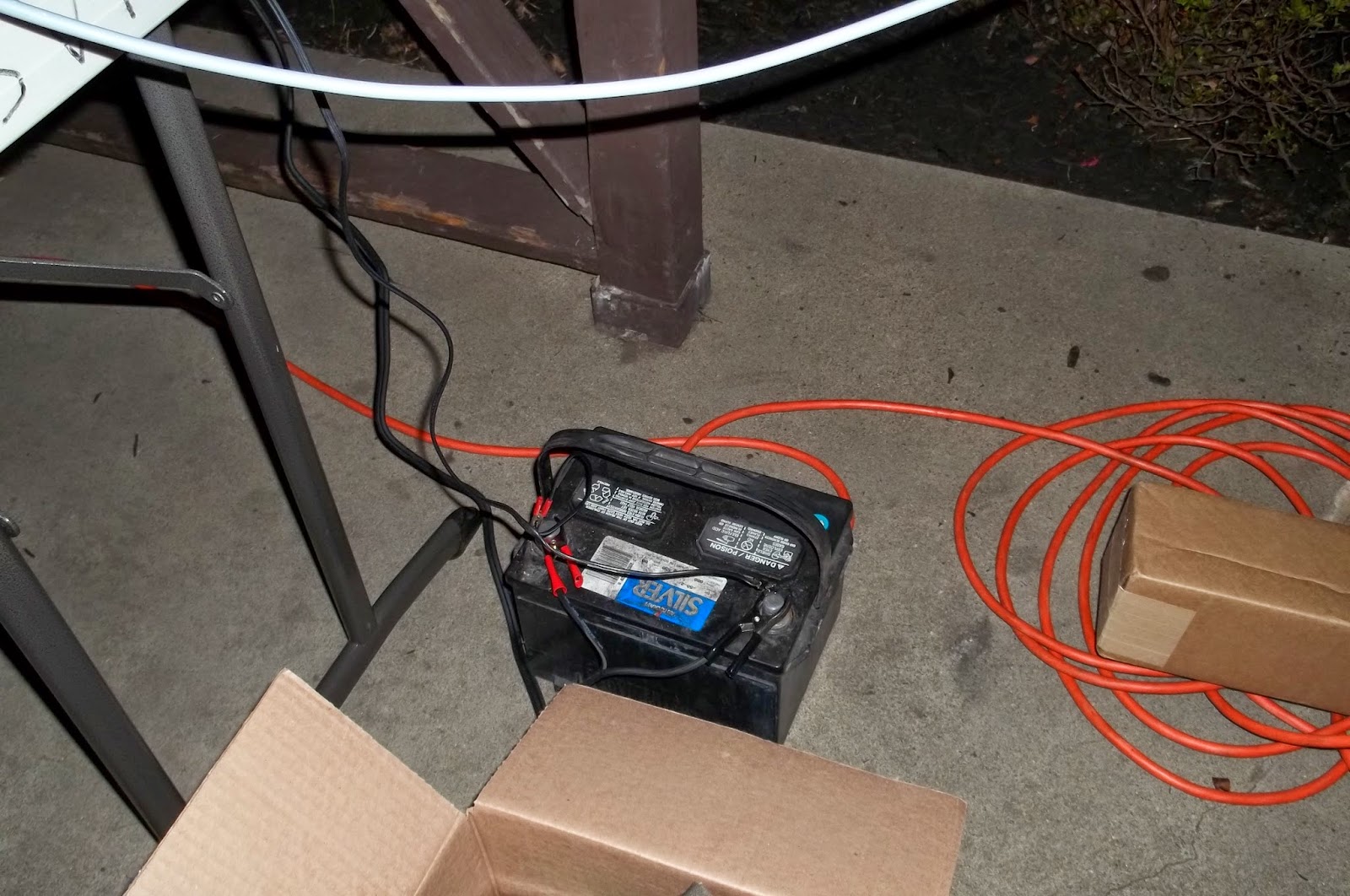
We operated on solar charged batteries all weekend without a hitch. The energy hogs for the weekend were the two laptops that we used for logging. The Field Day rules state that since we were not using the laptops for rig control, we could have powered them from mains (which we did not have) or a generator (which we had, but didn’t use). In keeping with our self imposed “severe emergency capability” theme in order to make this a drill as much as possible, we also powered them off a deep cycle battery using an inverter. We needed to switch the laptops over to a fresh battery somewhere in the mid morning hours, Sunday.
SPARC’s first Field day was an outstanding and unqualified success, and I think we ‘busted’ the myth that Field Day has to be QRO to be fun.
The EARCHI worked great and way better than I dared hope for. With less exceptions than I can count on one hand, I was able to work everyone that I tried to. Being on an energy budget because of the batteries and wanting them to last all weekend if possible, I didn’t try calling CQ or running a frequency (it was S&P all weekend). I will reserve that for FOBB and the Skeeter Hunt, which are only four hour events. I can afford to be a little “battery foolish” during those, and I expect the EARCHI to work just as well during those two events.
The other Godsend of the weekend? That Joplin ARC antenna launcher kit that I purchased and built up. We were able to place antenna lines pretty much exactly where we wanted with hardly any effort at all. That thing is one of the greatest things since sliced bread! One or two of the guys were skeptical about being able to place an antenna line so easily and accurately with such little effort. The old saying is “That seeing is believing”. They’re believers now!
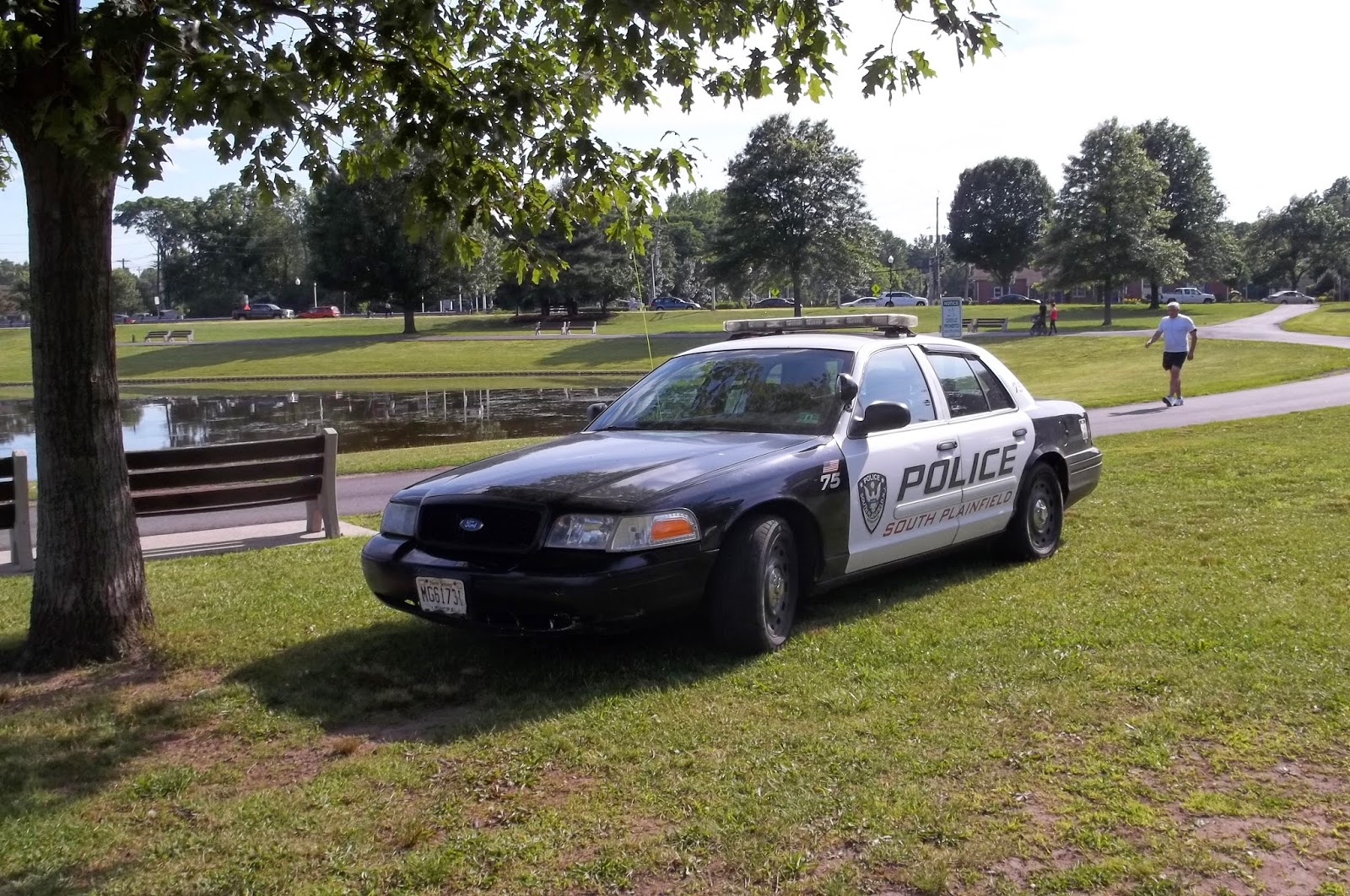
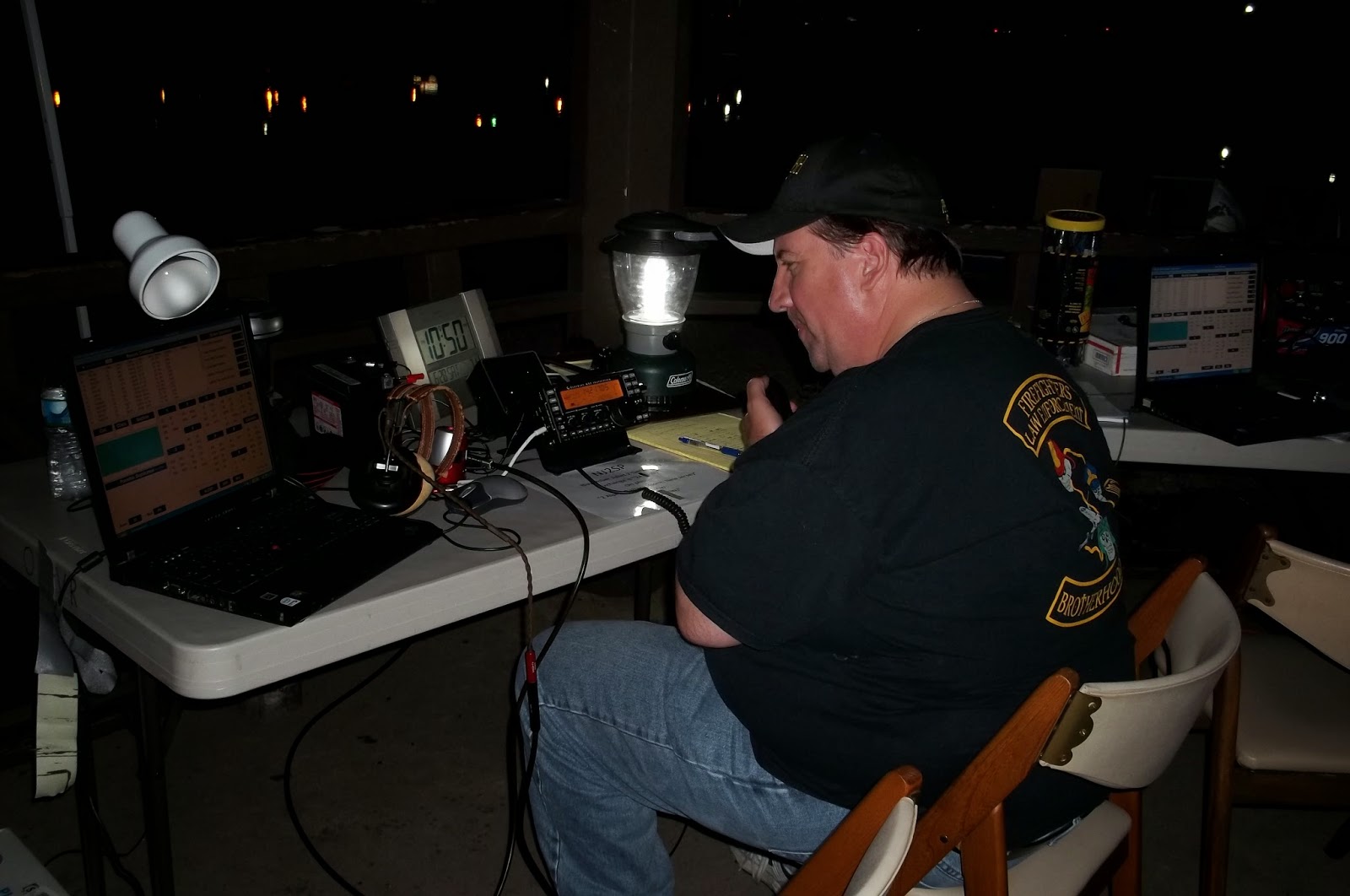
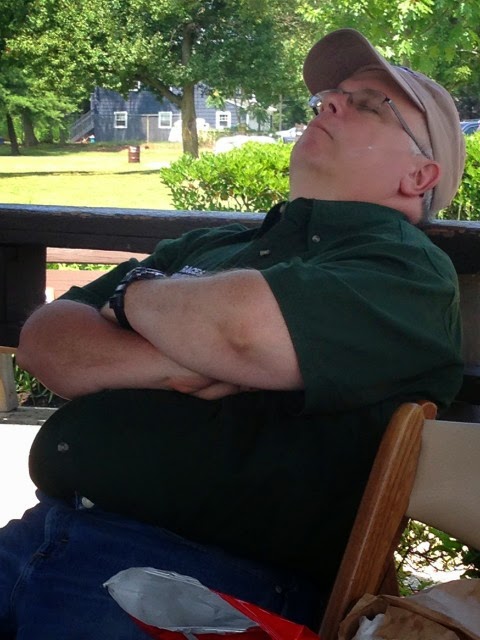
After being awake for 24+ hours, I fell asleep while waiting for the Mayor to show up late Sunday morning. I woke up in time for his visit, though!

In closing, I’ll answer a question that was posed to me by a member of the visiting public, the way I wanted to answer it. A woman asked me if it was a bit extreme staying awake throughout the 24 hours of Field Day. Of course, I gave her the answer of “In the event of an emergency or a natural disaster, sleep may very well be a luxury, …….” Yadda, yadda, yadda.
What I wanted to say was any of the following:
1) It’s Field Day! Sleep is overrated!
2) Heck no Lady! Field Day is fun!
Or I could’ve gotten all Clint Eastwood and said:
3) Ma’am? I’ll sleep when I’m dead!
One final, last added mention. Last year, Marv K2VHW introduced me to Deep Woods Off moist towelettes. They are a must for the Field Day Go Package. They worked extremely well, and I was not bothered by a single “Skeeter” (pesky little fellows, I should have had them pound brass!) all night long.
Space Weather, HF Radio Propagation – The Interview on ‘Ham Radio Now’
Why would an amateur radio operator be interested in space weather? Is it worth the time and resources to forecast propagation, in the daily operation of a typical ham radio station?
Gary, host of the popular ‘Ham Radio Now’ video podcast, talks with Tomas Hood (NW7US), propagation and space weather columnist for CQ Amateur Radio Magazine (and in the late ‘Popular Communications Magazine’ as well as ‘CQ VHF Quarterly Magazine’) and The Spectrum Monitor Magazine. Gary discusses with Tomas how scientists forecast space weather, and how the average ham radio operator can also make predictions, and what propagation forecasting can bring to the daily operations of an amateur radio enthusiast.
Watch on YouTube: ‘Ham Radio Now’ Episode 156: Propagation…

Tomas, NW7US, talks about radio propagation on shortwave (HF) as well as space weather.
Concentrating on one or two bands?
With limited space for antennas, it seems sensible to concentrate efforts on just a couple of bands only. As my favorite band is 10m, I am tempted to erect a more efficient antenna for this band and maybe put up the 6m V2000 only during the Es season. My problems are (a) a lack of mobility because of my stroke and (b) choice of compact, efficient antennas. At present I can cover 40, 20, 10, 6, 2 and 70cms, plus 630m rather inefficiently with my earth electrode antenna. Perhaps, whilst my health is not too good, I am better sticking with what I’ve got? I know that on 10m my antenna could be better but the Par end-fed covers 3 bands (10, 20 and 40m) and my 2W QRP has reached VK on WSPR on all these bands and doesn’t do a bad job.The Par is is almost impossible to see in the air.

Radio propagation and space weather course
As the propagation columnist for several amateur radio magazines, I hear from a diverse group of interested people that find space weather and the propagation of radio waves fascinating. I admit: I am a space weather and radio propagation nut, and it is always good to correspond or meet with other interested folks. This is an aspect of our hobby that never grows old, as there is so much that we don’t yet know–we communicators are in a perfect space to make discovery and to make improvements to our understanding of this science. Over the years, I’ve heard a lot from readers of my columns, expressing their fascination with the science of radio and solar phenomenon.
Are you interested in learning about the Sun and the Sun-Earth connection (space weather), including topics of sunspots, solar flares, coronal mass ejections, and so on? Do you want to delve deeper into topics including the ionosphere, the magnetosphere, and how radio waves propagate from transmitter to receiver?

The critical frequency (foF2) for mornings during June 2014.
You might consider a time-proven “course”–material that is very comprehensive–that you can self-study, to become well-versed in this information. The course (one that has been used in professional disciplines) is offered either stand-alone, or bundled with the ray-tracing PropLab PRO software.
Some may say, “But, I like the magic of just getting on the air and trying my luck! If I learn all this stuff, then it becomes science, and not a hobby.” It is true that there’s a joy at being dazzled with the magic of radio; buy a super cool transceiver, and a factory-made antenna with coax already fitted with connectors, adding the necessary accessories to make it come alive, then begin exploring the shortwave frequencies. Magical, indeed! But, there are many in the hobby that wish to learn how all of that works. Some even begin learning how to build antennas, radio kits, and discover the joy of the “science” of radio. A few eventually take the step with gained “scientific” knowledge of electronics, and they design and build equipment for their hobby. The course is part of that mix: learning how the Sun affects getting a radio signal from point A to point B, and how to leverage their time and efforts, is a joy, indeed.
Interested? Here’s the web page: http://hfradio.org/swp_course/

PropLab PRO creates ray-traced radio wave analysis
If any disclosure is necessary, here you go: The proceeds from a purchase of this course go to the funds I use to keep cw.HFRadio.org, swl.HFRadio.org, and other resources at HFRadio.org, plus http://SunSpotWatch.com up and running. There are monthly fees, yearly fees, and software licensing to cover, as well as the purchase of hardware from time to time. These operating and maintenance funds are mostly covered by me, Tomas, NW7US, out of my personal funds. Any donations and sales helps out. Haters and Hecklers can send their comments to the bit bucket.
73 de NW7US
Field Day stuff
Marv K2VHW and I met this afternoon to scope out the two parks we have in mind for Field Day. As I had mentioned before, our first choice is Spring Lake Park, which is the property of Middlesex County. That gazebo is huge! It can easily accommodate two large tables for operating, as well as supply space for observers and guests. In addition, there are trees that are close enough to support a full sized G5RV and another to support the EARCHI end fed (more about that later).
The other venue possibility, Putnam Street Park, is another excellent site. There is plenty of space, it has high visibility and plenty of traffic. Trees are plentiful and there are restroom facilities on hand. There’s only one drawback – a lack of shelter. We would have to borrow or rent a multi-person tent, to have a place to operate in the case of inclement weather.
After I got home from our scouting trip, I decided to play for a bit, and try out that 53 foot radiator for the EARCHI antenna. I was hoping that if all worked out, this would be our CW Field Day antenna, as well as what I would use for FOBB and the Skeeter Hunt.
My experience today shows that that chart published by Balun Designs was spot on! I quickly got excellent matches with the KX3’s auotuner on all the bands almost instantly. 17 Meters was the hardest band to match and that only took about two seconds to accomplish.
I made contact with Josh 6Y5WJ and CO0SS on 15 Meters and a PY2 station on 10 Meters. These were made with the antenna at a less than optimal height too, as I used my Jackite pole as the support. Once I get this baby up properly in a tree, it should perform even better.
After that, I worked on a design for a banner that we will use on Field Day. This is what I have come up with so far:

This is an 8 X 3 foot banner made from heavy outdoor vinyl, with grommets and wind slits. If I get approval from the rest of the Field Day Committee, I will place the order tomorrow evening.
72 de Larry W2LJ
QRP – When you care to send the very least!
There’s a new radio hobby magazine in town!
Recently, a number of hobby radio magazines have either retired, or have merged into a digital mix of several. Filling that void is the new The Spectrum Monitor, a creation of Ken Reitz KS4ZR, managing editor for Monitoring Times since 2012, features editor since 2009, columnist and feature writer for the MT magazine since 1988. Ken offers this digital, radio communications magazine monthly. The web site is at http://www.thespectrummonitor.com/

The Spectrum Monitor magazine – get your’s, today.
Ken, a former feature writer and columnist for Satellite Times, Satellite Entertainment Guide, Satellite Orbit magazine, Dish Entertainment Guide and Direct Guide, is also contributing editor on personal electronics for Consumers Digest (2007 to present). He is the author of the Kindle e-books “How to Listen to the World” and “Profiles in Amateur Radio.”
The Spectrum Monitor Writers’ Group consists of former columnists, editors and writers for Monitoring Times, a monthly print and electronic magazine which ceases publication with the December, 2013 issue. Below, in alphabetical order, are the columnists, their amateur radio call signs, the name of their column in The Spectrum Monitor, a brief bio and their websites:
Keith Baker KB1SF/VA3KSF, “Amateur Radio Satellites”
Past president and currently treasurer of the Radio Amateur Satellite Corporation (AMSAT). Freelance writer and photographer on amateur space telecommunications since 1993. Columnist and feature writer for Monitoring Times, The Canadian Amateur and the AMSAT Journal. Web site: www.kb1sf.com
Kevin O’Hern Carey WB2QMY, “The Longwave Zone”
Reporting on radio’s lower extremes, where wavelengths can be measured in miles, and extending up to the start of the AM broadcast band. Since 1991, editor of “Below 500 kHz” column forMonitoring Times. Author of Listening to Longwave (http://www.universal-radio.com/catalog/books/0024u.html). This link also includes information for ordering his CD, VLF RADIO!, a narrated tour of the longwave band from 0 to 530 kHz, with actual recordings of LW stations.
Mike Chace-Ortiz AB1TZ/G6DHU “Digital HF: Intercept and Analyze”
Author of the Monitoring Times “Digital Digest” column since 1997, which follows the habits of embassies, aid organizations, intelligence and military HF users, the digital data systems they use, and how to decode, breakdown and identify their traffic. Web site: www.chace-ortiz.org/umc
Marc Ellis N9EWJ, “Adventures in Radio Restoration”
Authored a regular monthly column about radio restoration and history since 1986. Originally writing for Gernsback Publications (Hands-On Electronics, Popular Electronics, Electronics Now), he moved his column to Monitoring Times in January 2000. Editor of two publications for the Antique Wireless Association (www.antiquewireless.org): The AWA Journal and the AWA Gateway. The latter is a free on-line magazine targeted at newcomers to the radio collecting and restoration hobbies.
Dan Farber ACØLW, “Antenna Connections”
Monitoring Times antenna columnist 2009-2013. Building ham and SWL antennas for over 40 years.
Tomas Hood NW7US, “Understanding Propagation”
Tomas first discovered radio propagation in the early 1970s as a shortwave listener and, as a member of the Army Signal Corps in 1985, honed his skills in communications, operating and training fellow soldiers. An amateur Extra Class operator, licensed since 1990, you’ll find Tomas on CW (see http://cw.hfradio.org ), digital, and voice modes on any of the HF bands. He is a contributing editor for CQ Amateur Radio (and the late Popular Communications, and CQ VHF magazines), and a contributor to an ARRL publication on QRP communications. He also wrote for Monitoring Times and runs the Space Weather and Radio Propagation Center at http://SunSpotWatch.com. Web site: http://nw7us.us/ Twitter: @NW7US YouTube: https://YouTube.com/NW7US
Kirk Kleinschmidt NTØZ, “Amateur Radio Insight”
Amateur radio operator since 1977 at age 15. Author of Stealth Amateur Radio. Former editor,ARRL Handbook, former QST magazine assistant managing editor, columnist and feature writer for several radio-related magazines, technical editor for Ham Radio for Dummies, wrote “On the Ham Bands” column and numerous feature articles for Monitoring Times since 2009. Web site: www.stealthamateur.com.
Cory Koral K2WV, “Aeronautical Monitoring”
Lifelong air-band monitor, a private pilot since 1968 and a commercial pilot licensee since 1983, amateur radio licensee for more than 40 years. Air-band feature writer for Monitoring Times since 2010.
Stan Nelson KB5VL, “Amateur Radio Astronomy”
Amateur radio operator since 1960. Retired after 40-plus years involved in mobile communications/electronics/computers/automation. Active in radio astronomy for over twenty years, specializing in meteor monitoring. Wrote the “Amateur Radio Astronomy” column for Monitoring Timessince 2010. A member of the Society of Amateur Radio Astronomers (SARA). Web site: www.RoswellMeteor.com.
Chris Parris, “Federal Wavelengths”
Broadcast television engineer, avid scanner and shortwave listener, freelance writer on federal radio communications since 2004, wrote the “Fed Files” column for Monitoring Times.http://thefedfiles.com http://mt-fedfiles.blogspot.com Twitter: @TheFedFiles
Doug Smith W9WI, “The Broadcast Tower”
Broadcast television engineer, casual cyclist and long distance reception enthusiast. “Broadcast Bandscan” columnist for Monitoring Times since 1991. Blog:http://americanbandscan.blogspot.com Web site: http://w9wi.com
Hugh Stegman NV6H, “Utility Planet”
Longtime DXer and writer on non-broadcast shortwave utility radio. Former “Utility World” columnist for Monitoring Times magazine for more than ten years. Web site: www.ominous-valve.com/uteworld.html Blog: http://mt-utility.blogspot.com/ Twitter: @UtilityPlanet YouTube: www.youtube.com/user/UtilityWorld
Dan Veeneman, “Scanning America”
Software developer and satellite communications engineer writing about scanners and public service radio reception for Monitoring Times for 17 years. Web site: www.signalharbor.com
Ron Walsh VE3GO, “Maritime Monitoring”
Retired career teacher, former president of the Canadian Amateur Radio Federation (now the Radio Amateurs of Canada), retired ship’s officer, licensed captain, “Boats” columnist and maritime feature writer for Monitoring Times for eight years. Avid photographer of ships and race cars.
Fred Waterer, “The Shortwave Listener”
Former “Programming Spotlight” columnist for Monitoring Times. Radio addict since 1969, freelance columnist since 1986. Fascinated by radio programming and history. Website: http://www.doghousecharlie.com/
Thomas Witherspoon K4SWL, “World of Shortwave Listening”
Founder and director of the charity Ears To Our World (http://earstoourworld.org), curator of the Shortwave Radio Archive http://shortwavearchive.com and actively blogs about shortwave radio on the SWLing Post (http://swling.com/blog). Former feature writer for Monitoring Times.
QRPttF 2014
Today was QRP to the Field for 2014, and it was also my birthday. What a present! Although I didn’t get to spend anywhere near as much time on the air as I would have liked, I got a little air time in and that’s always a good thing.
The theme for today was Tres de Mayo in honor of Cinco de Mayo. Well, here in New Jersey there really aren’t an abundance of locales with a Mexican flair. So I got a little creative.
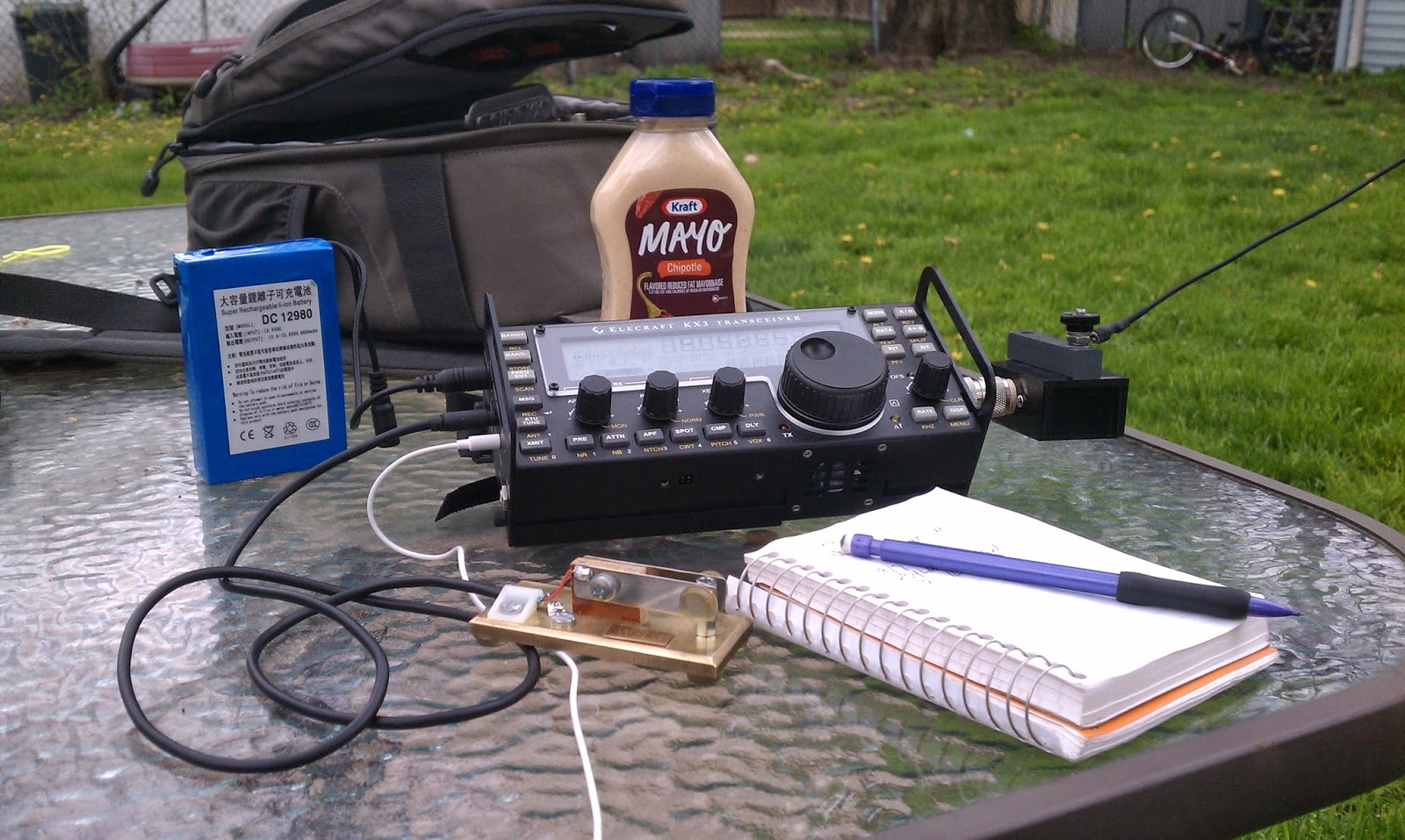
Yes, I placed some Chipotle Mayo next to me while I operated.
I got to experiment a bit too. I used both my Par EndFedz and the EARCHI 9:1 Unun with a 36 foot radiator. The Par EndFedz performed as expected. The EARCHI performed much better than last time. The extra three feet of wire made a big difference. The KX3 handled the wire well on all bands, 40 through 10 Meters with minimal clicking and clacking from the auto tuner.
In the hour or so of operating time that I got in, I worked about a dozen or so stations. Included were some very familiar calls like Mert W0UFO, Jerry N9AW, Rick NK9G, Dave AB9CA, Gene N5GW and Kelly K4UPG among others.
So even though I didn’t get a lot of operating time in, I did learn more about the EARCHI end fed. I think it will serve well as an all around multi band antenna for portable ops.
72 de Larry W2LJ
QRP – When you care to send the very least!













