Archive for the ‘antenna’ Category
 Radio propagation and space weather course
 June 9th, 2014 |
  Author:
 As the propagation columnist for several amateur radio magazines, I hear from a diverse group of interested people that find space weather and the propagation of radio waves fascinating. I admit: I am a space weather and radio propagation nut, and it is always good to correspond or meet with other interested folks. This is an aspect of our hobby that never grows old, as there is so much that we don’t yet know–we communicators are in a perfect space to make discovery and to make improvements to our understanding of this science. Over the years, I’ve heard a lot from readers of my columns, expressing their fascination with the science of radio and solar phenomenon.
Are you interested in learning about the Sun and the Sun-Earth connection (space weather), including topics of sunspots, solar flares, coronal mass ejections, and so on? Do you want to delve deeper into topics including the ionosphere, the magnetosphere, and how radio waves propagate from transmitter to receiver?

The critical frequency (foF2) for mornings during June 2014.
You might consider a time-proven “course”–material that is very comprehensive–that you can self-study, to become well-versed in this information. The course (one that has been used in professional disciplines) is offered either stand-alone, or bundled with the ray-tracing PropLab PRO software.
Some may say, “But, I like the magic of just getting on the air and trying my luck! If I learn all this stuff, then it becomes science, and not a hobby.” It is true that there’s a joy at being dazzled with the magic of radio; buy a super cool transceiver, and a factory-made antenna with coax already fitted with connectors, adding the necessary accessories to make it come alive, then begin exploring the shortwave frequencies. Magical, indeed! But, there are many in the hobby that wish to learn how all of that works. Some even begin learning how to build antennas, radio kits, and discover the joy of the “science” of radio. A few eventually take the step with gained “scientific” knowledge of electronics, and they design and build equipment for their hobby. The course is part of that mix: learning how the Sun affects getting a radio signal from point A to point B, and how to leverage their time and efforts, is a joy, indeed.
Interested? Here’s the web page: http://hfradio.org/swp_course/

PropLab PRO creates ray-traced radio wave analysis
If any disclosure is necessary, here you go: The proceeds from a purchase of this course go to the funds I use to keep cw.HFRadio.org, swl.HFRadio.org, and other resources at HFRadio.org, plus http://SunSpotWatch.com up and running. There are monthly fees, yearly fees, and software licensing to cover, as well as the purchase of hardware from time to time. These operating and maintenance funds are mostly covered by me, Tomas, NW7US, out of my personal funds. Any donations and sales helps out. Haters and Hecklers can send their comments to the bit bucket.
73 de NW7US
There’s a new radio hobby magazine in town!
Recently, a number of hobby radio magazines have either retired, or have merged into a digital mix of several. Filling that void is the new The Spectrum Monitor, a creation of Ken Reitz KS4ZR, managing editor for Monitoring Times since 2012, features editor since 2009, columnist and feature writer for the MT magazine since 1988. Ken offers this digital, radio communications magazine monthly. The web site is at http://www.thespectrummonitor.com/

The Spectrum Monitor magazine – get your’s, today.
Ken, a former feature writer and columnist for Satellite Times, Satellite Entertainment Guide, Satellite Orbit magazine, Dish Entertainment Guide and Direct Guide, is also contributing editor on personal electronics for Consumers Digest (2007 to present). He is the author of the Kindle e-books “How to Listen to the World” and “Profiles in Amateur Radio.”
The Spectrum Monitor Writers’ Group consists of former columnists, editors and writers for Monitoring Times, a monthly print and electronic magazine which ceases publication with the December, 2013 issue. Below, in alphabetical order, are the columnists, their amateur radio call signs, the name of their column in The Spectrum Monitor, a brief bio and their websites:
Keith Baker KB1SF/VA3KSF, “Amateur Radio Satellites”
Past president and currently treasurer of the Radio Amateur Satellite Corporation (AMSAT). Freelance writer and photographer on amateur space telecommunications since 1993. Columnist and feature writer for Monitoring Times, The Canadian Amateur and the AMSAT Journal. Web site: www.kb1sf.com
Kevin O’Hern Carey WB2QMY, “The Longwave Zone”
Reporting on radio’s lower extremes, where wavelengths can be measured in miles, and extending up to the start of the AM broadcast band. Since 1991, editor of “Below 500 kHz” column forMonitoring Times. Author of Listening to Longwave (http://www.universal-radio.com/catalog/books/0024u.html). This link also includes information for ordering his CD, VLF RADIO!, a narrated tour of the longwave band from 0 to 530 kHz, with actual recordings of LW stations.
Mike Chace-Ortiz AB1TZ/G6DHU “Digital HF: Intercept and Analyze”
Author of the Monitoring Times “Digital Digest” column since 1997, which follows the habits of embassies, aid organizations, intelligence and military HF users, the digital data systems they use, and how to decode, breakdown and identify their traffic. Web site: www.chace-ortiz.org/umc
Marc Ellis N9EWJ, “Adventures in Radio Restoration”
Authored a regular monthly column about radio restoration and history since 1986. Originally writing for Gernsback Publications (Hands-On Electronics, Popular Electronics, Electronics Now), he moved his column to Monitoring Times in January 2000. Editor of two publications for the Antique Wireless Association (www.antiquewireless.org): The AWA Journal and the AWA Gateway. The latter is a free on-line magazine targeted at newcomers to the radio collecting and restoration hobbies.
Dan Farber ACØLW, “Antenna Connections”
Monitoring Times antenna columnist 2009-2013. Building ham and SWL antennas for over 40 years.
Tomas Hood NW7US, “Understanding Propagation”
Tomas first discovered radio propagation in the early 1970s as a shortwave listener and, as a member of the Army Signal Corps in 1985, honed his skills in communications, operating and training fellow soldiers. An amateur Extra Class operator, licensed since 1990, you’ll find Tomas on CW (see http://cw.hfradio.org ), digital, and voice modes on any of the HF bands. He is a contributing editor for CQ Amateur Radio (and the late Popular Communications, and CQ VHF magazines), and a contributor to an ARRL publication on QRP communications. He also wrote for Monitoring Times and runs the Space Weather and Radio Propagation Center at http://SunSpotWatch.com. Web site: http://nw7us.us/ Twitter: @NW7US YouTube: https://YouTube.com/NW7US
Kirk Kleinschmidt NTØZ, “Amateur Radio Insight”
Amateur radio operator since 1977 at age 15. Author of Stealth Amateur Radio. Former editor,ARRL Handbook, former QST magazine assistant managing editor, columnist and feature writer for several radio-related magazines, technical editor for Ham Radio for Dummies, wrote “On the Ham Bands” column and numerous feature articles for Monitoring Times since 2009. Web site: www.stealthamateur.com.
Cory Koral K2WV, “Aeronautical Monitoring”
Lifelong air-band monitor, a private pilot since 1968 and a commercial pilot licensee since 1983, amateur radio licensee for more than 40 years. Air-band feature writer for Monitoring Times since 2010.
Stan Nelson KB5VL, “Amateur Radio Astronomy”
Amateur radio operator since 1960. Retired after 40-plus years involved in mobile communications/electronics/computers/automation. Active in radio astronomy for over twenty years, specializing in meteor monitoring. Wrote the “Amateur Radio Astronomy” column for Monitoring Timessince 2010. A member of the Society of Amateur Radio Astronomers (SARA). Web site: www.RoswellMeteor.com.
Chris Parris, “Federal Wavelengths”
Broadcast television engineer, avid scanner and shortwave listener, freelance writer on federal radio communications since 2004, wrote the “Fed Files” column for Monitoring Times.http://thefedfiles.com http://mt-fedfiles.blogspot.com Twitter: @TheFedFiles
Doug Smith W9WI, “The Broadcast Tower”
Broadcast television engineer, casual cyclist and long distance reception enthusiast. “Broadcast Bandscan” columnist for Monitoring Times since 1991. Blog:http://americanbandscan.blogspot.com Web site: http://w9wi.com
Hugh Stegman NV6H, “Utility Planet”
Longtime DXer and writer on non-broadcast shortwave utility radio. Former “Utility World” columnist for Monitoring Times magazine for more than ten years. Web site: www.ominous-valve.com/uteworld.html Blog: http://mt-utility.blogspot.com/ Twitter: @UtilityPlanet YouTube: www.youtube.com/user/UtilityWorld
Dan Veeneman, “Scanning America”
Software developer and satellite communications engineer writing about scanners and public service radio reception for Monitoring Times for 17 years. Web site: www.signalharbor.com
Ron Walsh VE3GO, “Maritime Monitoring”
Retired career teacher, former president of the Canadian Amateur Radio Federation (now the Radio Amateurs of Canada), retired ship’s officer, licensed captain, “Boats” columnist and maritime feature writer for Monitoring Times for eight years. Avid photographer of ships and race cars.
Fred Waterer, “The Shortwave Listener”
Former “Programming Spotlight” columnist for Monitoring Times. Radio addict since 1969, freelance columnist since 1986. Fascinated by radio programming and history. Website: http://www.doghousecharlie.com/
Thomas Witherspoon K4SWL, “World of Shortwave Listening”
Founder and director of the charity Ears To Our World (http://earstoourworld.org), curator of the Shortwave Radio Archive http://shortwavearchive.com and actively blogs about shortwave radio on the SWLing Post (http://swling.com/blog). Former feature writer for Monitoring Times.
MQ26-SR. 2 years on.
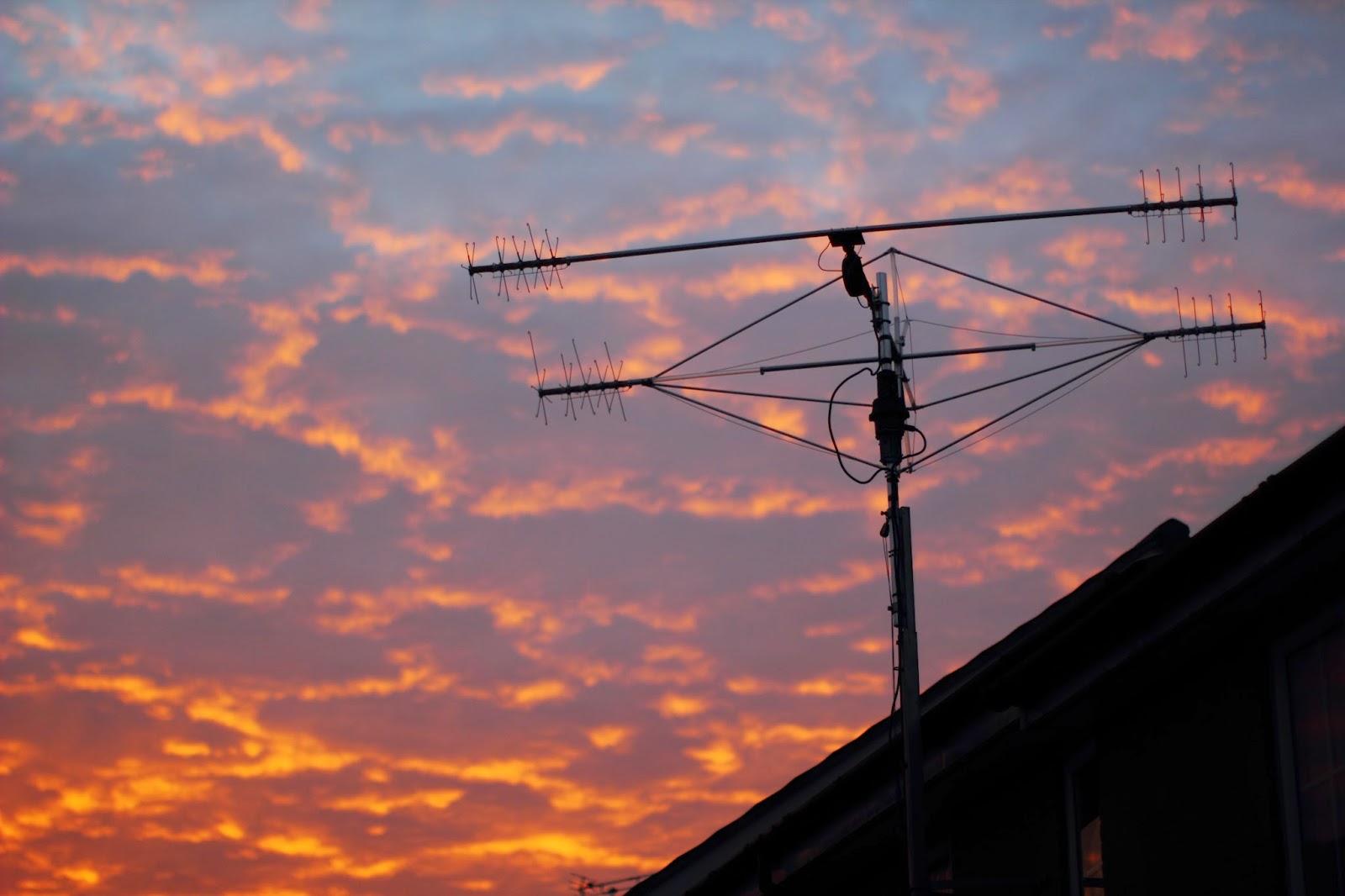
One of my most read posts on this blog is “Which Antenna” it describes the comparison between 2 antennas. The MA5B and the MQ26-SR. As my readers will know I opted for the MQ26-SR. and 2 years on its only fair I tell you how I have gotten on with the antenna.
I can hardly believe that 2 years exactly has passed where I hosted an erecting party, to install my new mast, antenna and rotator. The first year of the antenna was perfect I was able to find the DX weak signals pick them out and get heard over the majority of the European pileups. I had a great deal of fun. The antenna remained unchanged in that first year.
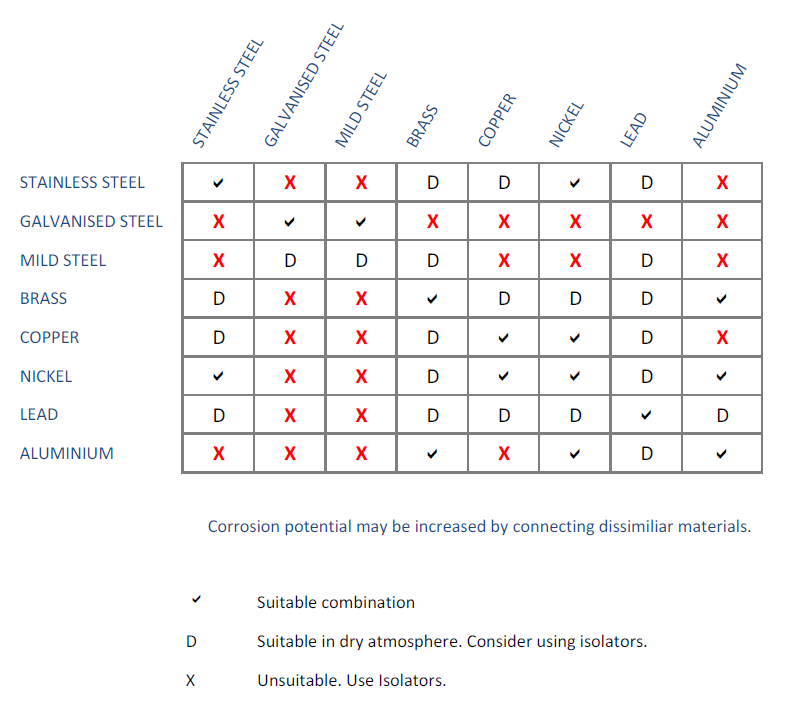
But suddenly over a period of 3 months I found the SWR was changing, and the antenna was becoming more and more deaf on 20m. Something clearly had changed on the antenna. My initial thoughts were water ingress in the Balun. I never really trusted the balun and found the construction of it crude. But in fact the balun was fine. I did however find that every clamp, bracket and connection on the antenna extremely corroded. “dissimilar metals” was the culprit.
A huge strip down clean and reassemble job was needed. And so this was completed with the antenna still in place, and although better the antenna still isn’t quite right. It really does need bringing down to earth and cleaning thoroughly and wrapping up in self amalgamating tape.
So 2 years on. What do I think ? the antenna is excellent. But do look closely at the spreader arms, clips and any screw terminal. You may need to buy some new hardware in order to achieve a compatible metal. Have a look at the chart below. For a cross match on metals used to clamp the antenna up. As a guide I had a stainless steel screw, brass washers, clamping an aluminum ring clip. Not a great combination.
Also make sure the clear acrylic tubes do indeed have a place for water to drain from. 2 of mine do not and I have the bottom bracket nearly half full of water at any given time.
Portable Hexbeam
Saturday saw me opening a beer celebrating finishing off the new decking area…which means….Sunday saw me finishing off my portable hexbeam from Folding Antennas. The build took quite a while, about 8 for the hardware and about 3 for the layout and tuning. I’ve not used it much in anger as the rains started coming.
An early doors write up is here…..but so far its looking worth the build time. Here’s a shot of the half finished decking…oh and a half finished antenna.

LHS Episode #124: Dog Boarding
 Hello, folks! A couple weeks late and a dollar or two short, we’re back! In this delectable episode of Linux in the Ham Shack, your intrepid hosts discuss a variety of topics from antenna safety to Linux conventions to getting your name on an asteroid. For our main discussion, we tackle a couple updates to Linux distributions, including one specifically for amateur radio use. Then we plow on through a heaping helping of feedback. Thanks for tuning in, and be sure to tell all your friends about us. Also, hope to see you all at Dayton this year! Rewards for those who pledged to our fund are coming soon. Stay tuned.
73 de The LHS Guys
Worst snow winter since 1958 and an indoor Yagi antenna

Norway has had its fair share of precipitation this winter. Along the coast most of it has been in the form of rain. But that is different in the mountains. Our cabin at 800 m above sea level is now about to disappear in the snow and we can hardly see out of the windows anymore. This is a result of having had to shovel the snow off the roof three times so far this winter. And there is yet more to come.
They say that one has to go back to the winter of 1958 for more snow than we have had this winter, and we are still only in February. The snow has also given us an unexpected problem. Our digital TV signal is now gone. The TV transmitter is at Mount Gaustadtoppen at 1883 m ASL which is about 10 km to the North and with almost free line of sight. It used to be possible to receive the signals from the national TV provider (Riks-TV) with just a simple indoor dipole, i.e. two wires each of length 13-14 cm connected to a coaxial cable. But not so anymore after all the snow has accumulated outside the windows.
Therefore I had to find a good Yagi-antenna calculator and make a better antenna. I put it on a cardboard of length 45 cm and used the antenna calculator of K7MEM (Martin Meserve). It is a little hard to figure out the exact frequency as there are 5 multiplexes in the TV system and for that particular transmitter they range from 506 to 620 MHz (http://www.finnsenderen.no/finnsender). I therefore just designed the antenna for the multiplex in the middle, 563 MHz. The wavelength is 53.3 cm and typical antenna element length is half of that.

The antenna calculator gave me a design with one reflector behind the receiver element, and four directors in front of it. In the picture, the reflector is to the left and the antenna points to the transmitter to the right.
I made the elements from thick wire, and just taped them to the cardboard. The connector to the coaxial cable is under the cardboard and attached to the center of element two from the left – the one which is split into two.
The Yagi antenna was first described by H. Yagi in the paper “Beam Transmission of Ultra Short Waves“, (Proceedings of the Institute of Radio Engineers, 1928). But as the contribution from his colleague Uda was at least as great as Yagi’s, the antenna should really be called the Yagi-Uda antenna. I seem to remember that Uda could not write English (both of them were Japanese), so the article was written in the name of Yagi only.
But what about my Yagi, eh Yagi-Uda antenna, did it work? Yes, actually it did! With digital signals there is a threshold effect and above a certain signal level the signal quality quickly goes to 100% with a low BER (bit error rate) and with this antenna I came above that threshold. The gain of this antenna is in the order of 8 dB or about 6 dB more than the old single element antenna. Luckily, that was enough to compensate for the attenuation through the snow pile. And as you can see, one doesn’t need aluminium to make a working TV antenna.
[In Norwegian: Verste snøvinter i manns minne og en innendørs TV-antenne]
shack tour.
I always thought “why don’t more people share their shacks” well when I was approached to create a tour of mine. Its clearly quite a nerve racking thing. Allowing people into your inner sanctum and allowing people to see how you operate and how your equipment is set up is strangely one of the more worrying things Ive done in recent weeks.
Well if you are interested you can see the video here. 1 comment from Sandy – has already requested a further video on the morse keys I have. So in the upcoming days / weeks I will be uploading a amendment video to show what I have.













