Author Archive
 Hunting For NDBs In CLE188
 November 20th, 2014 |
  Author:
  |
| Courtesy: http://americanradiohistory.com/ |
These listening events serve several purposes. They:
- determine, worldwide, which beacons are actually in service and on-the-air so the online database can be kept up-to-date
- determine, worldwide, which beacons are out-of-service or have gone silent since the last CLE covering this range
- will indicate the state of propagation conditions at the various participant locations
- will give you an indication of how well your LF/MF receiving system is working
- give participants a fun yet challenging activity to keep their listening skills honed
Hi all,
The CLE Survey results are so interesting I almost forgot to send this!
Please join us in our 188th Co-ordinated Listening Event which starts
this Friday. All are very welcome - 'Regulars' and 'First-Timers' alike.
CLEs are not contests - if you enjoy taking part you are a winner!
Days: Friday 21st - Monday 24th November
Times: Start and end at midday, your LOCAL TIME
Range: 370 - 384.9 kHz
Just log all the NDBs that you can identify with their nominal (listed)
frequencies in the range (it includes 370 kHz, but not 385 kHz)
plus any UNIDs that you come across there.
Please send your CLE log to the List in a plain text email if possible
(not in an attachment) with CLE188 at the start of its title.
Show on each log line:
# The date (e.g. 2014-11-21, etc., or just 21) and UTC.
(the date changes at 00:00 UTC)
# kHz (the nominal published frequency, if known)
# The Call Ident.
Please show those main items FIRST - other optional details such as
Location and Distance go LATER in the same line.
If you send interim logs, please also send a 'Final' (complete) log.
As always, tell us your own location and brief details of the equipment
that you were using during the weekend.
I'll send the usual 'Any More Logs?' email at about 18:00 UTC on
Tuesday - you can check from it that your log has been found OK.All logs must arrive on the list by 09:00 UTC on Wednesday 26th
at the very latest.
I hope the combined results will be completed on that day.
To help your listening, seeklists are available via the CLE page
http://www.ndblist.info/cle.htm
Good listening - enjoy the CLE
Brian
----------------------------------------------------------
From: Brian Keyte G3SIA ndbcle'at'gmail.com
Location: Surrey, SE England (CLE co-ordinator)
----------------------------------------------------------
(If you wish you could use any one remote receiver for your loggings,
stating the location and owner - with their permission if required.
A remote listener may NOT also use another receiver, local or remote,
to make further loggings for the same CLE).
Final details can be found at the NDB List website, and worldwide results, for every participant, will be posted there a few days after the event.
The very active Yahoo ndblist Group is a great place to learn more about the 'Art of NDB DXing' or to meet other listeners in your region. There is a lot of good information available there and new members are always very welcome.
If you are contemplating getting started on 630m, listening for NDBs is an excellent way to test out your receive capabilities as there are several NDBs located near this part of the spectrum.
You need not be an ndblist member to participate in the CLEs and all reports, no matter how small, are of much value to the organizers.
Reports may be sent to the ndblist or e-mailed to either myself or CLE co- ordinator, Brian Keyte (G3SIA).
Please...don't be shy and do give the CLE a try....then let us know what NDB's can be heard from your location! Your report can then be added to the worldwide database.
More BK Building
My recent 'Building For The BK' blogs have tempted at least one ardent homebrewer, John (VE7BDQ), to dig into his junkbox stash to create a nicely-working BK rig....it's a Colpitts oscillator using a pair of 45's in push-pull. His lash-up is now working and ready to go on both 80 and 40m and he is contemplating 160m operation with it as well....very nice!
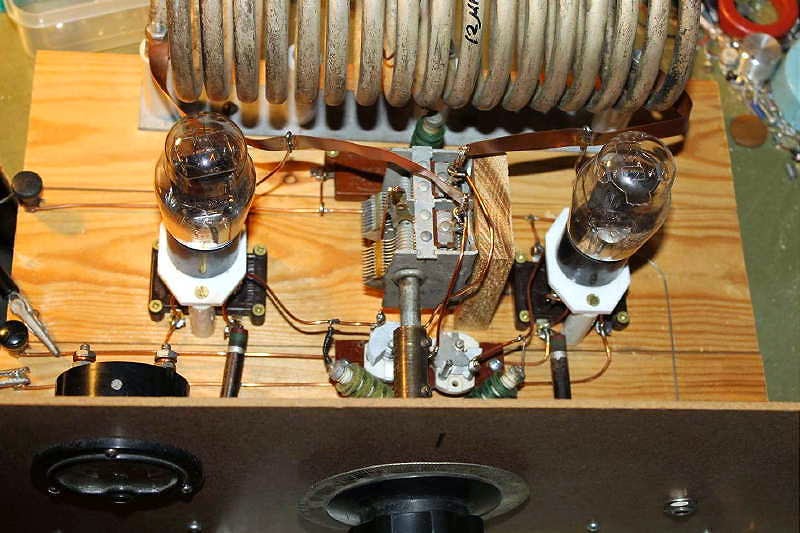
Although John did not have every period-appropriate component available to him, it didn't discourage him from building his BK rig. For too many, this is often a stumbling block that leads to nothing being built....as the boy's of '29 no doubt would have done, he put something together completely from his junkbox.
It will be super to have another left-coast station in this years '29 Party...and a Canadian station to boot!
Anyone else building for the BK? ....there's still a few weeks left.
 |
| 1935 ARRL Handbook. Source: http://www.arrl.org/ |
John and I had a nice QSO today on 80m CW and the rig sounds just great. He reports 240 volts on the plates and a current of 58ma. His scope-measured output is just over 8 watts for an impressive efficiency of just over 60%. It appears that the Colpitts-style is much more efficient than the more popular TNT or Hartley oscillators...well at least more efficient than the ones I built!
Although John did not have every period-appropriate component available to him, it didn't discourage him from building his BK rig. For too many, this is often a stumbling block that leads to nothing being built....as the boy's of '29 no doubt would have done, he put something together completely from his junkbox.
It will be super to have another left-coast station in this years '29 Party...and a Canadian station to boot!
Anyone else building for the BK? ....there's still a few weeks left.
BK Building…
 |
| March 1926 QST. Courtesy: ARRL |
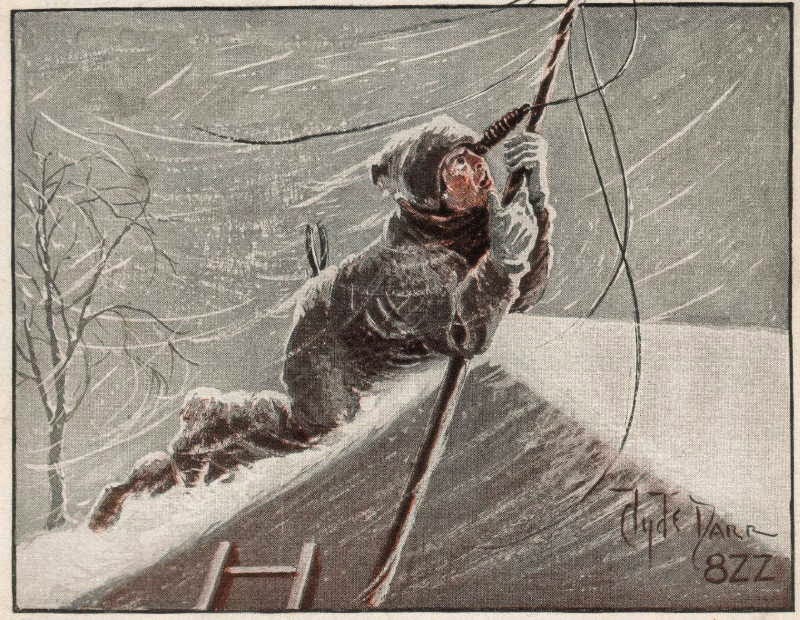
Every year as contest time approaches, I anxiously follow our local weather patterns in hope that the winds remain quiet for the event. For the past few years, the wind has been non-existent...right until zero-hour, when, almost as if a switch were thrown, the wind ramps up to gale-like conditions. Now if you've never heard a self-excited oscillator directly connected to a wind-blown antenna, then be sure to take a listen to this year's BK. These '29 rigs are often not very pretty-sounding, even into a dummy load, but couple them to the wind and things get very 'nostalgic-sounding' quickly. Frequency shifts in the order of several hundred Hertz between letters are not uncommon, making copying a weak signal difficult and almost impossible if listening with a narrow filter. The amplifier will effectively isolate the effects of a shifting antenna impedance from the oscillator stage, making life very much less stressful, come BK time.
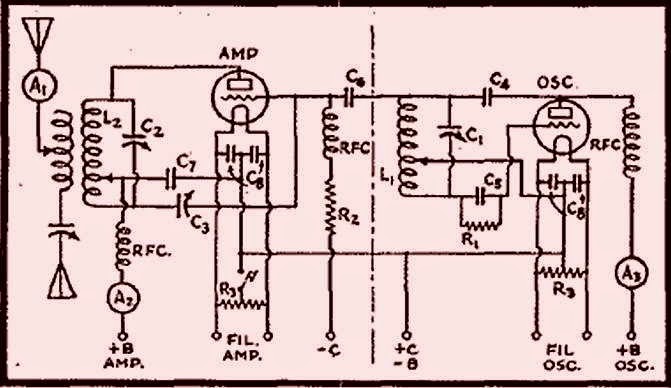
My plan is to follow the wisdom of the '29ers themselves, carefully explained in "More Power With Better Frequency Stability" by George Grammer and published in the February 1931 edition of QST. I'm always impressed at how quickly those folks back in the 20's figured out so many of the important "basics of radio" that have withstood the test of time. It must have been an exciting time to be a ham! A glance through any of the numerous radio magazines from the late 20's and early 30's reveals a vibrant market for the homebrewer, with every type of component available. Whether the average ham could afford to buy them in the hungry-thirties is another question.
I've chosen to use another type '10' power triode as my amplifier, as shown below.
 |
| Courtesy: ARRL |
I see the main challenges being coupling conveniently from the oscillator as well as neutralizing the triode amplifier...I wonder, will neutralizing it on 40m (for example) also make it stable on 80m?
As well, since the type '10' uses a directly-heated cathode, if I wish to let the oscillator run while I key the amplifier, a separate filament supply will be required for each tube. With this in mind, I've got the ball rolling this week with the construction of a dedicated '29 rig filament supply. The supply uses two center-tapped 5V transformers with their secondaries in series and brought out to the back panel. This will allow me to use tubes with 2.5V, 5V, 7.5V and 10V filaments...up to 3A.
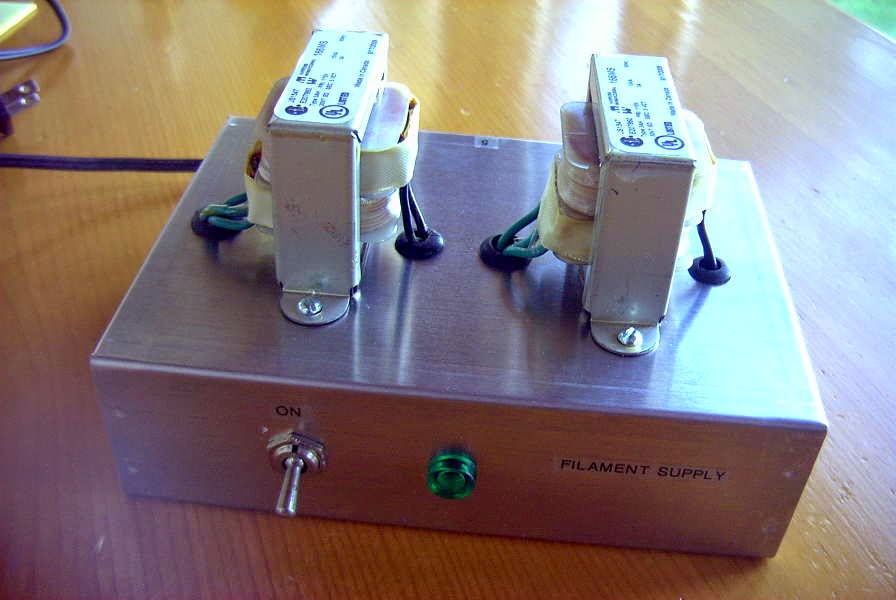 |
| New filament supply |
Are you building or planning anything for this year's BK Party?
“CQ BR” – The Bug Roundup!
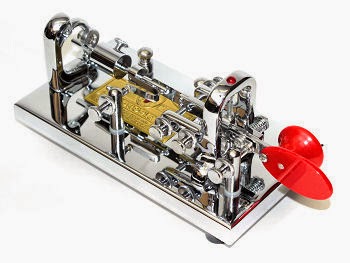
Sponsoring the event is the Samuel F. Morse Amateur Radio Club (W6SFM) of Sacramento, CA. Detailed information may be found at their website, located here.
The club page describes the event as :
"a special time to bring bug operators together on the air. In the same spirit as ARRL's Straight Key Night, participants are encouraged to make simple, conversational, “chewing-the-fat” QSOs using their bug type key. This is an opportunity to exercise, share and exhibit your personalized fist. This is NOT a contest. Call "CQ BR" so folks know you are a Bug Roundup Participant."
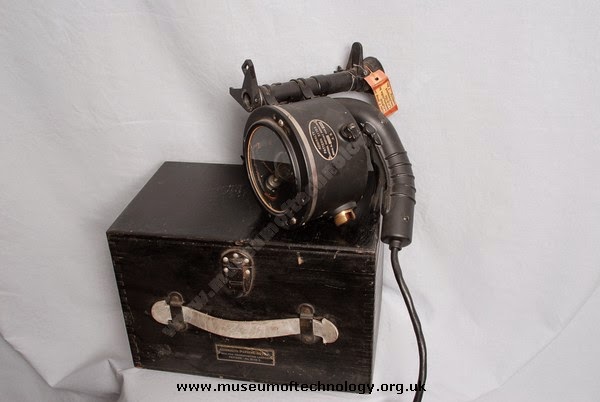
You may have guessed by now that I love CW and always have, since learning the 'code' as an eleven-year old in Scouts! Our Scoutmaster had procured several sets of beautiful boxed Aldis signalling lamps, the same as shown below:
 |
| Image Courtesy: http://www.museumoftechnology.org.uk |
Our leader worked in the Marine Building, the tallest building at the time, in downtown Vancouver.
 |
| Marine Building circa 1947. Courtesy: http://searcharchives.vancouver.ca/ |
It nice to see events like this and the ARRL's "Straight Key Night" along with clubs like the, "SKCC" , "FISTS", "FOC" and "The CW Operators' Club", all doing their best to keep CW alive. Hopefully you will have some time to play in the 'BR' this weekend.
A Fine “U3” Package For 630m
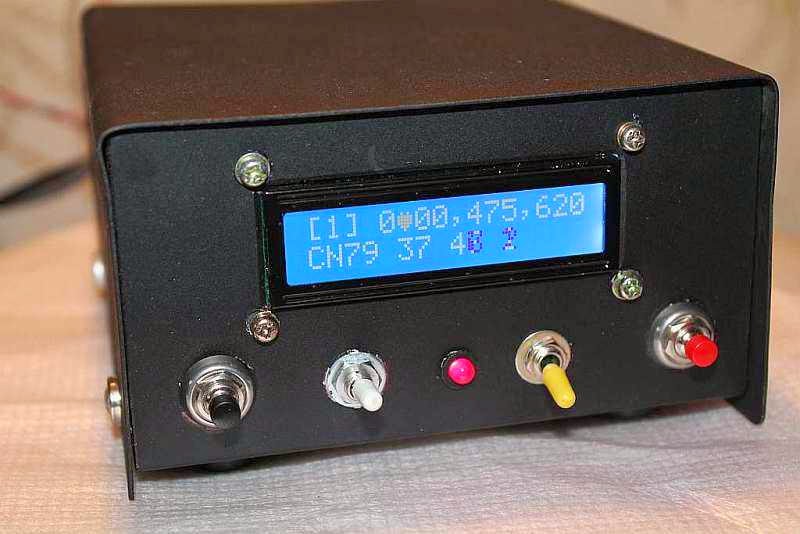
The "U3" is the Ultimate3 QRSS/WSPR Transmitter Kit produced by Hans Summers (GØUPL) and is fast becoming a popular and inexpensive workhorse among WSPR fans. A short description from GØUPL's website indicates that the "U3" is:
"the third version in the "Ultimate" QRSS/WSPR kit trilogy. It can produce QRSS, Hell, WSPR, Opera and PI4 slow-signal modes anywhere from audio to 10m and above. Plug-in LPF filters are available for all 12 HF/MF/LF bands."
Jack has tailored his version for our new (to Canadian amateurs) 630m band but has also added a versatile MOSFET linear amplifier of his own design that runs on 12VDC. Using an inexpensive IRF540 switching FET, Jack can run up to 30W of output on 630m but normally runs at the 5-10W level on 475 kHz. Most of Jack's homebrew gear looks as if it just came off the Hewlett-Packard assembly line and his latest project is no exception.
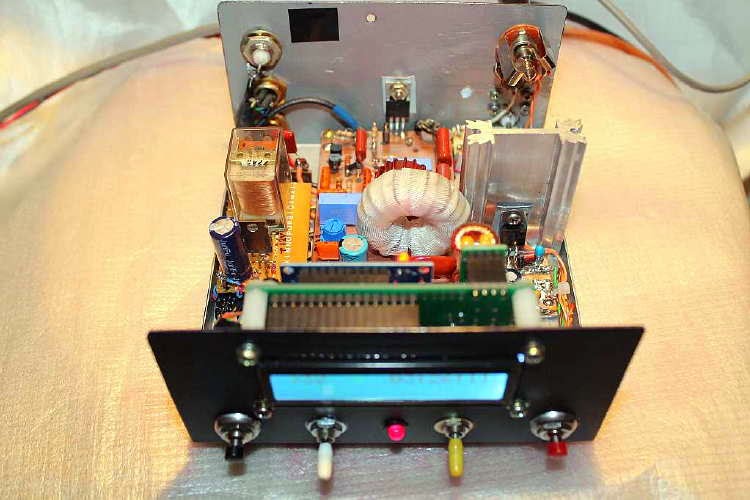
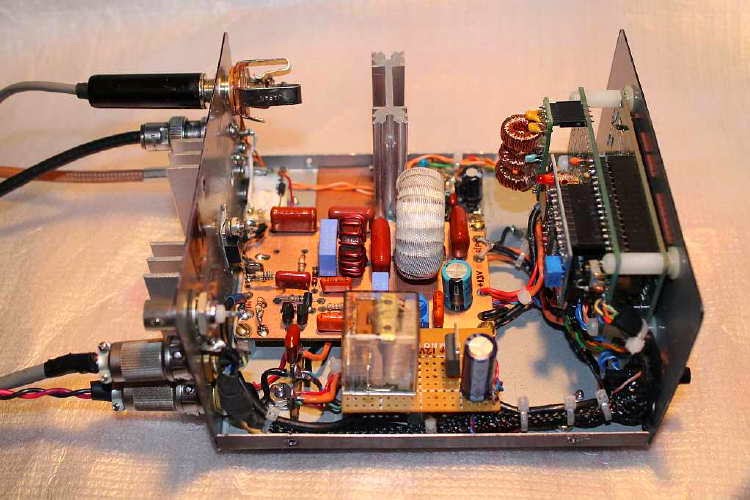
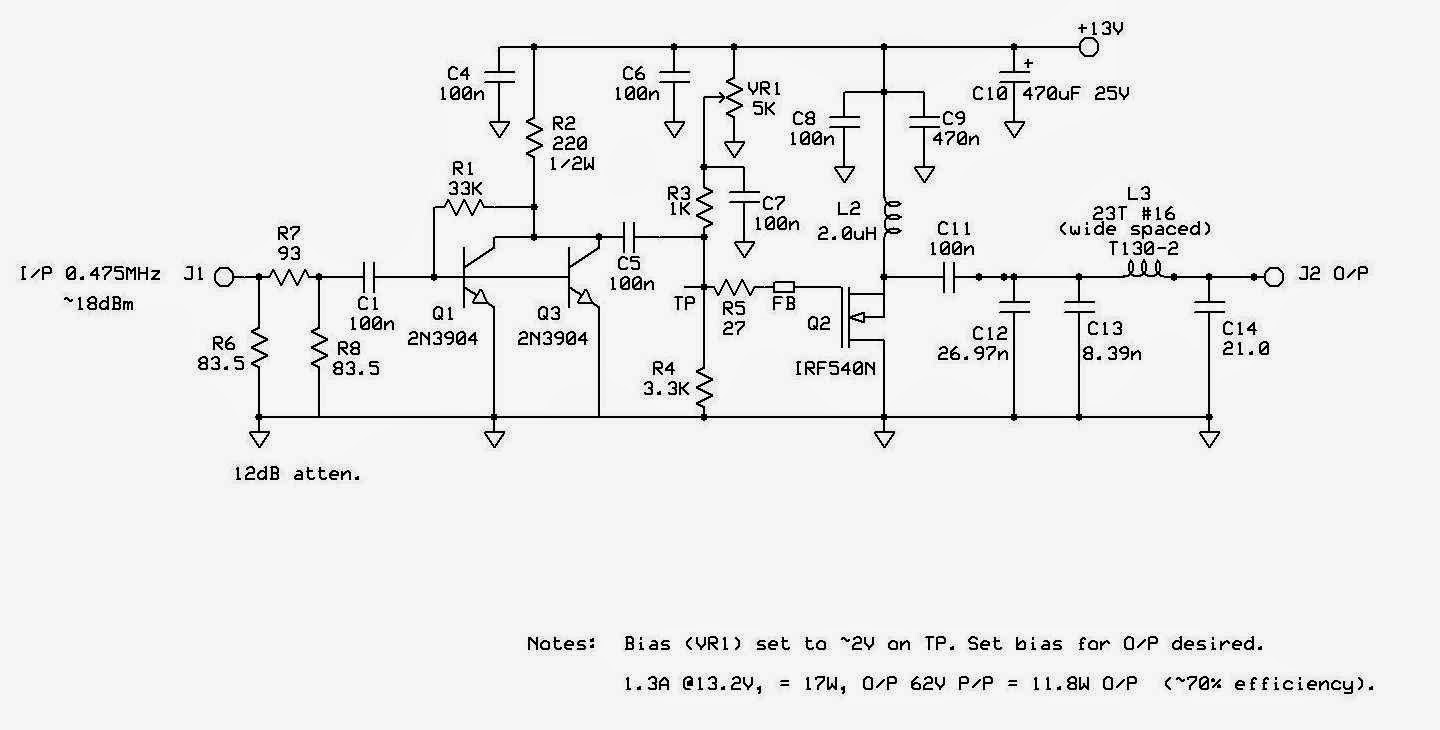 |
| All images courtesy of VA7JX |
Using mainly the WSPR (Weak Signal Propagation Reporter) mode, Jack and many others, have found that 630m offers some amazing propagation, considering the low ERP levels imposed by the backyard-sized antenna efficiencies on this band. Using an inverted "L", resonated for 630m, his 5W signal has been spotted by the following stations in the past few days:
WH2XCR (Hawaii) at 4258 km.
WG2XJM, 3552 km, Shawnee, OK
WH2XHY, 2822 km, Fitchborg Wi.
WG2XXM, 2789 km, Wichita Kansas.
N6KOG, 1390 km, Tracy Ca.
KK6EEW, 1284 km, Healdsburg Ca.
WE2XPQ, 1172 km, Alaska
W7LW, 983 km, Kuna, ID
W7MY, 605 km, Richland WA.
WH2XGP, 504 km, Quincy, WA
VA7JX is one of the three west coast Canadian stations that have transmit-capability on 630m, the two others being myself and VE7BDQ (John). John can be found most nights on the 475kHz WSPR mode as well, running the legal limit of 5W EIRP into a small inverted "L" as well. John has also enjoyed good success on WSPR, having been spotted regularly on the east coast and more recently, in Hawaii. For exact frequencies of both stations, check the WSPRNet Activity page for the latest real-time information.
Although WSPR works well as a propagation indicator....and it seems that there is plenty of nice propagation on 630m....it does not allow two stations to actually QSO each other. Our new band really needs more Canadian stations to spark activity and get things rolling! Ideally, it would be nice to call CQ on the band, with a realistic hope of getting a reply.
With three VE7's now 'all-ears', nightly activity from VE6, VE5, VE4 and VE3 would be an exciting prospect and would really liven-up what seems to be a very prop-friendly part of the spectrum...who'd a thought it? It seems that amateurs are now re-discovering what the maritime operators have known for decades!
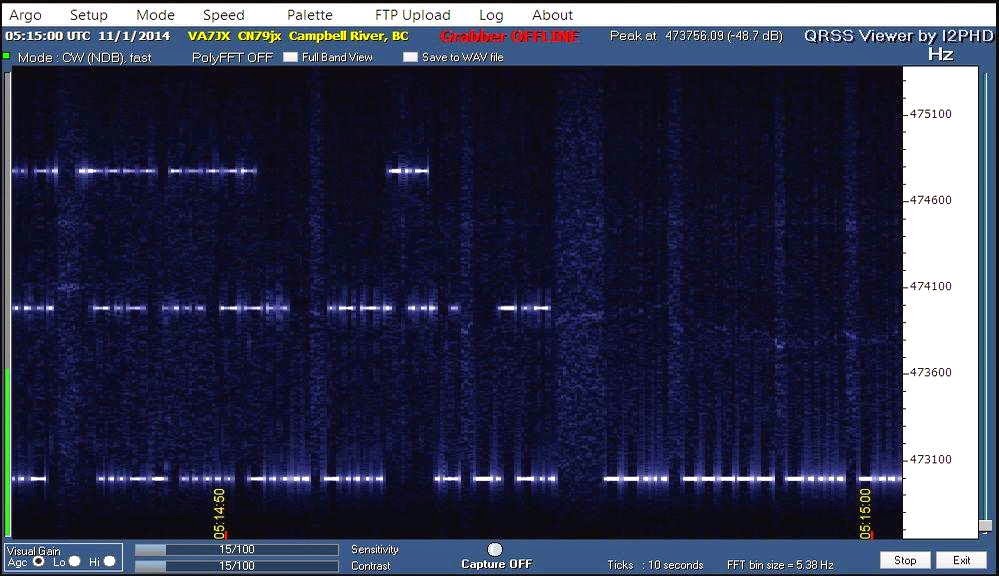
If any of us can help you with getting on-the-air, please do not hesitate to ask....and, if you are presently building or testing, you can look for your signal on the VA7JX 630m screen grabber....a real-time view of the band from VE7 land and available any time, by chance or by request, from VA7JX.
Launching Antennas With Right Guard
 Dedicated LFer, K2ORS (Warren), posted a short video yesterday of his friend's attempted 'pre-antenna launch' test flight: "Attempted to use an 8 rotor U.A.V, to lift a string over the trees with
which an antenna wire could be pulled up. However, there were some
control issues..."
Dedicated LFer, K2ORS (Warren), posted a short video yesterday of his friend's attempted 'pre-antenna launch' test flight: "Attempted to use an 8 rotor U.A.V, to lift a string over the trees with
which an antenna wire could be pulled up. However, there were some
control issues..." I'm not sure exactly what went wrong but I hope that beautiful machine was not damaged too heavily.
I've seen a few others using inexpensive quadcopters to get light strings up and over trees and it seems that they would be ideal for such tasks. As these devices flood the hobby-market, their prices seem to be dropping quickly and more and more amateurs are looking at these with antennas in mind.
Over the years I have tried numerous methods of getting a string up and over...slingshots, fishing rods... but nothing seemed to get me past the 35'- 40' mark, if that high. Maybe it was just poor technique on my part as others claim to have good success with these methods. Eventually I decided to try a homebrew 'spud gun' as I needed to get wires up to the top of my 70' Balsam.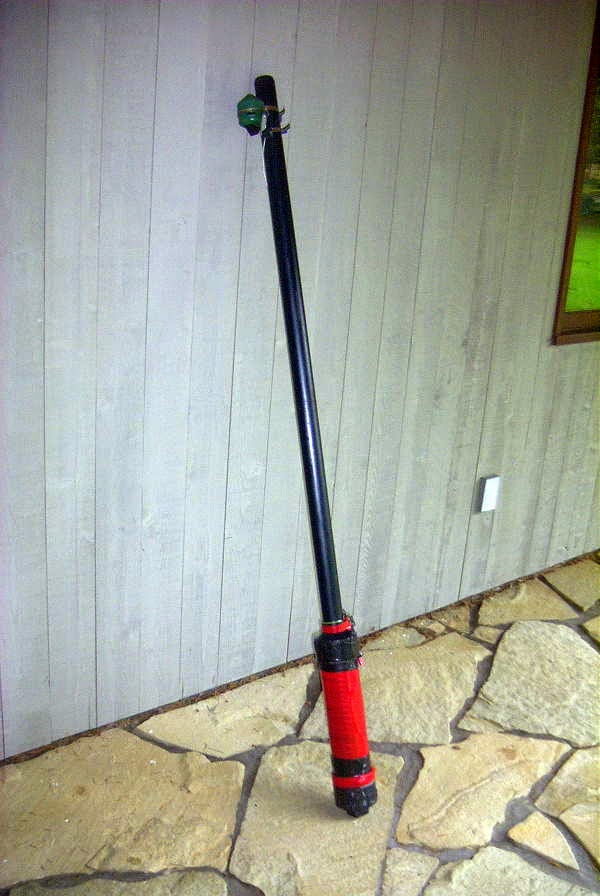
I used Schedule 40 ABS pipe, the thick-walled stuff. This is becoming harder to find in the typical hardware outlets as most of it seems to be the lighter foam-core material which should not be used for this.
When I first fired it, I wrapped the breech in several layers of towelling, just in case it blew apart but felt confident enough to remove it after a few test shots.
There are several websites describing spud gun construction and a quick Google-search will bring up some interesting plans. My system pretty much follows this design, found here at spudgunner.com.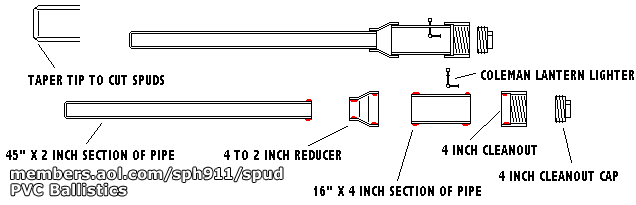
When I first fired it, I wrapped the breech in several layers of towelling, just in case it blew apart but felt confident enough to remove it after a few test shots.
There are several websites describing spud gun construction and a quick Google-search will bring up some interesting plans. My system pretty much follows this design, found here at spudgunner.com.
The first propellant that I used was hair spray but found that it quickly built-up a layer of sticky-goo on the inside of the cleanout cap and threads, making it very hard to unscrew the cap. I cleaned it thoroughly and changed to Right Guard spray deodorant which worked extremely well, was very clean burning and left no residue.
The first few times I fired the gun I was shocked to hear how loud it was, with a loud 'BOOM' reverberating around the neighbourhood. After a few shots, I fully expected to see the local RCMP arriving but when enquiring a few doors away, I was told that they had not heard anything! Perhaps it is because the thing is right beside you at the time that makes it sound so loud but I have never had any enquiries about it.
I have mounted an inexpensive (Walmart) spinning reel at the very top which has been loaded with a light (10lb) mono filament fishing line. This is attached to a homebrew lathe-turned wooden bullet, about 8" long, as shown below.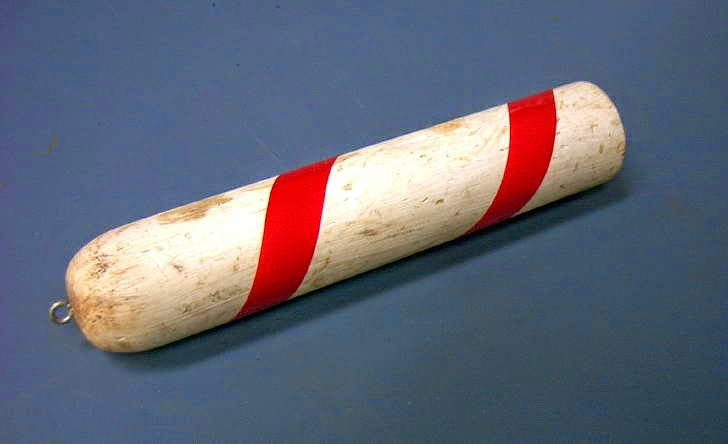
The first few times I fired the gun I was shocked to hear how loud it was, with a loud 'BOOM' reverberating around the neighbourhood. After a few shots, I fully expected to see the local RCMP arriving but when enquiring a few doors away, I was told that they had not heard anything! Perhaps it is because the thing is right beside you at the time that makes it sound so loud but I have never had any enquiries about it.
I have mounted an inexpensive (Walmart) spinning reel at the very top which has been loaded with a light (10lb) mono filament fishing line. This is attached to a homebrew lathe-turned wooden bullet, about 8" long, as shown below.
The bullet is lowered down the barrel to a peg mounted just above the firing-chamber. Once fired, it pulls line off of the spinning reel, hopefully to land on the ground on the other side of the tree. The initial attempt at launching the line over my 70' Balsam resulted in a perfect shot, but about 100' above the tree! The bullet pulled all of the line from the reel and snapped off. I eventually found it on the beach in a small bay about four properties to my south...oops.
I then backed-off on the amount of propellant and found that just a short one-second squirt was enough for a more controlled launch. It took me a few shots to get the feel of the launcher and compensating for the light wind. It is best to do this when there is no wind at all is it doesn't take much to blow the line and bullet slightly off course.
I have since used the gun many times, both here and at other ham's locations, to fire lines very high. It has always worked very well.
Should you choose to build something similar, be sure to build with caution and follow any safety instructions noted on the various websites. Most importantly, be sure to use the proper material.
Editor's Note: Using a combustion gun is inherently dangerous and can result in serious injury or death. Using the wrong materials, especially, can put the operator at risk. We cannot be responsible for personal injury or property damage resulting from use (or misuse).
I have since used the gun many times, both here and at other ham's locations, to fire lines very high. It has always worked very well.
Should you choose to build something similar, be sure to build with caution and follow any safety instructions noted on the various websites. Most importantly, be sure to use the proper material.
Editor's Note: Using a combustion gun is inherently dangerous and can result in serious injury or death. Using the wrong materials, especially, can put the operator at risk. We cannot be responsible for personal injury or property damage resulting from use (or misuse).
More Resistors From China
 I suspect that, overall, very few hams actually take the time to read ham radio blogs. Of those that do, there is probably only a small percentage that take the time to read any post-blog 'comments' that might be made by others....so...if you missed the comments regarding my recent e-Bay resistor purchase, the following information may be of interest.
Steve, G1KQH, commented that he had found an even better deal on resistors from China at Banggood, in Guangzhou. I have heard good things about this company, which sells a large variety of items from electronic parts to the latest quadcopters. Steve reported a good buy on 1%, 1/4W resistors...50 different values and 50 of each....2500 resistors in total. The offering may be found here.
 |
| Courtesy: Banggood.com |
Steve adds: "The values of resistor are: 10M ,4,7M, 2M, 1M, 390K, 330K, 300K, 220K, 200K, 180K, 150K, 100K, 82K, 68K, 47K, 33K, 37K, 20K, 18K, 15K, 10K, 9K1, 8K2, 6K8, 5K6, 4K3, 3K9, 3K3, 3K, 2K7, 2K4, 2K, 1K5, 1K2, 1K, 680R, 470R, 300R, 270R, 180R, 91R, 68R, 56R, 47R, 20R, 10R, 6,6R, 1,8R, 1,2R , 1R.
They are five banded resistors inc one for the tolerance.
Arrived quick and you can use Paypal on Banggood, so no problem getting your money back if things go wrong."
With the free shipping, this is a super price and could be very difficult to beat! In addition, they offer smaller 1/4W resistor kits, a nice kit of 1/2W resistors, SMD kits and capacitor kits.
G1KQH maintains an interesting amateur radio blog, well worth a read. Thanks for the info Steve.













