Author Archive
 More Low Noise Vertical (LNV) Construction
 December 1st, 2015 |
  Author:
 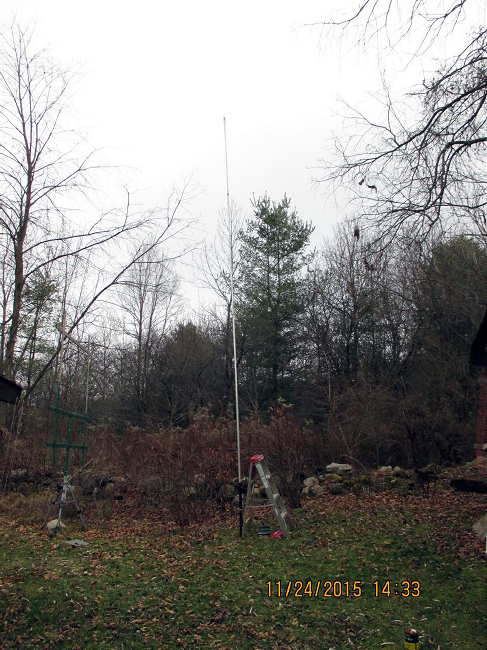 |
| New LNV At WG2XKA |
The low-noise vertical discussed here previously, has recently been implemented by at least three of the 630m experimental stations. John, WG2XKA / WA3ETD, along with Ken, WG2XXM / K5DNL and John, WG2XIQ / KB5NJD, have all constructed versions of this receiving antenna after reading about the details here.
John's antenna, pictured above, is described in more detail here, along with some nice pictures of his matching transformer.
All stations report good results with the antenna so it may be something you might want to consider if your present receiving antenna is a noise-collector.
For those interested in getting started on 630m, John (WG2XIQ), has a ton of inspiring information available on his website here as does John (WG2XKA) on his site here.
Aurora On The Move
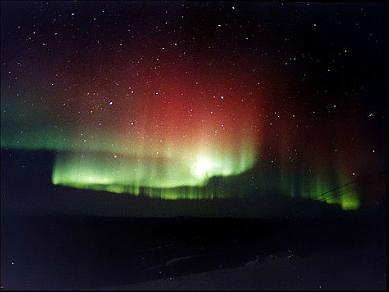
A recent posting to the Pacific Northwest VHF Society's reflector brought my attention to an interesting article describing the southward migration of the auroral zone.
According to the research paper published in the Proceedings of the National Academy of Sciences, the earth's magnetic field is gradually growing weaker, thus affecting its interaction with the solar wind.
The paper indicates that our present, abnormally high magnetic field, forces this interaction (auroras) to higher latitudes and as the field strength gradually weakens to more long-term average levels, auroras will be seen further south than we have been used to. The field has already weakened by about 10% over the past two hundred years and will continue to do so. Apparently it's all related to the regular 'flipping' of our magnetic field, with the most 'recent' flip taking place about 780,000 years ago.
So what does this mean for radio amateurs? Probably not a lot, in the immediate future but the unwanted effects to disturbances in the geomagnetic field will eventually be felt further and further to the south. Radio propagation in southern British Columbia has always been particularly sensitive to even very small disturbances in the field, particularly on the LF and MF bands. I am constantly amazed at how regions only 150 miles to the south or southeast of me are so much less affected than here, in the southern fringes of the auroral zone. VE7's don't claim to be in radio's 'black hole' without good reason.
630m WSPR
 |
| courtesy: http://wsprnet.org/ |
Happy Thanksgiving to those of you in the U.S.A.
It seems that the 630m WSPR digital crowd is growing quickly, with more new stations showing up every evening on the web's WSPRnet activity page. Most nights see activity from 80 or more stations, either transmitting or listening in WSPR mode on 630m!
WSPR is the 'Weak Signal Propagation Reporter' beacon-only mode being used by many of the stations presently transmitting on 630m, especially the U.S. experimental stations.
Those with the WSPR software (freeware and easily installed) usually have the program automatically upload their spots (stations being heard) to the WSPRnet page so that the transmitting stations are able to see where their signals are being heard. It also becomes quickly apparent, when examining the various spots, just how good or bad propagation might be at any given time.
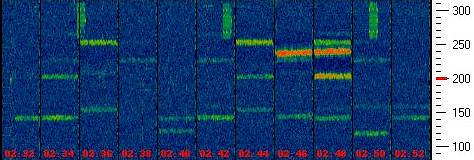 |
| WSPR Waterfall Displaying Detected Signals |
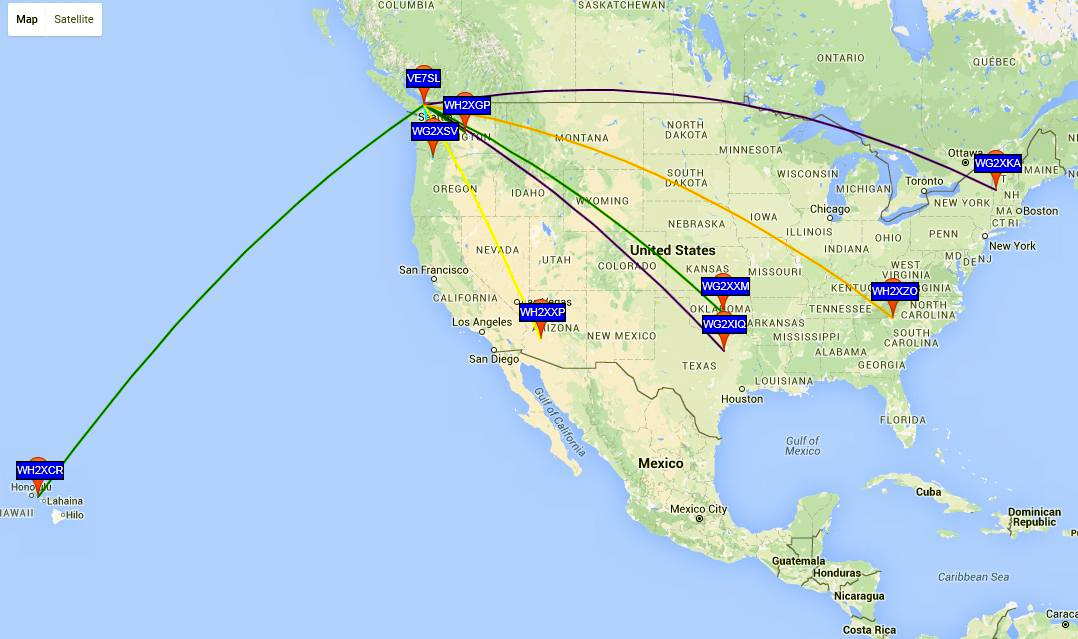
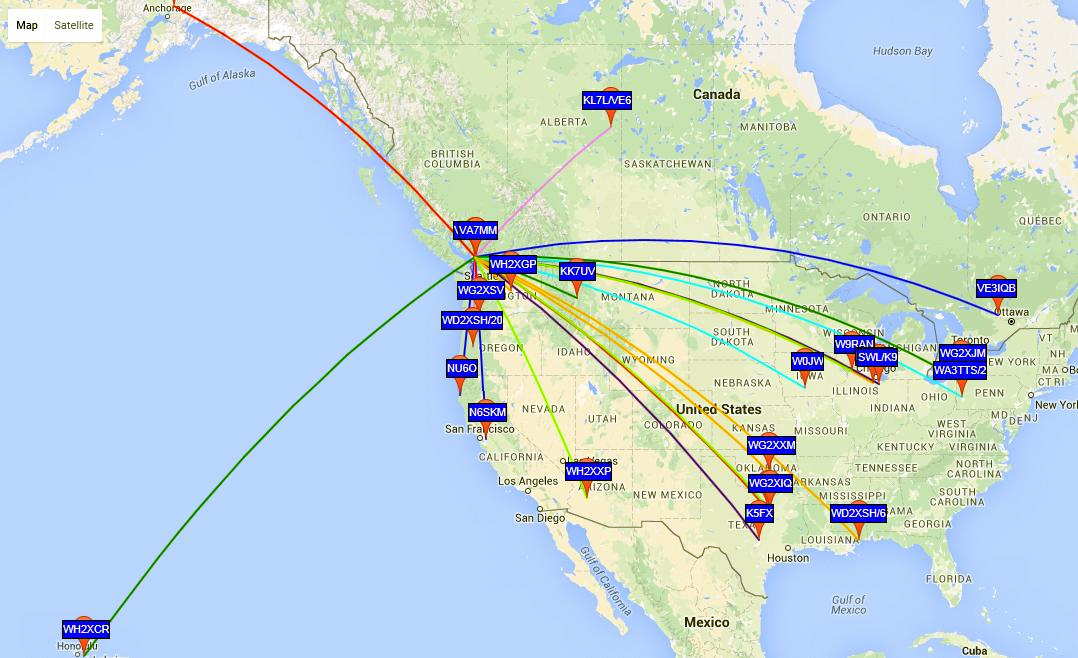
If you choose, you can also see your spotted stations in a Map mode, as shown at the top. This map shows the stations that I was hearing last night on 630m.
Along with the call and grid locator of the station being heard, the WSPR software also indicates several other bits of information, including the signal-to-noise ratio as heard at your location. Shown below is the decoded output from several stations following the two-minute transmission period.
| 06:58 | WH2XXP | 0.475662 | -13 | 0 | DM33 | 5 | VE7SL | CN88iu | 1909 | |
| 06:58 | WG2XXM | 0.475709 | -6 | 0 | EM15lj | 5 | VE7SL | CN88iu | 2610 | |
| 06:58 | WG2XKA | 0.475723 | -9 | 0 | FN33lq | 1 | VE7SL | CN88iu | 3833 |
Note the SNR reports ... usually, signals stronger than around -14dB will be just detectable by ear with anything in the + range being pretty strong.
Shown below are the Tuesday night reports of local station, VE7CNF, and indicates the extensive area over which his WSPR beacon was reported. Toby is running a modest 5W eirp station from a suburban-sized lot. Analyzing the reports, it is apparent that many of these stations rose to audible signal levels at various times throughout the evening and would have probably been workable on normal CW mode ... even from the 'burbs!
 |
| courtesy: http://wsprnet.org/ |
There are probably many of you already listening to WSPR signals on HF and have yet to venture down to 630m to see what can be heard. The improved propagation conditions of late make this an ideal time to have a peek at 630m and see what you can spot.
Your low-band wire antennas can often hear surprisingly well below the broadcast band and you may be surprised at what WSPR can detect. Use the USB mode with your receiver set to 474.200 kHz and, if possible, upload your 630m MF spots to the WSPRnet. You can also follow up-to-the-minute activity on the 2200m/630m ON4KST Chat page which is always interesting.
Hunting For NDBs IN CLE 200
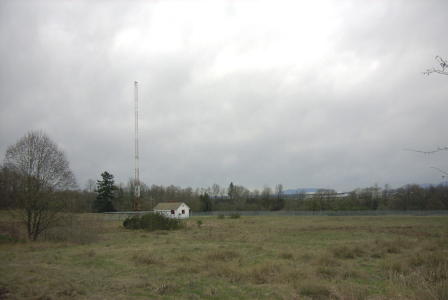 |
| XX - 344 Abbotsford, BC |
This month's frequency range covers 335.0 - 349.9 kHz.
Conditions have been very good this week ... hopefully this will continue.
A good CLE target this time is 'XX' on 344 kHz near Abbotsford, B.C. It has been heard throughout North America and can be a good prop-indicator for eastern listeners.
From CLE coordinator Brian Keyte (G3SIA), comes the following reminder:
Hi all:
Our 200th Co-ordinated Listening Event is only a few days away.
Just a normal CLE using a busy range of frequencies which usually
attracts a lot of interest.
First-timers' CLE logs will also be very welcome, as always.
Days: Friday 27 November - Monday 30 November
Times: Start and end at midday, your LOCAL time
Range: 335.0 - 349.9 kHz
Please join us wherever you are - just log the NDBs you can identify
having their nominal frequencies in the range (it includes 335 kHz
but not 350 kHz) and any UNIDs that you come across there too.
(A good way for some of us to unwind after Thanksgiving?)
We last concentrated on these frequencies in CLE185 in Aug. 2014.
Please send your CLE log to the List (no attachments and ideally in a
plain text email) with CLE200 at the start of its title. Show on each line:
# The Date (or Day No: 27 to 30)
# The Time in UTC
# kHz - the nominal published frequency, if known.
# The Call Ident.
Please show those main items FIRST. Any other optional details such
as Location and Distance go LATER in the same line.
If you send any interim logs, please also send a 'Final' (complete) one.
And, of course, tell us your own location and brief details of the
equipment that you were using during the Event.
You can find full details about current and past CLEs from the CLE page
http://www.ndblist.info/cle.htm including access to the CLE200 seeklists
for your part of the World prepared from the loggings on Rxx.
Good listening - enjoy the CLE.
Brian
----------------------------------------------------------
From: Brian Keyte G3SIA: <ndbcle'at'gmail.com>
Location: Surrey, SE England (CLE co-ordinator)
----------------------------------------------------------
(If you would like to listen remotely you could use any one remote
receiver such as http://websdr.ewi.utwente.nl:8901/ for your
loggings, stating its location and owner and with their permission
if required. A remote listener may NOT also use another receiver,
local or remote, to make further loggings for the same CLE)"
__._,_.___
These listening events serve several purposes. They:
- determine, worldwide, which beacons are actually in service and on-the-air so the online database can be kept up-to-date
- determine, worldwide, which beacons are out-of-service or have gone silent since the last CLE covering this range
- will indicate the state of propagation conditions at the various participant locations
- will give you an indication of how well your LF/MF receiving system is working
- give participants a fun yet challenging activity to keep their listening skills honed
Final details can be found at the NDB List website, and worldwide results, for every participant, will be posted there a few days after the event. If you are a member of the ndblist Group, results will also be e-mailed and posted there.
The very active Yahoo ndblist Group is a great place to learn more about the 'Art of NDB DXing' or to meet other listeners in your region. There is a lot of good information available there and new members are always very welcome.
If you are contemplating getting started on 630m, listening for NDBs is an excellent way to test out your receive capabilities as there are several NDBs located near this part of the spectrum.
You need not be an ndblist member to participate in the CLEs and all reports, no matter how small, are of much value to the organizers. 'First-time' logs are always VERY welcome!
Reports may be sent to the ndblist or e-mailed to either myself or CLE co- ordinator, Brian Keyte (G3SIA), whose address appears above.
Please ... do give the CLE a try ... then let us know what NDB's can be heard from your location! Your report can then be added to the worldwide database to help keep it up-to-date.
__._,_.___
CW Practice With RufzXP
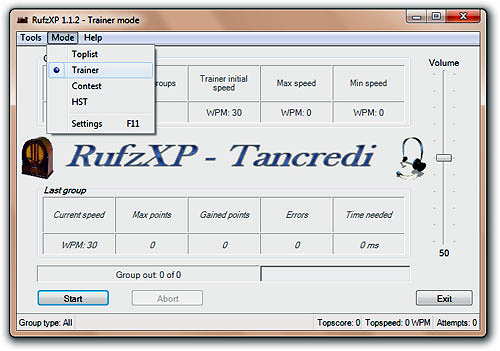
Lately I've been playing with a very helpful piece of CW-training freeware called 'Rufz', an abbreviation of a German word meaning 'Listening to Callsigns'. Rufz is the brainchild of Mathias Kolpe (DL8MM) and Alessandro Vitiello (IV3XYM).
RufzXP is the latest version, compatible with most operating systems from Windows 98 to Win 8.1.
RufzXP is not a contest simulator with QSB and QRM. The program simply sends 50 calls at random, one at a time, starting at your chosen speed. If you correctly type the call, it will increase speed slightly to send the next call. The speed will continue to increase as long as you correctly copy and type the call ... if not, the speed will decrease to the previous level.
This pattern continues until all 50 calls have been sent. The program then displays all of the calls sent, along with the calls that you typed, as well as the speed. You very soon realize the threshold level between copying comfortably at near 100% and where you start to drop off quickly. It really is a great eye-opener and a wonderful way to increase your copying (and typing) ability.
The highest that I have been able to log a few correct calls is at 54 WPM but I can see that with a few minutes of practice each day, this number should continue to improve. Hopefully my ability to type the calls will also improve as my present keyboarding skills are probably being stifled by my 'hunt and peck' style of typing ... I really should have taken typing in high school and have regretted it ever since.
The website for RufzXP contains a wealth of inspiring data, from sound files of various speeds to lists and photos of various high-speed aficionados ... with an impressively large number being European teenagers. It seems that High Speed Telegraphy World Championships are very popular in Europe and many of the champions are quite young. Have a look at some of the teens, aged 16 or younger (both boys and girls) who are copying over 100 WPM ... several of them not even hams.
A particularly interesting page lets you play the word 'PARIS' at various speeds.
Here it is at 20 WPM:
PLAY
... and again at 50 WPM:
PLAY
... yet again at 100 WPM:
PLAY
Now....listen to 'PARIS' being sent at the present record-holding speed of 200 WPM:
PLAY
I have no idea how anyone could copy CW at this speed but apparently YT7AW was able to correctly copy one call out of seven, sent at this speed ... incredible! Perhaps it is the subconscious mind operating at this level.
You may be interested to see someone copying at just over 140 WPM!
If your CW skills need honing, RufzXP might be just the thing you need.
The 1929 ‘BK’ QSO Party
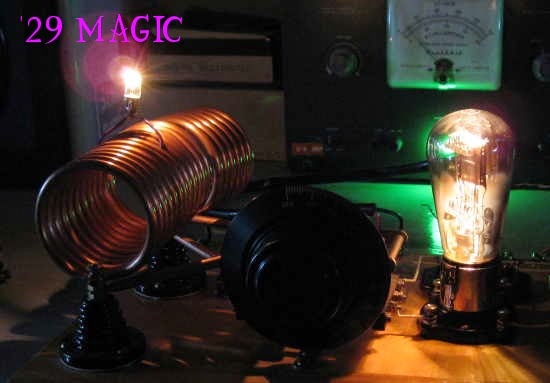 The month of December will soon be upon us and that means it's 'BK' time once again! The Bruce Kelley 1929 QSO Party is the annual two-weekend event celebrating the sound of amateur radio as it was in 1929.
At no other time of the year can you tune across the bands and hear the melodic sound of radio as it once was ... before the days of crystal-control, when most hams were using self-excited one or two-tube transmitters.
With antennas blowing in the wind, these directly-coupled oscillators often make the band sound like a musical symphony gone wrong ... the wonderful whooping, chirping, buzzing, clicking, drifting, swishing, swaying, warbling, and other interesting sounds of '29, when amateur radio was in its infancy.
If you've ever considered joining-in on the fun, then you still have a few weeks to slap something together for the party ... it need not be 'pretty', but it must be 'compliant'. That is, the tube (or tubes) that you use, must have been available in 1929 or earlier. For receiving, use anything you like ... modern or vintage, as there are no restrictions.
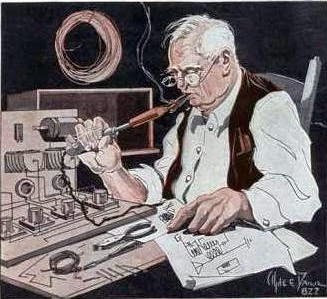
I've penned several blogs on popular circuits and tubes that are commonly used among the BK regulars and they can be viewed here:
Building '29 Style
Building '29 - What To Build? - PT.1
Building '29 - What To Build? - PT.2
More BK Building
With the usual propagation of early December, it is not surprising that many transcontinental QSO's are made every year, even with the little two or three watters. Considering the 10 watt power input rule, it is surprising how strong some signals from across the country can become on the lower bands, especially on 40m.
Please consider rolling-up your sleeves, heating up your soldering iron and putting something together for the BK fun, especially if you are on the left coast ... and don't be the least concerned about how it looks!
For a gallery of inspiration from individuals that were too weak to resist the temptation, have a look at some previously built '29 time machines.
For the first time, I'll be using my newly constructed MOPA, a two-tuber that will hopefully reduce my annual BK windstorm angst. It seems that every BK weekend, I have gale-force winds here on the island, making my signal a little bit 'too musical', although some '29 diehards still claim to love the sound ... for them, there is no hope.
630 Crossband Excitement
In spite of the mediocre band conditions, this past weekend's 630 crossband activity was a great success. Firstly, it was gratifying to see so much activity from the VE7 region. Last year, it was just John, VE7BDQ, and myself, holding the fort, but this year saw new activity from VE7CNF, VA7MM and VE7CA. If this rate keeps up, the band will soon be getting crowded and wouldn't that be great!
It was only a few short months ago that VE7CNF and VA7MM began tinkering on 630m, their signals barely out of the noise here on Mayne Island. How quickly their stations have evolved into systems now capable of working several thousands of miles on the new band. To make the weekend even more special, Markus, VE7CA, had his first-ever 630m contacts on Saturday, working all of the locals and later in the evening, pushing his 14 watts down into Tahuya, WA, working K7CW on crossband. I'll wager that Markus will treasure that first 'DX' QSO for some time.
Conditions from VE7 on Friday were poor, and although somewhat disappointing, not entirely unexpected after watching the sun play tricks on our geomagnetic field all week long. The only path that seemed somewhat normal was the north-south one, yielding contacts with the Californians. As the K-index briefly dropped to '1', Saturday's conditions were much improved, showing short-lived glimpses of normality both to the west and to the east.
On both evenings, the HF bands (and probably 630m to a lesser extent) seemed to be very 'long', with few continental signals being heard. The long skip made it very hard, in some cases, to hear close-in callers on both 40 and 80m ... callers who would normally be 599. Particularly absent where callers from the closer WØ states and the easier W7 regions such as Nevada, Utah and Arizona ... areas that have been easily worked on previous crossband nights. It was also disappointing to not have anyone from the other VE regions call in. I hope it was just conditions and not from lack of trying, as it has been a struggle to generate much interest in the western provinces so far.
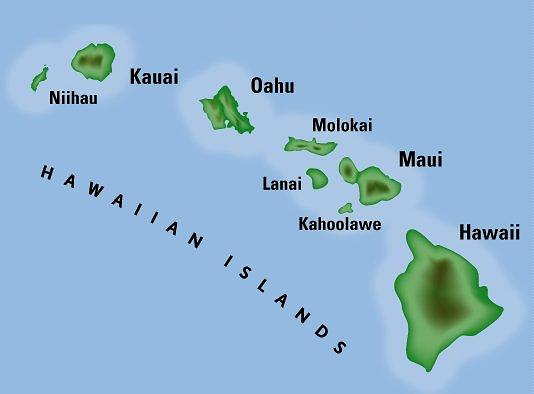
The biggest surprise and the highlight of the weekend was most assuredly the crossband contacts between the VE7 stations and Hawaii, with VA7MM, VE7CNF, VE7BDQ and VE7SL, all working Merv, K9FD/KH6 in Maunaloa on Moloka'i Island. Merv noted that all four VE7's were worked within a 25 minute window and all peaked at different times. A few minutes later, the 'tranpacific' path turned 'transcontinental' as NO3M in Pennsylvania, called VE7SL and exchanged 559/549 signal reports ... who would have thought that 630m could generate such magic! This band has so much exciting potential for amateurs, even for those confined to normal suburban backyard locations. Activity will surely skyrocket when U.S. amateurs get access to the band ... hopefully soon.
Several SWL reports were received from the U.S., with one of the most interesting coming on Saturday night, from the maritime operators at KSM, near San Francisco. As well, the Red Oak Victory shipboard station anchored near San Francisco, KYVM, sent a detailed report of several VE7 stations that they had heard.
Crossband Summaries
VE7BDQ :
VA7TA CN79 Courtenay, BC
K6LG DM13 Riverside, CA
VA7MM CN89 Port Coquitlam, BC
VE7KW CN89 Port Coquitlam, BC
K7HV CN87 Seattle, WA
VE7CA CN89 North Vancouver, BC
VE7CNF CN89 Burnaby, BC
VE7SL CN88 Mayne Island, BC
K7CW CN87 Tahuya, WA
VA7JX CN79 Campbell River, BC
VA7DXX CN89 Ladysmith, BC
K9FD/KH6 BL11 Maunaloa, HI
K7SS CN87 Seattle, WA
K6AIG DM04 Mandalay Bay, CA
VE7CNF :
KK7UV DN36 Missoula, MT
VA7MM CN87 Port Coquitlam, BC
K6GZ DM14 Esperia, CA
VA7TA CN79 Courtenay, BC
K6LG DM13 Riverside, CA
K7CW CN87 Tahuya, WA
VE7KW CN89 Port Coquitlam, BC
VE7BDQ CN89 Delta, BC
VA7DXX CN89 Ladysmith, BC
WØYSE CN85 Vancouver, WA
K9FD/KH6 BL11 Maunaloa, HI
VA7MM :
VE7KW CN89 Port Coquitlam, BC
VA7TA CN79 Courtenay, BC
K7CW CN87 Tahuya, WA
K9FD/KH6 BP11 Maunaloa, HI
WØYSE CN85 Vancouver, WA
K7SS CN87 Seattle, WA
VA7DXX CN88 Ladysmith, BC
VE7CA :
VE7SL CN88 Mayne Island, BC
VE7CNF CN89 Burnaby, BC
VE7BDQ CN89 Delta, BC
K7CW CN87 Tahuya, WA
VA7MM CN87 Port Coquitlam, BC
VO1NA :
VE1VDM FN85 Onslow, NS
VO1BQ GN37 St. John's, NL
VE7SL :
VE7KW CN89 Port Coquitlam, BC
KK7UV DN36 Missoula, MT
VA7MM CN87 Port Coquitlam, BC
K6GZ DM14 Esperia, CA
VA7TA CN79 Courtenay, BC
K7CW CN87 Tahuya, WA
K6LG DM13 Riverside, CA
VE7BDQ CN89 Delta, BC
VA7DXX CN88 Ladysmith, BC
VA7JX CN79 Campbell River, BC
K9FD/KH6 BP11 Maunaloa, HI
NO3M EN91 Saegertown, PA
K7SF CN85 Portland, OR
K7SS CN87 Seattle, WA
KGØD/7 CN88 Sequim, WA
W2VJN CN83 Roseburg, OR
It is readily apparent that acres of antenna space are not needed to enjoy 630m ... all of these stations operate out of normal-sized residential lots, with antennas planned and built well enough to exploit the propagation characteristics of 630m.
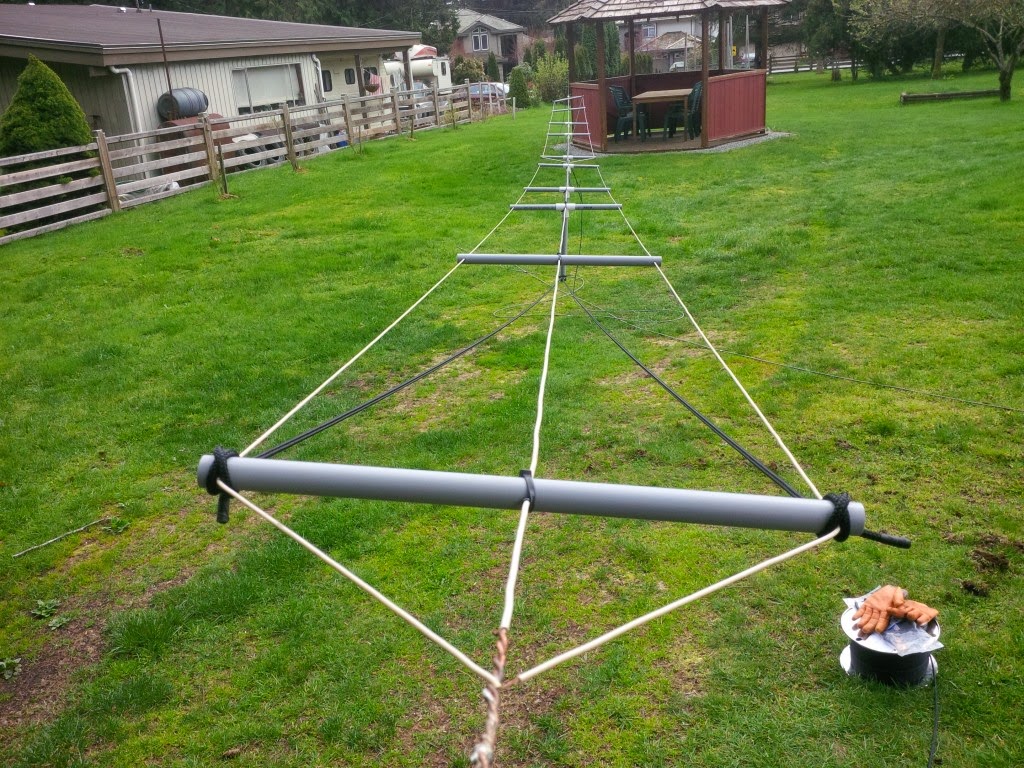 | ||
| VA7MM antenna system. More info here. |
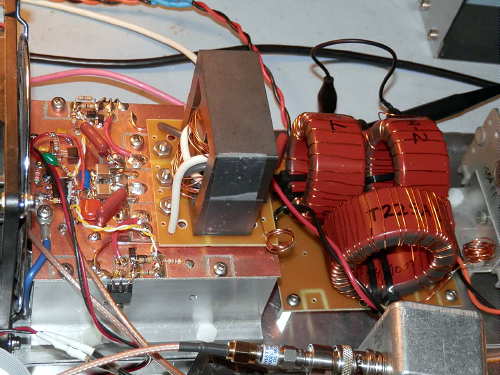 | ||
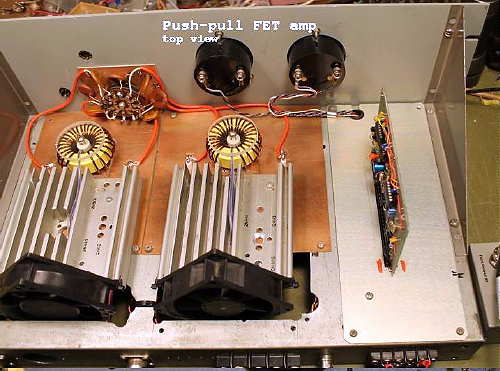
| VE7CNF's homebrew PA. Website here. |
 |
| VE7BDQ's homebrew 2200m/630m duo-band tx. |













