Author Archive
 Christmas Memories
 December 25th, 2016 |
  Author:
As the cold days of December dragged on, like most high school kids, I always looked forward to the arrival of the Christmas holidays ... even more so once I had discovered the magic of radio.
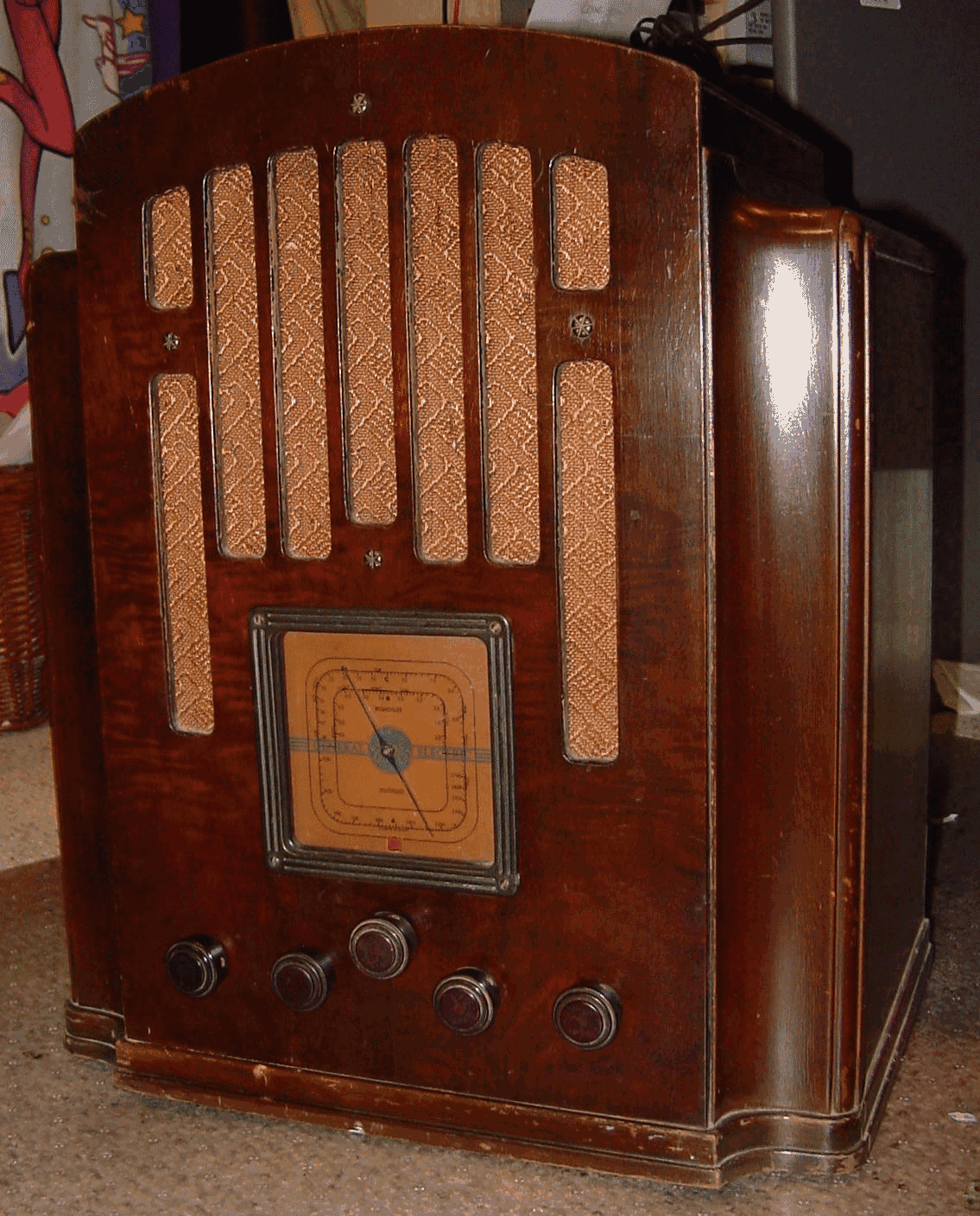
For me, it meant being able to stay up as late as I wanted, listening for shortwave and broadcast band DX on my big old GE cathedral-style radio.
My radio shack was located high in a cozy attic bedroom, on the top level of our old three-story house in the middle of Vancouver. I can never recall having any kind of noise-related problem back then, in the pre-digital age. It seemed that even the power lines were quiet!
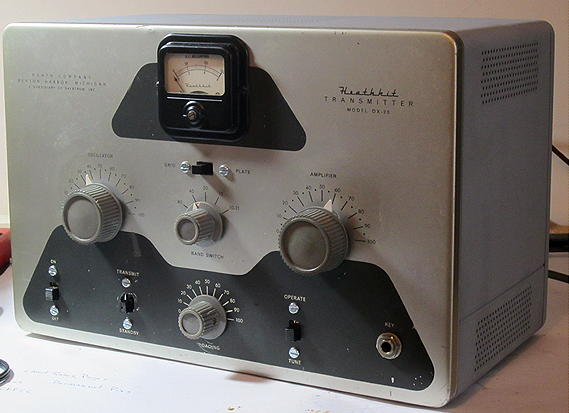
One particular Christmas holiday stands out above many others ... December '64. By then, I was licenced and on-the-air as VE7ANP. I was using a Heathkit DX-20 (30 watts out) along with the Heathkit VF-1 VFO ... the one with the mesmerizing green dial (it was the sight of one of these dials a few years earlier that tweaked my interest in amateur radio ... but that's another story!).
One particular Christmas holiday stands out above many others ... December '64. By then, I was licenced and on-the-air as VE7ANP. I was using a Heathkit DX-20 (30 watts out) along with the Heathkit VF-1 VFO ... the one with the mesmerizing green dial (it was the sight of one of these dials a few years earlier that tweaked my interest in amateur radio ... but that's another story!).
 |
| courtesy: http://www.transistor-repairs.com |

My receiver was an aging but lovely BC-779 Hammarlund Super-Pro.
 |
| courtesy: http://rigreference.com |
On the peaked porch roof just outside of my upstairs attic window, was the base of my new 40m antenna ... a full-sized 40m vertical groundplane. It was made from 33' of galvanized eavesdrop drain pipe, reinforced with an inner 2x2 and guyed in three places. The ground counterpoise system consisted of just three bell-wire radials, each a quarter-wavelength long ... one to the boulevard tree and the other two wrapped around the sides of the house, just under the eaves. The antenna was fed with about 10' of RG-58 coax. Switching was handled via a footswitch-controlled 'clunky' relay that also switched the VFO on for a better sounding note. The highly affordable VF-1 was not known for its great stability but by finding just the 'right' 6AU6, and keeping the switch contacts clean, it could do a pretty good impression of a real VFO.
This particular holiday stands out because I was intent on trying to work some JA stations on 40m, in the pre-dawn hours. I had worked several JA's on 20m CW earlier in the fall but working Japan on 7mc with my previous low wire antennas had proven to be very challenging. I hoped things would be different with my new 40m vertical.
I recall rising the first morning of the holidays to find that we had received a huge overnight snowfall, about a foot in total. This seemed to happen a lot more often back then than it does now. The peaked roof supporting the groundplane was piled high with fresh snow and completely covered the vertical's feedpoint and the radial wire junction. I pulled-up the wooden window's bottom sash and reached far enough out to clean all of the snow from the antenna's base while the rig, preparing itself for the impending assault of 40m's low end, warmed-up just beside me.
A careful tune across the band brought a plethora of signals sounding as clean and crisp as the morning air ... it was the perfect 'DX-morning'! I managed to work several JA's that morning and throughout the Christmas break. Several of the contacts stretched well past my local sunrise, as 40m revealed some of her DX secrets to me for the first time.
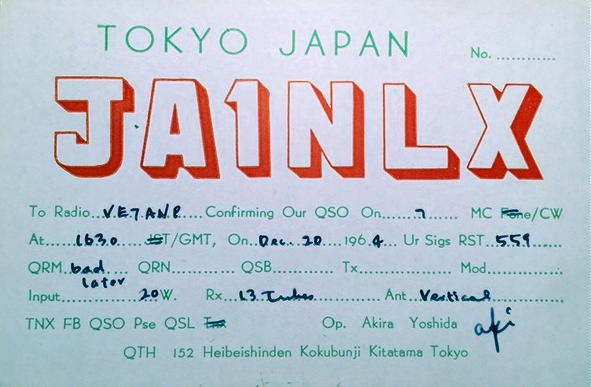
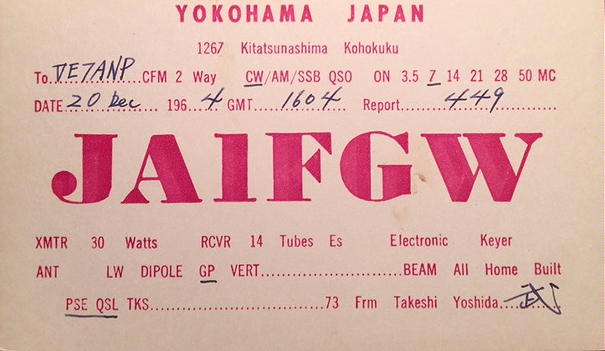
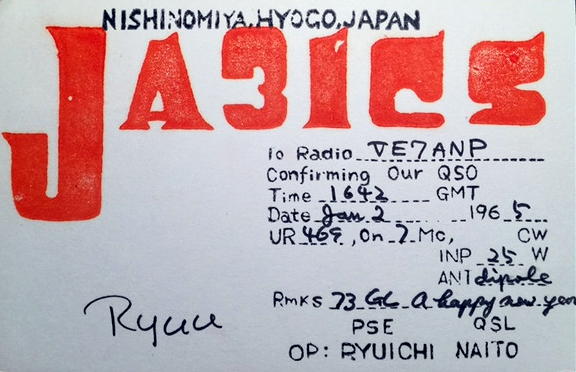
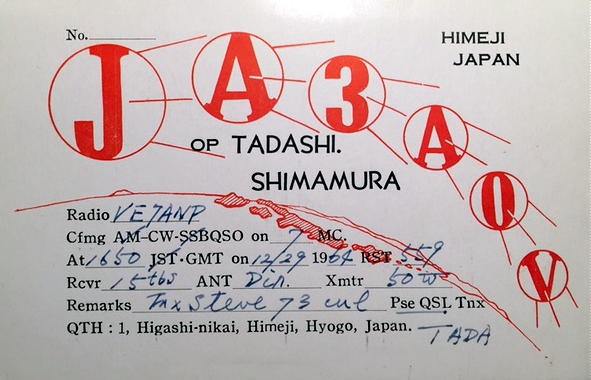
Like so many Christmases past, the memories of my Christmas '64 radio experiences are as vivid as if they had happened yesterday. I hope that your Christmas of 2016 is as joyous and memorable as well.
EME In The ’80s
 |
| VE7SL - my original 2m EME antenna. |
Unlike today's widespread JT65B usage on eme, where signals can be many db into the noise and inaudible by ear, eme contacts could only be completed by actually copying signals that you could hear with your ears. This usually required big antennas and lots of power.
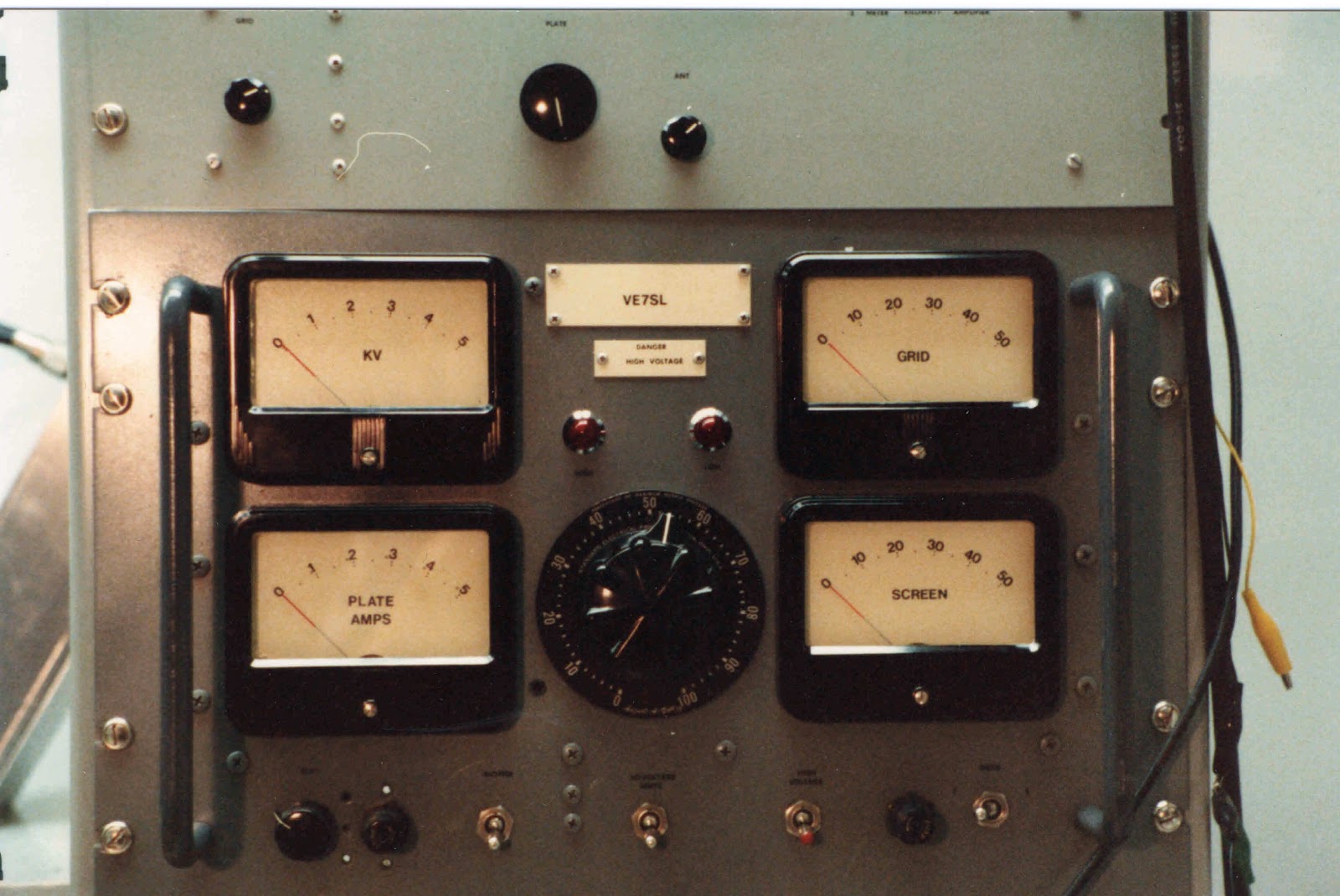
After a year and a half of evening work in my basement shop, my system was pretty much ready to go. I built a kilowatt amplifier, from the ARRL's VHF Handbook, along with its plate and screen power supplies.
 |
| 2m 'Plumbers Delight' handbook amp. |
My antennas (see above), as well as the large H-frame support, were also built in the basement and used all scrap aluminum from one of the numerous scrap yards that were in Vancouver at the time. The system consisted of sixteen separate 6 element NBS-styled yagis, all phased. Many of the two-dozen plus N connectors were bought at Boeing Surplus near Seattle, another interesting source of parts, also now long gone. Keeping water out of the phasing lines and connectors was a real challenge here in the rain forest and if one connector was not done exactly right, would create a lot of headaches.
The antenna took up a large portion of my small, 33'-wide suburban backyard. Pointing was all done by hand, using homemade scales to indicate elevation and azimuth angles, so that it could be pointed accurately even on cloud covered days and nights. A hand-cranked boat winch took care of elevation. I had a switch-box full of surplus VHF relays out at the antenna that protected my JFET preamp and also allowed me to compare sky and sun noise against a 50 ohm load.
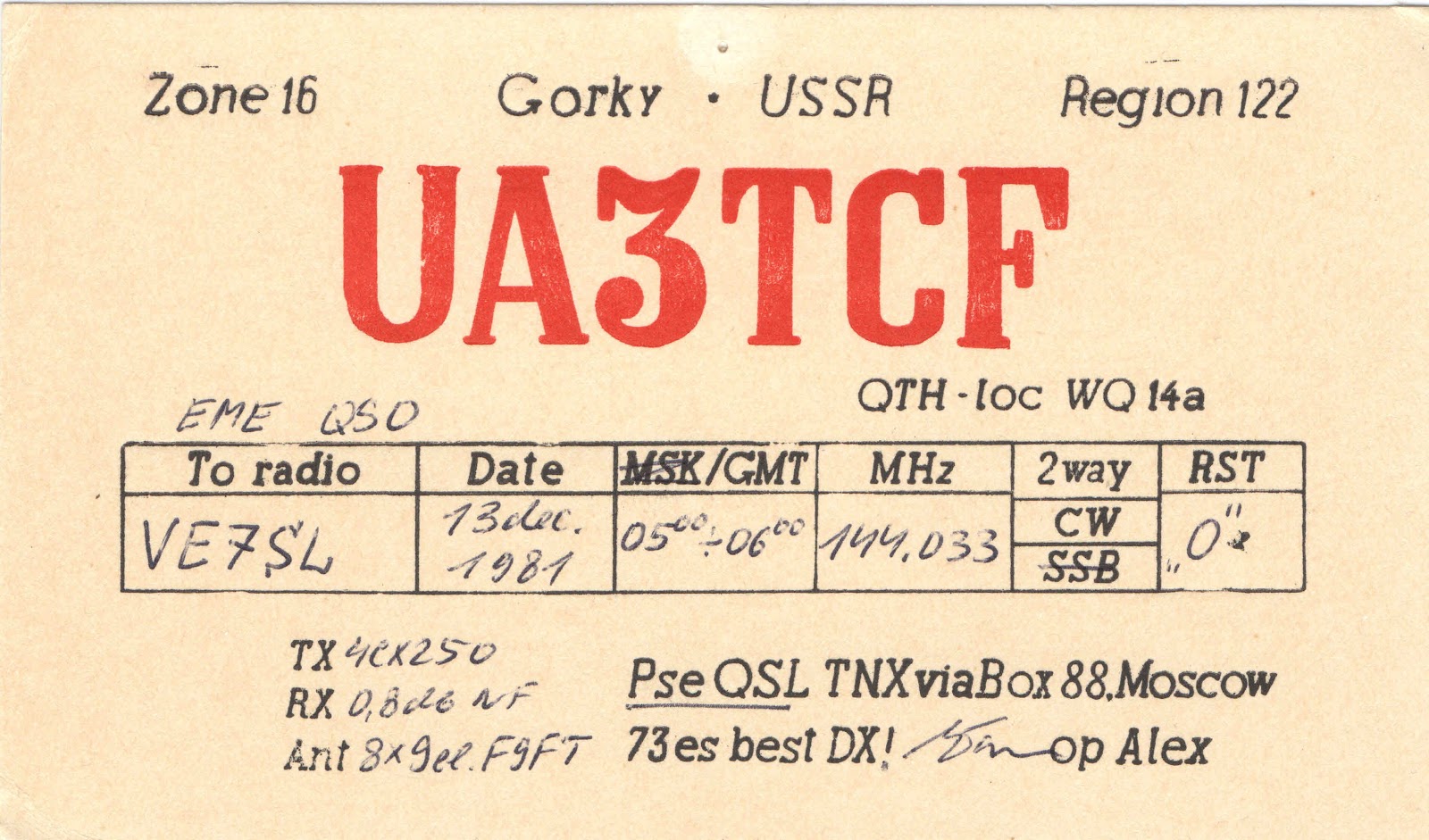
Over the course of a few years, the system was employed to work many Europeans as well as North American VEs' and Ws'. The one contact that stands out memorable for me, was with UA3TCF, east of Moscow. This was because I had to aim the array directly into my two-story house, located about 20' away! The moon was very low as well, so that not much elevation was required.
I eventually found that trying to hold down a full-time high school teaching job and running sked requests at 0300 were not very compatible! It also became a lot of work just to maintain the system properly. I had met and completed my original goals and it became time to move on.
Eventually the array was broken down into smaller sections and sold to local 2m guys, along with the amplifier ... but it was a huge learning experience for me and the fact that I survived building and playing with a 2,000 volt power supply, still scares the heck out of me!
 |
| Plate & screen supply for the 2m amp. |
 |
| The VHF rack with xvrtrs and amps 50mHz-432mHz. |
 |
| My gal Sal adorning the 2m tower on a snowy Sunday morning. |
EME In The ’80s
|
| VE7SL - my original 2m EME antenna. |
Unlike today's widespread JT65B usage on eme, where signals can be many db into the noise and inaudible by ear, eme contacts could only be completed by actually copying signals that you could hear with your ears. This usually required big antennas and lots of power.
After a year and a half of evening work in my basement shop, my system was pretty much ready to go. I built a kilowatt amplifier, from the ARRL's VHF Handbook, along with its plate and screen power supplies.
|
| 2m 'Plumbers Delight' handbook amp. |
My antennas (see above), as well as the large H-frame support, were also built in the basement and used all scrap aluminum from one of the numerous scrap yards that were in Vancouver at the time. The system consisted of sixteen separate 6 element NBS-styled yagis, all phased. Many of the two-dozen plus N connectors were bought at Boeing Surplus near Seattle, another interesting source of parts, also now long gone. Keeping water out of the phasing lines and connectors was a real challenge here in the rain forest and if one connector was not done exactly right, would create a lot of headaches.
The antenna took up a large portion of my small, 33'-wide suburban backyard. Pointing was all done by hand, using homemade scales to indicate elevation and azimuth angles, so that it could be pointed accurately even on cloud covered days and nights. A hand-cranked boat winch took care of elevation. I had a switch-box full of surplus VHF relays out at the antenna that protected my JFET preamp and also allowed me to compare sky and sun noise against a 50 ohm load.
Over the course of a few years, the system was employed to work many Europeans as well as North American VEs' and Ws'. The one contact that stands out memorable for me, was with UA3TCF, east of Moscow. This was because I had to aim the array directly into my two-story house, located about 20' away! The moon was very low as well, so that not much elevation was required.
I eventually found that trying to hold down a full-time high school teaching job and running sked requests at 0300 were not very compatible! It also became a lot of work just to maintain the system properly. I had met and completed my original goals and it became time to move on.
Eventually the array was broken down into smaller sections and sold to local 2m guys, along with the amplifier ... but it was a huge learning experience for me and the fact that I survived building and playing with a 2,000 volt power supply, still scares the heck out of me!
|
| Plate & screen supply for the 2m amp. |
|
| The VHF rack with xvrtrs and amps 50mHz-432mHz. |
|
| My gal Sal adorning the 2m tower on a snowy Sunday morning. |
Thursday’s Moonrise
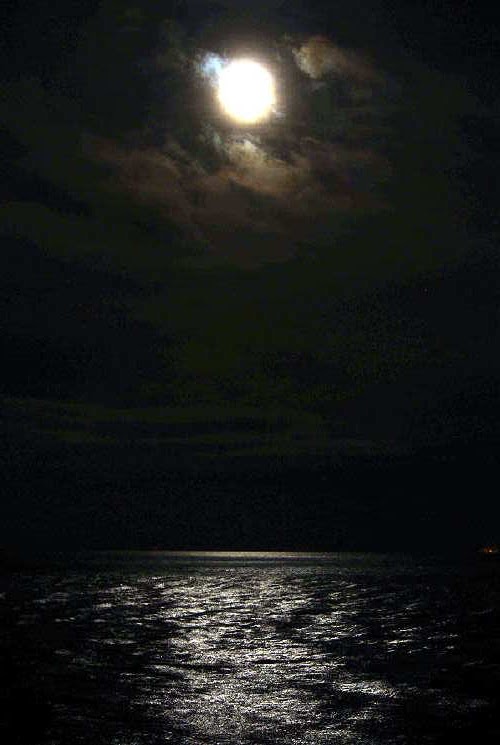
I couldn't hold out any longer! The sight of a full-moon rising over the ocean a few nights ago was just too difficult to resist ... I would have to spark-up my 2m mini moonbounce system and see what was happening.
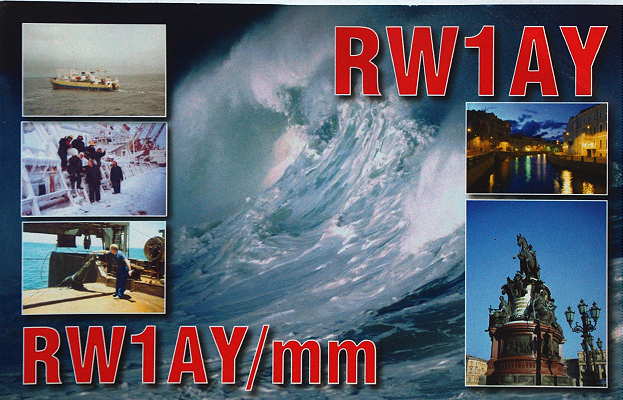
The QSLs are now all in from my last eme adventures in the early summer, bringing my total number of contacts to 80.
 |
| RW1AY used an 8 x 15el cross-polarized array |
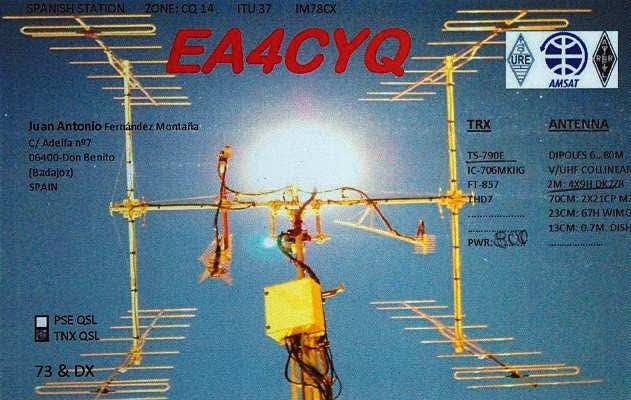 |
| EA4CQ's 4 x 9el DK4ZB yagis |
 |
| YU7AA's 8 x 13el nested array |
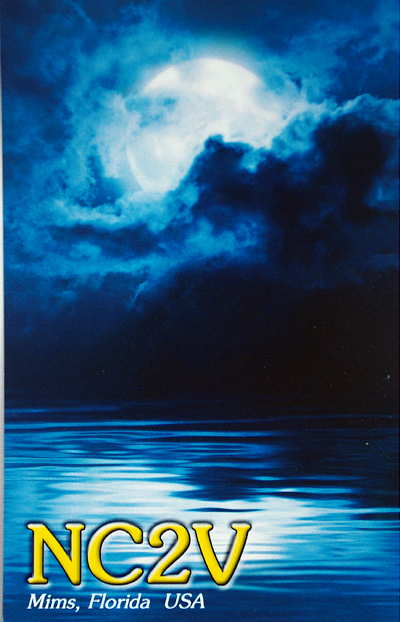 |
| NC2V used a 4 x 20el cross-polarized array |
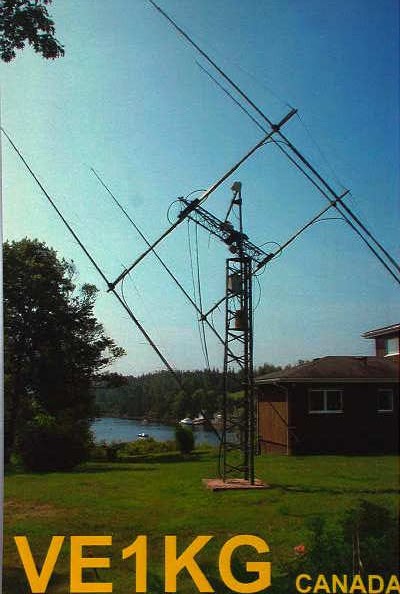 |
| VE1KG's 4 x 17el yagi array |
 |
| DK5SO used four 20' long yagis and 750W |
My simple system uses a single 9el m2 yagi and an old third-hand 140W brick amplifier and built-in GaAsFET preamp. The yagi is mounted atop my 50' tower and fed with about 100' of RG-213 cable, along with its 2+ db of loss.
Looking directly out over the saltwater of Georgia Strait seems to provide the near theoretical 'sea-gain' of 6db, making the little yagi behave more like a box of four in terms of gain. As well, there are no noise sources when pointing out over the water at the rising moon. Not being able to elevate the antenna means 'moonrises' only, and usually gives me about 90 minutes per session before the moon gets too high.
Last night was surprisingly active, mostly with U.S. stations, as it was still early evening here but there were also several early-rising Europeans on the band.
One outstanding signal was from a station I had not worked before, OK1DIG, who was running a 4 x 15 element yagi array. I called him a few times when his signal was easily audible (-15db) but he seemed to only hear me later, replying to one of my 'CQ's, with his signal starting to drop here. This is often the case on 2m eme as a reciprocal two-way path is not always the rule. He was my only contact of the evening (#81) but also heard were K9SLQ, UT3MD, PA3FYC, all of whom I have yet to work.
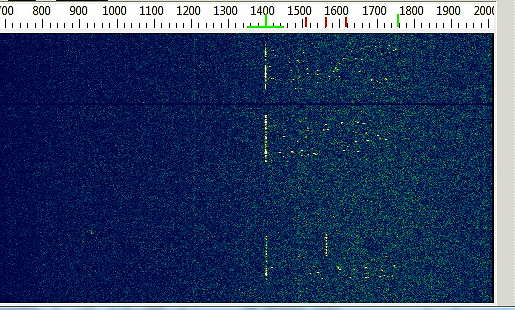 |
| OK1DIG's audible JT65B CQs |
Thursday’s Moonrise
I couldn't hold out any longer! The sight of a full-moon rising over the ocean a few nights ago was just too difficult to resist ... I would have to spark-up my 2m mini moonbounce system and see what was happening.
The QSLs are now all in from my last eme adventures in the early summer, bringing my total number of contacts to 80.
|
| RW1AY used an 8 x 15el cross-polarized array |
|
| EA4CQ's 4 x 9el DK4ZB yagis |
|
| YU7AA's 8 x 13el nested array |
|
| NC2V used a 4 x 20el cross-polarized array |
|
| VE1KG's 4 x 17el yagi array |
|
| DK5SO used four 20' long yagis and 750W |
My simple system uses a single 9el m2 yagi and an old third-hand 140W brick amplifier and built-in GaAsFET preamp. The yagi is mounted atop my 50' tower and fed with about 100' of RG-213 cable, along with its 2+ db of loss.
Looking directly out over the saltwater of Georgia Strait seems to provide the near theoretical 'sea-gain' of 6db, making the little yagi behave more like a box of four in terms of gain. As well, there are no noise sources when pointing out over the water at the rising moon. Not being able to elevate the antenna means 'moonrises' only, and usually gives me about 90 minutes per session before the moon gets too high.
Last night was surprisingly active, mostly with U.S. stations, as it was still early evening here but there were also several early-rising Europeans on the band.
One outstanding signal was from a station I had not worked before, OK1DIG, who was running a 4 x 15 element yagi array. I called him a few times when his signal was easily audible (-15db) but he seemed to only hear me later, replying to one of my 'CQ's, with his signal starting to drop here. This is often the case on 2m eme as a reciprocal two-way path is not always the rule. He was my only contact of the evening (#81) but also heard were K9SLQ, UT3MD, PA3FYC, all of whom I have yet to work.
|
| OK1DIG's audible JT65B CQs |
My Favorite Contest

A few blogs back, I briefly touched upon my favorite contest of the year ... the 160m Stew Perry Contest, or more affectionately noted as the 'Stew' or 'SP'.
The contest is named in honor of W1BB, one of the earliest and most dedicated proponents of 160m in its earlier days, as well as being the first amateur to earn 160m DXCC #1, in 1976.
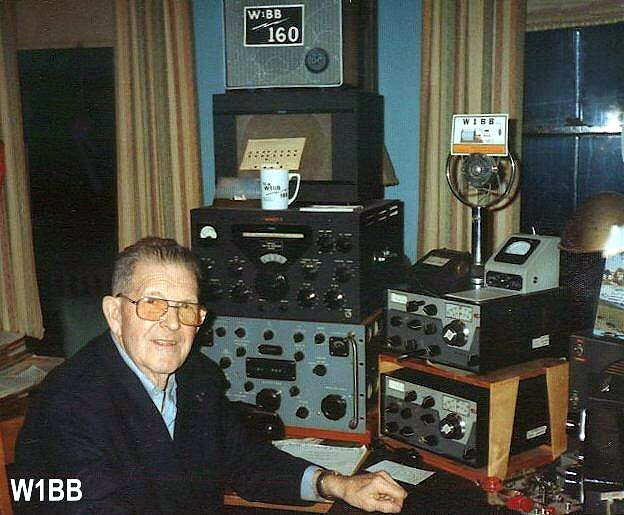 |
| courtesy: http://www.k1zm.com/w1bb |
These bulletins were chalk-full of DX reports, station information, and antenna-building hints. It was hard not to get excited about the Topband after reading one of Stew's bulletins!
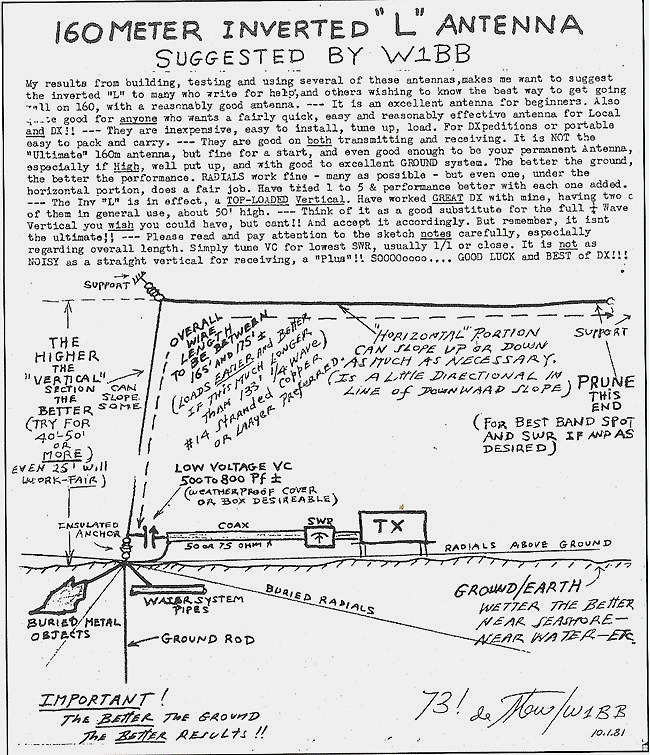
This was largely back in the day when very few commercial transmitters had a 160m position on the bandswitch. If it did, it was most likely a hernia-making DX-100 or a similar E.F. Johnson biggy ... seems most 160m ops were he-men back in the early days.
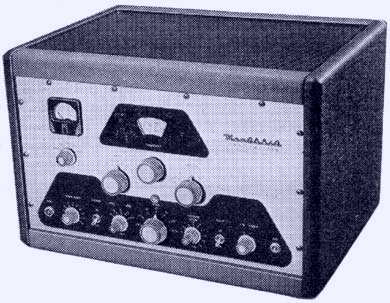 |
| Heathkit DX-100 |
The 'Stew' is just a short 24 hour affair but often packs the CW band from end to end with a ton of activity, including lots of DX. It seems that most 160m diehards will jump at any opportunity to get on their favorite band, especially when conditions are as good as they have been of late.
The 'SP' is somewhat unique in that its system of scoring is probably the fairest of any contest around. The number of points earned for any QSO is determined by the distance between the two stations, with your computer contesting software dutifully making the needed calculations automatically from the exchange of Grid Square information, rather than the ubiquitous '599'.
Such a system gives stations in the western half of North America a chance to compete, on equal grounds, with the much higher activity levels found back east. With most contests awarding fixed points per QSO, it is much easier for eastern stations to rack-up big scores by working the multitude of other easterners ... this is just not possible out west where activity levels, and population densities, are so much smaller.
Contest PR-man ... Lew, W7EW, on behalf of the Boring (Oregon) Amateur Radio Club sponsorship, has sent a heads-up via the Topband reflector, which is reproduced below in case you wish to learn more.
Greetings Radio Ruffians with a TopBand Bent,
The anticipation is palpable as time draws near for the
start of the 21st Running of The Stew Perry TopBand DX
Challenge sponsored by the multitude of Amateurs who
make up The Boring Amateur Radio Club. The contest is Dec
17/18. That is this weekend coming up, for those of you
that need reminders like to remember an anniversary, put
gas in the vehicle or to breathe.
The rules for this contest are different. Please navigate to
http://www.kkn.net/stew/ and see how they are different.
Another unique aspect of The Stew is that The Boring
Amateur Radio Club does not specify categories to win
handsome plaques. You, the combatants do that. Yes,
anyone who thinks up a stellar category and remits $60 or
$63 to us will join the radio stalwarts listed below who are
stoking the fires of competition.
KL7RA Top # of QSOs by a S/O
N0TT Top Score, S/O, <21Y/O, > 200 QSOs
K7CA Longest DX, S/O, Low Power from Zone 3
K7CA Top Score S/O CQ Zone 19,24,25,27,28 or China
KH6LC VK/ZL Challenge- Top S/O VK-ZL
AA6VB Top Score Big City >50K, Little Pistol <100W
AA6VB Top Score Base Loaded Vertical < 60' tall
N6TQ/A25TQ California Dreaming- Top # of QSOs with Cal
VK0EK Stations by a non-California station
Rochester DX Assoc Top Score,S/O, L-P, Outside N. America
UX1UA Top # NA + SA QSOs by Zone 16 station
K7FL Top Score 100% Search and Pounce
K9JWV/WC7S Top QRP Score,West of Mississippi,wire antennas
Dr. Beldar-L1AR Top Score,S/O, Temporary Antenna erected > Dec.3
(All parts of temporary antenna including radials must be
installed after Dec. 3, 2016. This antenna must be the only antenna
for TopBand at the station and may be left erected because as we
all know "temporary" means "until I die")
KR2Q Golden Log Award
K2PO Top Score, S/O, Low Power, Zone 3
N6TR Top Score,S/O, Hi Power from CN Grid Field
W2GD Team Top # QSOs, NA/SA by EU Station
K6ND K6SE Memorial- Top Score, S/O, World
WA6CDR N5IA Memorial- Top # of Grids Worked
WA8WZG Top Score, S/O, by a 6 character call (Example- KA2BFD
or WD6XYZ)
W7RH Top Score, Low Power Asia
K1EP Top Score (>100QSOs) by YL or XYL
VE9AA Yr Trees Ants? If you have your TX wires in the trees or even
attached to 1 tree and your adjudicated score is closest one to
tree tree tree tree (3,333), then you win this plaque
VK6VZ VK6HD Memorial- Top Score by N. hemisphere station working S.
hemisphere stations.
Winner gets a new, fresh Flying Doctors of VK baseball hat
This list grows but will become even longer after you dream up a
contesting category. Just email me with the particulars so we may flesh it
out as some prior plaque proposals were too obtuse, couldn't be performed
by any one of our species or just a tad obscene.
There will be one or two more postings of the categories and sponsors
right up until and through the start of The Stew so don't delay! Also those
who haven't sent off their check or PayPals for their plaque sponsorship yet should not delay either.
Also follow Stalwart's VK6VZ's example and go fire up your system
tonight so you won't be modally morose when the only thing that happens
when you call CQ is that you open and close the neighbor's garage door
with a distinctive cadence.
73 and I remain,
Lew w7ew
The Boring Amateur Radio Club Committee on Participation
[email protected]
If you have a few hours of free time this Saturday night, why not give the 'Stew' a look, especially if you've never operated on the Topband. If you can load-up that old longwire on 160, I'll guarantee you'll have fun as well as be surprised at what you can work ... hopefully I'll see many of you this weekend in the best contest of the year!
My Favorite Contest
A few blogs back, I briefly touched upon my favorite contest of the year ... the 160m Stew Perry Contest, or more affectionately noted as the 'Stew' or 'SP'.
The contest is named in honor of W1BB, one of the earliest and most dedicated proponents of 160m in its earlier days, as well as being the first amateur to earn 160m DXCC #1, in 1976.
|
| courtesy: http://www.k1zm.com/w1bb |
These bulletins were chalk-full of DX reports, station information, and antenna-building hints. It was hard not to get excited about the Topband after reading one of Stew's bulletins!
This was largely back in the day when very few commercial transmitters had a 160m position on the bandswitch. If it did, it was most likely a hernia-making DX-100 or a similar E.F. Johnson biggy ... seems most 160m ops were he-men back in the early days.
|
| Heathkit DX-100 |
The 'Stew' is just a short 24 hour affair but often packs the CW band from end to end with a ton of activity, including lots of DX. It seems that most 160m diehards will jump at any opportunity to get on their favorite band, especially when conditions are as good as they have been of late.
The 'SP' is somewhat unique in that its system of scoring is probably the fairest of any contest around. The number of points earned for any QSO is determined by the distance between the two stations, with your computer contesting software dutifully making the needed calculations automatically from the exchange of Grid Square information, rather than the ubiquitous '599'.
Such a system gives stations in the western half of North America a chance to compete, on equal grounds, with the much higher activity levels found back east. With most contests awarding fixed points per QSO, it is much easier for eastern stations to rack-up big scores by working the multitude of other easterners ... this is just not possible out west where activity levels, and population densities, are so much smaller.
Contest PR-man ... Lew, W7EW, on behalf of the Boring (Oregon) Amateur Radio Club sponsorship, has sent a heads-up via the Topband reflector, which is reproduced below in case you wish to learn more.
Greetings Radio Ruffians with a TopBand Bent,
The anticipation is palpable as time draws near for the
start of the 21st Running of The Stew Perry TopBand DX
Challenge sponsored by the multitude of Amateurs who
make up The Boring Amateur Radio Club. The contest is Dec
17/18. That is this weekend coming up, for those of you
that need reminders like to remember an anniversary, put
gas in the vehicle or to breathe.
The rules for this contest are different. Please navigate to
http://www.kkn.net/stew/ and see how they are different.
Another unique aspect of The Stew is that The Boring
Amateur Radio Club does not specify categories to win
handsome plaques. You, the combatants do that. Yes,
anyone who thinks up a stellar category and remits $60 or
$63 to us will join the radio stalwarts listed below who are
stoking the fires of competition.
KL7RA Top # of QSOs by a S/O
N0TT Top Score, S/O, <21Y/O, > 200 QSOs
K7CA Longest DX, S/O, Low Power from Zone 3
K7CA Top Score S/O CQ Zone 19,24,25,27,28 or China
KH6LC VK/ZL Challenge- Top S/O VK-ZL
AA6VB Top Score Big City >50K, Little Pistol <100W
AA6VB Top Score Base Loaded Vertical < 60' tall
N6TQ/A25TQ California Dreaming- Top # of QSOs with Cal
VK0EK Stations by a non-California station
Rochester DX Assoc Top Score,S/O, L-P, Outside N. America
UX1UA Top # NA + SA QSOs by Zone 16 station
K7FL Top Score 100% Search and Pounce
K9JWV/WC7S Top QRP Score,West of Mississippi,wire antennas
Dr. Beldar-L1AR Top Score,S/O, Temporary Antenna erected > Dec.3
(All parts of temporary antenna including radials must be
installed after Dec. 3, 2016. This antenna must be the only antenna
for TopBand at the station and may be left erected because as we
all know "temporary" means "until I die")
KR2Q Golden Log Award
K2PO Top Score, S/O, Low Power, Zone 3
N6TR Top Score,S/O, Hi Power from CN Grid Field
W2GD Team Top # QSOs, NA/SA by EU Station
K6ND K6SE Memorial- Top Score, S/O, World
WA6CDR N5IA Memorial- Top # of Grids Worked
WA8WZG Top Score, S/O, by a 6 character call (Example- KA2BFD
or WD6XYZ)
W7RH Top Score, Low Power Asia
K1EP Top Score (>100QSOs) by YL or XYL
VE9AA Yr Trees Ants? If you have your TX wires in the trees or even
attached to 1 tree and your adjudicated score is closest one to
tree tree tree tree (3,333), then you win this plaque
VK6VZ VK6HD Memorial- Top Score by N. hemisphere station working S.
hemisphere stations.
Winner gets a new, fresh Flying Doctors of VK baseball hat
This list grows but will become even longer after you dream up a
contesting category. Just email me with the particulars so we may flesh it
out as some prior plaque proposals were too obtuse, couldn't be performed
by any one of our species or just a tad obscene.
There will be one or two more postings of the categories and sponsors
right up until and through the start of The Stew so don't delay! Also those
who haven't sent off their check or PayPals for their plaque sponsorship yet should not delay either.
Also follow Stalwart's VK6VZ's example and go fire up your system
tonight so you won't be modally morose when the only thing that happens
when you call CQ is that you open and close the neighbor's garage door
with a distinctive cadence.
73 and I remain,
Lew w7ew
The Boring Amateur Radio Club Committee on Participation
[email protected]
If you have a few hours of free time this Saturday night, why not give the 'Stew' a look, especially if you've never operated on the Topband. If you can load-up that old longwire on 160, I'll guarantee you'll have fun as well as be surprised at what you can work ... hopefully I'll see many of you this weekend in the best contest of the year!