My CQ WW CW contest overview.

The QRP setup
I had a great part time effort in the CQ WW CW contest, I was not concerned with score or putting in a major amount to time in the contest chair. The key goals in this contest was to see how my CW reading by ear was doing and when on the rig to stay with it for the time I committed too. The reading code by  ear was fine up to speeds in around 25 BUT with some stations they were flying at around 35-40 wpm and that is just to fast. My code reader MRP4066 handled the high speed code no problem this software is not free but I found it to be the best! I entered the contest as single op, QRP single band (15m) and I met the requirements as a "classic" operator  I added this overlay to my submission. My total QSO count was 33 a score of 3,128 points and 10 zones. At my QTH I did not hear the usual amount of European stations I have in the past. My operating time was during the day from late morning to until late afternoon. During the late morning I head mainly Caribbean, African and some European stations but not many. As the afternoon approached more South and Central American stations came it as Europe faded.
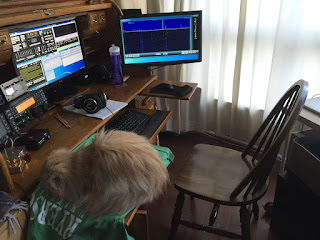
I did have some "Murphy" moments such as…….I was not able to get my MFJ mag loop to tune at all at the start of the contest. Very quickly I found it was a very loose PL-259 connected on the rear of the loop's control box. Then for some reason N1MM+ set my CQ zone as 5 and not 4 and I did not click into this until about 10 contacts into the contest. Finally on the K3 there is a "test" setting and I use it to check macros without transmitting. Then old age had me forget to turn off the test mode, this found me thinking I was calling stations but was transmitting 0 watts….. Now that's QRP!!
Since I am operating QRP and using small MFJ loop antenna on the balcony my operating style was as follows
- I Use my VFO B to save a strong DX station that at the time has a huge pileup going. This stops me from wasting time trying to break the pile. Better to come back when the crazy pileup is gone. This worked great when I came across a Senegal station.
- Even when a station is at an S2 level but is just calling and listening my 5 watts can and did many times make it through for a contact.
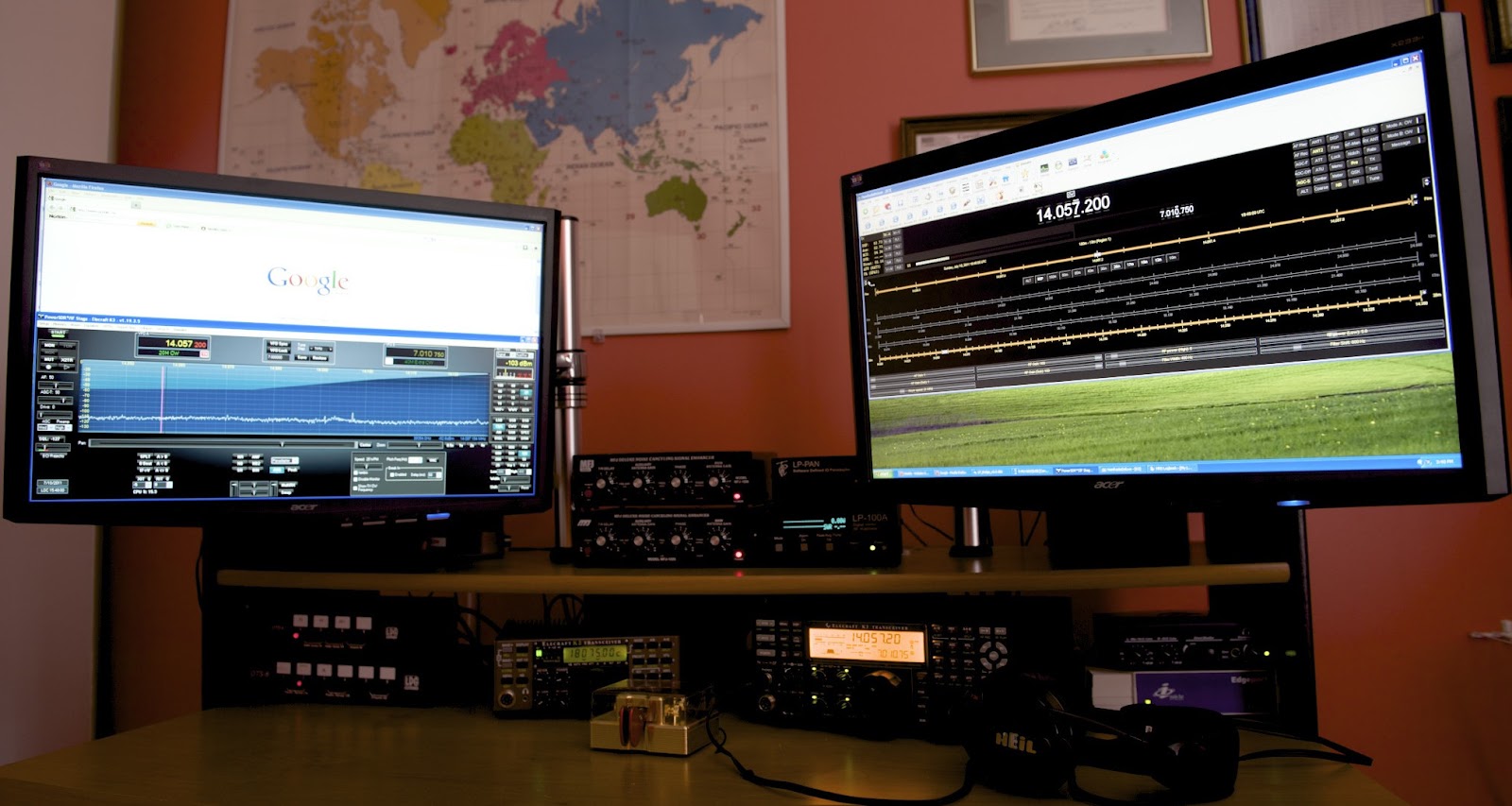
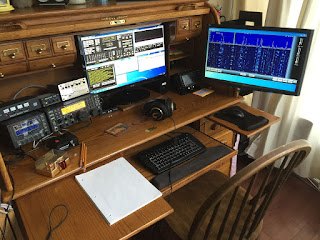
- I don't use a spotting network as I found most of these stations have a huge pileup but I do have an Elecraft P3.  Using some hardware and software my P3 is seen on a 19 inch monitor and I am able to point and click on signals. My K3 then moves to that signal this allows me to see the activity on the band and Search and pounce these stations.
- When possible stay with a band such as 15m were my MFJ loop does not need to be retuned at all across the whole CW portion.
- Stick with my 250hz Inrad 8 pole CW filter so I can get between tight signals and only hear the op I want to contact.
In my post I am going to go into detail about my software I am now using and finding to be great for contesting and general QSO's It's now time to grab some eats and relax.

CQ contest this weekend.

Ahhh the old setup along with a great antenna............
The blog keyboard has been quiet these past few weeks but I am coming along with my digi adventure! I did have some long evenings with trying to get the PC software and rig to talk and get along with each other. I really find the Yahoo groups to be a great help when Im ready to throw in the towel. There seems to be a group for most ham radio applications and very willing and knowledgeable folks out there more than happy to help. This weekend is the CQ CW contest and I have been spending some of my downtime getting things ready. The software I be using is N1MM+ I have not as of yet used this version in a contest I had been sticking with just plan old N1MM. As for rig software I migrated to Win4K3 and am very happy with it more on that in another post. Finally my logging software has changed as well I have just started to use Log40M again more on that in another post. I never planned it this way but it seems that all is new for the contest and that can be both exciting and a disaster!! I have spent time testing out N1MM+, Win4K3 and Log40M and all seems to be going just fine.....but then again there is Murphy. Some of my goals for the contest are:
1.  Stay with the contest and not to get frustrated.
2.  Try not to use the morse code reader and do most by ear....see how that works out.
3.  Have fun and not worry about the score as with my setup placing anywhere for anything is most likely out of the question.
I will keep you posted as to how things go in the contest.....oh and the new setup as well....maybe I will hang some garlic close to the shack to keep Murphy away....:)

WSPRing on 30M

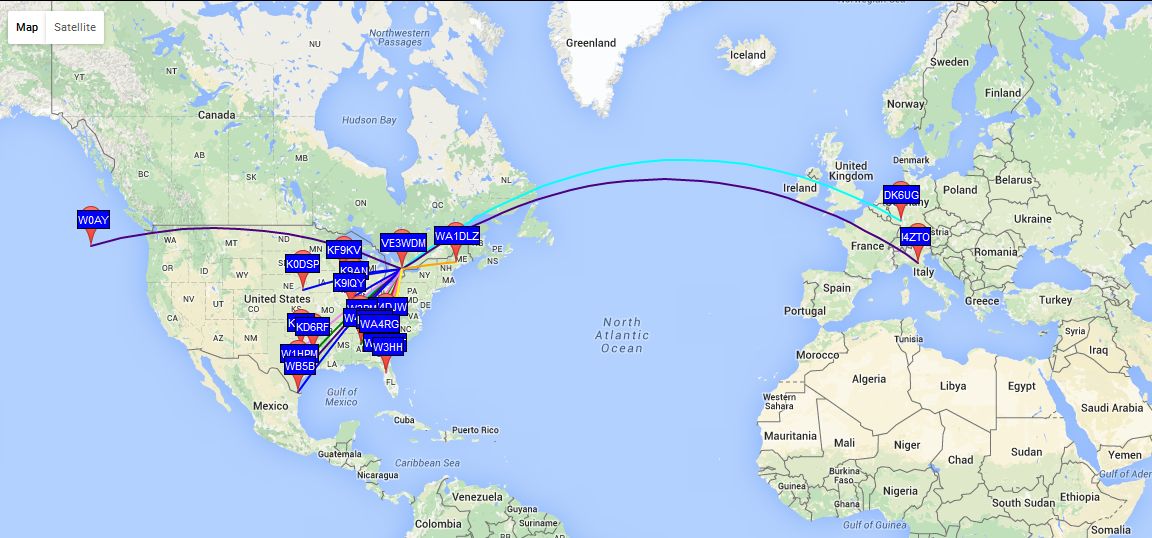
30m WSPRing
On Sunday I found some time to get on the radio and I found there was not to much happening on the bands. I had some other things I could do while on the PC so I started up WSPR just to see how the bands were doing. I gave 30m a go starting around 3pm local time and really there were no spots of my signal. At around 5pm local things began to pickup and I was being heard across the pond. I was using 5 watts and I understand that is very high for WSPR but I wanted to see how the loop antenna would do with that type of power. I would like to use WSPR to see when each of the bands peaks in my area and this would mean a few weekends of WSPRing from morning to evening to see if I can pickup a pattern for good propagation from my location. Just as a side note I'm not sure where W0AY is located.....seems to be out in the ocean?? I did look his call up on QRZ.COM and found his home QTH to be in Montana so not to sure why he is out in the ocean.........maybe M/M?? I did email Laurence to see if in fact he was M/M or if WSPR was just a bite confused last evening.  

The MFJ 1788 is on the air and a contact in log!

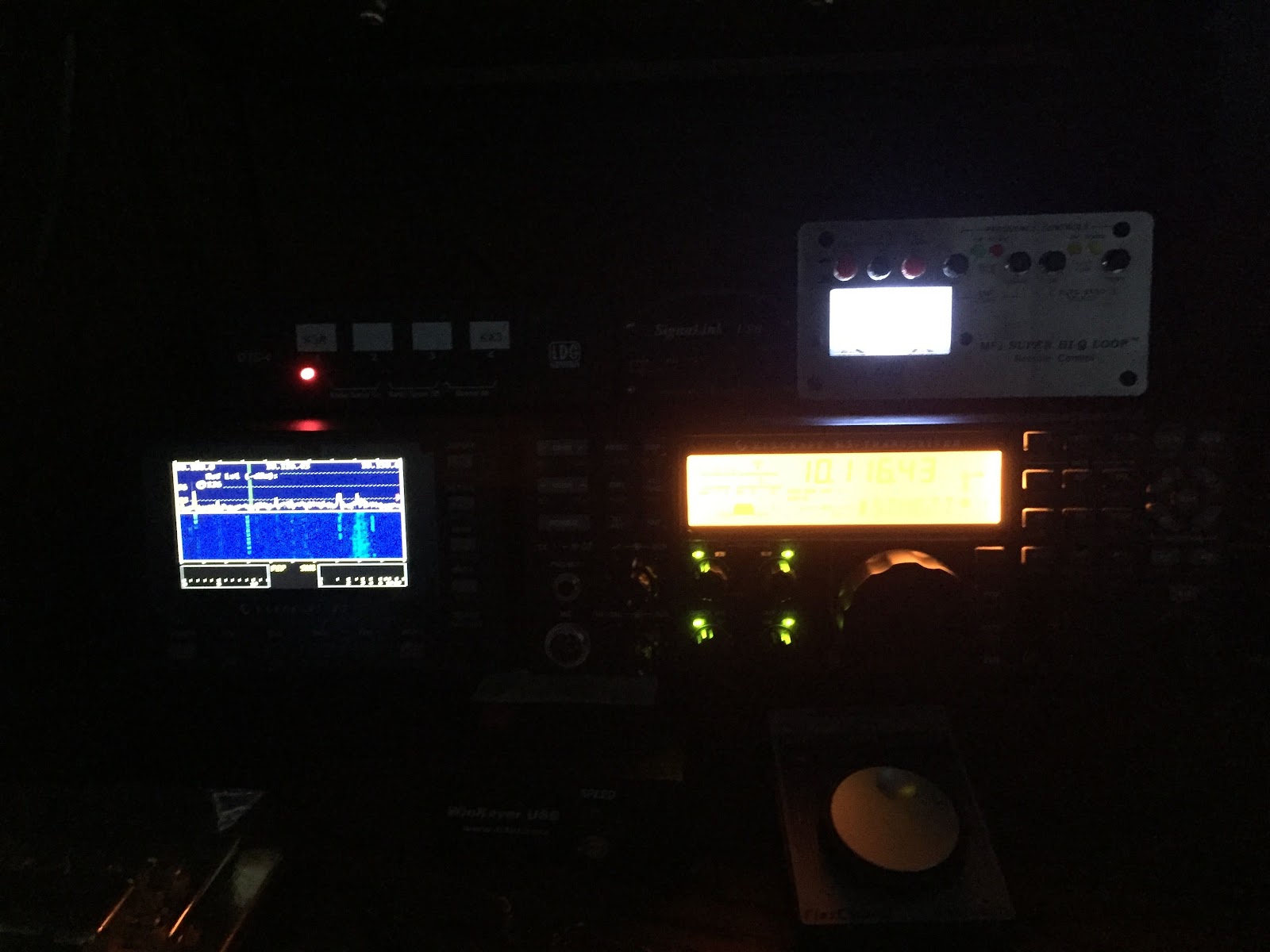
Not the best shot but it's an evening shot
I was able to get the loop on the air today after work and I was very much wanting to see if it was actually working on the air.........testing it and putting it on the air can be a whole different kettle of fish. I am happy to say the antenna works just fine if not better. It seems to tune to a better SWR and seems more smooth at arriving at a low SWR. In the past it seemed to have a very sharp tuning curve and if you did not pay attention the sweet spot was gone. So the bands were decent sounding well were I was on 30m that is. I called CQ and I had a come back from VE3HEU! Not exactly DX but it's a contact and from what I have been reading the bands at times have been rough shape......HI HI. Vic was so close we could had met for coffee in the local Starbucks for goodness sake.  He is a fellow condo ham that was using a mobile whip antenna and at 10 floors up using approx 90 watts. I am not that bold and my power is at a steady 5 watts as I don't want to have a knock at my door. This gave me a great opportunity some CW practice and boy when you don't use it for some time you really  have to think about what you are sending. It felt really great to get on the radio again as it has been go go go  here with work, out of town guests and just plan old stuff around the house that has to be done. I think I may stick with 30m's as it seems to be very much alive in the early evenings.

Time to look inside the MFJ 1788

Taking a close look at things
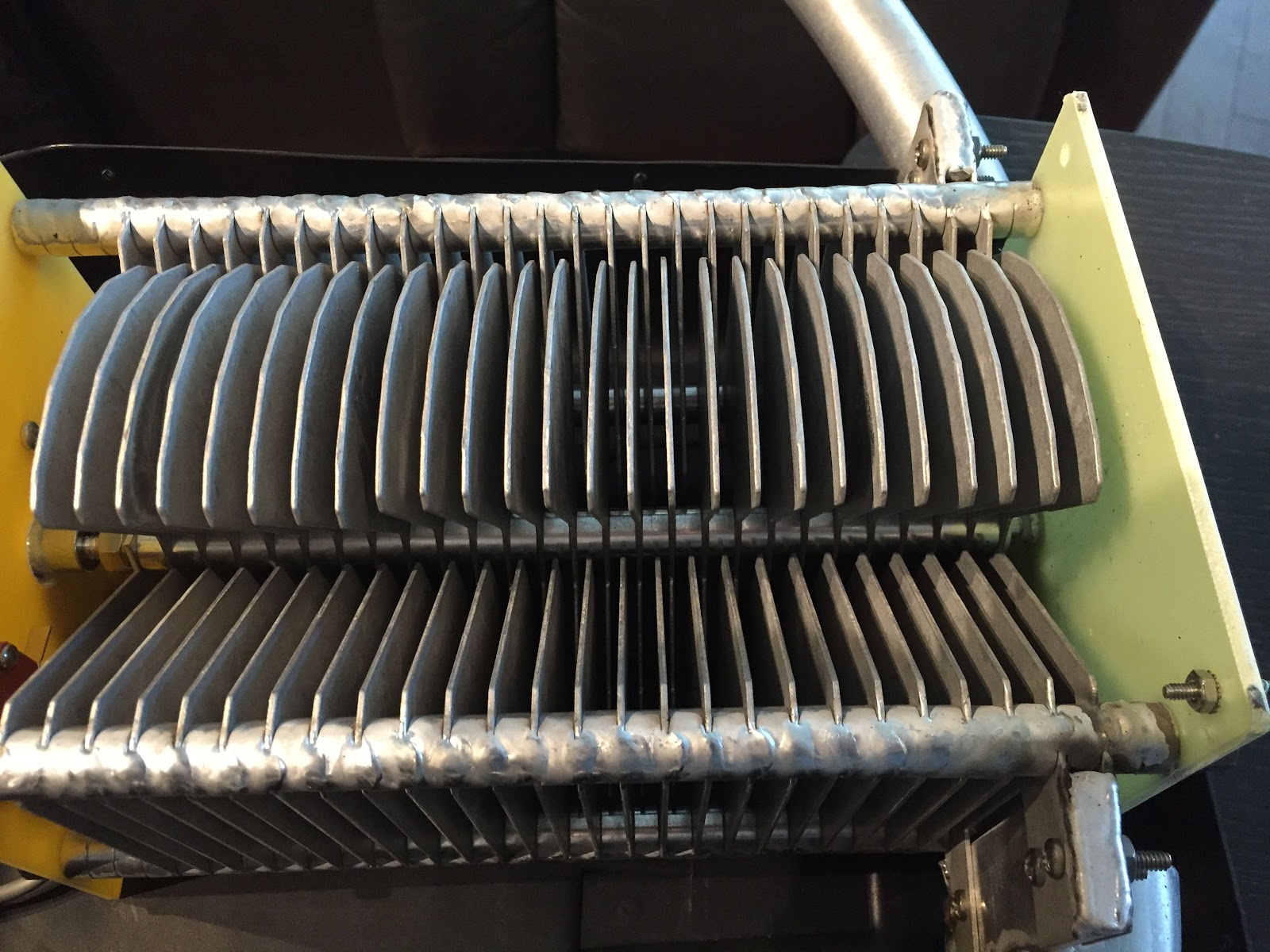
It's the fall and time for some antenna maintenance for me there is no tower to climb or any outdoor work for that matter. It's as simple as bringing the MFJ 1788 indoors from my balcony and having a look. I have had the cover of the antenna off in the past so it was no problem to quickly remove it and start investigating. Some of the things I look for are poor solder joints, little critters who have made my antenna home, the smooth operation of the tuning capacitor and the over all health of the components.  It was a good thing I did check the mechanical connections and without exaggerating I have to say that almost all nuts were
Checking the cap fins
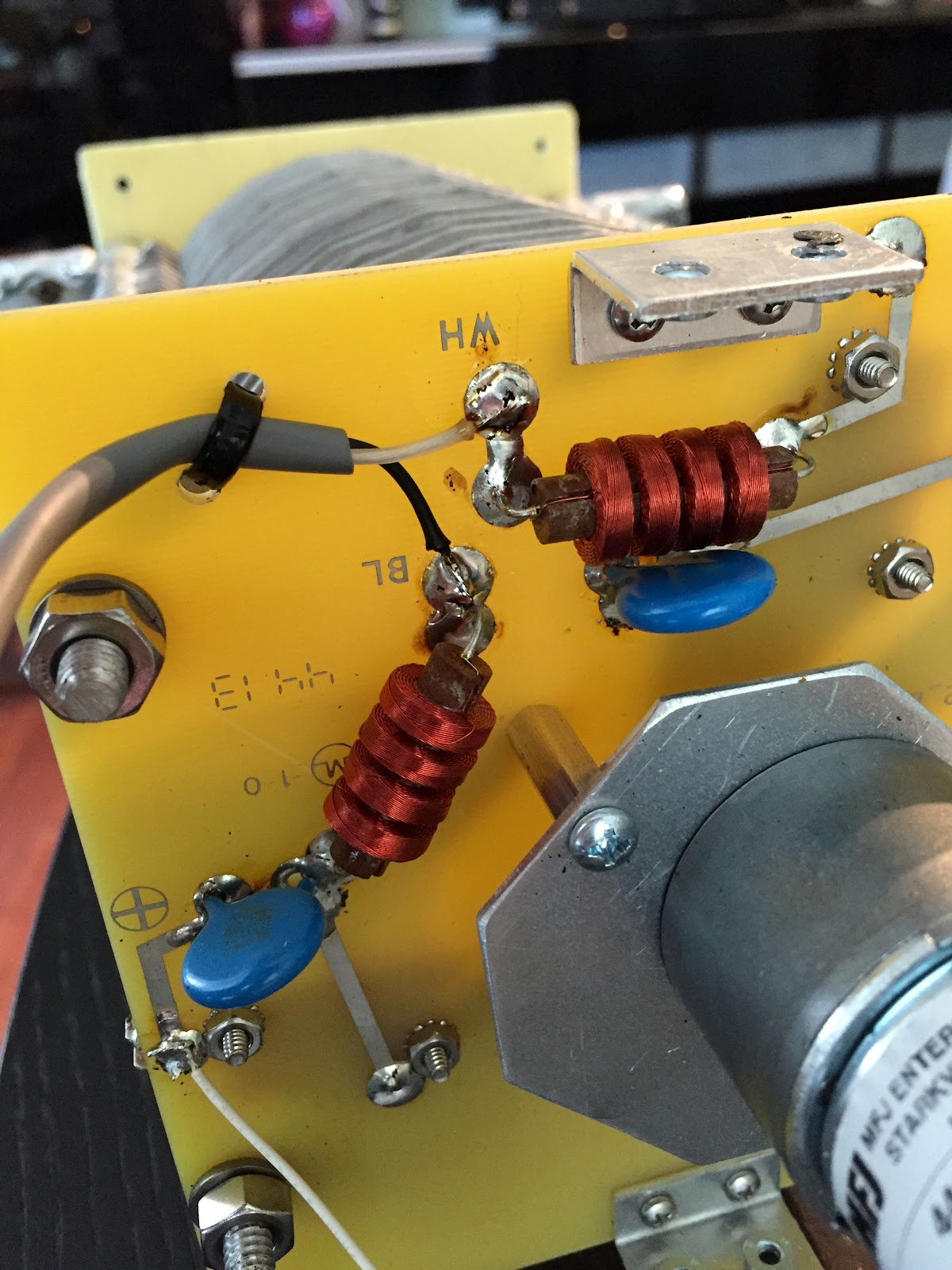
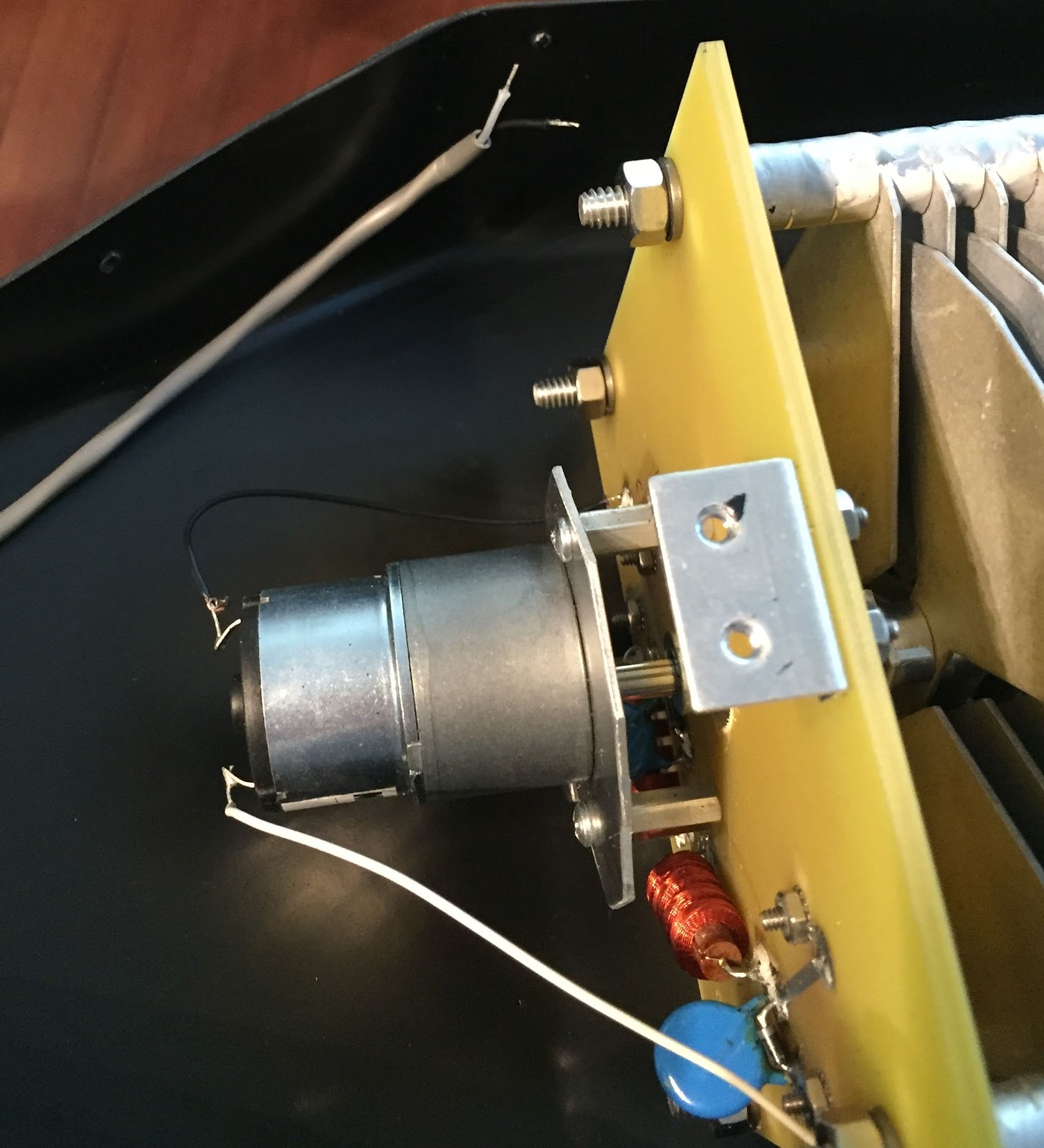
loose......some very alarmingly loose! The hardware holding the stepper motor in place was the worst but not far behind was the larger nuts that held the large tuning capacitor in place. I can't remember the antenna acting funky at all but I do believe it was just a matter of time before something reared it's ugly head like a quirky SWR! Another thing I like to do while the antenna is apart and fully cycle the tuning capacitor for not only smooth operation but the equal spacing of the moving fins along side the stationary fins. There was only some minor adjustments needed to the capacitor fins.........BUT where does "Murphy"  fit into this adventure........well just as I was finishing my adjustments the antenna slipped off the TV tables I had it on and the control wire that runs the motor broke off the circuit board! Also the "feed loop" wire was distorted somewhat. The feed loop is 10
Some of the many nuts that were very loose.
Control wire torn off.
gauge wire in the antenna that is contorted into a egg shape, this little baby can really play games with how the SWR outcome on the loop is determined. I played with it when I first got the loop and that was a mistake as it occupied about 2 hours of my time to get the antenna's SWR back to "normal". I vowed to never touch that feed loop again, but thanks to Murphy it seems I have to revisit that dark cave again. I re-soldered the stepper motor wires back in place and did my best with the feed loop wire. The antenna was put back together and with my fingers cross I tested it and to my utter surprise the unit was working better than it has in the past.

Adding a receive antenna

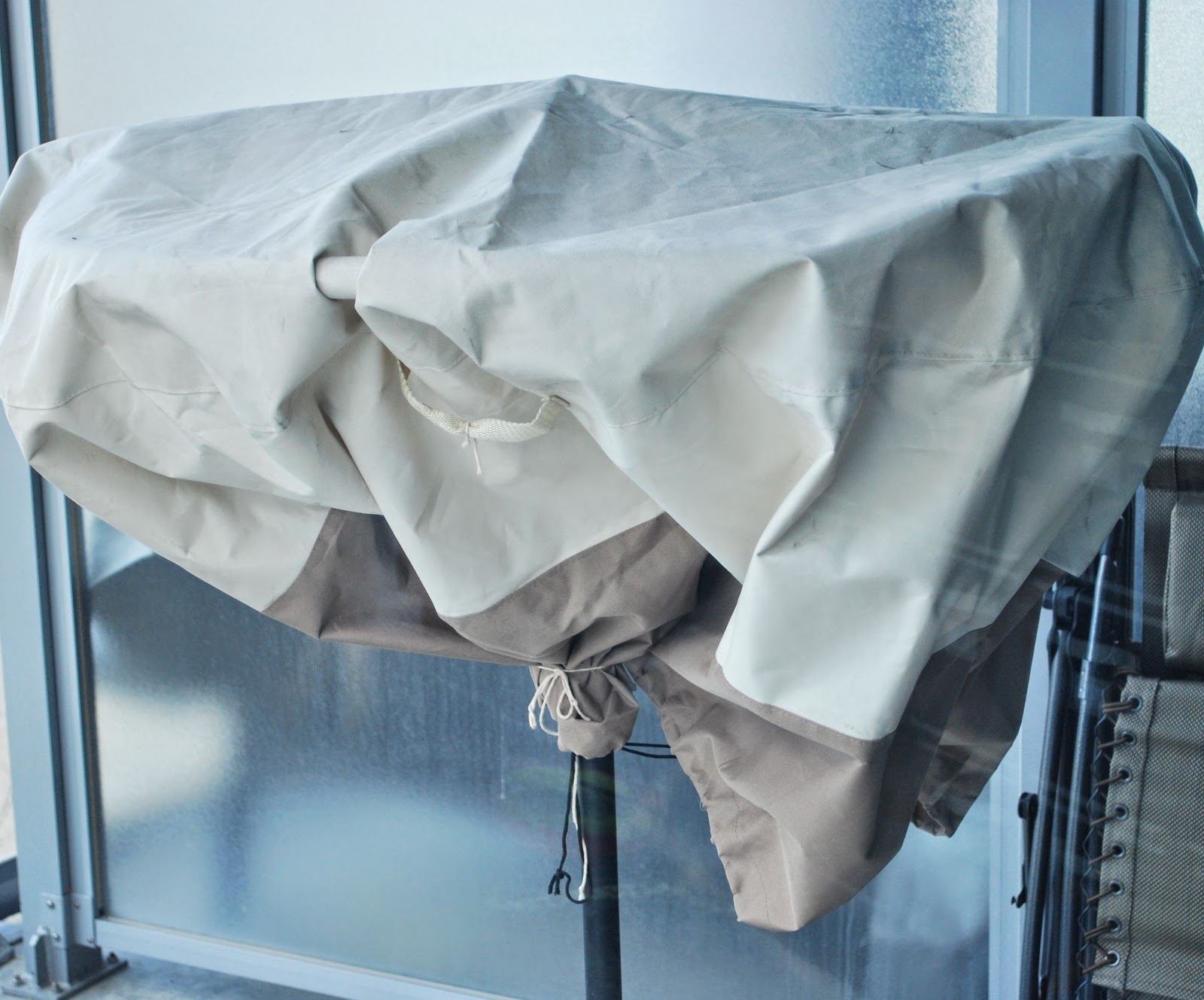
My stealth MFJ 1788 
There have been many a time when on one band I have wondered if conditions had changed and another band had opened up. I have the MFJ 1788 mag loop and with this antenna to check another band another a total retuning is required, this means loosing the sweet spot on the band I am on! It can get frustrating retuning the loop to find out the band you were checking out is more or less dead from my spot on the map. With the downturn of the bands of late and sometime reading on spotting networks how a certain band is now open but to find out after a retune of the loop the propagation gods really didn't allow my neck of the woods to benefit from any opening. I then have to venture back to the previous band and once again retune the loop antenna. Don't get me wrong I am very happy with the MFJ 1788 it has allowed me a means to get on the air from this very antenna restricted area that I am in. I have also made some amazing contacts and am still very much able to enjoy the hobby of ham radio......but the retune thing can get to be a real pain! It was due time to try to come up with a solution, here at VE3WDM it seems that I sell a piece of gear to only find out that later on I need it!!!!!
LF Engineering H-900 that was sold
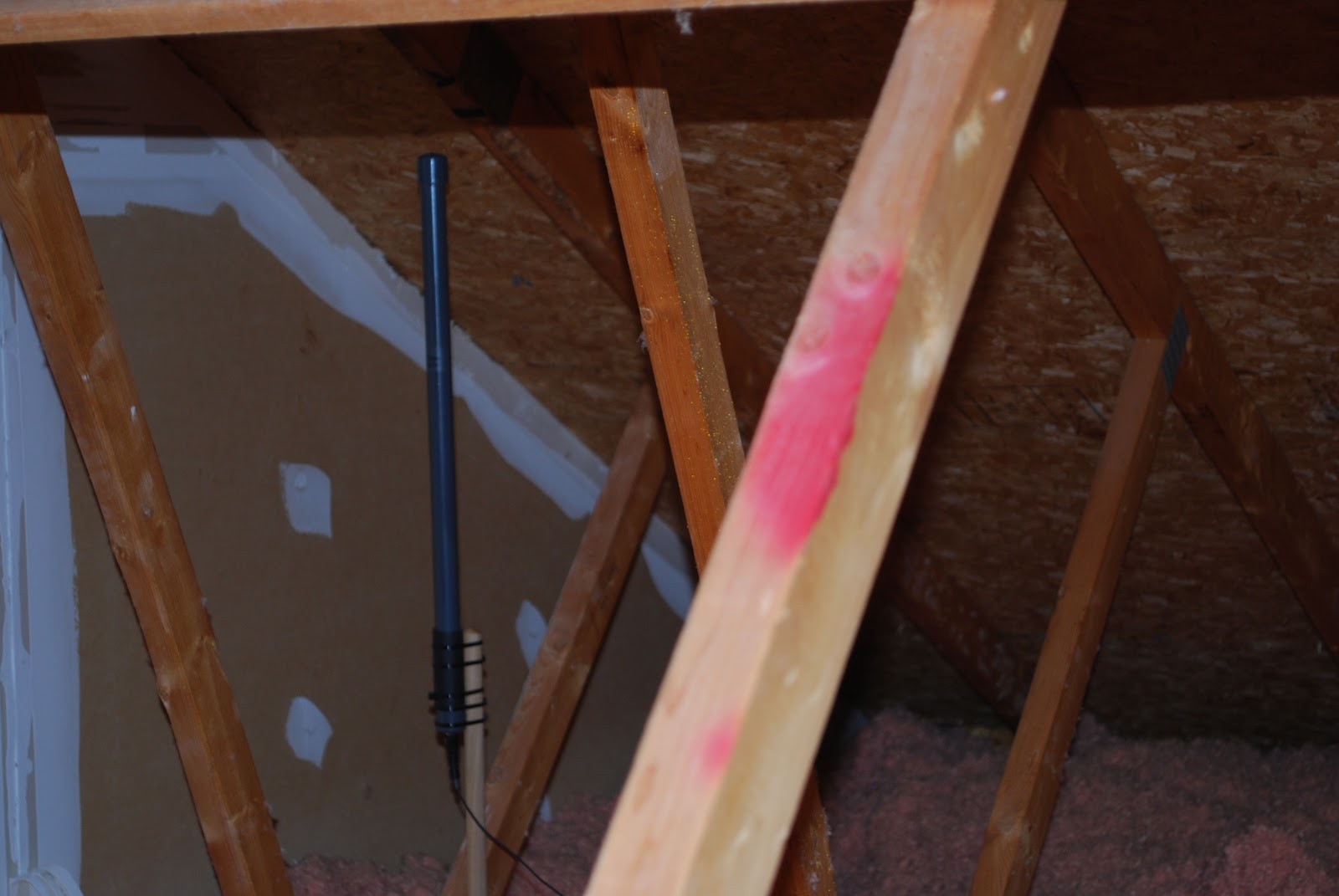
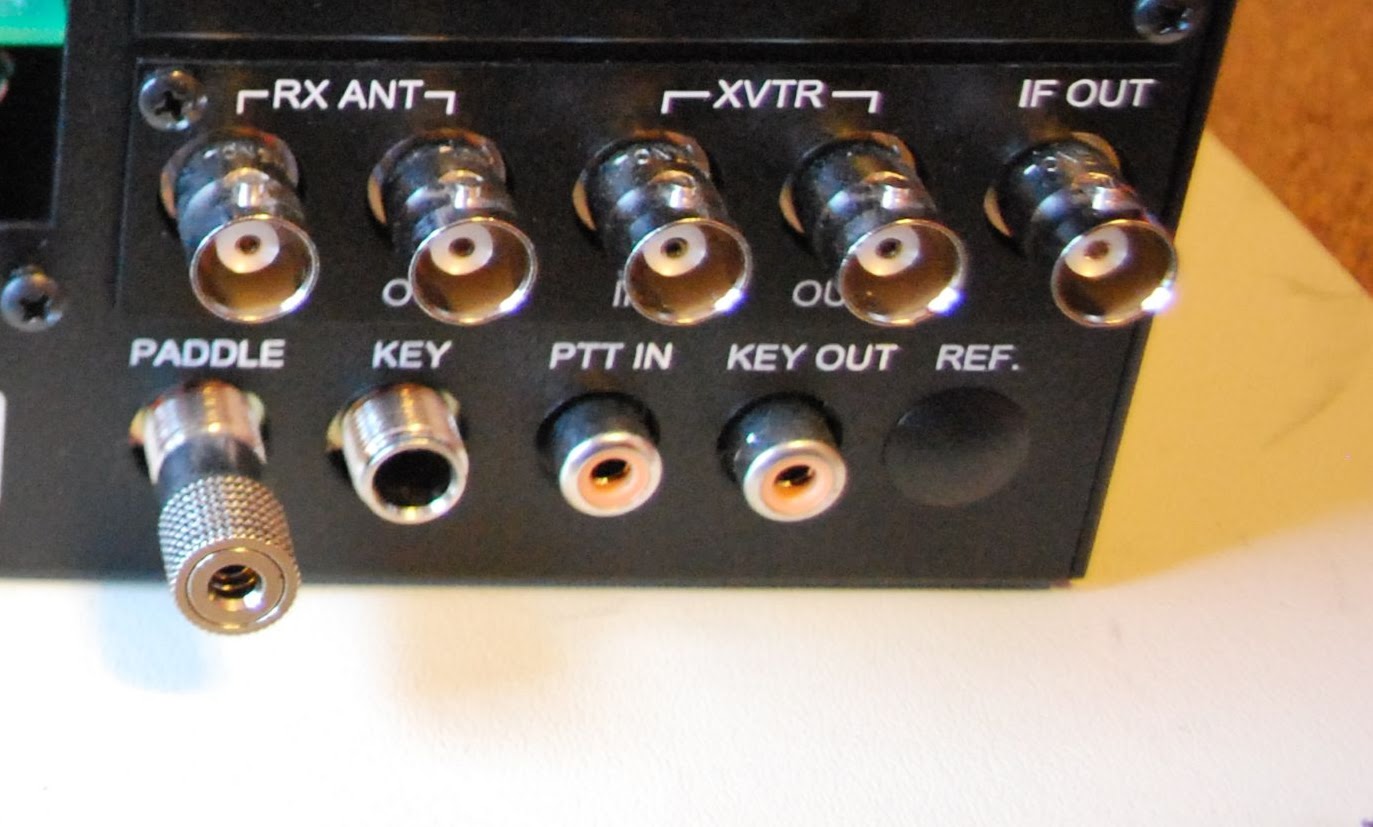
The easiest way for me to find out what is going on with the bands and at the same time leaving  the mag loop antenna alone is to have a separate receive antenna. But in my case just to string up a separate "receive antenna is not so simple being Im a condo ham. The receive antenna still seemed to be the simplest and best solution for me. I had to knock a receive antenna down to condo size and the best way to do that is the "amplified active antenna". Oh thats right I used to have one of those (LF Engineering active antenna) but wise me sold it and now once again I need it!! Before I dish out some cash for an active antenna I wanted to see what the reception was like with a wire antenna from the condo. Before stringing a wire antenna in the condo I wanted to see what was available to me.....I had a receive antenna looking right at me! I have a curtain rod that is metal and about 20 feet long. I ran some coax up to the curtain rod and down to the Elecraft K3. On the K3 you can add what's called the KXV3A board ( I have one installed on my K3) it allows you do add a separate receive antenna via a BNC connector.
KVX3 board in K3
At this point I have not been able to honestly give my receive antenna/curtain rod a good work out. But I am one step closer to my goal of having a separate receive antenna.

VE3WDM's QRPower BLOG 2015-10-01 23:00:00

On to the next step. 
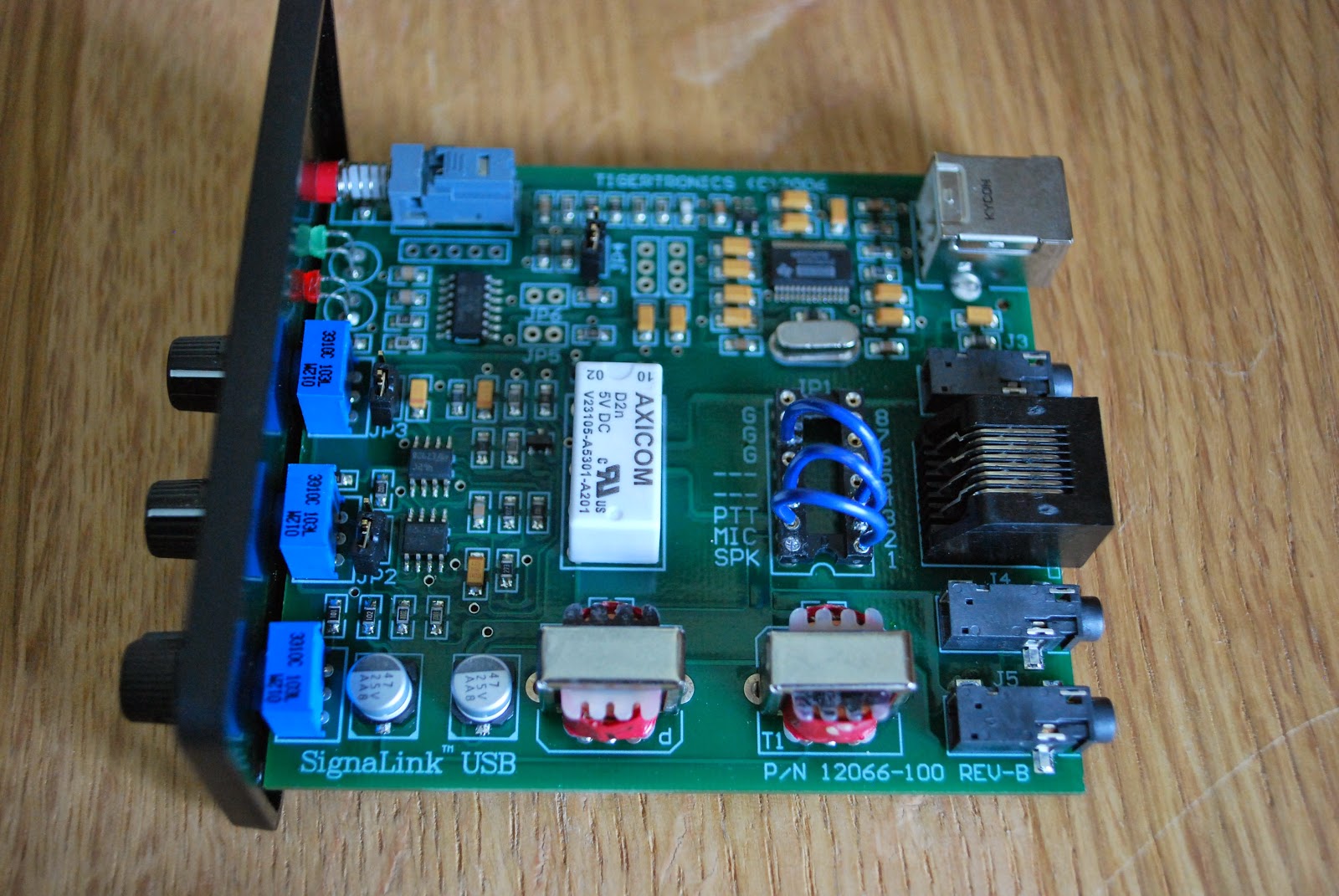
Setting up internal jumpers
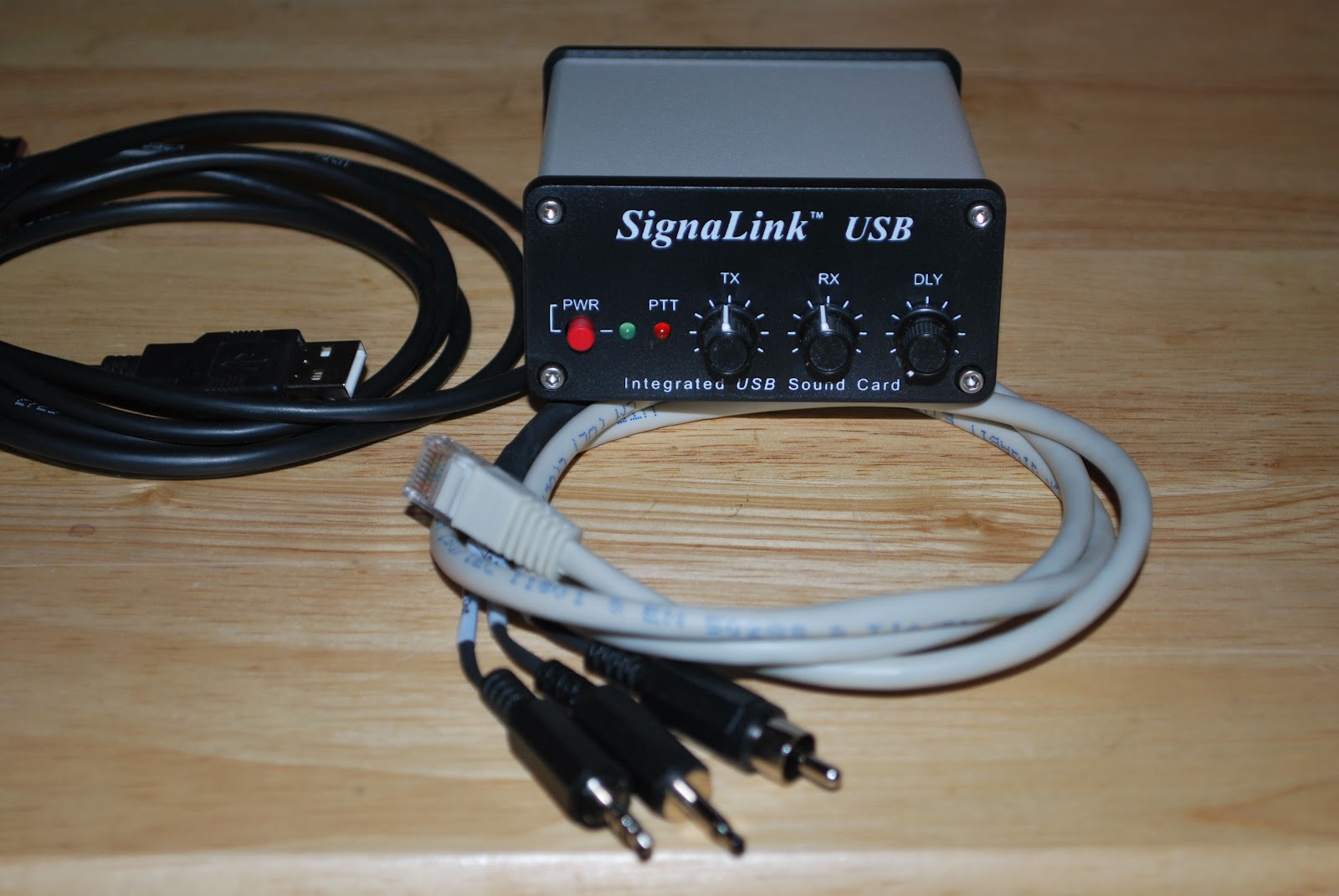
Getting my digital operating off the ground has been off and on the last month as we have had relatives visiting from the UK so we have been out and about with them. The latest is I have been able to download and install WSJT-X's software. There is an online install guide that is just great and I followed it slowly step by step. In the past I have found when the digi modes have tripped me up it's been my own fault in most cases. I rush the process and something along the line is overlooked and problems arise that cost me time and frustration. The WSJT-X software is up and running and I have been able to get my Elecraft K3 to communicate with the software. This has always been a challenge in the past to get the proper settings so rig and software get along. Next is to get the Signalink USB own sound card to be the stand alone card for my digital operations. The PC's sound card can look after all windows 7 tasks. The Signalink USB is a very nice unit and in the past I did have one and sold it....story of my ham career! On their site they have some very detailed easy to follow setup instructions for most if not Windows OS's and most but not all digital software. Well it's off to the next step in my digital adventure.

Subscribe FREE to AmateurRadio.com's
Amateur Radio Newsletter

 
We never share your e-mail address.


Do you like to write?
Interesting project to share?
Helpful tips and ideas for other hams?

Submit an article and we will review it for publication on AmateurRadio.com!

Have a ham radio product or service?
Consider advertising on our site.

Are you a reporter covering ham radio?
Find ham radio experts for your story.

How to Set Up a Ham Radio Blog
Get started in less than 15 minutes!


  • Matt W1MST, Managing Editor