Author Archive
 Dorking With VHF Contest Rules
 January 25th, 2015 |
  Author:
  One continuing discussion in the VHF community is how to promote more activity, especially during the major VHF contests. One central theme that always emerges is how to modify the VHF contest rules to make them better, to make them fairer and to encourage new contesters. (Let me say up front that there is room for improvement in the contest rules but I don’t think rule changes alone will change contest participation significantly.)
In 2013, the ARRL contests added the Three-Band Single Operator and Single Operator FM Only entry categories. In January 2015, the ARRL added three more categories: Single Operator Unlimited High Power, Single Operator Unlimited Low Power, and Single Operator Unlimited Portable. These “unlimited” categories allow “passive use of spotting assistance” which roughly means these operators can monitor the various DX spotting networks but not spot themselves. The CQ Worldwide VHF Contest already allows passive assistance for all participants and self-spotting for digital EME and meteor scatter contacts. See the CQ WW VHF rules.
In January, the ARRL announced additional changes:
The Board … adopted amendments to the General Rules for ARRL Contests Above 50 MHz to encourage greater participation and band utilization. The changes become effective with the 2015 June ARRL VHF Contest. The revisions stemmed from recommendations offered by the Board’s Programs and Services Committee’s ad-hoc VHF and Above Revitalization subcommittee, composed of active VHF/UHF contesters, and they received strong support from the VHF/UHF community.
The subcommittee was charged with developing recommendations to increase the level and breadth of ARRL VHF and above contest participation and encourage operation on lesser-used bands. As a start to the process, the Board approved three changes that will permit assistance for all operator categories, with no effect on entry category; permit self-spotting for all operator categories, and allow single operators to transmit on more than one band at a time.
The changes will permit assistance in arranging contacts, but not in conducting contacts. They will, for example, allow a station to announce its location in a chat room, on a repeater, or even via e-mail.
The self-spotting/assistance issue is a hotly debated issue among VHFers, with two main schools of thought:
1) Contacts should be made completely independent of non-amateur assistance. Sometimes passive spotting assistance is allowed, but some folks want to eliminate that practice as well.
2) Contacts can be made with non-amateur assistance (spotting networks, chat rooms, etc.) as long as a complete radio contact occurs over the ham bands. This follows the common practice of internet spotting for EME and meteor scatter. Also, some rover stations have requested the ability to spot themselves when they enter a new grid.
There are a number of shades of gray positions between these two points of view (see the CQ WW VHF rules, for example), but I won’t try to explain them here. In general, I support the move to loosening up the restrictions on assistance (#2). Without good 6m propagation, VHF contests tend to be “QSO poor” and expanded use of spotting will allow for additional contacts. The potential risk is that we’ll get sloppy with what constitutes a legitimate contact. Once I know the exact frequency and call sign of the other station, it will be easier to “hear” the other station even when the path is not there. Of course, we already have this situation when we complete a QSO on one band and QSY to another band to work the same station. We know the frequency and call sign (and the grid)…did we really hear the other guy or just think we did? In the end, it all comes down to the integrity of the radio hams involved in the contact.
Those are my thoughts. What do you think?
73, Bob K0NR
The post Dorking With VHF Contest Rules appeared first on The KØNR Radio Site.
Top Five K0NR Blog Posts from 2014
 It’s always interesting to see which of my blog posts are getting the most attention. According to my website stats, these posts got the most views in 2014. It turns out that most of these were written before 2014 but they are still getting lots of hits.
The top post was 2012 Jeep Wrangler Radio Install. When it comes to doing mobile radio installations, I’ve often found it helpful to search the web for information. There’s nothing like seeing how someone else did their radio install to get some help and guidance. With this post, I tried to repay the favor and it seems that lots of people have gotten use out of it.
The second most popular post is Can I Use My Ham Radio on Public Safety Frequencies? I wrote this one back in 2012 but always seems to get a lot of hits. It is getting a bit out of date, so I should probably update it.
Next up is Solving the Baofeng Cable Problem. This article explains how to solve one of the biggest challenges of programming those low cost HTs from China. Also on the subject of low cost HTs is this popular post: Yet Another HT From China (Baofeng UV-B5).
Another popular post is my list of favorite ham radio iPhone apps: The Incomplete List of Ham Radio iPhone Apps. This post from 2011 is definitely out of date but keeps getting lots of hits. I’ve updated this list a couple of times now and the most recent post is here: The Completely Updated Incomplete List of Ham Radio iPhone Apps. For some reason, the obsolete post still gets viewed the most.
Well, that is the top five posts but I am including a sixth bonus post at no extra charge. The FM/VHF Operating Guide is arguably one of the best time-tested articles I’ve written, originating way back in the twentieth century. It has taken many forms and revisions over the years and is now a static page on k0nr.com.
Thanks for stopping by k0nr.com and have a Happy New Year.
73, Bob K0NR
The post Top Five K0NR Blog Posts from 2014 appeared first on The KØNR Radio Site.
Hey, Should I Buy the Baofeng Radio?
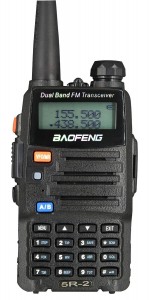 I keep getting asked about the Baofeng radios. Especially the new hams seem to be attracted to the low price. Even though I own several of them and make good use of them, I have been a little reluctant to recommend them. I put together my thoughts on these radios and a few tips to get started. Read the full story here on HamRadioSchool.com.
73, Bob K0NR
The post Hey, Should I Buy the Baofeng Radio? appeared first on The KØNR Radio Site.
This Spewed Out of the Internet #30
 Reporting on more critical information spewing forth from the interwebz, here’s some stuff you just can’t live without.
In a surprise move, Baofeng introduces yet another dualband HT, but this one might be the best yet. Maybe. See the PD0AC first impressions of the GT-3 Mark II.
Yaesu has announced a new dualband HT, the FT2DR, that has a Big Honking Display and touchscreen interface.
The crack reporting team over at Ham Hijinks keeps cranking out ham radio news: Turkey Takes Toll on Ham.
The ARRL is looking into changing some of the VHF contest rules. The first proposal includes allowing self-spotting and the use of non-amateur assistance. I say “heck yeah!”
If you ever thought it would be a good idea to use a banana as a Morse code keyer, check out this video. Meanwhile, Burger King has recognized the importance of ham radio for space communications (video).
The QRZNow web site got caught “borrowing” content from other ham radio web sites without permission or providing attribution.
Stu W0STU over at HamRadioSchool.com has been straining his brain on the topic of complex impedance. If you need some help understanding this (ahem) complex topic, take a look at his three part article on the subject: Part 1, Part 2, Part 3.
If you are worried about exposure to excessive EMF (Electromagnetic Field), you’ll want to consider this device over at Amazon.com. Be sure to read the reviews to get the full entertainment value.
73, Bob K0NR
The post This Spewed Out of the Internet #30 appeared first on The KØNR Radio Site.
How About a New 12 Volt Automotive Connector?
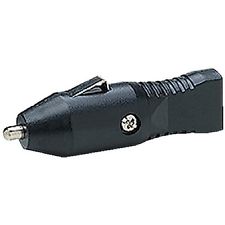 Don’t get me wrong — I do like standard connectors. A while back, I wrote about how the micro-USB connector became the standard power/data connector for mobile phones. Well, that is unless you own an iPhone.
The good news is that we do have a standard power connector for 12 VDC in automobiles. The bad news is that it is an ugly behemoth derived from — can you believe it? — a cigarette lighter. For some background and history, see the Wikipedia article. The Society of Automotive Engineers (SAE) has a standard that describes this power connector (SAE J563). Alan K0BG correctly warns us to “never, ever use existing vehicle wiring to power any amateur radio gear” including the 12 volt accessory plug. (I always follow this advice, except in the cases when I don’t.) I also found this piece by Bill W8LV on eham.net that describes the crappiness of these connectors.
Well, there is a new standard power connector showing up in cars: the USB port. These ports provide the data and power interface for mobile phones, integrating them into the auto’s audio system. Standard USB ports (USB 1.x or 2.0) have a 5V output that can deliver up to 0.5A, resulting in 2.5W of power. A USB Charging Port can source up to 1.5A at 5V, for 7.5 W of power. This is not that great for powering even low power (QRP) ham radio equipment.
Now a new standard, USB Power Delivery, is being developed that will source up to 100W of power. The plan is for the interface to negotiate a higher voltage output (up to 20V) with 5A of current. Wow, now that is some serious power. We will have to see if this standard is broadly adopted.
Two things are obvious to me: 1) the old cigarette lighter connector needs to go away and 2) it is not clear what the replacement will be.
What do you think? Any ideas for the next generation of 12V automotive connector?
73, Bob K0NR
The post How About a New 12 Volt Automotive Connector? appeared first on The KØNR Radio Site.
Announcing the January 2015 WØTLM Technician License Class
 Ham Radio Two-Day License Class
Sat Jan 31 and Sat Feb 7 (8 AM to 5 PM) 2015
Location: Black Forest Fire Station 1, Black Forest, CO
The Technician license is your gateway to the world-wide excitement of Amateur Radio …
- Earn your ham radio Technician class radio privileges
- Pass your FCC amateur radio license exam right in class on the second day
- Multiple-choice exam, No Morse Code Required
- Live equipment demonstrations
- Learn to operate on the ham bands, 10 Meters and higher
- Learn to use the many VHF/UHF FM repeaters in Colorado
- Find out how to participate in emergency communications
There is a non-refundable $25 registration fee for the class.
In addition, students must have the required study guide and read it before attending the two-day class: HamRadioSchool.com Technician License Course $20.95
(make sure you get the most recent edition of this book, updated for the new FCC exam questions)
Advance registration is required (no later than one week before the first session, earlier is better! This class usually fills up weeks in advance.)
To register for the class, contact: Bob Witte KØNR
Email: [email protected] or Phone: 719 659-3727
Sponsored by the Tri-Lakes Monument Fire Radio Association
For more information on amateur (ham) radio visit www.arrl.org or www.wedothat-radio.org
The post Announcing the January 2015 WØTLM Technician License Class appeared first on The KØNR Radio Site.
Twisted Phonetic Alphabet
 Stu W0STU just posted an article on HamRadioSchool.com about the use of phonetic alphabets. I had previously posted a Shack Talk article on the same subject.
The “standard” phonetic alphabet is the ITU alphabet but I am starting to think that we might need to get a little more creative on our use of phonetics. Why not innovate in this area, just like we innovate on the technical front?
Towards that end, I was reminded of his phonetic alphabet listed over at netfunny.com:
        A  Are               N  Nine
        B  Bee               O  Owe
        C  Cite              P  Pseudonym
        D  Double-U          Q  Queue
        E  Eye               R  Rap
        F  Five              S  Sea
        G  Genre             T  Tsunami
        H  Hoe               U  Understand?
        I  I                 V  Vie
        J  Junta             W  Why
        K  Knot              X  Xylophone
        L  Lye               Y  You
        M  Me                Z  Zero
Even this creative alphabet can be improved on. For example, I think H should be Honor.
What do you think?
73, Bob
The post Twisted Phonetic Alphabet appeared first on The KØNR Radio Site.













