Author Archive
 CQ WPX, LoTW and the End of QSL Cards
 April 4th, 2015 |
  Author:
 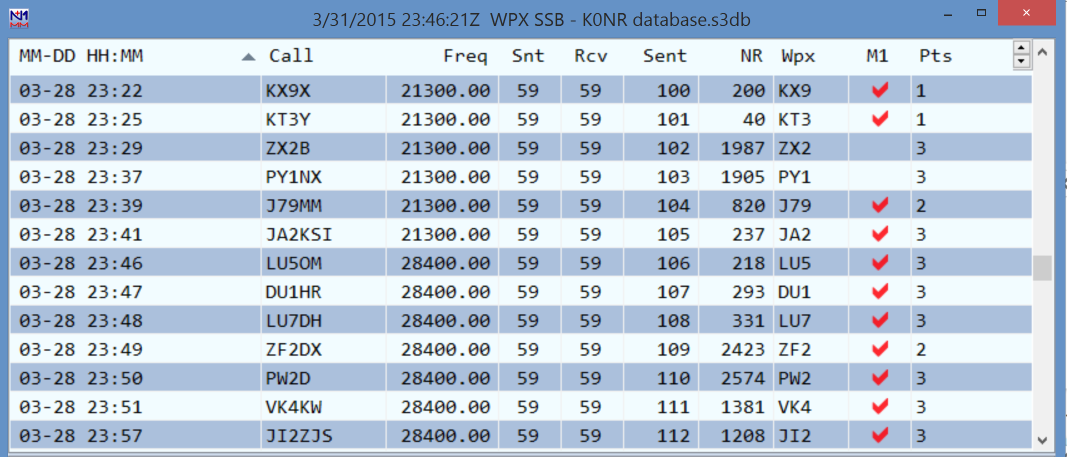 Last weekend, I had a fun time working the CQ WPX contest on SSB. I’ve always liked the format of the contest with the callsign prefix as the score multiplier (e.g., K1, K2, W1, W2, VE1, VE2 are all multipliers). Its like every new contact is a multiplier. This contest attracts plenty of DX but unlike some DX contests, everyone works everyone.
Consistent with the contest, the CQ WPX Awards Program issues operating awards based on callsign prefixes. The initial mixed mode (CW, SSB, digital) award requires confirmed contacts with 400 different prefixes. Back in the 20th century, I kept track of my confirmed contacts for WPX but lost interest along the way. I am sure I’ve worked more than 400 prefixes but the challenge was getting them all confirmed. More recently, the ARRL Logbook of the World (LoTW) added support for the CQ WPX Awards, so I started paying attention again, watching my CQ WPX total grow. I am not a big awards chaser but I have found value in using them as a specific goal to motivate me to get on the air.
Right before the CQ WPX contest, I had 380 prefixes confirmed via LoTW, so I figured that if I worked a few new ones during the contest, I could punch through 400 without too much trouble. I used my signature HF slacker approach at the cabin, using the Yaesu FT-950 to push 100 watts of RF power to wire antennas in the trees. For 40m, 20m and 15m, I used a trap-dipole antenna and for 10m I used a newly built ladder-line j-pole mounted vertically.
On Saturday, the propagation on the 10m band was smokin’ hot, strong signals from all continents. The 10m j-pole performed well. It was an absolute blast to easily work into Africa, Europe, South America, Australia, New Zealand and Asia. The 15m and 20m bands were also very productive. My approach was to tune around, looking for new prefixes to add to my confirmed total. Propagation was not as good on Sunday but still respectable but I only operated a few hours.
After the contest, I submitted my log to the contest web site and loaded my contacts into LoTW (188 QSOs and 157 prefixes). Immediately, I received two new confirmed prefixes. Over the next few hours, I checked back to watch my CQ WPX confirmed total climb on LoTW. It did not take long before it passed through 400 (and the total is still climbing). I will admit that I really liked the instant gratification of seeing my QSOs immediately confirmed.
That’s when it hit me: I am done with paper QSL cards. The amount of time and effort it takes to get 400 paper cards in my hand is just not worth it. It is soooooo 20th century.
Disclaimer: Actually, I still enjoy and use paper QSL cards…they are now just a secondary activity for me.
The post CQ WPX, LoTW and the End of QSL Cards appeared first on The KØNR Radio Site.
WordPress Security
 My site has been down for a few days due to a “security problem” that I encountered. it seems that some malware showed up on the server and my host disabled the site. It took a bit of ftp’ing to get the offending files removed but we are back on the air.
I can’t say for certain how the bad guys got into the site but it would appear they were specifically targeting sites using WordPress. I was already running a security plugin for WordPress but since the attack I’ve tightened up the parameters considerably. If I inadvertently locked you out, my apologies.
It is interested to watch how many attacks are reported by the security plugin, mostly from locations outside of the US. If you are using WordPress and don’t have a security plugin installed, I highly recommend installing one and locking things down tight.
73, Bob K0NR
The post WordPress Security appeared first on The KØNR Radio Site.
ARRL Field Day: Season To Taste
 I’ve written before about the flexibility of Field Day and the need to season to taste to make it your own. I have always thought that one of the great things about Field Day is that it can be tuned to whatever interests you or your club. It can be a serious radio contest (well, almost); it can be an emcomm drill. It can be a radio campout; it can be a foodfest, it can be a beer-drinking party. Insert your idea here.
This year, our local club, the Tri-Lakes Monument Radio Association is going to try a new approach that we call Tech Field Day. We previously have held a one-day educational event that we call Tech Day, that featured a series of presentations and hands-on demonstrations. The main theme of Tech Day was to help the Technician level hams gain more knowledge and help them move on up to General class operating.
We are taking the basic idea of Tech Day and combining with a shortened one-day version of Field Day. So on Saturday June 27th, we’ll offer a series of educational presentations along with some classic Field Day radio operating. The operating emphasis will be on giving newer hams a chance to get on the air, probably on both HF and VHF. (Our plans are still coming together.) We will also promote the theme of emergency communications, operating off a emergency power source, etc.
There are a number of things that we are intentionally leaving out. We won’t operate the entire 24 hour period…in fact, we’ll probably just be on the air Saturday afternoon. We won’t worry about making a lot of contacts or running up the score. Our stations will be relatively simple (no towers, no amplifiers).
So that’s our idea of a fun Field Day. What are you planning to do?
73, Bob K0NR
The post ARRL Field Day: Season To Taste appeared first on The KØNR Radio Site.
2015 SOTA VHF Activity Days
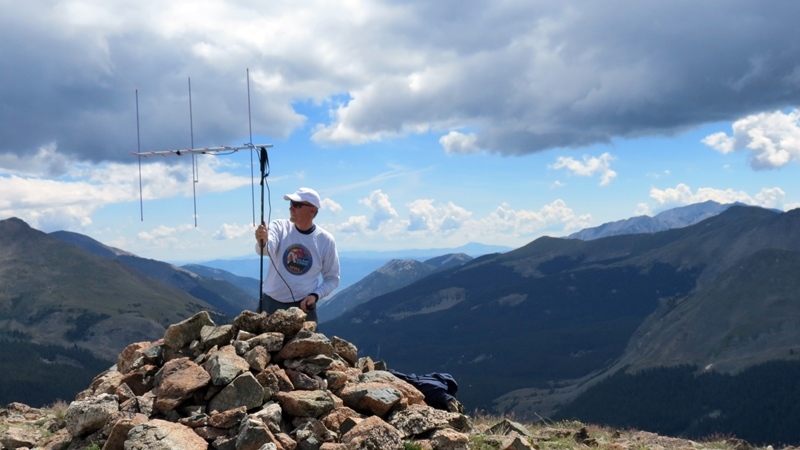 On the topic of operating events for Summits On The Air (SOTA) activations, Guy N7UN suggested focusing on six major events for 2015. Most of these are VHF-oriented but HF activity can also occur on these days.
- Jan 24-26: ARRL Jan VHF Contest + NA SOTA Winter Activity Weekend
(oops, I guess we already missed that one) - Apr 18-19: North America SOTA Spring Activity Weekend
- Jun 13-15: ARRL June VHF Contest + NA SOTA Summer Activity Weekend
- Jul 18-19: CQ WW VHF Contest + optional for SOTA
- Aug 1-2: Colorado 14er Event + NA SOTA Rocky Mtn Rendezvous + W7 SOTA Activity Weekend + ARRL UHF Contest
- Sept 12-14: ARRL Sept VHF Contest + NA SOTA Fall Activity Weekend
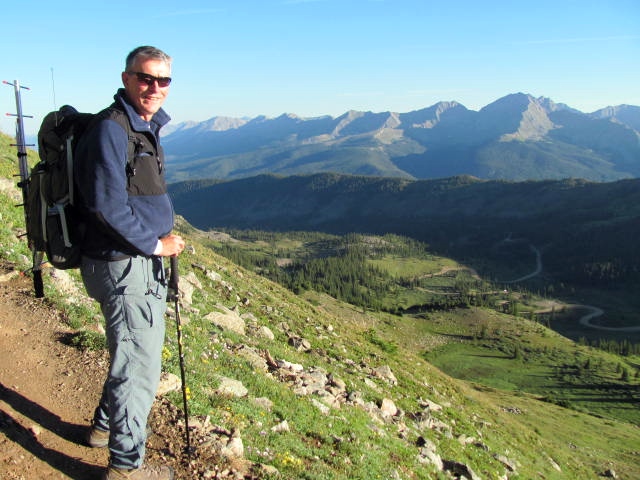 Of course, any day is a good day for SOTA activity. I also think six weekends are a great way to focus our operating activity and create S2S (summit to summit) radio contacts. The August 1-2 weekend looks to be the alignment of the planets with four events happening on that weekend. Early August usually offers excellent conditions for hiking the highest peaks in Colorado, so come on out and play.
For more info on VHF SOTA, see How To Do a VHF SOTA Activation.
Get off the couch, put on your hiking boots, grab your backpack, grab your radio but most important: get on the air!
73, Bob K0NR
The post 2015 SOTA VHF Activity Days appeared first on The KØNR Radio Site.
What’s All the Fuss About K1N?
If you have been paying any attention to the world of ham radio DX, you have heard about the DXpedition to Navassa Island. According to Wikipedia, Navassa Island is a unorganized, unincorporated territory of the United States. Haiti (just 40 miles to the east) also claims ownership of the island but it appears that the US currently has control. The island is designated as the Navassa National Wildlife Refuge by the US Fish and Wildlife Service and access to the island is severely limited. (There is some interesting reading about the various territories of the US on Wikipedia.)
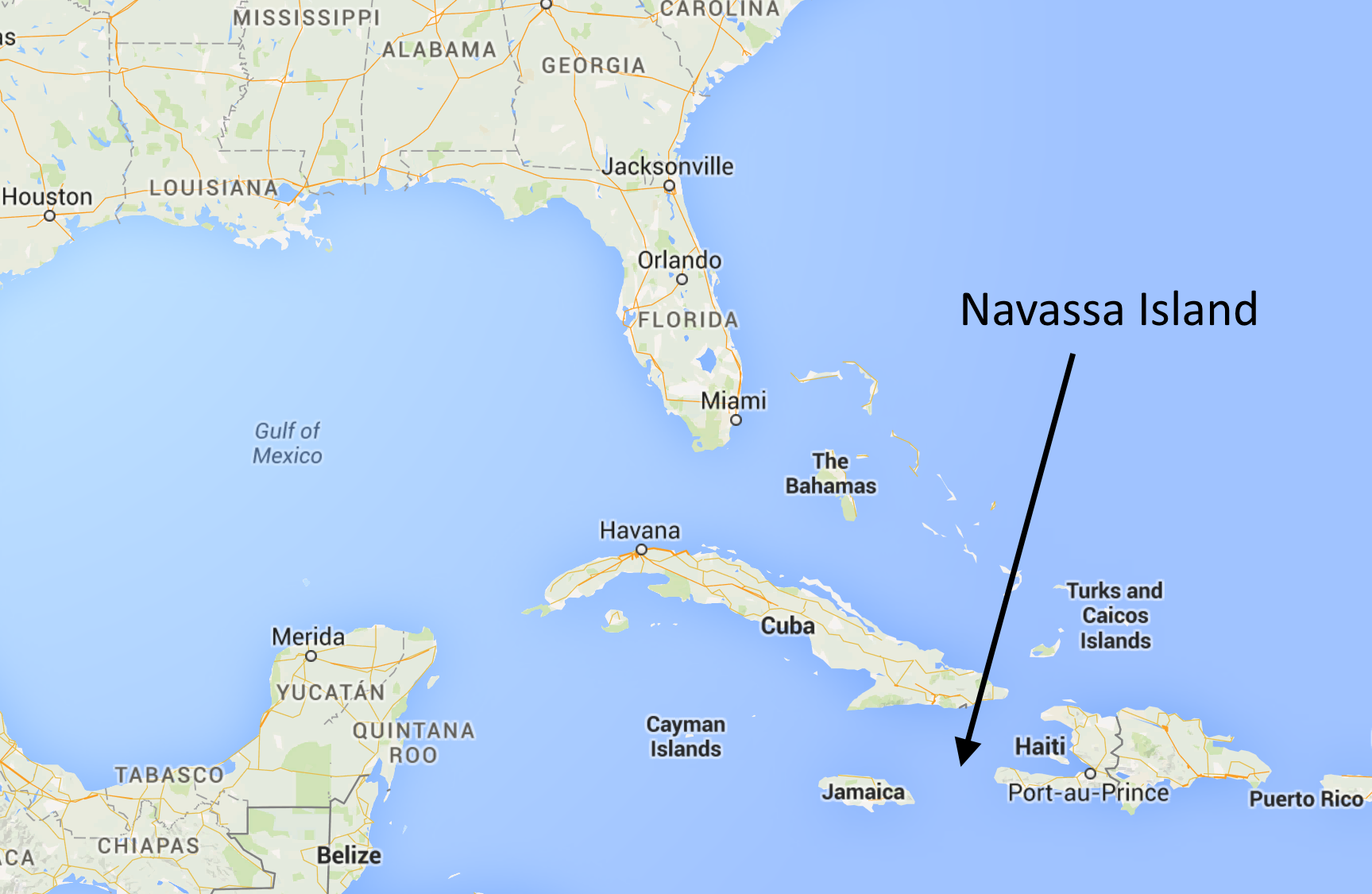 For the purposes of DXCC, Navassa Island is considered a separate country (I mean entity), one that is very difficult to work because no one lives there. Actually, its worse than that because hardly anyone is even allowed to set foot on the island, let alone install a ham station. This means that Navassa is near the top of the list of the most wanted DXCC entities.
An enterprising and persistent group of radio hams managed to get permission to visit the island and put it on the air. The logistical challenge is large, including the use of ships and helicopters to get all of the people, radio gear and supplies on and off the island. As you can imagine this gets quite expensive.
This is where I have to chuckle at the silliness of the situation. Imagine explaining this to someone that drops in from another planet. We have this hobby that involves communicating long distances via electromagnetic waves. One of the pursuits in this hobby is counting up how many countries you have contacted. Well, they aren’t all true independent countries, so we have to keep a special list to keep track of which ones are considered countries. Now, we have this one island that is on the list but we also have this rule that no one is allowed to live on this island. This causes a group of people to assemble a major expedition, costing a great deal of time and treasure, with the sole purpose of enabling electromagnetic communication from the island.
At this point, I should mention I am a slacker DXer. Many years ago, I did take the time to get >100 countries confirmed so that I could claim DXCC but I don’t spend much effort trying to chase new countries. When I heard about the Navassa DXpedition, it did peak my interest because I knew it was such a rare opportunity. Who knows when and if I would get another shot at working this country? I also knew the getting enough RF from my station to Navassa would not be very difficult. It is only 2300 miles from Colorado, a slam dunk on 20m, even with my modest 100W to a dipole antenna. Except that there would be 20,000 other hams called at the same time, creating a huge pileup. Which is why I don’t get into chasing rare DX. While I love the challenge of bouncing my signal off the ionosphere to reach distant locations, I don’t groove on the pile up that normally ensues. That quickly turns into a contest of who has the biggest signal (size does matter) and who is most adapt at getting the attention of the DX station.
About the time that K1N started operating from the island, I was out of town on business. I began to think that working Navassa was not for me. However, I did manage to find some operating time on Feb 14, which turned out to be the last full day of K1N operation. After just a couple of calls, I got through the pileup and worked them on 20m SSB. (I’d like to think that it was superior operating technique but it was probably just dumb luck.)
Thanks to the team that put Navassa Island on the air. (Yes, I did send in a small donation to help the cause.) From what I experienced, this DXpedition was very efficient and well run. Take a look at the interview with one of the participants, Glenn W0GJ, who had some interesting comments about the experience.
73, Bob K0NR
The post What’s All the Fuss About K1N? appeared first on The KØNR Radio Site.
2014 World Radiosport Team Championship
From the World Radiosport Team Championship (WRTC) website:
The World Radiosport Team Championship (WRTC) is a competition between two-person teams of amateur radio operators testing their skills to make contacts with other Amateur Radio operators around the world over a 24 hour period. All teams use identical antennas from the same geographic region, eliminating all variables except operating ability.
WRTC2014 included 59 competing teams from 29 qualifying regions around the world. Competitors represented 38 different countries.
This is a unique contest in that the stations used are roughly identical so that operator skill is the main variable. I love watching these guys work the radios, especially the CW ops. Even if you are not a contester, take a look at this excellent video and enjoy radio hams having fun messing around with radios.
WRTC 2014 Documentary from James Brooks on Vimeo.
The post 2014 World Radiosport Team Championship appeared first on The KØNR Radio Site.
2013 Ford F-150 Ham Radio Installation
After acquiring a Ford F-150 truck last year, I’ve been working on getting a ham radio installed in it. At times, I have loaded up my vehicle with multiple radios covering HF through 70 cm but lately I am content with just having a reasonable dualband 2m/70 cm FM rig in the mobile. Actually, I used a Yaesu FT-8900 that does FM on 10m, 6m, 2m and 70 cm but just set it up for the two bands.
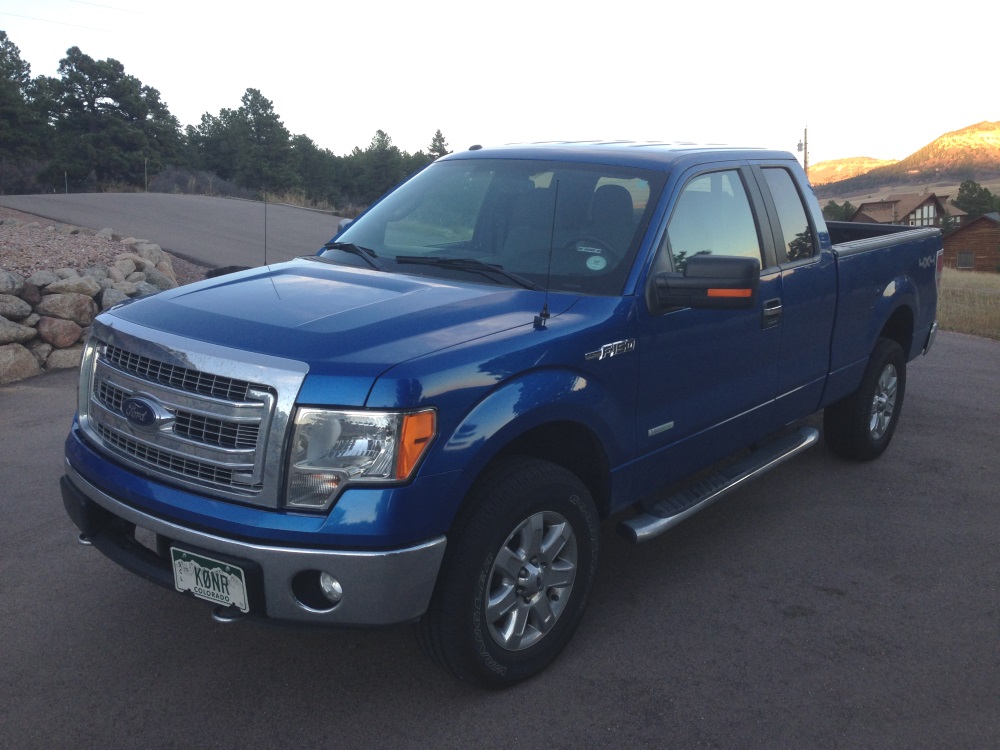
Ford F-150 with 2m/70cm antenna on the front fender
One of the most critical questions for a mobile installation is what kind of antenna to install and where to put it. In the end, the antenna is going to be the main determinant of mobile performance. Ideally, I’d like to have the antenna on the roof of the cab but the truck will not fit in my garage in that configuration. Another option I considered was mounting a longer dualband antenna using one of the stake pocket mounts from Breedlove. I prefer NMO mounts for VHF/UHF antennas and the stake pocket looked like a good way to go. However, a little measuring revealed that a 1/2-wave or 5/8-wave 2m antenna on the stack pocket was not going to clear my garage door. So it seemed that I was limited to a shorter antenna. I may still use the stake pocket mount for an additional antenna for road trips or to add 6m and 10m antennas.
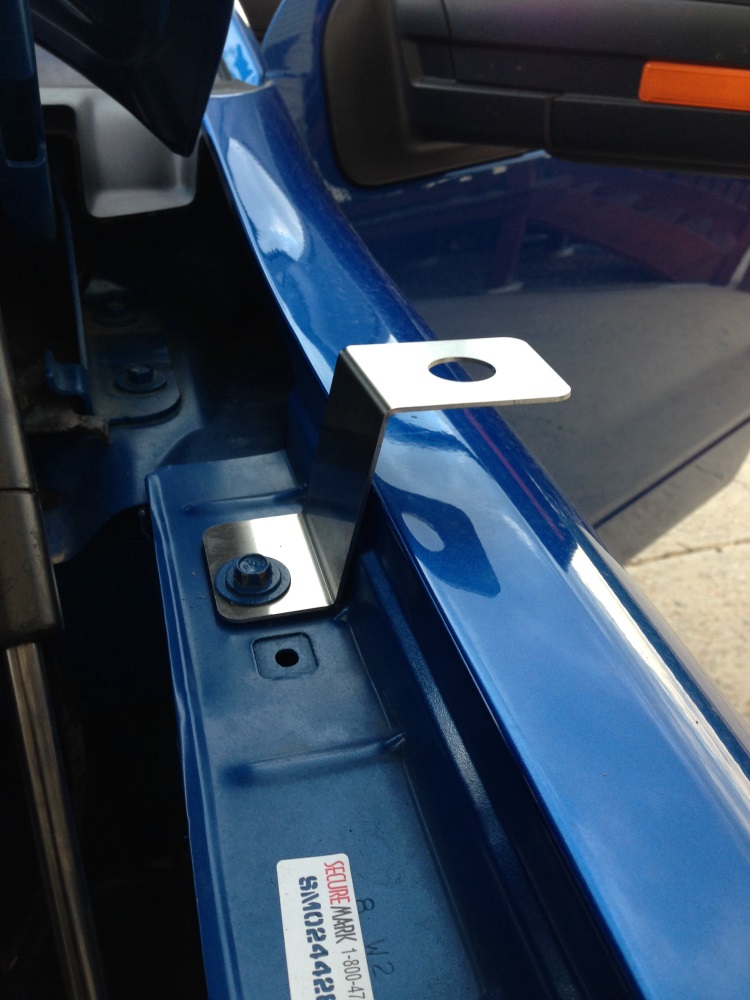
At this point, the F-150 bracket offered by The Antenna Farm looked like a good option. They have a number of these brackets made specifically for various vehicles, so check them out. This made the antenna installation quite simple. <click on any of the photos for a larger view>
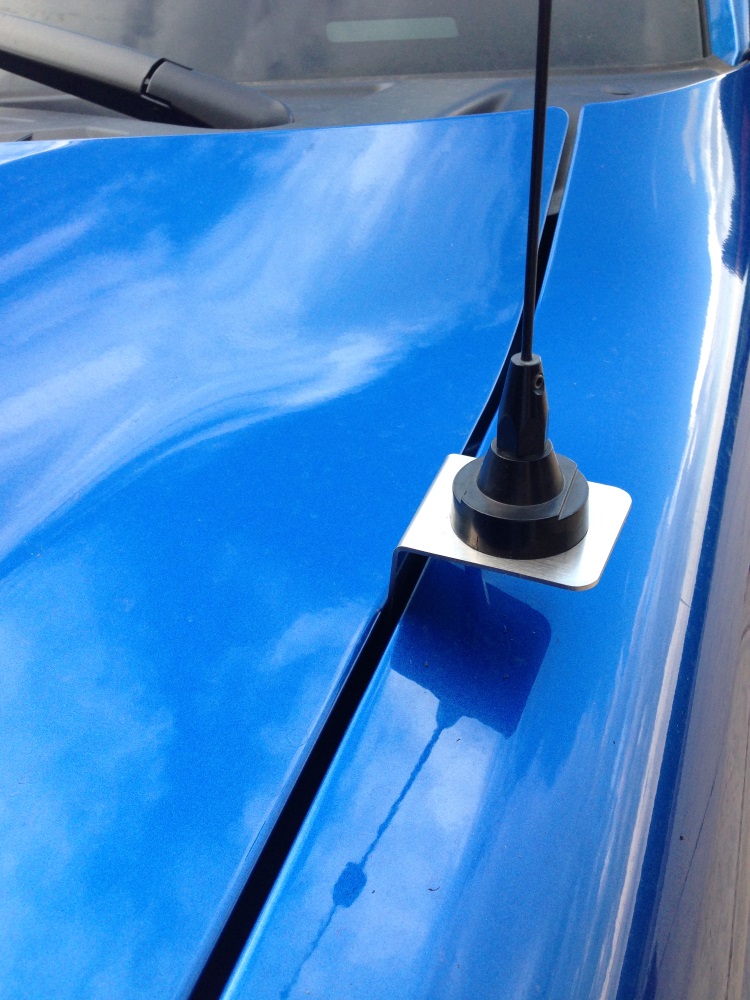
The antenna is an NMO-mount dualband that I had laying around the hamshack. I don’t recall the exact model number but these are very common, about 19-inch long for 1/4-wave operation on 2m and a small loading coil to make it work on the 70cm band.
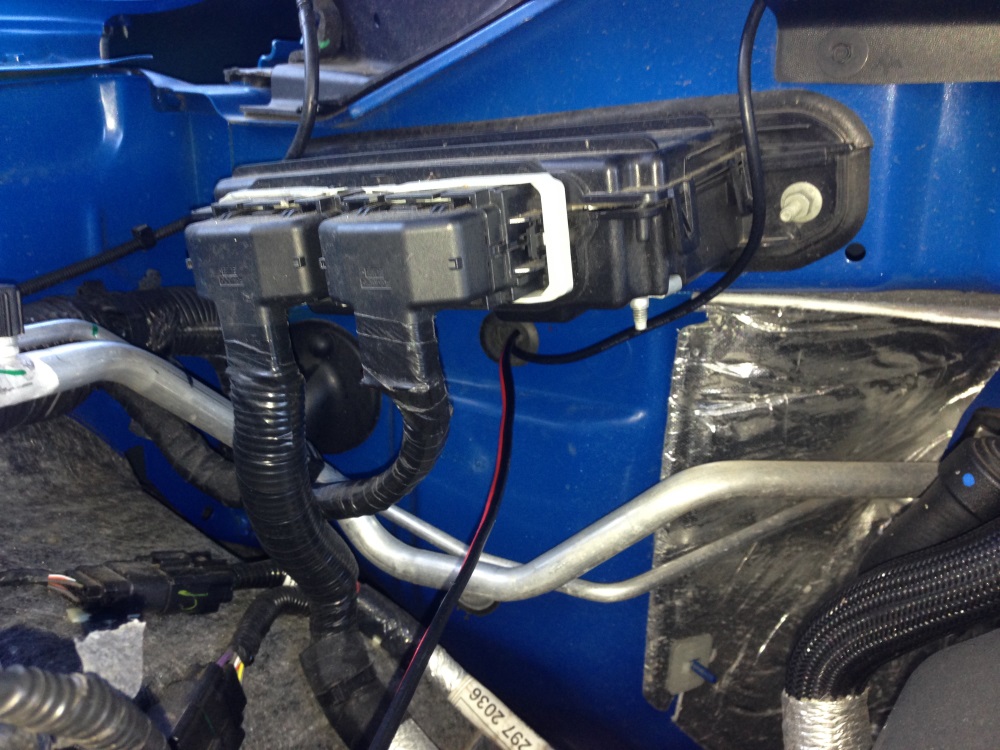
The F-150 has several precut holes for passing wires through the firewall. I used one that is on the passenger side just below a large module, as shown in the photo. It took a stiff wire and some force to punch my way through the rubber plug and into the cab compartment.
I don’t have a photo of the battery connection but I connected the positive lead right onto the battery terminal while the negative lead was attached to the truck chassis near the battery. You may have been told to always connect directly to the battery terminals but that advice no longer applies to some newer cars because there is a current monitoring device in the negative battery lead. To avoid confusing the vehicle battery monitoring system, the negative connection to your transceiver needs to be on the chassis side of the current monitor. Alan K0BG explains this issue on his web site. Actually, Alan has a wealth of information on mobile installations on his web site: www.k0bg.com. Oh, of course, I used inline fuses on both the positive and negative power cables.
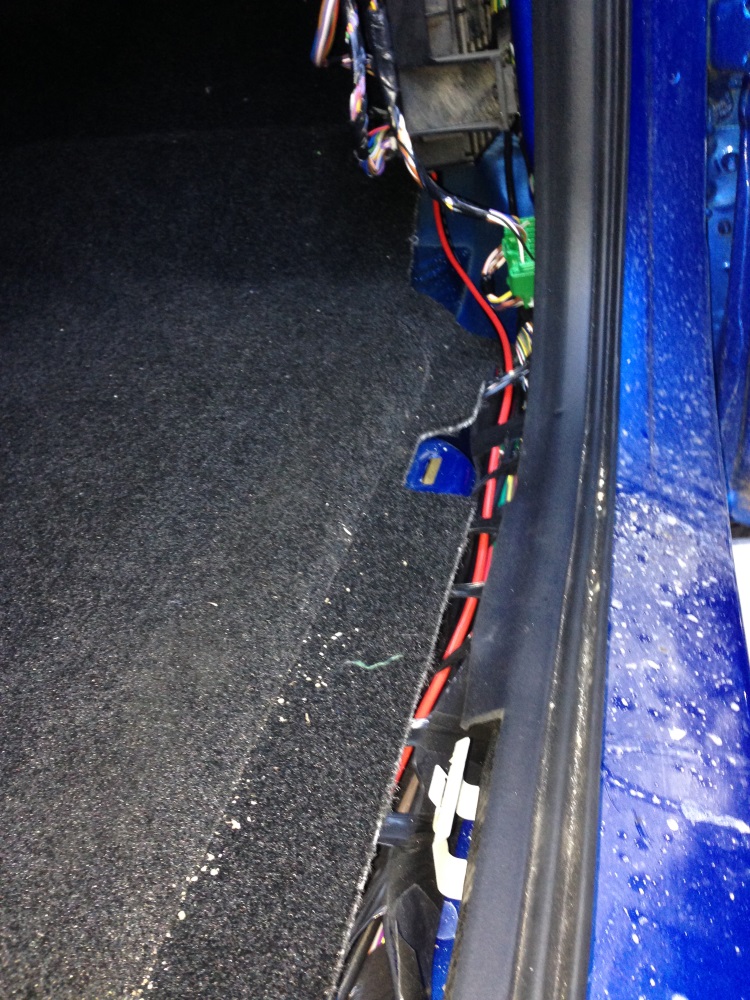
I mounted the FT-8900 transceiver on the floor under the back seat. To route the power cables and antenna coax, I pulled up the flat plastic trim piece that runs along the floor at the passenger door. I started from the front and did some careful prying (and praying) to remove the trim without breaking it. This exposes a trough with a factory wiring harness in it but there’s room for more. A few other plastic trim pieces were removed to get access to the wires coming through the firewall. All in all, this was not that difficult. (Yea, Ford!)
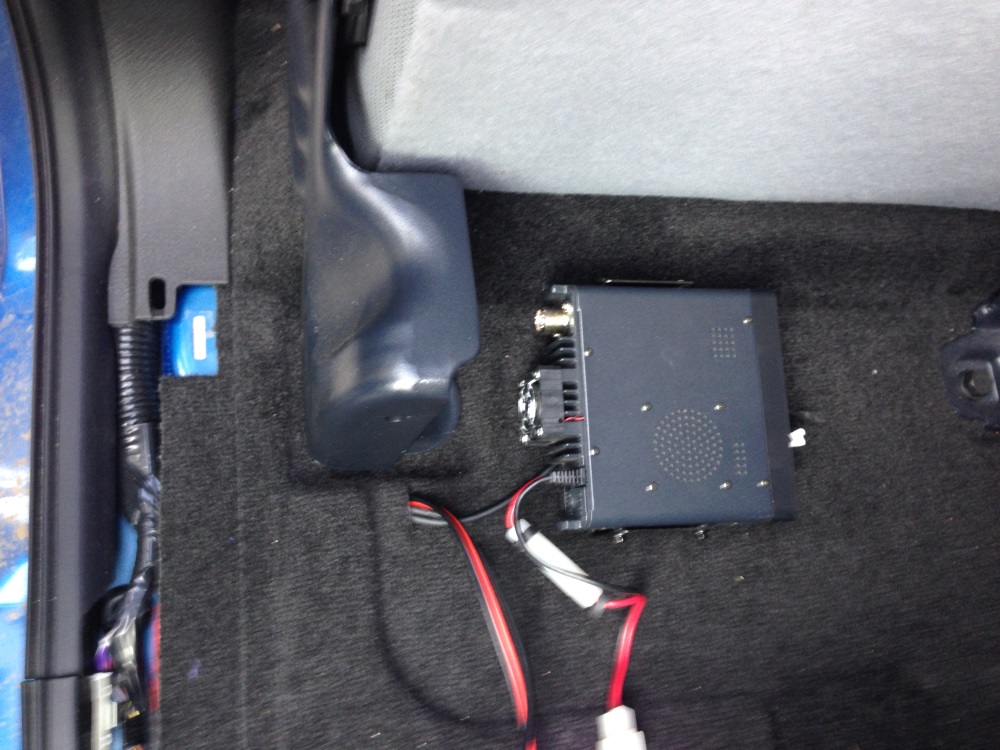
The photo to the left shows the FT-8900 radio installed under the passenger side rear seat. I drilled holes through the floor and mounted the radio with hefty sheet metal screws. The screws go right through the metal floor and and can be seen from under the truck. (Check that out before drilling!) Because the radio body is under the rear seat, I am using a small external speaker mounted near the drivers seat.
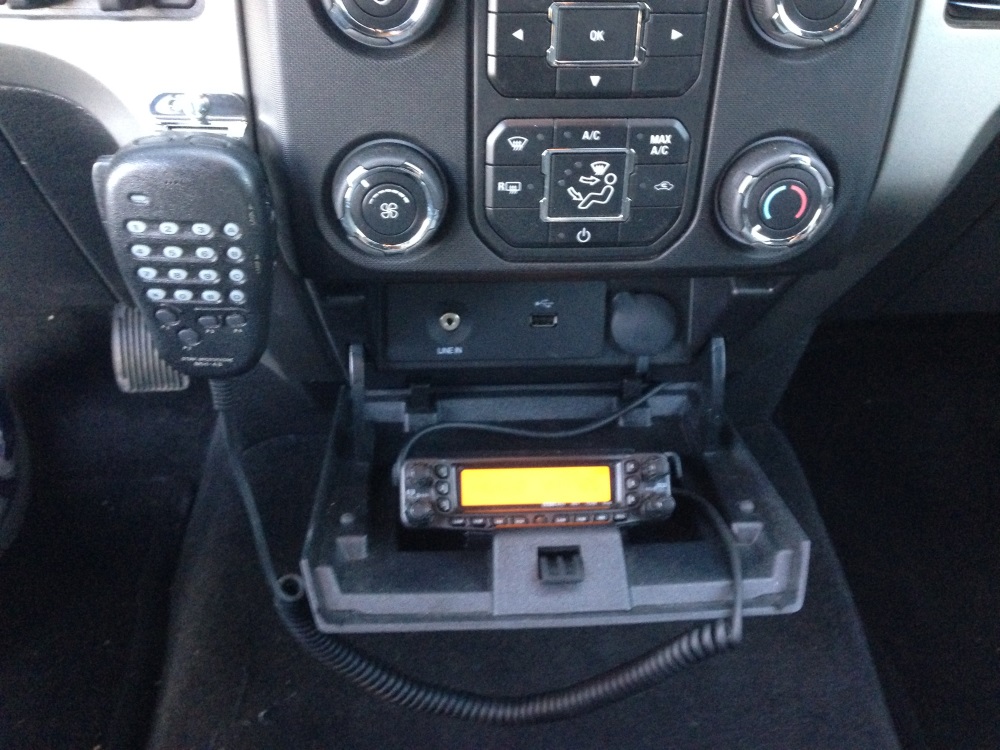
The radio control head is mounted inside a little door/shelf that normally pops open to reveal the USB port for plugging in a smartphone. (Note that Ford has multiple seat / dashboard configurations.)
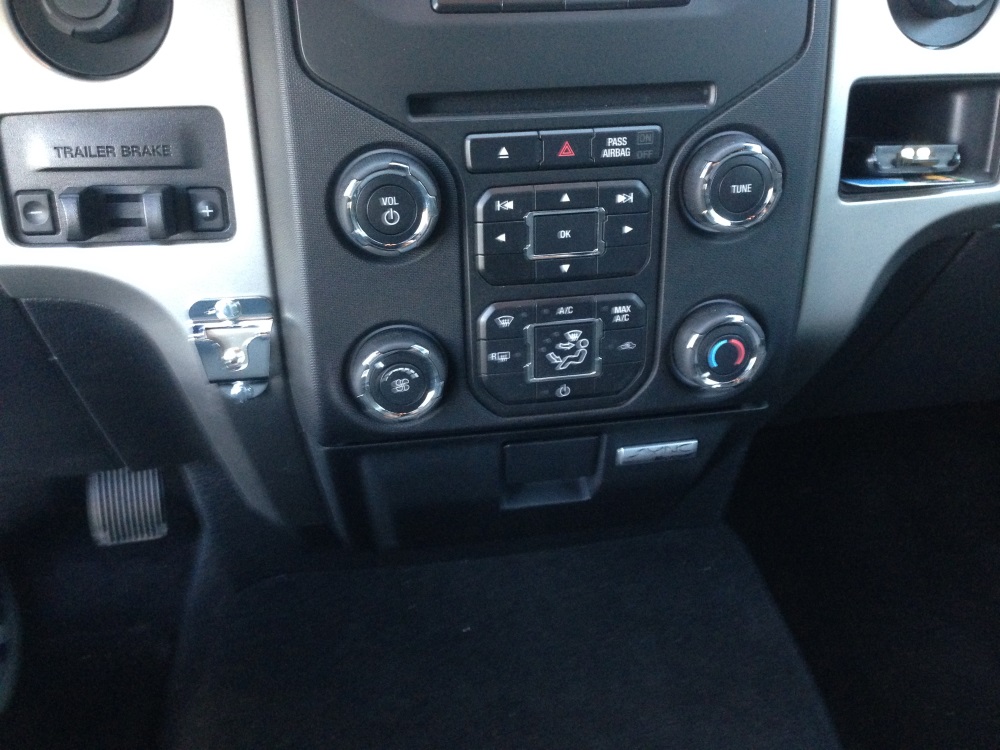 The FT-8900 control head just fits inside this little shelf, even when the door is closed (see photo). The microphone does have to be removed to close the door. I mounted a microphone hanger with a couple of sheet metal screws, as shown in the photo. I don’t like the crappy little hanger that usually comes with a ham transceiver so I bought some higher quality hangers on Amazon.
Overall, I am pleased with the radio install. The antenna location is clearly a compromise and I notice the performance is not as good as my previous vehicle (which was a small SUV with an NMO mount antenna in the middle of the roof.) But the antenna is “low profile” and sufficient for “around town” mobile operating. I am getting a little noise on the 2m band which needs some investigation. The 70cm band is very clean and is the band I use the most.
73, Bob K0NR
The post 2013 Ford F-150 Ham Radio Installation appeared first on The KØNR Radio Site.













