Author Archive
 A periodic problem
 December 15th, 2012 |
  Author:
I had an email from a KComm user from Russia today. He reported that when he clicks on a spot in the DX Cluster window the message “Invalid floating point operation” appears.
I guessed immediately what the cause of this was. It’s a problem that has been the bane of my life ever since I started programming as a hobby. In most of Europe the character used for the decimal point is a comma, not a dot (or period as our American friends say.) If your program is being used in a European country, adopts the correct regional settings and then reads some data expressed in the US or British way (such as the frequency in a DX Cluster spot) when it tries converting data to a binary floating point value it will come up with an error. If the European Union was actually any use you might think they would have standardized the representation of numbers by now, but hey…
If you are affected by this issue then a workaround is to use the Regional Settings in Control Panel to change the decimal separator to a dot instead of a comma. I’ve looked at the KComm source code and fixing the problem doesn’t look as if it is going to be easy so a solution may be a little while in coming.
The 1,000th post
Blogger tells me that this blog contains 999 posts, which must make this one the one-thousandth. When I started blogging almost four years ago back in February 2009 I had no idea that it would go on for so long.
Of course, the events of 18 months ago gave me every reason to believe I would never achieve such a total. Fortunately fate, having given me a metaphorical kick in the crotch, decided to smile on me after all and so I have defied the doctors’ predictions. Slowly but surely I have been going from strength to strength, so that I think I have a fighting chance of going on for at least another 1,000.
I would like to take this opportunity to thank all of my readers, especially those who comment or email, without whom the whole business of blogging would be a waste of time. I am particularly grateful to the many who sent messages of encouragement which were a great morale booster to both Olga and myself during a difficult time.
I hope you will all keep reading this as well as my “brain tumour blog” One Foot in the Grave, which is rapidly approaching a milestone of its own. I hope I will keep on “beating the bastard” and carry on blogging (and hamming) for years to come.
QSLs received
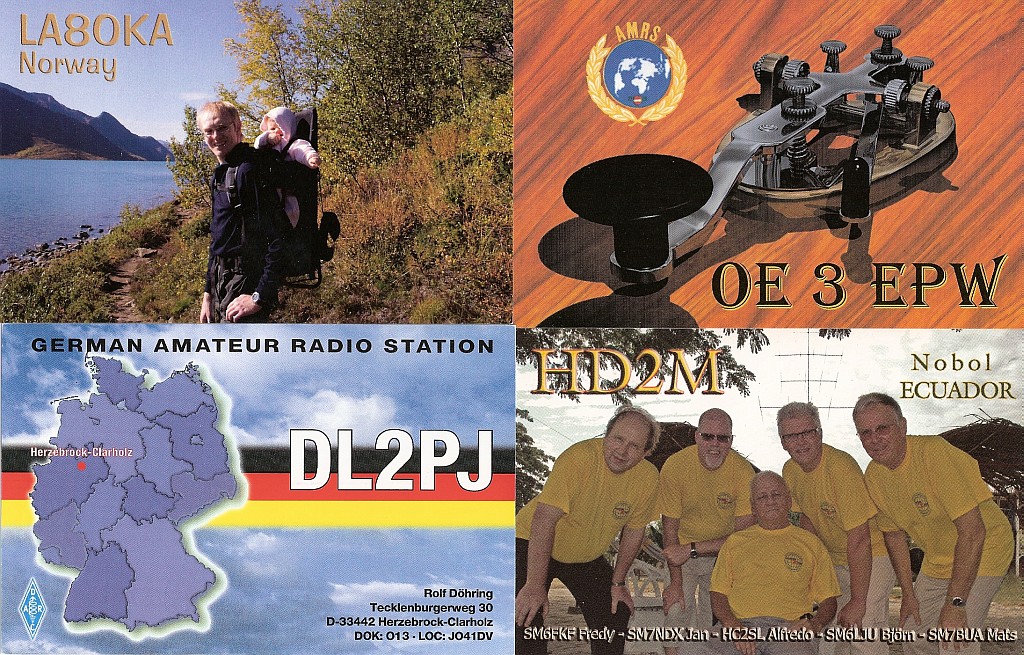 |
| QSL cards received by G4ILO 13 Dec 2012 |
I received a batch of cards from the QSL Bureau this morning. Here are a few of the more colourful.
RSGB Centenary

It’s fashionable for British hams to knock the RSGB. But I have never been much influenced by fashion.
The RSGB will be 100 years old in 2013. No doubt there will be all sorts of celebrations, a special event station and so on.
To mark the occasion I will display the RSGB centenary badge on my blog and my website until the end of 2013. I think it would be a good idea if more RSGB members who have blogs and web pages did the same.
Here is a snippet of code to make it easy for you to add this to your website:

It’s an image not text so you can’t cut and paste it – Blogger kept interpreting it as HTML code so this was the only way I could find to include it!
China on a handheld
 |
| Wu, BG6RRN |
Today was cold and frosty. I was sitting downstairs in the warm browing through my newly-arrived January 2013 RadCom. In the shack my K3 was listening for beacons, my K2 was being a Robust Packet APRS gateway on 30m and my TM-D710 was being the local VHF APRS gateway whilst the other side of this dual band radio was running my Echolink node and logged in to the IRELAND conference (Echolink’s equivalent of D-Star’s reflectors.)
The Baofeng UV-3R+ on the table burst into life and I heard Wu, BG6RRN making a call. No-one replied to him so I called back. And so I found myself having a chat about Chinese radio equipment with a Chinese radio amateur using a Chinese handheld!
Wu spoke pretty good English – better than my Chinese anyway! He asked what I thought about Chinese radio equipment and I replied as diplomatically as possible that I liked it because it was cheap but the quality control could sometimes be better. Wu was familiar with the UV-3R+ I was using to link into my Echolink node and said that they were very popular in China as well.
Wu told me that he has had an Icom IC-7000 transceiver for a month but had so far not made any European contacts. He has never tried PSK31 so I encouraged him to try it. I hope I’ll hear him on the HF bands one day. Today’s chat may not have been a proper radio QSO but I do enjoy the opportunities Echolink provides to talk with hams with whom I would not otherwise make contact.
A bug in KComm
Today started off with me continuing to compare the two morse decoders MRP40 and CW Skimmer in view of PC4T Paul’s insistence that the latter was the better morse decoder. When I heard someone calling CQ with no takers I took pity on them and returned their call. JY4NE and C6AKQ went into the log very quickly, in fact so quickly I was left wondering if I had actually worked them. Some people moan that all digital mode operators do is exchange macro files, but in a lot of CW QSOs you barely exchange anything!
Next I replied to a Russian station who was a bit more chatty. Unfortunately my logging program KComm locked up in mid-QSO. It was embarrassing because I was sending from the keyboard and didn’t even have a key plugged into the transceiver so I couldn’t continue. I’m sure there will be people who would add me to a blacklist for this, but these days I tend to treat CW as just another digital mode. Hence my interest in good decoder programs. 🙂
KComm has a feature where you can insert the answer to a multiple choice question into the outgoing text. It is expressed like this: %?question|answer 1|answer 2|answer3? which would cause a box to pop up saying “Question” and you click on the answer you want inserted. It was this feature that was causing the program to lock up.
After a couple of hours tracing code in the debugger I could not see what the error was, unless it was a bug in the Lazarus library software. The feature had been in KComm since many versions ago, but this current version was compiled with a new version of Lazarus, so that was a possible explanation. Eventually I managed to modify my program code to avoid the error, with the result that this afternoon there is now a version 2.02 of KComm.
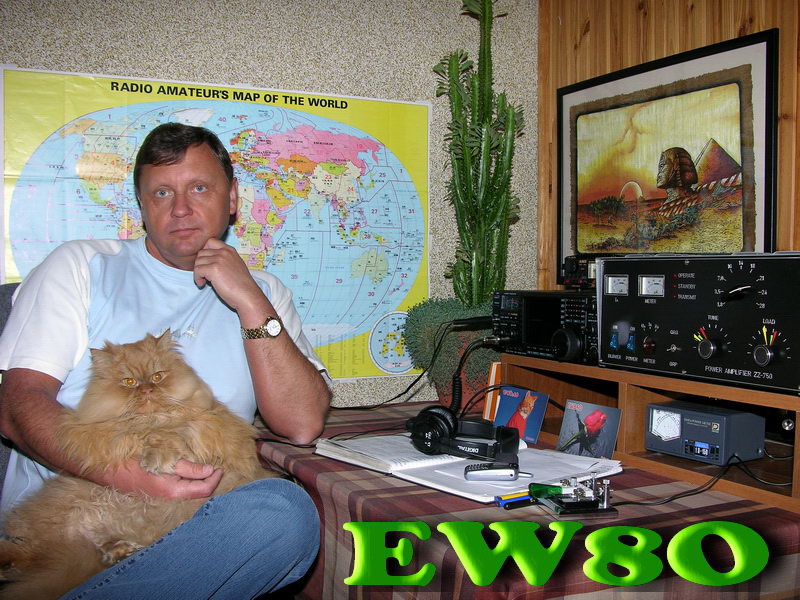
I tested the update by having a QSO with Mik EW8O in Belarus. Then I decided it was time for a rest – I find debugging code these days is mentally exhausting!
Beacon monitor failure
After wasting most of the weekend trying to get it to work I have abandoned the idea of monitoring the IBP beacons using Faros. Although I did have it working with my Elecraft K3 I did not want to tie up this expensive transceiver on such a task. But my efforts to get my FT-817 working with this software came to nothing.
The first problem was getting Faros to control the FT-817. It uses a program called Omni-Rig to do this. The solution – no thanks to the developer who has still not replied to my plea for help – turned out to be a bad FT-817.ini file installed with Omni-Rig. I tried other programs to verify that my FT-817 CAT interface was working properly. I even ran the same developer’s CW Skimmer software which also uses Omni-Rig, and which controlled the FT-817 just fine. The idea of looking to see if there was a different FT-817.ini file was just a flash of inspiration.
Having got Faros controlling the radio the second and final problem was getting it and the Yaesu talking to the same sound card. This did work if I used the computer’s built-in sound card, but that is normally used by my K3. I have several radios in my shack, most of which are connected to the shack PC and all of the others use various USB sound devices. Whilst all of my other software – including my own program KComm – produce a drop-down list showing distinguishable names of all these devices, Faros displays a list showing three lines that all say “USB Sound Device.” I tried selecting each one of them in turn, but I could not get Faros to talk to the sound device that was actually connected to the FT-817.
If it was confusing for me trying to choose from identically named devices, it also seemed to confuse Windows, which ended up sending PSK31 audio out of the PC speaker instead of to my K3! I had to reboot the computer to get sound using the correct devices again. At this point I threw in the towel and admitted defeat. Some things just aren’t worth the hassle.
So endeth my attempt at beacon monitoring.













