Author Archive
 Classic WSPR vs WSPR-X
 March 4th, 2013 |
  Author:
 Are you a fan of WSPR mode? Have you tried K1JT’s new program WSPR-X yet?
 |
| Comparing classic WSPR to WSPR-X |
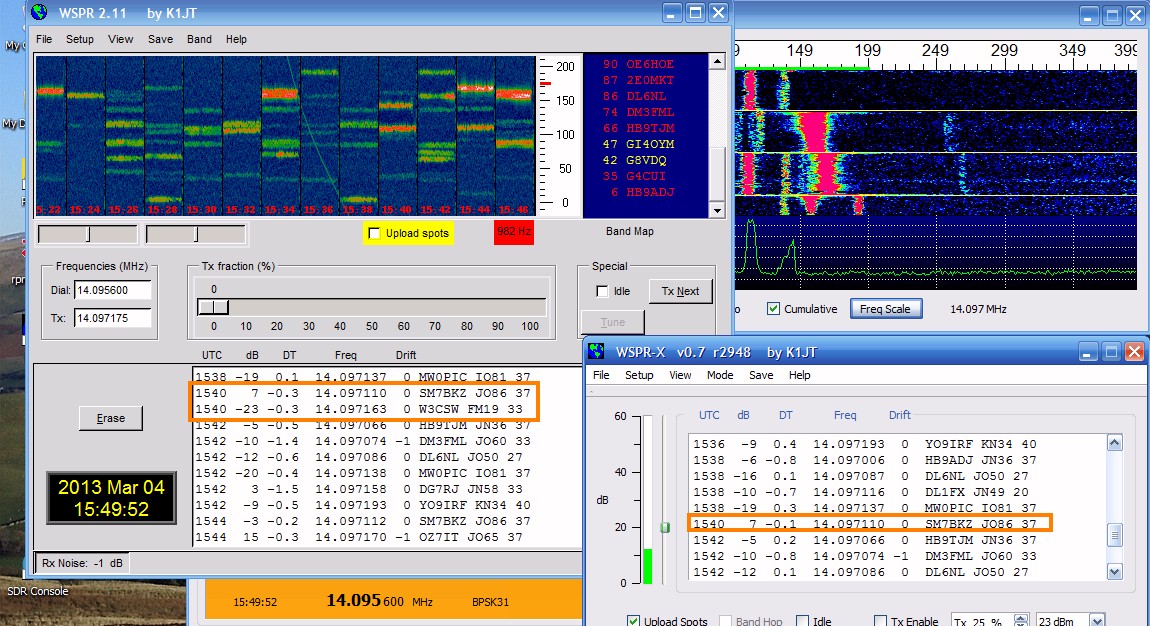
I decided to switch to the newer program as the older ‘classic’ version won’t work with VSPE virtual serial ports. But I had a sneaky feeling that WSPR-X was not decoding some of the traces it should. So I decided to run both programs in parallel, using the same sound card, the same radio, the same data source. Sure enough, WSPR-X is missing about 1 decode in 10 compared to WSPR 2.11. There is no apparent common factor between the signals it missed. They are not at the extremes of the frequency range, close to the limit of timing error nor especially faint.
Look at the screenshot above and look at the decodes for 1540. Classic WSPR has decoded two signals for this interval whilst WSPR-X has decoded only one. The signal from W3CSW was missed. Later signals from the same station were decoded. That is just one example. I only needed to wait a few minutes to find another.
I set the older WSPR to save .wav files and when these were processed by WSPR-X using its File Open option the result was the same as when the signals were received off-air. The same transmission was missed in each case.
WSPR-X seems a bit faster to run the decodes than WSPR. It prints them up on the screen before classic WSPR does. There are sometimes slight differences in the dB and DT figures, but not enough to worry about. Has anyone else noticed this?
Ghosts on JT9-1
I spent a couple of hours working JT9-1 on 20m this afternoon. I only messed up once when I forgot where I was in the sequence. I could do with the software showing the outgoing message in the log as well.
WSJT-X update
A couple of days ago I had an email from Joe, K1JT, author of the WSPR and WSJT software. He had read my post about my first JT9-1 QSO in which I said that I missed the JT65-HF user interface. Joe pointed out that WSJT-X is in a very early stage of program development, and user input will surely help to define its future evolution. He asked what features of the JT65-HF GUI I found desirable.

I replied with what I thought were the key points that made JT65-HF easier to use. The result is a new version of WSJT-X which I have just tried. One change is that the horizontal ‘panadapter’ display scale now matches the waterfall when the user has set FFT Bins/Pixel greater than 1.
However, the real big change is that double-clicking on a decode line now generates a set of messages addressed to the second callsign on the line, regardless of where you double-click. It also sets the Tx and Rx frequencies to that of the decoded transmission and selects the first message in the sequence. This is a big time and error-saver in the few seconds you have between receiving a call and having to reply. You still have to set Auto to ON to enable the transmitter and select the next message in the sequence after the first has been received. Perhaps it’s a matter of personal preference but I don’t think it is a bad thing for the user to take control of this rather than have the program try to work out the appropriate reply. In other words, double-click on a decode when it is a CQ call or a reply to your CQ. Use the Tx n buttons to select the next message in the sequence as you progress through the QSO.
Try this latest version of WSJT-X. I think you’ll find it a big improvement. Now all we need is for Laurie VK3AMA to come up with a version of JT-Alert that adds logging and ‘worked before’ detection and there will be no reason not to switch to this much narrower JT mode.
Name calling
Something that’s been puzzling me for the last couple of years, particularly on the digital modes, is the number of people who address me by name before I’ve told them. These are not stations I’ve worked before – KComm will alert me to those. But increasingly often when I reply to a station they will come right back with “Good afternoon, Julian.” I’ve even had people end JT65A contacts with “TU JULIAN 73”, despite the fact that the operator’s name is not part of the exchange.
I’m not egotistical enough to think that half of hamdom know my name because of my blog. I’ve had people address me as “Mr Julian Moss” which I think is a bit formal for the amateur bands. But it makes me suspect that some database is involved.
It would shake my faith in the parsimony of hams to think that 50% – because that’s about how often it happens nowadays – have stumped up for a subscription to QRZ. But if they haven’t, where do they get the information from? Is there a free callsign lookup database I haven’t heard of? And if there is, doesn’t the fact that you can access a station’s details at the click of a button render somewhat pointless the rest of the QSO?
Andalucia Day

I switched on the radio this afternoon, started up KComm, and the first station that printed up on the screen was EG7DCA, a special call to mark Andalucia Day. A rapid exchange of signal reports and he was in the logbook.
Andalucia Day, as this link will tell you, is the anniversary of a referendum held in 1980 in which people voted for the southern province of Spain, Andalucia, to become an autonomous region. This year that anniversary falls on 26 February, today.
I love Andalucia. The name immediately conjures up for me a vista of whitewashed villages nestling among rugged mountains, memories of walks on mountain paths and lazy days enjoying a glass or three of local wine in a tapas bar.
I often used to dream of living in an Andalucian village. I could happily have become one of the many British expats out there. But dreams don’t always turn out how you imagine. The endless sunshine seems irresistible but summers can be unbearably hot and as one gets older you start to need things like healthcare, which is good, free and English-speaking in Britain. In view of what has happened to me in the last two years it’s probably a good thing I didn’t become an expat!
Still, I can’t look at a picture like this without feeling nostalgic!
 |
| Canillas de Albaida, Andalucia |
A 40m transceiver kit
It has been a while since my soldering iron has been warmed up and I have been feeling the urge to build something. The challenge of building something from scratch has usually proved too much, so I have decided to build a kit. I’ve read a lot of good things about the “Iler 40” and its 20m brother so I decided to get one.
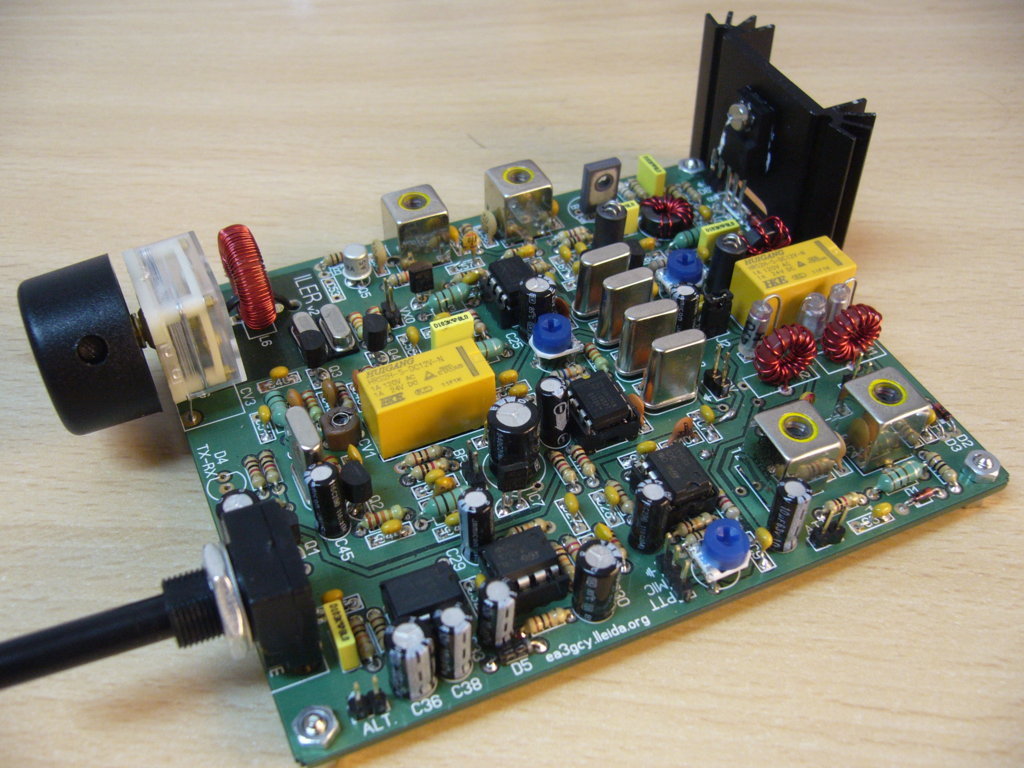 |
| Iler 40 transceiver (EA9GCY photo) |
I thought that this kit was sold on Ebay but a search for “Iler 20” came up blank. A more generic search produced some interesting hits including this 40m transceiver kit from a UK seller. This kit is quite a bit cheaper than the Iler kits but without any reviews it is a bit of an unknown quantity. I eventually found that the Iler kits can be bought from the maker’s own site. The excellent reviews plus a higher output (4w vs 1w) were the decider. I was a bit unsure of which version to go for but I eventually plumped for the 40m version. More to follow once it gets here.
QSLs sent
I have just sent a new batch of QSLs via GlobalQSL for printing and distributing via the bureau. I like the Global QSL service. It takes away the chore of sending QSL cards and reduces the work to a simple log export to ADIF file.

I had to purchase 1000 new card credits before I could upload them. Today’s batch, from last summer until now, was over 400 contacts on 398 cards. That’s excluding local FM QSOs and contest contacts. I didn’t realize I was so active on the air. At that rate I’ll be ordering another batch before the year is out!













