Posts Tagged ‘RFI’
 A DAB of interference
 August 24th, 2010 |
  Author:
 I think it is important when operating a ham radio station from home to ensure that none of your own domestic equipment suffers from interference. It’s a sign that everything is OK, and if a neighbour should complain then it helps to prove the point that it is not your fault if you can demonstrate that your own TV, phone, stereo etc. are not affected by your transmissions. I’ve been surprised at the amount of power I’ve been able to run using antennas in the attic without experiencing any problems.
Last night I decided to use the digital DAB band of my radio tuner to listen to the Promenade Concert on BBC Radio 3 because Olga complained of hearing some high pitched noise (inaudible to me) on the analogue FM band, when played through a stereo amplifier and a pair of large 40 year old IMF monitor speakers. For a few minutes it was fine, then there were a couple of interruptions to the broadcast which I guessed were caused by the transmission of my APRS beacons. I think that the DAB transmissions are quite close in frequency to 2m so I shut down the 2m APRS gateway and we enjoyed the rest of the concert without interruptions. I imagine that the neighbours, if they listen to radio at all, will use analogue FM just as we normally do, but it is a bit of a concern that just 10W of 2m FM can cause interference to anything.
The only other known problem caused by my radio transmissions is a neighbour’s security lights. I imagine this is a common problem. I installed an identical looking PIR controlled security light at the front of the house a few years ago after a couple of drunk youths wandered up our cul de sac one night and decided to uproot some of the plants in a neighbour’s garden. I found that I could turn the lights on with as little as 5W on 20m. The solution was to leave our lamp turned off and hope that the neighbour thought it was the wind blowing the bushes around that was triggering his ones. Fortunately it is often windy here and I didn’t used to go on the air in the evening all that often.
But my APRS gateway runs from morning to night and runs 50W output on 30m so the problem will become more evident as the nights draw in unless I adopt the simplest solution which is to shut it down (or switch to receive only) at nightfall. Breaking cover by admitting to a neighbour that I have been causing this to happen risks opening a can of worms that could put me off the air entirely, and remedying the problem would be expensive as his lights are part of a professional security installation that I would not be allowed to tamper with even if I wanted to.

Inspirational
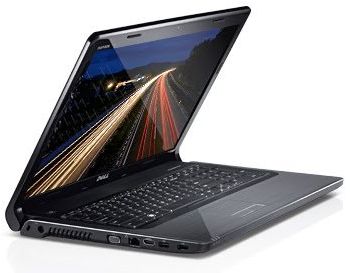 My new work laptop came this morning. It’s a Dell Inspiron 1764 with an Intel i3-350M(2.26GHz) Mobile CPU, 3GB of RAM and a 250GB SATA hard drive. It isn’t the most portable laptop, having – like the Toshiba it replaces – a full-sized keyboard and a 17.3in. widescreen display. It looks and feels absolutely gorgeous, the screen is superb, the keyboard perfect for my fat fingers, and it’s blisteringly fast. Click on the Firefox icon and the browser is there in a second or two.
What’s more, the Dell doesn’t cause any RF interference that I’ve noticed. The old Toshiba caused an increased level of hash that broke the squelch on my 2m FM receiver unless I cranked the knob round quite a way. Since I started receiving HF APRS I noticed that the Tosh caused a 3 S-point noise level on 30m as well, which all but prevented reception of any packets. So I am delighted with the new PC for that reason as well. I can now leave my radio station running all day as a VHF and HF APRS gateway while I work.
The old Toshiba had Linux installed on it early on in its life for security reasons plus the fact that Linux has some good web development tools. I was going to buy a PC with Linux preinstalled but I couldn’t find what I wanted so I resigned myself to paying the Microsoft Tax. The Dell came with 64-bit Windows 7. I thought that I should try it under Windows for a few days just in case there was a fault and I had to send it back. But to be honest I think I may stick with Windows. It looks more polished than Linux, it’s fast and I’ve already started to find replacements for the Linux tools I used. Firefox, which I spend most of the day using, looks and works exactly the same on both platforms, of course.
I certainly wouldn’t choose Windows 7 64-bit for a shack PC as there are too many compatibility problems with popular hardware and ham radio applications. But for what I need to do to keep the business running it looks like being a good choice.

BBC to investigate interference complaints
Ofcom, the UK telecommunications regulatory authority, has announced that it will pass the responsibility for investigating reports of interference to TV and radio services to the BBC from July 1st. On that date, members of the public experiencing interference to radio or TV should lodge a complaint with the BBC using a web form, which may advise them of issues such as a local transmitter fault.
Some UK amateurs have expressed concern about the possible effect of this change, but I don’t consider it likely to make much difference. As far as I can see, Ofcom will still be responsible for issues of interference to amateur radio such as that caused by PLT devices. These days, TVI and BCI are fairly infrequently experienced and almost always caused by a poor or faulty antenna installation or receiving equipment. Putting the BBC in charge of investigating complaints of interference to its own services makes a lot of sense.

Noises off
Show me a tidy shack and I’ll show you the shack of someone who doesn’t spend much time tinkering with equipment, or someone who has been nagged by his XYL to make the shack tidy and curses every time he needs to connect or disconnect something – which at G4ILO seems to be several times a week.
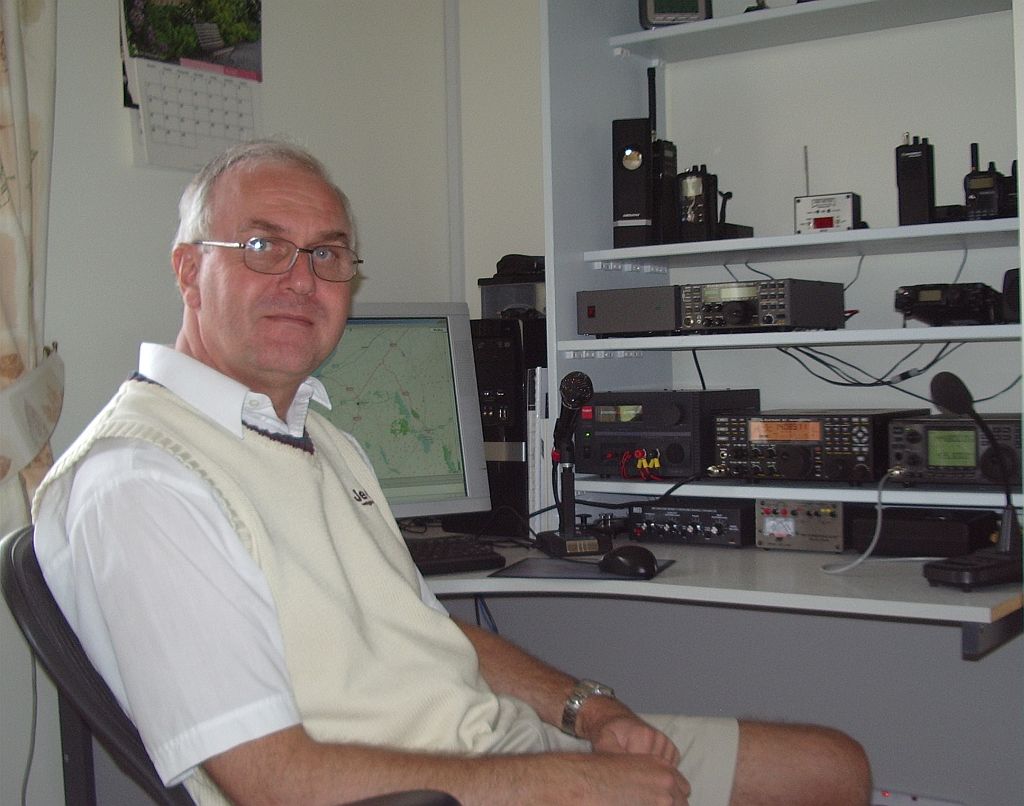 When I switched on the computer this morning there appeared to be a Sporadic-E opening building on 2m to the south east so I switched on the IC-910H and turned the SuperMoxon in that direction. Nothing was heard, so I switched to the vertical instead and was puzzled as to why the band noise was so much greater on the beam than the Slim Jim.
The opening passed, as all such openings have this year with nothing heard or worked, and I decided to investigate. I switched the computer off and the noise fell to the same level as on the vertical. Eventually, after much trial and error and cursing because the cables can only be reached by groping blind (with the aid of a shaving mirror or a picture of the back of the rig) behind the equipment I established that the problem was the serial cable providing PTT control to the interface connecting the 910H to the computer. Even when it was disconnected from the radio, plugging it in to the serial port on the computer caused the noise level to jump up.
This was a cheap interface I’d bought some time ago for the FT-817. The serial cable supplied wasn’t screened, but I’d shortened it to use with a USB to serial adapter without a lot of spare cable lying around. This had resulted in it being too short to use with a real serial port, so I had replaced the cable. I had used screened cable for the replacement, but although I had connected the copper shield to the GND pin of the RS-232 port, it wasn’t connected to the body or shell of the plug, which in any case was plastic.
I managed to solder to the metal flange of the plug, the bit that pushes on to the socket on the PC, and connect a short wire from that to the GND pin and the shield. That seemed to do the trick, and the noise level is now the same when the beam is pointing towards the shack as it is on the vertical. Problem solved, for once! Nevertheless I do sometimes wonder if computers are worth all the trouble they cause to us radio enthusiasts.

PLT DX Contest
For someone as plagued with HF band interference as me this sounds like a sick joke or an April 1 spoof that passed it’s read-by date. The Electromagnetic Compatibility Industry Association (bet you didn’t even know there was one) has announced a contest to see who can detect interference furthest from a power line adapter installation. Yes, really. There are two prizes: the Long Distance Award (LDX) for the person who detects interference the greatest distance from the installation, and the Most Typical prize (MTY) for the entrant whose detection distance is closest to the median value.
Well I suppose when interference blots out HF entirely we need to use our radios for something. I believe a CQ WW Wi-Fi contest in the offing. You collect SSIDs for multipliers. Double points if the network is unencrypted.














